
























Key takeaways
- Central Asia remains one of the most affordable regions for international travelers, with budget trips often running a fraction of comparable European itineraries.
- Uzbekistan is usually the cheapest of the five Stans, while Kazakhstan and the capitals tend to cost the most day to day.
- Accommodation ranges from a few dollars for a hostel dorm bed to boutique courtyard hotels in restored merchant houses.
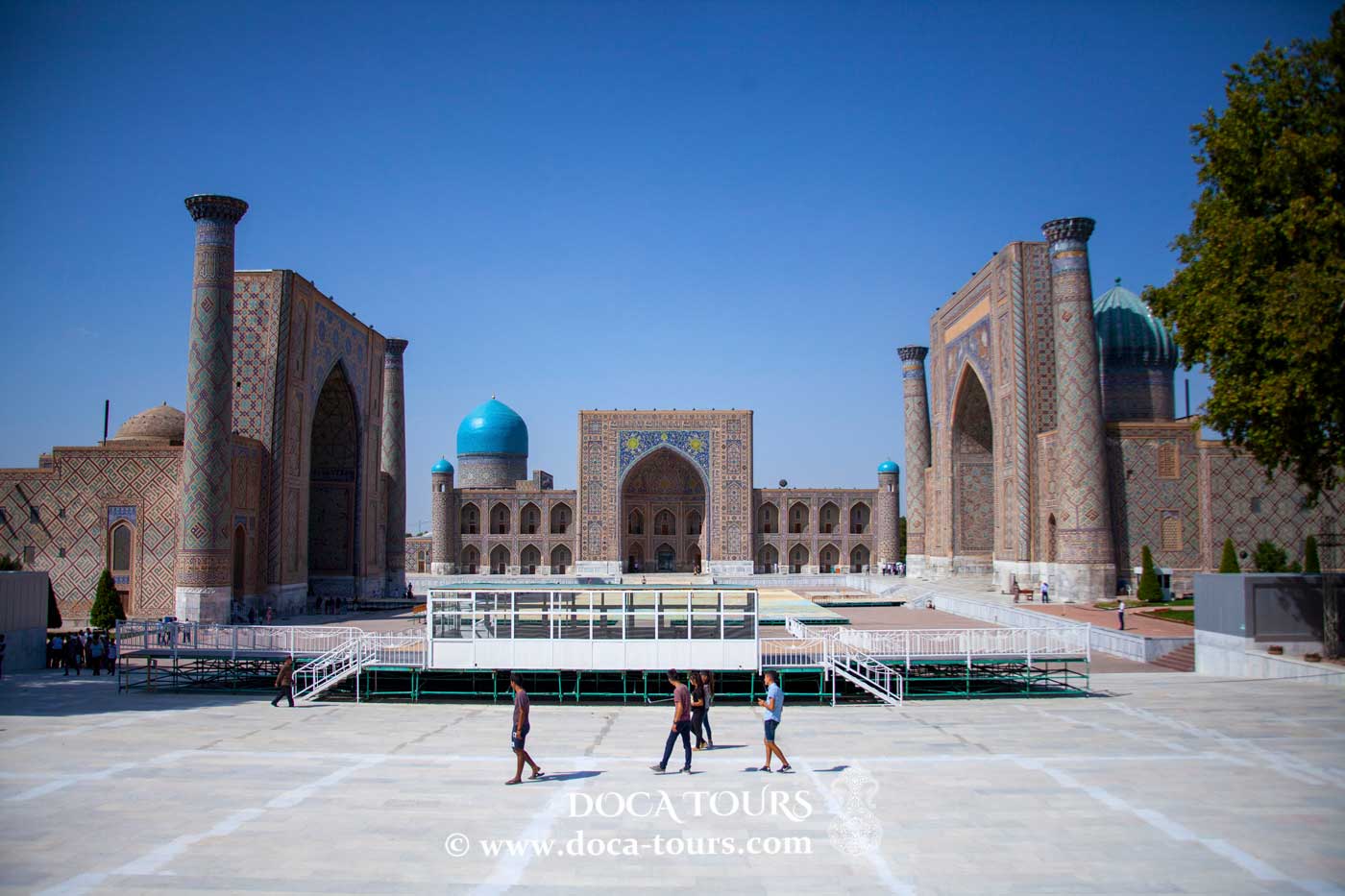
- Entrance fees are modest: foreign adults pay 100,000 UZS (about 8.30 USD) to enter Registan Square in Samarkand.
- A guided tour raises the headline price but folds in transport, logistics and border paperwork that independent travelers pay for piece by piece.
Central Asia is one of the best value regions in the world for travelers right now. A careful trip through Uzbekistan, Kyrgyzstan or Tajikistan can cost a fraction of what the same number of days would run in Western Europe, and even comfortable mid-range travel stays reasonable. This guide breaks down the real central asia travel cost in 2026. It covers daily budgets, hotels, food, transport, entrance fees, and the choice between going it alone or booking a guided tour.
Prices below are given in US dollars because that is the currency most travelers compare against and the one many guesthouses and drivers accept directly. Local currencies swing, so treat every figure as a planning guide rather than a fixed quote.
What is the average daily central asia travel cost?
Daily spending varies more by country and travel style than by season. Uzbekistan sits at the low end, where simple guesthouses, cheap plov and inexpensive trains keep costs down. Kazakhstan runs higher, especially in Almaty and Astana, where restaurant and hotel prices look closer to mid-tier European cities. Kyrgyzstan and Tajikistan land in between, with the catch that reaching remote mountain areas adds transport cost.
As a rough frame, a backpacker staying in hostels, eating at local canteens and using shared transport spends very little per day in Uzbekistan and moderately more in Kazakhstan. A mid-range traveler who wants private rooms, sit-down restaurant meals and the occasional private car should budget several times that. Luxury exists too. It runs mostly through boutique hotels and private guides, yet even that tier costs less than equivalent service in most of Europe.
If you are shaping a multi-country route, remember that the days and distances you cover are the biggest driver of your total, more than how much you spend on any single day.
Accommodation: from hostel dorms to boutique hotels
Where you sleep is usually the largest single line in a Central Asia budget, and the range is wide.
- Hostel dorms. Backpacker hostels in Tashkent, Bishkek, Samarkand and Almaty offer dorm beds at the cheapest end of the scale, often with breakfast and a shared kitchen.
- Guesthouses and family homestays. Family-run guesthouses are the heart of budget travel here, especially in Kyrgyzstan and along the mountain routes. A private room with breakfast costs modestly and often includes the warmest hospitality of the trip.
- Mid-range hotels. Standard three-star hotels in the main cities are comfortable and still affordable by Western standards.
- Boutique hotels. Restored merchant houses and courtyard hotels in Bukhara, Khiva and Samarkand are a highlight in their own right. They cost more, but they remain a relative bargain for the character you get.
A yurt camp is a category of its own. Spending a night in a felt tent on the shore of a high lake is one of the signature experiences of the region, and it is priced like a guesthouse rather than a resort.
Food, transport and entrance fees
Food
Eating well is cheap across the region. A plate of plov, a bowl of lagman or a stack of samsa at a local eatery costs very little, and markets are full of bread, fruit and dried goods for next to nothing. Restaurant meals aimed at travelers cost more but still land far below European prices.
Transport
Getting around is where careful travelers save the most. Shared taxis and marshrutka minibuses connect towns for a few dollars. Uzbekistan's high-speed trains between Tashkent, Samarkand and Bukhara are fast, comfortable and inexpensive, and city metros cost only cents a ride. The bigger expenses are long intercity distances, domestic flights in Kazakhstan and the specialized vehicles needed for rough roads like the Pamir Highway. Flights between the five capitals can cost more than you expect, so routing matters.
Entrance fees
Monuments are a small part of the budget. Foreign adults pay 100,000 UZS, about 8.30 USD, to enter Registan Square in Samarkand, with a reduced fee for under-18 visitors and an optional on-site guided tour for groups, according to a 2026 Samarkand visitor guide. Most other sites sit in a similar modest range.
One planning note: many of these countries carry a concentration of UNESCO World Heritage sites, and that density is part of what makes a Silk Road route so rich in things to see. Mapping which monuments you most want to visit helps you plan the ticket budget.
Guided tour pricing vs independent travel
The honest comparison comes down to sticker price against total cost. Independent travel almost always shows a lower headline number. You chase your own train tickets, haggle for shared taxis, book guesthouses as you go and absorb the occasional wasted day when a connection falls through.
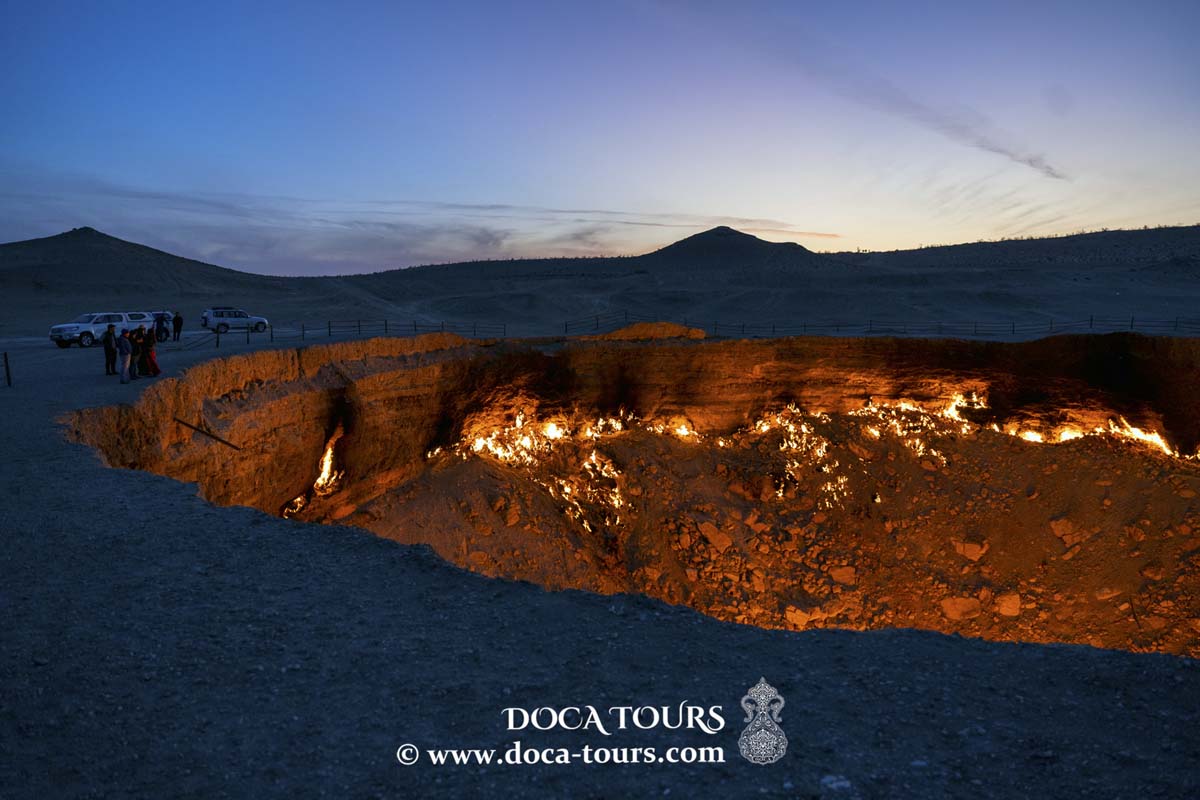
A guided tour quotes one larger figure, but that figure already contains the pieces independent travelers pay for separately: transport between cities, drivers, English-speaking guides, accommodation, entrance logistics and the paperwork that cross-border Central Asia travel can require. Turkmenistan in particular is difficult to visit independently, which is one reason the Door to Hell gas crater at Darvaza usually features on an organized trip.
The real question is what your time and certainty are worth across a region with five currencies, several languages and a set of visa rules that change. A tour trades a higher upfront cost for removed friction. If you want to weigh operators before committing, Choosing a Silk Road Tour Operator: What Really Matters lays out what to compare. At Doca Tours we price full Silk Road packages with the transport, guiding and logistics already included, so the number you see is close to the number you pay.
Money-saving tips without missing the highlights
You can cut your central asia travel cost significantly without skipping the sights that make the trip worth taking.
- Lean on Uzbekistan. It is the cheapest base for food, trains and city travel, so spend more of your budget days there and fewer in pricier Kazakhstan.
- Ride the trains and shared taxis. High-speed rail and marshrutkas are a fraction of the cost of flights or private cars, and they show you the landscape.
- Stay in guesthouses. Family homestays cost less than hotels and feed you better, with breakfast usually included.
- Eat where locals eat. Canteens and bazaars deliver the best food at the lowest price. Save restaurants for a treat.
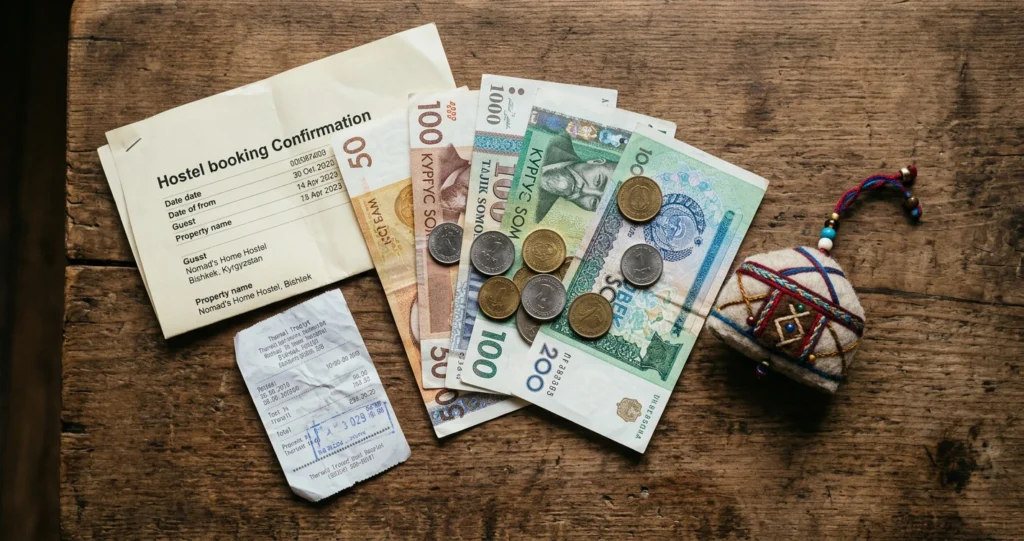
- Carry cash. Cards fail at markets, entrance booths and small guesthouses, and ATM fees add up, so bring US dollars to exchange and keep local currency on hand.
- Travel in shoulder season. Spring and autumn bring lower prices and gentler weather than the summer peak.
- Pack for the gaps. Buying forgotten gear on the road costs more than bringing it, so bring what you need from home.
Before you lock in anything, check the entry rules, since a missed visa is the most expensive mistake of all. Our Central Asia Visa Requirements 2026: Country-by-Country guide is the place to start.
Plan your Silk Road budget
The practical next step is to decide your route first, then build the budget around it, because distance and the number of countries drive the total far more than daily spending does. Sketch the cities you want, sort the visas, and choose between the lower sticker price of independent travel and the removed friction of a guided package. If you would rather see one clear figure that already covers transport, guiding and logistics across the Stans, compare that against your own estimated day rate and decide which trade suits the trip you want.
Frequently asked questions
How much does a trip to Central Asia cost per day?
Budget travelers can get by on a low daily figure in Uzbekistan and somewhat more in Kazakhstan or Kyrgyzstan. Mid-range travelers who want private rooms, restaurant meals and the occasional taxi should plan for a higher daily spend.
Which Central Asian country is the cheapest to visit?
Uzbekistan is generally the most affordable, especially for food and city transport. Tajikistan is also inexpensive once you are on the ground, though reaching remote areas like the Pamirs can add cost.
Is a guided tour or independent travel cheaper in Central Asia?
Independent travel usually has a lower sticker price, but a guided tour bundles transport, drivers, permits and accommodation into one figure and removes the time cost of arranging everything yourself across five countries.
How much are entrance fees to major Silk Road sites?
They are low by global standards. Registan Square in Samarkand charges foreign adults 100,000 UZS, roughly 8.30 USD, and most other monuments sit in a similar range.
Do I need to carry cash in Central Asia?
Yes. Cards work in larger city hotels and some restaurants, but markets, shared taxis, small guesthouses and entrance booths often expect cash in local currency or US dollars.