



























Key takeaways
- A specialist Silk Road tour operator should run its own ground logistics across Central Asia, not resell another company's itinerary with a markup.
- Central Asia was the world's fastest-growing tourism region in 2025, with the sector expanding 17.7% year on year (WTTC, 2026), so new sellers are entering fast and vetting matters more.
- Ask who guides you, who owns the local permits, and how support works on the ground before you pay a deposit.
- Verify small-group and private claims by asking for a firm maximum group size in writing.
- Doca Tours operates its own guided packages across all five Central Asian republics, which is the test that separates operators from resellers.
The difference between a good Silk Road trip and a frustrating one usually comes down to who runs it on the ground. The best test when choosing a Silk Road tour operator is simple: does the company operate its own tours across Central Asia, or is it reselling someone else's itinerary with a markup added on top?
That question matters more now than it used to, and here's why. Central Asia recorded the world's fastest growth in tourism's contribution to the economy in 2025, expanding 17.7% compared with the previous year, with the sector adding $20.1 billion to the regional economy (WTTC, via Kun.uz, 2026). Rapid growth pulls in new sellers, and not all of them touch the ground they sell.
Here's what to look for, what to ask, and how to tell a genuine operator from a middleman.
What Should a Specialist Silk Road Operator Offer?
A specialist Silk Road operator should control the whole trip: route planning, permits, transport, accommodation, guiding and on-the-ground support across several countries at once. The growth numbers show why this is a real industry rather than a side gig. Uzbekistan alone recorded 9.1 million visits by foreign nationals in the first eight months of 2026, up 21.1% year on year (Uzbekistan Tourism Committee, via Euronews, 2026).
Look for a few concrete capabilities. The operator should employ or directly contract licensed local guides. It should hold or arrange the permits needed for border crossings and restricted sites. It should have its own relationships with drivers and hotels, not a booking screen that resells rooms.
A true specialist also knows the rhythm of the region. It can tell you which season suits your route and why. If an operator cannot explain the trade-offs between a spring and autumn departure, that is a warning sign. The best operators talk through seasonal detail that most sellers skip.
Local Expertise Versus International Reseller Markups
Booking directly with a company that operates in Central Asia usually costs less and works better than going through an international reseller. Resellers sit between you and the people doing the actual work. They add a margin, and they slow down every question because answers have to travel back through the chain.
The spending data suggests travellers are already getting more for their money on the ground. According to the same Uzbekistan Tourism Committee figures, average spending per tourist has reached $503, compared with $197 in 2017, with the average stay now at eight days. Longer stays and richer itineraries reward operators who know the terrain, not those relabelling a standard loop.
How do you tell the two apart? Ask where the company is based and who runs the tour day to day. A reseller will often describe the destination in glossy terms but go vague on logistics. An operator can name the guide's qualifications, the vehicle, and the exact hotels.
Questions to Ask Before Booking a Multi-Country Tour
Before you pay a deposit on a multi-country Silk Road tour, ask who guides you, who owns the permits, and how support works at the border. These three answers separate an operator from a broker faster than any brochure. A multi-country route touching Uzbekistan, Kazakhstan, Kyrgyzstan, Tajikistan and Turkmenistan involves real paperwork, and someone has to own it.
Use this short checklist:
- Who is my guide, and are they licensed in each country we visit?
- Do you handle all border crossings yourselves, or hand me to a different local firm?
- What is the firm maximum group size, in writing?
- What happens if a flight is cancelled or I fall ill mid-trip?
- Who do I call at 11pm in Bukhara if something goes wrong?
An operator that runs its own trips answers these quickly and specifically. If responses are slow or hedged, you're probably talking to a middleman. For a broader view of how packages differ, see our guide to choosing the right Central Asia tour package.
One more practical point: confirm visa requirements early. Many nationalities enter Uzbekistan visa-free or apply through the official state e-visa system, and you should check current rules on the government portal rather than relying on a seller's summary.
How to Spot Genuine Small-Group and Private Options
Genuine small-group and private tours come with a firm, written cap on group size, usually somewhere between 8 and 16 travellers for small groups. If an operator won't commit to a maximum, treat the word "small" as marketing. The phrase alone means nothing without a number attached.
Private options deserve the same scrutiny. A real private tour means a dedicated guide and vehicle for your party, with an itinerary you can adjust. Some sellers advertise "private" trips that quietly merge you into a larger group at major sites. Ask directly whether your guide and transport are exclusive to your booking.
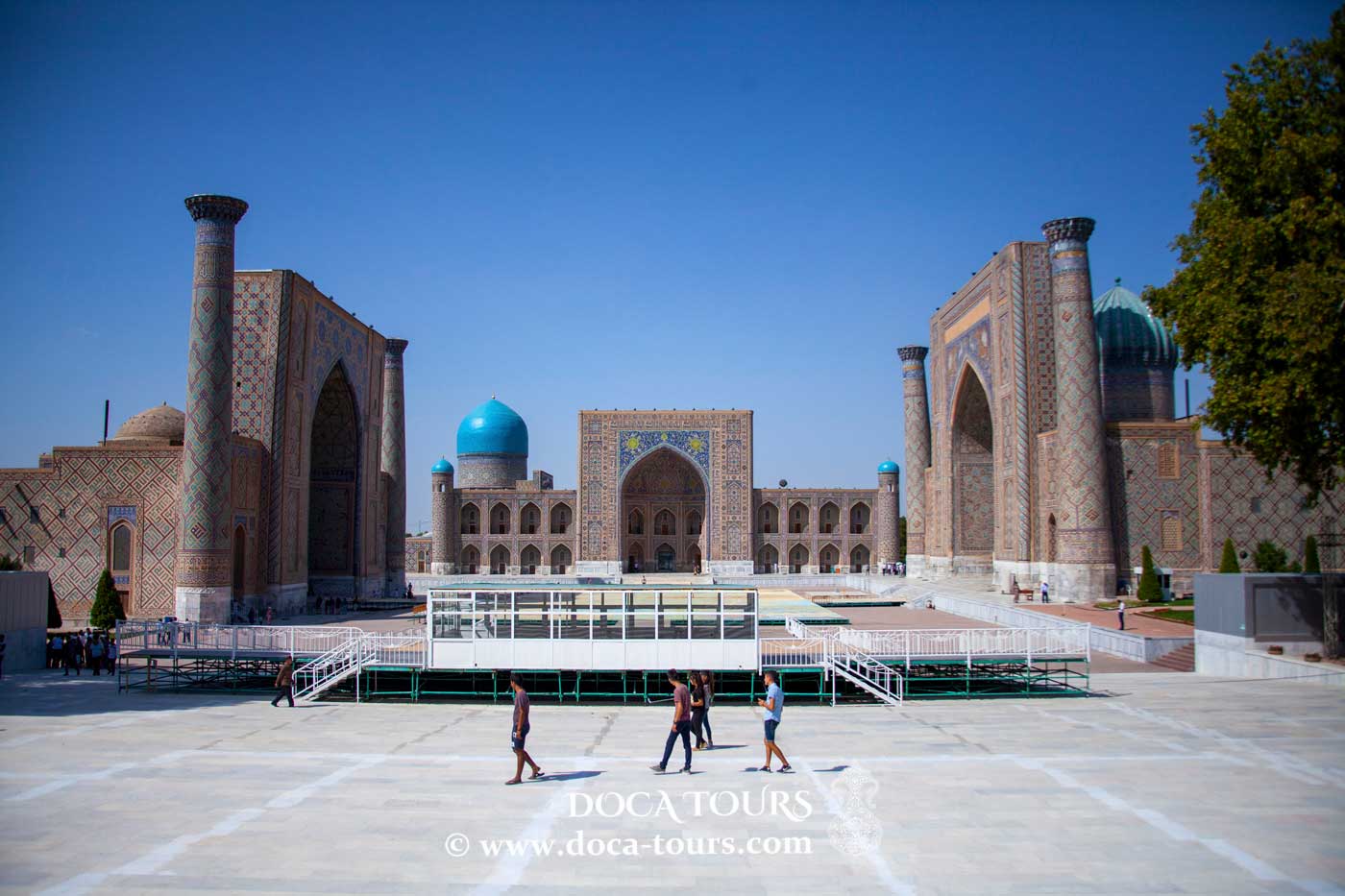
Why does group size matter so much on the Silk Road? Sites like the Registan draw crowds, and a tight group moves faster, hears the guide, and gets into quieter corners. The quality of the experience depends heavily on pacing and timing.
Reading Reviews and Verifying On-the-Ground Support
Reviews are useful, but read them for specifics rather than stars. The detail in a review tells you whether support was real. Look for travellers naming their guide, describing how a problem got solved, or mentioning responsiveness during the trip. Vague five-star praise is easy to manufacture; a story about a driver fixing a flat tyre in the Pamirs is not.
Cross-check reviews across more than one platform. A pattern across independent sources is worth more than a wall of identical praise on a single page. Pay attention to how the operator responds to criticism, since a calm, specific reply signals a company that owns its mistakes.
Verify on-the-ground support before you commit. Ask for a local emergency contact and test it with a question. A responsive operator answers within hours. This is also where first-hand reputation shows: travellers who have taken a full guided trip tend to comment on the small moments that reveal real support.
Why Doca Tours Is a Trusted Silk Road Operator
Doca Tours runs its own guided packages across all five Central Asian republics, which is the single test that separates an operator from a reseller. The company plans the routes, works with licensed local guides, handles the border logistics on multi-country trips, and provides support on the ground rather than passing travellers down a chain of third parties.
That model matches what the data rewards. In a region growing this fast, with longer stays and more adventurous itineraries, control over logistics is what keeps a trip smooth from the Registan in Samarkand to the mountain valleys of Kyrgyzstan. Doca Tours covers both ends of that spectrum, from cultural Silk Road routes to active mountain and nomad adventures.
Your next step is practical: write down the five questions from the checklist above, send them to any operator you are considering, and book the one that answers all five clearly and in writing. That exchange will tell you more than any brochure, and it is the fastest way to find a Silk Road tour operator you can trust.
Frequently asked questions
What does a Silk Road tour operator actually do?
A Silk Road tour operator plans the route, books permits and transport, arranges hotels and guides, and runs support on the ground across countries like Uzbekistan, Kyrgyzstan and Tajikistan. A true operator owns these logistics rather than reselling another firm's package.
Is it cheaper to book directly with a Central Asia operator?
Often yes. International resellers add a margin on top of the local operator's price. Booking with a company that runs its own tours in the region removes that extra layer, and you usually get faster answers to questions.
How do I verify a small-group tour is really small?
Ask for the maximum group size in writing before paying. Genuine small-group operators state a firm cap, often 8 to 16 travellers, and will confirm it in the booking terms rather than keeping it vague.
Do I need a visa to travel the Silk Road in Uzbekistan?
Many nationalities can enter Uzbekistan visa-free or apply through the official state e-visa portal. Check your passport's status on the government site before booking, since rules change and a good operator will confirm current requirements for you.
Can one operator cover multiple Central Asian countries?
Yes. Specialist operators run multi-country Silk Road routes that link Uzbekistan, Kazakhstan, Kyrgyzstan, Tajikistan and Turkmenistan. Ask whether the company handles all border logistics itself or hands you to separate local firms at each crossing.