

























Key takeaways
- Plov is the regional star, and UNESCO inscribed palov culture and tradition on its Representative List of the Intangible Cultural Heritage of Humanity in 2016.
- Lagman, manti, samsa and shashlik cover the noodle, dumpling, pastry and grilled meat corners of almost every menu.
- Bread, known as non, is treated as sacred: never place it upside down, and tear it by hand rather than cutting it.
- Vegetarians can eat well with samsa variations, salads, dairy and bread, but should ask whether rice and soups are cooked in meat fat.
The dishes you cannot leave Central Asia without tasting are plov, lagman, manti, samsa and shashlik, all built around slow-cooked meat, hand-pulled dough and fragrant rice. Central Asian food is the shared table of the old Silk Road, where Persian, Turkic, Russian and nomadic cooking met and stayed. This guide walks through the plates you will meet in Uzbekistan, Kazakhstan, Kyrgyzstan, Tajikistan and Turkmenistan, plus the bread, tea and bazaar customs that shape every meal.
Why Is Plov the Heart of Central Asian Food?
Plov is the dish the region organizes its celebrations around, so much so that UNESCO inscribed "palov culture and tradition" on its Representative List of the Intangible Cultural Heritage of Humanity in 2016. That same UNESCO nomination records 9,756 mahallas, the local neighborhood communities, actively keeping the tradition alive in Uzbekistan (UNESCO, 2016).
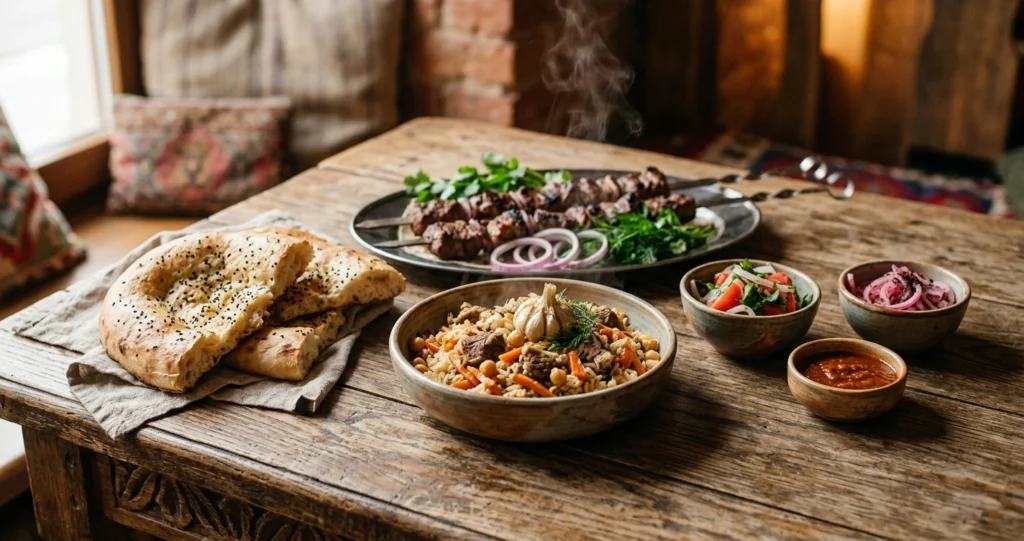
At its core, plov is rice cooked with yellow carrots, onions, meat and cumin in a wide cast-iron kazan. The rice absorbs the fat and stock until each grain stands separate and glossy. That simple frame hides real regional range.
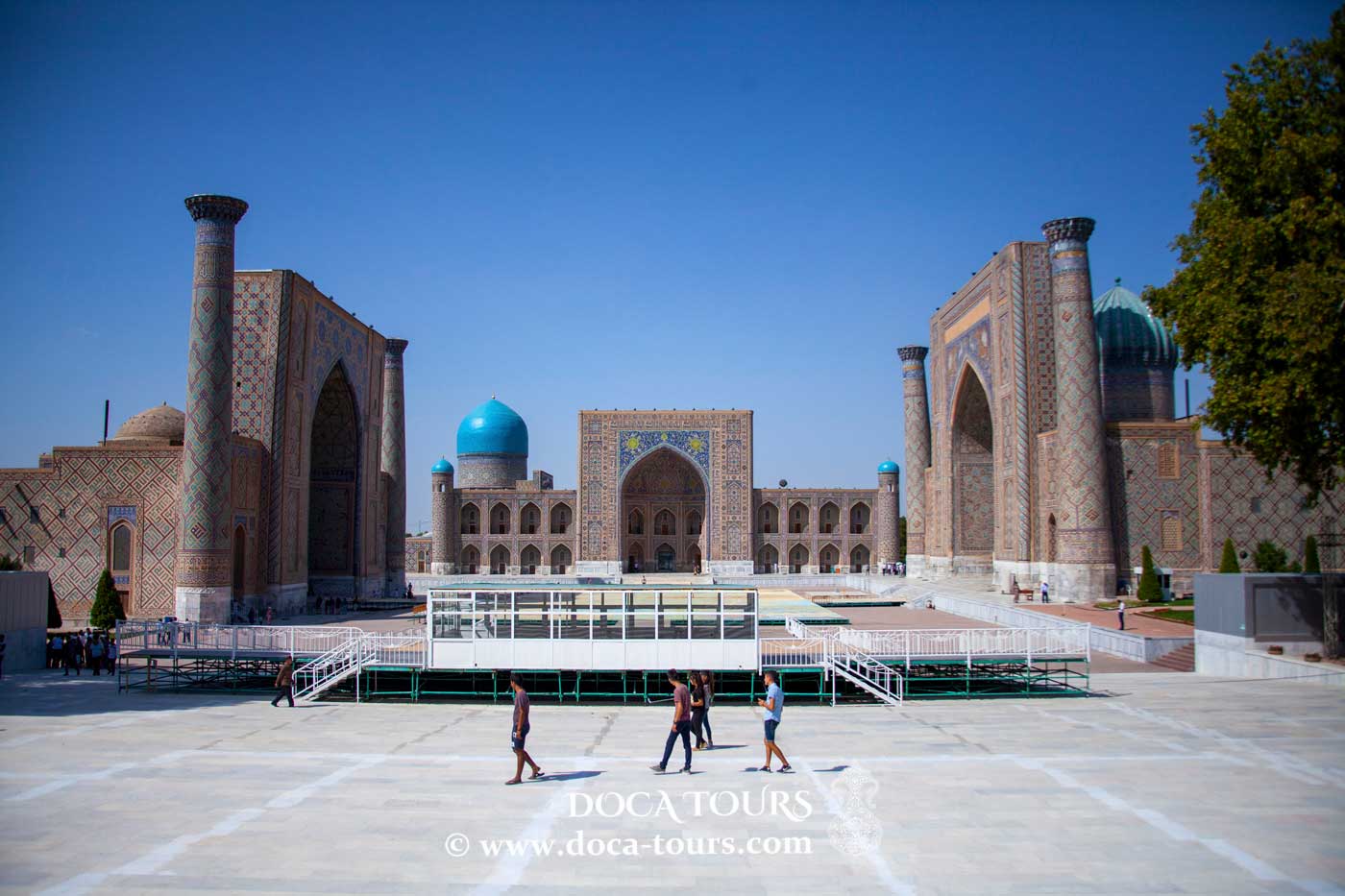
Samarkand plov layers the ingredients and serves them without stirring, so the rice stays pale. Bukhara and Tashkent cooks mix everything together and often add raisins or chickpeas. In Ferghana the rice turns a deep amber from caramelized carrots. Ordering plov in three cities gives you three different dishes under one name.
If you want to taste the Samarkand style at its source, our Samarkand city guide points you toward the neighborhoods where the midday plov sells out by early afternoon.
What Are Lagman, Manti, Samsa and Shashlik?
These four dishes carry the rest of the menu: a noodle soup, a dumpling, a pastry and grilled meat. Together they appear in nearly every teahouse and roadside cafe from Almaty to Dushanbe, and each traces back to a different thread of the Silk Road.
Lagman is hand-pulled wheat noodles in a spiced broth with mutton, peppers and tomatoes. Uyghur cooks brought the technique west, and you will see it served either soupy or fried, depending on the house.
Manti are large steamed dumplings filled with minced lamb, beef or pumpkin, usually topped with yogurt or butter. They are eaten by hand and arrive hot enough to need patience.
Samsa are baked pastries, flaky when made with layered dough or firm when slapped straight onto a tandoor wall. Fillings run from lamb and onion to pumpkin in autumn. Shashlik is skewered, char-grilled meat, the smoke of which drifts across every bazaar at lunchtime.
Shashlik rewards a little attention. Cooks thread cubes of lamb between discs of tail fat, which bastes the meat as it grills, and serve it over raw onion rings with a dusting of ground cumin. Order it with fresh non and a pot of green tea, and you have the standard working lunch across the region. Beyond these four, keep an eye out for shorpa, a clear mutton and vegetable soup, and chuchvara, small boiled dumplings that often share a bowl with lagman.
Why Is Bread Treated as Sacred in Central Asia?
Bread, called non in Uzbek and nan across the region, is the most respected item on the table, and flatbread culture is recognized far beyond local custom. UNESCO inscribed "flatbread making and sharing culture" as a multinational element in 2016, with Kazakhstan and Kyrgyzstan among the submitting countries (UNESCO, 2016). The listing notes that baking flatbread involves at least three people, often family members, each with a role.
Round non is baked against the inside wall of a clay tandoor and stamped in the center with a tool called a chekich, which creates the decorative dotted pattern. The crust comes out crisp and the middle stays soft.
The customs around it matter as much as the baking. Keep bread right side up on the table, tear it with your hands rather than a knife, and never set it on the floor. Hosts often break a loaf to open a meal and welcome guests. In Samarkand, bakers guard their recipes closely, and locals will tell you the city's non keeps for weeks.
How Do Tea Houses, Bazaars and Dining Etiquette Work?
The tea house, or chaikhana, is where meals slow down and conversation happens, and green tea is poured before anything else arrives. Across much of the region the same gesture repeats: the host pours a little tea, tips it back into the pot, and repeats this three times before filling the cup. A partly filled cup is a sign of respect, since it means the host will refill it often and stay attentive.
Bazaars are the other center of food life. Markets like Siab in Samarkand or Chorsu in Tashkent pile up dried apricots, nuts, spices, melons and fresh non under domed roofs. Vendors expect you to taste before buying, and polite bargaining is normal.
A few table habits help. Remove your shoes if you sit on a raised platform called a tapchan. Accept tea with your right hand. Wait for the eldest person to begin. Traveling with a guide from Doca Tours also means someone can translate a menu, read a bazaar stall and order the regional plov that outsiders usually miss.
What Are the Vegetarian Options and Dietary Tips?
Vegetarians can eat genuinely well in Central Asia, though the cuisine is built around meat, so a little planning helps. Bread, fresh and pickled salads, dairy such as yogurt and the dried curd balls called kurt, plus pumpkin samsa and vegetable lagman all appear widely.
The main thing to check is cooking fat. Plov, many soups and even some rice sides are often cooked with mutton fat or stock, so it is worth asking how a dish is prepared before ordering. The phrase for "without meat" is useful to learn in Russian or the local language.
Autumn brings the easiest season for meat-free eating, when pumpkin fillings and fresh produce flood the bazaars. Fruit is excellent year round, from Ferghana melons to mountain apricots. Travelers with allergies should note that nuts and sesame turn up often in sweets and breads.
Where to Taste It First
Start with plov at a busy lunchtime spot where locals queue, since turnover means the kazan is fresh. From there, work outward to lagman, a plate of manti and whatever samsa is coming out of the tandoor that day. Let the bazaars and tea houses set your pace rather than a restaurant checklist. If you would rather have the regional variations, market days and etiquette handled for you, browse the Central Asia food-and-culture routes offered by Doca Tours and build the trip around the table.
Frequently asked questions
What is the national dish of Central Asia?
Plov, a rice dish cooked with carrots, onions, meat and spices, is the most celebrated. UNESCO added palov culture and tradition to its heritage list in 2016. Every region prepares its own version.
Is Central Asian food spicy?
Generally no. The cuisine leans on cumin, coriander, dill and black pepper rather than chili heat. Dishes are savory and aromatic, so travelers who dislike spicy food can eat comfortably across the region.
Can vegetarians eat well in Central Asia?
Yes, with some planning. Bread, salads, dairy, pumpkin samsa and vegetable lagman are common. Because many rice dishes and soups use meat fat, it helps to ask how a dish is cooked before ordering.
What should I know about bread etiquette?
Bread, called non, is sacred. Tear it by hand instead of cutting it, keep it right side up on the table, and avoid dropping it on the floor. Hosts often break bread to welcome guests.