
























Video: https://www.youtube.com/watch?v=d0eZNTTRHR4
If you ask a resident of any country in the former Soviet Union: what do you associate Uzbeks with? Probably at least five out of ten would say plov. And maybe even more.
Indeed, plov is more than a national dish of the Uzbeks. Plov is an integral part of Uzbek identity, traditions and everyday life. From time immemorial, plov has been a compulsory part of any important event in the life of the Uzbeks. Without plov, until now, it is impossible to imagine the Uzbek feast.
Whether it is beshik tuy, sunnat tuy, wedding or funeral, plov is a compulsory part of Uzbek life and at different phases of life. It is inconceivable to imagine taking plov away from Uzbeks. It is the same as taking away their soul!
Not without reason, several years ago UNESCO recognized plov recipe as intangible heritage of humanity. And the record of almost 8 tons of plov cooked in Tashkent by 50 cooks has not been broken yet. The record was fixed by representatives of the Guinness Book of Records, who closely observed the cooking process.
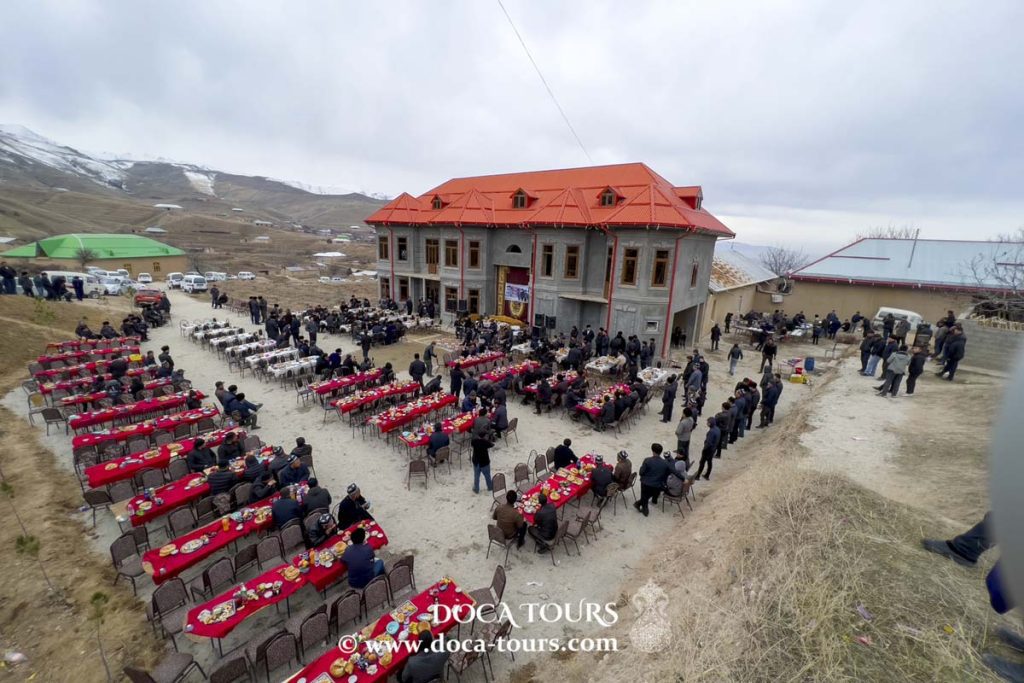
In this issue, I would like to share my impressions of this morning’s plov, to which I was invited. This family feast was held in the deep kishlak of Urgut, one of the most densely populated areas of Samarkand. Urgut is located in a mountainous area, about 50 km from Samarkand.
The celebration was organized on two occasions: the wedding of my acquaintance and at the same time the Sunnat Tuy of his little nephew. Sunnat tuy is a celebration of the circumcision of boys, which is one of the most important events for Uzbeks. By the way, we have a separate video dedicated to the event on our channel.
In Uzbek villages, they often combine several events, because families are very large, there are many guests, and it is very expensive to arrange festivities for each occasion separately. According to Uzbek traditions, all acquaintances, relatives, neighbors, colleagues, etc. should be invited to such important family celebrations. This custom has been observed and honored here for centuries.
So, first I would like to name some figures regarding the event where I was invited, so that you could imagine the scale of the Uzbek family celebrations.
For the morning pilaf 1300 people were invited. Most of them were men who came from 7:00 am to noon, and from 12:00 pm to 4:00 pm women came.
A total of seven cauldrons of plov were prepared. One cauldron of plov consists of:
– 20 liters of sunflower oil, 10 liters of zigir oil (a mixture of flax, cotton, sesame and melon seed oils).
– 30 kg of beef
– 60 kg of carrots
– 60 kg of rice
– Chickpeas, zira, salt, water.
The morning plov was cooked right next to the home of the hosts of the party. As we have already mentioned in a separate video about morning plov – Nahor Osh, this is done in order to somehow reduce the load with the number of guests. Usually older people come to the morning plov, and in the evening young people and the closest relatives and family friends are invited to the main celebration. By the way, in the evening of the same day another 1000 people were invited to the restaurant, but I was not there, and if you want a detailed look at the traditional Uzbek wedding – follow this link.
Let’s go back to our plov. I will not go into detail about the recipe and the technology of cooking plov because there are hundreds of such videos in YouTube and other resources.
As we can see, here the plov is traditionally cooked on firewood. The firewood gives the plov a special flavor that you can’t get at home.
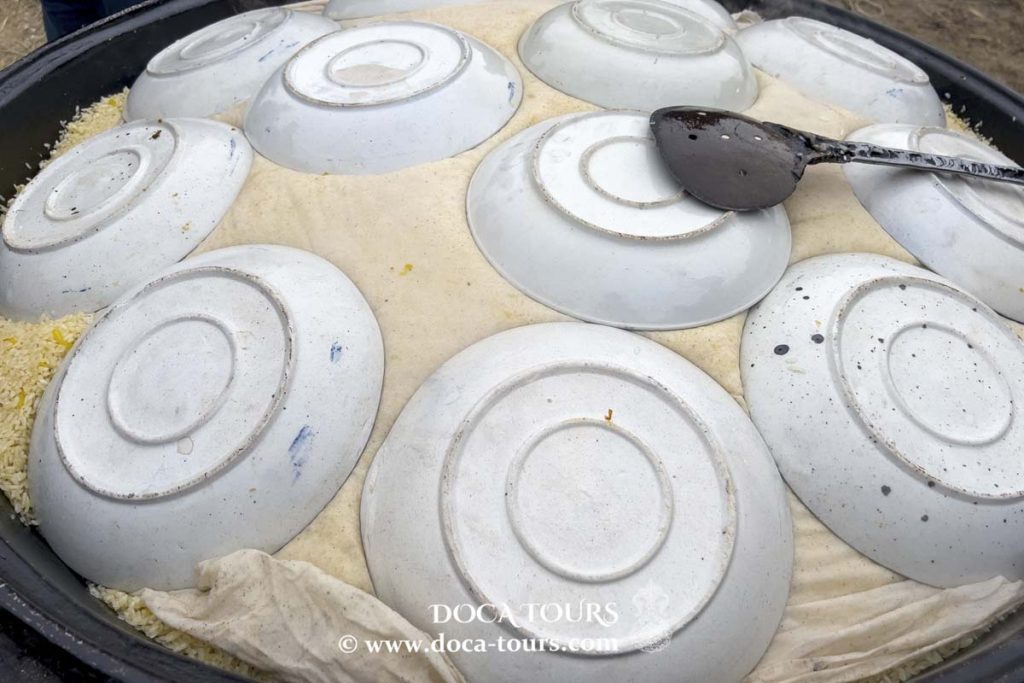
The cauldron is usually cast-iron with a deep round bottom. Each mahalla has at least one large common cauldron, which can be rented at any time for free by the inhabitants of this mahalla.
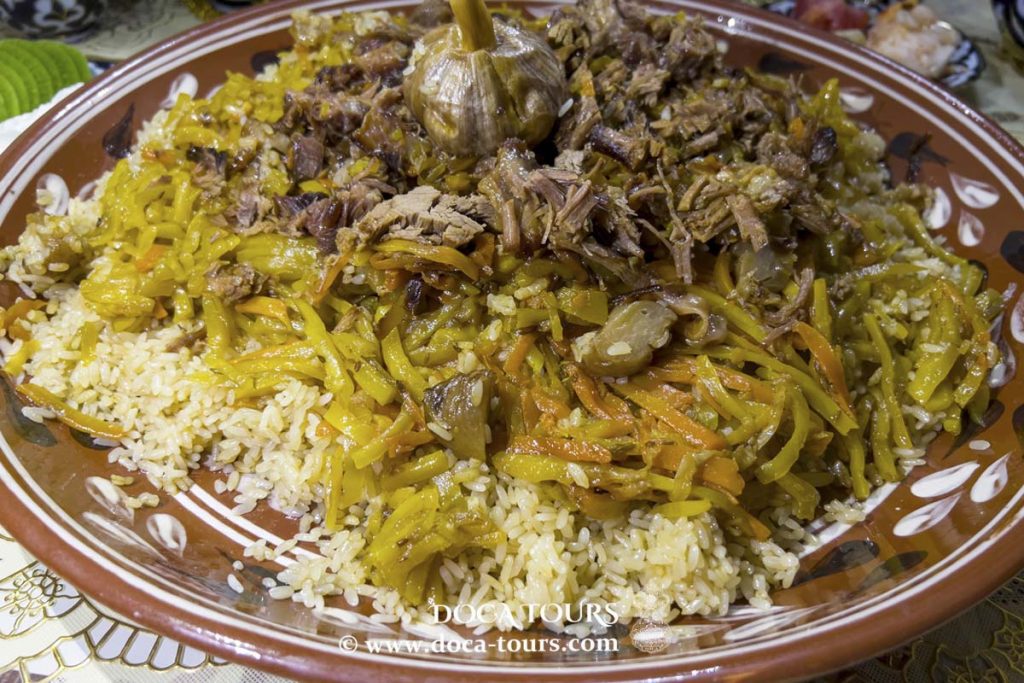
The peculiarity of Samarkand plov is that it is prepared in layers. Ingredients: meat, carrots and rice must not be mixed until the end of cooking. Such technology is typical only for Samarkand region.
As we can see, first large pieces of beef are thrown into the heated oil. They are large so that the meat does not burn during cooking – it stays on the bottom of the cauldron for more than an hour. That is why it turns out so tender after cooking.
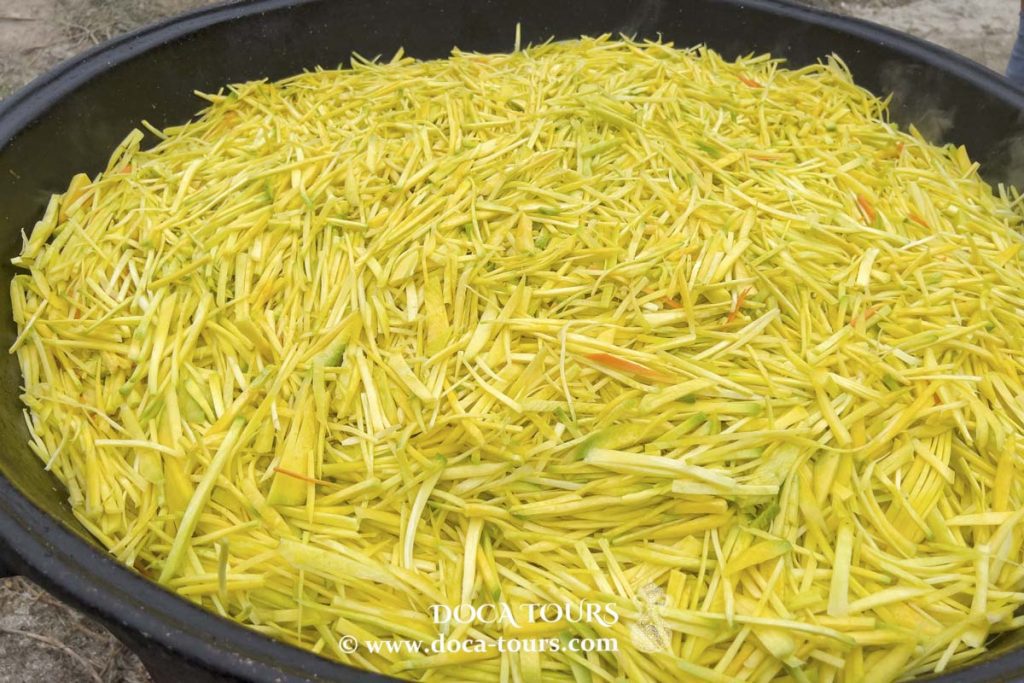
Pre-cut carrots are piled on top of the fried meat. By the way, cutting carrots is also a separate event, where dozens of men come together the day before the holiday and everyone chops carrots. Samarkand usually uses yellow carrots, they turn out juicy and not too sweet like red ones. They also put chickpeas and cumin. Zira or cumin give a special taste to the whole dish. It is difficult to imagine Samarkand plov without it.
Finally, rice is added: it is steeped in warm, salty water beforehand. Uzbek rice differs from other types of rice because it does not boil quickly. Therefore, in the Uzbek plov you can see every richen.
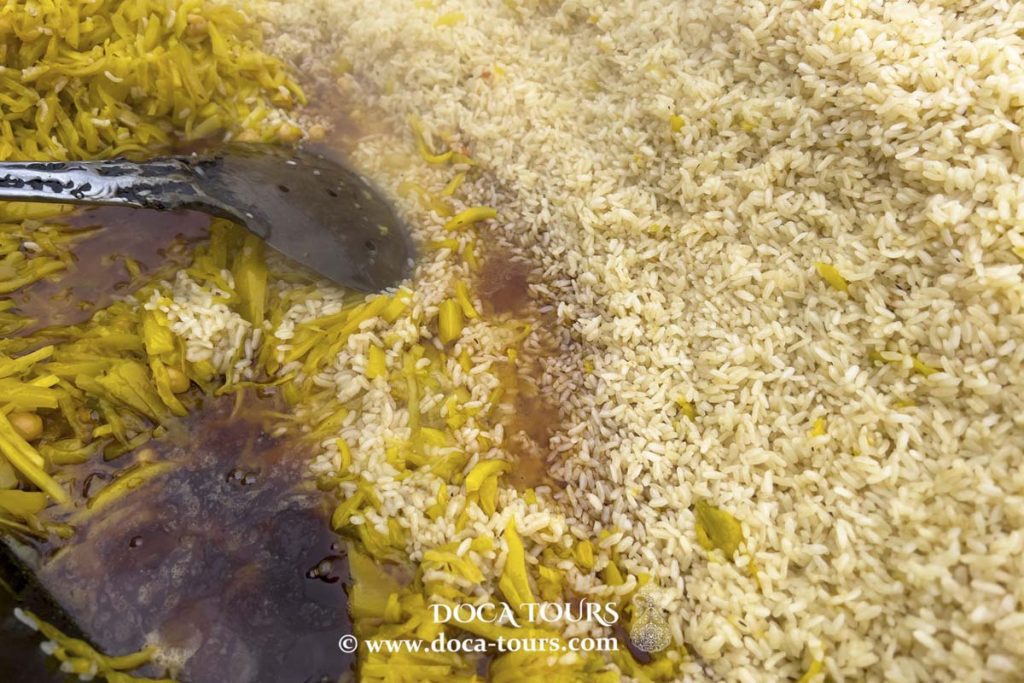
For those who are still unfamiliar with the technology of cooking plov, I would like to note that in the plov pour a lot of water to the bottom of the cauldron is not burned, and boiled rice well. But the trick of plov is that in the end of the dish does not remain a single drop of water. All the water evaporates. The meat should be soft, the carrots sweet, the rice cooked, but not overcooked! If there is such a combination in plov, it means it was a success!
Of course, when such big events are organized where hundreds of guests come together, professional cooks take over. They are cooks who specialize in plov. This profession is usually passed down from generation to generation. The whole process is thought out in detail. You will never see a cook who panics or makes any sudden movements. They have everything well-organized and everything runs smoothly. But the responsibility is enormous: you have to feed 1300 people in a couple of hours!
As we see, the plov is ready. The cook serves the plov in the same way as he cooked it. That is, rice is laid on the plate first, then comes carrot and spices and meat is put on top.
I can’t describe this extraordinary taste of plov in words! You’d better come to Uzbekistan and try this royal dish yourself!
Thank you very much for your attention.
Subscribe to the channel and don’t forget to like our videos.
#doca_tours #docatours_russia_ #centralasia #discoverorientalcentralasia #oybekostanov @mr.ostanov_photographer #tours #travel #travelphotography #photography #travelgram #instagood #instatravel #wanderlust #adventure #trip #Uzbekcuisine #Uzbekistan #plov #bukhara #Khiva #samarkand