Termez, the administrative center of Uzbekistan's Surxondaryo Region, is a district-level city with a population of 182,800 as of 2021. This ancient city is renowned for its association with Alexander the Great's Alexandria on the Oxus, its role as a hub of early Buddhism, a site for Islamic pilgrimage, and a strategic base for Soviet military operations in Afghanistan, with access through the nearby Hairatan border crossing.
The city's name has several proposed origins. Some trace it to the Greek word Thermos (Θέρμος), meaning "hot," linking it to Alexander the Great's era. Others suggest it derives from the Sanskrit term Tarmato (तर्मतो), meaning "on the riverbank."
One of the oldest cities in Central Asia, Old Termez, was founded before the 3rd century BCE near the Amu Darya River. Historical records, including the Shahnameh, hint at its existence during the mythological Zoroastrian Kayanian dynasty.
In 329 BCE, Alexander the Great conquered the region of Sogdia, with Termez likely serving as the site of Alexandria on the Oxus. After Seleucid rule, Termez became part of the Greco-Bactrian Kingdom, where Greek influence persisted until the Kushan Empire, when Bactrian replaced Greek as the administrative language.
During this era, Termez, known as Ta-li-mi (迭里迷) in Chinese sources, emerged as a prominent center of Mahāsāṃghika Buddhism. Later, under the Sassanid Empire in the 3rd century CE, elements of religious syncretism appeared, blending Zoroastrianism and Buddhism, as seen in Buddhist monasteries with fire altars and inscriptions referencing "Buddha-Mazda."
In the 7th century, the Buddhist monk Xuanzang visited Termez, describing its religious and cultural significance. However, as the Umayyad Caliphate expanded, Termez became a frontier city opposite the Islamic empire.

In 676, Termez fell to the Umayyad Caliphate. Under the Abbasid and Samanid Empires, it flourished as a religious and scholarly center, producing luminaries like the hadith scholar al-Tirmidhi and Sufi master al-Hakim al-Tirmidhi.
From the 11th to the 13th centuries, the city changed hands between the Ghaznavids, Seljuks, Karakhanids, and Khorezmshahs. In 1220, Genghis Khan's forces destroyed Termez after a brutal two-day siege, massacring its inhabitants.
By the early 14th century, the city was rebuilt. The traveler Ibn Battuta described it as a thriving town with fine architecture, bustling markets, and unique customs, such as using milk for hair washing in baths.
During the Timurid era, Termez gained prominence again, supported by the Tirmidh Sayyids, a local religious aristocracy. It remained under Timurid rule until the 16th century, when it became part of the Emirate of Bukhara.
By the late 18th century, the city was abandoned, with its ruins located near the villages of Salavat and Pattakesar.
In 1887, the Russian Empire established a brown water navy on the Amu Darya River, marking the beginning of increased Russian influence in the region. By December 1894, the Amu Darya Fleet was bolstered by the arrival of the 31st Amu Darya Border Brigade, followed by reinforcements, including the 4th Orenburg Cossack Regiment, the 13th Turkestan Special Battalion, and the 2nd Orenburg Cossack Battery.
The Emirate of Bukhara gradually ceded territory to the Russian Empire. On January 27, 1900, over 9,000 acres of land were handed over to Russia, enabling the implementation of a resettlement program for Russian settlers.
After the Russian Revolution, Pattakesar became part of the Bukharan People's Soviet Republic and later the Uzbek Soviet Socialist Republic. In 1928, it was renamed Termez, reclaiming its ancient name, and gained town status in 1929. Under Soviet rule, Termez grew into a significant industrial and military hub. A pedagogical institute and a theater were established, and industrial development surged during World War II as factories were relocated from western regions affected by Nazi attacks.
The city hosted the 108th Motor Rifle Division for many years. During the Soviet–Afghan War (1979–1989), Termez became a critical military base, with over 100,000 troops stationed there. Infrastructure developments included a military airfield and the Afghanistan–Uzbekistan Friendship Bridge. In 1989, Soviet forces completed their withdrawal from Afghanistan through the Termez bridge, marking the war's conclusion.
In 2001, Germany established a base in Termez to support ISAF operations in Afghanistan. The base served as a logistics hub for German and Dutch forces but was closed in 2015.
During the 2021 Taliban offensive and the Fall of Kabul, the Biden administration sought Uzbekistan’s assistance in temporarily housing Afghan evacuees. A refugee camp was constructed in Termez, and 494 Afghans were evacuated via Termez Airport. In August 2021, Russia and Uzbekistan conducted joint military exercises near the city.
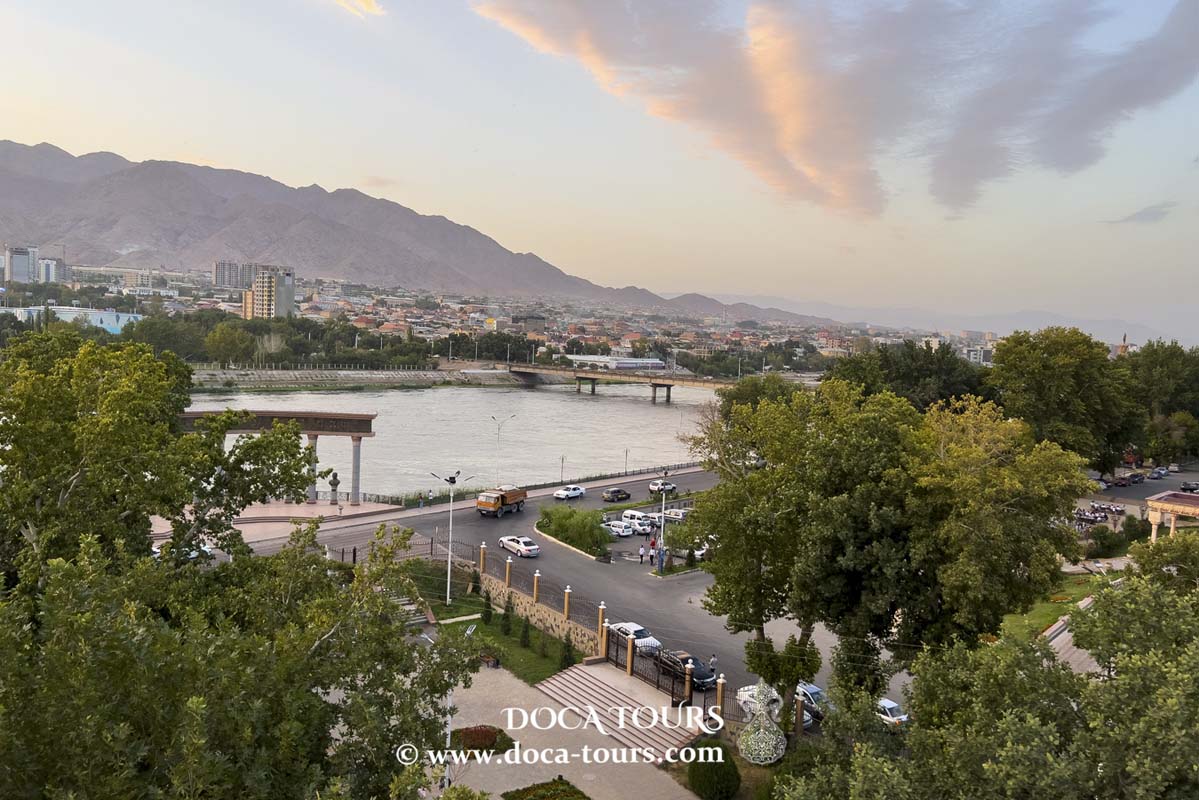
Termez serves as a vital southern gateway for Uzbekistan. The Amu Darya River, which separates Uzbekistan from Afghanistan, is spanned by the Afghanistan–Uzbekistan Friendship Bridge, connecting Termez to Hairatan in Afghanistan. The city is also served by Termez Airport, with flights to Tashkent, Moscow, and other destinations.
Termez is a major rail hub, connected to other Uzbek cities and Mazar-i-Sharif in Afghanistan. Daily trains operate between Tashkent and Termez, while international freight trains link Termez to Afghanistan. Plans are underway to extend the railway network to Peshawar as part of the China–Pakistan Economic Corridor and the Belt and Road Initiative.
Public transportation within the city includes buses, marshrutkas, and taxi services. The Termez river port, located in the southeastern part of the city, further enhances its connectivity.
The city’s strategic location and transport infrastructure make it a crucial node for regional trade and transit, facilitating movement across Central and South Asia.
As of 2021, Termez had an estimated population of 182,800, primarily comprising Uzbeks and Tajiks, with an indeterminate number of Lyuli residing in the city. According to a 2014 World Bank report, the population of Termez grew by 50% between 1990 and 2014. The report categorized Termez as a "Type 3" city, indicating a "Growing Population & Declining Economic Activity," although this assessment predates the economic reforms initiated by President Shavkat Mirziyoyev.
Termez is home to several higher education institutions. In 1992, the Pedagogical Institute was elevated to Termez State University. Additional institutions include the Termez Branch of Tashkent Medical Academy, Termez Technical University, and the Termez Branch of Tashkent State Agrarian University. The city also hosts 26 secondary schools, six of which offer instruction in Russian. A presidential school was inaugurated in 2021, further enhancing educational opportunities.
Termez experiences a cool arid climate (Köppen BWk), bordering on a hot arid climate (BWh). Summers are long and intensely hot, while winters are short and cool.
Termez features the Surkhon Termez football club, which plays at Alpomish Stadium. The city also boasts a kurash training facility and a hippodrome for kupkari competitions. In May 2022, Termez hosted the Uzbekistan kurash championship for juniors born in 2007–2008.
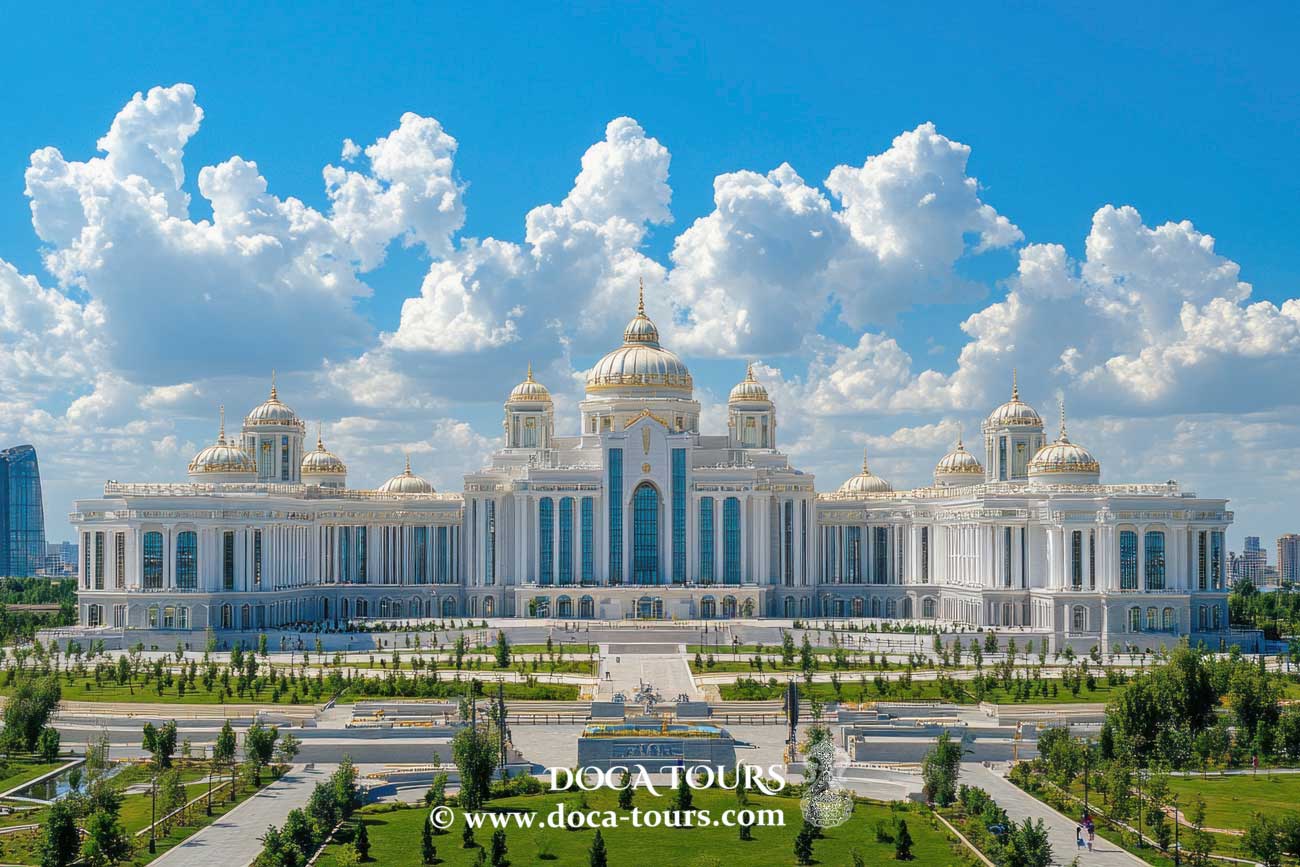
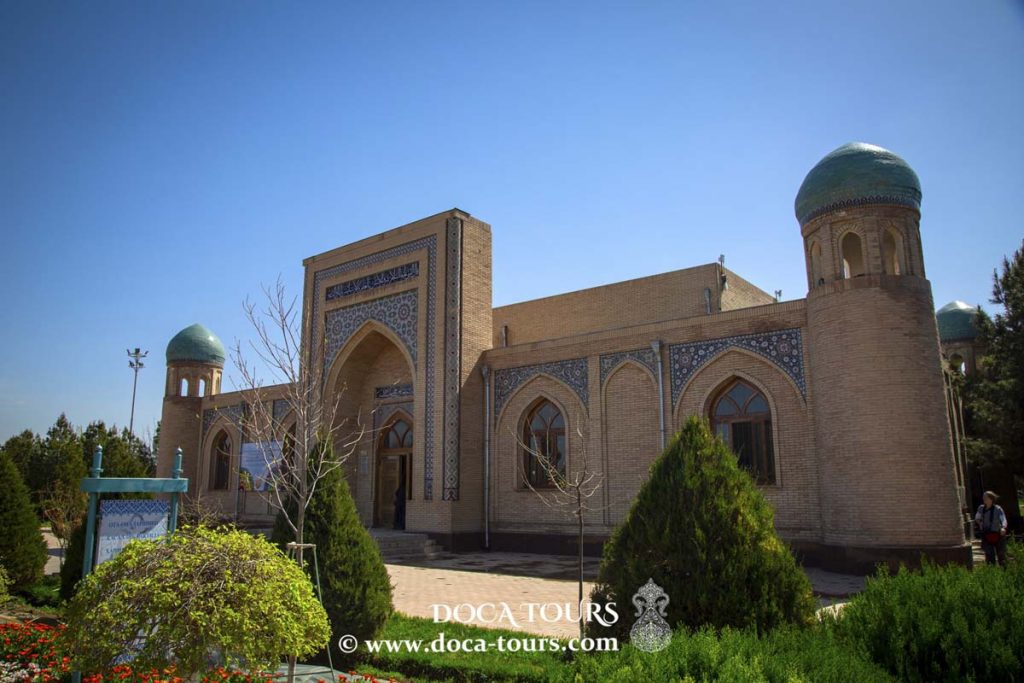
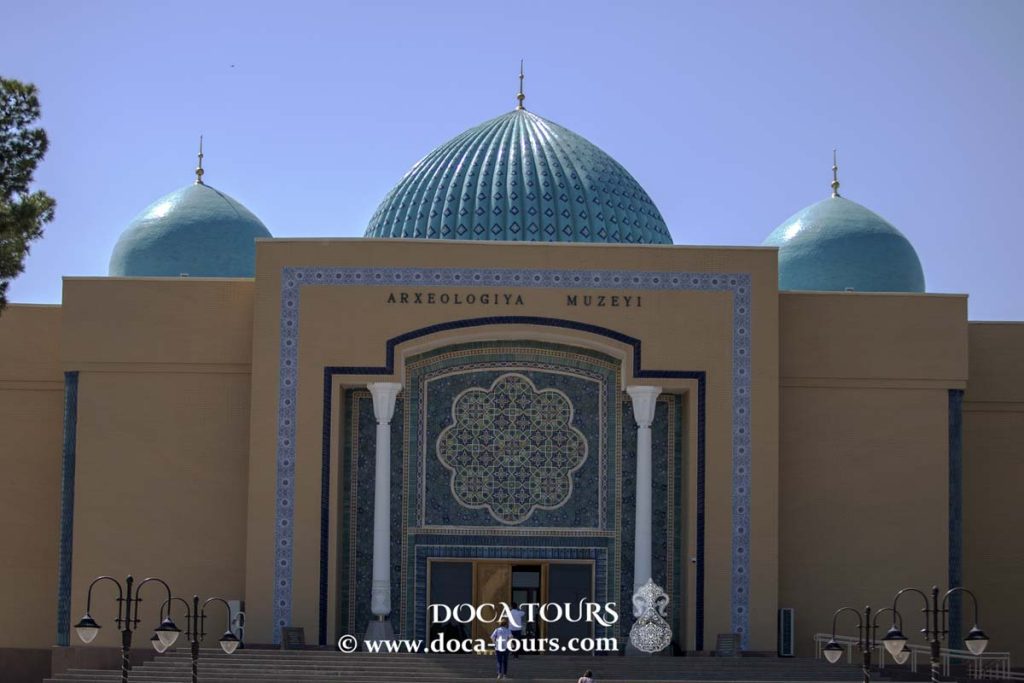
Opened in 2002 for Termez's 2,500th anniversary, this museum displays around 27,000 artifacts, including items from the Graeco-Bactrian and Kushan periods, Buddhist relics, and ancient coins. The turquoise-domed structure is one of Uzbekistan's premier museums.
Dating to the 9th century, this mud-brick structure was likely a caravanserai or summer palace. Its ruins include walls up to two stories high, with one section restored to illustrate its original grandeur.
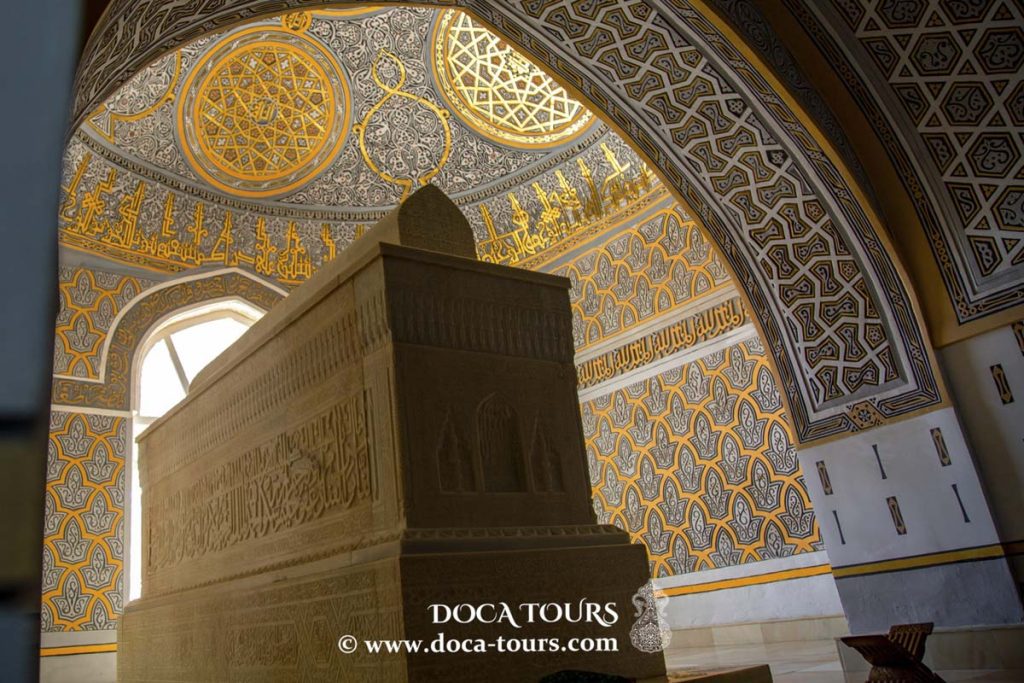
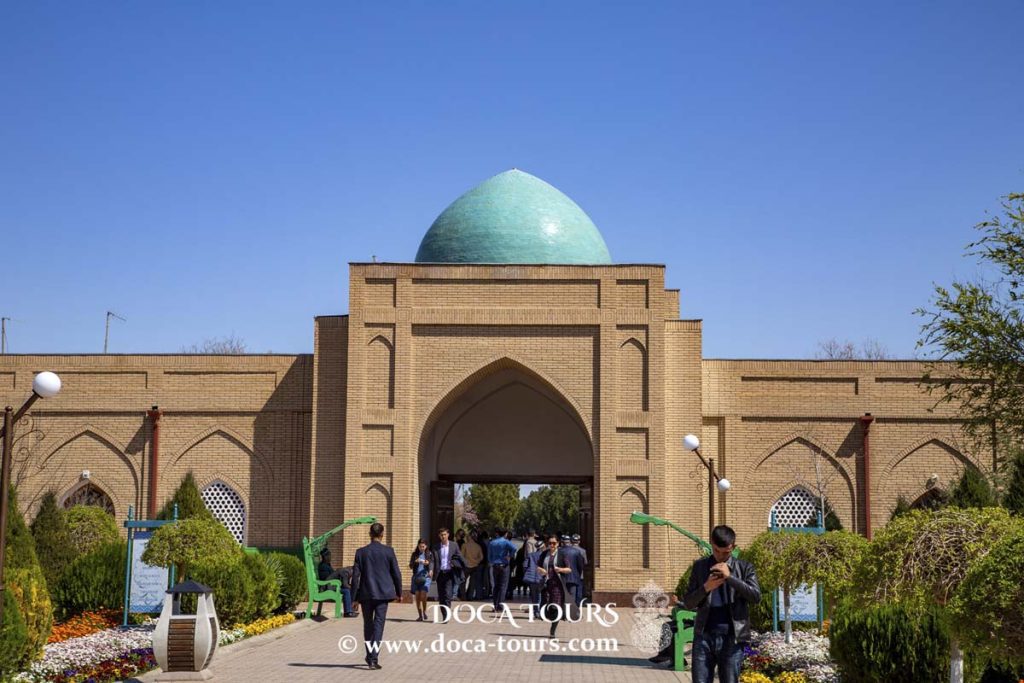
This 10th–15th-century site centers on the mausoleum of Al Hakim At-Termizi, a revered Sufi saint. Expanded during Shah Rukh’s reign, it remains a significant spiritual and historical site.
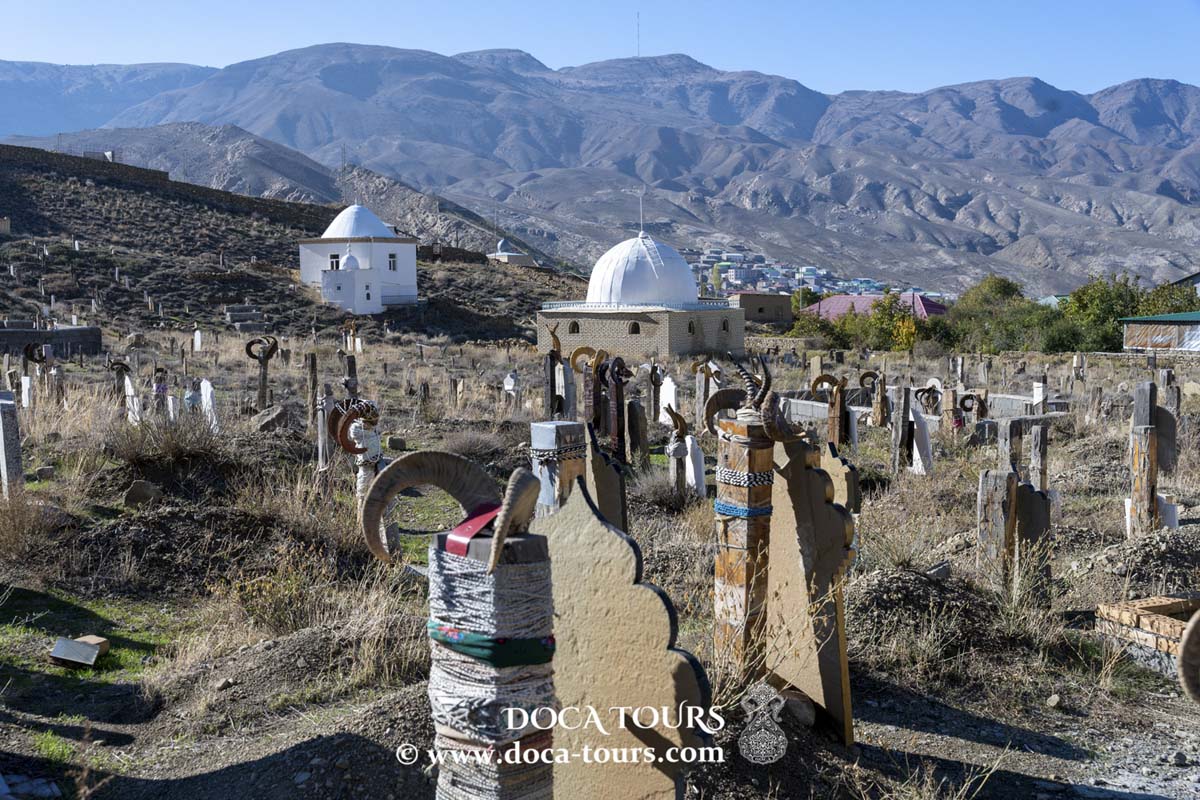
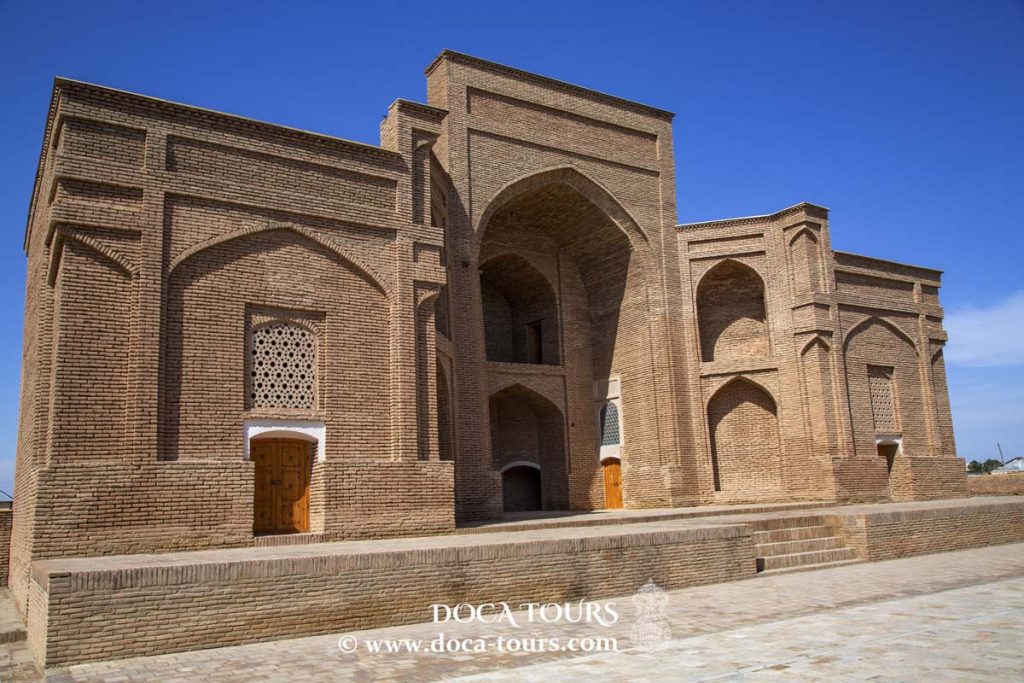
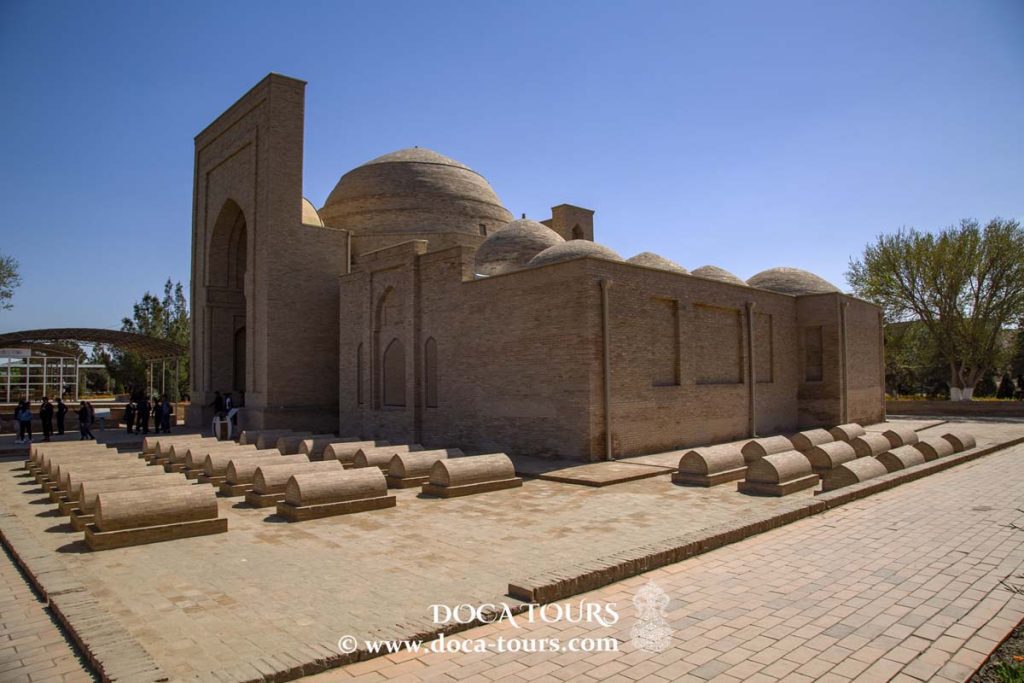
This necropolis of the Termez Sayyids was developed between the 10th and 17th centuries. The unique mortar used in its construction included clay, egg yolk, camel blood, and milk. Pre-Islamic symbols, such as the Zoroastrian star motif, are visible on some structures.
Built in the 16th century by Abdullah Khan II of Bukhara, this resting place for Sufi dervishes features architectural ties to Afghan designs, particularly in its vaulted ceilings.
A Buddhist temple complex founded in the 2nd century AD, Kara Tepe includes rock-cut cave cells, stupas, and brick structures. Situated near the Uzbek–Afghan border, visiting requires a permit.
This Buddhist monastery, dating from the 1st–3rd centuries AD, features inscriptions in multiple ancient scripts and frescoes displayed at the State Museum of History of Uzbekistan.
Standing at 16 meters, this 1st–2nd-century AD brick stupa is one of Uzbekistan’s oldest surviving Buddhist structures.
Identified as Alexandria on the Oxus, this ancient city built by Alexander the Great had a harbor, lighthouse, citadel, and temples. Archaeological excavations are ongoing.
Termizi Memorial Complex and Hakim Termezi Mausoleum
This site, dating from the 9th–15th centuries, houses the tomb of Abu Abdullah Muhammad Hakim Termezi, an influential Islamic scholar and Sufi figure. It is considered sacred by Muslims and attracts many visitors.