KUNYA URGENCH
- Geographical coordinates: 42°19′ N. lat. 59°09′ E
- Former names: Gurganj, Urgench
- Elevation: 273 m
- Official language: Turkmen
- Popular languages: Russian, Uzbek etc.
- Nationality: Turkmen, Karakalpak, etc.
- Population: 36 754 (2022)
- Time Zone: UTC+5
- Telephone Code: +993 347
- Postal Codes: 746350
- Vehicle Registration Code: DZ
Köneürgench: Ancient Capital of Khwarezm
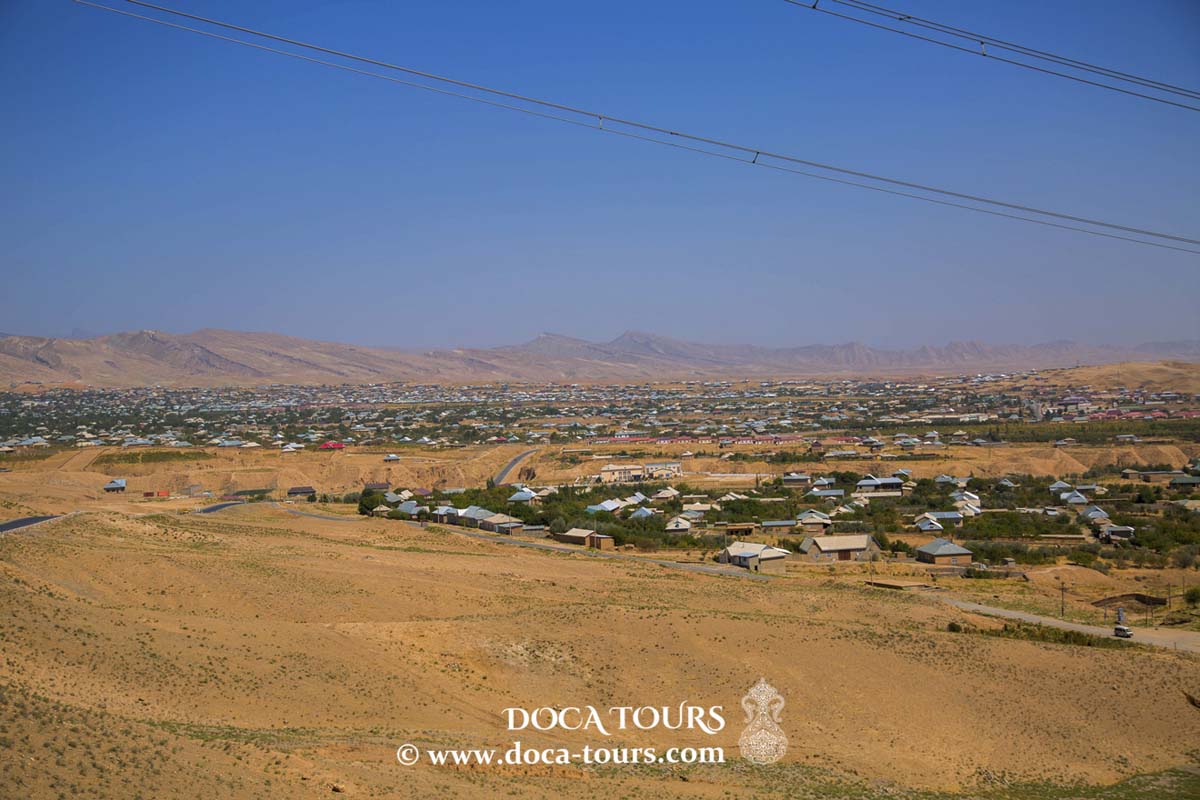
Köneürgench (formerly known as Kunya-Urgench, Urgench, and Gurganj) is the administrative center of the Köneürgench District in the Dashoguz Province of Turkmenistan. Recognized as one of the oldest cities in Turkmenistan and Central Asia, its name translates from Turkmen as "Old Urgench." The city is situated approximately 480 kilometers north of Ashgabat, the capital of Turkmenistan, in the region of the ancient Amu Darya delta near Sarykamysh.

Historical Significance
Between the 11th and 13th centuries, Köneürgench served as the capital of the Khwarezmian Empire, ruled by the Oghuz-Turkmen dynasty of the Anushteginids. Until the 16th century, it remained the center of the Khwarezm region. Before the Mongol invasion in the 13th century, the city—then known as Gurganj—was one of the wealthiest and largest cities in the Islamic world. During the 14th century, it was a major hub of Islamic scholarship but suffered repeated attacks and partial destruction by the armies of Tamerlane.
Early History
The first mention of Köneürgench appears in the Chinese chronicle Records of the Grand Historian from the 3rd–1st centuries BCE, under the name Yue-gan. Later, in the 7th century, Chinese sources described it as a Turkic domain with "oxen and wagons." Around this time, other cities in the Amu Darya delta, such as Kunya-Uaz, Zamakhshar, and Shakhsenem, flourished in what is now northern Turkmenistan.
The exact founding date of Köneürgench is unknown, but its oldest fortress, Kyrk Molla ("Forty Mullahs"), dates back to the 5th–2nd centuries BCE. The city is also mentioned in the Avesta under the name Urva (or Urga). From 305 to 995, Köneürgench (then Gurganj) was part of the Khwarezmian state ruled by the Afrighid dynasty. By the mid-8th century, it fell under Arab control and acquired the name Gurganj.
Köneürgench Under the Mamunids
Under the Mamunid dynasty, Köneürgench became the capital of the northern Khwarezmian Emirate. During the Samanid Empire, it was second in importance only to Bukhara. In 995, Emir Mamun ibn Muhammad defeated southern Khwarezm and unified the region under his rule. Köneürgench became a center of learning with the establishment of the Mamun Academy, which attracted renowned scholars like Avicenna and al-Biruni. Avicenna’s foundational works, The Canon of Medicine and The Book of Healing, were partially written here.
As part of the Great Silk Road, Köneürgench was a key trading hub and is now one of Turkmenistan's most important archaeological sites. The area is home to numerous well-preserved architectural monuments from the 11th to 16th centuries, including mosques, caravanserai gates, fortresses, mausoleums, and minarets.
In 1017, Khwarezm was conquered by Mahmud of Ghazni, marking another turning point in the city’s history.
Capital of the Khwarezmian Empire
With the rise of the Oghuz-Turkmen Anushteginid dynasty, Köneürgench regained its status as the capital of a vast empire spanning Central Asia and the Middle East. According to Soviet Turkologist E. Nashirvanov, the Khwarezmian state, led by the Oghuz-Turkmen, aimed to unite the surrounding Turkic tribes under its leadership. The 12th and early 13th centuries were a golden age for Köneürgench, making it one of the most prominent cities in the region.
In 1219, Arab geographer Yaqut al-Hamawi described Gurganj as a city unparalleled in size, wealth, and beauty. He noted its bustling markets and vibrant trade. Similarly, Al-Qazwini praised its charm, calling it a heavenly city surrounded by angelic protection. The city was known for its skilled artisans, particularly blacksmiths and woodworkers, who crafted exquisite objects from ivory and ebony. Workshops also produced high-quality natural silk.
The Sufi saint Najm al-Din Kubra (1145–1221) founded the Kubraviya Sufi order in Köneürgench, training notable mystics like Najm al-Din Daya Razi, Sa’d al-Din Hamuya, and Sayf al-Din Bakharzi. During the Mongol invasion in 1221, Najm al-Din Kubra defended the city with his disciples. His tomb remains a significant religious site. Köneürgench also housed a vast library established by the scholar Shahab al-Din Khivaki.
The Mongol Conquest
In 1221, Köneürgench, then called the "heart of Islam," was destroyed by the Mongols. A 50,000-strong army led by Jochi, Chagatai, and Ögedei besieged the city for seven months before capturing it. Historical accounts by Rashid al-Din and Juvayni detail the brutal massacre and destruction. Residents fortified streets and homes, engaging in fierce combat, but the Mongols eventually set the city ablaze. Survivors were either enslaved or executed. Craftsmen and young women were taken captive, while others were drowned when the Amu Darya's waters flooded the city after the Mongols breached local dams.
Following its destruction, Gurganj became part of Jochi's Ulus and was renamed Urgench by the Turks and Mongols.
Under the Golden Horde
Köneürgench rose to prominence again in the 14th century as the Mongol khanates fragmented into independent states. Its strategic location along major trade routes connecting Eastern Europe to Asia facilitated its economic revival. By the 1320s, it enjoyed near autonomy under the rule of the local Sufi dynasty and the Golden Horde’s governor, Kutlug-Timur. This period saw a surge in trade, craftsmanship, and architecture, erasing many traces of the Mongol devastation.
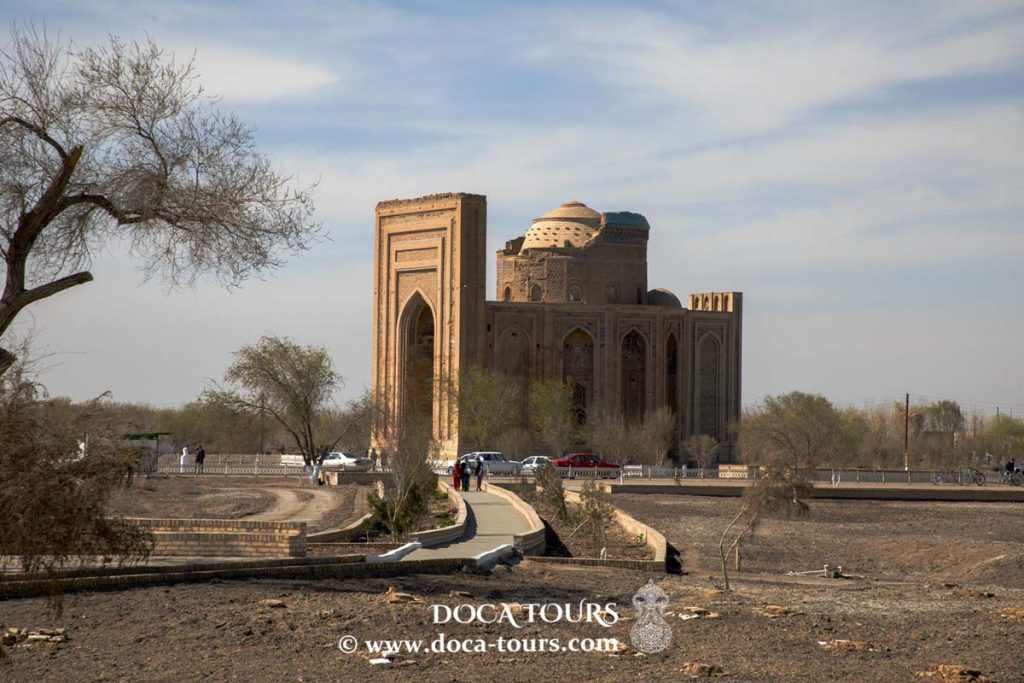
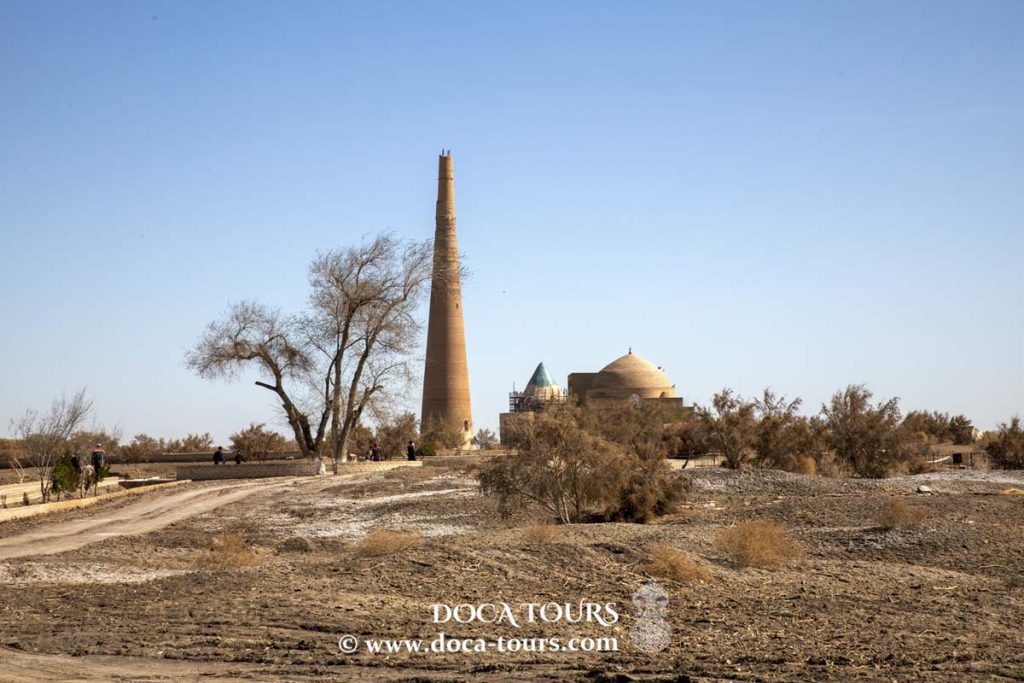
The city’s landmarks from this era include the Kutlug-Timur Minaret and the Mausoleum of Tyurabek-Khanym, both architectural masterpieces. According to the traveler Ibn Battuta, Köneürgench was one of the largest and most beautiful Turkic cities, boasting vibrant bazaars, wide streets, a hospital, and a magnificent mosque built by Tyurabek-Khanym.
Köneürgench remains a testament to Turkmenistan's rich cultural and historical heritage, offering valuable insights into the ancient civilizations of Central Asia.
Capital of Khwarezm Under the Qongrat-Sufi and Shaybanid Dynasties
In 1359, Köneürgench gained independence within the Golden Horde and was governed by the Qongrat-Sufi dynasty. From 1359 to 1388, the city served as the capital of Khwarezm under the rule of the Qongrat-Sufi family. During this time, Khwarezm’s Qongrat rulers minted coins bearing Arabic inscriptions such as “Minted in Khwarezm. Authority belongs to God. Muhammad” and the names of the four righteous caliphs.
One notable coin, struck between 1365–1366, bears the name of Husayn Sufi, a Qongrat ruler and son of Naghday. Husayn Sufi controlled Urgench and northern Khwarezm, with coins minted under his authority starting in 1364. Taking advantage of instability in Transoxiana, he also seized the cities of Kath and Khiva, which were under the Chagatai Khans.
This incursion into Chagatai territory led to conflict with Tamerlane (Timur). By 1370, after unifying Transoxiana under his rule, Timur demanded the return of Kath and Khiva.
Husayn Sufi issued anonymous dinars, replacing the titles of Golden Horde khans with Islamic inscriptions, including phrases such as “Power belongs to God, the One, the Almighty” and “There is no god but Allah, and Muhammad is His messenger.” These inscriptions, along with the names of the four caliphs, were engraved on silver coins minted in Khwarezm.
Timur’s Campaigns Against Köneürgench
Between 1372 and 1379, Timur conducted four military campaigns against Köneürgench. During these raids, the city suffered looting and partial destruction. Many scholars, artists, and craftsmen were forcibly relocated to Timur’s capital, Samarkand. In 1388, during his fifth and final campaign, Timur’s forces completed their conquest, leaving Köneürgench in ruins.
The city’s decline was exacerbated by invasions from the Dasht-i Kipchak Uzbeks and the diversion of the Amu Darya river, which disrupted local trade and agriculture. Despite this, several architectural masterpieces, such as the Mausoleum of Il-Arslan (12th century) and the Mausoleum of Khwarezmshah Tekesh (1200), survived and can still be seen today.
16th Century and the Shaybanid Conquest
By the early 16th century, Khwarezm fell under the rule of Timurid Husayn Bayqara. In 1505, after an 11-month siege, Köneürgench was captured by Shaybani Khan. However, following Shaybani Khan’s death in 1510, the region briefly came under the control of Ismail I and the Safavids. This period of Safavid rule was short-lived.
The unexpected shift of the Amu Darya’s course to the north in the 16th century forced many residents to abandon Köneürgench. In 1646, after the establishment of a new Urgench in modern-day Uzbekistan, the ancient city was renamed Köneürgench (“Old Urgench”). From 1511 to 1920, Köneürgench was part of the Khiva Khanate, serving as its capital between 1511 and 1598.
In 1512, Ilbars Khan, a Shaybanid, defeated the Safavid forces and established control over Köneürgench. With the support of his uncles Abulek Khan and Aminak Khan, Ilbars Khan consolidated power, eliminating Safavid influence in Khiva and Hazarasp. By 1512, the Uzbek khans, founders of the Arabshahid dynasty (related to the Shaybanids of Transoxiana), took control of Khwarezm and ruled for nearly two centuries.
During the reign of Avanesh Khan, the Bukhara Shaybanid ruler Ubaydullah Khan (1533–1539) attempted to conquer Khwarezm. Later, Dost Muhammad Khan, a descendant of Yadgar Khan, ruled Köneürgench after the death of Agatay Khan in 1557.
The Decline of Köneürgench
In the late 16th and early 17th centuries, the Khwarezm rulers gradually shifted their capital to Khiva, completing the move during the reign of Abulgazi Khan (1643–1663). Köneürgench fell into obscurity, and its population dwindled significantly.
The city remained largely abandoned until 1831, when settlers returned during the construction of the Khan-Yab irrigation canal. Despite its decline, many of Köneürgench’s monumental structures, including mosques, mausoleums, and minarets, survived.
20th Century Köneürgench
In 1924, Köneürgench and the surrounding region became part of the Turkmen SSR. By 1999, Köneürgench had been designated as the administrative center of the Köneürgench District in the Dashoguz Region of independent Turkmenistan.
On June 20, 1998, a meteorite weighing approximately one ton fell near Köneürgench, further cementing the city’s place in history.
21st Century Developments
In 2021, a branch of the “Halkbank” Joint-Stock Commercial Bank opened in Köneürgench. In 2022, the Union of Industrialists and Entrepreneurs of Turkmenistan established an entrepreneurship school in the city, offering training in 30 fields, including English, Chinese, and Russian languages, as well as accounting, history, and archiving.
In November 2022, Köneürgench officially gained city status within Köneürgench District.
Architectural Monuments
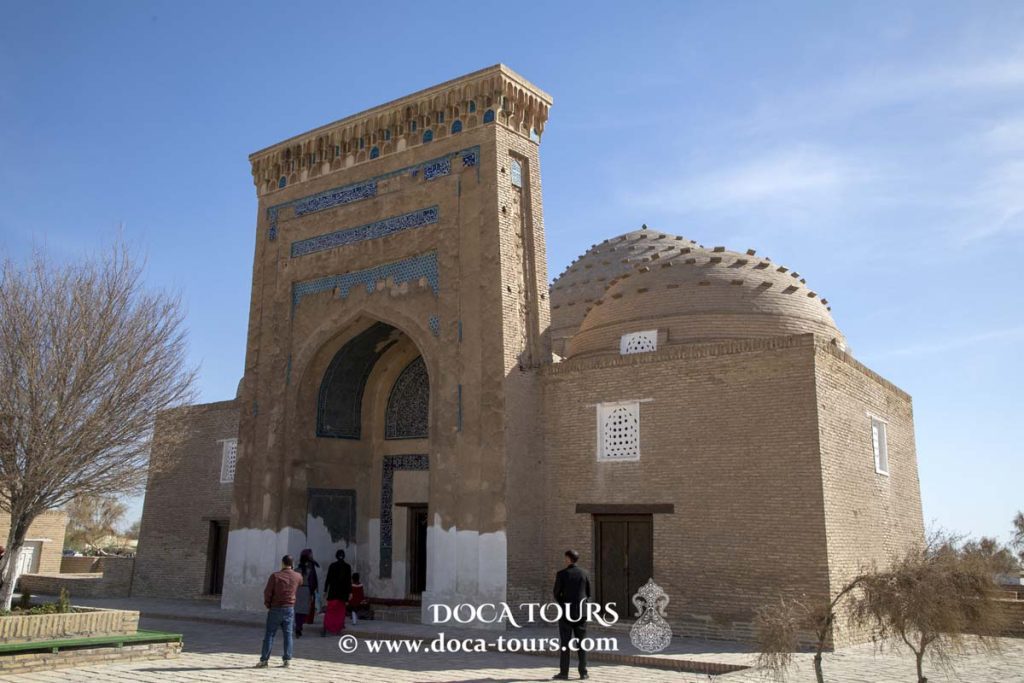
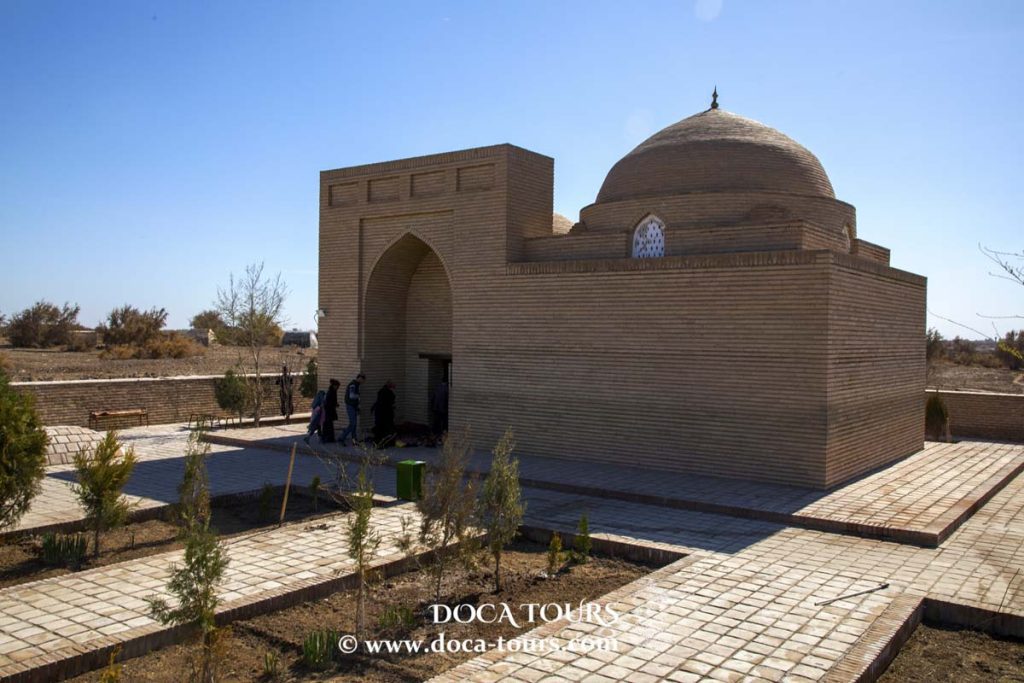
Köneürgench boasts a rich architectural legacy, with its builders influencing structures across the Muslim world, including Timurid architecture in Central Asia and the Mughal architecture of India. Among its significant historical sites are:
- Mausoleum of Il-Arslan (12th century)
- Kutlug-Timur Minaret (14th century), the tallest brick minaret in Central Asia at 60 meters
- Mausoleum of Khwarezmshah Tekesh (13th century)
- Mausoleum of Tyurabek-Khanym (14th century)
- Kyrk Molla Fortress (5th–2nd centuries BCE)
Other notable landmarks include the medieval necropolis “360 Saints,” believed to house the remains of Islamic martyrs from the Mongol invasions.
In 2005, the architectural monuments of Köneürgench were designated a UNESCO World Heritage Site.


 In 1219, Arab geographer Yaqut al-Hamawi described Gurganj as a city unparalleled in size, wealth, and beauty. He noted its bustling markets and vibrant trade. Similarly, Al-Qazwini praised its charm, calling it a heavenly city surrounded by angelic protection. The city was known for its skilled artisans, particularly blacksmiths and woodworkers, who crafted exquisite objects from ivory and ebony. Workshops also produced high-quality natural silk.
The Sufi saint Najm al-Din Kubra (1145–1221) founded the Kubraviya Sufi order in Köneürgench, training notable mystics like Najm al-Din Daya Razi, Sa’d al-Din Hamuya, and Sayf al-Din Bakharzi. During the Mongol invasion in 1221, Najm al-Din Kubra defended the city with his disciples. His tomb remains a significant religious site. Köneürgench also housed a vast library established by the scholar Shahab al-Din Khivaki.
In 1219, Arab geographer Yaqut al-Hamawi described Gurganj as a city unparalleled in size, wealth, and beauty. He noted its bustling markets and vibrant trade. Similarly, Al-Qazwini praised its charm, calling it a heavenly city surrounded by angelic protection. The city was known for its skilled artisans, particularly blacksmiths and woodworkers, who crafted exquisite objects from ivory and ebony. Workshops also produced high-quality natural silk.
The Sufi saint Najm al-Din Kubra (1145–1221) founded the Kubraviya Sufi order in Köneürgench, training notable mystics like Najm al-Din Daya Razi, Sa’d al-Din Hamuya, and Sayf al-Din Bakharzi. During the Mongol invasion in 1221, Najm al-Din Kubra defended the city with his disciples. His tomb remains a significant religious site. Köneürgench also housed a vast library established by the scholar Shahab al-Din Khivaki.
 The city’s landmarks from this era include the Kutlug-Timur Minaret and the Mausoleum of Tyurabek-Khanym, both architectural masterpieces. According to the traveler Ibn Battuta, Köneürgench was one of the largest and most beautiful Turkic cities, boasting vibrant bazaars, wide streets, a hospital, and a magnificent mosque built by Tyurabek-Khanym.
Köneürgench remains a testament to Turkmenistan's rich cultural and historical heritage, offering valuable insights into the ancient civilizations of Central Asia.
The city’s landmarks from this era include the Kutlug-Timur Minaret and the Mausoleum of Tyurabek-Khanym, both architectural masterpieces. According to the traveler Ibn Battuta, Köneürgench was one of the largest and most beautiful Turkic cities, boasting vibrant bazaars, wide streets, a hospital, and a magnificent mosque built by Tyurabek-Khanym.
Köneürgench remains a testament to Turkmenistan's rich cultural and historical heritage, offering valuable insights into the ancient civilizations of Central Asia.
 Husayn Sufi issued anonymous dinars, replacing the titles of Golden Horde khans with Islamic inscriptions, including phrases such as “Power belongs to God, the One, the Almighty” and “There is no god but Allah, and Muhammad is His messenger.” These inscriptions, along with the names of the four caliphs, were engraved on silver coins minted in Khwarezm.
 During the reign of Avanesh Khan, the Bukhara Shaybanid ruler Ubaydullah Khan (1533–1539) attempted to conquer Khwarezm. Later, Dost Muhammad Khan, a descendant of Yadgar Khan, ruled Köneürgench after the death of Agatay Khan in 1557.