
























Key takeaways
- A guided tour turns Samarkand, Bukhara and Khiva from pretty facades into readable history, with a local expert explaining the layers you cannot see on your own.
- Uzbekistan holds 8 UNESCO World Heritage properties, and the three classic Silk Road cities are all inscribed (UNESCO, 2026).
- Most reputable packages bundle transport, hotels, entrance fees and some meals into one price, so you are not negotiating logistics every morning.
- Private tours give you pace and flexibility; small-group tours lower the cost and add travel companions. Doca Tours runs both.
- Foreign arrivals reached 11.7 million in 2025, so booking a trusted operator early matters more than it used to (Yuz.uz, 2025).
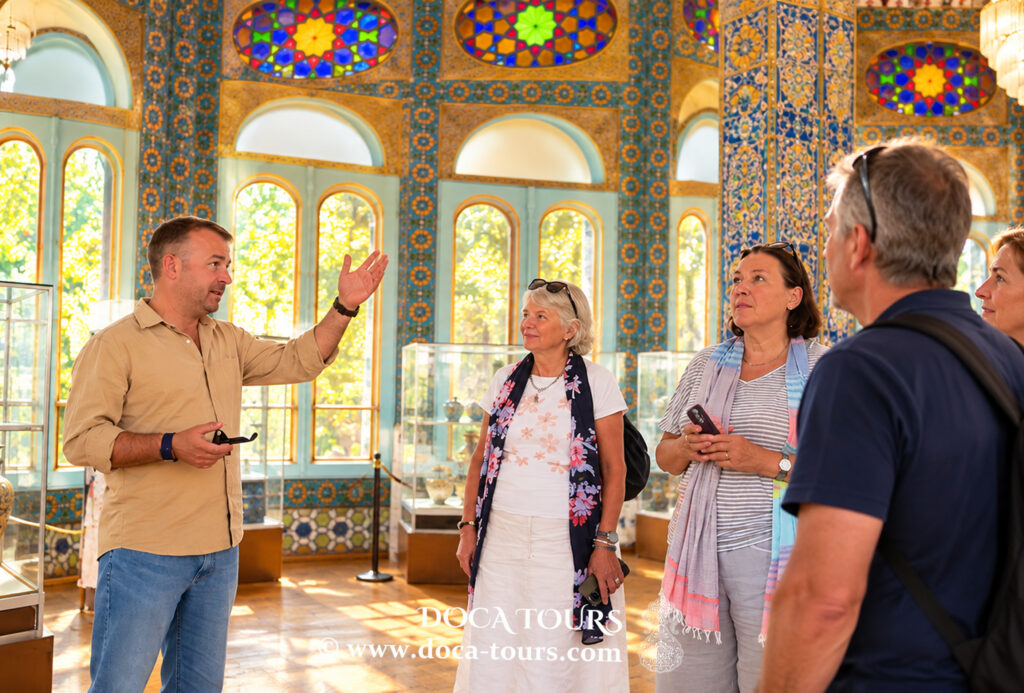
A guided tour of Uzbekistan hands you a local expert who reads the inscriptions, drives the long stretches between cities, and gets you inside sites you would walk straight past alone. For most international visitors, that is the difference between photographing a blue dome and understanding why it stands there. This guide covers what an Uzbekistan guided tour actually includes, what a typical week looks like, and how to book one with Doca Tours.
Uzbekistan has become one of the fastest-growing destinations in the region. Foreign arrivals reached 11.7 million in 2025, up from 6.6 million in 2023 (Yuz.uz, 2025). More visitors means busier sites and tighter hotel availability in peak season, which is exactly why a planned, guided trip has become the practical choice.
How a Guided Tour Unlocks Silk Road History
The three headline cities, Samarkand, Bukhara and Khiva, are all inscribed on the UNESCO World Heritage List, part of 8 properties across the country (UNESCO World Heritage Centre, 2026). A guide turns that density of history into something you can actually follow rather than a blur of madrasas and minarets.
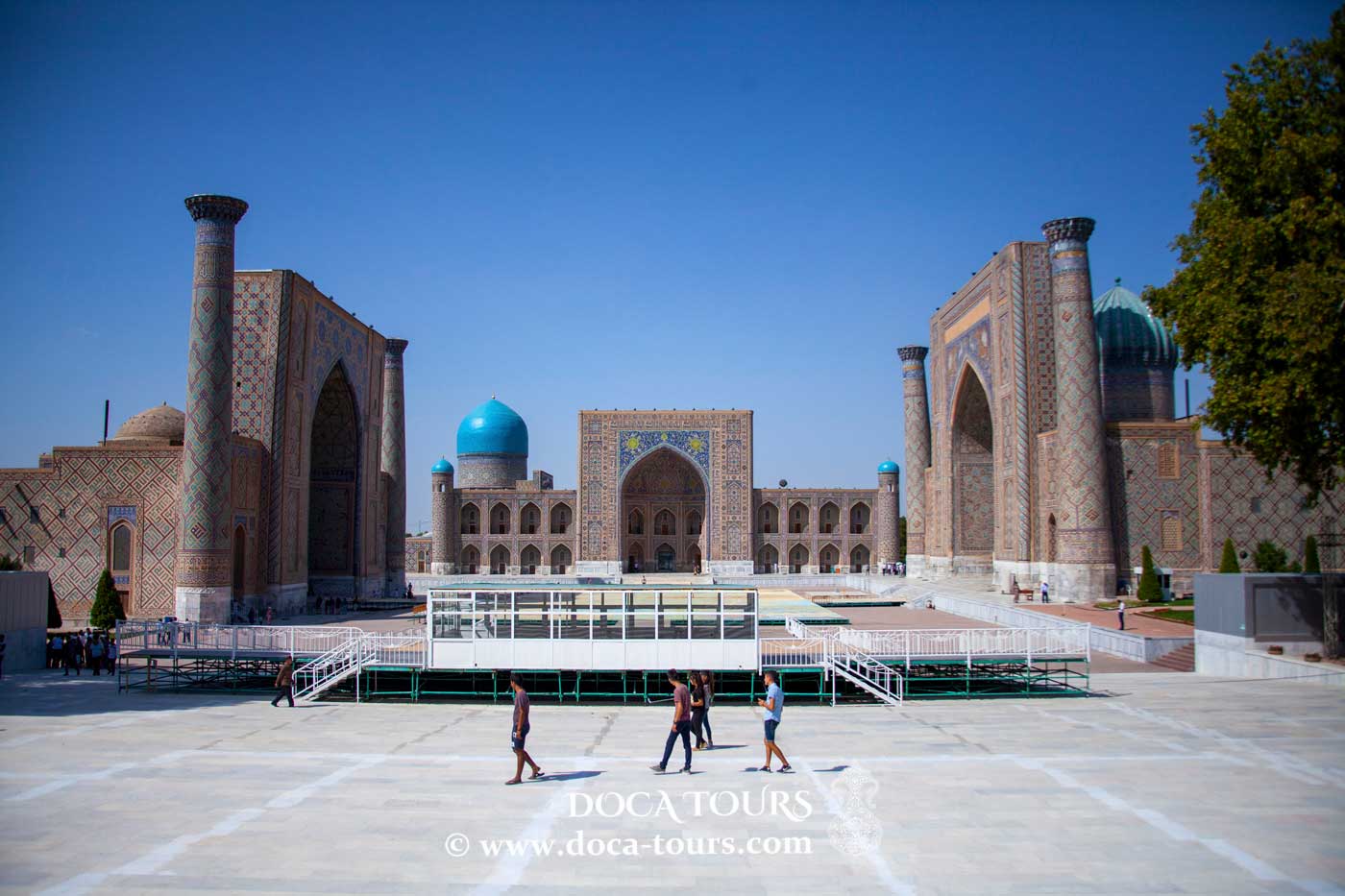
Take the Registan in Samarkand. On your own you see three grand facades. With a guide you learn which ruler built which madrasa, why one portal carries tigers in defiance of the usual ban on living images, and how the square worked as a public stage for six centuries. Bukhara’s old town packs scores of madrasas, mosques and minarets into a few walkable blocks, and reading that on your own is hard. Hearing it explained in order, building by building, is what people remember.
A good guide also handles the practical wall that trips up solo travelers: most inscriptions are in Persian, Arabic and Uzbek, and site labeling is thin. The interpretation is the product.
A Sample Day-by-Day Itinerary With a Local Guide
A classic Uzbekistan guided tour runs seven to ten days and follows the historic route west, from the capital toward the desert cities. Here is how a typical week unfolds with a local guide managing transport, timing and access.
- Day 1, Tashkent. Arrival, a gentle walking tour of the old town and the metro’s mosaic stations, and a first dinner to settle in.
- Day 2, Samarkand. High-speed train from Tashkent, then the Registan, Gur-e-Amir (Timur’s mausoleum) and Bibi-Khanym Mosque.
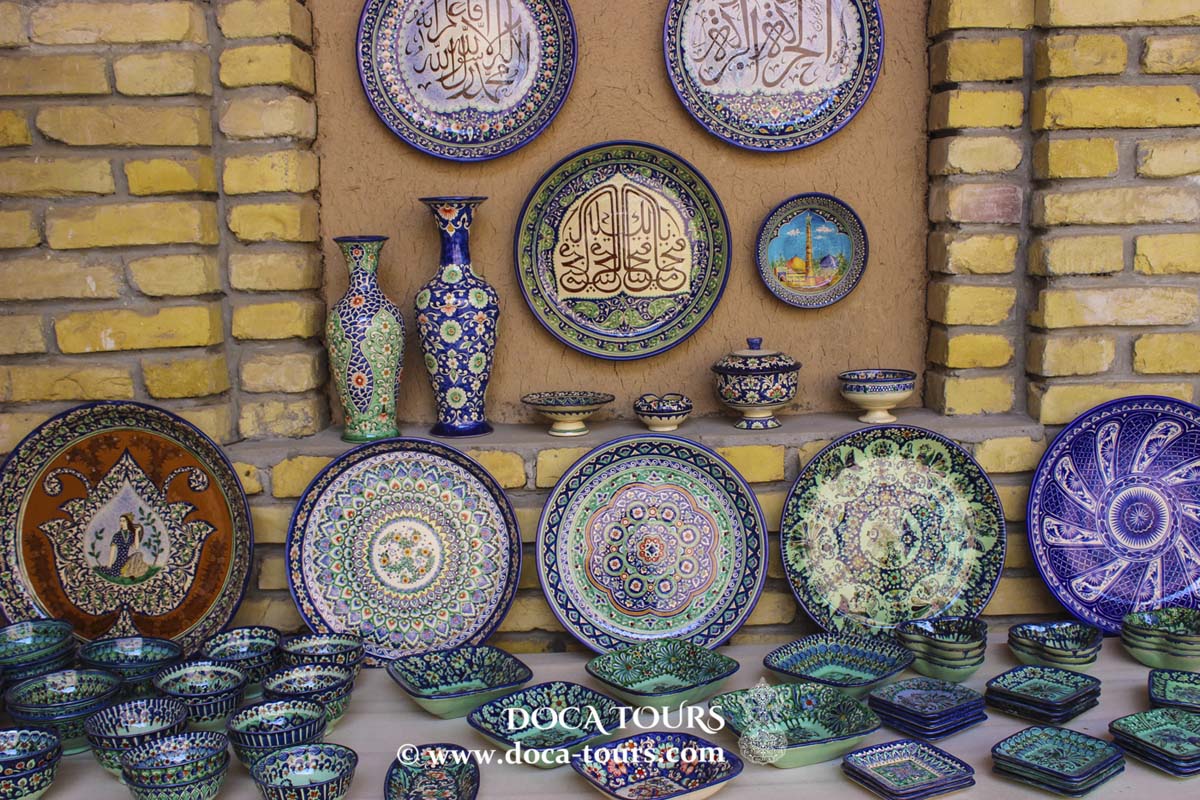
- Day 3, Samarkand. The Shah-i-Zinda necropolis and Ulugh Beg’s observatory, with time for a paper or ceramics workshop.
- Day 4, Bukhara. Transfer by road, arriving among the old town’s madrasas and the Kalyan minaret at golden hour.
- Day 5, Bukhara. A full day on foot through the trading domes, the Ark fortress and quiet courtyard mosques.
- Day 6, Khiva. Travel farther west to the walled inner city of Itchan Kala, best seen in the late afternoon.
- Day 7, Khiva and departure. A final morning inside the walls before the journey home.
The exact order shifts with your flights and whether you start or end in Tashkent. If your dates are flexible, our season-by-season guide to visiting Uzbekistan explains how weather changes the experience month to month.
What’s Included: Transport, Accommodation, Entrance Fees and Meals
Most reputable Uzbekistan guided tours bundle the logistics into one price so you are not arranging taxis and tickets every morning. On a Doca Tours trip, the package usually covers:
- A licensed local guide for the full route, the part that actually unlocks the history.
- Transport, which mixes the fast Tashkent-Samarkand-Bukhara train with private vehicles for transfers and day trips.
- Accommodation, often in restored courtyard houses and boutique hotels inside or near the old towns.
- Entrance fees to the major monuments, so you skip ticket queues and budgeting surprises.
- Some meals, typically daily breakfast plus selected lunches or dinners that showcase regional cooking.
International flights into Uzbekistan are normally arranged separately, which keeps the land package price clean and lets you use your own airline points. The clarity matters: with arrivals climbing fast, hotels in the old towns sell out early in spring and autumn, and a booked package locks in rooms you might not secure on your own.
Private vs Small-Group Guided Options
The main choice on any Uzbekistan guided tour is private versus small-group, and it comes down to pace against price. Both run the same route and use the same caliber of guide, so you are choosing the style of travel, not the quality of it.
A private tour is built around you. You set the wake-up time, linger at the sites that grab you, add a carpet workshop or a long lunch, and change plans on the day. It suits families, couples and anyone who dislikes moving in a group.
A small-group tour lowers the cost per person and adds the easy company of fellow travelers, usually in a group small enough to still fit inside a courtyard mosque without a megaphone. It suits solo travelers and anyone happy to follow a fixed daily rhythm.
Doca Tours runs both across its Uzbekistan itineraries. If you are still weighing the wider trip, our guide to choosing the right Central Asia tour package walks through how group size, pace and budget interact.
Insider Access and Stories You’d Miss Traveling Solo
Here is where a guided tour earns its price beyond logistics. A local guide opens doors, literally and socially, that stay shut to independent visitors. That is the quiet value you only notice once you are inside somewhere you could not have reached alone.
Think of the suzani embroiderer who lets you watch a stitch she learned from her grandmother, the miniature painter who explains his pigments in a back-room studio, or the custodian who unlocks a side chapel for your group after hours. Guides know which teahouse serves the plov the way the neighborhood actually eats it, and which rooftop catches the Registan at the exact minute the light goes gold. They translate not just the inscriptions but the small talk, so a market stop becomes a conversation instead of a transaction.
Solo travel in Uzbekistan is perfectly doable and often rewarding. What it rarely delivers is this layer of human access, the introductions and timing that come from a guide who lives there and knows everyone on the lane.
How to Book a Doca Tours Guided Uzbekistan Trip
Booking a guided Uzbekistan trip with Doca Tours is straightforward, and starting early pays off given how fast demand is rising. Over the first seven months of 2026 alone, 7,749,307 foreign tourists visited the country, a 22.6% jump year on year (Yuz.uz, citing national statistics, 2026). Peak-season rooms in the old towns go first.
Start by choosing your window, then your style. Spring and autumn give the mildest weather for the desert cities; private suits travelers who want control, small-group suits those watching budget. From there, send Doca Tours your dates, group size and any must-see stops, and the team shapes an itinerary with the guide, hotels and transport confirmed before you pay the balance.
If you are deciding between Uzbekistan and a wider regional loop, read the Central Asia package guide linked above first, then reach out with the route you have in mind. The sooner you book, the better your pick of guides and courtyard hotels for the dates you want.
Frequently asked questions
How many days do you need for an Uzbekistan guided tour?
Seven to ten days covers the three core Silk Road cities of Samarkand, Bukhara and Khiva, plus Tashkent. Shorter trips work if you skip Khiva, which sits farther west and needs extra travel time.
Is a guided tour of Uzbekistan worth it compared to traveling solo?
For most visitors, yes. A guide translates Persian and Arabic inscriptions, handles transport between distant cities, and gets you into sites and workshops that are hard to find alone. You trade some spontaneity for depth and ease.
What is included in a Doca Tours guided Uzbekistan trip?
Packages typically include a licensed local guide, private or shared transport, hotels, entrance fees to major monuments, and some meals. Flights into Uzbekistan are usually arranged separately.
When is the best time to take an Uzbekistan guided tour?
Spring (April to May) and autumn (September to October) offer mild weather and clear light for the tiled monuments. Summer is hot in the desert cities, and winter is quiet but cold.
Private or small-group tour, which should I choose?
Choose private if you want control over pace and flexible stops. Choose small-group if you want a lower price and the company of other travelers. Both include the same expert guiding and site access.