
























Key takeaways
- Registan Square, with its three madrasahs, is the single must-see sight and best visited early morning or at sunset.
- Shah-i-Zinda and the Gur-e-Amir mausoleum hold the finest Timurid tilework in the city and sit a short walk apart.
- Uzbekistan welcomed 10.7 million foreign tourists in the first eleven months of 2025, a 73% rise over 2019 (IndexBox, December 2025).
- Two days is enough to cover Samarkand’s headline sights, with a third day ideal for a Shakhrisabz day trip.
- Spring (April to May) and autumn (September to October) offer the most comfortable weather and best light.
Two unhurried days are enough to see the best things to do in Samarkand. Start at Registan Square, then work through the Shah-i-Zinda necropolis, the Gur-e-Amir mausoleum, Bibi-Khanym Mosque and the Siab Bazaar. This guide walks you through each sight, where to eat and sleep, and a ready-made itinerary you can follow step by step. Our guides lead travellers through this route most weeks, so the timing tips below come from running it in practice.
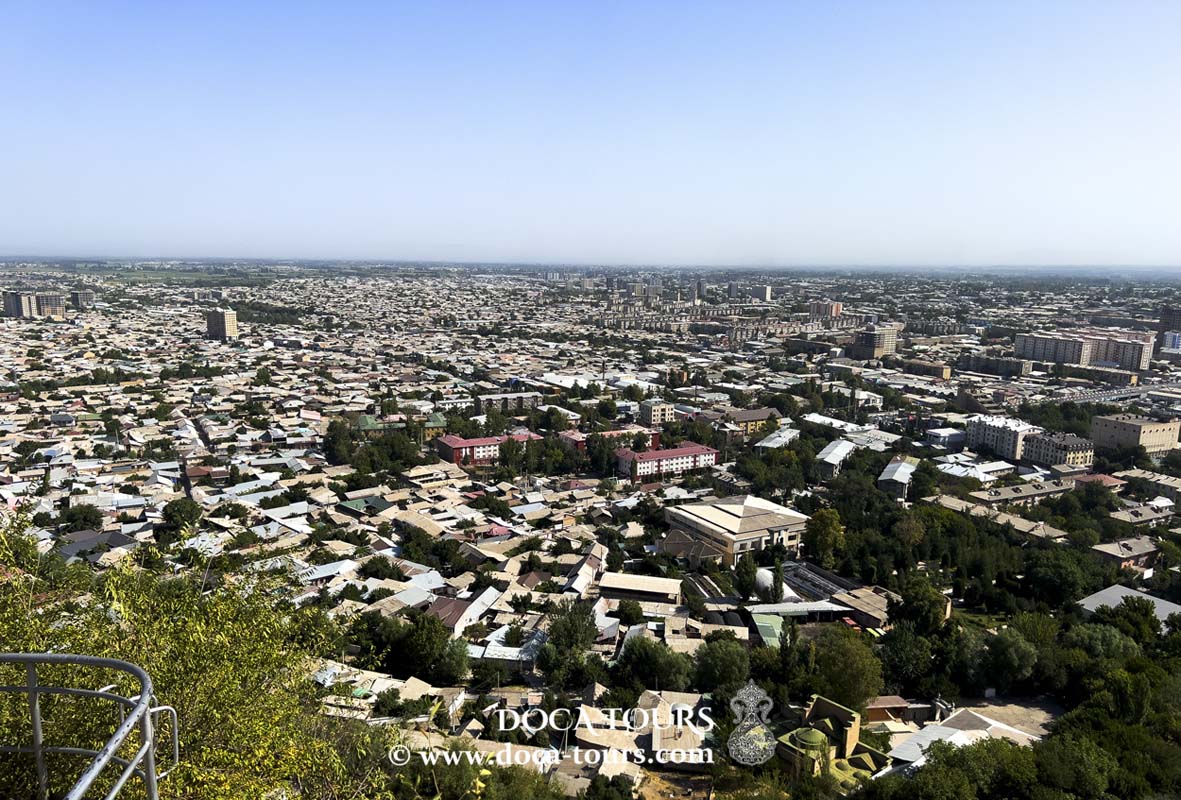
Samarkand sits at the heart of the ancient Silk Road and was inscribed on the UNESCO World Heritage list in 2001 as “Samarkand, Crossroad of Cultures” (UNESCO World Heritage Centre). Few cities pack this much history into a walkable centre.
The Best Things to Do in Samarkand at a Glance
The core sights cluster within a compact old town, so a visitor can tick off most of them on foot over a weekend. Interest is climbing fast: Uzbekistan welcomed 10.7 million foreign tourists in the first eleven months of 2025, a 73% increase over the same period in 2019 (IndexBox, December 2025). Samarkand is the main draw of that surge.
More visitors mean better infrastructure: new boutique hotels, clearer signage, English-speaking guides and smoother rail links from Tashkent. It also means the famous sights fill up by mid-morning, so an early start pays off. Going with a planned tour removes the logistics and gets you through the gates before the crowds.
Registan Square and Its Three Madrasahs
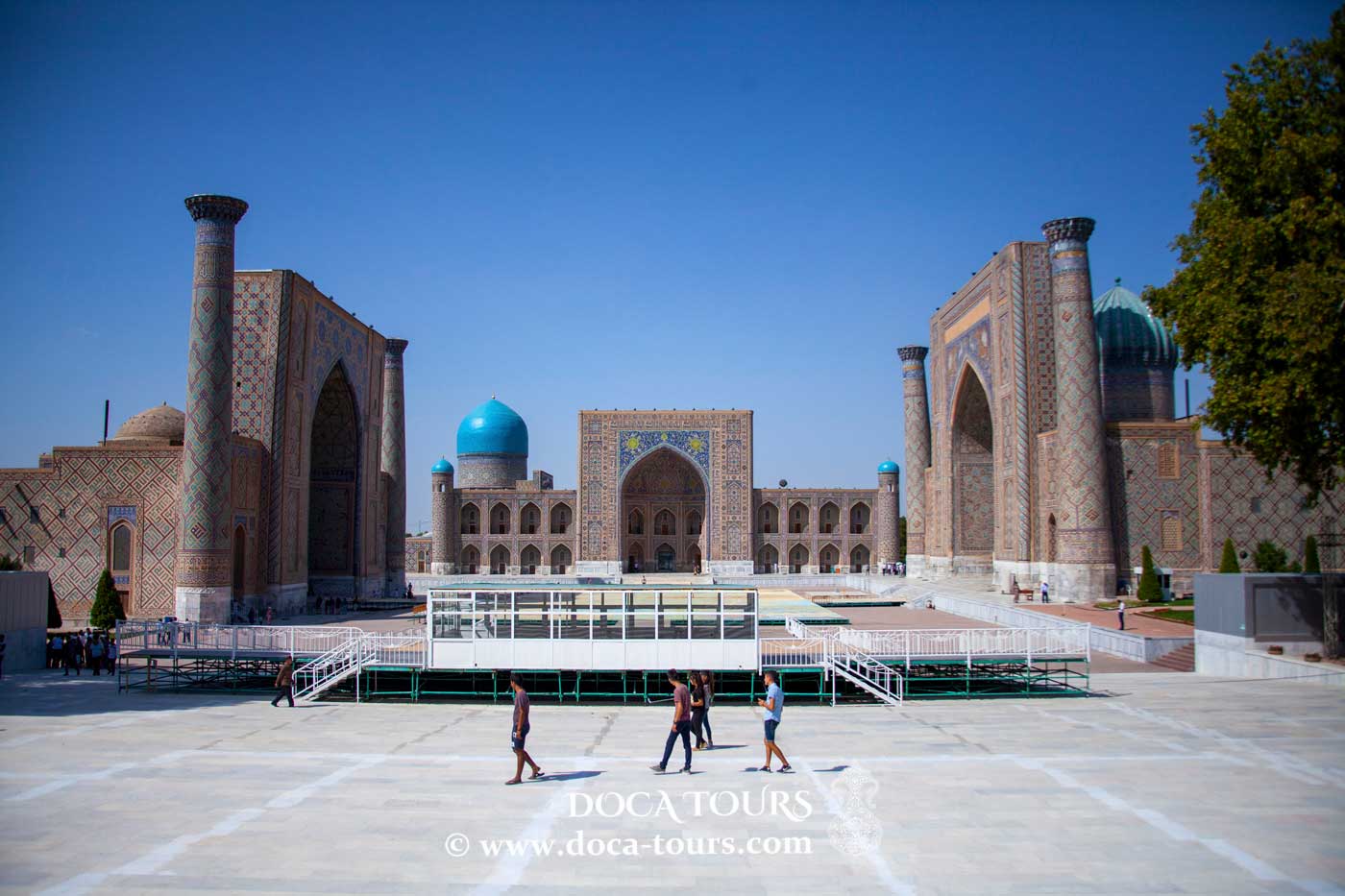
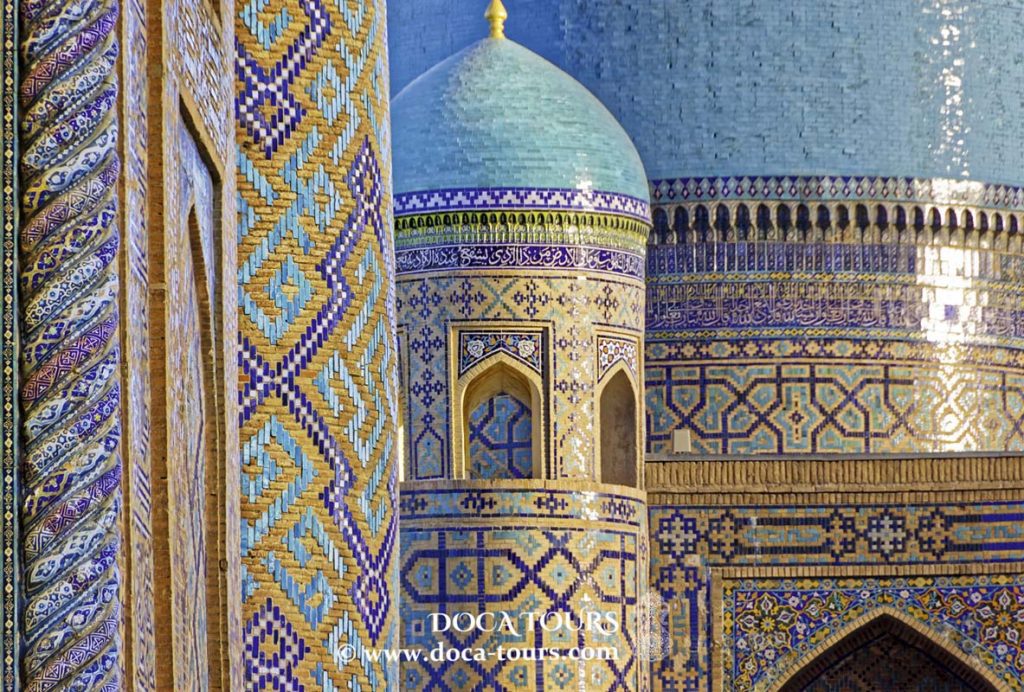
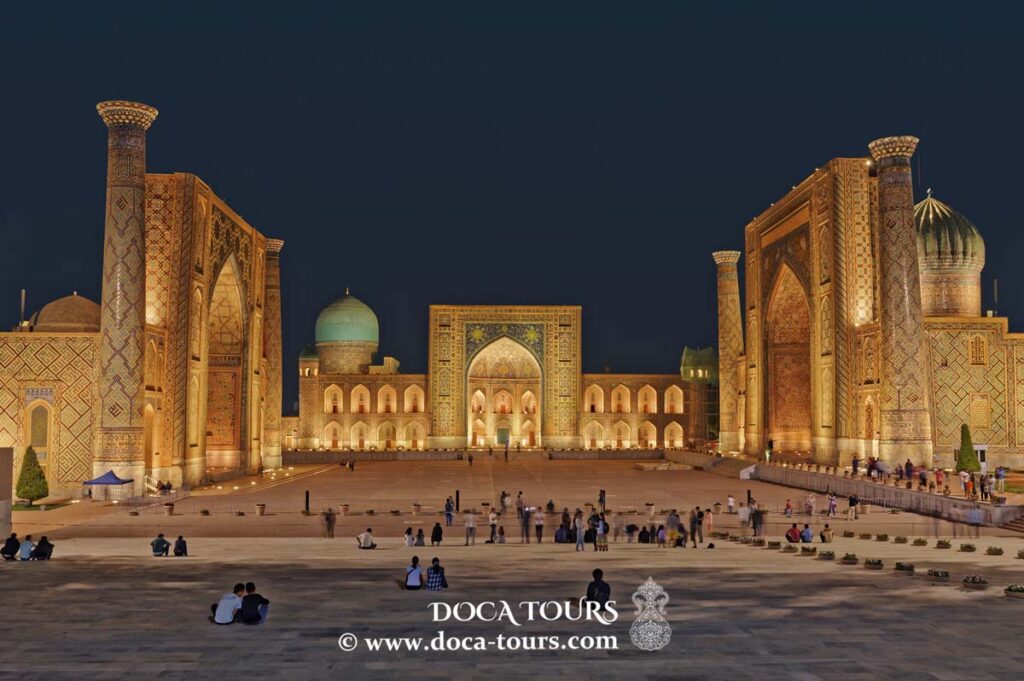
Registan Square is the top thing to do in Samarkand, a vast public space framed by three madrasahs covered in turquoise tile and gold. It was the civic heart of the medieval city, where markets, proclamations and public gatherings took place.
The Ulugh Beg Madrasah on the west side is the oldest, built between 1417 and 1420 by Timur’s grandson, the astronomer Ulugh Beg. Facing it, the Sher-Dor Madrasah went up two centuries later, between 1619 and 1636, and is famous for the pair of lion-like beasts chasing deer across its portal, a rare piece of figurative art in Islamic design. The Tilya-Kori Madrasah closes the north side, finished around 1660, its prayer hall lined with gold leaf that gives it the name “gilded.”
Come at opening time or in the last hour of daylight. The low sun lights the tiles and the crowds thin out. Climbing one of the restored minarets, where permitted, gives the best overhead view of the square.
Shah-i-Zinda and the Gur-e-Amir Mausoleum
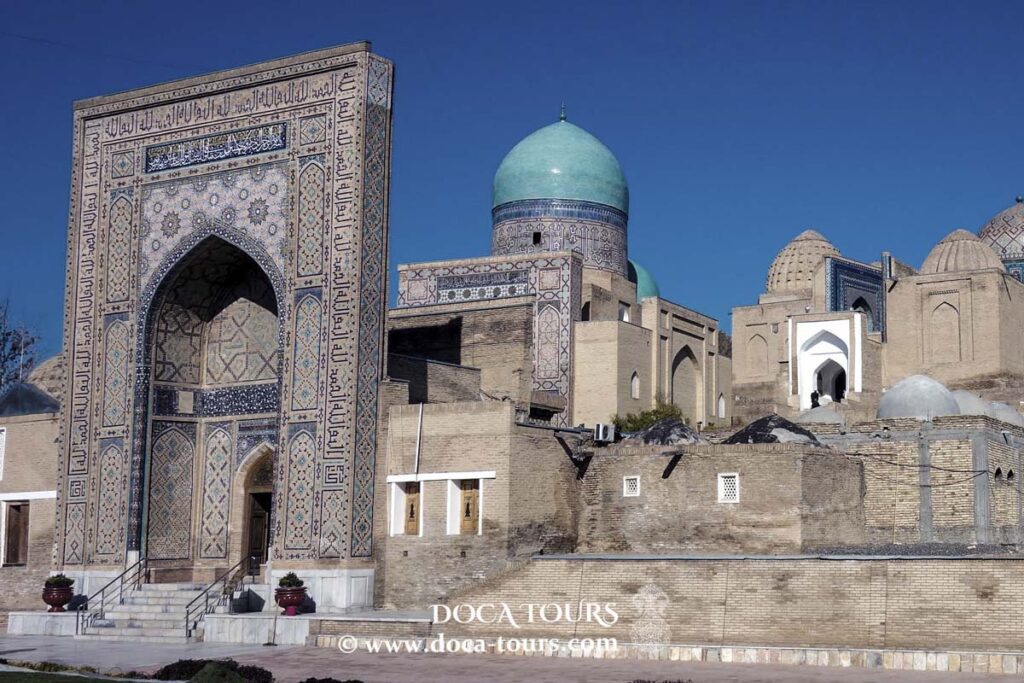
Shah-i-Zinda and the Gur-e-Amir hold Samarkand’s richest tilework, and the two are easy to pair in a single morning. Shah-i-Zinda is a narrow avenue of mausoleums stacked up a hillside, with its oldest structures dating to the 11th century and most of the dazzling tombs built in the 14th and 15th.
The name means “the living king,” a reference to Qusam ibn Abbas, a cousin of the Prophet Muhammad who is said to be buried here. The tombs of Timur’s sister and niece, completed in 1372, show some of the finest Timurid ceramic work anywhere. On our group trips we reach the avenue soon after it opens, when the tiled corridor is quiet and the morning light picks out the blues. Afternoon works too, though it draws bigger crowds.
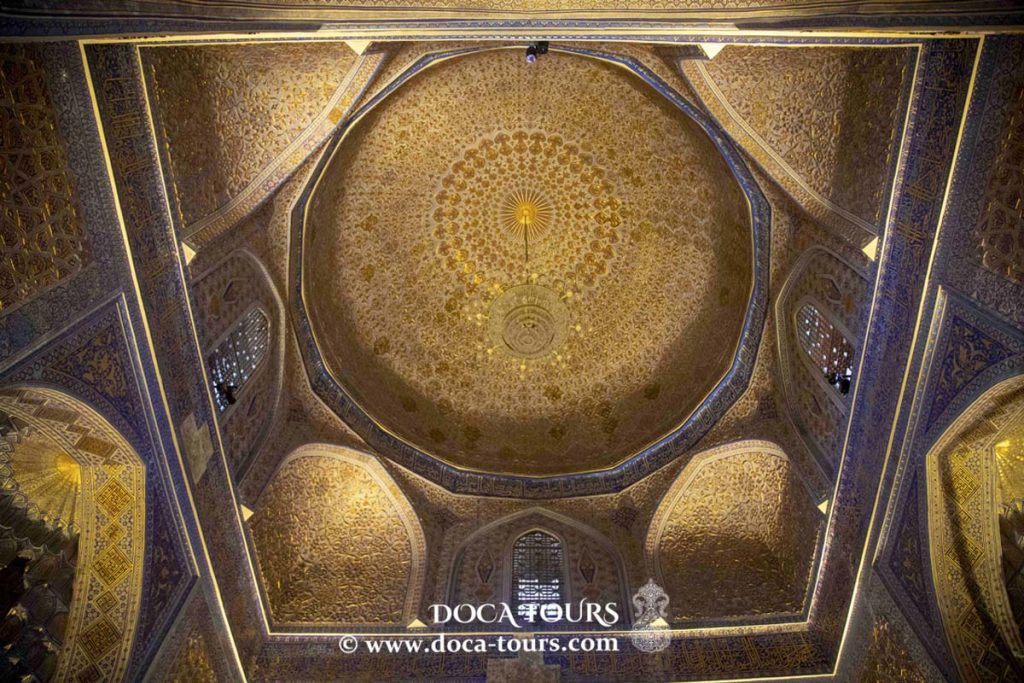
A short walk away, the Gur-e-Amir is the tomb of Timur (Tamerlane) himself, along with his sons and grandson Ulugh Beg. Its fluted azure dome is one of the city’s defining silhouettes, and the interior glows with gold and deep blue. The ruler’s dark jade cenotaph is among the largest carved jade stones in the world.
Bibi-Khanym Mosque and the Siab Bazaar
Bibi-Khanym Mosque and the neighbouring Siab Bazaar sit side by side, which makes them a natural pairing. The mosque was built between 1399 and 1404 on Timur’s orders after his campaign in India, and in its day it ranked among the largest in the Islamic world. Its entrance portal towers more than 30 metres high.
Earthquakes brought much of it down over the centuries, and what you see today is heavily restored, but the scale still impresses. In the courtyard stands a huge marble Quran stand, a popular spot for visitors.
Step out the back and you reach the Siab Bazaar, Samarkand’s liveliest market. Traders pile up melons, pomegranates, dried apricots, nuts and spices, and bakers sell the round Samarkand non that is famous across Central Asia. Go in the morning for the freshest produce and carry cash, since card payment is rare. This is the best place to taste samsa pastries and the local plov without sitting down for a full meal.

Day Trips and Hidden Corners Beyond the Main Sights
Beyond the headline monuments, Samarkand rewards a slower look and one good day trip. The best excursion is Shakhrisabz, about 90 kilometres south and roughly a two-hour drive over a mountain pass. It is Timur’s birthplace and a UNESCO site in its own right, home to the towering ruins of the Ak-Saray Palace he meant to outshine everything in Samarkand.
Closer to town, the Ulugh Beg Observatory preserves the curved track of a giant 15th-century sextant used to map the stars with remarkable accuracy for its era. The small Afrosiyob Museum, on the site of the ancient city, displays 7th-century wall paintings that predate the Timurid era entirely.
For a quieter moment, wander the Tashkent Street area or the leafy lanes around the Hazrat Khizr Mosque at dusk. These corners rarely appear on a rushed itinerary, yet they show the everyday city rather than the monuments.
Where to Eat and Stay in Samarkand
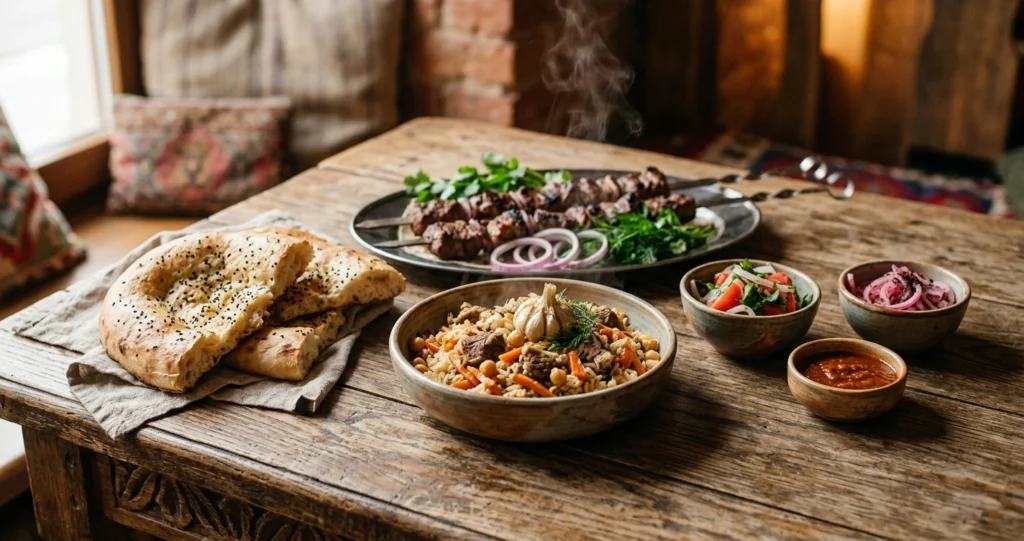
Samarkand’s food is built around plov, non bread and grilled meat, and you do not need a fancy restaurant to eat well. Plov, the national rice dish cooked with carrots, onions, meat and chickpeas, is best at lunch when it is freshly made. Look for a busy choyxona (teahouse) near the old town, or try the food stalls inside the Siab Bazaar.
Other dishes worth ordering are shashlik skewers, manti dumplings and lagman noodle soup. Round off a meal with green tea and local dried fruit.
For lodging, the lanes between Registan and Gur-e-Amir hold a growing number of family-run boutique guesthouses, often set in restored courtyard houses with tiled inner yards. These put you within walking distance of the main sights. Larger international-standard hotels cluster slightly further out near the newer boulevards. Booking ahead matters in spring and autumn, when rooms near the centre go quickly.
A Suggested 2-Day Samarkand Itinerary
Two days covers Samarkand’s essentials without rushing. Here is a simple plan.
Day 1
- Early morning: Registan Square before the crowds, allowing at least 90 minutes for all three madrasahs.
- Late morning: Gur-e-Amir mausoleum, a 15-minute walk south.
- Lunch: plov at a teahouse near the old town.
- Afternoon: Bibi-Khanym Mosque, then the Siab Bazaar next door.
- Evening: return to Registan for the sunset light.
Day 2
- Morning: Shah-i-Zinda necropolis while the light is soft and the avenue is quiet.
- Midday: Ulugh Beg Observatory and the Afrosiyob Museum nearby.
- Afternoon: slow wander through the old-town lanes and craft workshops, with time for tea.
- Optional third day: a full-day trip to Shakhrisabz.
Timing your visit well makes all of this more comfortable. Spring and autumn bring warm days and good light, while high summer turns brutally hot. For a month-by-month breakdown, see our guide to the best time to visit Uzbekistan.
If you would rather skip the logistics of transfers, tickets and guides, a guided package folds Samarkand into a wider Silk Road route alongside Bukhara and Khiva. Doca Tours runs small-group and private trips across the region with local guides who open up the history behind the tiles. Start by browsing a route that suits your dates and pace, then build the rest of your Central Asia trip around it.
Frequently asked questions
How many days do you need in Samarkand?
Two full days cover the main sights comfortably: Registan Square, Shah-i-Zinda, Gur-e-Amir, Bibi-Khanym Mosque and Siab Bazaar. Add a third day for a day trip to Shakhrisabz, Timur’s birthplace.
What is the best time of year to visit Samarkand?
April to May and September to October bring warm, dry days and softer light for photography. Summers climb above 35C and winters turn cold, so the shoulder seasons are far more pleasant for sightseeing on foot.
Is Samarkand worth visiting?
Yes. Samarkand holds some of the Islamic world’s most celebrated architecture, including Registan Square and the Timurid mausoleums, and is a UNESCO World Heritage Site inscribed in 2001.
What food should you try in Samarkand?
Try Samarkand plov (rice with carrots, meat and chickpeas), the city’s famous round non bread baked in tandoor ovens, samsa pastries and shashlik skewers. The Siab Bazaar is the easiest place to sample them.