

























The best time to visit Uzbekistan is spring, roughly April to May, or autumn, from September to October, when days are warm and skies stay clear. These shoulder seasons give you comfortable weather for long days among the madrasas of Samarkand and the old lanes of Bukhara, without the crushing heat of midsummer or the chill of deep winter.
That said, every season has a case for it. The desert summers are harsh but manageable with planning, and winter rewards travelers who want quiet monuments and lower prices. This guide walks through each season, then breaks the country down by region and by the festivals worth building a trip around.
Interest in the country is climbing fast. Uzbekistan welcomed 10.7 million foreign tourists in 2025 through November, generating about EUR 3.74 billion in tourism exports (IndexBox, 2025). More visitors means the best-weather months now book up early.
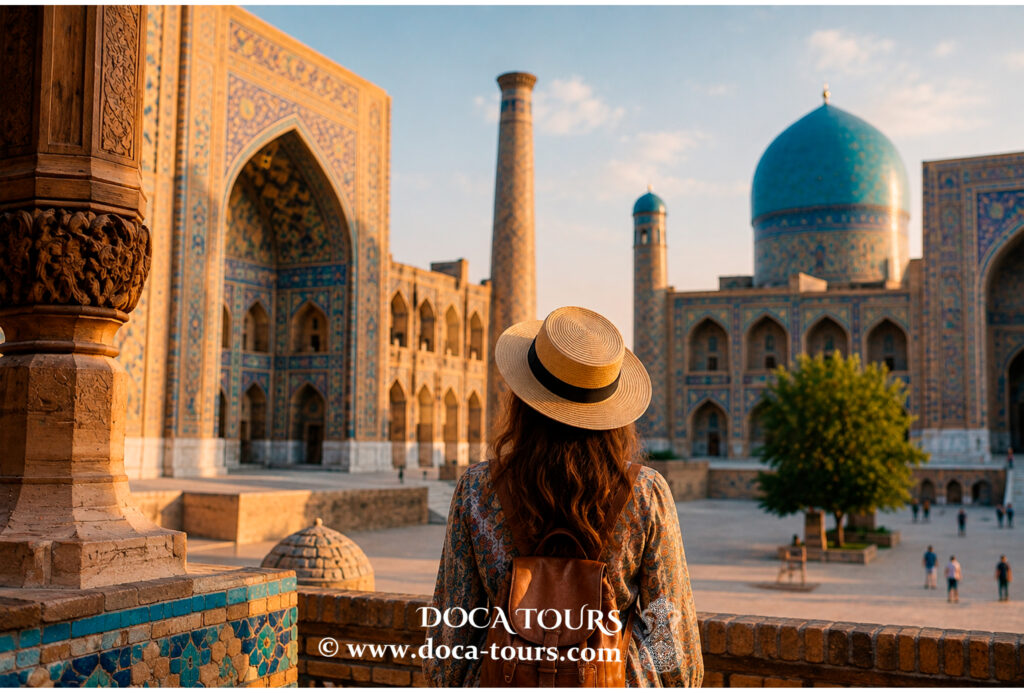
Why Are Spring and Autumn the Best Times to Visit Uzbekistan?
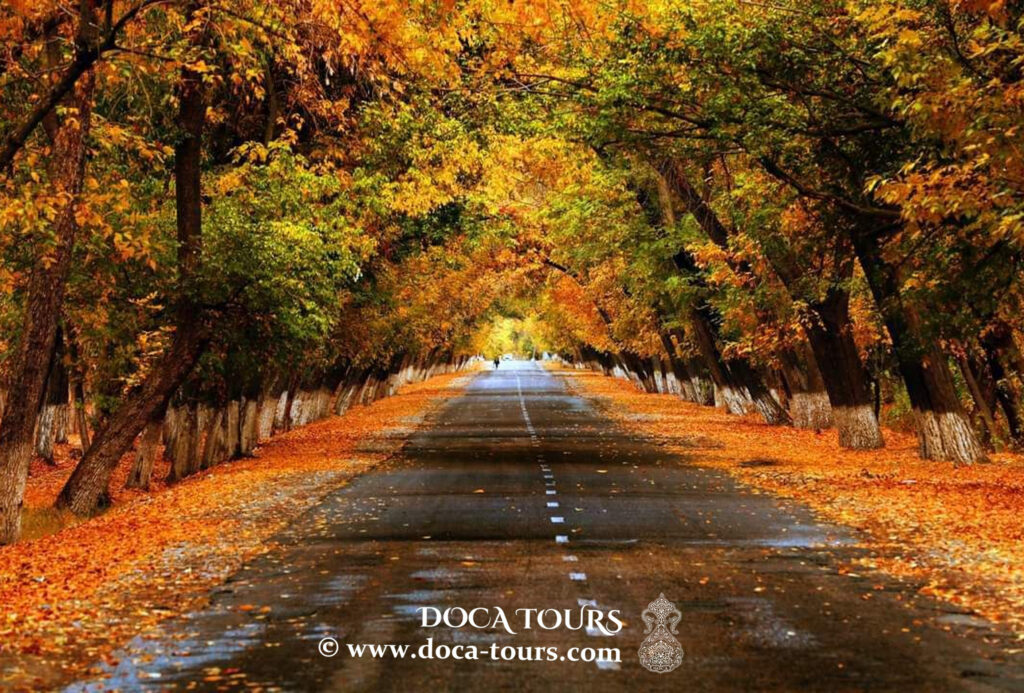
Spring and autumn are the ideal shoulder seasons because daytime temperatures sit in a comfortable range and the harsh extremes ease off. In spring the orchards and steppe turn green, and in autumn the markets fill with grapes, melons and pomegranates from the harvest.
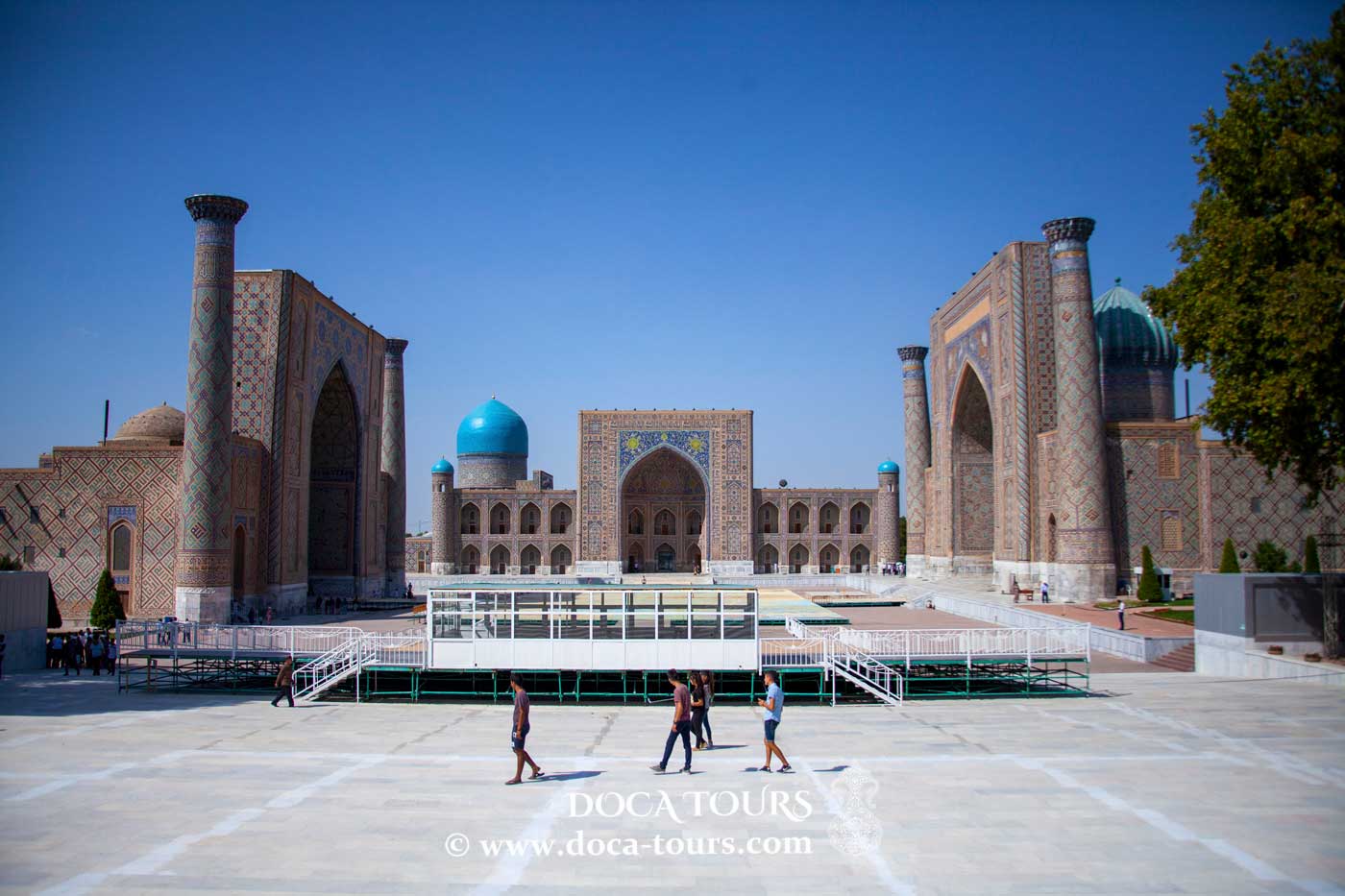
These months reward slow sightseeing. You can spend a full afternoon at the Registan in Samarkand or wander Bukhara’s trading domes without wilting by noon. Evenings turn cool enough for a jacket, which makes the long dinners that Uzbek hospitality is built around far more pleasant.
Demand reflects this. Uzbekistan recorded a 73% increase in international arrivals compared with 2019 levels in the first nine months of 2025, and UN Tourism ranked it among the seven fastest-growing destinations worldwide (IndexBox, 2025). Spring and autumn carry the heaviest share of that traffic, so reserve guides and city-center hotels well ahead.
If you are still deciding on the shape of your trip, our guide to choosing a Central Asia tour package covers how route length and pace change the experience across the region.
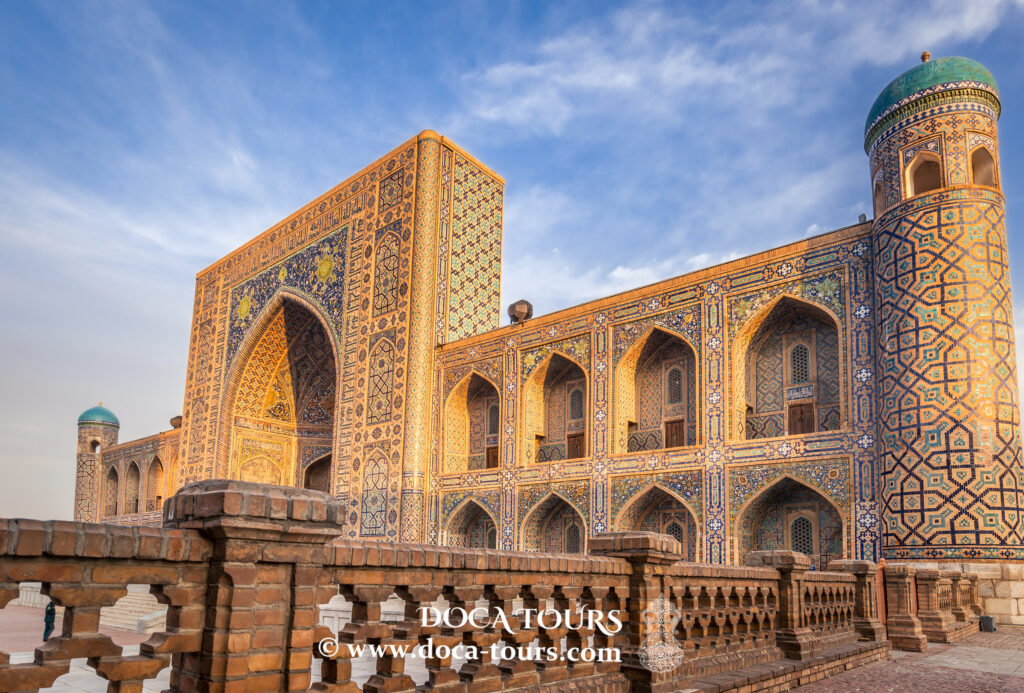
How Hot Does Summer Get in Samarkand and Bukhara?
Summer in Uzbekistan is genuinely hot, and the desert cities feel it most. Bukhara and Samarkand sit in a dry continental zone where afternoons in July and August climb well into the high range and the sun is relentless. Shade is scarce in the open plazas, and midday sightseeing becomes a test of endurance.
You can still travel well in summer with a few habits. Start at dawn, when the light on the tilework is soft and the stone is cool. Retreat indoors or to a tea house through the hottest hours, then head back out in the early evening as the heat breaks.
Carry more water than you think you need, wear a hat and light long sleeves, and favor accommodation with reliable air conditioning. A good local guide will quietly reorder the day around the heat, which is one reason small-group trips run by operators like Doca Tours shift sightseeing into the cooler ends of the day during summer.
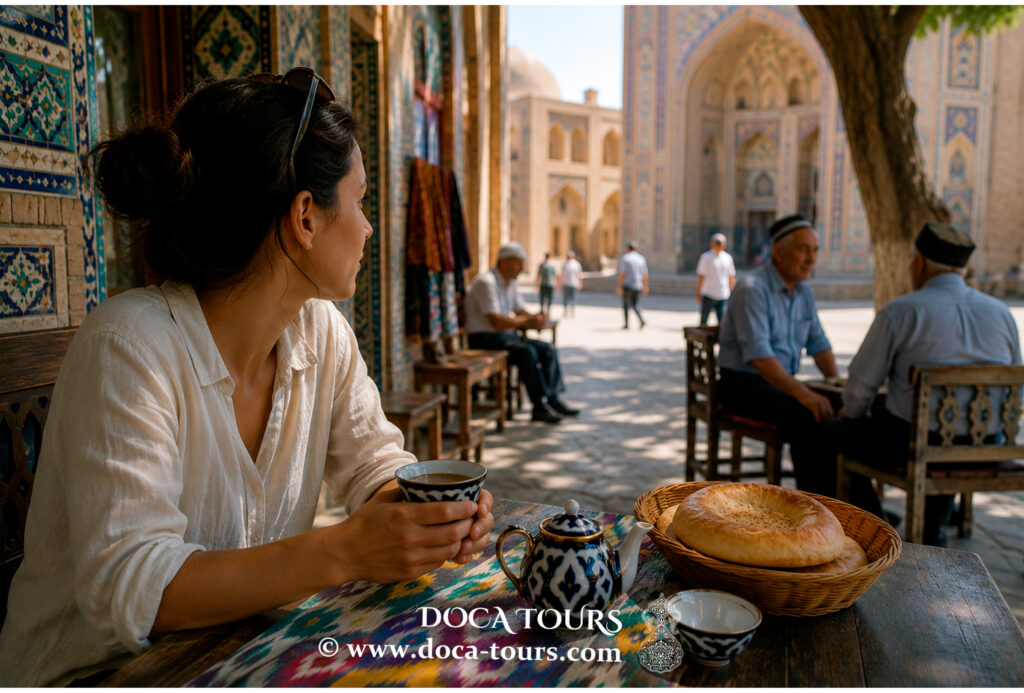
Is Winter a Good Time to Visit Uzbekistan?
Winter is the quietest and cheapest season to visit Uzbekistan, and for some travelers that trade is worth the cold. Crowds thin out dramatically between December and February, hotel rates drop, and the great monuments of Samarkand, Bukhara and Khiva feel almost private.
Expect cold, crisp days and the chance of snow, which turns the turquoise domes into a striking sight against a white dusting. Pack real winter layers, including gloves and a warm coat, because mornings and evenings bite. Daylight is shorter, so plan slightly tighter sightseeing schedules.
The main sites stay open through winter, and the slower pace suits photographers and anyone who dislikes queues. Because demand is low, you can often arrange a trip on shorter notice than in the packed spring and autumn windows. For travelers chasing value and solitude over perfect weather, winter makes a strong case.
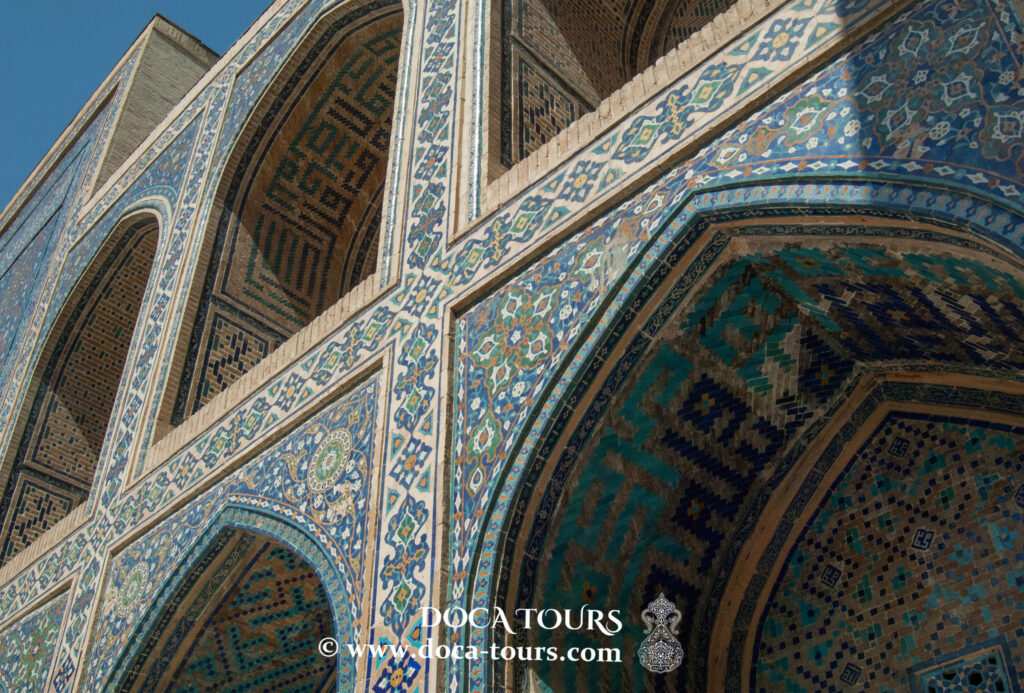
What Is the Weather Like by Region?
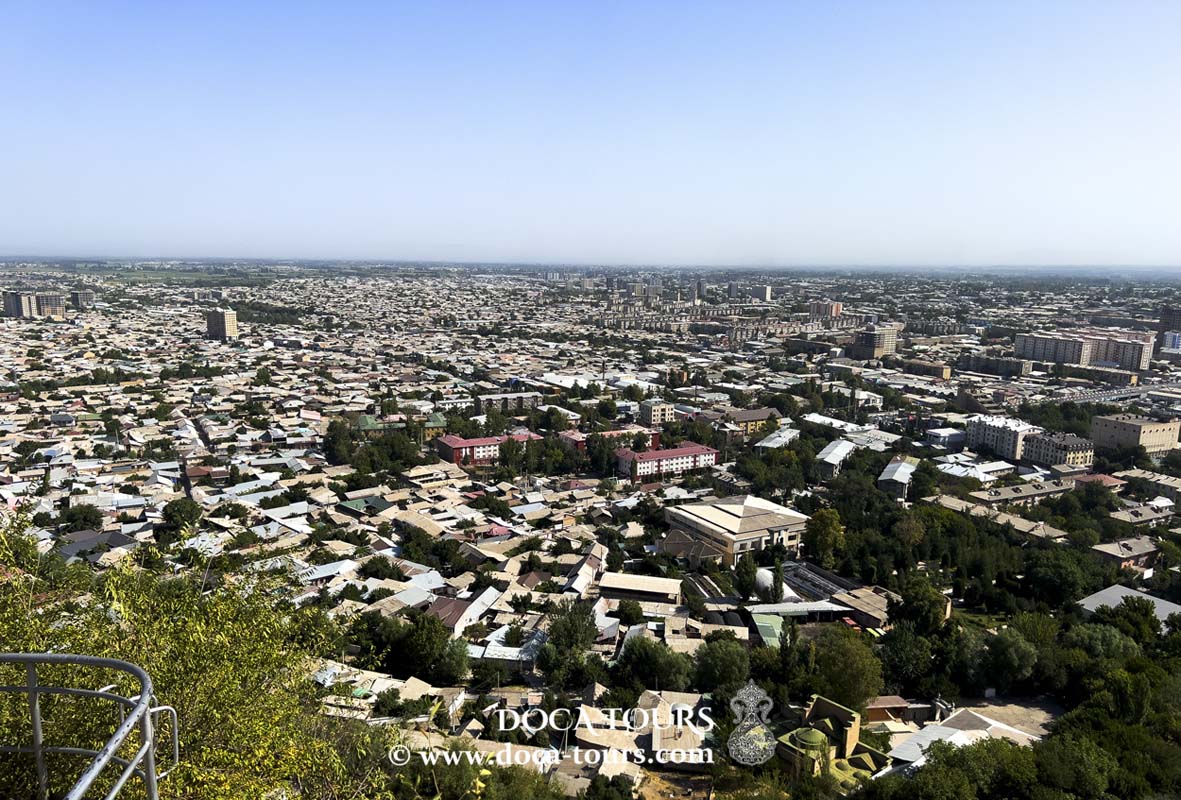
Uzbekistan’s weather splits sharply between its low desert cities and its mountains, so the region you visit matters as much as the month. The classic Silk Road cities sit on dry plains, while the east rises toward the Tian Shan foothills, where conditions run cooler and wetter.
The desert belt, including Bukhara, Khiva and the Kyzylkum surrounds, delivers the hottest summers and the biggest day-to-night temperature swings. Spring and autumn are the sweet spot here, and even a summer visit cools off sharply after dark.
Samarkand sits a little higher and feels marginally milder than Bukhara, though it still bakes in July. Tashkent, the capital, follows a similar continental pattern with hot summers and cold winters. If you add a mountain leg near the Chimgan or Nurata ranges, expect lower temperatures year-round and possible snow into spring, which makes late spring and early autumn the safest timing for combined city-and-mountain itineraries.
Rainfall is modest across the lowlands and falls mostly in winter and early spring, so the famous turquoise skies of the Silk Road cities hold for much of the year. The practical takeaway is simple: if your trip centers on Samarkand, Bukhara and Khiva, you have wide latitude on timing. If you want to pair those cities with trekking or mountain scenery, narrow your window to the shoulder months when the high ground is both accessible and comfortable.
Matching the Region to Your Interests
Photographers and architecture lovers often favor autumn, when harvest light is warm and the crowds have thinned from their spring peak. Families traveling with children tend to prefer the gentler temperatures of April and May. Travelers combining Uzbekistan with neighboring Kazakhstan, Kyrgyzstan or Tajikistan should weigh the mountain seasons in those countries too, since passes and high routes open later in the year. A route built around your interests, rather than a fixed calendar, usually lands you in the right place at the right time.
Which Festivals and Events Are Worth Timing Your Trip Around?
Two events stand out for travelers who want to align a trip with Uzbek culture: Navruz in spring and the Sharq Taronalari music festival in late summer. Both pull the country’s traditions into the open and add real color to an itinerary.
Navruz, the spring new year rooted in ancient Persian tradition, falls on 21 March 2026, a Saturday. The government has set an extended public break around it from 20 to 23 March 2026 (Gazeta.uz, 2025). Expect street celebrations, music, sports and the ceremonial cooking of sumalak across cities and villages.
The Sharq Taronalari festival brings musicians from across the world to Samarkand’s Registan. It runs on a two-year cycle in late August; the 2024 edition took place from 26 to 30 August (Government of Uzbekistan, 2024), with the next edition expected in the same window. If you visit during a festival year, build your route so you reach Samarkand for those dates, and book early, since the city fills quickly.
Whichever season fits your plans, the next step is to pin down your dates against the weather and events above, then lock in guides and hotels before the shoulder-season rush closes out the best options. Reach out to Doca Tours to shape a route that lands you in Samarkand and Bukhara at the right time of year.
Frequently asked questions
What is the best month to visit Uzbekistan?
April, May, September and October are the strongest months. Days are warm but comfortable, nights are cool, and the light is good for photographing the tilework in Samarkand, Bukhara and Khiva.
Is it too hot to visit Uzbekistan in summer?
Summer is hot, especially in the desert cities of Bukhara and Samarkand, where afternoons become uncomfortable. Travel is still possible if you sightsee early, rest at midday and carry water.
Is winter a good time to visit Uzbekistan?
Winter suits travelers who want fewer crowds and lower prices. Days are cold and sometimes snowy, but the main monuments stay open and feel far quieter than in spring.
When is Navruz celebrated in Uzbekistan?
Navruz, the spring new year, falls on 21 March 2026, a Saturday. Uzbekistan marks it as a public holiday with an extended break and street celebrations in cities and towns.
Do I need to book Uzbekistan tours far in advance?
For spring and autumn, yes. These are the busiest seasons, and good guides and hotels in Samarkand and Bukhara fill quickly. Winter travel can often be arranged with shorter notice.