



Experience the magic of Uzbekistan, once the heartbeat of the ancient Silk Road, where traders and travelers from across the globe converged in bustling caravanserais. Relive the legacy of powerful dynasties, magnificent cultural achievements, and the echo of caravans winding their way through these timeless cities.
This comprehensive 10-day journey allows you to explore Tashkent, Khiva, Bukhara, and Samarkand at an unhurried pace, with exciting detours to off-the-beaten-path destinations like Sarmish petroglyphs and a yurt camp in the Kyzylkum Desert. Trace the footsteps of ancient merchants and enjoy diverse modes of travel: plane, train, car, and even camel rides.
With its perfect blend of cultural immersion, breathtaking landscapes, and authentic Silk Road experiences, this tour promises to be a journey you will never forget.
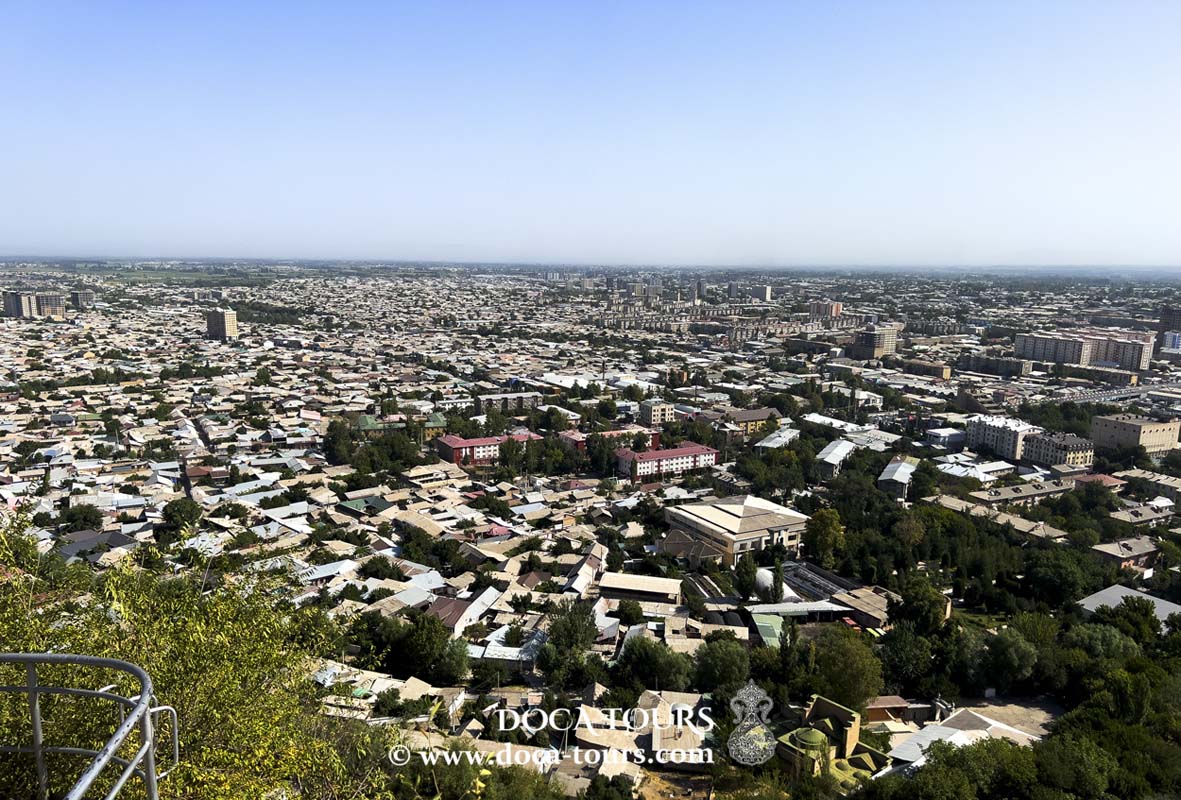
Upon arrival in Tashkent, the capital city of Uzbekistan and the largest metropolis in Central Asia, you will be greeted at the airport and transferred to your hotel. Check-in at the hotel begins at noon, allowing you to settle in and unwind after your flight. Take this time to rest and refresh yourself in preparation for an exciting day ahead.
Once you are ready, your private guide and driver will pick you up from the hotel lobby to commence your immersive city tour of Tashkent. As Uzbekistan’s cultural and economic hub, Tashkent beautifully blends ancient history with modern development, offering a fascinating insight into the country’s heritage and progress. Your guided tour will take you through some of the most significant landmarks and hidden gems of the city, including:
- The Old City and the Khazret-Imam Architectural Complex – This historic area of Tashkent is home to the renowned Khazret-Imam Complex, a spiritual center that houses one of the world’s oldest Qurans, believed to date back to the 7th century. The beautifully preserved complex consists of several ancient mosques and madrasahs, reflecting the city’s deep-rooted Islamic traditions.
- Chorsu Bazaar – Experience the bustling atmosphere of Tashkent’s most famous market, where locals gather to purchase fresh produce, spices, textiles, ceramics, and handcrafted souvenirs. This vibrant marketplace provides a glimpse into everyday Uzbek life and is an excellent place to explore the country’s rich culinary and artistic traditions.
- Tashkent Metro – Take a ride on the city’s immaculate subway system, one of the most visually stunning metro networks in the world. Each station is uniquely decorated with elaborate mosaics, intricate carvings, and artistic lighting, making it a fascinating experience beyond simple transportation.
- Amir Timur Square – Visit the heart of Tashkent, where a grand statue of Amir Timur (Tamerlane), Uzbekistan’s legendary conqueror, stands proudly at the center. Significant government buildings and cultural institutions, making it a perfect spot to learn about the country’s historical and contemporary influences, surround the square.
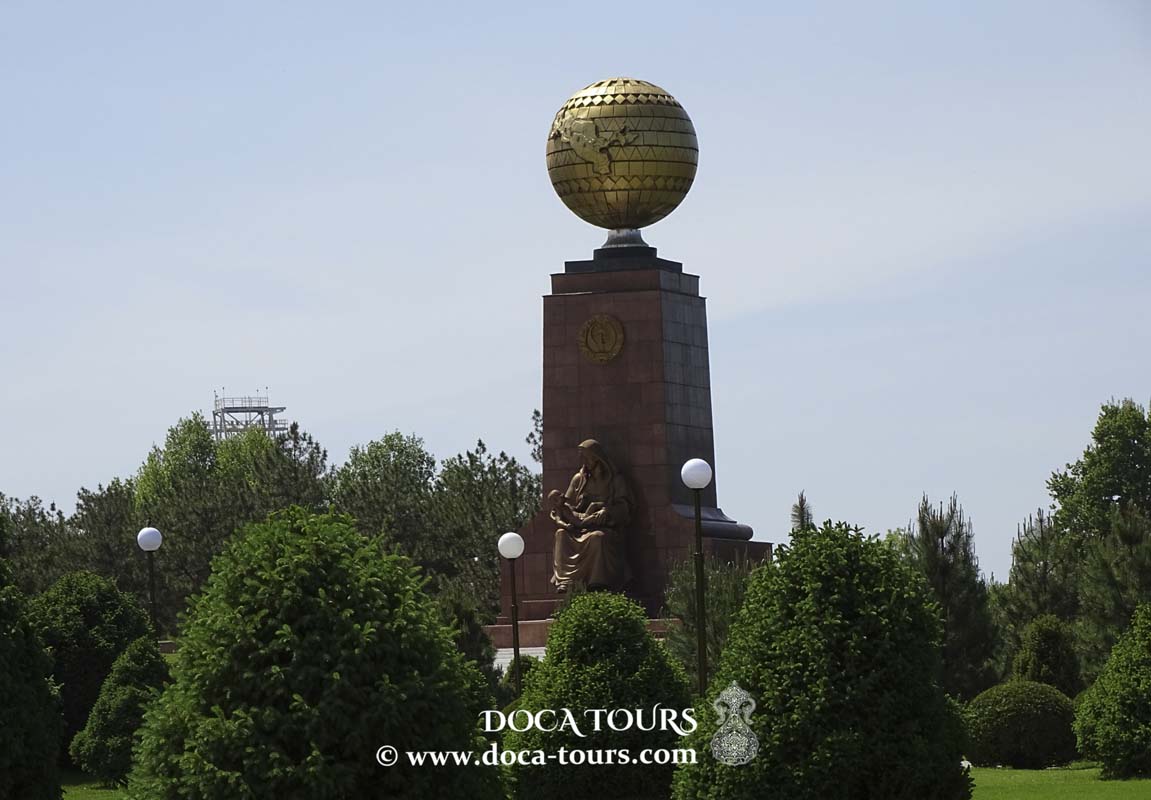
- Independence Square – The main square of Tashkent symbolizes Uzbekistan’s sovereignty and is home to several monuments, including the poignant Mourning Mother Monument and the Eternal Flame, dedicated to the memory of those who lost their lives during World War II.
- Sacred Heart Cathedral – Discover this stunning Roman Catholic Church, built in the early 20th century, which features magnificent stained-glass windows, soaring spires, and Gothic-style architecture. It serves as a testament to the city’s diverse religious history.
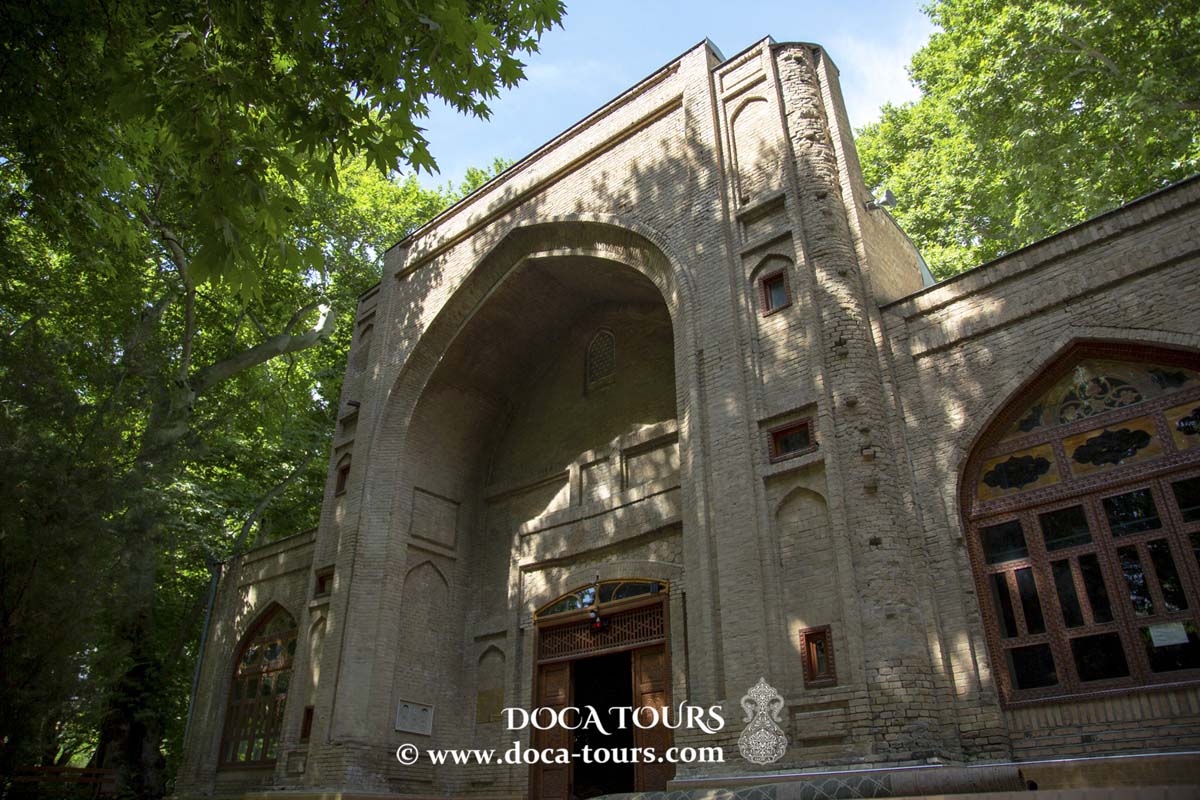
- Applied Arts Museum – End your city tour with a visit to this cultural gem, which displays some of the finest examples of Uzbekistan’s traditional handicrafts. Housed in an ornately decorated mansion, the museum displays exquisite embroidery, ceramics, woodcarvings, and silk textiles, offering insight into the country’s rich artistic heritage.
After an engaging and informative tour lasting approximately 4-5 hours, you will return to your hotel for an overnight stay in Tashkent, where you can relax and prepare for the next leg of your journey.
Early in the morning, you will be transferred to the local airport for a domestic flight to Urgench, located in western Uzbekistan. The flight covers a distance of approximately 1,093 kilometers and takes around 1 hour and 40 minutes. Upon arrival in Urgench, a driver will meet you at the airport and take you on a scenic 35-kilometer drive to the ancient city of Khiva, a UNESCO World Heritage site.
Upon reaching your hotel in Khiva, you will check in and meet your local guide, who will accompany you on a fascinating walking tour of the city. Known as the "Museum under the Open Sky," Khiva is an exceptionally well-preserved medieval town that transports visitors back in time with its intricate Islamic architecture, towering minarets, and labyrinthine alleys.
- Your tour will begin at Kunya-Ark Fortress, the oldest part of the city and the former residence of Khiva’s rulers. From here, you will continue to explore some of the city's most iconic landmarks:
- Kalta Minor Tower – One of the most striking architectural masterpieces in Khiva, this unfinished minaret was originally intended to be the tallest in Central Asia. Though construction was halted, it’s distinctive turquoise and blue tiles make it one of the most recognizable symbols of the city.
- Muhammad Amin-Khan Madrasah – The largest medieval madrasah in Khiva, this impressive structure once served as an educational institution for Islamic scholars. Today, it stands as a testament to the city’s rich academic and religious heritage.
- Muhammad Rahim-Khan Madrasah – This sprawling complex was one of the largest madrasahs in all of Central Asia, reflecting the importance of education and religious studies in the region.
- Juma Mosque – A unique mosque featuring 212 intricately carved wooden columns, some of which date back to the 10th century. The mosque’s vast interior creates a mesmerizing play of light and shadow, making it a truly captivating sight.
- Tash-Hauli Palace (Stone Courtyard Palace) – A spectacular example of 19th-century in Khiva architecture, this palace was built to resemble a fortress with high walls, fortified towers, and elaborately decorated interiors.
- Necropolis of Pahlavan Mahmud – A revered religious site, this necropolis is dedicated to Pahlavan Mahmud, a poet, philosopher, and warrior who became the patron saint of Khiva. The complex is adorned with exquisite tilework and intricate carvings.
- Minaret and Madrasah of Islam Khodja – The final stop on your tour is the minaret and madrasah dedicated to Islam Khodja, the personal advisor to the last khan of Khiva. The minaret, standing at an impressive height of 45 meters, offers the best panoramic views of the city from its top platform.
After an extensive 6–7-hour exploration of Khiva’s architectural wonders and historical sites, you will return to your hotel for a well-deserved overnight stay. Enjoy the peaceful ambiance of this ancient city as you reflect on the incredible experiences of the day.
After enjoying an early breakfast at the hotel, prepare for an exciting overland journey from Khiva to Bukhara. The route stretches approximately 480 kilometers (7 hours) and takes you through the vast and arid landscapes of the Kyzylkum Desert, one of Central Asia’s largest deserts.
This historic route was once an integral part of the legendary Great Silk Road, the ancient trade network that connected China, Central Asia, the Middle East, and Europe. Merchants, travelers, and explorers traversed this path for centuries, carrying precious goods such as silk, spices, and ceramics while exchanging knowledge and culture.
During the drive, marvel at the ever-changing desert scenery, where golden dunes, dry steppe vegetation, and occasional nomadic settlements paint a picture of Uzbekistan’s remote wilderness. You will make stops along the way to stretch your legs and take in the breathtaking expanse of the desert. Be sure to capture some photos of this unique and timeless landscape.
Arriving in Bukhara in the late afternoon, you will check in to your hotel and have some time to unwind after the long journey. In the evening, enjoy a leisurely walk around Bukhara’s Old City, where centuries-old architecture and a peaceful ambiance transport you to a bygone era. You can explore nearby teahouses, boutique shops, and traditional courtyards, soaking in the charm of this UNESCO-listed historic city.
Overnight stay in Bukhara.
After a hearty breakfast at the hotel, embark on an immersive 6 to 7-hour guided walking tour through the heart of Bukhara, a city that has preserved its medieval charm and spiritual significance for over a thousand years. Bukhara was once a great center of learning and commerce along the Silk Road, and today, its well-preserved monuments stand as testaments to its glorious past.
Key Highlights of the Bukhara Old City Tour:
- Lyabi-Hauz Ensemble – This lively square, dating back to the 16th–17th centuries, is considered the centerpiece of Old Bukhara. It is built around a large rectangular reservoir, which served as an important water source for the city. Historic madrasahs, traditional teahouses, and artisan workshops, making it a perfect place to experience the city’s vibrant atmosphere, surround the area.
- Magoki-Attori Mosque – One of the oldest surviving mosques in Bukhara, originally built in the 12th century. Before the arrival of Islam, the site was home to a Zoroastrian temple, symbolizing Bukhara’s deep-rooted history of religious transformation.
- Trade Domes of Bukhara – Step into the bustling world of 16th-century bazaars, where merchants once traded silk, spices, and exquisite handicrafts. Today, the historic domed markets continue to offer an array of handmade souvenirs, from intricately woven carpets to finely crafted ceramics and jewelry.
- Poi Kalyan Ensemble – One of Bukhara’s most iconic landmarks, this architectural complex includes:
- The Kalyan Minaret, standing at 46 meters, once served as a beacon for travelers and a symbol of the city's grandeur.
- The Kalyan Mosque, an expansive place of worship with a vast courtyard and stunning blue-tiled domes
- The Miri-Arab Madrasah, a revered Islamic school that continues to function as a place of religious study.
- Ulugbek and Abdulazizkhan Madrasahs – Two madrasahs facing each other, representing different eras of Bukhara’s architectural brilliance. The famous Timurid ruler and astronomer commissioned the Ulugbek Madrasah (15th century), while the Abdulazizkhan Madrasah (17th century) displays lavish decoration and intricate carvings.
- Ark Fortress – A magnificent 4th-century citadel that served as a royal residence and military stronghold for Bukhara’s rulers. Inside, you will find a museum detailing the city’s history, with exhibits displaying ancient artifacts, royal treasures, and remnants of past dynasties.
- Bolo-Khauz Complex – Dating back to the 18th century, this picturesque site includes a mosque and minaret built next to a small water reservoir. The mosque’s wooden-pillared façade is an architectural masterpiece reflecting traditional Bukharan design.
- Samanid Mausoleum – A stunning 9th-century structure and one of the oldest Islamic mausoleums in Central Asia. Built entirely of baked brick, its unique geometric patterns and harmonious symmetry make it an outstanding example of early Islamic architecture.
- Chashma Ayub Mausoleum – Also known as the "Spring of Job," this religious site is linked to the biblical prophet Job (Ayub). Legend has it that he struck the ground here, causing a healing spring to emerge.
After an enriching day of exploration, return to your hotel for a well-deserved rest.
Overnight stay in Bukhara.
Today, you will venture beyond the central old city to explore lesser-known yet fascinating sites that reveal more about Bukhara’s diverse cultural heritage. This 3 to 4-hour guided tour will take you to some of the city's most intriguing landmarks.
- Chor Minor – This charming 18th-century madrasah is instantly recognizable for its four small turquoise-domed minarets, each with distinct decorative patterns. It once served as a library and educational center, and today, it remains one of Bukhara’s most photogenic monuments.
- Sitorai Mokhi-Khosa (Emir’s Summer Residence) – A splendid palace located just outside the city, built as a summer retreat for Bukhara’s last emirs. The architecture blends traditional Bukharan elements with Russian imperial influences, creating a unique and lavish design. The palace’s name translates to "Star and Moon Palace," reflecting its ethereal beauty.
- Bakhautdin Naqshband Mausoleum – A sacred pilgrimage site dedicated to Bahouddin Naqshband, the revered founder of the Naqshbandi Sufi Order. This tranquil complex is an important spiritual destination for Sufis and visitors interested in Islamic mysticism.
- Fayzulla Khodjaev House Museum – Step into a beautifully preserved 19th-century Bukharan house that once belonged to Fayzulla Khodjaev, a prominent political figure in the early 20th century. The museum provides an intimate glimpse into the traditional lifestyle, culture, and interior décor of Bukharan aristocrats during that era.
After the tour, you will have free time to further explore Bukhara at your own pace. Whether you choose to relax in a teahouse, shop for souvenirs, or simply enjoy the historic ambiance, your time in Bukhara is sure to leave lasting memories.
Overnight stay in Bukhara.
After breakfast at the hotel, your driver will pick you up for a journey into the Kyzylkum Desert, where you will spend the night in a traditional yurt camp, experiencing the nomadic way of life. Along the way, you will stop at key cultural and historical sites that highlight Uzbekistan’s artistic heritage and ancient civilizations.
- Stop 1: Gijduvan – The Art of Ceramics (50 km, 1 hr)
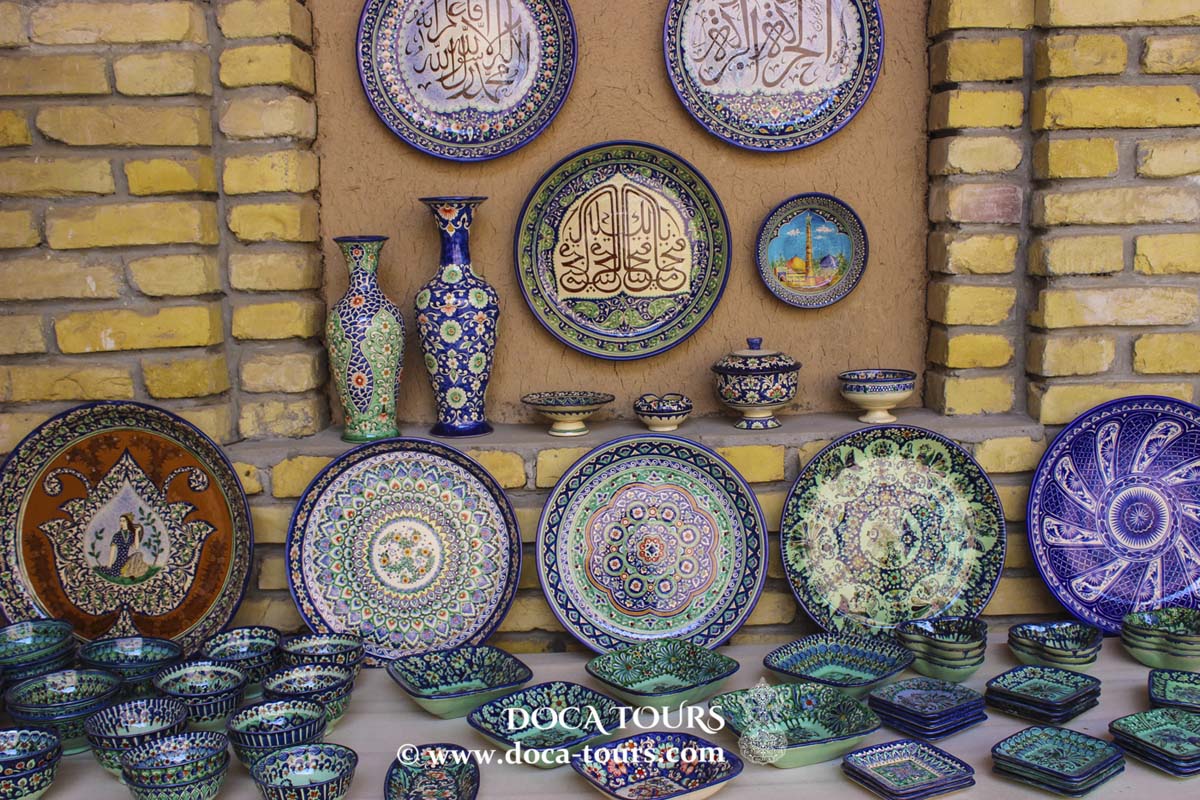
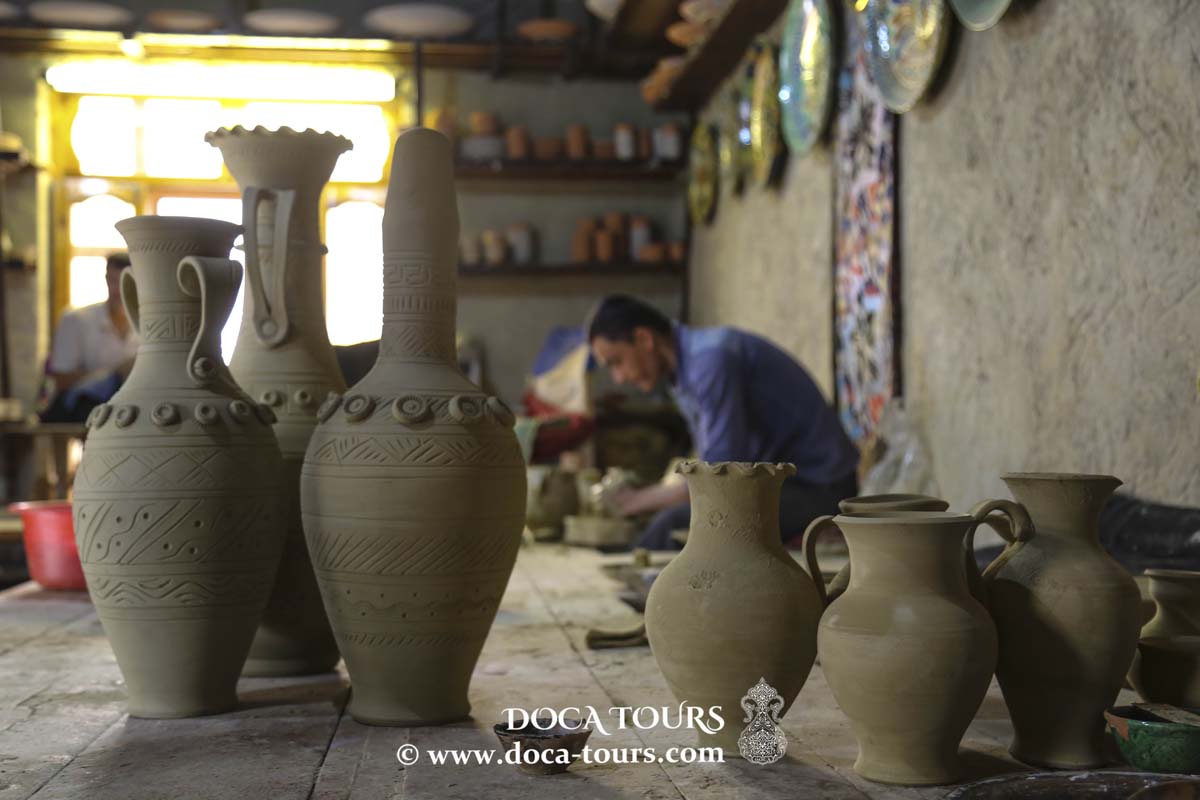
Your first stop is Gijduvan, a small town renowned for its centuries-old ceramic tradition. The art of pottery making has been passed down through generations, with families preserving their unique techniques for more than six centuries.
- At the Gijduvan Ceramic Museum and Workshop, you will see master potters at work, shaping and painting vibrant ceramics that feature traditional Uzbek motifs. The town’s signature ceramic style is known for its bold colors, intricate geometric and floral designs, and distinctive glazing techniques. Visitors will have the opportunity to try their hand at pottery and purchase handcrafted pieces as souvenirs.
- Stop 2: Sarmish – The Open-Air Petroglyph Museum (100 km, 1 hr 30 min)
Continuing the journey, you will arrive at Sarmish Gorge, an extraordinary archaeological site featuring over 10,000 ancient petroglyphs. These rock carvings, some dating back to the Bronze Age (around 3000 BC), depict hunting scenes, animals, ritual practices, and early human life.
- The petroglyphs are believed to have spiritual and symbolic significance for the nomadic tribes that once roamed the region. As you walk through this natural open-air museum, your guide will provide insights into the meanings of the carvings and their historical context. The dramatic landscape of Sarmish Gorge, surrounded by rugged mountains and desert terrain, offers excellent photography opportunities.
- Stop 3: Arrival at the Yurt Camp (150 km, 2 hrs)
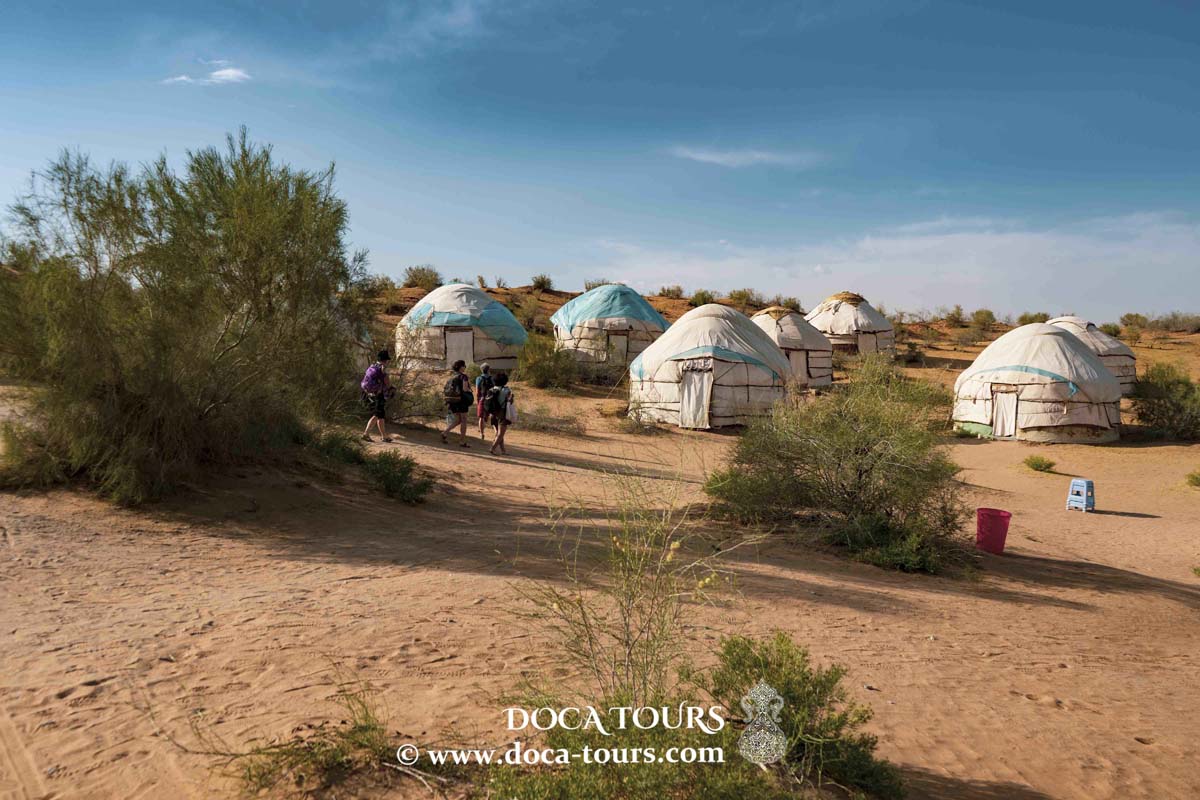
After exploring Sarmish, continue the journey deeper into the Kyzylkum Desert, where a traditional yurt camp awaits. Upon arrival, you will settle into your yurt, a round felt-covered tent decorated with handcrafted carpets and textiles.
The rest of the afternoon is free for you to enjoy at your own pace:
- Camel Ride Experience – Take a short camel ride through the dunes, experiencing the traditional mode of transport used by Silk Road traders and nomads.
- Walking Tour of the Desert – Explore the surroundings on foot, observing the unique desert landscape and its sparse yet resilient flora and fauna.
- Relaxation – Unwind in the peaceful desert atmosphere, enjoying the silence and vast open horizons.
Evening: Campfire, Folk Music, and Star Gazing
As the sun sets, a traditional dinner will be served around a campfire, featuring Uzbek and Kazakh nomadic dishes, including plov (rice pilaf), shashlik (grilled meat skewers), and freshly baked bread.
A Kazakh akin (folk singer and poet) will perform traditional music and improvisational storytelling, sharing centuries-old nomadic traditions through song.
After dinner, take time to gaze at the endless desert sky, where the absence of city lights allows for a breathtaking view of the Milky Way and constellations.
Overnight stay in a yurt, surrounded by the tranquility of the desert.
Wake up to the quiet beauty of the desert and enjoy a traditional breakfast at the yurt camp before setting off on another day of exploration.
A short drive will bring you to Aydarkul Lake, a vast, shimmering body of water that stretches over 4,000 square kilometers in the middle of the desert. This unexpected oasis is home to a variety of migratory birds and is an important ecological site.
At Aydarkul Lake, you will have time to: Walk along the shoreline and enjoy the serene desert scenery.
Swim in the clear waters, a refreshing contrast to the arid surroundings.
Observe the local anglers and learn about the lake’s role in the region’s ecosystem.
After a relaxing morning by the lake, return to the yurt camp for an early lunch, enjoying freshly prepared local dishes before continuing the journey.
Leaving the desert behind, travel to Nurata, a small town with a history dating back to the 4th century BC. Nurata is best known for its fortress ruins, believed to have been built by Alexander the Great during his conquest of Central Asia in 327 BC.
During your visit, explore: The Ruins of Alexander the Great’s Fortress – The fortress once served as a key military outpost, strategically positioned to control trade routes. Today, only fragments of the ancient walls remain, offering a glimpse into the military architecture of the time.
The Chashma Complex and Holy Spring – A sacred site believed to contain a natural spring with healing properties. According to legend, the Prophet Job (Ayub) struck the ground here, and a spring emerged. The site is now a place of pilgrimage, where visitors can see the clear, fish-filled waters and learn about local religious traditions.
The Nurata Mosque – A historic place of worship built near the holy spring, featuring beautiful Islamic architecture and a peaceful courtyard.
After exploring Nurata, the journey continues towards Samarkand, one of the most legendary cities of the Silk Road.
The drive from Nurata to Samarkand takes you through changing landscapes, from desert plains to fertile valleys. Along the way, you will pass traditional villages and agricultural fields, where locals cultivate wheat, cotton, and fruit orchards.
Arriving in Samarkand in the late afternoon, check in to your hotel and take time to rest after the long journey.
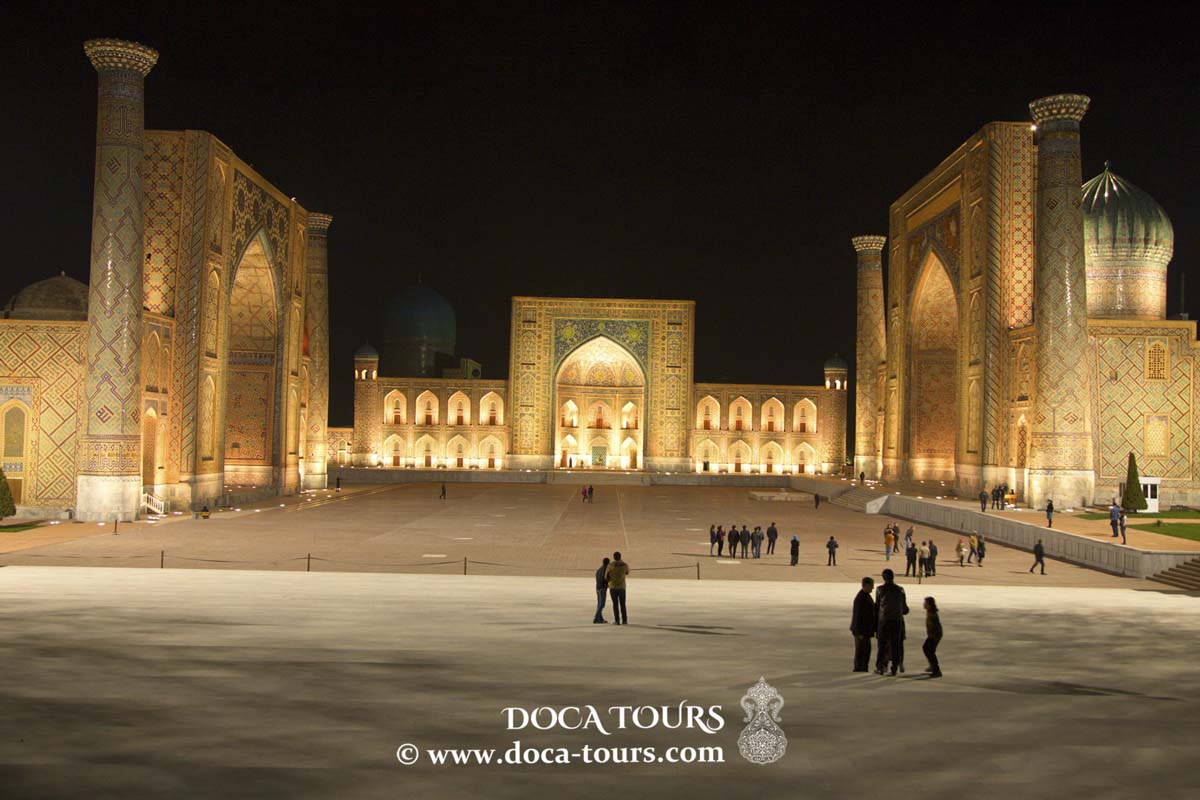
In the evening, you may choose to take a short walk around the city, getting your first glimpse of its famous turquoise domes and grand architectural monuments, beautifully illuminated at night.
Overnight stay in Samarkand.
Begin your day with a hearty breakfast at the hotel, preparing for a full-day exploration of Samarkand, one of the greatest cities of the ancient Silk Road. Known as the “Jewel of the East”, Samarkand is a living museum of Islamic architecture, history, and vibrant culture.
- Registan Square – The Beating Heart of Samarkand
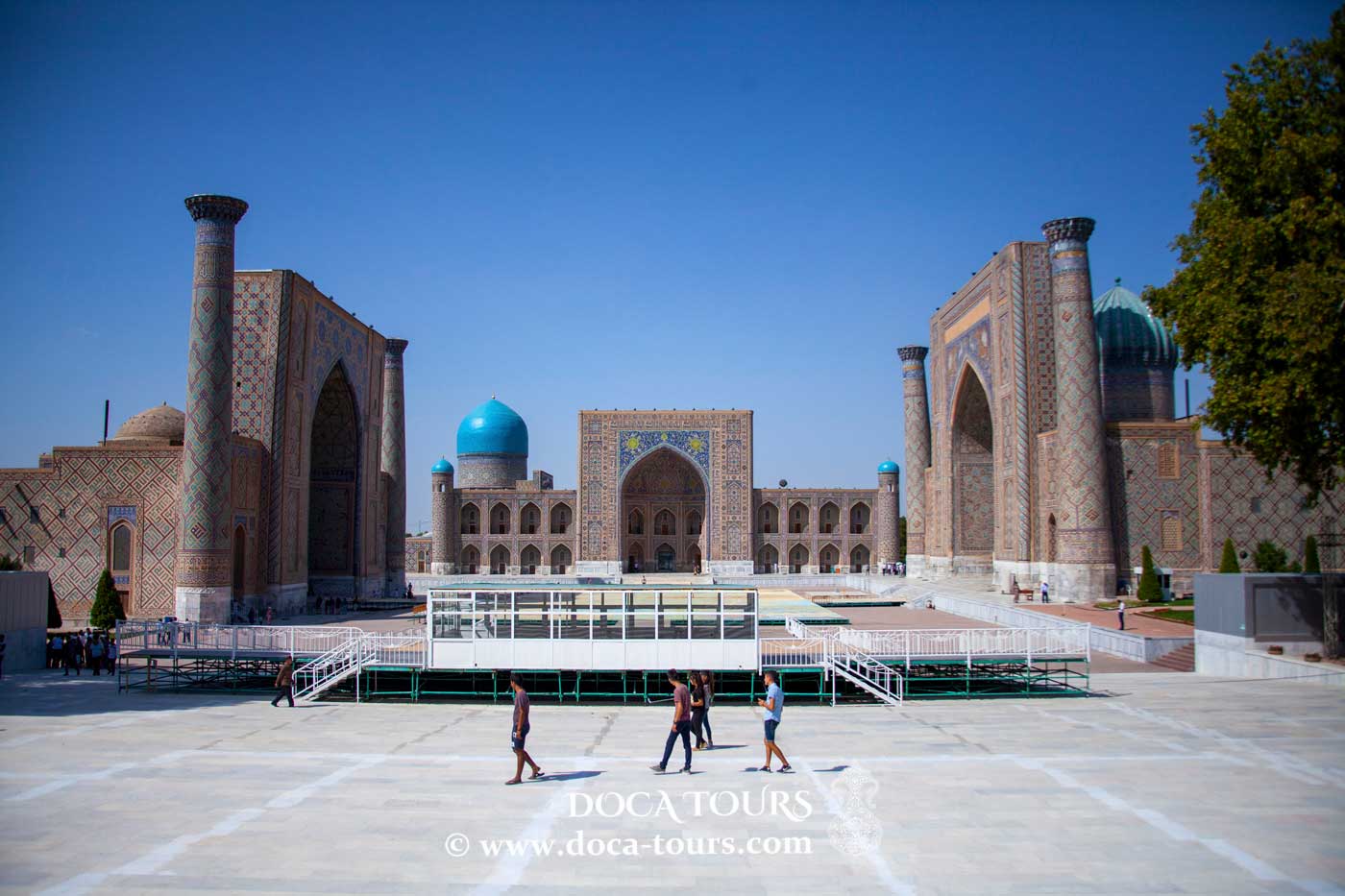
Your first stop is Registan Square, the most iconic and historically significant landmark of Samarkand. For centuries, this was the city's commercial and social hub, where merchants, scholars, and travelers gathered. Today, it is one of the most awe-inspiring architectural ensembles in the world. The square is framed by three magnificent madrasahs:
- Ulugbek Madrasah (15th century) – Built by the famous astronomer-king Ulugbek, this madrasah was a leading center of learning in Central Asia.
- Sher-Dor Madrasah (17th century) – Its striking facade features tigers hunting deer, a rare depiction in Islamic art.
- Tilla-Kori Madrasah (17th century) – This madrasah, meaning "gold-covered," is famous for its lavishly decorated gilded interior and impressive mosque.
Traditional Handicrafts and Souvenirs: Walk along a charming boulevard lined with workshops where you can witness artisans at work. Discover handwoven silk fabrics, woodcarvings, ceramics, and miniature paintings, and purchase unique souvenirs directly from the craftsmen.
- Bibi-Khanym Mosque – A Monument of Love: Visit the Bibi-Khanym Mosque, one of the largest and most ambitious projects of Amir Timur (Tamerlane). According to legend, this grand mosque was built in honor of his favorite wife, Bibi-Khanym, and upon completion, it was considered one of the most magnificent structures in the Islamic world. Despite centuries of wear, its towering portals, domes, and intricate mosaics still evoke a sense of awe.
- Siab Bazaar – A Feast for the Senses: Step into the bustling Siab Bazaar, a lively traditional market where the aromas of fresh spices, dried fruits, and Samarkand’s legendary bread fill the air. Explore the many stalls offering handmade sweets, nuts, dried apricots, and pomegranates, and witness the local bakers preparing none (Uzbek bread) in traditional tandoor ovens.
- Shakhi-Zinda Necropolis – The Avenue of Mausoleums: One of the most mystical and beautiful sites in Samarkand, Shakhi-Zinda is a complex of over twenty ornately decorated mausoleums, built between the 9th and 14th centuries. Climb the blue-domed pathway, where each tomb is adorned with intricate tilework, geometric patterns, and vibrant turquoise mosaics. The complex is believed to be the burial site of Kusam ibn Abbas, a cousin of the Prophet Muhammad.
- Gur Emir Mausoleum – The Final Resting Place of Tamerlane: No visit to Samarkand is complete without seeing Gur Emir, the majestic mausoleum of Amir Timur. The architectural brilliance of this site, with its deep blue dome, gold-covered interiors, and stunning calligraphy, makes it one of the most spectacular tombs in Central Asia. Here, Timur rests alongside his descendants and scholars, including the great astronomer Mirzo Ulugbek.
- Ulugbek Observatory – A Glimpse into Medieval Astronomy: End your tour at the Ulugbek Observatory, one of the greatest astronomical research centers of the medieval world. Founded in the 15th century by Ulugbek, this observatory was home to a massive sextant used for precise celestial measurements. Visit the Ulugbek Museum to learn about his contributions to astronomy, mathematics, and science.
After an enriching day, return to your hotel for a well-deserved rest.
Overnight in Samarkand.
Enjoy breakfast at the hotel before embarking on the final leg of your Samarkand journey. Today’s itinerary includes visits to key historical and cultural sites before traveling to Tashkent.
- Afrosiab – The Ancient City of Samarkand: Begin with a visit to the Afrosiab Museum and Archaeological Site, where you will explore the remnants of pre-Islamic Samarkand, dating back over 2,500 years. Here, you can see well-preserved wall paintings, artifacts, and pottery that provide Alexander the Great conquered a glimpse into the daily life of ancient Samarkand before it.
- The Mausoleum of Khodja Daniyar – A Sacred Pilgrimage Site: Next, visit the Mausoleum of Khodja Daniyar, believed by many to be the final resting place of Prophet Daniel. It is said that Timur brought the remains of the prophet here in the 14th century, and the tomb continues to be a place of pilgrimage for Muslims, Jews, and Christians alike. The site is famous for its elongated sarcophagus, which, according to legend, continues to grow.
- Konigil Village – The Art of Samarkand Paper Making: A short drive will take you to Konigil Village, where you will witness the ancient art of papermaking using mulberry tree bark. Samarkand paper was once considered the finest in the Islamic world, used in manuscripts, royal decrees, and paintings. Watch artisans revive this centuries-old tradition using water-powered mills and natural dyes.
- Silk Carpet Factory – The Weaving of Oriental Masterpieces: Continue to the Oriental Silk Carpet Factory, where you will see the delicate and labor-intensive process of hand-weaving carpets. Skilled artisans work for months, sometimes years, to complete a single masterpiece. You will have the opportunity to learn basic weaving techniques and even try your hand at the loom.
- Journey to Tashkent by High-Speed Train: After completing your sightseeing tour, transfer to the railway station for the afternoon journey to Tashkent. The high-speed train covers the 330 km distance in just 2 hours and 15 minutes, offering a comfortable ride with scenic views of Uzbekistan’s landscapes.
Upon arrival in Tashkent, you will be met at the station and transferred to your hotel for check-in. Enjoy the evening at your leisure, exploring the capital city’s vibrant nightlife or relaxing after your travels.
Overnight in Tashkent.
Day 10: Departure from Tashkent
On your final morning in Uzbekistan, enjoy breakfast at the hotel before checking out. Depending on your flight schedule, you may have time for some last-minute exploration or shopping in Tashkent.
A private transfer will take you to Tashkent International Airport, marking the end of your unforgettable journey along the Silk Road Caravan in Uzbekistan.
End of the Echoes of the Silk Road.
Included in the Tour Price
- All transfers
- Domestic Flights: Economy-class flight ticket from Tashkent to Urgench
- Train Tickets: Economy-class train tickets for the Samarkand to Tashkent route.
(In rare cases where the high-speed train is unavailable, alternative reservations will be made on a regular train.)
- Accommodation:
Hotel Stays (8 nights) – Accommodation in double/twin rooms at well-selected hotels, including daily breakfast.
Yurt Camp Stay (1 night) – Experience an authentic yurt camp stay in the Kyzylkum Desert, in a shared room, with lunch, dinner, and breakfast included.
- City Tours & Sightseeing:
- Private guided tours led by experienced English-speaking local guides on Days 1, 2, 4, 5, 8, and 9.
- All entrance fees to historical and cultural landmarks, as per the itinerary.
- Transportation during the trip
Not Included in the Tour Price
- Tour Leader to accompany the group throughout the entire tour duration.
- Uzbekistan Visa Fees:
- Consular fees for obtaining Uzbekistan tourist visa.
- Letter of Invitation (LOI) (if required for visa application).
- International Flights: Airfare to/from Uzbekistan before and after the tour.
- Gratuities/Tips: Tips for drivers, guides, and porters are not included.
- Additional Hotel Services: Personal expenses such as laundry, minibar, room service, and phone calls.
- Meals: Lunches and dinners are not included, except for meals at the yurt camp.
- Travel Insurance: Travelers are responsible for arranging their own travel insurance.
- Other Expenses: Any services, activities, or costs not explicitly mentioned in the "Inclusions" section.
Thank you very much for your interest in our travel services—we truly appreciate it!
With us, you will embark on some of the most unforgettable journeys of your life.
Simply send us your travel request, and we will tailor an itinerary based on your preferences. We take a flexible, personalized approach to ensure your trip meets your exact needs.
Once we receive your request, you will receive a response within 24 hours.
For a quicker reply, feel free to contact us via WhatsApp: +99893 352 00 44.
We look forward to planning your dream trip!
Your DOCA TOURS Team.
Included in the Tour Price
- All transfers
- Domestic Flights: Economy-class flight ticket from Tashkent to Urgench
- Train Tickets: Economy-class train tickets for the Samarkand to Tashkent route.
(In rare cases where the high-speed train is unavailable, alternative reservations will be made on a regular train.)
- Accommodation:
Hotel Stays (8 nights) – Accommodation in double/twin rooms at well-selected hotels, including daily breakfast.
Yurt Camp Stay (1 night) – Experience an authentic yurt camp stay in the Kyzylkum Desert, in a shared room, with lunch, dinner, and breakfast included.
- City Tours & Sightseeing:
- Private guided tours led by experienced English-speaking local guides on Days 1, 2, 4, 5, 8, and 9.
- All entrance fees to historical and cultural landmarks, as per the itinerary.
- Transportation during the trip
Not Included in the Tour Price
- Tour Leader to accompany the group throughout the entire tour duration.
- Uzbekistan Visa Fees:
- Consular fees for obtaining Uzbekistan tourist visa.
- Letter of Invitation (LOI) (if required for visa application).
- International Flights: Airfare to/from Uzbekistan before and after the tour.
- Gratuities/Tips: Tips for drivers, guides, and porters are not included.
- Additional Hotel Services: Personal expenses such as laundry, minibar, room service, and phone calls.
- Meals: Lunches and dinners are not included, except for meals at the yurt camp.
- Travel Insurance: Travelers are responsible for arranging their own travel insurance.
- Other Expenses: Any services, activities, or costs not explicitly mentioned in the "Inclusions" section.
Thank you very much for your interest in our travel services—we truly appreciate it!
With us, you will embark on some of the most unforgettable journeys of your life.
Simply send us your travel request, and we will tailor an itinerary based on your preferences. We take a flexible, personalized approach to ensure your trip meets your exact needs.
Once we receive your request, you will receive a response within 24 hours.
For a quicker reply, feel free to contact us via WhatsApp: +99893 352 00 44.
We look forward to planning your dream trip!
Your DOCA TOURS Team.
Upon arrival in Tashkent, the capital city of Uzbekistan and the largest metropolis in Central Asia, you will be greeted at the airport and transferred to your hotel. Check-in at the hotel begins at noon, allowing you to settle in and unwind after your flight. Take this time to rest and refresh yourself in preparation for an exciting day ahead.
Once you are ready, your private guide and driver will pick you up from the hotel lobby to commence your immersive city tour of Tashkent. As Uzbekistan’s cultural and economic hub, Tashkent beautifully blends ancient history with modern development, offering a fascinating insight into the country’s heritage and progress. Your guided tour will take you through some of the most significant landmarks and hidden gems of the city, including:
- The Old City and the Khazret-Imam Architectural Complex – This historic area of Tashkent is home to the renowned Khazret-Imam Complex, a spiritual center that houses one of the world’s oldest Qurans, believed to date back to the 7th century. The beautifully preserved complex consists of several ancient mosques and madrasahs, reflecting the city’s deep-rooted Islamic traditions.
- Chorsu Bazaar – Experience the bustling atmosphere of Tashkent’s most famous market, where locals gather to purchase fresh produce, spices, textiles, ceramics, and handcrafted souvenirs. This vibrant marketplace provides a glimpse into everyday Uzbek life and is an excellent place to explore the country’s rich culinary and artistic traditions.
- Tashkent Metro – Take a ride on the city’s immaculate subway system, one of the most visually stunning metro networks in the world. Each station is uniquely decorated with elaborate mosaics, intricate carvings, and artistic lighting, making it a fascinating experience beyond simple transportation.
- Amir Timur Square – Visit the heart of Tashkent, where a grand statue of Amir Timur (Tamerlane), Uzbekistan’s legendary conqueror, stands proudly at the center. Significant government buildings and cultural institutions, making it a perfect spot to learn about the country’s historical and contemporary influences, surround the square.
- Independence Square – The main square of Tashkent symbolizes Uzbekistan’s sovereignty and is home to several monuments, including the poignant Mourning Mother Monument and the Eternal Flame, dedicated to the memory of those who lost their lives during World War II.
- Sacred Heart Cathedral – Discover this stunning Roman Catholic Church, built in the early 20th century, which features magnificent stained-glass windows, soaring spires, and Gothic-style architecture. It serves as a testament to the city’s diverse religious history.
- Applied Arts Museum – End your city tour with a visit to this cultural gem, which displays some of the finest examples of Uzbekistan’s traditional handicrafts. Housed in an ornately decorated mansion, the museum displays exquisite embroidery, ceramics, woodcarvings, and silk textiles, offering insight into the country’s rich artistic heritage.
After an engaging and informative tour lasting approximately 4-5 hours, you will return to your hotel for an overnight stay in Tashkent, where you can relax and prepare for the next leg of your journey.
Early in the morning, you will be transferred to the local airport for a domestic flight to Urgench, located in western Uzbekistan. The flight covers a distance of approximately 1,093 kilometers and takes around 1 hour and 40 minutes. Upon arrival in Urgench, a driver will meet you at the airport and take you on a scenic 35-kilometer drive to the ancient city of Khiva, a UNESCO World Heritage site.
Upon reaching your hotel in Khiva, you will check in and meet your local guide, who will accompany you on a fascinating walking tour of the city. Known as the "Museum under the Open Sky," Khiva is an exceptionally well-preserved medieval town that transports visitors back in time with its intricate Islamic architecture, towering minarets, and labyrinthine alleys.
- Your tour will begin at Kunya-Ark Fortress, the oldest part of the city and the former residence of Khiva’s rulers. From here, you will continue to explore some of the city's most iconic landmarks:
- Kalta Minor Tower – One of the most striking architectural masterpieces in Khiva, this unfinished minaret was originally intended to be the tallest in Central Asia. Though construction was halted, it’s distinctive turquoise and blue tiles make it one of the most recognizable symbols of the city.
- Muhammad Amin-Khan Madrasah – The largest medieval madrasah in Khiva, this impressive structure once served as an educational institution for Islamic scholars. Today, it stands as a testament to the city’s rich academic and religious heritage.
- Muhammad Rahim-Khan Madrasah – This sprawling complex was one of the largest madrasahs in all of Central Asia, reflecting the importance of education and religious studies in the region.
- Juma Mosque – A unique mosque featuring 212 intricately carved wooden columns, some of which date back to the 10th century. The mosque’s vast interior creates a mesmerizing play of light and shadow, making it a truly captivating sight.
- Tash-Hauli Palace (Stone Courtyard Palace) – A spectacular example of 19th-century in Khiva architecture, this palace was built to resemble a fortress with high walls, fortified towers, and elaborately decorated interiors.
- Necropolis of Pahlavan Mahmud – A revered religious site, this necropolis is dedicated to Pahlavan Mahmud, a poet, philosopher, and warrior who became the patron saint of Khiva. The complex is adorned with exquisite tilework and intricate carvings.
- Minaret and Madrasah of Islam Khodja – The final stop on your tour is the minaret and madrasah dedicated to Islam Khodja, the personal advisor to the last khan of Khiva. The minaret, standing at an impressive height of 45 meters, offers the best panoramic views of the city from its top platform.
After an extensive 6–7-hour exploration of Khiva’s architectural wonders and historical sites, you will return to your hotel for a well-deserved overnight stay. Enjoy the peaceful ambiance of this ancient city as you reflect on the incredible experiences of the day.
After enjoying an early breakfast at the hotel, prepare for an exciting overland journey from Khiva to Bukhara. The route stretches approximately 480 kilometers (7 hours) and takes you through the vast and arid landscapes of the Kyzylkum Desert, one of Central Asia’s largest deserts.
This historic route was once an integral part of the legendary Great Silk Road, the ancient trade network that connected China, Central Asia, the Middle East, and Europe. Merchants, travelers, and explorers traversed this path for centuries, carrying precious goods such as silk, spices, and ceramics while exchanging knowledge and culture.
During the drive, marvel at the ever-changing desert scenery, where golden dunes, dry steppe vegetation, and occasional nomadic settlements paint a picture of Uzbekistan’s remote wilderness. You will make stops along the way to stretch your legs and take in the breathtaking expanse of the desert. Be sure to capture some photos of this unique and timeless landscape.
Arriving in Bukhara in the late afternoon, you will check in to your hotel and have some time to unwind after the long journey. In the evening, enjoy a leisurely walk around Bukhara’s Old City, where centuries-old architecture and a peaceful ambiance transport you to a bygone era. You can explore nearby teahouses, boutique shops, and traditional courtyards, soaking in the charm of this UNESCO-listed historic city.
Overnight stay in Bukhara.
After a hearty breakfast at the hotel, embark on an immersive 6 to 7-hour guided walking tour through the heart of Bukhara, a city that has preserved its medieval charm and spiritual significance for over a thousand years. Bukhara was once a great center of learning and commerce along the Silk Road, and today, its well-preserved monuments stand as testaments to its glorious past.
Key Highlights of the Bukhara Old City Tour:
- Lyabi-Hauz Ensemble – This lively square, dating back to the 16th–17th centuries, is considered the centerpiece of Old Bukhara. It is built around a large rectangular reservoir, which served as an important water source for the city. Historic madrasahs, traditional teahouses, and artisan workshops, making it a perfect place to experience the city’s vibrant atmosphere, surround the area.
- Magoki-Attori Mosque – One of the oldest surviving mosques in Bukhara, originally built in the 12th century. Before the arrival of Islam, the site was home to a Zoroastrian temple, symbolizing Bukhara’s deep-rooted history of religious transformation.
- Trade Domes of Bukhara – Step into the bustling world of 16th-century bazaars, where merchants once traded silk, spices, and exquisite handicrafts. Today, the historic domed markets continue to offer an array of handmade souvenirs, from intricately woven carpets to finely crafted ceramics and jewelry.
- Poi Kalyan Ensemble – One of Bukhara’s most iconic landmarks, this architectural complex includes:
- The Kalyan Minaret, standing at 46 meters, once served as a beacon for travelers and a symbol of the city's grandeur.
- The Kalyan Mosque, an expansive place of worship with a vast courtyard and stunning blue-tiled domes
- The Miri-Arab Madrasah, a revered Islamic school that continues to function as a place of religious study.
- Ulugbek and Abdulazizkhan Madrasahs – Two madrasahs facing each other, representing different eras of Bukhara’s architectural brilliance. The famous Timurid ruler and astronomer commissioned the Ulugbek Madrasah (15th century), while the Abdulazizkhan Madrasah (17th century) displays lavish decoration and intricate carvings.
- Ark Fortress – A magnificent 4th-century citadel that served as a royal residence and military stronghold for Bukhara’s rulers. Inside, you will find a museum detailing the city’s history, with exhibits displaying ancient artifacts, royal treasures, and remnants of past dynasties.
- Bolo-Khauz Complex – Dating back to the 18th century, this picturesque site includes a mosque and minaret built next to a small water reservoir. The mosque’s wooden-pillared façade is an architectural masterpiece reflecting traditional Bukharan design.
- Samanid Mausoleum – A stunning 9th-century structure and one of the oldest Islamic mausoleums in Central Asia. Built entirely of baked brick, its unique geometric patterns and harmonious symmetry make it an outstanding example of early Islamic architecture.
- Chashma Ayub Mausoleum – Also known as the "Spring of Job," this religious site is linked to the biblical prophet Job (Ayub). Legend has it that he struck the ground here, causing a healing spring to emerge.
After an enriching day of exploration, return to your hotel for a well-deserved rest.
Overnight stay in Bukhara.
Today, you will venture beyond the central old city to explore lesser-known yet fascinating sites that reveal more about Bukhara’s diverse cultural heritage. This 3 to 4-hour guided tour will take you to some of the city's most intriguing landmarks.
- Chor Minor – This charming 18th-century madrasah is instantly recognizable for its four small turquoise-domed minarets, each with distinct decorative patterns. It once served as a library and educational center, and today, it remains one of Bukhara’s most photogenic monuments.
- Sitorai Mokhi-Khosa (Emir’s Summer Residence) – A splendid palace located just outside the city, built as a summer retreat for Bukhara’s last emirs. The architecture blends traditional Bukharan elements with Russian imperial influences, creating a unique and lavish design. The palace’s name translates to "Star and Moon Palace," reflecting its ethereal beauty.
- Bakhautdin Naqshband Mausoleum – A sacred pilgrimage site dedicated to Bahouddin Naqshband, the revered founder of the Naqshbandi Sufi Order. This tranquil complex is an important spiritual destination for Sufis and visitors interested in Islamic mysticism.
- Fayzulla Khodjaev House Museum – Step into a beautifully preserved 19th-century Bukharan house that once belonged to Fayzulla Khodjaev, a prominent political figure in the early 20th century. The museum provides an intimate glimpse into the traditional lifestyle, culture, and interior décor of Bukharan aristocrats during that era.
After the tour, you will have free time to further explore Bukhara at your own pace. Whether you choose to relax in a teahouse, shop for souvenirs, or simply enjoy the historic ambiance, your time in Bukhara is sure to leave lasting memories.
Overnight stay in Bukhara.
After breakfast at the hotel, your driver will pick you up for a journey into the Kyzylkum Desert, where you will spend the night in a traditional yurt camp, experiencing the nomadic way of life. Along the way, you will stop at key cultural and historical sites that highlight Uzbekistan’s artistic heritage and ancient civilizations.
- Stop 1: Gijduvan – The Art of Ceramics (50 km, 1 hr)
Your first stop is Gijduvan, a small town renowned for its centuries-old ceramic tradition. The art of pottery making has been passed down through generations, with families preserving their unique techniques for more than six centuries.
- At the Gijduvan Ceramic Museum and Workshop, you will see master potters at work, shaping and painting vibrant ceramics that feature traditional Uzbek motifs. The town’s signature ceramic style is known for its bold colors, intricate geometric and floral designs, and distinctive glazing techniques. Visitors will have the opportunity to try their hand at pottery and purchase handcrafted pieces as souvenirs.
- Stop 2: Sarmish – The Open-Air Petroglyph Museum (100 km, 1 hr 30 min)
Continuing the journey, you will arrive at Sarmish Gorge, an extraordinary archaeological site featuring over 10,000 ancient petroglyphs. These rock carvings, some dating back to the Bronze Age (around 3000 BC), depict hunting scenes, animals, ritual practices, and early human life.
- The petroglyphs are believed to have spiritual and symbolic significance for the nomadic tribes that once roamed the region. As you walk through this natural open-air museum, your guide will provide insights into the meanings of the carvings and their historical context. The dramatic landscape of Sarmish Gorge, surrounded by rugged mountains and desert terrain, offers excellent photography opportunities.
- Stop 3: Arrival at the Yurt Camp (150 km, 2 hrs)
After exploring Sarmish, continue the journey deeper into the Kyzylkum Desert, where a traditional yurt camp awaits. Upon arrival, you will settle into your yurt, a round felt-covered tent decorated with handcrafted carpets and textiles.
The rest of the afternoon is free for you to enjoy at your own pace:
- Camel Ride Experience – Take a short camel ride through the dunes, experiencing the traditional mode of transport used by Silk Road traders and nomads.
- Walking Tour of the Desert – Explore the surroundings on foot, observing the unique desert landscape and its sparse yet resilient flora and fauna.
- Relaxation – Unwind in the peaceful desert atmosphere, enjoying the silence and vast open horizons.
Evening: Campfire, Folk Music, and Star Gazing
As the sun sets, a traditional dinner will be served around a campfire, featuring Uzbek and Kazakh nomadic dishes, including plov (rice pilaf), shashlik (grilled meat skewers), and freshly baked bread.
A Kazakh akin (folk singer and poet) will perform traditional music and improvisational storytelling, sharing centuries-old nomadic traditions through song.
After dinner, take time to gaze at the endless desert sky, where the absence of city lights allows for a breathtaking view of the Milky Way and constellations.
Overnight stay in a yurt, surrounded by the tranquility of the desert.
Wake up to the quiet beauty of the desert and enjoy a traditional breakfast at the yurt camp before setting off on another day of exploration.
A short drive will bring you to Aydarkul Lake, a vast, shimmering body of water that stretches over 4,000 square kilometers in the middle of the desert. This unexpected oasis is home to a variety of migratory birds and is an important ecological site.
At Aydarkul Lake, you will have time to: Walk along the shoreline and enjoy the serene desert scenery.
Swim in the clear waters, a refreshing contrast to the arid surroundings.
Observe the local anglers and learn about the lake’s role in the region’s ecosystem.
After a relaxing morning by the lake, return to the yurt camp for an early lunch, enjoying freshly prepared local dishes before continuing the journey.
Leaving the desert behind, travel to Nurata, a small town with a history dating back to the 4th century BC. Nurata is best known for its fortress ruins, believed to have been built by Alexander the Great during his conquest of Central Asia in 327 BC.
During your visit, explore: The Ruins of Alexander the Great’s Fortress – The fortress once served as a key military outpost, strategically positioned to control trade routes. Today, only fragments of the ancient walls remain, offering a glimpse into the military architecture of the time.
The Chashma Complex and Holy Spring – A sacred site believed to contain a natural spring with healing properties. According to legend, the Prophet Job (Ayub) struck the ground here, and a spring emerged. The site is now a place of pilgrimage, where visitors can see the clear, fish-filled waters and learn about local religious traditions.
The Nurata Mosque – A historic place of worship built near the holy spring, featuring beautiful Islamic architecture and a peaceful courtyard.
After exploring Nurata, the journey continues towards Samarkand, one of the most legendary cities of the Silk Road.
The drive from Nurata to Samarkand takes you through changing landscapes, from desert plains to fertile valleys. Along the way, you will pass traditional villages and agricultural fields, where locals cultivate wheat, cotton, and fruit orchards.
Arriving in Samarkand in the late afternoon, check in to your hotel and take time to rest after the long journey.
In the evening, you may choose to take a short walk around the city, getting your first glimpse of its famous turquoise domes and grand architectural monuments, beautifully illuminated at night.
Overnight stay in Samarkand.
Begin your day with a hearty breakfast at the hotel, preparing for a full-day exploration of Samarkand, one of the greatest cities of the ancient Silk Road. Known as the “Jewel of the East”, Samarkand is a living museum of Islamic architecture, history, and vibrant culture.
- Registan Square – The Beating Heart of Samarkand
Your first stop is Registan Square, the most iconic and historically significant landmark of Samarkand. For centuries, this was the city's commercial and social hub, where merchants, scholars, and travelers gathered. Today, it is one of the most awe-inspiring architectural ensembles in the world. The square is framed by three magnificent madrasahs:
- Ulugbek Madrasah (15th century) – Built by the famous astronomer-king Ulugbek, this madrasah was a leading center of learning in Central Asia.
- Sher-Dor Madrasah (17th century) – Its striking facade features tigers hunting deer, a rare depiction in Islamic art.
- Tilla-Kori Madrasah (17th century) – This madrasah, meaning "gold-covered," is famous for its lavishly decorated gilded interior and impressive mosque.
Traditional Handicrafts and Souvenirs: Walk along a charming boulevard lined with workshops where you can witness artisans at work. Discover handwoven silk fabrics, woodcarvings, ceramics, and miniature paintings, and purchase unique souvenirs directly from the craftsmen.
- Bibi-Khanym Mosque – A Monument of Love: Visit the Bibi-Khanym Mosque, one of the largest and most ambitious projects of Amir Timur (Tamerlane). According to legend, this grand mosque was built in honor of his favorite wife, Bibi-Khanym, and upon completion, it was considered one of the most magnificent structures in the Islamic world. Despite centuries of wear, its towering portals, domes, and intricate mosaics still evoke a sense of awe.
- Siab Bazaar – A Feast for the Senses: Step into the bustling Siab Bazaar, a lively traditional market where the aromas of fresh spices, dried fruits, and Samarkand’s legendary bread fill the air. Explore the many stalls offering handmade sweets, nuts, dried apricots, and pomegranates, and witness the local bakers preparing none (Uzbek bread) in traditional tandoor ovens.
- Shakhi-Zinda Necropolis – The Avenue of Mausoleums: One of the most mystical and beautiful sites in Samarkand, Shakhi-Zinda is a complex of over twenty ornately decorated mausoleums, built between the 9th and 14th centuries. Climb the blue-domed pathway, where each tomb is adorned with intricate tilework, geometric patterns, and vibrant turquoise mosaics. The complex is believed to be the burial site of Kusam ibn Abbas, a cousin of the Prophet Muhammad.
- Gur Emir Mausoleum – The Final Resting Place of Tamerlane: No visit to Samarkand is complete without seeing Gur Emir, the majestic mausoleum of Amir Timur. The architectural brilliance of this site, with its deep blue dome, gold-covered interiors, and stunning calligraphy, makes it one of the most spectacular tombs in Central Asia. Here, Timur rests alongside his descendants and scholars, including the great astronomer Mirzo Ulugbek.
- Ulugbek Observatory – A Glimpse into Medieval Astronomy: End your tour at the Ulugbek Observatory, one of the greatest astronomical research centers of the medieval world. Founded in the 15th century by Ulugbek, this observatory was home to a massive sextant used for precise celestial measurements. Visit the Ulugbek Museum to learn about his contributions to astronomy, mathematics, and science.
After an enriching day, return to your hotel for a well-deserved rest.
Overnight in Samarkand.
Enjoy breakfast at the hotel before embarking on the final leg of your Samarkand journey. Today’s itinerary includes visits to key historical and cultural sites before traveling to Tashkent.
- Afrosiab – The Ancient City of Samarkand: Begin with a visit to the Afrosiab Museum and Archaeological Site, where you will explore the remnants of pre-Islamic Samarkand, dating back over 2,500 years. Here, you can see well-preserved wall paintings, artifacts, and pottery that provide Alexander the Great conquered a glimpse into the daily life of ancient Samarkand before it.
- The Mausoleum of Khodja Daniyar – A Sacred Pilgrimage Site: Next, visit the Mausoleum of Khodja Daniyar, believed by many to be the final resting place of Prophet Daniel. It is said that Timur brought the remains of the prophet here in the 14th century, and the tomb continues to be a place of pilgrimage for Muslims, Jews, and Christians alike. The site is famous for its elongated sarcophagus, which, according to legend, continues to grow.
- Konigil Village – The Art of Samarkand Paper Making: A short drive will take you to Konigil Village, where you will witness the ancient art of papermaking using mulberry tree bark. Samarkand paper was once considered the finest in the Islamic world, used in manuscripts, royal decrees, and paintings. Watch artisans revive this centuries-old tradition using water-powered mills and natural dyes.
- Silk Carpet Factory – The Weaving of Oriental Masterpieces: Continue to the Oriental Silk Carpet Factory, where you will see the delicate and labor-intensive process of hand-weaving carpets. Skilled artisans work for months, sometimes years, to complete a single masterpiece. You will have the opportunity to learn basic weaving techniques and even try your hand at the loom.
- Journey to Tashkent by High-Speed Train: After completing your sightseeing tour, transfer to the railway station for the afternoon journey to Tashkent. The high-speed train covers the 330 km distance in just 2 hours and 15 minutes, offering a comfortable ride with scenic views of Uzbekistan’s landscapes.
Upon arrival in Tashkent, you will be met at the station and transferred to your hotel for check-in. Enjoy the evening at your leisure, exploring the capital city’s vibrant nightlife or relaxing after your travels.
Overnight in Tashkent.
Day 10: Departure from Tashkent
On your final morning in Uzbekistan, enjoy breakfast at the hotel before checking out. Depending on your flight schedule, you may have time for some last-minute exploration or shopping in Tashkent.
A private transfer will take you to Tashkent International Airport, marking the end of your unforgettable journey along the Silk Road Caravan in Uzbekistan.
End of the Echoes of the Silk Road.