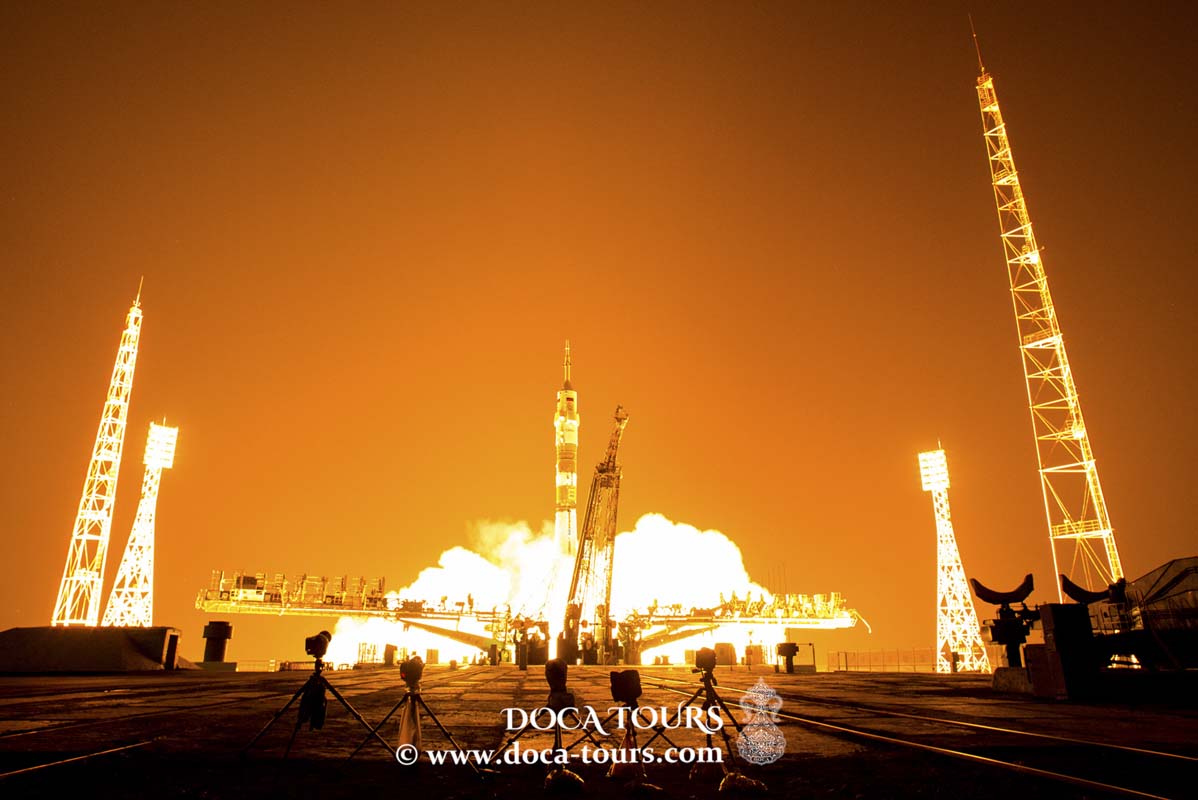
The Baikonur Cosmodrome, operated by Russia, is located in Kazakhstan. Situated in the Kazakh city of Baikonur, it is the largest operational spaceport in the world by area. All Russian crewed spaceflights are launched from this facility.
Nestled in the Kazakh steppe at an altitude of approximately 90 meters (300 feet) above sea level, Baikonur is about 200 kilometers (120 miles) east of the Aral Sea and north of the Syr Darya River. It lies near Toretam, a station on the Trans-Aral Railway. Since 1991, Russia, as the legal successor state to the Soviet Union, has maintained control over the site. Initially, it managed the facility through the post-Soviet Commonwealth of Independent States (CIS) but later formalized an agreement with Kazakhstan in 2005, allowing Russia to lease the cosmodrome until 2050. The site is jointly managed by Roscosmos and the Russian Aerospace Forces.
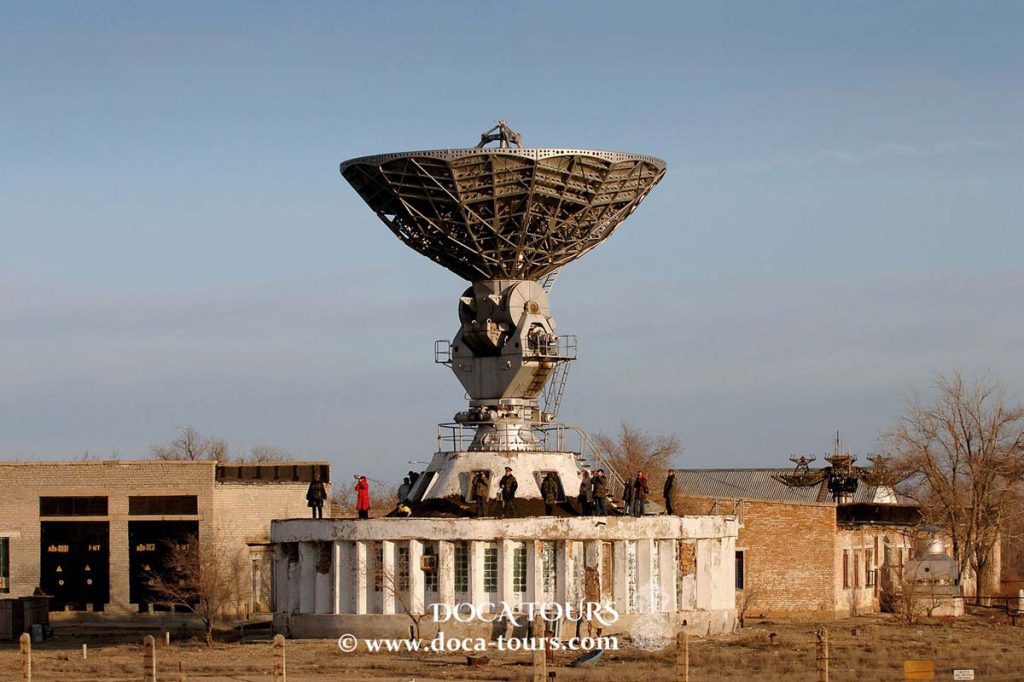
In 1955, the Ministry of Defense of the USSR issued a decree establishing the Baikonur Cosmodrome. Initially, it was constructed as the primary hub for the Soviet space program. This launch site became the departure point for both Sputnik-1 and Vostok-1 missions. The launch pad used for these historic events was later renamed "Gagarin's Start" in honor of Yuri Gagarin, the Soviet cosmonaut who piloted Vostok-1, becoming the first human to journey into outer space. Under current Russian administration, Baikonur remains an active spaceport, supporting numerous commercial, military, and scientific missions each year.
On February 12, 1955, the Soviet government authorized the creation of Research and Testing Range No. 5 (NIIP-5; Russian: 5-й Научно-Исследовательский Испытательный Полигон). Officially established on June 2, 1955, it was initially designed as a testing facility for the world’s first intercontinental ballistic missile (ICBM), the R-7 "Semyorka." Soon after, NIIP-5 was expanded to include launch complexes for space exploration missions.
The site was selected by a commission led by General Vasily Voznyuk, influenced by Sergey Korolev, the chief designer of the R-7 ICBM and later the mastermind behind the Soviet space program. The location had to meet several criteria: it needed to be surrounded by open plains to accommodate the missile’s radio control system, which required uninterrupted signals from ground stations spread across hundreds of kilometers. The missile’s trajectory also had to avoid populated areas. Additionally, proximity to the equator was advantageous, as the Earth’s surface rotates faster there, providing a boost to rockets launched into orbit.

Considering these requirements, the commission chose Tyuratam, a settlement in the heart of the Kazakh steppe. The construction of launch facilities, along with hundreds of kilometers of new roads and railways, made the cosmodrome one of the Soviet Union’s most expensive infrastructure projects. A support town was built around the facility to provide housing, schools, and other amenities for workers. In 1966, this settlement was officially designated a city and named Leninsk.
The American high-altitude reconnaissance aircraft U-2 first detected and photographed the Tyuratam missile test range on August 5, 1957.
In April 1975, as part of preparations for the Apollo-Soyuz Test Project, NASA astronauts were granted permission to visit the cosmodrome. Upon their return to the United States, the crew noted that during an evening flight to Moscow, they could see the lights of the launch pads and associated facilities for over 15 minutes. Astronaut Thomas Stafford remarked that, in comparison, "Cape Kennedy looks quite small."

According to most sources, the name Baikonur was deliberately chosen in 1961 (around the time of Gagarin's flight) to mislead the Western bloc toward a location approximately 320 kilometers (200 miles) northeast of the actual launch site. This referred to a small mining town and railway station called Baikonur near Zhezkazgan. The closed city of Leninsk, built to support the cosmodrome, was officially renamed Baikonur on December 20, 1995, by Boris Yeltsin.
NASA's historical account of the Apollo-Soyuz Test Project suggests that the name Baikonur wasn’t meant to misdirect but was actually a regional name for Tyuratam before the cosmodrome’s construction.
Russian scientist Afanasiy Ilyich Tobonov investigated mass animal deaths in the 1990s and concluded that such incidents occurred only along the flight paths of rockets launched from Baikonur. Dead birds and livestock were usually incinerated, and those involved in the burning—including Tobonov himself, his brothers, and residents of his native village Eliptyan—often succumbed to strokes or cancer. In 1997, the Russian Ministry of Defense altered the flight path and removed discarded rocket stages from areas near Russia's Nyurbinsky District.
In scientific literature, evidence highlights the harmful effects of rocket launches on the environment and public health. UDMH, a fuel used in certain Russian rocket engines, is highly toxic. It contributes to acid rain and cancer among the local population near the cosmodrome. Valery Yakovlev, head of the Laboratory of Ecosystem Research at the Kazmekhanobr State Research and Production Association for Applied Ecology, stated: "Scientists have identified the extreme destructive impact of the Baikonur Cosmodrome on the environment and the region’s population: 11,000 tons of space debris contaminated with highly toxic UDMH still remain scattered across crash zones." The disposal of this debris has become an integral part of the local economy.

Baikonur has been the launch site for many historic space missions: the first operational ICBM, the first artificial satellite Sputnik-1 on October 4, 1957, the first spacecraft to approach the Moon Luna-1 on January 2, 1959, Yuri Gagarin's first human orbital flight on April 12, 1961, and Valentina Tereshkova's historic flight as the first woman in space in 1963. Additionally, 14 cosmonauts from 13 other nations, including Czechoslovakia, East Germany, India, and France, launched from Baikonur as part of the Interkosmos program. In 1960, a prototype R-16 ICBM exploded during preparations, resulting in the deaths of over 100 people. The cosmodrome also hosted launches of spacecraft such as Venera-9 and Mars-3.
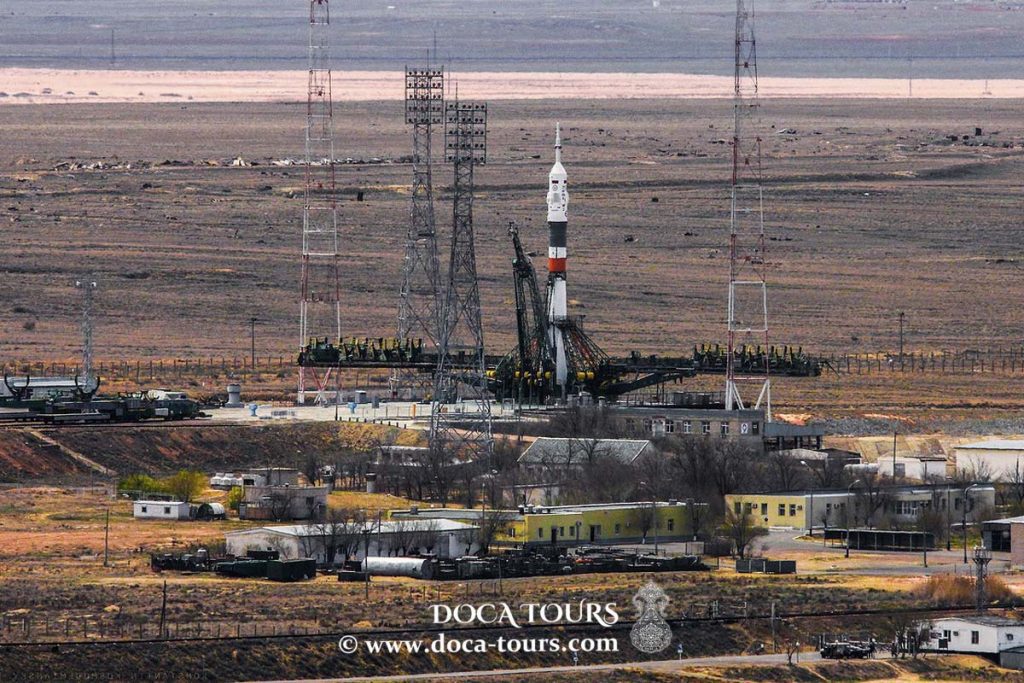
After the Soviet Union's collapse in 1991, Russia's space program continued to operate from Baikonur under the auspices of the Commonwealth of Independent States. Initially, Russia sought a 99-year lease for Baikonur but ultimately agreed to pay an annual rent of $115 million for 20 years, with an option to extend for 10 additional years. On June 8, 2005, the Russian Federation Council ratified an agreement between Russia and Kazakhstan extending Russia's lease of Baikonur until 2050. However, the fixed annual rent of $115 million has remained a longstanding point of contention between the two nations. To reduce its reliance on Baikonur, Russia constructed the Vostochny Cosmodrome in the Amur Region.
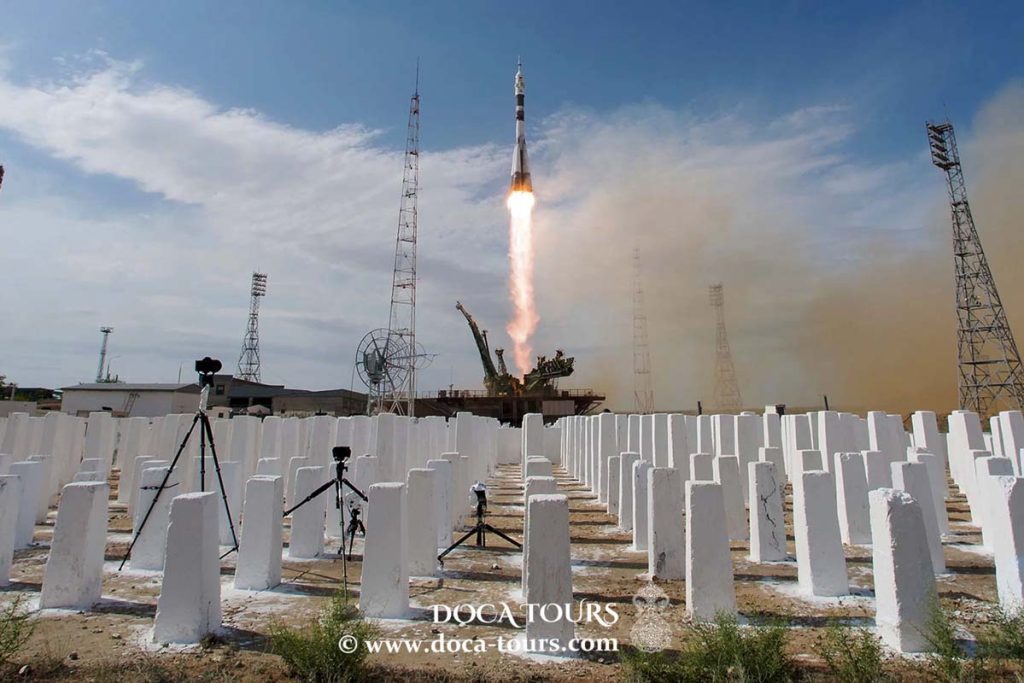
Baikonur has played a critical role in supporting the International Space Station (ISS), as it is the only cosmodrome used for Russian missions to the station. The inclination of the ISS orbit, 51.6°, is largely dictated by the location of Baikonur, situated near the 46th parallel north. This angle represents the lowest orbital inclination that Soyuz boosters can achieve from Baikonur without crossing over Chinese territory. Following the retirement of NASA's Space Shuttle program in 2011, Baikonur became the sole launch site for crewed ISS missions until the Crew Dragon Demo-2 launch in 2020.

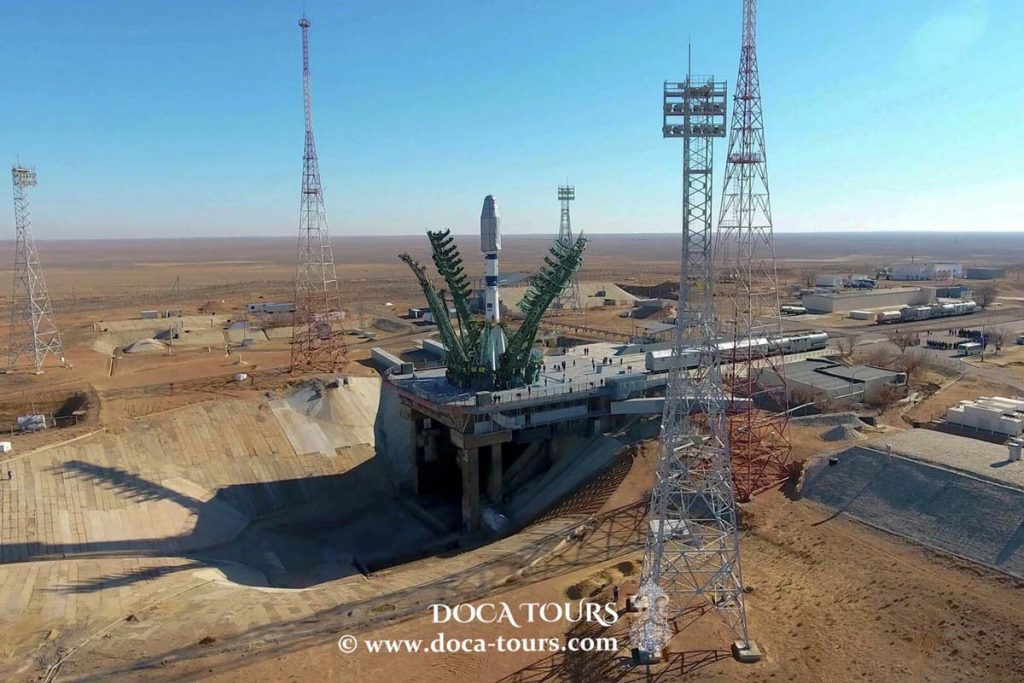
In 2019, Gagarin's Start hosted three crewed launches in March, July, and September before closing for upgrades to accommodate the new Soyuz-2 rocket, with its first launch initially planned for 2023. The final launch from Gagarin's Start occurred on September 25, 2019. However, the modernization project faced funding issues, partly due to the Russian invasion of Ukraine. By 2023, Russian and Kazakh authorities announced plans to deactivate Gagarin's Start as an active launch site and convert it into a museum, partially aimed at boosting tourism.
On March 7, 2023, the Kazakh government seized control of the Baiterek launch complex, part of the Baikonur Cosmodrome. This included barring several Russian officials from leaving Kazakhstan and preventing Roscosmos from liquidating its assets. The move was driven in part by Russia's failure to settle a $29.7 million debt to Kazakhstan. The takeover followed mounting tensions between the two nations, exacerbated by Russia’s ongoing invasion of Ukraine.
While Baikonur is globally recognized as the launch site for Soviet and Russian space missions, its primary purpose from its establishment in 1955 until the Soviet Union's collapse in 1991 was to test liquid-fueled intercontinental ballistic missiles (ICBMs). The facility's official (and classified) name was State Testing Range No. 5, or 5 GIK. It remained under the control of the Soviet and later Russian Ministry of Defense until the mid-1990s, when Russia's civilian space agency and its industrial contractors began taking over specific facilities.
In 2006, Roscosmos head Anatoly Perminov announced plans to withdraw the last Russian military personnel from Baikonur by 2007. However, on October 22, 2008, a test launch of an SS-19 Stiletto missile was conducted from Baikonur, suggesting that full military withdrawal may not have occurred.
On December 22, 2004, Kazakhstan and Russia signed an agreement to establish the joint venture "Russia-Kazakhstan Baiterek," with each country holding a 50% stake. The project aimed to develop the Baiterek ("poplar") launch complex at Baikonur to support the Russian Angara launch vehicle. The new system was expected to enable payloads of up to 26 tons to be launched into low Earth orbit, compared to 20 tons with the Proton system. A key advantage of Angara is its use of kerosene as fuel and oxygen as an oxidizer, which are less harmful to the environment compared to the toxic fuels used by older boosters. Kazakhstan's total investment in the project was estimated at $223 million over 19 years.
As of 2010, the project had stalled due to insufficient funding, though it was still regarded as promising. It offered Russia and Kazakhstan the opportunity to continue collaborating on Baikonur even after the construction of Russia’s Vostochny Cosmodrome. By 2017, the first launch from the Baiterek rocket and space complex was scheduled for 2025.
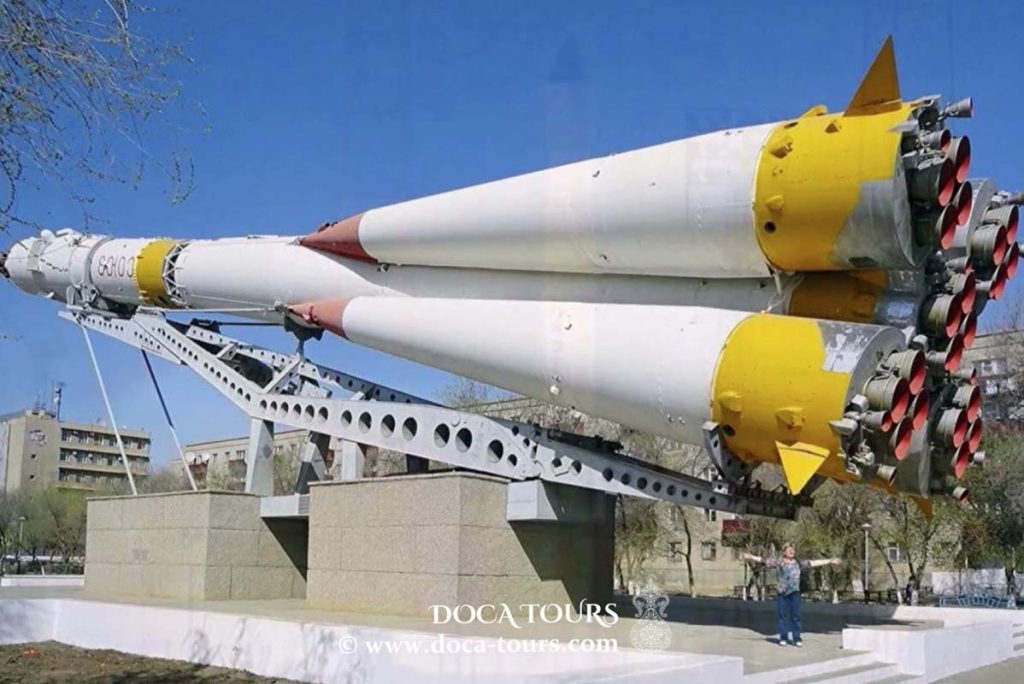
The Baikonur Cosmodrome hosts a small museum located near two modest cottages where rocket engineer Sergey Korolev and the first cosmonaut, Yuri Gagarin, once lived. These historic cottages have been preserved and are part of the museum complex. The museum houses a collection of space artifacts, including a restored test model from the Soviet Buran program. The only completed orbital Buran spacecraft, which conducted a single uncrewed test flight in 1988, was destroyed in 2002 when its hangar collapsed. A detailed list of surviving Buran spacecraft and artifacts can be found under the Buran Program section.
The museum also features photographs chronicling the cosmodrome’s history, including images of every cosmonaut. Each crew from every mission launched at Baikonur contributes a signed crew photograph, which is displayed under glass.
A significant portion of the collection is dedicated to Yuri Gagarin. Items include the ground control panel used during his historic flight, his uniform, and soil from his landing site, preserved in a silver container. The museum also displays an older version of the Soyuz descent capsule in one of its halls.
In 2021, the Baikonur Cosmodrome was ranked among the top 10 tourist destinations in Kazakhstan.
In 2023, plans were announced to integrate the "Gagarin’s Start" launch complex into the Baikonur museum complex.
The Baikonur Cosmodrome has been prominently featured in various forms of media.
Command & Conquer: Generals (2003) and its expansion Zero Hour depict the site as being seized by the GLA to launch an ICBM filled with biochemical weapons at an unspecified U.S. naval base in Europe. The U.S. recaptures it during the events of Zero Hour.
Call of Duty: Black Ops (2010) includes the cosmodrome in its campaign, where the protagonist is tasked by John F. Kennedy with destroying a Soyuz spacecraft and eliminating key targets at the launch complex. It is also featured in the multiplayer map "Launch" and the zombie map "Ascension."
Destiny (2014) includes a location inspired by Baikonur, reflecting its historical significance.
The Baikonur Cosmodrome and its surroundings are central to the 2022 French television miniseries Infiniti.
The site also plays a prominent role in Terry Hayes' 2023 spy-thriller novel Year of the Locust, which explores the cosmodrome, the city of Baikonur, and nearby areas, including the Aral Sea.
In Tom Clancy's EndWar, Baikonur appears as Russia's main space launch site within the "Veterans" map pack.