ARSLANBOB VALLEY
- Geographical coordinates: 41°20′N 72°56′E
- Elevation: 1,600 m
- Common Languages: Kyrgyz, Russian
- Ethnic Groups: Kyrgyz, Uzbek, Russians
- Population: 15 196 (as of 2021)
- Time Zone: UTC+6
- Postal Codes: 720801
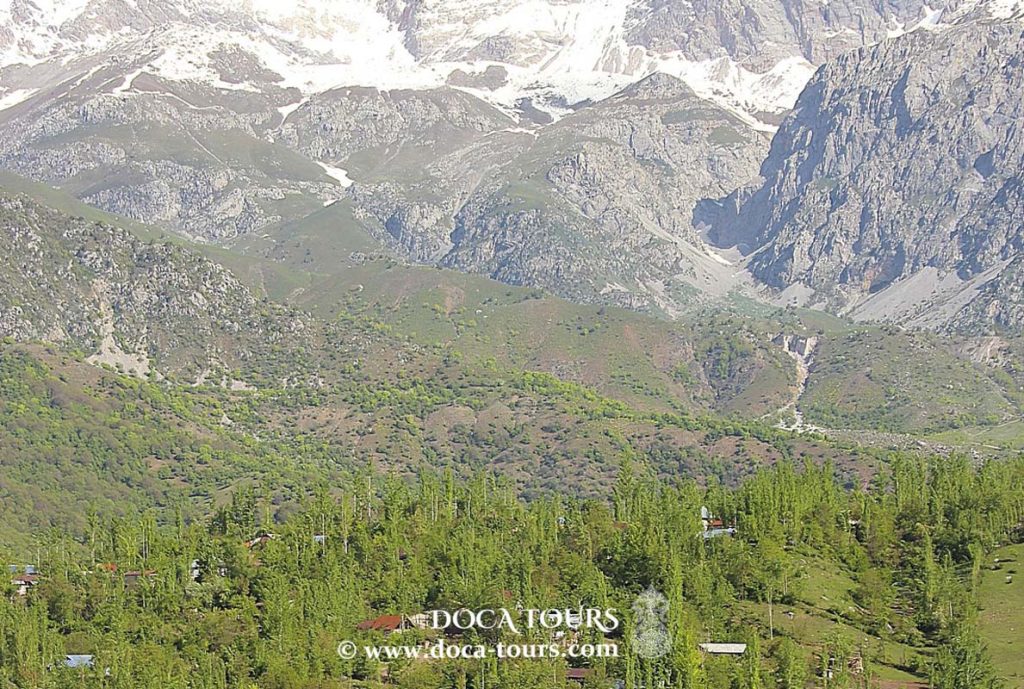
Arslanbob is a village, district, valley, mountain range, and a vast forest of wild walnut trees (Juglans regia) located in the Jalal-Abad region of Kyrgyzstan. The first known export from Kyrgyzstan to Europe was the walnut from Arslanbob. The area is home to two waterfalls, which draw tourists, pilgrims, and other visitors during the spring and summer seasons.
As of 2021, the population of Arslanbob was 15,196.
Etymology
The name "Arslanbob" honors an 11th-century figure, Arslanbob-Ata (also known as Arstanbap-Ata). The suffix "bob" is a traditional term used in Arslanbob, meaning "traveler and explorer."
History
According to legend, Alexander the Great took walnuts from the Arslanbob forest, which later established walnut plantations in Europe. This connection is why the walnut is referred to as the "Greek walnut" in Russia. However, scientific research suggests that the walnut forests around Arslanbob are approximately 1,000 years old and were likely cultivated. This aligns with another local story, which claims that the forest was planted under the guidance of Arstanbap, who founded the village and passed away around 1120 CE.

Geography
Arslanbob is accessible from Jalal-Abad via Bazar-Korgon. Kyzyl-Unkur, located 15 kilometers (9.3 miles) away, can be reached through Ugon-Talaa, situated in the Kara-Unkur Valley.
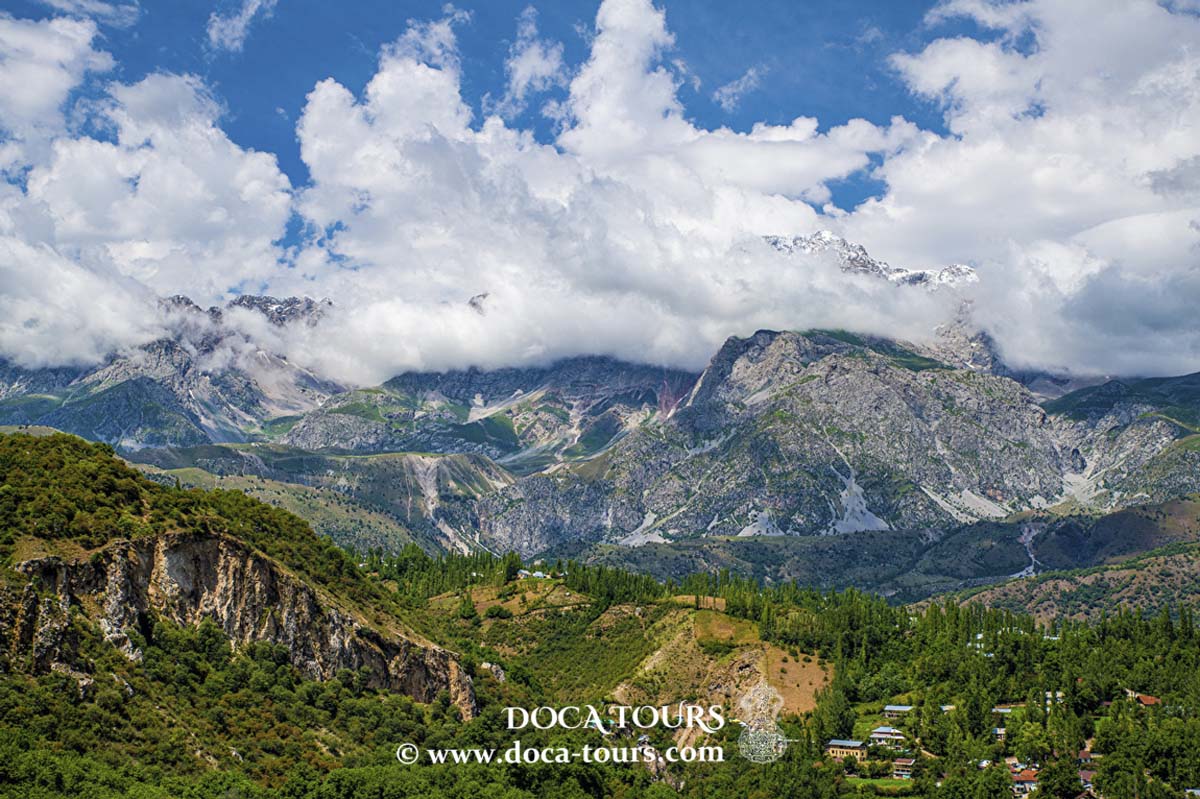
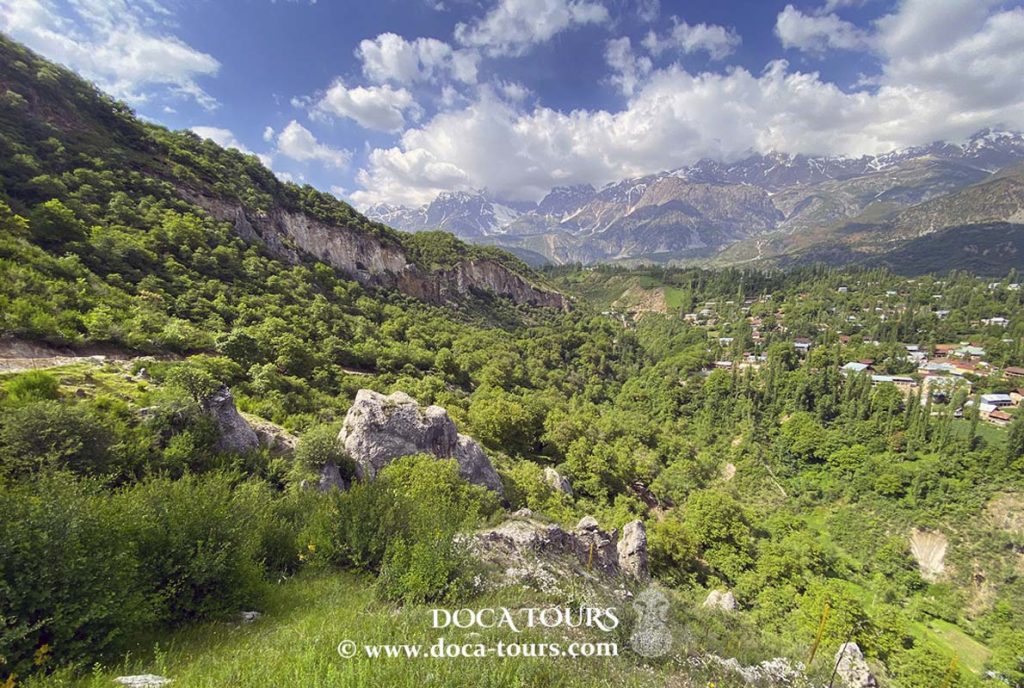
The walnut forest spans 60,000 hectares (150,000 acres) of land between the Fergana and Chatkal mountain ranges. This vast forest lies at an elevation of 1,500 to 2,000 meters (4,900 to 6,600 feet) above sea level, on the southern slopes of the Fergana Range. Covering 11,000 hectares (27,000 acres), the Arslanbob forest is the largest walnut grove in the world.
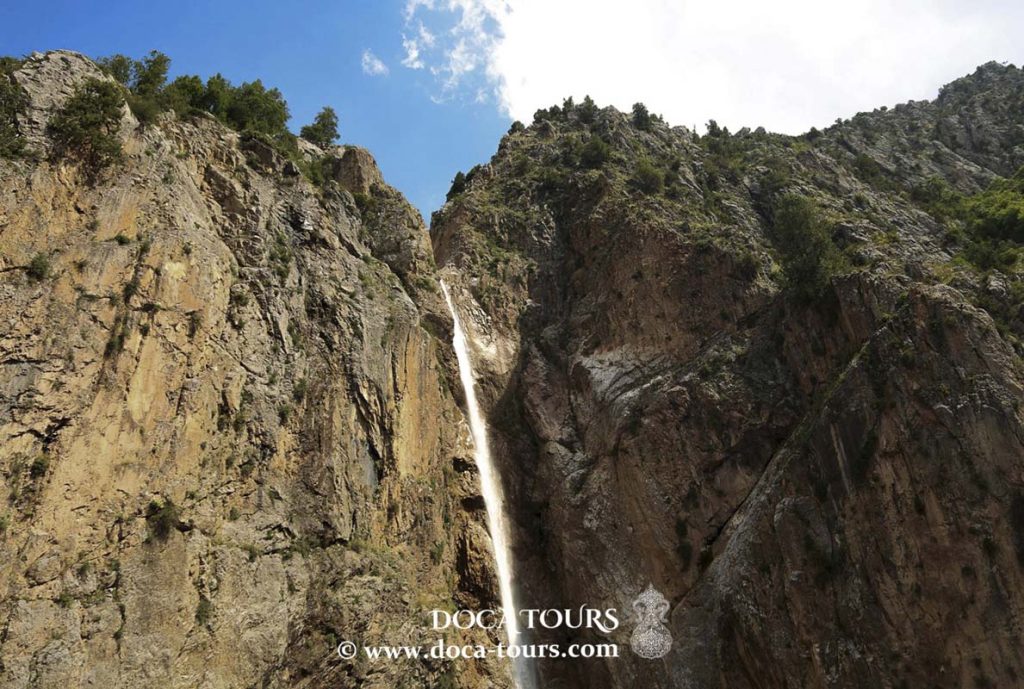
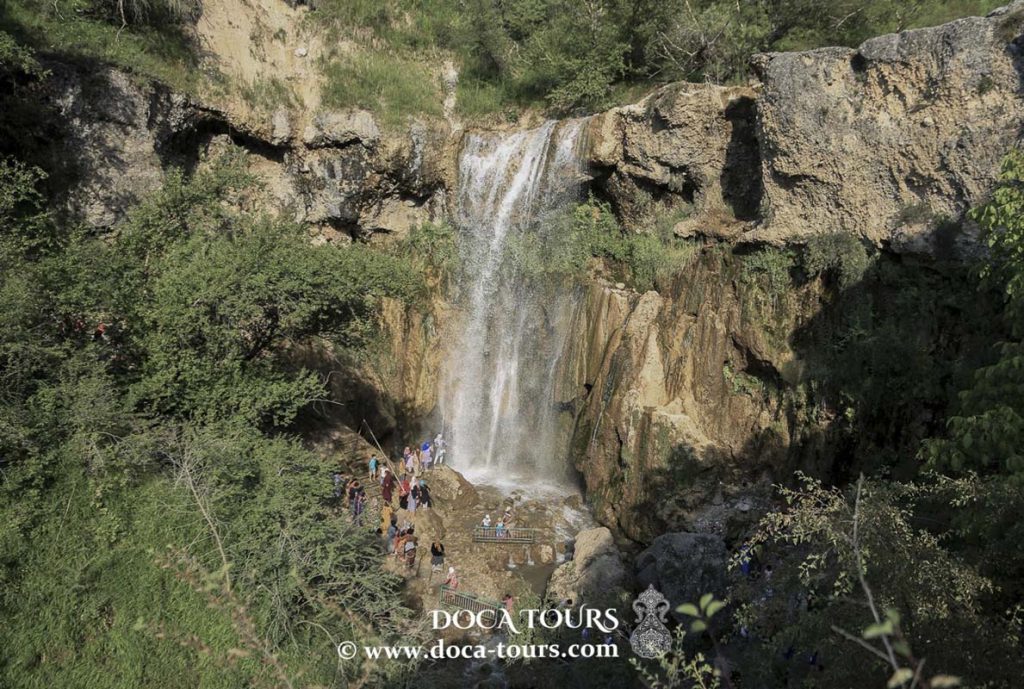
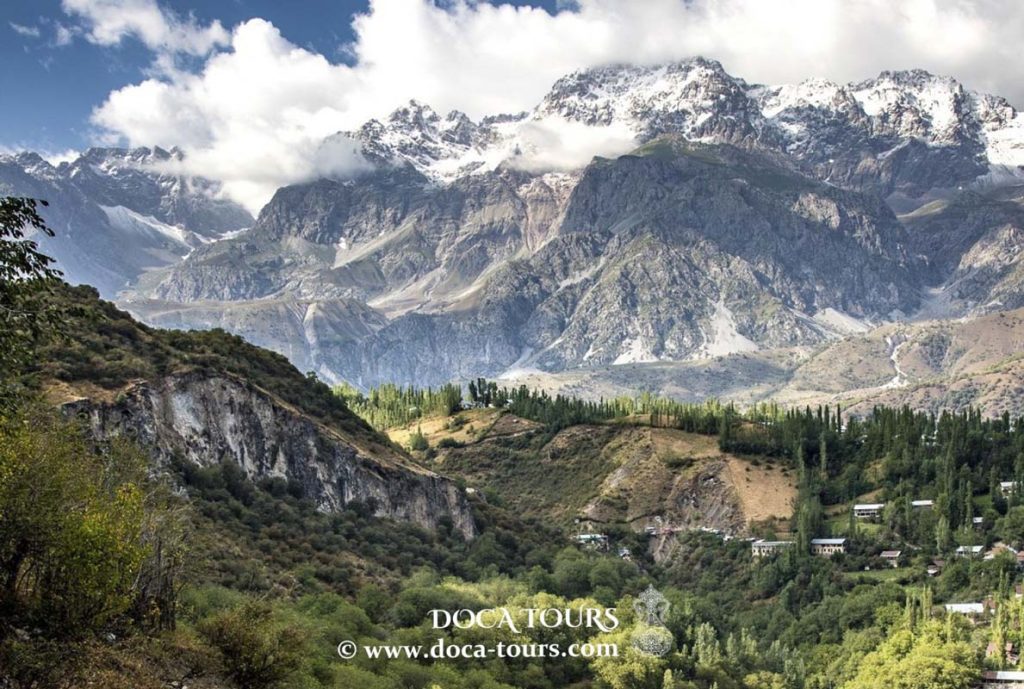
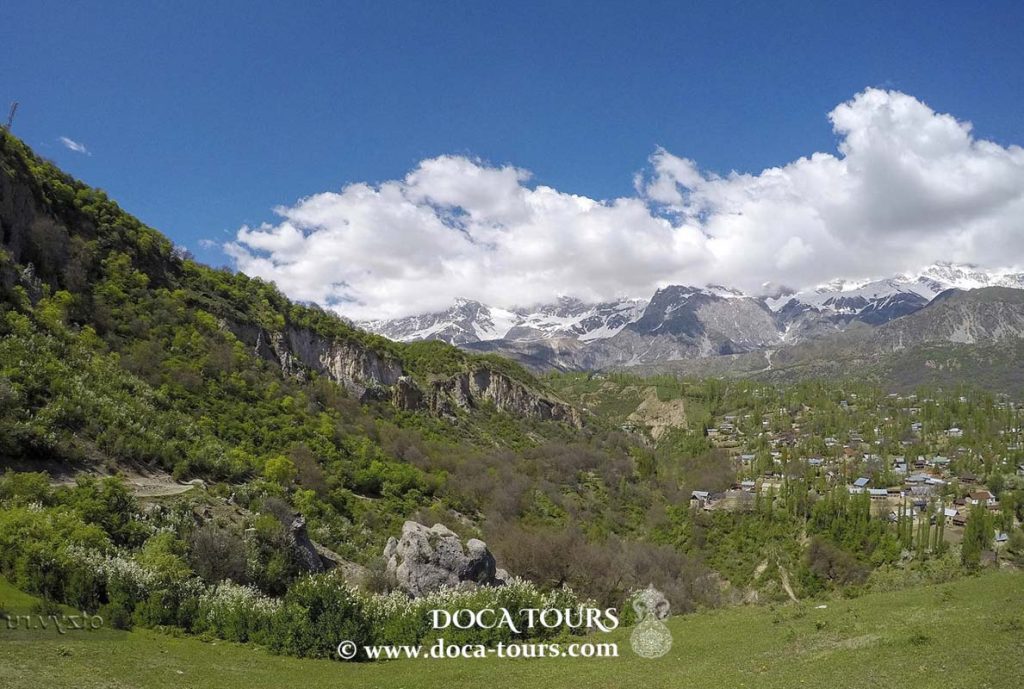
Beyond the village of Arslanbob rise the Babash-Ata mountains. Nearby are two waterfalls: one is 80 meters (260 feet) tall, with a slippery scree slope, located on a cliff to the north of the village. The other, to the east, is 23 meters (75 feet) high and features two prayer caves, one of which is called the Cave of 40 Angels. A short walk away lies the Dashman Forest Reserve, another walnut forest.
Flora and Fauna
Flora
The main threats to the forest include livestock grazing and haymaking. Additionally, nut collection, hunting, logging, firewood gathering, and climate change impact the forest’s regeneration capacity.
In September 1995, the International Union for Conservation of Nature (IUCN) held a workshop in Arslanbob to discuss the region's "exceptional botanical garden" of walnut-fruit forests. These forests, distributed across the Arslanbob-Kugart and Khoja-Ata ranges, once covered 630,900 hectares (1,559,000 acres). However, decades of exploitation have significantly reduced their size. These dense forests contain a unique variety of species with high economic value.
Following World War II, in 1945, Arslanbob became home to an experimental forest research station under the Soviet Academy of Sciences' Forestry Institute. The research aimed to establish commercial walnut plantations and optimize fruit, valuable timber, and other forest product yields. Reports highlighted successful results in cultivating walnut and fruit trees through collaborative research efforts.
Wild varieties of other fruit-bearing species, including apple (Malus siversiana), pear (Pyrus korshinsky), and plum (Prunus sogdiana), are also found in the region.
Fauna
Raccoons were introduced to the Arslanbob forest and now inhabit approximately 12,000–15,000 hectares (30,000–37,000 acres) in the western Achinsk district of the Jalal-Abad region.
Culture
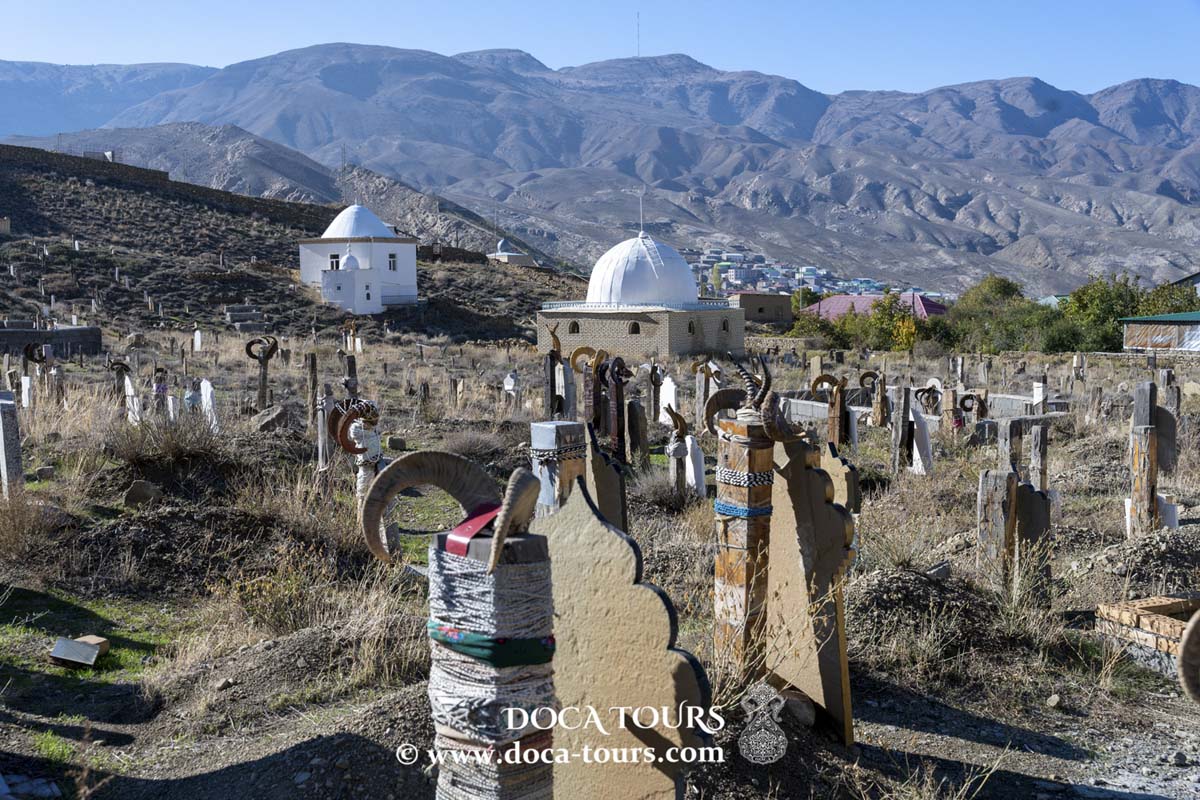
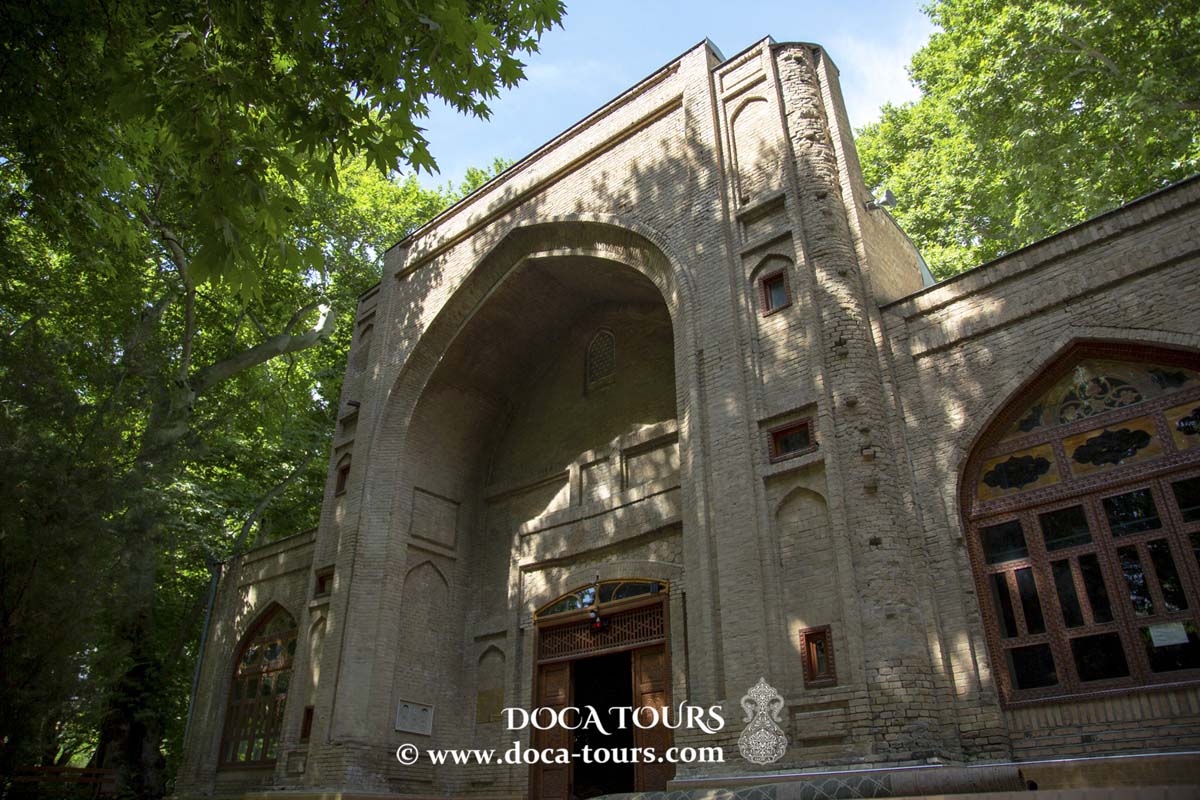
The tomb of Ibn Abbas, now in ruins, is located near the forest. The 16th-century mausoleum of Arslanbob-Ata is situated close to the village center. It is enclosed within a newer whitewashed brick structure built in the 20th century. The entrance features a walnut wood doorframe adorned with ram horns. Adjacent to the mausoleum is a newly constructed mosque with an impressive ceiling. Arslanbob also serves as a center for the Sufi order Volosatye Ishany and a branch of the Yasawiya tariqa.
Legends
According to legend, a disciple of the Prophet Muhammad, while searching for a paradise-like place on Earth, discovered the picturesque valley in Kyrgyzstan. However, finding the area barren, he reported the situation to the Prophet. In response, the Prophet Muhammad sent him seeds of various trees, including walnuts, to plant in the valley. The disciple, Arslanbob, scattered the seeds from a mountaintop, cultivating a thriving forest that he nurtured. This association with the Prophet makes the site sacred to Muslims.
A local tale recounts that Arslanbob-Ata's wife betrayed him to his enemies, leading to his demise. It is also said that impressions of his feet and hands, along with bloodstains, can still be seen in the area.
Other legends suggest that Alexander the Great planted the first walnut trees in Arslanbob and carried sacks of walnuts to use as payment for ferrymen while transporting his troops.
Another story attributes the spread of walnuts to the trade routes of the Silk Road.
Economy
The local economy of Arslanbob revolves primarily around walnuts. During the walnut harvesting season, which lasts for one month in September, residents of Arslanbob and nearby villages gather walnuts. To do this, they lease small plots of land from the Forest Department on a five-year rental basis. In addition to walnuts, they also collect fruits and wood. This period is not only economically significant but also a time of community celebration.
Walnuts are highly valued for their content of oil, protein, antioxidants, and omega-3 fatty acids. Historically, walnuts were used in barter trade to secure essential services. This practice of bartering still occurs in some cases, such as paying a teacher or covering bus fares in the villages.
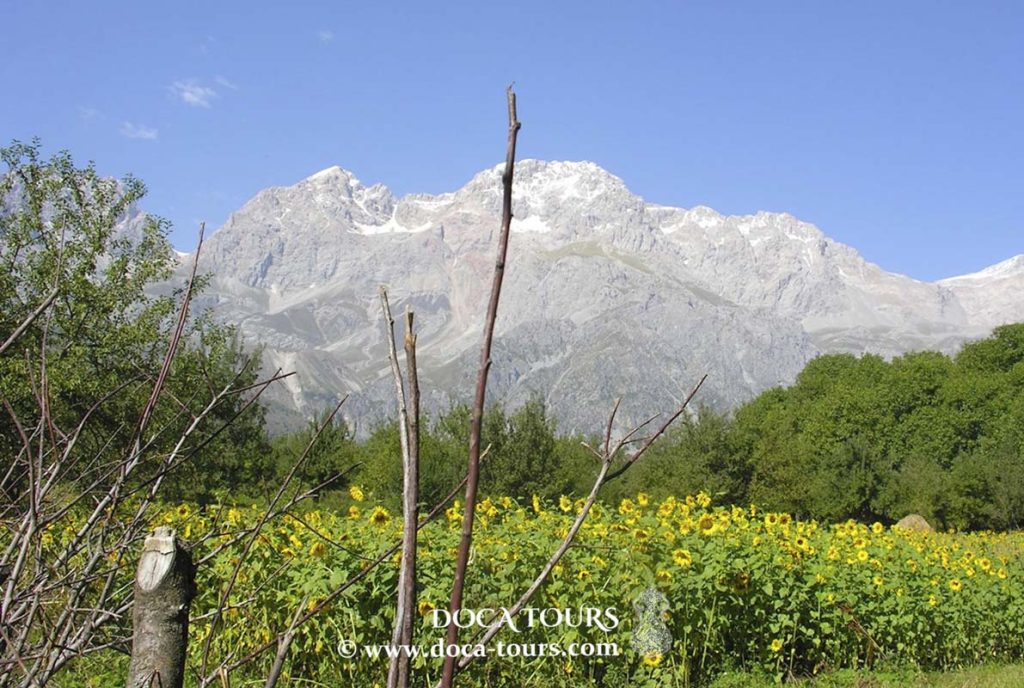
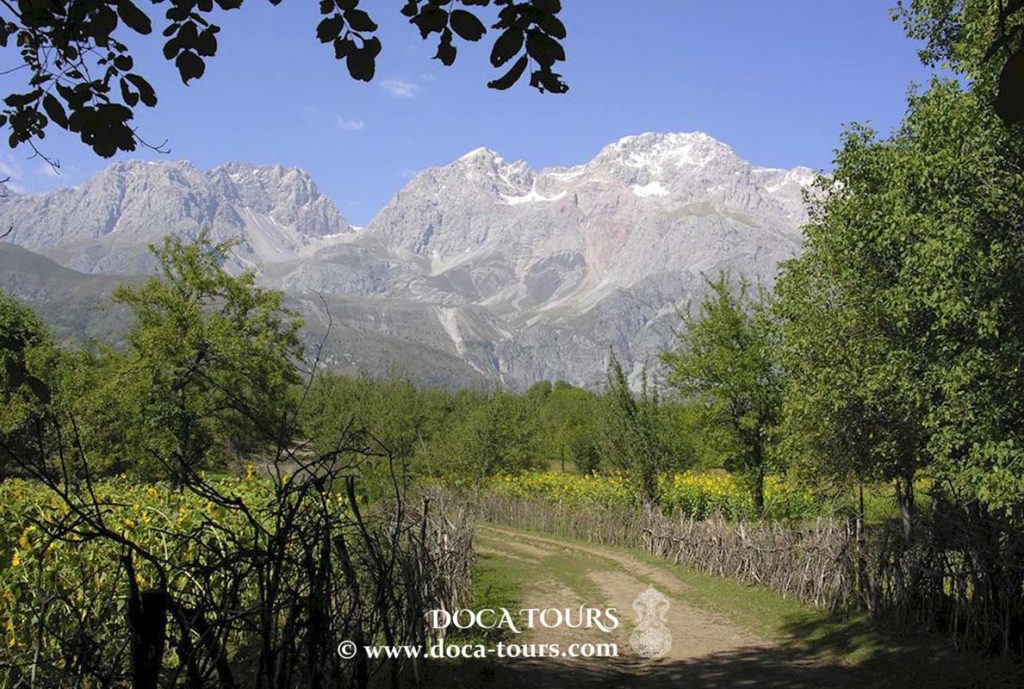
Other crops grown in the region include corn, potatoes, and sunflowers.
Tourism
Tourism is a growing industry in and around Arslanbob. Trekking is a well-established activity in the surrounding hills and valleys, while skiing as an adventure sport is in its early stages of development near the Jailoos mountains. Exploring the walnut forest through a hike that passes the village and leads to red cliffs is also a popular attraction during the season.
Two waterfalls in the area draw numerous visitors, who often seek blessings, magical powers, or spiritual experiences. The spaces around the waterfalls are adorned with prayer flags and fabric strips bearing wishes, a tradition linked to local beliefs. One of the waterfalls is said to have been visited by a saintly woman, further enhancing its spiritual significance.


 Following World War II, in 1945, Arslanbob became home to an experimental forest research station under the Soviet Academy of Sciences' Forestry Institute. The research aimed to establish commercial walnut plantations and optimize fruit, valuable timber, and other forest product yields. Reports highlighted successful results in cultivating walnut and fruit trees through collaborative research efforts.
Wild varieties of other fruit-bearing species, including apple (Malus siversiana), pear (Pyrus korshinsky), and plum (Prunus sogdiana), are also found in the region.
Following World War II, in 1945, Arslanbob became home to an experimental forest research station under the Soviet Academy of Sciences' Forestry Institute. The research aimed to establish commercial walnut plantations and optimize fruit, valuable timber, and other forest product yields. Reports highlighted successful results in cultivating walnut and fruit trees through collaborative research efforts.
Wild varieties of other fruit-bearing species, including apple (Malus siversiana), pear (Pyrus korshinsky), and plum (Prunus sogdiana), are also found in the region.
 Two waterfalls in the area draw numerous visitors, who often seek blessings, magical powers, or spiritual experiences. The spaces around the waterfalls are adorned with prayer flags and fabric strips bearing wishes, a tradition linked to local beliefs. One of the waterfalls is said to have been visited by a saintly woman, further enhancing its spiritual significance.