
























Key takeaways
- Itchan Kala is Khiva's walled inner city, a UNESCO World Heritage Site packed with mosques, madrasahs and minarets within a short walk.
- The Islam Khoja minaret stands 56.6 meters tall and rewards the 175-step climb with the best rooftop view in the old town.
- One ticket covers most monuments inside the walls, so plan a full day rather than a few hurried hours.
- Staying one night lets you see Itchan Kala at dawn and dusk when the day-trip crowds are gone.
- Khiva pairs naturally with a Kyzylkum desert crossing toward Bukhara for a complete Silk Road route.
Spend at least one full day inside Itchan Kala, Khiva's walled inner city, and stay the night if you can. This Khiva travel guide walks you through the gates of a living open-air museum where mosques, madrasahs and minarets stand within a few minutes' walk of each other. Khiva sits in the far west of Uzbekistan, the most complete of the country's three great Silk Road cities. Its old town is so tightly preserved that stepping through the main gate feels like crossing into the nineteenth century.
Most visitors arrive expecting a quick stop. They leave wishing they had booked another night. Here is how to see Khiva properly, what to climb, and how to fold it into a longer journey across Central Asia.
Entering the Open-Air Museum of Itchan Kala
Itchan Kala is the heart of any Khiva travel guide, a rectangle of mud-brick streets enclosed by towering walls and crowned with blue-tiled domes. The whole district is a UNESCO World Heritage Site, the first place in Uzbekistan to earn that status, and it holds dozens of monuments inside a compact grid you can cross on foot in ten minutes.
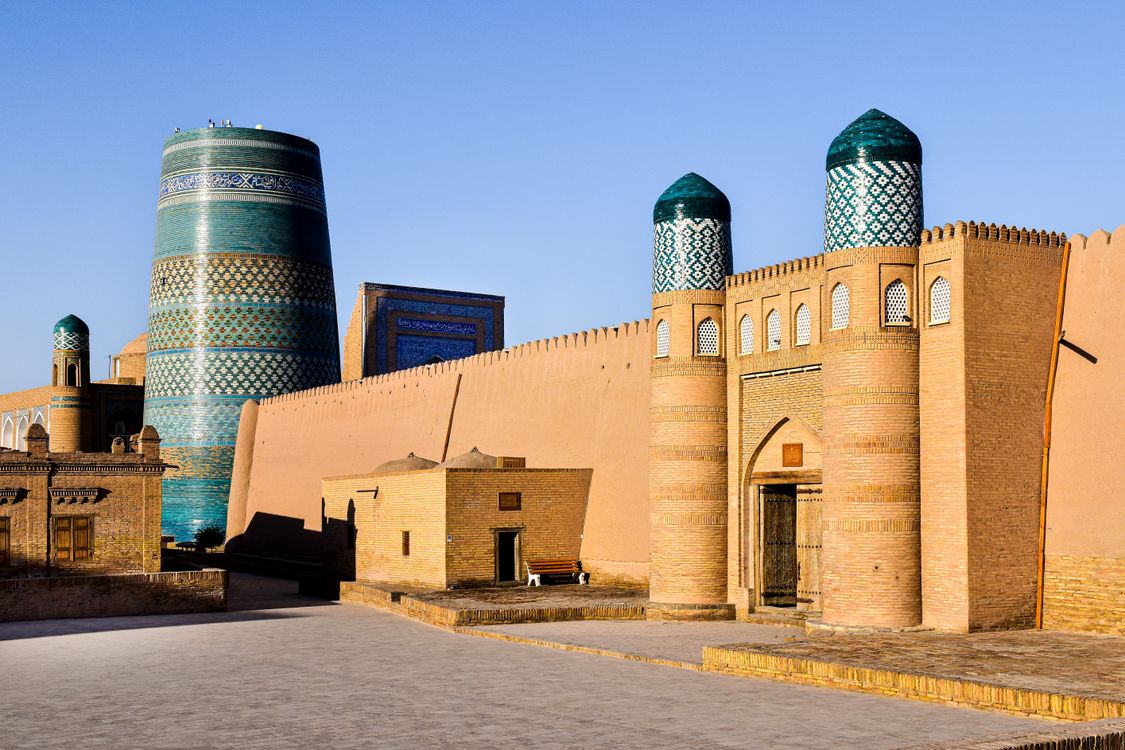
You enter through one of four gates set into the ramparts. The western Ata Darvoza gate is the main entrance, and it opens onto the city's showpiece view: the stubby turquoise bulk of the Kalta Minor minaret ahead and the citadel rising to the left. Buy a combined ticket here. It covers most museums, mosques and minarets inside the walls for two days, so you rarely pay again once you are through the gate.
The streets themselves are the attraction. Craftsmen still carve wood and hammer copper in doorways their families have worked for generations. Because the walls keep cars out, the only sounds are footsteps, call to prayer and the occasional tour group. If you are weighing whether the region suits you, our honest guide to safety in Central Asia covers what independent travelers actually experience here.
Kalta Minor, Kunya Ark and the Juma Mosque
Three monuments anchor the western end of Itchan Kala, and together they tell the story of Khiva's khans. The Kalta Minor minaret is the one everyone photographs first. Its band of glazed turquoise and green tiles wraps the entire squat tower, and it is unfinished: the ruler who commissioned it died in the mid-nineteenth century, and work stopped at roughly a third of the planned height. The result is a fat, gleaming stump that has become Khiva's signature image.
Behind it stands the Kunya Ark, the old royal fortress. This was the khan's seat of power, holding a throne room, a mint, a mosque and a prison. Climb the Ak Sheikh Bobo bastion inside the Ark for an early look over the rooftops; it is lower than the minarets but a good warm-up.
A short walk east brings you to the Juma Mosque, and it is unlike any other mosque you will see in Uzbekistan. Instead of a grand portal and dome, its flat roof rests on hundreds of carved wooden columns, some many centuries old, standing in dim rows. Shafts of light drop through two roof openings and move across the floor as the day passes. It is one of the oldest and most unusual structures inside the walls.
Climbing the Watchtowers for Sunset Views: A Khiva Travel Guide Highlight
The Islam Khoja minaret rises 56.6 meters above Khiva, the tallest structure in the old town, and the 175-step climb to its gallery delivers the finest view inside the walls (Uzbekistan.travel). Construction began in 1908, and the narrow spiral staircase is dark and tight, so bring a phone light and take it slowly when groups pass on the way down.
From the top, the whole walled city spreads below you: flat earthen roofs, the blue domes of the madrasahs, the ramparts marking the edge of the old town, and the Kyzylkum desert haze beyond. Time your climb for the last hour before sunset. The low light turns the mud-brick walls deep gold, and the tiled domes glow. The Kunya Ark bastion and the climbable minaret of the Juma Mosque offer lower alternatives if the main staircase feels too steep.
Sunset is also when the day-trippers leave. If you have stayed overnight, you will often have the viewing gallery almost to yourself, which brings us to the single most useful decision you can make about Khiva.
Why One Night in Khiva Beats a Day Trip
A day trip shows you Khiva's monuments. One overnight shows you Khiva. Many itineraries squeeze the old town into a few midday hours, which is exactly when the light is harsh, the courtyards are busy and the crowds peak. Staying inside or just outside the walls changes the experience completely.
Several guesthouses and boutique hotels sit within Itchan Kala itself, in restored madrasahs and merchant houses. Wake early and you can walk empty lanes at dawn, when the only people out are bakers and street sweepers. Return to the walls after dark, when the gates and minarets are lit and the day groups have driven back to their hotels elsewhere. The compact size that makes Khiva easy to rush is the same thing that makes an unhurried evening so rewarding.
Food is part of the case for staying. Khiva's signature dish, tukhum barak, is an egg-filled dumpling you rarely find elsewhere, and the regional take on plov differs from Tashkent or Samarkand. Our roundup of Central Asian dishes every traveler should try explains what to order and why. An overnight gives you time for a proper dinner rather than a rushed lunch between sights.
Combining Khiva with the Kyzylkum Desert Route
Khiva's remote location works in your favor, because the road east crosses the Kyzylkum desert and delivers you to Bukhara. This is one of the classic Silk Road legs: a drive of roughly six to seven hours that tracks the Amu Darya river before turning into open sand and scrub. Breaking the journey with a stop beside the river, or an overnight in a desert yurt camp, turns a transfer into a highlight.
The logic of the route is simple. Khiva sits at the western edge of Uzbekistan, so most travelers either fly in and drive out, or drive in and fly out, pairing it with Bukhara and Samarkand to the east. Planning the order of these cities is where a well-built itinerary pays off, and our guide to a two-week Silk Road itinerary lays out a sequence that avoids backtracking.
This is also where a guided trip earns its keep. The desert crossing has few services, road conditions vary, and the yurt camps worth staying in are not always easy to book independently. Doca Tours runs this western leg as part of its wider Central Asia packages, handling the Khiva nights, the desert transfer and the handover to Bukhara so you can watch the landscape instead of managing it.
Start by deciding how many nights you can give Khiva, then build the rest of the route outward from there. If the answer is at least one overnight inside the walls, you will have seen Itchan Kala the way it deserves to be seen: at dawn, at dusk, and from the top of its tallest minaret.
Frequently asked questions
How long should I spend in Khiva?
Plan at least one full day inside Itchan Kala, and ideally one overnight. The walled city is compact, but the early morning and evening light are the reason to stay rather than rush through on a day trip.
Do I need a ticket to enter Itchan Kala?
Walking the streets of Itchan Kala is free, but a combined ticket is required to enter most monuments, museums and minarets. One ticket typically covers the majority of sites inside the walls for two days.
What is the best thing to climb in Khiva?
The Islam Khoja minaret, at 56.6 meters, is the tallest in Khiva and the standout climb. The 175 narrow steps lead to a viewing gallery with a full panorama of the walled city's rooftops and domes.
How do I get from Khiva to Bukhara?
Most travelers cross the Kyzylkum desert by road, a drive of roughly six to seven hours that follows the Amu Darya river. It is a classic Silk Road leg, and guided tours usually fold it into a wider Uzbekistan itinerary.
Is Khiva worth visiting compared to Samarkand and Bukhara?
Yes. Khiva is smaller and more intact than Samarkand or Bukhara, with its entire old town enclosed by walls. Many travelers find it the most atmospheric of Uzbekistan's three main Silk Road cities.