ALMATY
- Geographical coordinates: 43°16′39″N 76°53′45″E
- Former Names: Almatu, Zailiyskiy, Verniy, Alma-Ata
- Elevation: 785 meters
- Common Languages: Kazakh, Russian
- Ethnic Groups: Kazakh, Russian, Uygur, Tatar, Korean
- Population: 500 803 (2020)
- Time Zone: UTC+5
- Telephone Code: +7 727
- Postal Codes: 0500XX
- Vehicle Registration Code: 02
Formerly known as Alma-Ata, Almaty is the largest city in Kazakhstan, with a population exceeding two million. It served as the nation's capital from 1929 to 1936 while Kazakhstan was an autonomous republic within the RSFSR, then from 1936 to 1991 as a Soviet Union republic, and finally as the capital of an independent Kazakhstan until 1997, when the government relocated the capital to Akmola (now Astana).
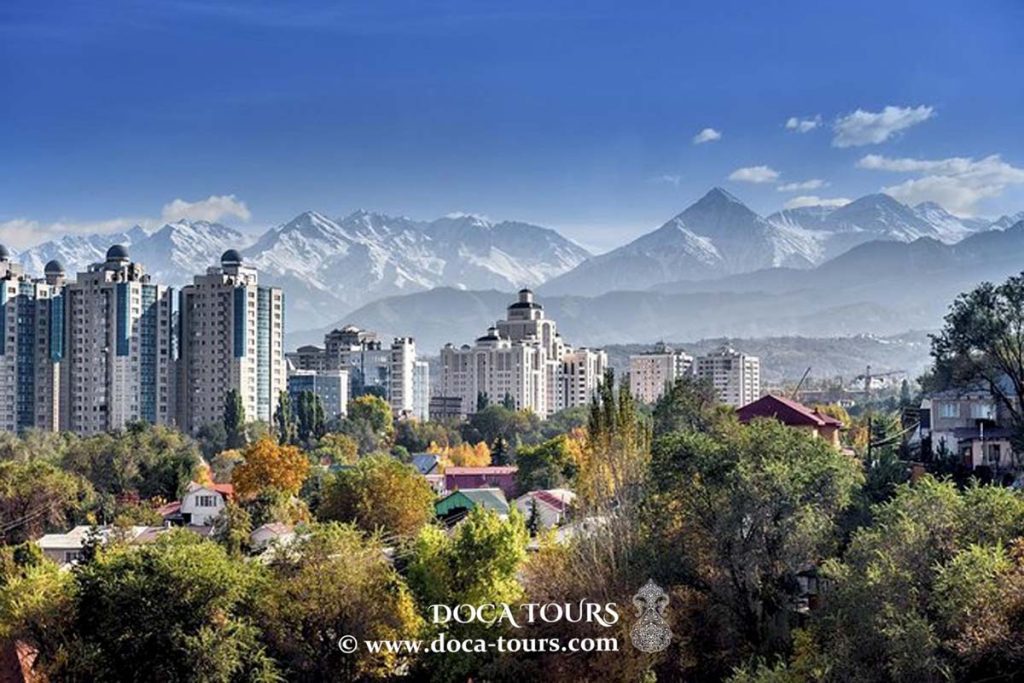
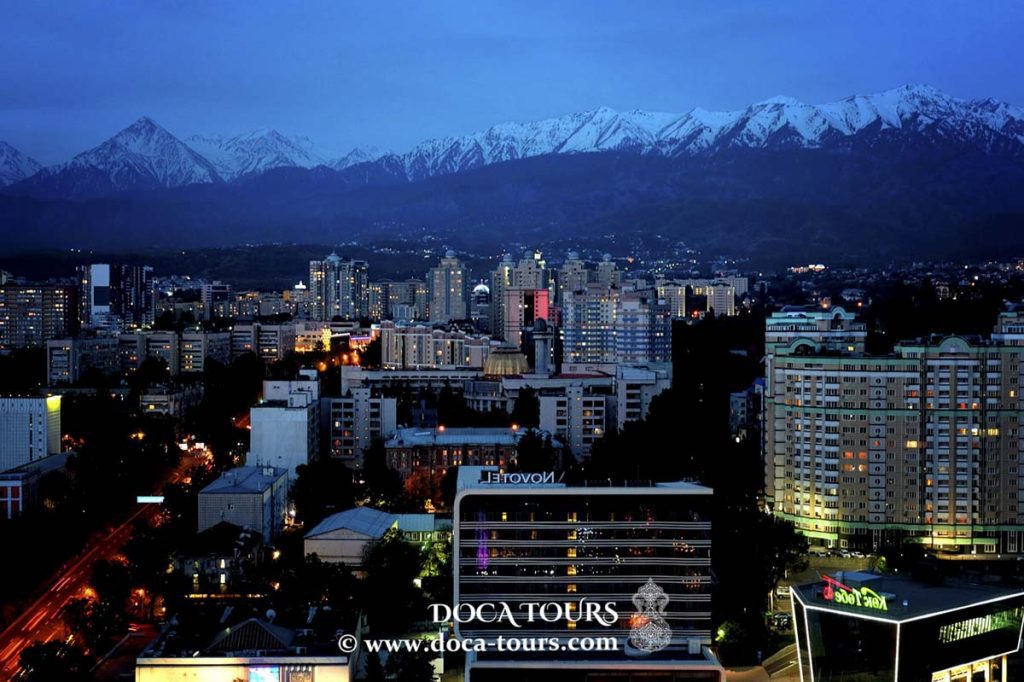
Almaty remains a major commercial, financial, and cultural hub of Kazakhstan. It is also the most populous and cosmopolitan city in the country. Situated in the mountainous region of southern Kazakhstan near the Kyrgyzstan border, the city lies at an elevation of 700–900 meters (2,300–3,000 feet) in the foothills of the Zailiyskiy Alatau, where the Bolshaya and Malaya Almatinka rivers descend onto the plains. Like Astana and Shymkent, Almaty does not belong to any region and is officially designated as a "city of republican significance."
Since November 2017, Almaty has been part of UNESCO's Creative Cities Network in the field of music.

Etymology
The name Almaty traces its origins to the medieval settlement of Almatau, which once existed near the modern city. A debated theory suggests that the name derives from the Kazakh word for "apple" (alma) and is often translated as "full of apples." Originally, it was Almatau, meaning "Apple Mountain."
The region surrounding Almaty is known for its significant genetic diversity of wild apple species. The area west of the Tian Shan Mountains is considered the birthplace of the apple. The wild Malus sieversii is believed to be a likely ancestor of the modern domesticated apple.
History
Prehistoric Almaty
Between 1000 and 900 BCE, during the Bronze Age, the first farmers and herders established settlements in the area of modern Almaty. During the Saka period (700 BCE to the early Common Era), the region was inhabited by the Saka and later the Wusun tribes, who lived north of the Tian Shan mountain range. Evidence of this era includes numerous burial mounds and ancient settlements, particularly the massive kurgans of Saka kings. Among the most notable archaeological finds are the "Golden Man," also known as the "Golden Warrior," from the Issyk kurgan; the Zhalauly treasure; the Kargaly diadem; and various bronze artifacts from Zhetysu, such as cauldrons, lamps, and altars. During the Saka and Wusun periods, Almaty emerged as an early educational and cultural center.
15th–18th Centuries
Between the 15th and 18th centuries, the city experienced a decline as trade activity along this section of the Silk Road diminished due to the rise of maritime trade routes favored by European countries. This era was marked by significant ethnic and political transformations.
The region faced invasions by the Dzungars, who temporarily dominated the Kazakh people. The Kazakhs resisted, defending their land and striving to maintain their independence. In 1730, the Kazakhs defeated the Dzungars in the Anyrakay Mountains, located 70 kilometers (45 miles) northwest of Almaty. The territory was under the jurisdiction of the Senior Zhuz (Uly Zhuz) of the Kazakhs.
By the 18th century, the city and surrounding region lay near the border of the Kokand Khanate. In the 1850s, the area was incorporated into the Russian Empire.
The Founding of Verny
The Zenkov Cathedral, a 19th-century Russian Orthodox church located in Panfilov Park, is the fourth tallest wooden building in the world.
Landmarks such as the Town Hall on Republic Square and the World War II memorial Feat in the Park of 28 Panfilov Guardsmen highlight the city's history.
To establish control over the region, Russia built the Zailiysky Fort between the Bolshaya and Malaya Almatinka rivers. Construction began on February 4, 1854, and was largely completed by autumn. The fort featured a pentagonal wooden palisade, with one side running along the Malaya Almatinka River. By the end of the year, it was renamed Fort Vernoye (Verny), occasionally referred to as Vyrnoye at the time. Eventually, the wooden palisade was replaced with a brick wall equipped with loopholes. The main structures of the fort were centered around a large square used for drills and parades.
In 1867, the settlement around the fort had grown significantly and was reorganized into the town of Almatinsk. By the end of the same year, it was renamed Verny.
On May 28, 1887, at 4:00 a.m., an earthquake devastated Verny in just 11–12 minutes.
By 1906, the town's population had reached 27,000, two-thirds of whom were Russians and Ukrainians.
On January 3, 1911, the city was nearly completely destroyed again, with over 770 brick buildings collapsing during the Kebin Earthquake of 1911.
Soviet Era
Almaty Opera House Building
In 1918, following the Russian Revolution and the establishment of the Bolshevik government, Soviet power was introduced in Verny. The city and its region became part of the Turkestan Autonomous Soviet Socialist Republic (RSFSR). On February 5, 1921, Verny was renamed Almaty, one of the city's ancient names, following a joint meeting of representatives from the regional government, professional trade associations, and local religious groups.
In 1926, the Soviet Council of Labor and Defense approved the construction of the Turkestan-Siberian Railway, which became a key factor in the future growth of Kazakhstan, particularly in the eastern and southeastern regions. The construction of the railway had a major economic impact and played a decisive role in Almaty's development as the capital of the Kazakh Autonomous Soviet Socialist Republic. In 1930, the highway and railway to Almaty were completed.
On April 29, 1927, the government decided to move the capital of the Kazakh Autonomous Soviet Socialist Republic from Kyzylorda to Almaty, within the RSFSR. This move attracted more trade and government officials, stimulating the city's rapid development.
On January 31, 1928, Lev Trotsky, the leader of the October Revolution of 1917, along with his wife Natalia Sedova and son Lev Sedov, was exiled to Almaty by Joseph Stalin, the head of the All-Union Communist Party (Bolsheviks) in Moscow. Trotsky was later expelled from Almaty to Turkey in February 1929 before being sent into exile in Mexico.
Almaty Airport opened in 1930, establishing direct air links between Almaty and Moscow, the center of the Soviet government. Almaty became the main air gateway to Kazakhstan, a status it still holds today. The transformation of this small town into the capital of the Kazakh SSR was accelerated by large-scale construction of new administrative, government, and residential buildings. The Great Purge of 1936–1938 also reached Kazakhstan, where many intellectuals, activists, leaders, teachers, and others were executed. Soviet authority dominated the population. During the 1930s, Kazakh nomads suffered from famine due to the disruption of their traditional way of life.
In 1936, the Architectural and Planning Bureau developed a plan to strengthen Almaty as the new cultural capital of the Kazakh SSR. The plan was based on the existing rectangular district system, which was to be reinforced and reconstructed.
Administrative Division
Almaty is located in the southeast of Kazakhstan, nearly 1,000 km from the capital, Astana. The capital of Kyrgyzstan, Bishkek, lies 190 km to the west, while Urumqi in China is nearly 1,000 km to the east.
The region is also home to the Mynzhylky Plateau, an elevated plain situated at the source of the Malaya Almatinka River, at an altitude of 3,000 meters above sea level.
Climate
Almaty has a humid continental climate with hot summers and cold winters. It is notably influenced by mountain-valley circulation, especially in the northern part of the city, which is located at the transition zone between the mountain slopes and the plains.
The average annual temperature is 10°C (50°F), with January being the coldest month, averaging −4.7°C (24°F), and July being the warmest, with an average of 23.8°C (75°F). In typical years, frosts begin around October 14 and end around April 18, with sustained extreme cold from December 19 to February 23, lasting about 67 days. Days with temperatures above 30°C (86°F) last, on average, around 36 days each year.
Like any major city, Almaty experiences an urban heat island effect, meaning that frosts in the city center start about 7 days later and end 3 days earlier than in the northern suburbs. The annual precipitation totals around 650–700 mm (25.6–27.6 inches), with April and May being the rainiest months, accounting for about a third of the city's annual rainfall.
Snow or sharp drops in temperature are not uncommon in Almaty as early as late May. For instance, snowfalls were recorded on May 13, 1985, May 1, 1989, May 5, 1993, and May 18, 1998. The latest recorded snowfall occurred on June 17, 1987.
The Almaty meteorological station primarily records southeast winds (30%), with wind resistance increasing in the summer (37%) and decreasing in the winter (19%). Winds exceeding 15 m/s occur on average about 15 days per year.
Culture
Almaty is often regarded as the heart and soul of both classical and popular culture in Kazakhstan. The city and Almaty region have a distinct character and pace compared to other regions and cities in Kazakhstan. Modern Almaty has a more European feel, with a greater number of cafes, restaurants with outdoor seating, and public green spaces.
Almaty is both a historical and contemporary hub of intellectualism in Kazakhstan, owing to its location along the ancient Silk Road and the fact that many Russian intellectuals were exiled to the region. The Abay Kazakh State Opera and Ballet Theatre has been a cornerstone of the city’s theatrical scene since 1934 and was founded by a community of local artists. The Kasteev State Museum of Arts, established in 1935, is the largest museum in Kazakhstan and houses the largest collection of works by Kazakh classical and contemporary artists.
The wild apple (Malus sieversii) is widely recognized to have originated in the Almaty area and holds significant cultural importance in the city.
Economy
Almaty generates about 20% of Kazakhstan's GDP (approximately $36 billion in 2010). The city accounts for around 20% of state revenues and 60% of bank loans. As the most economically powerful country in Central Asia, Kazakhstan’s key financial center is Almaty, which is classified as a "beta-global city" according to the 2012 GaWC study.
One of the largest sectors in Almaty is finance, and its financial exports make it a significant contributor to Kazakhstan's balance of payments. Almaty is home to Halyk Bank, the largest bank in Central Asia, as well as Kaspi Bank and other major financial institutions. The Kazakhstan Stock Exchange is also based in Almaty.
The city is also developing as a Regional Financial Center (RFC).
Plans are underway for the construction of the Western Europe - Western China highway, which will pass through Almaty. The new airport in Almaty is expected to handle around 45 million tons of cargo annually. The headquarters of Air Astana is located at the Air Astana Centre 1 in Almaty. Prior to its dissolution, Air Kazakhstan and Kazakhstan Airlines also had their headquarters in the city.
The economy of Almaty and the surrounding region continues to grow, with an expected annual increase of nearly 6.5% through 2020. To mitigate the rapidly growing demand for electricity caused by this growth, the authorities in Kazakhstan have decided to modernize the energy system by building a new power transmission line and upgrading substations. The Alma Transmission project, supported by the World Bank, has been instrumental in achieving this goal.
Recreation
Medeu
Medeu is an outdoor speed skating rink and bandy rink, located in a mountain valley (Medeu Valley or the Small Almatinka River Valley) on the southeastern outskirts of Almaty, Kazakhstan. Situated at an altitude of 1,691 meters above sea level, it is one of the highest ice rinks in the world. Medeu covers 10,500 square meters of ice and employs a sophisticated freezing and watering system to maintain the quality of the ice.
Medeu was constructed in 1972 in the eponymous gorge, 15 kilometers from the city. It was known as the "factory of records" because, over a span of 33 years, 126 world records were set on its high-altitude ice. The unique feature of the rink, located at 1,700 meters, is the thin air and high-quality ice, made with pure mountain water free from salts. Additionally, the sports complex is protected by a protective dam and Chimbulak is situated above it. In the 1990s, Medeu hosted the international music festival "Voice of Asia" (Asia Dauysy).
Şymbūlaq
Şymbūlaq is a ski resort located near Almaty, in the upper part of the Medeu Valley in the Zailiyskiy Alatau mountain range, at an altitude of 2,200 meters (7,200 feet) above sea level. The resort is approximately 25 kilometers (16 miles) south of Almaty, along the Medeu road. It is known for its mild climate, abundant sunshine, and heavy snowfall during the winter months (from November to May). The resort offers both day and night skiing. Additionally, it holds a Guinness World Record for having the highest ski slope in the world accessible for night skiing.
Big Almaty Lake
Big Almaty Lake is a natural lake located in the Zailiyskiy Alatau mountains at an altitude of 2,511 meters above sea level, about 15 kilometers south of Almaty. Like many other lakes in the Zailiyskiy Alatau, it was formed as a result of an earthquake. The lake is a key source of drinking water for the region. It can be accessed by car (about an hour's drive from the city center), by bike, or on foot (about half a day’s walk).
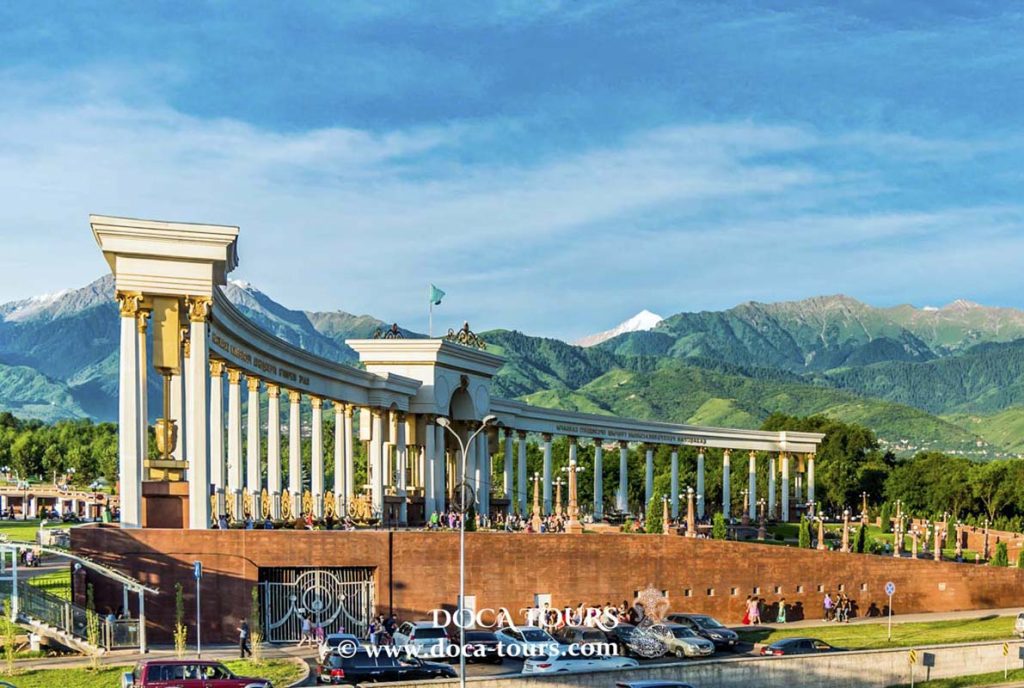
First President's Park
The First President’s Park is an urban park located in Almaty at the intersection of Navoi Street and Al-Farabi Avenue in the Bostandyk District. The park was opened in July 2010.
The creation of the park began in 2001, and it is divided into three main zones: the avenue, the boulevard, and the dendrological zones. The greenery was planted according to a dendrological plan. In honor of Almaty's participation in the Olympic Flame relay for the Beijing Olympic Games, around one hundred spruces and birches were planted. In 2011, one hundred Tien Shan spruces were also planted. A complex of water projects is planned to be developed on an area of 9.5 hectares.
Kok-Tobe Tower
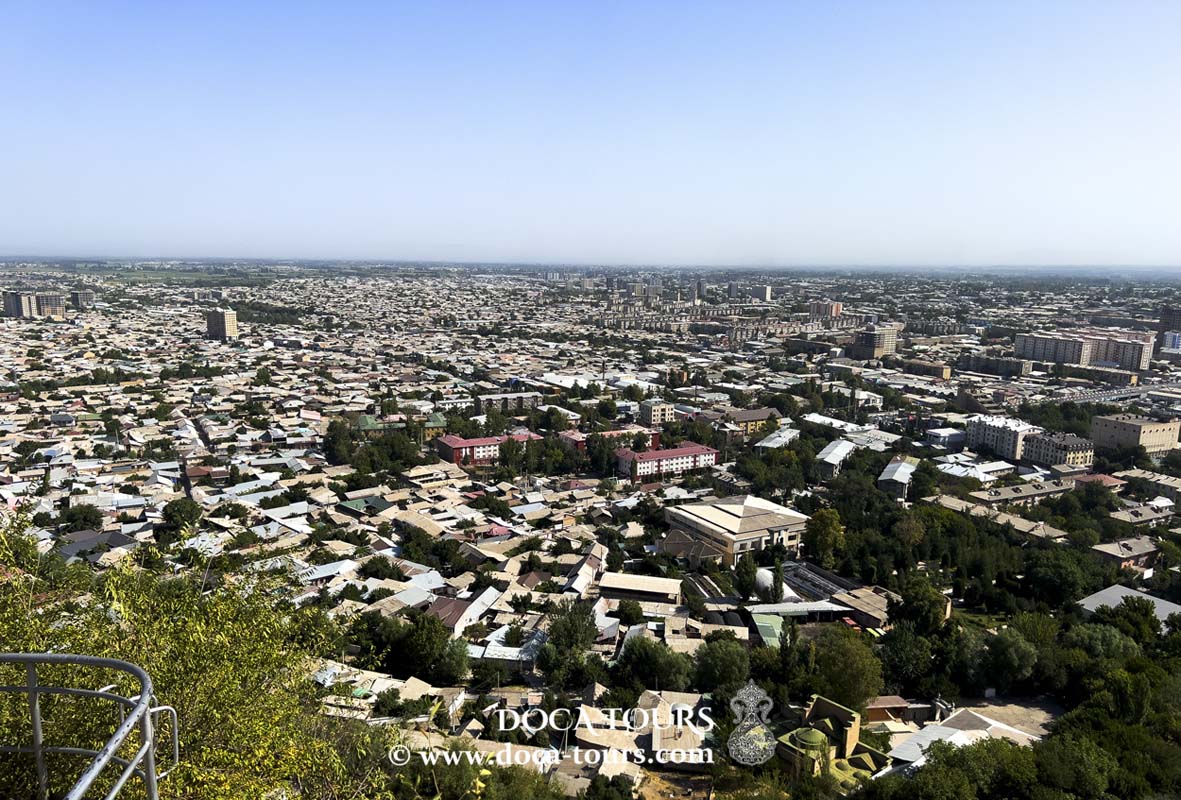
The cable car line connects Almaty with the popular recreation area at the summit of Kok-Tobe Mountain (Kazakh: Көк-төбе, meaning "Blue Hill"), located in the southeast of the city. This area features numerous tourist attractions, including a zoo, amusement park rides, and restaurants.
The city's television tower, the Almaty Tower, is located on the hill. It was constructed between 1978 and 1983 and stands at 371.5 meters tall. Situated at an elevation of 1,000 meters above sea level, it is the tallest structure in Almaty. The tower reaches a height of nearly 372 meters and sits at an altitude of 1,130 meters. Its base is made of a reinforced concrete foundation shaped like a three-story sectional basement. The tower’s shaft is a stepped metal hexagon, with a diameter of 18 meters at the base, narrowing to 13 meters and 9 meters at the locations of technical service floors at 146 and 252 meters above ground. Built to withstand the seismic activity of the mountainous terrain, the tower can endure an earthquake of up to 10 magnitude. As an active radio and television broadcasting station, the tower operates under a special regime, making it inaccessible to visitors wishing to observe the city from its height. The tower is illuminated at night by powerful floodlights and is visible from almost every part of the city.
Air Transport
The nearest airport to Almaty is Almaty International Airport, located 15 kilometers (9.5 miles) to the northeast of the city center.
Public Transport
The Sayran Bus Station provides intercity bus services within Kazakhstan, as well as international routes to Kyrgyzstan and China, and regional bus services to the west of the city. The Sayakhat Bus Station offers regional bus connections to areas to the north and east of the city.
Kazakhstan Temir Zholy (Kazakh Railways) operates two stations: Almaty-1, located 20 minutes away from the city and primarily used for freight, and Almaty-2, which is located within the city and mainly serves passengers. Almaty Metro opened in 2011, and a light rail line was built in the same year.
The Almaty-bike bike-sharing system has been operating since September 2016, allowing users to purchase a monthly pass and ride for free.
Education
Universities
- Kazakh National Medical University, named after Asfendiyarov (formerly Almaty Governmental Medical Institute - AGMI)
- Almaty Management University (ALMU)
- International Information Technology University (IITU)
- Kazakh-British Technical University (KBTU)
- University of International Business
- Kazakh National Medical University
- Almaty Institute of Power Engineering and Telecommunications
- Kazakh National Technical University (KazNTU)
- Al-Farabi Kazakh National University (KazNU)
- Suleyman Demirel University (SDU)
- KIMEP University (KIMEP)
- Kazakh-American University (KAU)
- Kazakh National Academy of Arts, named after T. Zhurgenov
- Kazakh Academy of Sciences
- Kazakh Academy of Labour and Social Relations
- Kazakh National Pedagogical University, named after Abay
- Turan University
- Kazakh Ablai Khan University of International Relations and World Languages
- Central Asian University (CAU)
- Kazakh-German University (KNU)
- Kazakh Leading Academy of Architecture and Civil Engineering
- Kazakh National Agrarian University (SHI, AEZVI)
- Narxoz University
- International Business Academy
Sister Cities to Almaty:
- Alexandria, Egypt
- Taegu, South Korea
- Istanbul, Turkey
- Tel-Aviv, Israel
- Rennes, France