

























Key Takeaways
- Central Asian nomadic culture remains a living tradition in Kyrgyzstan and Kazakhstan, not simply a chapter in a history book.
- The yurt, eagle hunting, and traditional horseback games such as kok-boru continue to play important roles in steppe and mountain life.
- The 2024 World Nomad Games in Astana brought together athletes from 89 countries competing in 21 sports.
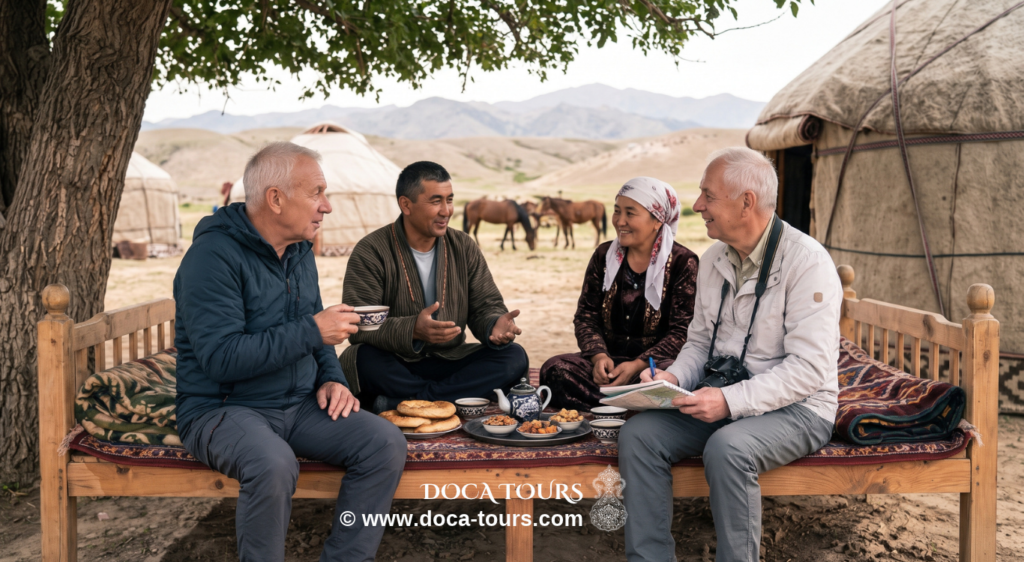
- A summer yurt stay at a jailoo, such as Song-Kol in Kyrgyzstan, offers an opportunity to experience traditional nomadic hospitality.
- Travel responsibly by supporting local communities, asking permission before taking photographs, and respecting traditional yurt etiquette.
Central Asia’s nomadic culture is still a living way of life in Kyrgyzstan and Kazakhstan, not merely a chapter in a history book. Each summer, herding families move to high mountain pastures with their livestock and set up traditional felt yurts, continuing seasonal practices that have shaped the region for centuries.
For travelers, this creates opportunities to share a meal inside a working yurt, observe an eagle hunter demonstrating traditional falconry, and watch horseback games that remain an important part of local sporting culture. This guide explores the origins of Central Asian nomadic traditions, how they survive today, and how to experience them respectfully.
Discover more about the region and plan your journey with DOCA TOURS, a local travel company specializing in private journeys and cultural experiences across Central Asia.
The Roots of Central Asian Nomadic Culture
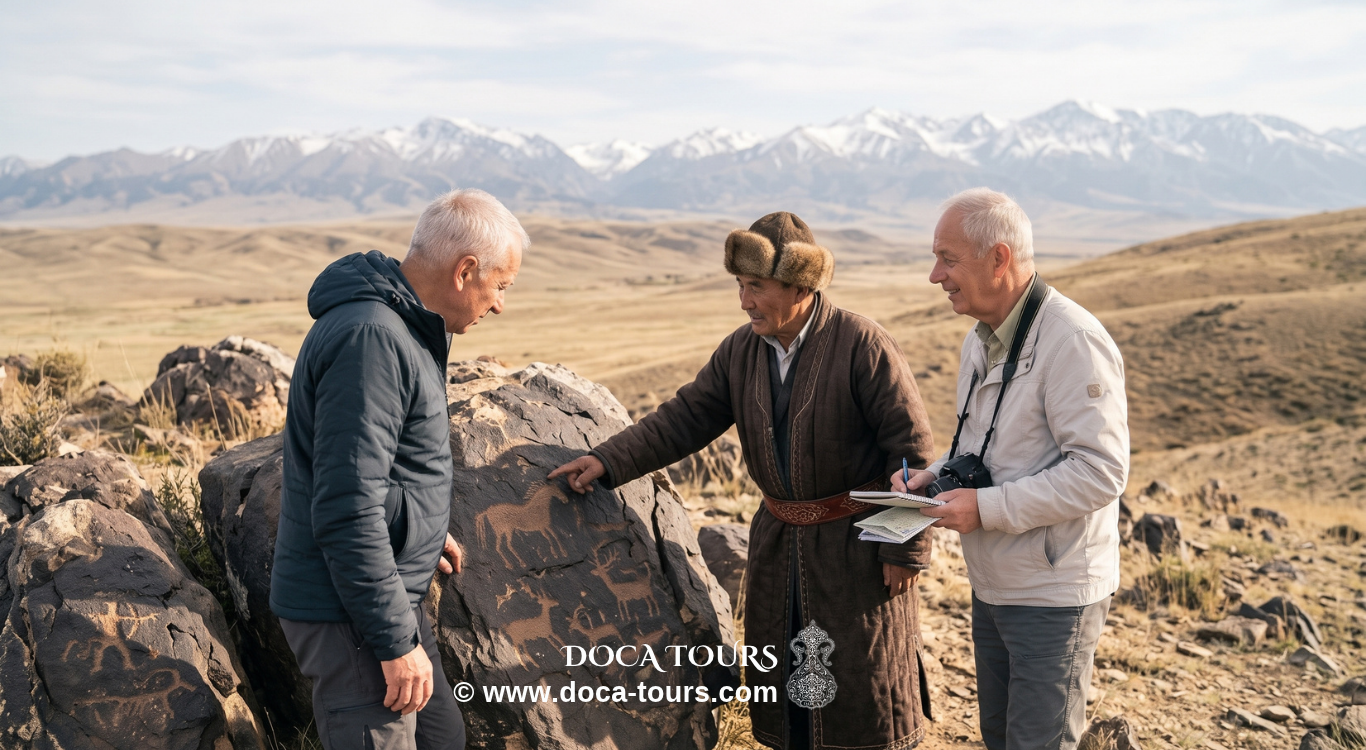
Central Asian nomadic culture developed in response to the region’s geography and climate. In areas dominated by dry steppe, open grasslands, and high mountains, moving livestock between seasonal pastures was often more practical than remaining in one place. For centuries, Turkic and Mongol peoples and other pastoral communities developed ways of life adapted to these changing landscapes.
Livestock, particularly horses, sheep, and goats, played a central role in the traditional economy. Camels were important in some desert regions, while yaks were raised in certain high-altitude areas. Families moved between seasonal pastures, spending colder months in more sheltered locations and warmer months on high mountain meadows known in Kyrgyzstan as jailoo.
This mobility influenced almost every aspect of traditional life. Homes needed to be portable, which made the yurt an ideal dwelling: its wooden frame and felt coverings could be assembled and dismantled relatively quickly. Oral storytelling, epic poetry, songs, and genealogies helped preserve cultural knowledge and community identity across generations.
Nomadic communities also maintained connections with settled cities and merchants along the Silk Road. Horses, livestock products, wool, and other goods contributed to exchanges between pastoral communities and urban trading centers.
To explore this history further, read our guide to the ancient Silk Road and its historic trade routes.
Eagle Hunting, Horse Games, and the Yurt Lifestyle
Three traditions offer a particularly revealing introduction to Central Asian nomadic culture: hunting with birds of prey, traditional horseback competitions, and life in the yurt. Each developed in response to local conditions and continues to hold cultural significance in parts of Kyrgyzstan and Kazakhstan.
Eagle Hunting: An Ancient Partnership Between Humans and Birds
Eagle hunting, traditionally associated with experienced hunters known as berkutchi in Kazakh usage, developed as a practical hunting technique in which trained birds of prey helped hunters pursue animals such as foxes and hares.
Training a golden eagle requires considerable skill, patience, and knowledge of the bird’s behavior. The relationship between hunter and eagle develops over time, and traditional hunting practices involve responsibilities for the bird’s care and eventual release, depending on local customs.
Today, eagle hunting demonstrations and cultural festivals allow visitors to learn about this specialized tradition. Responsible visits should prioritize the welfare of the birds and respect the knowledge of the people who maintain the practice.
UNESCO recognizes falconry as a living human heritage, reflecting the cultural importance of traditional relationships between people and birds of prey.
Kok-Boru and Traditional Horseback Games
Traditional horseback games remain an important feature of festivals and sporting events in Central Asia. One of the best-known is kok-boru, a Kyrgyz game related to kokpar in Kazakhstan and other regional horseback traditions.
In kok-boru, mounted teams compete to carry a goat carcass or an approved substitute and score by placing it in the opposing team’s goal. The game requires horsemanship, strength, teamwork, and tactical judgment.
Other traditional games include kyz kuumai, a horseback chase involving a man and a woman, and contests in which riders demonstrate their precision by picking up objects from the ground while riding at speed.
Kok-boru is included on UNESCO’s Representative List of the Intangible Cultural Heritage of Humanity. Learn more about the tradition through the official UNESCO entry for kok-boru.
The Yurt: A Portable Home and Cultural Symbol
The yurt is one of the most recognizable symbols of Central Asian nomadic life. Its circular wooden frame, traditionally covered with felt and secured with ropes, creates a practical dwelling that can be assembled, dismantled, and transported as families move between pastures.
The structure provides insulation against cold weather while remaining suitable for warmer conditions. Its design reflects generations of practical knowledge, craftsmanship, and adaptation to the natural environment.
Yurt-making traditions also carry social and cultural meaning. The work involves specialized skills, decorative techniques, and knowledge passed between generations within families and communities.
UNESCO recognizes traditional knowledge and skills associated with making Kyrgyz, Kazakh, and Karakalpak yurts as intangible cultural heritage. Read more in the official UNESCO entry on traditional yurt-making.
The World Nomad Games and Living Traditions Today
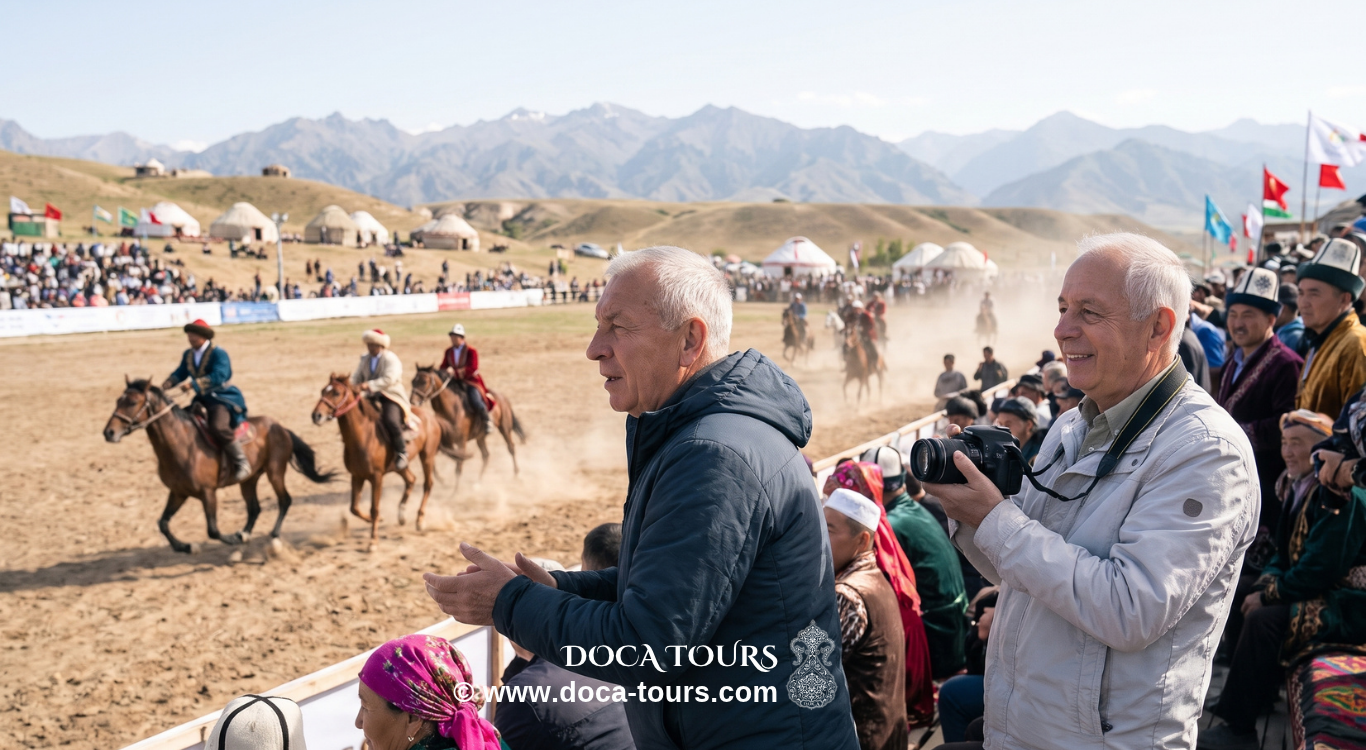
Traditional nomadic sports and cultural practices continue to attract interest both within Central Asia and internationally. One of the most prominent events celebrating this heritage is the World Nomad Games, an international sporting and cultural festival dedicated to traditional games and related heritage.
The fifth edition took place in Astana, Kazakhstan, in September 2024. According to The Astana Times’ report on the 2024 Games, athletes from 89 countries participated in 21 sports, with Kazakhstan leading the medal standings with 112 medals.
The Games feature traditional sports and cultural activities, including kok-boru, horseback wrestling, archery, and other competitions that require specialized skills. By bringing these traditions to an international audience, the event provides a platform for athletes and cultural practitioners to demonstrate their knowledge and abilities.
Beyond major festivals, many traditions remain part of everyday life in rural communities. Shepherds continue to move livestock to seasonal pastures, musicians perform on traditional instruments such as the komuz, and families maintain hospitality customs that have been passed down through generations.
Some of these practices are also documented on UNESCO’s lists of intangible cultural heritage. However, their significance goes beyond formal recognition: they remain meaningful because communities continue to practice, adapt, and transmit them.
Experiencing Nomad Hospitality Responsibly
Hospitality is an important cultural value across Central Asia. Traditionally, welcoming travelers and sharing food have been ways to demonstrate generosity and respect. Visitors can experience this hospitality when staying with local families or visiting communities that maintain traditional pastoral lifestyles.
Being a respectful guest means approaching local customs with curiosity rather than assuming that every family follows the same traditions. A few simple practices can help make visits more comfortable for both guests and hosts.
- Respect local customs. Follow your host’s guidance about entering the yurt, sitting arrangements, and appropriate behavior.
- Accept hospitality graciously. If tea or food is offered, respond politely. If you have dietary restrictions, explain them respectfully.
- Ask before taking photographs. Always seek permission before photographing people, especially children, elders, and eagle hunters.
- Dress appropriately. Choose practical, respectful clothing suitable for rural communities and changing mountain weather.
- Respect animals and the environment. Follow your host’s instructions around livestock, working animals, and birds of prey.
- Support local communities. Choose locally operated guesthouses, yurt camps, guides, and cultural experiences whenever possible.
Where your money goes also matters. Community-based tourism can help local households benefit directly from hosting visitors, provided that arrangements are transparent and participation is voluntary.
DOCA TOURS organizes private journeys and cultural experiences across Central Asia, working with local service providers to help travelers discover regional traditions. Depending on the itinerary, experiences may include yurt stays, encounters with local families, and visits to rural landscapes.
Explore our DOCA TOURS website to learn more about private travel experiences and tailor-made journeys in Central Asia.
Where to Experience Nomadic Culture on a Tour
Nomadic traditions can be explored in different parts of Central Asia, but the best experiences often depend on the season, the local community, and the type of activity you want to discover.
Song-Kol Lake, Kyrgyzstan: Summer Pastures and Yurt Stays

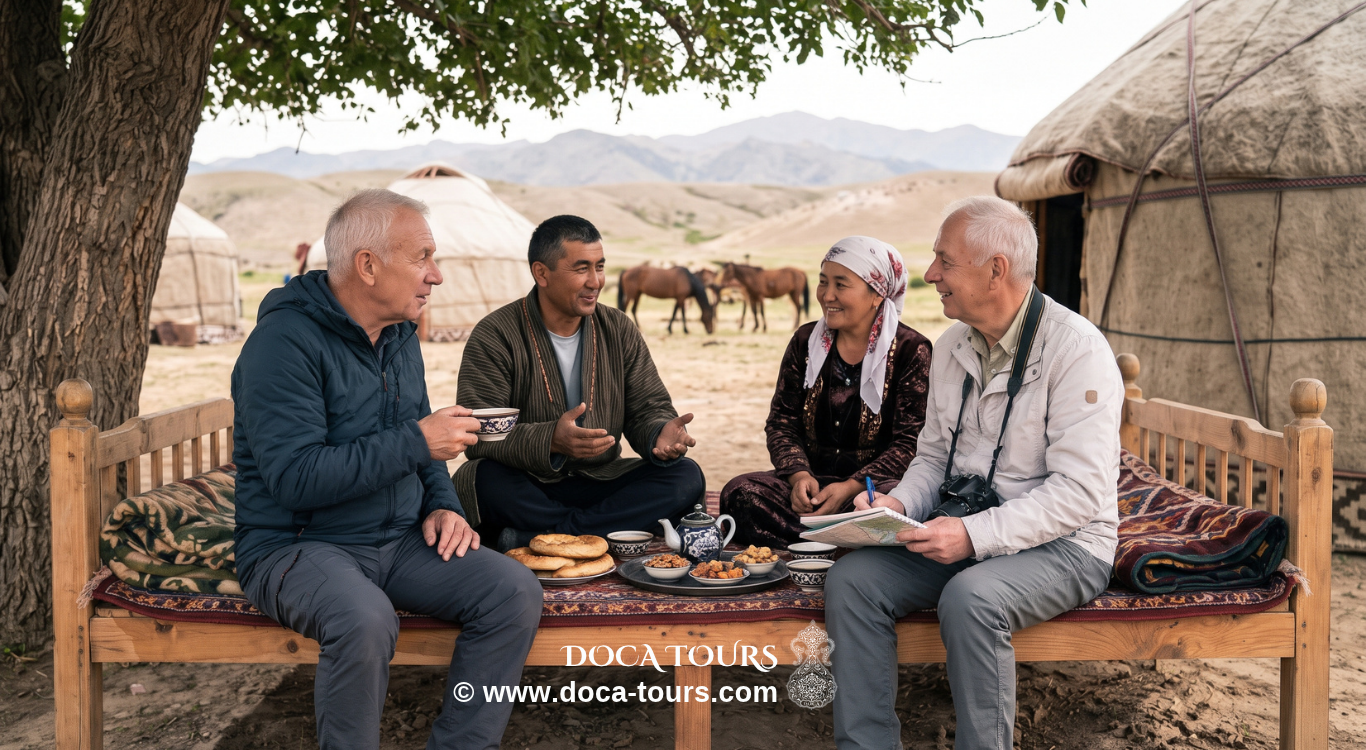
Song-Kol Lake is one of Kyrgyzstan’s best-known destinations for experiencing high-altitude pastoral life. During the summer months, herding families traditionally bring livestock to the surrounding mountain pastures and establish seasonal camps.
Visitors may have opportunities to stay in traditional yurts, enjoy home-cooked meals, observe daily herding activities, and learn about local customs. Depending on local conditions and the services available, activities may include horseback riding and walks through the surrounding mountain landscape.
Summer is generally the most suitable period for a visit, although the precise season varies with weather, road conditions, and the timing of livestock movements. Accommodation facilities and activities should be confirmed before departure.
For travelers interested in combining cultural encounters with mountain scenery, a journey through Kyrgyzstan can be an excellent addition to a wider Central Asian itinerary.
Kazakhstan: Eagle Hunting and the Open Steppe
Kazakhstan offers another perspective on nomadic heritage, with vast steppe landscapes, traditional horseback sports, and eagle-hunting traditions in certain regions.
Travelers based in Almaty may be able to arrange visits with practitioners who demonstrate traditional falconry, depending on the season and local availability. Astana is also an important destination for those interested in the modern presentation of traditional sports and the legacy of the 2024 World Nomad Games.
Choosing between Kyrgyzstan and Kazakhstan depends on your priorities. Kyrgyzstan is particularly appealing for mountain scenery, summer pastures, and overnight stays in yurt camps. Kazakhstan offers expansive steppe landscapes and opportunities to explore a different set of regional traditions.
If you are deciding which destination to visit first, read our comparison of Uzbekistan and Kazakhstan for first-time visitors.
Planning the Best Season for Your Visit
Seasonality is important when planning a trip focused on nomadic culture. Summer, generally from June through September, is often the best period for visiting high mountain pastures and seasonal yurt camps in Kyrgyzstan. Exact dates depend on weather and local conditions.
Eagle-hunting demonstrations and cultural festivals in Kazakhstan may be concentrated in particular parts of the year. Check local event dates and availability before finalizing your itinerary.
Mountain weather can change quickly, and road conditions may affect travel times. Allowing some flexibility in your schedule can make a rural journey more comfortable.
If a night in a yurt at Song-Kol or a visit with an eagle hunter appeals to you, start by choosing your preferred season and destination. You can then build a private itinerary around mountain landscapes, cultural encounters, and other experiences across the region.
To plan a tailor-made journey, visit DOCA TOURS and explore the possibilities for private travel across Central Asia.
Frequently Asked Questions About Central Asian Nomadic Culture
What Is Nomadic Culture in Central Asia?
Nomadic culture in Central Asia includes pastoral traditions built around seasonal livestock migration, portable felt yurts, horsemanship, traditional crafts, and oral storytelling. These practices remain part of cultural life in Kyrgyzstan and Kazakhstan, particularly in rural and mountainous regions.
Can Tourists Stay in a Yurt in Kyrgyzstan or Kazakhstan?
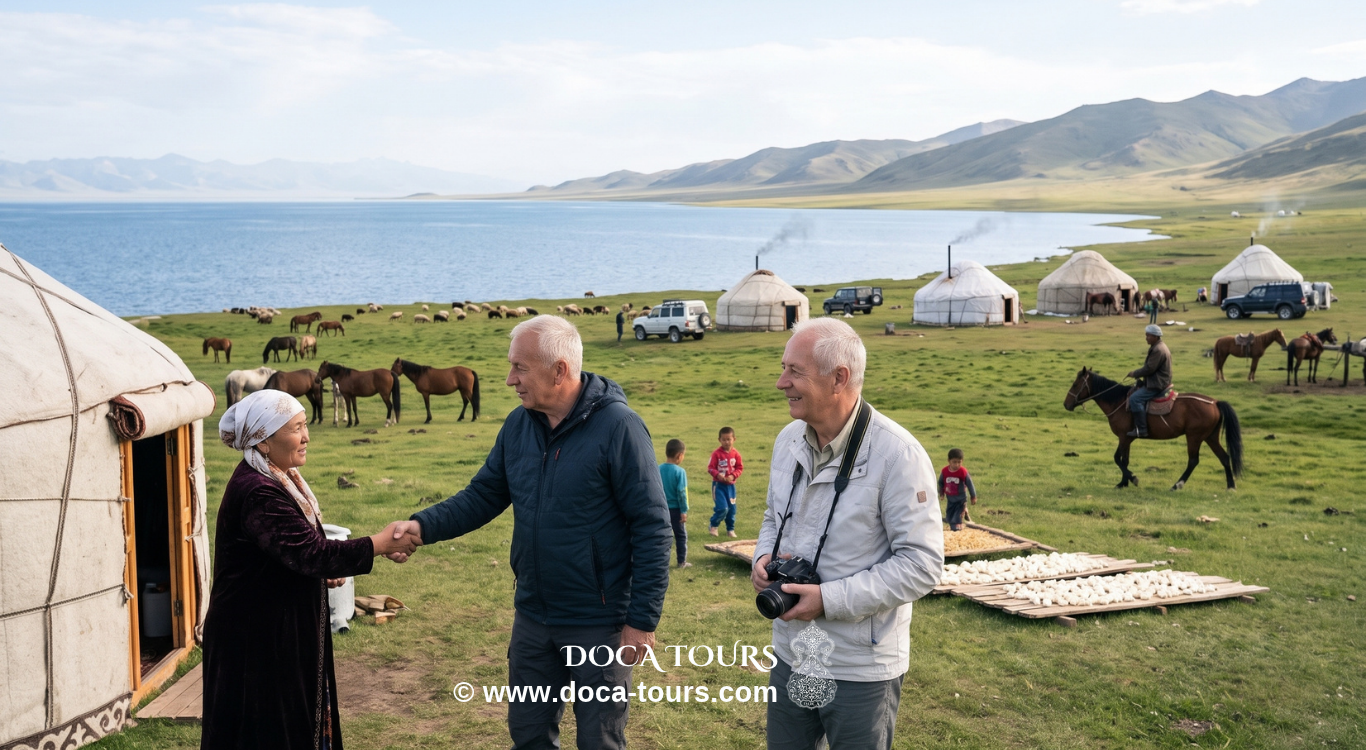
Yes. Travelers can stay in traditional or tourist-operated yurt camps in both countries. In Kyrgyzstan, seasonal camps around Song-Kol Lake are a popular option. Depending on the host and location, visitors may enjoy local meals, learn about pastoral traditions, and take part in selected activities.
Before booking, check the facilities, access arrangements, available services, and whether the camp is operated by a local family or community organization.
What Is Kok-Boru?
Kok-boru is a traditional Kyrgyz horseback game in which mounted teams compete to carry a goat carcass or an approved substitute and score in the opposing team’s goal. A related game is known as kokpar in Kazakhstan. Kok-boru is also recognized by UNESCO as intangible cultural heritage.
When Is the Best Time to Experience Nomadic Culture?
Summer, usually from June through September, is generally the best time to visit high mountain pastures and seasonal yurt camps in Kyrgyzstan. Eagle-hunting events and cultural festivals may take place at other times of the year. Check local schedules and weather conditions before booking.
Are Yurts Recognized by UNESCO?
Yes. UNESCO recognizes traditional knowledge and skills associated with making Kyrgyz, Kazakh, and Karakalpak yurts as intangible cultural heritage. This recognition highlights the craftsmanship, community knowledge, and cultural significance associated with yurt-making.
Read the official UNESCO documentation on yurt-making traditions.
How Can Travelers Support Local Nomadic Communities?
Choose locally operated accommodation and tours, pay agreed prices, ask permission before taking photographs, and respect local customs and the natural environment. Where possible, book experiences that provide clear benefits to the families and communities hosting visitors.
For private journeys and cultural experiences across the region, visit DOCA TOURS.