























Key takeaways
- Registan Square and Shah-i-Zinda reward photographers who arrive for the first hour after sunrise, when crowds are thin and the tilework glows warm.
- Uzbekistan welcomed 11.7 million foreign visitors in 2025, up nearly 47 percent on 2024, so popular sites now fill quickly after mid-morning.
- Bukhara's four surviving trading domes frame layered shots of light, shadow and market life in a compact walkable area.
- Always ask before photographing people in bazaars and at prayer; a smile and a printed photo go further than a long lens.
- Pack a polarizer, a fast wide lens and spare batteries; harsh midday sun and cold desert mornings both test your kit.
The best Silk Road photography happens in the quiet hour after sunrise, when warm light rakes across the tiled madrasahs of Samarkand and the trading domes of Bukhara before the crowds arrive. This guide walks through the strongest spots, the right time to shoot each one, the etiquette for photographing people, and the gear that handles Central Asia's bright skies and cold desert mornings.
The ancient trade route threads through Uzbekistan, Kazakhstan, Kyrgyzstan, Tajikistan and Turkmenistan, and it packs more photogenic density than almost anywhere in Asia. Interest is rising fast, too. Uzbekistan welcomed 11.7 million foreign visitors in 2025, nearly 47 percent more than in 2024, according to the country's National Statistics Committee (Kun.uz, 2025). More visitors means popular courtyards fill quickly, so timing matters as much as composition.
Golden-Hour Shots at Registan and Shah-i-Zinda
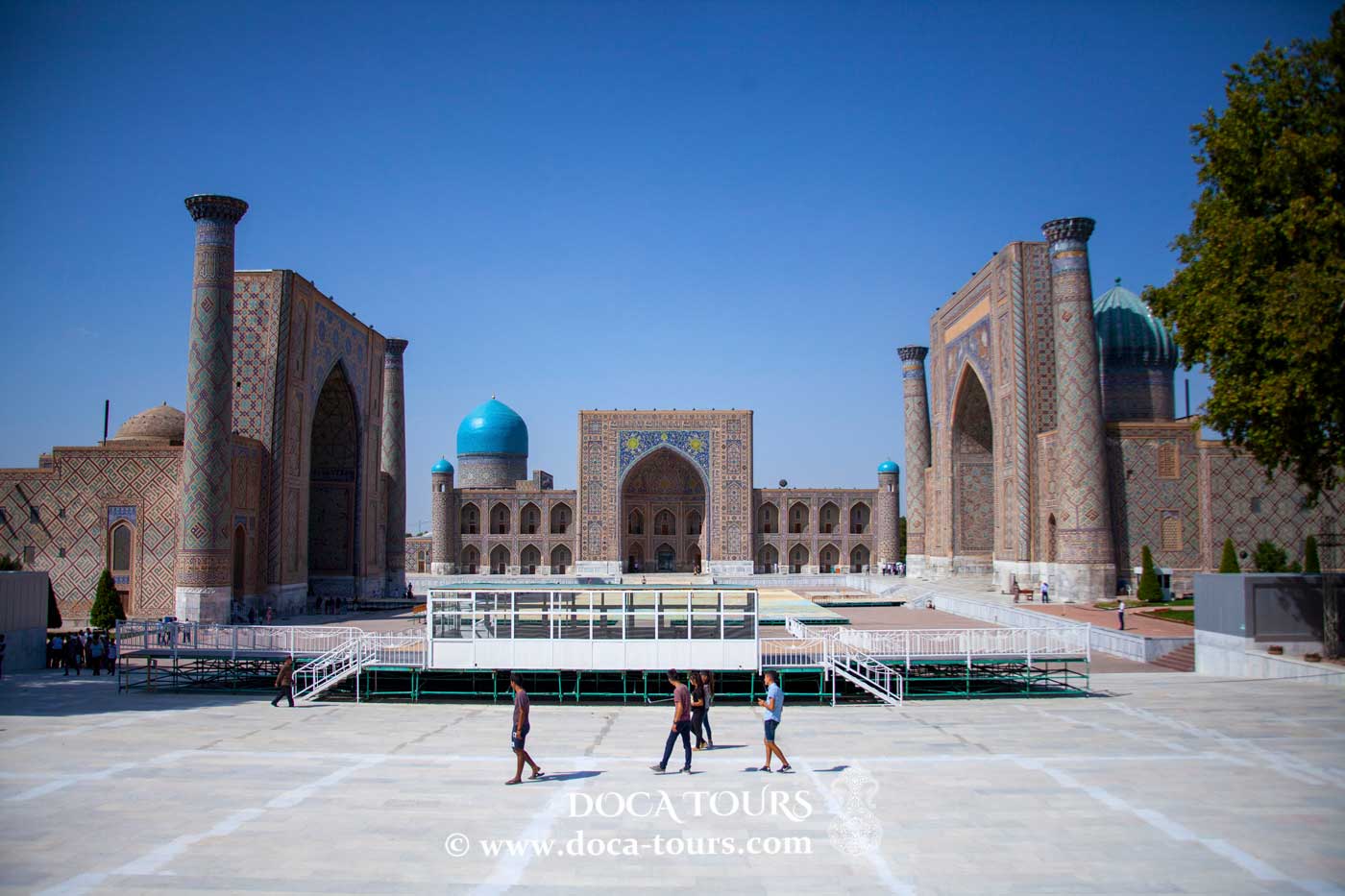
Registan Square in Samarkand is the single most rewarding frame on the Silk Road, and it looks best in the first hour of daylight. Three madrasahs face a central plaza, their turquoise domes and ribbed portals catching low sun beautifully. The site sits within Samarkand's historic core, which UNESCO inscribed as "Samarkand, Crossroad of Cultures" in 2001 (UNESCO World Heritage Centre).
Arrive before the ticket gates get busy. A wide-angle lens pulls in all three facades from the center of the square, while a short telephoto isolates the tile mosaics and muqarnas above the arches. Shooting from the raised steps on the east side keeps the morning sun behind you and the domes lit.
Shah-i-Zinda, a short walk northeast, is a narrow avenue of mausoleums clad in some of the finest glazed tilework in the Islamic world. The corridor is tight, so a wide lens and a steady hand matter. Go early: the lane funnels visitors into single file by mid-morning, and clean shots become hard to get.
Capturing Bukhara's Trading Domes and Alleys
Bukhara rewards photographers who slow down and wander. Its historic center earned UNESCO World Heritage status in 1993, and four domed bazaars from the sixteenth century still stand over the old trading streets: the jewellers' dome, the hatmakers' dome, the money changers' dome and the cloth merchants' hall. These arched interiors create pools of light and shadow that reward patient framing.
Point your lens up inside the domes, where sunlight falls through small openings onto stalls of carpets, ceramics and silk. Then step into the alleys that link them. Narrow lanes of mud-brick and carved wooden doors offer layered compositions, especially in late afternoon when the sun drops low and the walls turn amber.
The Poi Kalyan complex, with its towering minaret, anchors the skyline. Climb to a rooftop cafe for an elevated view across domes and minarets at dusk. Keep a fast prime lens handy for the dim bazaar interiors.
Desert Landscapes and Yurt Camps
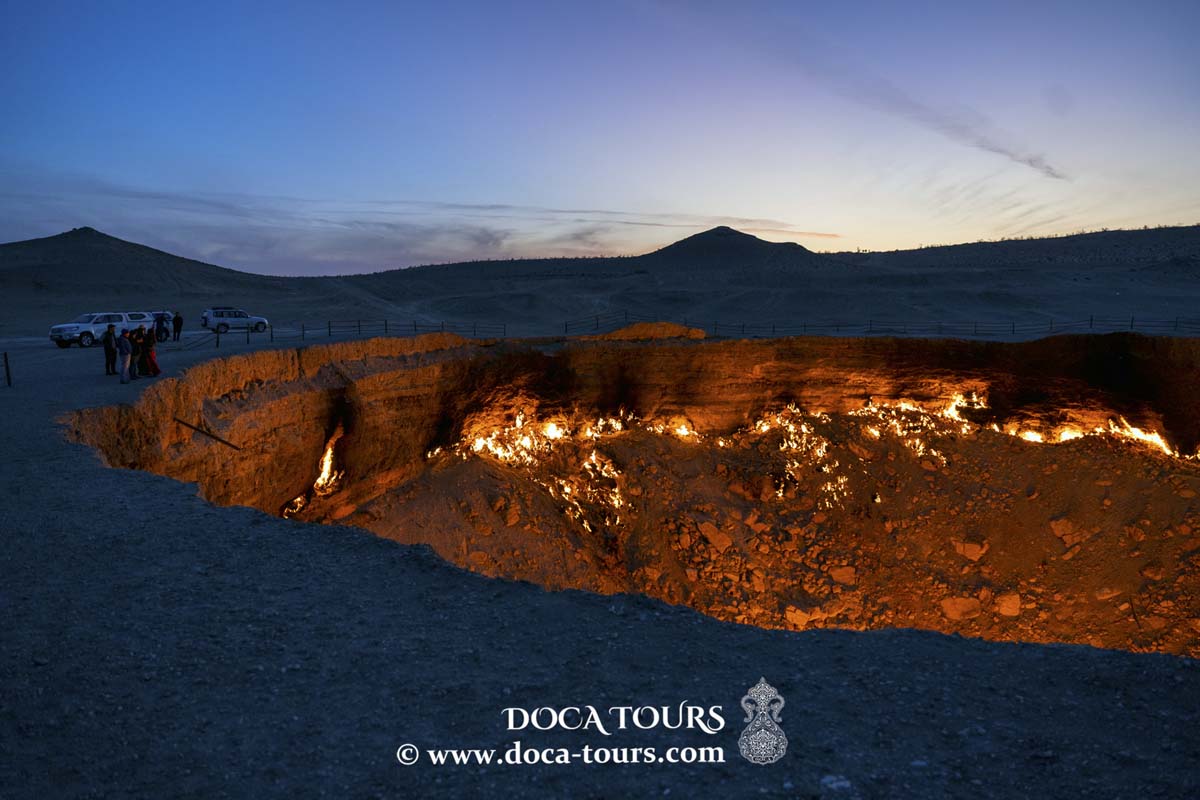
Beyond the cities, the Kyzylkum and Karakum deserts open into wide, empty horizons that suit a very different kind of image. Yurt camps near Lake Aydarkul in Uzbekistan and at Song-Kol in Kyrgyzstan give you both landscape and lifestyle subjects in one place. Felt tents against bare steppe, camels at golden hour and star-filled night skies all sit within reach of a single camp.
Desert light is extreme. Midday sun flattens everything and blows out highlights, so shoot the edges of the day. Blue hour before sunrise turns the steppe cool and minimal, while sunset backlights the yurts and throws long shadows across the sand.
Nights are the real prize. Away from city glow, the Milky Way is often visible to the naked eye. Bring a tripod, set a wide aperture and a 15 to 25 second exposure, and frame a lit yurt in the foreground for scale. A headlamp with a red mode protects your night vision while you work.
Portraits and Bazaar Scenes With Etiquette Tips
People make the strongest Silk Road photographs, and the rule here is simple: ask first. Bazaars in Samarkand, Bukhara and Osh overflow with color, from bread sellers and spice mounds to silk weavers at their looms. These scenes are tempting to grab on the sly, but a stolen frame rarely beats a shared one.
Make eye contact, gesture to your camera and wait for a nod. Most vendors agree warmly, and buying a piece of fruit or a handful of dried apricots first turns the exchange into something fair. A few words of Uzbek, Russian or Kyrgyz go a long way, and offering to show people the photo on your screen almost always brings a smile.
Be more cautious near mosques, at prayer and with women who have not invited the attention. When someone declines, lower the camera and move on without fuss. Festivals such as the spring new year are especially rich for portraits, when people dress in their best.
Gear and Settings for Silk Road Photography
Central Asia's light swings from harsh desert glare to dim tiled interiors, so pack a versatile kit. A wide-angle zoom around 16 to 35mm handles tight courtyards, domes and alleys. A fast prime, something near f/1.8, saves dim bazaars and evening streets without pushing the ISO too high. A short telephoto isolates tile detail and distant portraits.
A circular polarizer is the one filter worth its weight. It deepens the blue sky behind turquoise domes, cuts glare off glazed tiles and adds contrast to midday scenes you cannot avoid. Keep a lens cloth within reach, because fine desert dust finds everything.
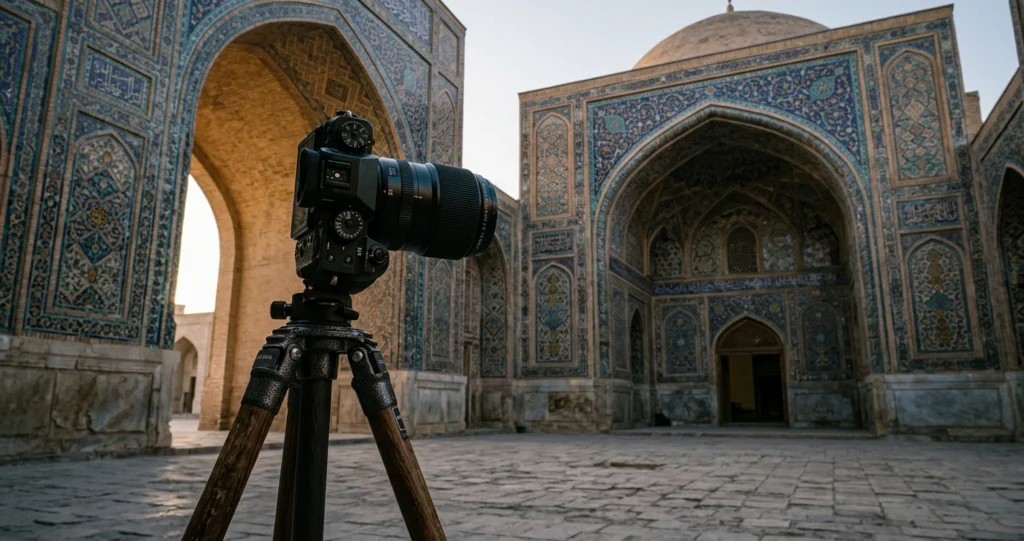
Power and storage planning matters more than people expect. Cold desert mornings drain batteries fast, so carry two or three spares and keep them in an inside pocket. Bring more memory cards than you think you need. A lightweight travel tripod covers both the night skies at yurt camps and the low-light interiors in Bukhara.
For settings, keep ISO low in daylight and lean on aperture priority to control depth of field in the architecture. Switch to manual for night skies. Shoot RAW throughout: the dynamic range between a shadowed alley and a sunlit dome is wide, and RAW files give you room to recover both ends later.
Plan Your Shooting Days Around the Light
The photographers who come home happy are the ones who build their itinerary around sunrise and sunset, not the other way round. Scout each site the afternoon before, note where the light will fall, then return at dawn to shoot it clean. With arrivals climbing every year, that early start is the difference between an empty courtyard and a crowd in every frame.
If you would rather have the logistics handled so you can focus on composition, Doca Tours runs guided Silk Road routes that put you at the key sites at the right hours, with local guides who smooth the introductions for portraits. Start by choosing the trip that fits your pace in our overview of the best Central Asia tours for first-time travelers, then pack your polarizer and spare batteries and go chase that first hour of light.
Frequently asked questions
When is the best time of day for Silk Road photography?
Shoot the first hour after sunrise and the last hour before sunset. Low-angle light warms the turquoise and gold tilework at Registan, Shah-i-Zinda and the Bukhara domes, and early starts beat the tour-group crowds.
Do I need a permit to photograph Silk Road monuments?
Most exterior and courtyard photography is free at open-air sites. Some museums, interiors and mausoleums charge a small camera fee or ban tripods. Check signs at the ticket desk and ask staff before setting up.
Is it rude to photograph people in Central Asian bazaars?
It can be if you shoot without asking. Make eye contact, gesture to your camera and wait for a nod. Vendors often agree happily, and buying something small first makes portraits feel fair rather than extractive.
What camera gear works best for Central Asia light?
A wide-angle lens handles tight courtyards and domes, a polarizer cuts glare off tiles and deep skies, and a fast prime suits dim interiors and evening streets. Bring more batteries than you think for cold desert mornings.
Which Silk Road city is best for first-time photographers?
Samarkand offers the highest concentration of iconic subjects, from Registan to Shah-i-Zinda, within walking distance. Bukhara follows closely with its intimate old town. Both suit a first trip and pair well on a single itinerary.