
























Key takeaways
- Bukhara's old town is a compact, walkable UNESCO World Heritage site where most major monuments sit within a 20-minute stroll of each other.
- The three anchors are the Poi Kalyan complex, the Ark Fortress and the Lyab-i Hauz plaza, each a short walk apart.
- Uzbekistan welcomed 8.2 million foreign visitors in 2024, up from 6.6 million in 2023, so book old-town hotels ahead in spring and autumn.
- A half day covers the headline sights; a full day adds the trading domes, craft workshops and time to slow down.
- Converted caravanserais now serve as atmospheric boutique hotels inside the historic core.
Give Bukhara two days and stay inside the old town. The historic centre is small and walkable, so you can reach the Poi Kalyan complex, the Ark Fortress and the Lyab-i Hauz plaza on foot in a single morning. The rest of your time goes to the trading domes and craft workshops.
This Bukhara travel guide walks you through the monuments that matter, where to sleep, and how to pace a half day or a full day so you see the best of the city without rushing.
This Bukhara travel guide starts in the UNESCO-listed historic center
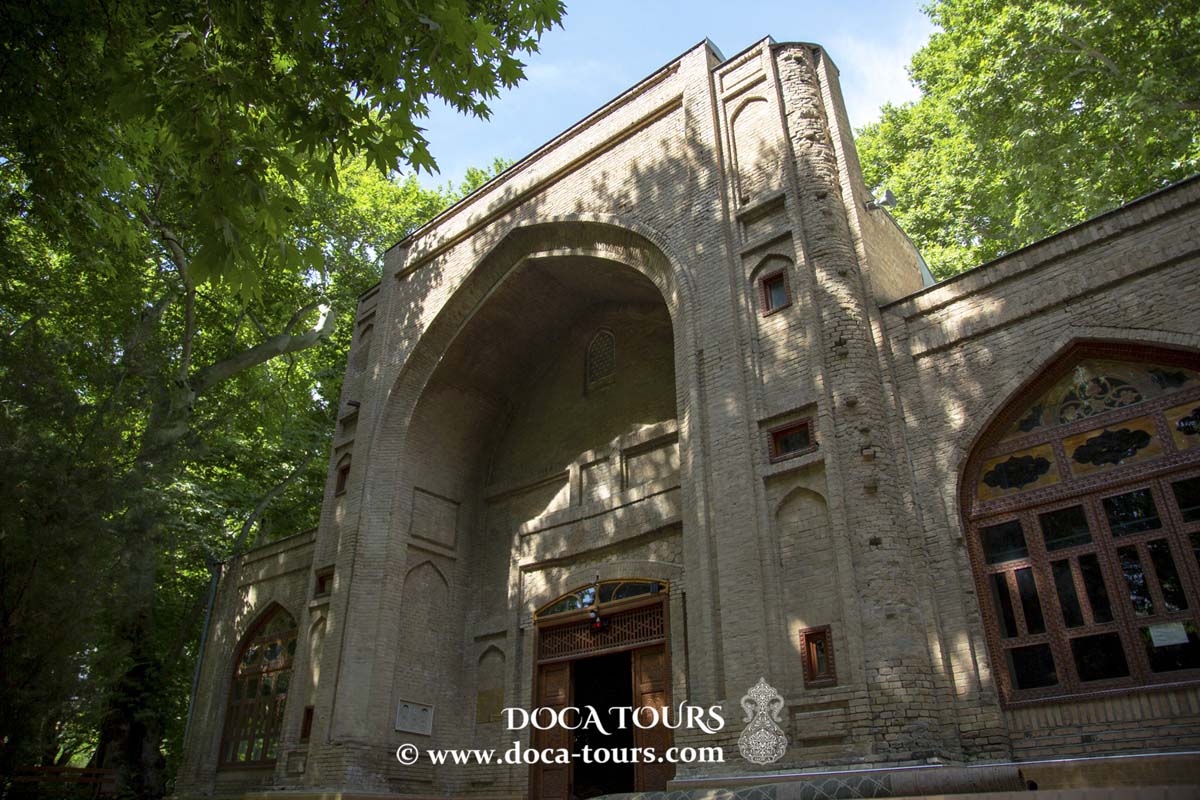
Bukhara's historic centre is one of the most complete medieval cities in Central Asia, and it has held UNESCO World Heritage status since 1993. The old town is dense and pedestrian-friendly, which means the smartest way to see it is simply to walk.
Settlement here stretches back more than two thousand years, and the street plan still follows its medieval logic: mosques, madrasas and bazaars clustered tight along shaded lanes. You do not need a car. Most visitors cover the core sights on foot and only use a taxi to reach the train station or outlying sites like the Sitorai Mokhi-Khosa summer palace.
Tourism to the country is growing fast, so the lanes can get busy in peak season. Uzbekistan welcomed 8.2 million foreign visitors in 2024, up from 6.6 million the year before (Kun.uz, citing the Uzbekistan Statistics Agency, February 2025). Early mornings are the best time to photograph monuments before the crowds and the midday heat arrive.
If Bukhara is one stop on a longer trip, it pairs naturally with Samarkand and Khiva. Our two-week Central Asia Silk Road itinerary shows how the cities link up across the region.
Poi Kalyan complex, the Ark Fortress and Lyab-i Hauz
Three ensembles anchor the old town, and all sit within a short walk of each other. Start at the Poi Kalyan complex, cross to the Ark Fortress, then finish at Lyab-i Hauz. That loop gives you the headline monuments in one logical line.
The Poi Kalyan complex is the symbolic heart of the city. Its 12th-century Kalyan Minaret once guided caravans across the desert, and it still towers over the square between the Kalyan Mosque and the Mir-i-Arab Madrasa, which remains an active Islamic seminary. The brickwork patterns on the minaret shift band by band, a detail easy to miss unless you stop and look up.
A few minutes west stands the Ark Fortress, the oldest site in Bukhara and the former seat of the city's emirs for centuries. The massive earthen walls enclose courtyards, a mosque and small museums. Climb the ramp to the entrance for a sense of scale, then look back over the old town from the ramparts.
Lyab-i Hauz closes the loop. Built around a stone pool dating to the 1620s, this leafy plaza is ringed by madrasas and mulberry trees, and it is the social centre of the old town. Teahouses line the water, making it the natural place to rest before dinner.
Trading domes and traditional craft workshops
Bukhara's covered bazaars, the trading domes, are among the few Silk Road markets still working after four centuries. Three main domes survive in the old town, and walking between them is one of the best ways to feel the city's merchant past.
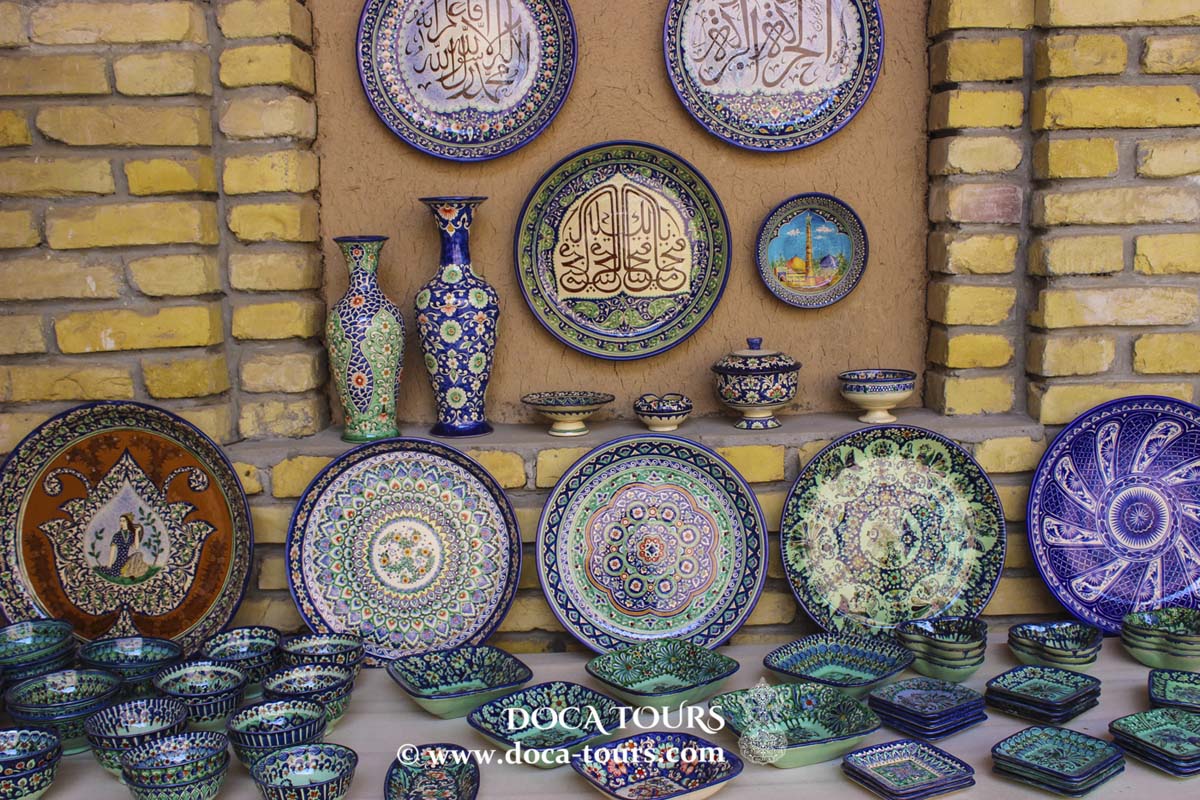
Each dome specialised in a trade, and the names still carry those roots: Toki Zargaron, the dome of the jewellers; Toki Telpak Furushon, the dome of the cap sellers; and Toki Sarrafon, the dome of the moneychangers. Today they shelter stalls selling ceramics, carpets, miniatures and the pointed suzani embroidery that Bukhara is known for.
The craft tradition is still alive beyond the stalls. Family workshops around the old town demonstrate hand-weaving, gold embroidery, knife-making and miniature painting, and many welcome visitors to watch artisans at work. Buying directly from a workshop supports the maker and usually means a better piece than the mass-produced souvenirs near the main squares.
A good local guide turns these domes from a shopping stop into a history lesson, pointing out which workshops are genuine and which stones are worth your time. Doca Tours builds craft-focused walks into its Bukhara itineraries for exactly this reason, so you spend your time with the makers rather than hunting for them.
Where to find the best caravanserai hotels
The most atmospheric places to stay in Bukhara sit inside the old town itself, often in restored caravanserais and merchant houses. Sleeping within the historic core means every major monument is a walk away, with no commute in and out.
Caravanserais were the inns of the Silk Road, built around courtyards where traders rested their camels and goods. Several have been carefully converted into small boutique hotels, keeping the arched galleries and central courtyards while adding modern comfort. These tend to be intimate, with a handful of rooms rather than large floor plans.
Book early for spring and autumn. With foreign arrivals climbing year on year, the best old-town rooms sell out months ahead in the shoulder seasons. If courtyard character matters more to you than hotel-chain amenities, prioritise a converted caravanserai or a traditional house near Lyab-i Hauz over a modern hotel on the edge of town.
Half-day and full-day Bukhara itineraries
If your time is tight, a half day covers the three anchor sights, while a full day adds the trading domes, craft workshops and room to slow down. Both routes work on foot from a base in the old town.
Half-day route (about 4 hours)
- Start early at the Poi Kalyan complex: the minaret, the mosque courtyard and the Mir-i-Arab facade.
- Walk west to the Ark Fortress and climb to the ramparts for the view.
- Loop back through the nearest trading dome toward Lyab-i Hauz.
- Finish with tea beside the pool at Lyab-i Hauz.
Full-day route (about 8 hours)
- Morning: the half-day loop above, taken at a slower pace with time inside the Ark's museums.
- Midday: lunch at a teahouse near Lyab-i Hauz, then shelter from the heat.
- Afternoon: work through all three trading domes and visit two or three craft workshops.
- Late afternoon: the Chor Minor gateway and a final return to the old town at golden hour.
A second day lets you add the Sitorai Mokhi-Khosa summer palace and the Chashma-Ayub and Samani mausoleums in the park on the western edge of the centre. For planning around weather and crowds, our season-by-season guide to visiting Uzbekistan breaks down what each month feels like on the ground.
Making the most of Bukhara
Book a central caravanserai hotel for your first night, then start at the Poi Kalyan complex at opening time before the heat and crowds build. That single decision, staying and starting inside the old town, is what separates a rushed stop from a trip you remember. When you are ready to turn this guide into a fixed plan, Doca Tours can fold Bukhara into a wider Silk Road route built around the cities and seasons you care about.
Frequently asked questions
How many days do you need in Bukhara?
Two days is the sweet spot. One full day covers the main monuments and trading domes, and a second lets you revisit the old town at a slower pace and visit craft workshops.
Is Bukhara old town walkable?
Yes. The historic centre is compact and largely pedestrian, with the Poi Kalyan complex, the Ark Fortress and Lyab-i Hauz all within roughly a 20-minute walk of one another.
When is the best time to visit Bukhara?
Spring (April to May) and autumn (September to October) bring mild days and clear skies. Summers are very hot and winters are cold, so the shoulder seasons are most comfortable.
Can you stay inside the old town?
Yes. Several historic caravanserais and merchant houses have been converted into boutique hotels inside the historic core, putting you within walking distance of every major sight.