
























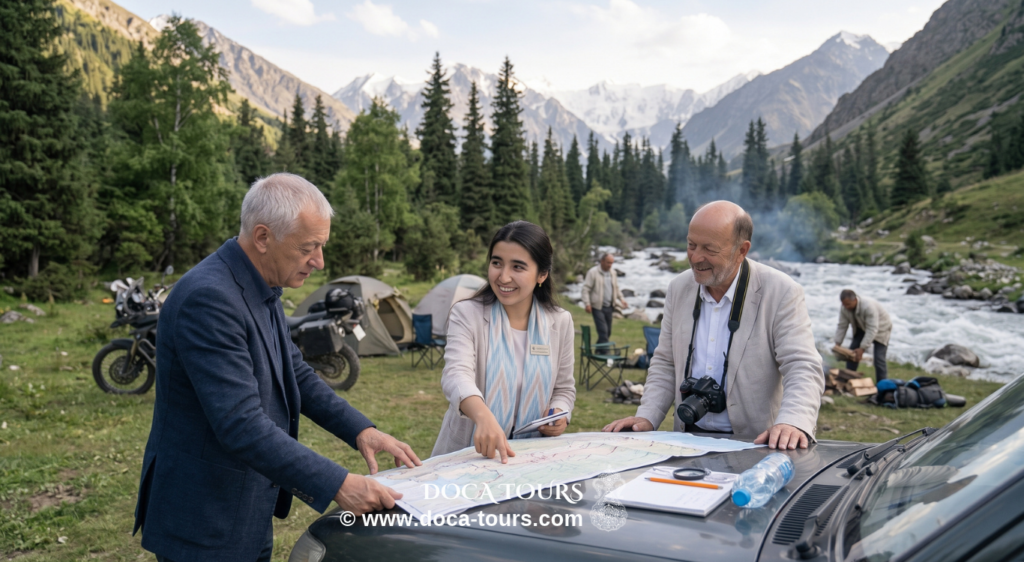
Key takeaways
- Kyrgyzstan motorcycle tours cross passes above 3,000 metres on a mix of asphalt and gravel, best ridden from June to September.
- A guided trip with a support vehicle suits most first-time visitors; self-ride suits experienced off-road riders comfortable with remote repairs.
- Lake Issyk-Kul sits at 1,607.9 metres and anchors many routes, making a natural rest and refuelling point between high climbs.
- A category A motorcycle licence plus an International Driving Permit covers most rentals; confirm engine-size limits before you book.
- Choose bikes by terrain: mid-weight adventure bikes handle gravel passes better than heavy touring machines.
If you want a riding destination where empty roads climb past 3,000 metres and glacial lakes open up around every bend, Kyrgyzstan delivers it better than almost anywhere in Asia. This guide walks you through routes, bike choices, licensing, support options and timing so you can book the right Kyrgyzstan motorcycle tours with confidence.
Most riders come here for one reason: the mountains are everywhere, the traffic is almost nowhere, and the passes are genuinely challenging. Below, we cover what makes the country special, how to plan a route, and how to decide between a guided trip and going it alone.
Why Is Kyrgyzstan a Motorcycle Adventure Dream?
Kyrgyzstan is one of the most mountainous countries on earth, and that single fact shapes every ride. The Tian Shan range fills the horizon, and the highest point, Jengish Chokusu, reaches 7,439 metres (PeakVisor). For a motorcyclist, this means constant elevation change, dramatic scenery and roads that rarely run flat for long.
The appeal is simple. You can ride for hours without passing a town, cross a high pass in the morning, and camp beside an alpine lake by evening. Pavement gives way to gravel, gravel to packed dirt, and the surface keeps the riding interesting rather than monotonous.
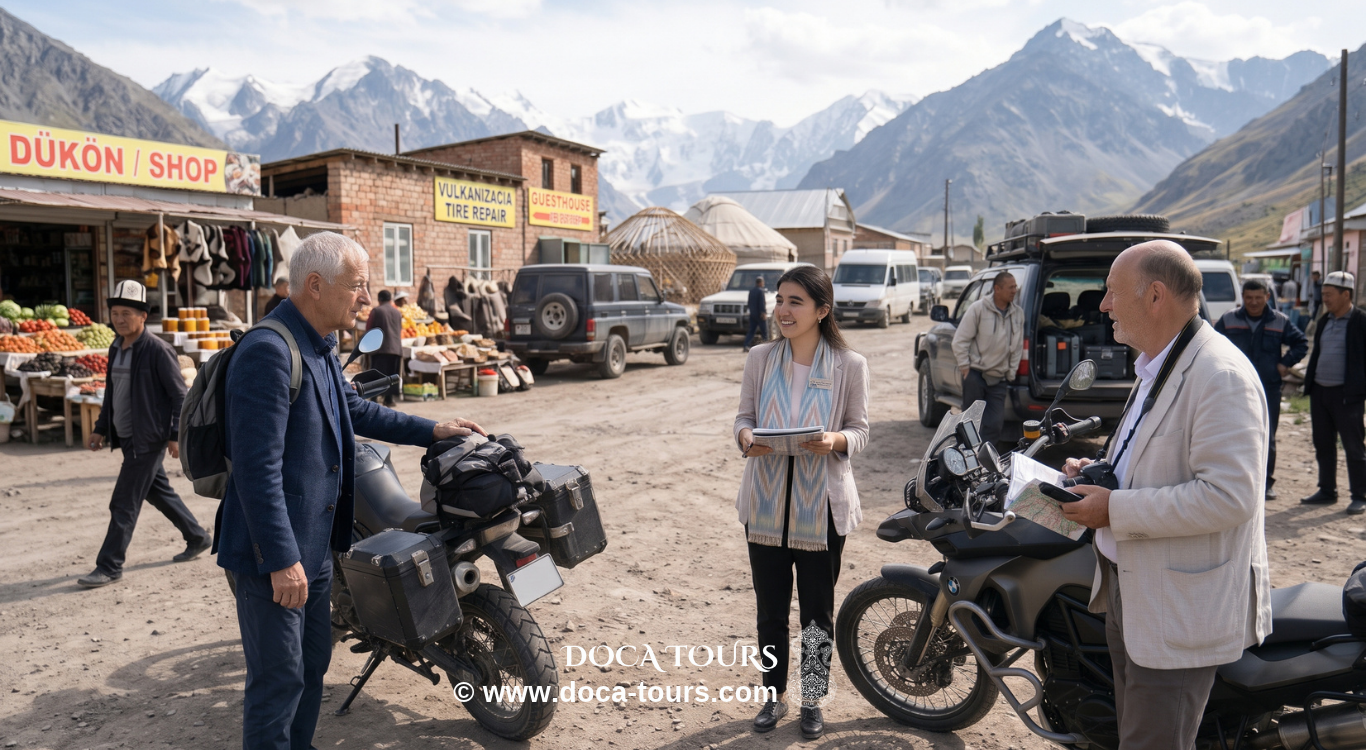
Traffic thins out fast once you leave Bishkek. Shepherds move livestock across the road, eagles circle overhead, and yurt camps dot the summer pastures. That remoteness is the draw, and it is also the reason planning matters.
If the mountain-and-saddle lifestyle appeals beyond two wheels, the same valleys also host horse riding tours in Kyrgyzstan that follow old nomad trails.
What Are the Best Passes, Valleys and Lakeside Roads?
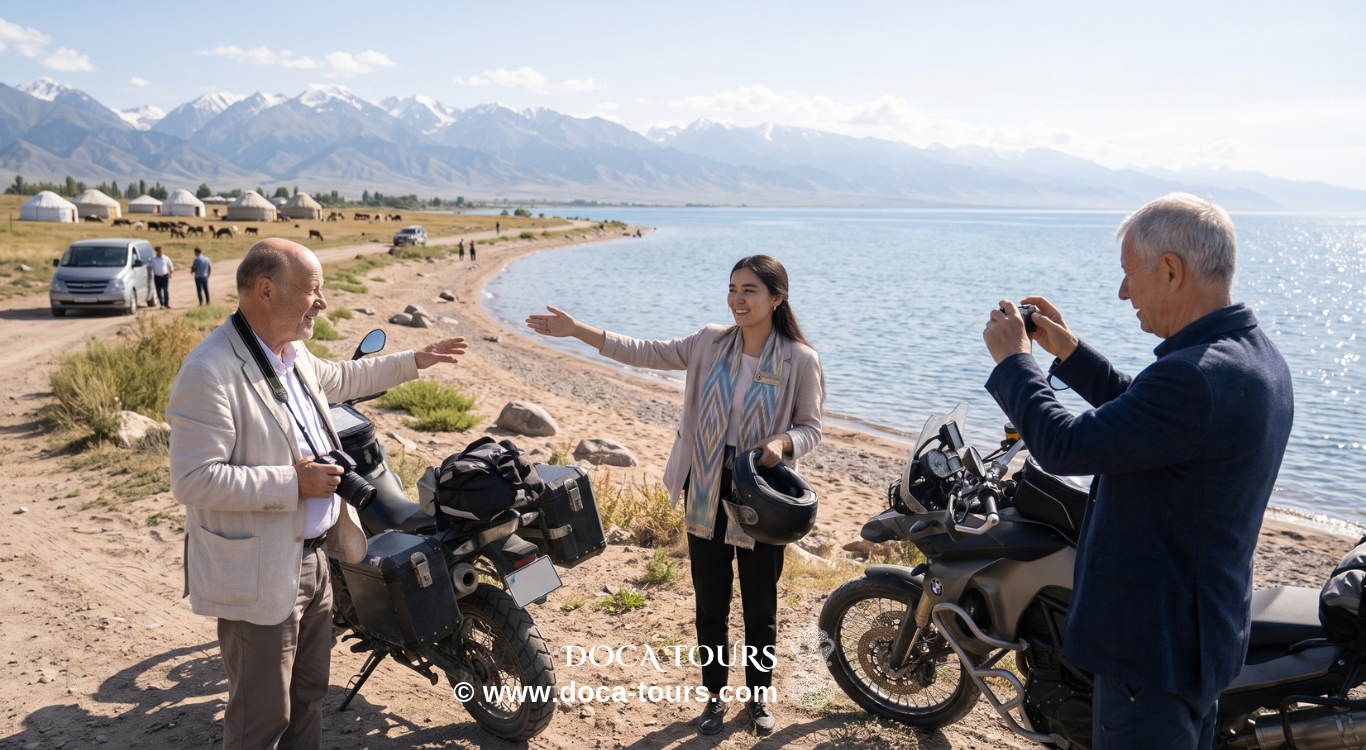
The signature rides combine high passes with long lakeside straights, anchored by Lake Issyk-Kul, which sits at 1,607.9 metres above sea level and covers 6,206 square kilometres (FEOW). It is one of the largest high-elevation lakes on earth, and most itineraries use its shoreline as a hub between harder climbs.
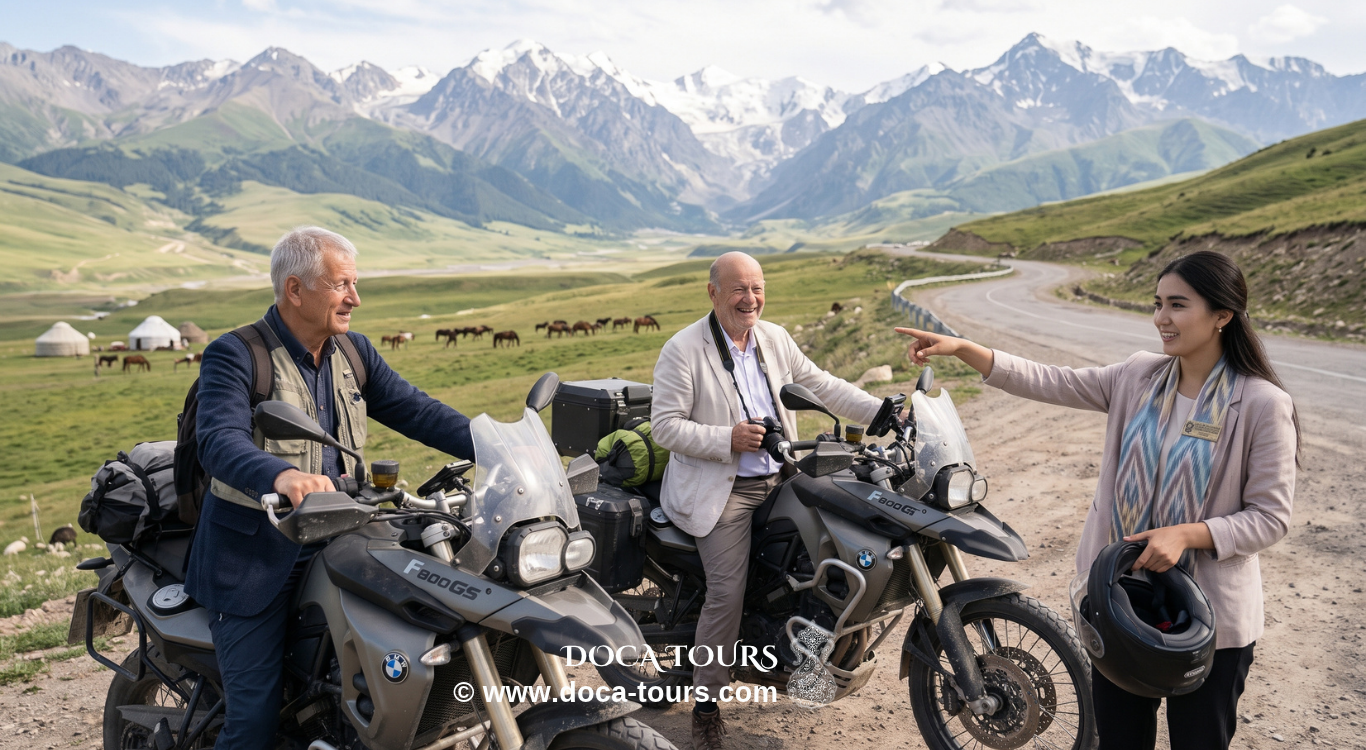
From the southern shore, gravel passes such as the Tosor route climb toward the interior and the high summer pastures around Song-Kol. These are the rides that define a Kyrgyzstan trip: steep switchbacks, loose surfaces, and views that stretch across whole valleys.
Other favourites link the Barskoon valley to remote plateaus, and the Suusamyr valley offers fast, flowing roads at altitude. Kaldama Pass and the route toward Kazarman reward riders who want a long, committing day on unpaved ground.
Not every section is technical. The lakeshore roads and the main corridors are paved and smooth, which gives your wrists and the bike a rest between the hard climbs. That rhythm of effort and recovery is what makes a week here so satisfying.
A good operator sequences these roads so the difficulty builds. Doca Tours plans Kyrgyzstan routes this way, easing riders into gravel before committing to the highest passes, which keeps the trip enjoyable rather than exhausting.
What Are the Bike Options, Licensing Rules and Support Vehicles?
For gravel passes and loose surfaces, a mid-weight adventure bike in the 650cc to 800cc class is the sweet spot, and most rentals require a category A motorcycle licence plus an International Driving Permit. Heavy touring machines struggle on the climbs, while smaller dual-sport bikes shine on the roughest sections.
Common rental choices include adventure models from BMW, KTM and Honda, often fitted with knobbly or dual-purpose tyres. When you book, confirm the exact model, its weight, and the tyre type, because those details decide how the bike handles above 3,000 metres.
Licensing is straightforward but worth checking early. Carry your home motorcycle licence and an International Driving Permit, and ask the operator whether any engine-size or experience minimum applies to high-pass routes. Some operators set these limits for safety on technical terrain.
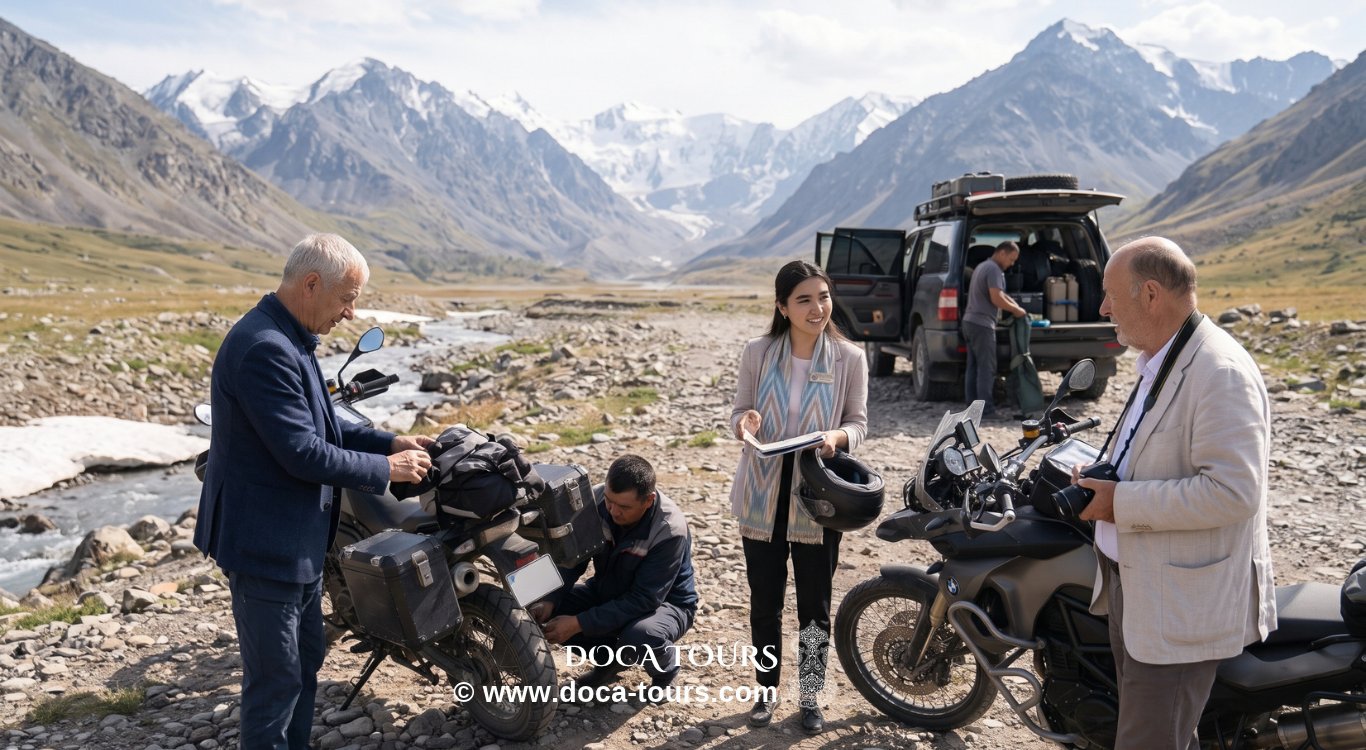
A support vehicle changes the experience. It carries luggage, spare parts, extra fuel and tools, and it gives tired or altitude-affected riders a warm seat. In valleys where the nearest garage can be hours away, that backup turns a potential trip-ender into a short delay. Doca Tours runs supported Kyrgyzstan routes with a vehicle shadowing the group for exactly this reason. See the DOCA TOURS travel services for information about its travel arrangements.
Should You Choose a Guided Tour or Self-Ride?
For most first-time visitors, a guided tour with a support vehicle is the safer and smoother choice, while self-ride suits experienced off-road riders who can handle navigation and repairs alone. The decision comes down to your off-road skill, your comfort with remote breakdowns, and how much planning you want to do yourself.
A guided trip removes the hardest logistics. The operator handles permits, fuel stops, accommodation and route choice, and a lead rider sets a safe pace through tricky sections. If something breaks, the support crew sorts it. You simply ride.
Self-ride offers total freedom and a lower price, but it loads every decision onto you. You navigate unmarked gravel, judge whether a snowmelt crossing is safe, and manage any mechanical problem in places with no phone signal. Experienced adventure riders thrive on this; newcomers often find it stressful.
A middle path exists. Some riders book a guided trip for the hardest passes, then add self-ride days on the easier lakeside loops. That combination gives you expert support where it counts and freedom where the roads are forgiving.
What About Season, Road Conditions and Safety?
Plan your trip for June through September, when snow has cleared the high passes and conditions stay reliable. Outside that window, many passes are blocked or dangerous, so the riding season is short and worth protecting.
July and August bring the warmest, driest weather and the best surface conditions, but also the most tourists around Issyk-Kul. June and September are quieter and still rideable, though you should pack for sudden cold at altitude. Weather at 3,500 metres can turn from sun to sleet within an hour.
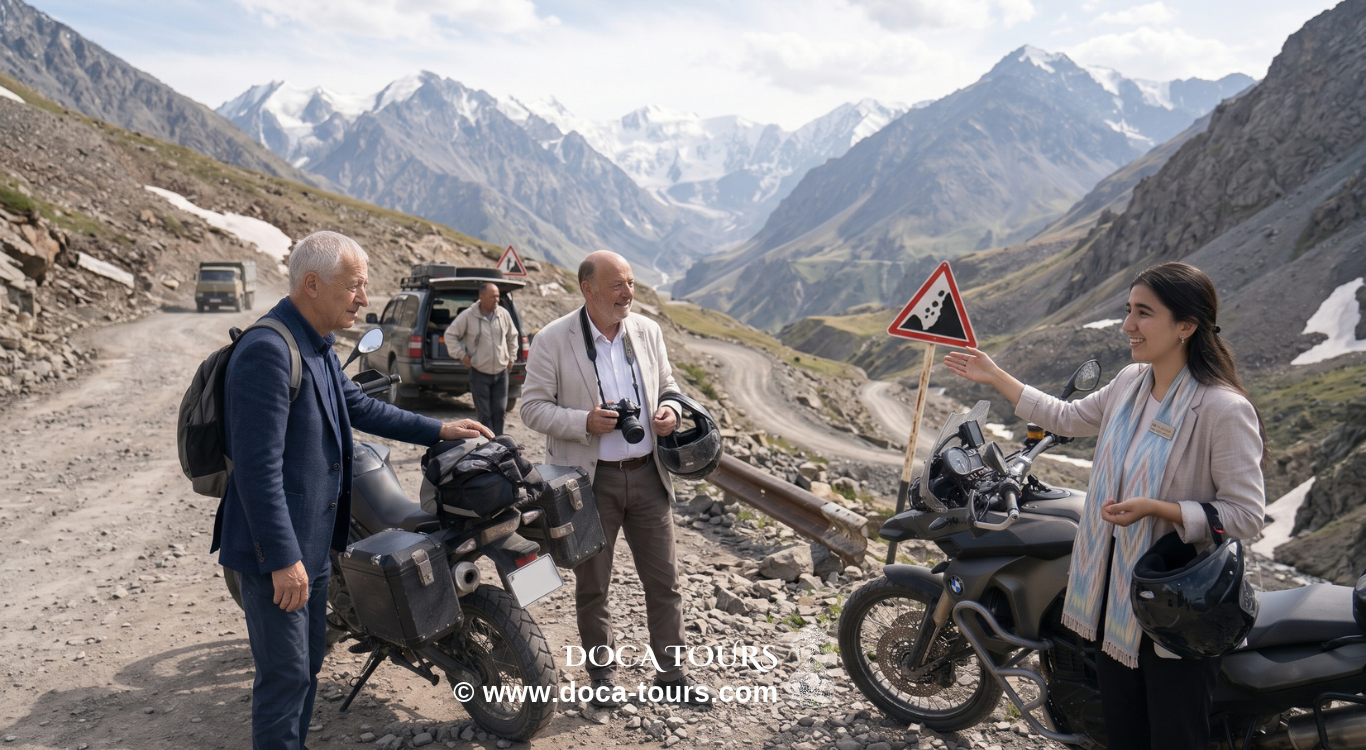
Road conditions vary widely in a single day. You might start on smooth asphalt, hit washboard gravel by lunch, and finish on a rocky track with river crossings. Ride within your limits, keep speeds sensible on loose surfaces, and never assume a pass is open without checking.
Altitude deserves respect. Climbing from lake level to a high pass in one ride can leave you light-headed, so hydrate, eat well and slow down if you feel off. Pack layered clothing, waterproof gloves and basic spares, because mountain weather shifts fast and the nearest shop is often far behind you.
Plan Your Ride
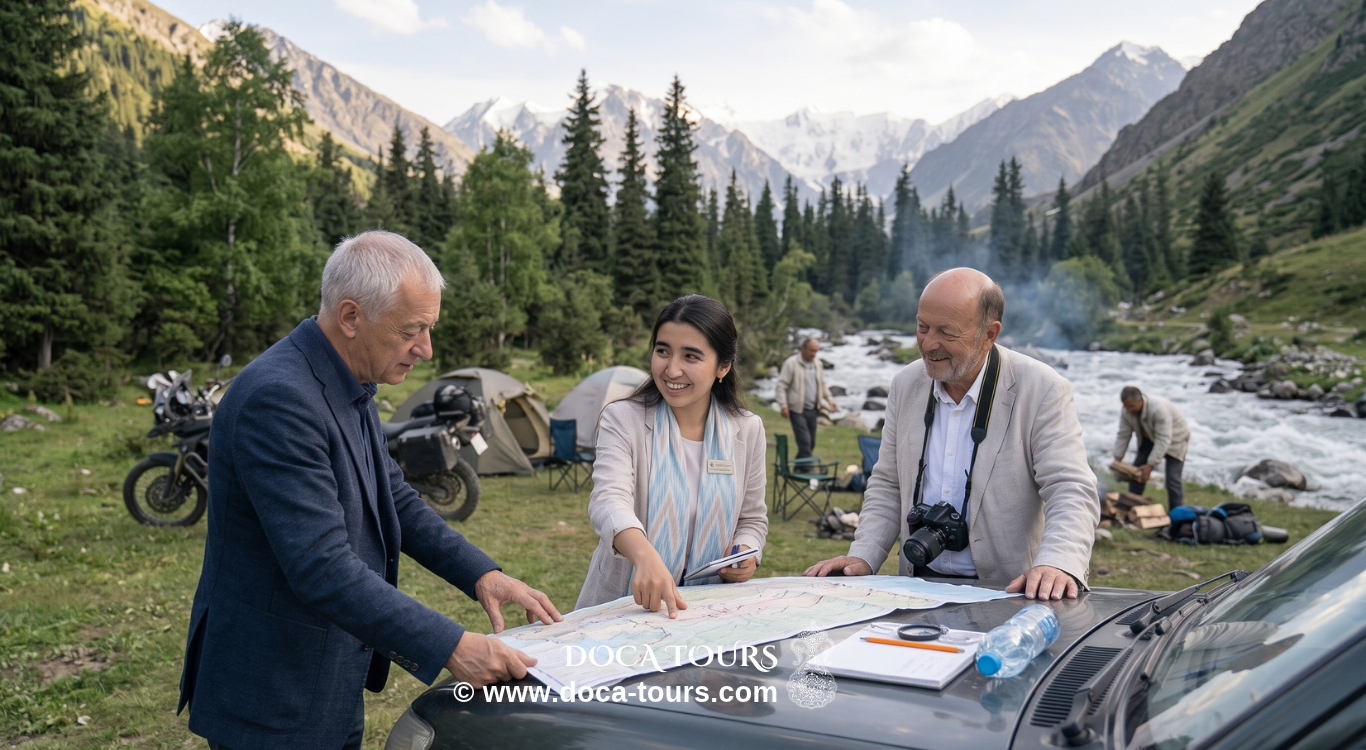
The quickest way to turn this into a real trip is to decide one thing first: your honest off-road skill level. Match that to a route, then book a supported tour if the high gravel passes stretch your comfort, or plan a self-ride if you have the experience and want the freedom. Reach out to Doca Tours with your riding background and target dates, and ask for a route that builds from easy valleys to the big passes so your week peaks at the right moment. You can also explore the Majestic Kyrgyzstan tour package and the 11-Day Highlights of Uzbekistan and Kyrgyzstan tour.
Frequently asked questions
Do I need a special licence for a Kyrgyzstan motorcycle tour?
You need a valid motorcycle licence (category A) from your home country and an International Driving Permit. Most operators ask you to carry both, and some set a minimum engine-size or off-road experience requirement for high-pass routes.
When is the best time for motorcycle touring in Kyrgyzstan?
June to September. Snow usually clears the high passes by early June, and conditions stay reliable until late September. July and August bring the warmest, driest riding but also the most traffic near Issyk-Kul.
Are the mountain passes paved or gravel?
It is a mix. Main corridors are paved, but many scenic passes such as the routes toward Song-Kol and Tosor turn to gravel, dirt and loose rock near the top. Expect unpaved sections on most adventure routes.
Can beginners join a guided motorcycle tour in Kyrgyzstan?
Beginners can join easier valley and lakeside routes with a guide and support vehicle, but high gravel passes demand real off-road confidence. Discuss your experience honestly with the operator so they match the route to your skill.
Is a support vehicle worth it?
For most riders, yes. A support vehicle carries luggage, spares and fuel, offers a warm seat if altitude or weather turns, and shortens repair delays in remote valleys where help can be hours away.