Tashkent, the capital and largest city of Uzbekistan, stands as the most populous urban center in Central Asia, housing over 3 million residents as of April 1, 2024. Situated in northeastern Uzbekistan, near the border with Kazakhstan, it boasts a rich history shaped by diverse cultures and events.
Prior to the advent of Islam in the mid-8th century, the region was dominated by Sogdian and Turkic cultural influences. The city was destroyed by Genghis Khan in 1219 but later reconstructed and thrived due to its strategic position along the Silk Road. Between the 18th and 19th centuries, Tashkent functioned as an independent city-state before being reabsorbed into the Khanate of Kokand. It fell under Russian control in 1865, becoming the capital of Russian Turkestan. During the Soviet era, Tashkent experienced rapid growth and significant demographic shifts caused by forced migrations. The devastating 1966 earthquake led to much of the city being rebuilt in Soviet style. By then, it had become the fourth-largest city in the Soviet Union, following Moscow, Leningrad, and Kyiv.
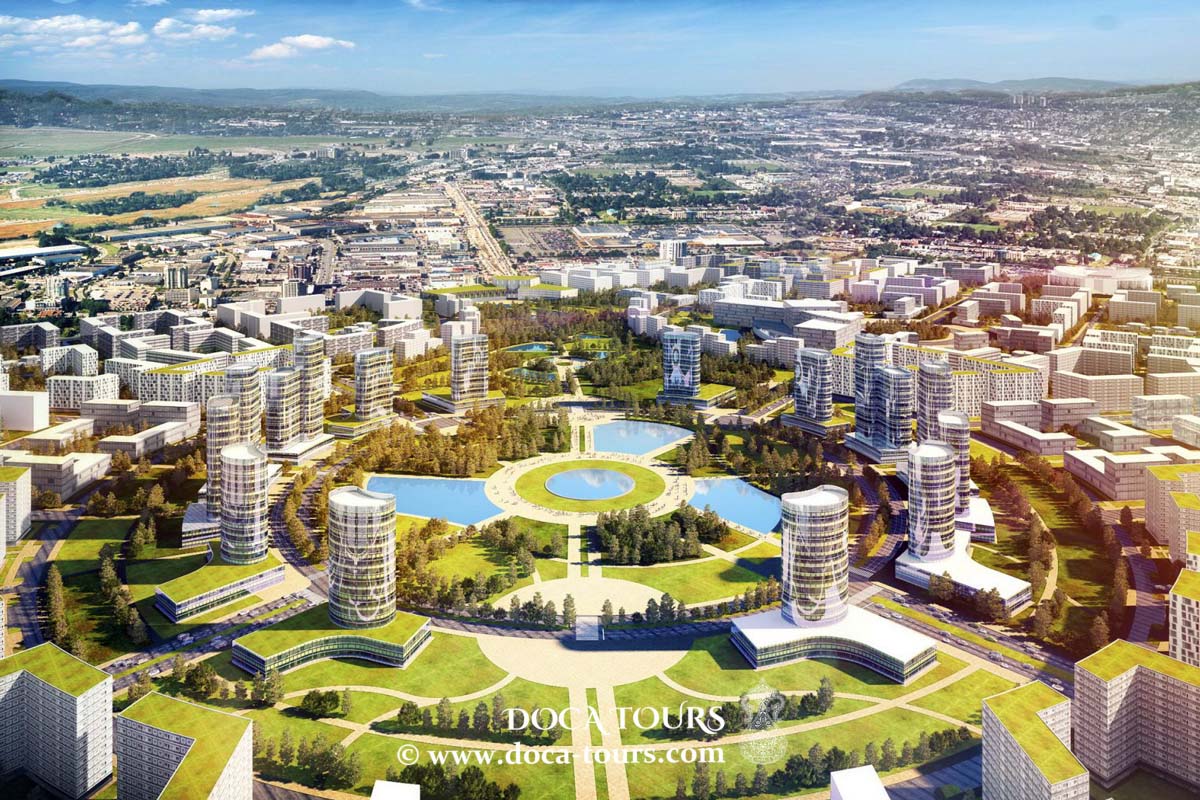
In modern times, as the capital of independent Uzbekistan, Tashkent maintains a multiethnic population, with Uzbeks forming the majority. The city marked 2,200 years of its documented history in 2009, and a master plan for its development extending to 2045 has been approved.
Throughout its history, Tashkent has experienced various name changes and shifts in cultural and political identity. According to the scholar Abu Rayhan Biruni, the name "Tashkent" derives from the Turkic word tash and the Persian kent, translating to "Stone City" or "City of Stones."
Tashkent's origins date back to between the 5th and 3rd centuries BCE, when it emerged as an oasis settlement along the Chirchik River, at the base of the West Tian Shan Mountains. This area, historically known as Beitian, may have been the summer capital of the Kangju confederacy. Some historians suggest that the "Stone Tower" referenced by Ptolemy and other ancient sources as a key landmark on the Silk Road corresponds to this settlement, though this identification remains debated.
In pre-Islamic and early Islamic periods, the city and surrounding region were referred to as Chach. This name is mentioned in Ferdowsi's Shahnameh.
The Chach principality, established between the 5th and 3rd centuries BCE, featured a square citadel roughly 8 km south of the Syr Darya River. By the 7th century CE, it had grown into a major trade hub with over 30 towns and an intricate canal network connecting Sogdian and Turkic communities. The Chinese Buddhist monk Xuanzang referred to the city as Zhěshí, while Chinese historical texts, such as the Book of Sui and Old Book of Tang, identified it as Shí ("stone") or Zhěshí.
Between 558 and 603 CE, Chach formed part of the Turkic Khaganate, which later split into eastern and western factions. The Western Turkic ruler Tong Yabghu Qaghan (618–630 CE) established his headquarters near Chach, in the Ming-bulak area, hosting delegations from the Tang Empire and Byzantium. During the mid-8th century, local Turkic rulers minted coins bearing inscriptions referencing their authority.
In the early 8th century, Chach (referred to as Shash in Arabic) was conquered by the Umayyad Caliphate. By the 10th century, historical accounts describe Shash as a city divided into three distinct areas: a citadel, the inner city (madina), and two suburbs—the inner suburb (rabad-dahil) and the outer suburb (rabad-harij). The citadel, fortified by walls with two gates, housed the ruler's palace and a prison.
During the Samanid Empire, Tashkent was renamed Binkath, though the surrounding region retained the name Chach, pronounced by the Arabs as ash-Shāsh (الشاش). Among the notable Islamic scholars from Tashkent during this time was al-Kaffal ash-Shashi (904–975), a theologian, linguist, and jurist of the Shafi'i school.

The city's name transitioned over time—from Chachkand or Chashkand to Tashkand, reflecting linguistic evolution and later Russian orthographic influence during the Soviet era. By the late 10th century, Tashkent became part of the Turkic Karakhanid state. In 998/99, the oasis of Tashkent was controlled by Karakhanid ruler Ahmad ibn Ali. By the late 12th century, the region evolved into an independent khanate with Banakat as its center, minting its own coins under rulers such as Mu’izz ad-dunya wa-d-din Qilich-khan and Jalal ad-dunya wa-d-din Tafgach-khakan.
In 1219, Tashkent was devastated during Genghis Khan's conquest. Much of its population was lost as the Mongols destroyed the Khwarezmian Empire by 1220, reducing the city to ruins.
Under Timur (Tamerlane) and the subsequent Shaybanid dynasties, Tashkent experienced a cultural and economic revival, emerging as a key center of commerce and scholarship along the Silk Road. During Timur’s rule (1336–1405), Tashkent served as a strategic stronghold. In 1391, Timur launched a campaign against the Golden Horde's Tokhtamysh Khan from Tashkent, returning victorious.
Prominent during this period was the Sufi saint Sheikh Khovendi at-Takhur (13th–14th centuries), whose mausoleum was constructed on Timur's orders. Additionally, the Zangiata mausoleum was built in Tashkent, honoring another revered Sufi saint.
The 16th century saw Tashkent governed by the Shaybanid dynasty. Suyunchkhoja Khan, a progressive ruler, fostered a court of intellectuals, poets, and scholars, including Vasifi, Abdullah Nasrullahi, and Masud bin Osmani Kuhistani. Vasifi later became the tutor to Suyunchkhoja Khan’s son and grandson. Under Shaybanid rule, coins were minted in Tashkent, signifying its economic and political significance.
From 1557, Tashkent came under the control of Abdullah Khan II, who issued his own currency. By the early 17th century, the city was ruled by Keldi Muhammad, another prominent Shaybanid leader, who continued minting coins locally.
In 1598, Tashkent fell into the hands of the Kazakh Khanate. Tauekel Khan, a Kazakh leader, waged war against the Bukhara Khanate, achieving victory in a battle between Tashkent and Samarkand. Under Yesim-Khan, who ruled from 1598 to 1628, a peace treaty was established with Bukhara, allowing the Kazakhs to retain control of Tashkent, Turkestan, and other key cities along the Syr Darya River. Tashkent remained a part of the Kazakh Khanate until 1723.
In 1784, Yunus Khoja, ruler of the Shayhantahur district (dakha), consolidated control over Tashkent, forming an independent Tashkent state. By the early 19th century, the state expanded its influence, controlling vast territories in the region.
In 1809, Tashkent was annexed by the Kokand Khanate. With a population of approximately 100,000, the city was the wealthiest in Central Asia at the time. Under Kokand’s rule, Tashkent was fortified with a 20-kilometer-long moat and adobe walls featuring 12 gates.
Despite its prosperity through trade with Russia, Tashkent resented the heavy taxes imposed by Kokand. The city’s clergy also aligned more closely with Bukhara's religious leadership, creating tension. However, before Bukhara could exploit this dissatisfaction, Russia intervened.
In May 1865, General Mikhail Chernyayev led a daring, unauthorized attack on Tashkent, despite being vastly outnumbered (15 to 1). With a force of fewer than 2,000 men, Chernyayev launched a surprise night assault on the city, which was defended by 30,000 troops and surrounded by 25 km of walls with 11 gates. After two days of intense fighting, Tashkent fell to the Russians. Chernyayev earned the nickname "Lion of Tashkent" from local leaders for his lenient approach—he abolished taxes for a year, freely mingled with the population, and declared himself the city's military governor. He even proposed making Tashkent an autonomous khanate under Russian protection.
While Tsar Alexander II rewarded Chernyayev and his troops, he considered the general too unpredictable and replaced him with General Konstantin von Kaufman. Tashkent became the capital of Russian Turkestan, with von Kaufman as its first Governor-General. A new Russian settlement emerged across the Ankhor Canal from the old city, attracting settlers and merchants. By the late 19th century, Tashkent became a center of espionage during the Great Game, the geopolitical rivalry between Russia and Britain. The arrival of the Trans-Caspian Railway in 1889 brought further economic growth and new settlers, including those who planted the seeds of revolutionary Bolshevik activity.

Tashkent underwent rapid industrialization in the 1920s and 1930s. During World War II, as Nazi Germany invaded the Soviet Union in 1941, factories from western regions were relocated to Tashkent to safeguard industrial production. This significantly boosted the city’s industrial capacity. Tashkent also became a hub for evacuees, including German communist exiles and displaced civilians from war zones. The city’s population surged past one million, with Russians and Ukrainians comprising the majority.
After the war, Tashkent became a center for Soviet scientific and engineering research. On January 10, 1966, it hosted the signing of a peace agreement between Indian Prime Minister Lal Bahadur Shastri and Pakistani President Ayub Khan, mediated by Soviet Premier Alexei Kosygin, to end the Indo-Pakistani War of 1965. Tragically, Shastri died the following day, reportedly of a heart attack, though speculation persists that he may have been poisoned.
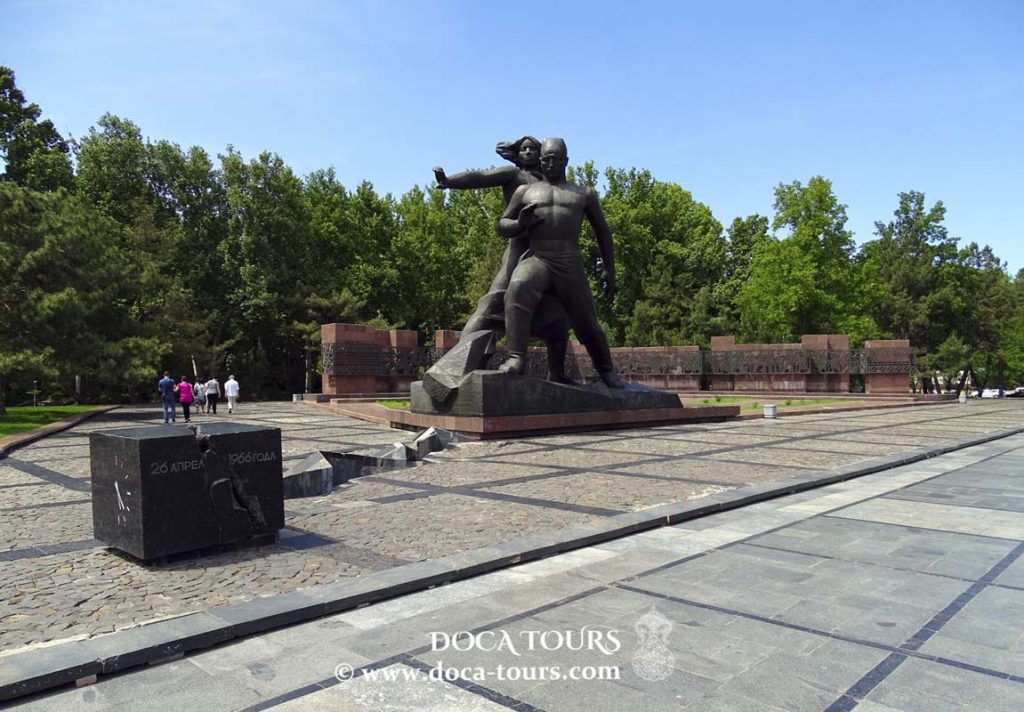
A devastating earthquake struck Tashkent on April 26, 1966, destroying much of the old city. Over 300,000 residents were left homeless, and 78,000 homes, primarily traditional adobe structures, were destroyed. The Soviet government launched a massive rebuilding effort, with contributions from other Soviet republics and nations such as Finland. The city was reconstructed as a model Soviet metropolis, featuring wide boulevards, parks, monuments, and modern apartment blocks. The Tashkent Metro was also constructed during this period. By 1970, about 100,000 new homes had been built, though many were occupied by construction workers rather than displaced residents. The Chilonzor district and other new areas expanded the city's boundaries.
By 1991, at the time of the Soviet Union’s collapse, Tashkent was the fourth-largest city in the USSR and a prominent center of science and engineering. However, due to the 1966 earthquake and subsequent Soviet redevelopment, much of Tashkent’s ancient architectural heritage had been lost, leaving only a few traces of its significance as a Silk Road trading hub.
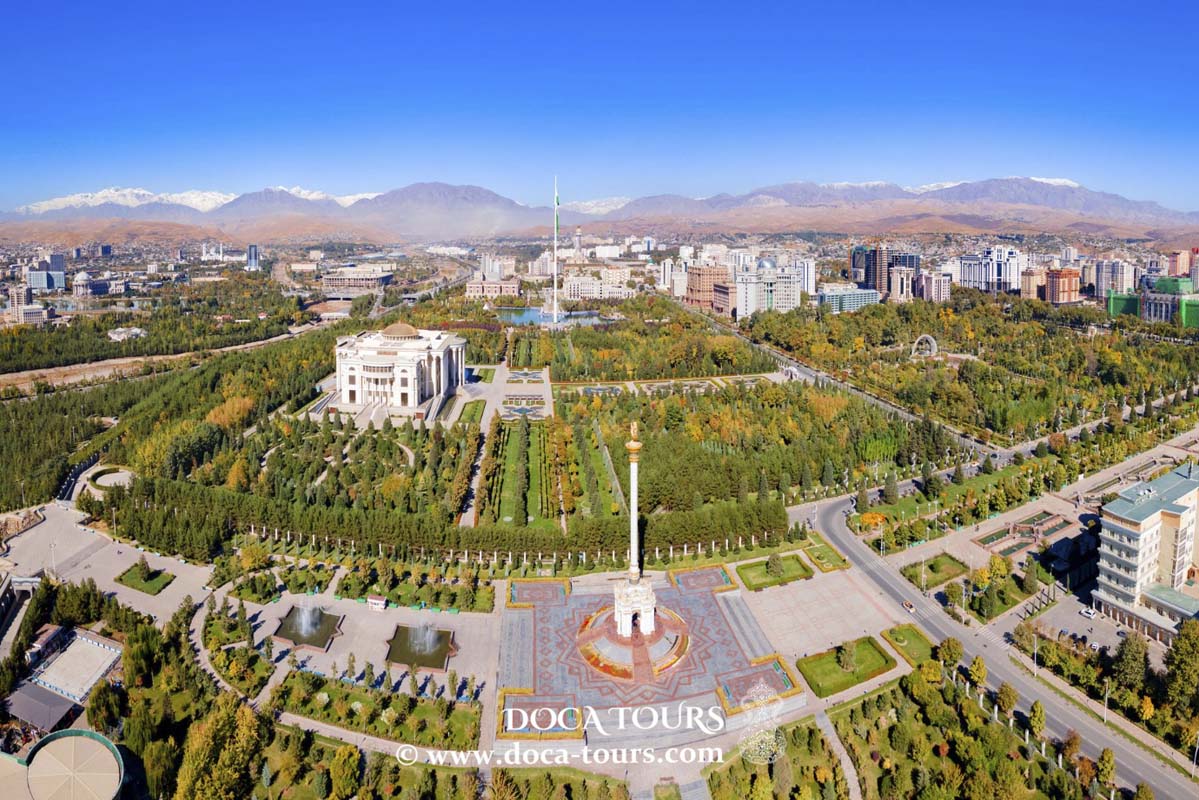
Tashkent, the capital of Uzbekistan, is renowned for its tree-lined avenues, fountains, and expansive parks. However, in 2009, a controversial initiative to cut down trees sparked public concern.
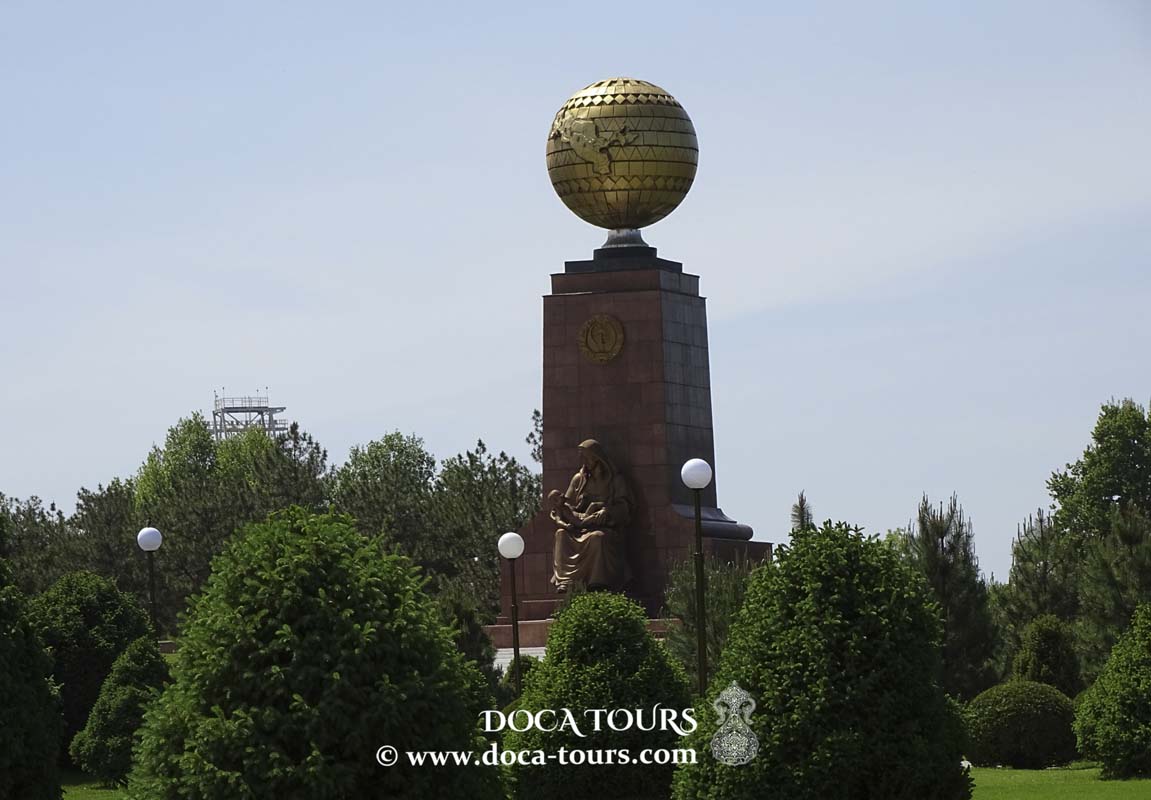
Since gaining independence in 1991, Tashkent has undergone significant economic, cultural, and architectural transformations. Many Soviet-era landmarks have been replaced with modern developments. For example, a massive Lenin statue was replaced by a globe depicting Uzbekistan’s map. The modern “Downtown Tashkent” district now features the 22-story NBU Bank building, luxury hotels, the International Business Center, and the Plaza Building.
The Tashkent Business District, established to support businesses of all sizes, has become a hub for investment. In 2018, construction began on a new downtown area, including a business zone with skyscrapers, international hotel chains like Hilton, residential apartments, malls, and entertainment venues. The International Business Center was slated for completion by the end of 2021. Tashkent also received a “BB−” rating with a “Stable” forecast from Fitch Ratings, reflecting its economic growth.
In 2007, Tashkent was recognized as a "cultural capital of the Islamic world" for its historic mosques, Islamic sites, and institutions, including the Islamic University. The city is also home to the Samarkand Kufic Quran, one of the oldest written copies of the Quran, which has been preserved in Tashkent since 1924.
Tashkent is Uzbekistan’s most visited city and has benefited greatly from increased tourism, spurred by reforms under President Shavkat Mirziyoyev. Visa-free policies for EU citizens and simplified visa procedures for other nations have made the city more accessible to international travelers.
In 1928, Tashkent hosted the first public demonstration of a fully electronic television. Boris Grabovsky, who patented his method in 1925, developed a system using vertical and horizontal electron beam sweeping under high voltage—a principle still employed in modern cathode-ray tube technology. Although Vladimir Zworykin and Philo Farnsworth are often credited as inventors of electronic television, this early demonstration in Tashkent is historically significant. In 1964, Grabovsky’s contributions were officially acknowledged, and he was honored as the "Honorable Inventor of the Uzbek Soviet Socialist Republic."
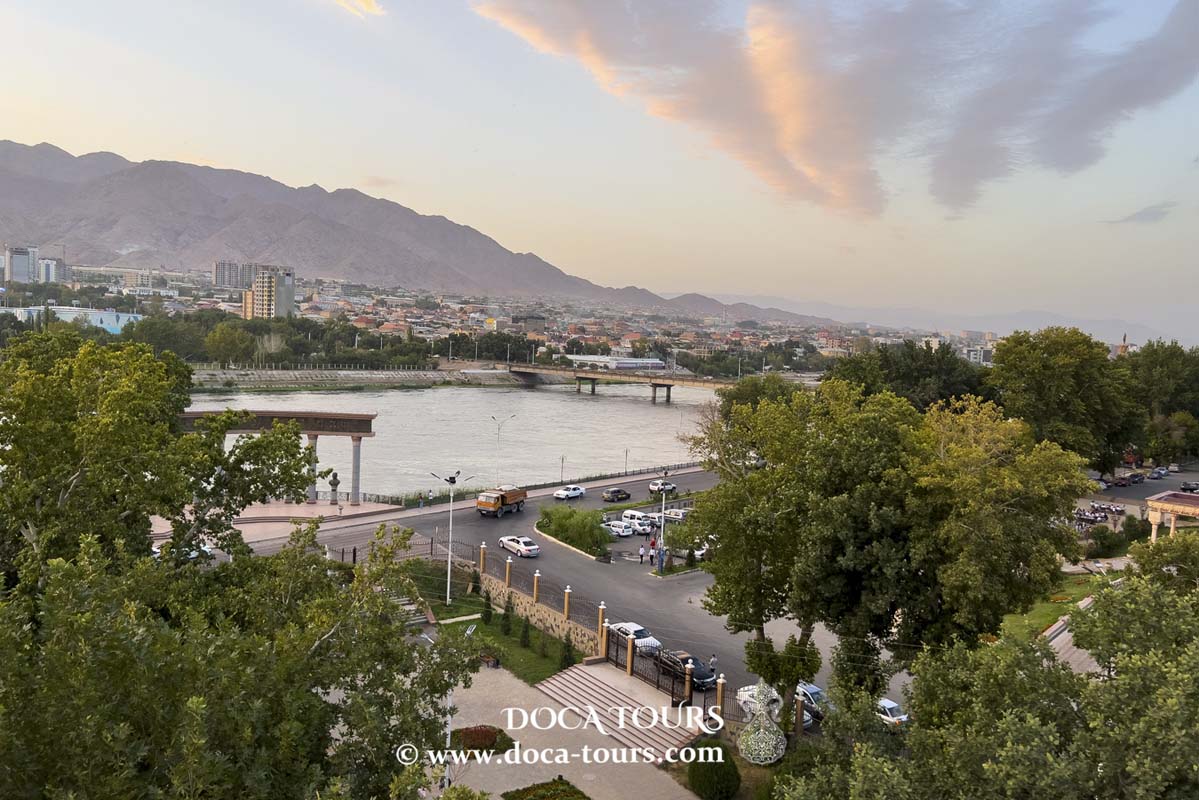
Tashkent lies in a fertile plain at the crossroads between Samarkand and Shymkent, just 13 km from two key border crossings into Kazakhstan. The city is built on deep alluvial deposits, where the Chirchiq River meets its tributaries, and is prone to seismic activity, including earthquakes and tremors.
Nearby major cities with populations exceeding 1 million include Shymkent (Kazakhstan), Dushanbe (Tajikistan), Bishkek (Kyrgyzstan), Kashgar (China), Almaty (Kazakhstan), Kabul (Afghanistan), and Peshawar (Pakistan).
Tashkent operates in the UTC+5 time zone.
Tashkent experiences a Mediterranean climate (Köppen: Csa) with influences from a humid continental climate (Köppen: Dsa). Winters are cold and snowy, while summers are long, hot, and dry, lasting from May to September. Most of the city’s precipitation falls in winter and spring, with snowfall common during the colder months. Summers, particularly July and August, can reach extreme temperatures, while rainfall is minimal from June through September. The city’s altitude of 500 m (1,600 ft) contributes to its distinctive precipitation patterns.
In 1983, Tashkent's population was approximately 1,902,000, spread across a municipal area of 256 km² (99 sq mi). By 1991, the year of the Soviet Union's dissolution, this number had increased to 2,136,600, making Tashkent the fourth most populous city in the USSR after Moscow, Leningrad (now St. Petersburg), and Kyiv. Today, Tashkent remains the fourth most populated city in the Commonwealth of Independent States (CIS).
As of 2020, the city's population had grown to 2,716,176.
In 2008, the ethnic composition of Tashkent was:
While much of Tashkent's ancient architecture was lost during the 1917 revolution and the devastating 1966 earthquake, the city is still home to a wealth of museums and monuments, many from the Soviet era.
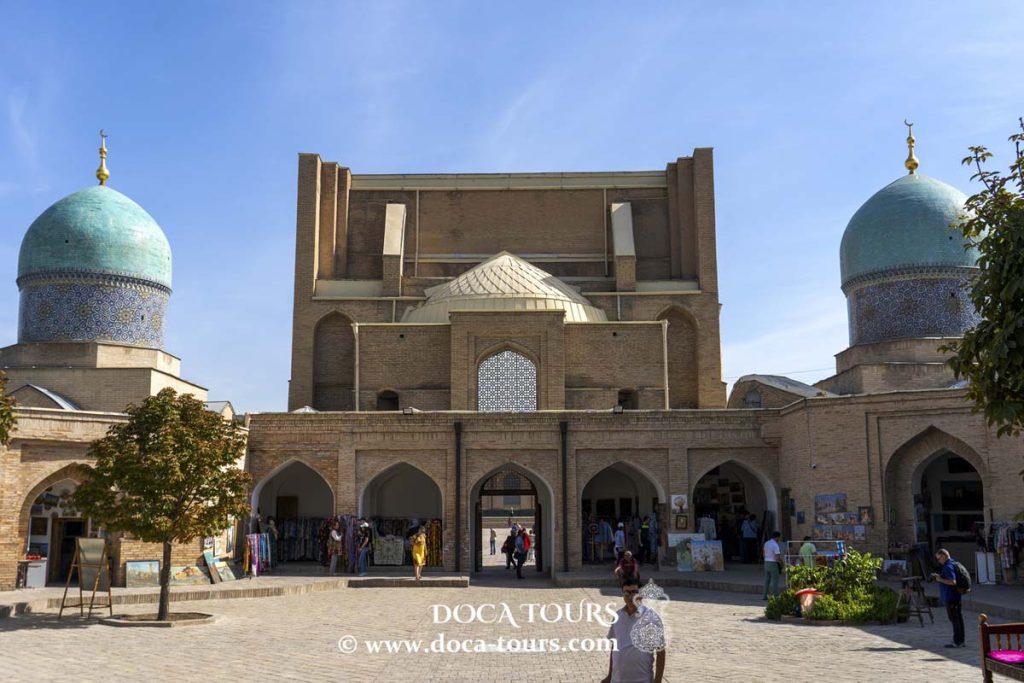
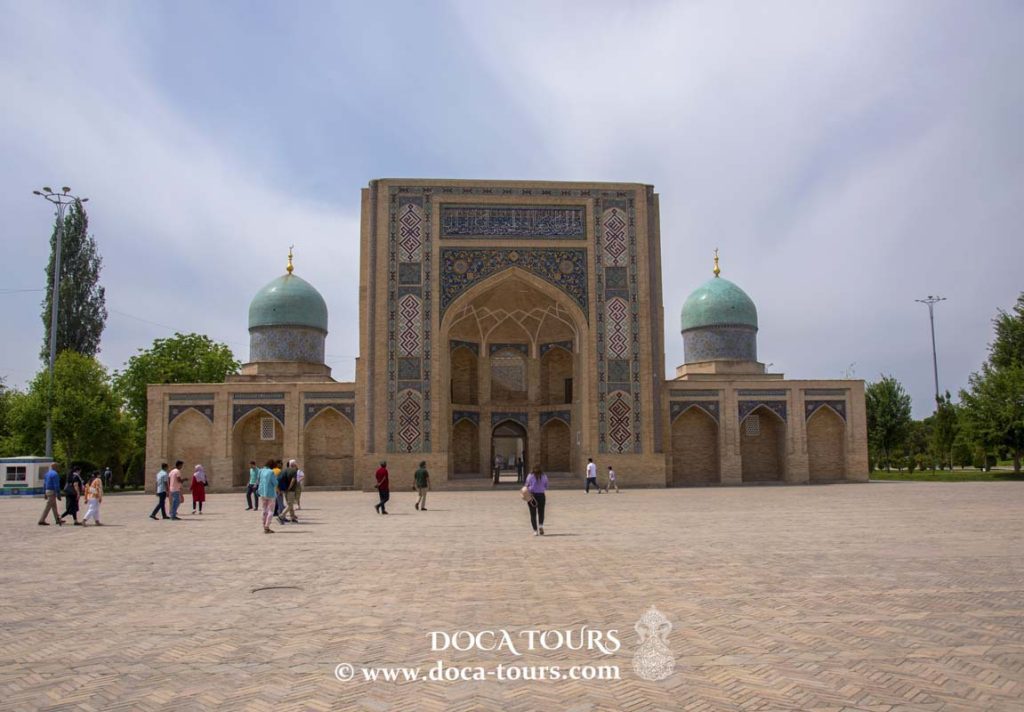
Dating back to the rule of Abdullah Khan II (1557–1598), this historic madrasa is under restoration by the Religious Board of Mawarannahr Muslims. While there is talk of converting it into a museum, it currently functions as a madrasa.
Located near Kukeldash Madrasah, this sprawling open-air market is the heart of Tashkent's old town and offers a wide variety of goods. It is a major attraction for visitors.
This complex features mosques, a shrine, and a library housing the famous Kufic-script Quran, believed to be the oldest surviving Quran, dating back to 655 CE. The manuscript, stained with the blood of Caliph Uthman, was brought to Samarkand by Timur, seized by Russia, and eventually returned to Uzbekistan in 1924.
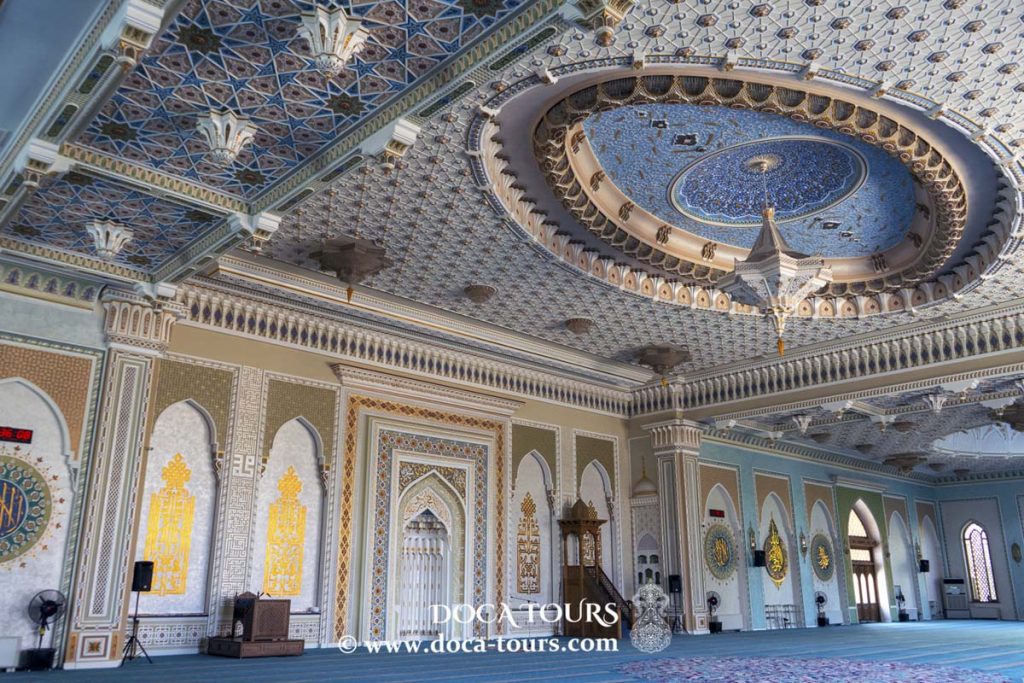
Dedicated to Imam Abu Bakr Muhammad ibn Ali ibn Ismail al-Kaffal ash-Shashi, this mausoleum was reconstructed in 1542 under the guidance of royal architect Gulyam Husayn. It is known for its asymmetrical domed portal design.
A group of three 15th-century mausoleums, restored in the 19th century, houses the tomb of Yunus Khan, the grandfather of Mughal Emperor Babur.
This 19th-century palace was home to Grand Duke Nikolai Konstantinovich, who was exiled to Tashkent for misconduct. The building, previously a museum, is now used by the Ministry of Foreign Affairs.
Designed by Aleksey Shchusev, who also created Lenin’s Tomb in Moscow, this theater was constructed during World War II using Japanese POW labor. It hosts performances of Russian opera and ballet.
This museum showcases art from the pre-Russian period, including Sogdian murals and Zoroastrian artifacts, alongside 19th and 20th-century applied arts like embroidered suzani. Many paintings were “borrowed” from the Hermitage by Grand Duke Romanov and never returned.
Housed in a stunning traditional residence, the museum’s building is its main highlight, featuring 19th and 20th-century applied arts.
The city’s largest museum, formerly the Lenin Museum, contains extensive collections highlighting Uzbekistan's history.
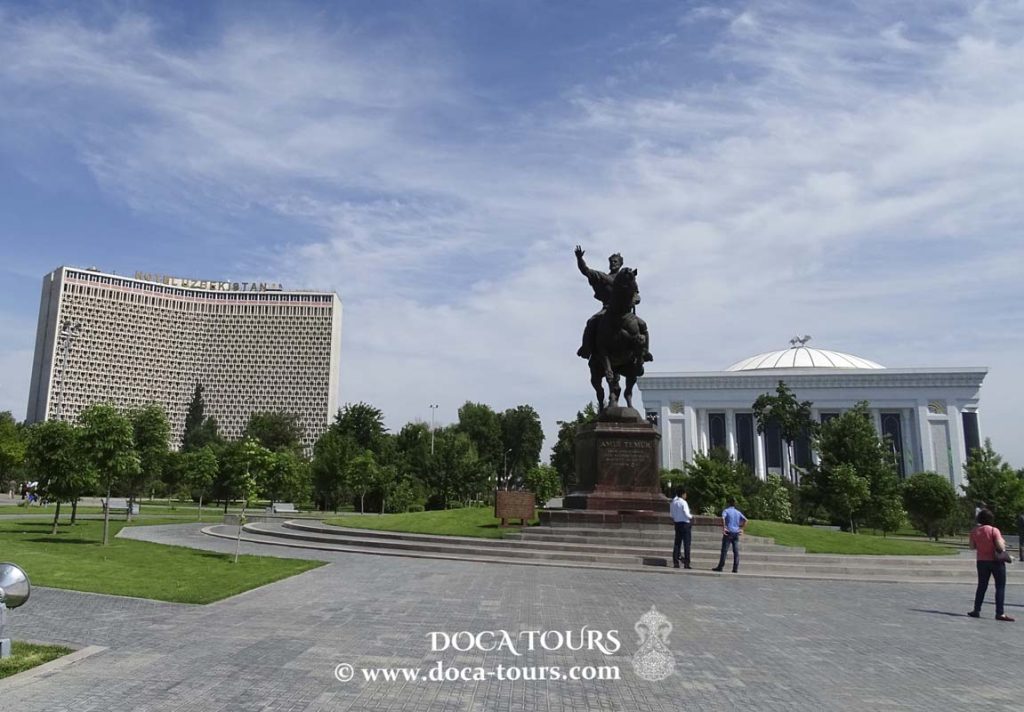
This museum, with its iconic blue dome, honors Timur and Uzbekistan's former president, Islam Karimov. Nearby is Amir Timur Square, featuring a statue of Timur on horseback surrounded by beautifully landscaped gardens and fountains.

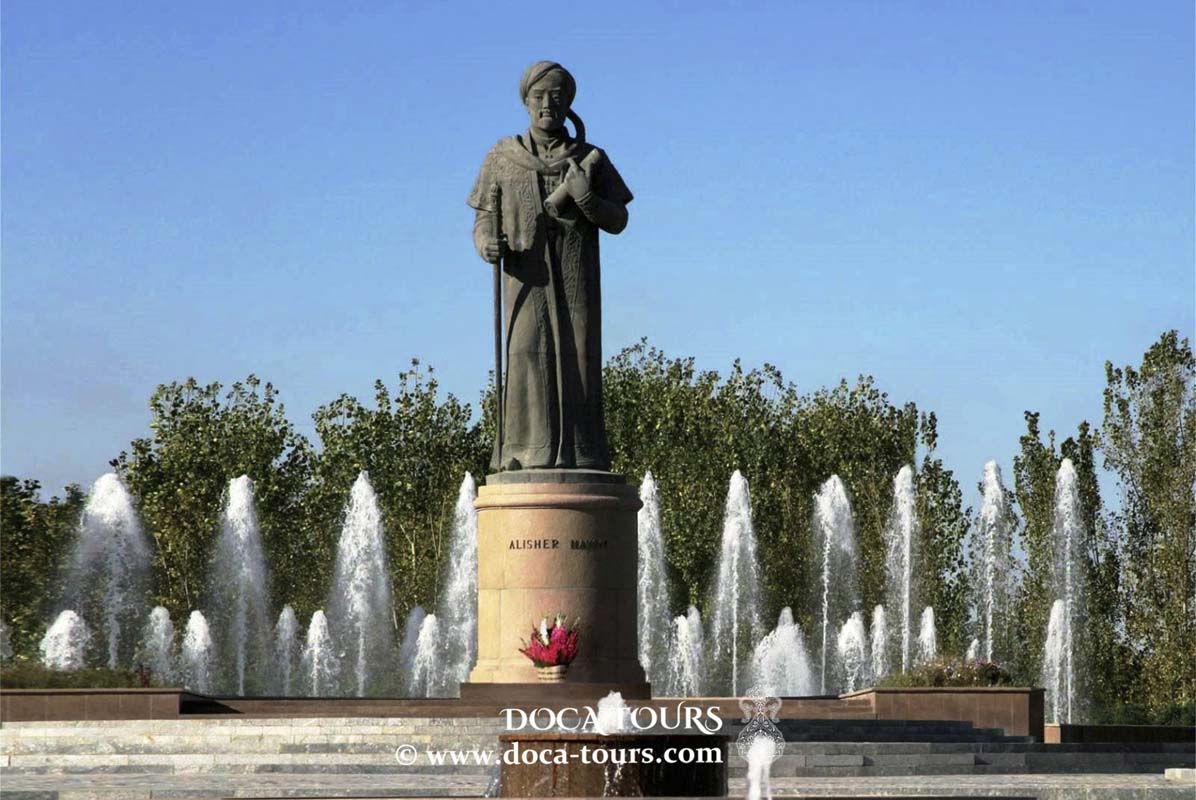
Dedicated to Alisher Navoi, this museum displays replica manuscripts, Islamic calligraphy, and miniature paintings from the 15th century.
Famous for its elaborate and artistic architecture, the metro system only allowed photography starting in 2018.
Russian Orthodox Church in Amir Timur Square
Built in 1898, this church was repurposed for non-religious uses during the Soviet era. It was later demolished in 2009, after serving various functions, including as a bank.
Tashkent is home to a World War II Memorial Park and the Defender of Motherland Monument, honoring those who served during the war.
Tashkent serves as the hub of Uzbekistan's scientific and educational development, hosting key institutions like the Academy of Sciences of Uzbekistan. The city also boasts numerous universities and higher education institutions, including:
Tashkent boasts an extensive and modern transportation network, including:
The city once had trolleybus and tram systems, which ceased operations in 2010 and 2016, respectively.
Tashkent offers a variety of shopping and entertainment options:
Shopping Malls: Popular destinations include Next, Samarqand Darvoza, Kontinent, Riviera, and Compass, many of which are managed by Tower Management Group under the Orient Group of Companies.
Theaters:
Alisher Navoi Theater: The city’s most prestigious theater, hosting regular ballet and opera performances.
Ilkhom Theater: Founded by Mark Weil in 1976, it was the first independent theater in the Soviet Union and continues to maintain its reputation.
Tashkent has established sister city relationships with the following cities around the world: