Samarkand, also spelled Samarqand (Uzbek and Tajik: Самарқанд / Samarqand, IPA: [samarˈqand, -ant]), is a city in southeastern Uzbekistan with a rich history as one of Central Asia's oldest continuously inhabited cities. It serves as the capital of the Samarqand Region and a district-level city, encompassing the settlements of Kimyogarlar, Farhod, and Khishrav. With a population of 551,700 as of 2021, it is Uzbekistan's third-largest city.
Archaeological evidence suggests human activity in the area as far back as the late Paleolithic Era. Although the exact founding date of Samarkand is uncertain, it is widely believed to date back to the 8th or 7th centuries BC. Positioned strategically along the Silk Road, the city flourished as a major hub linking China, Persia, and Europe. At various points in its history, Samarkand was one of the largest cities in Central Asia and an essential part of the empires of Greater Iran. During the Persian Achaemenid Empire, it served as the capital of the Sogdian satrapy. It was later conquered by Alexander the Great in 329 BC, when it was known as Marakanda, or Μαράκανδα in Greek. Subsequently, the city passed through the hands of various Iranian and Turkic rulers before falling to the Mongols under Genghis Khan in 1220.

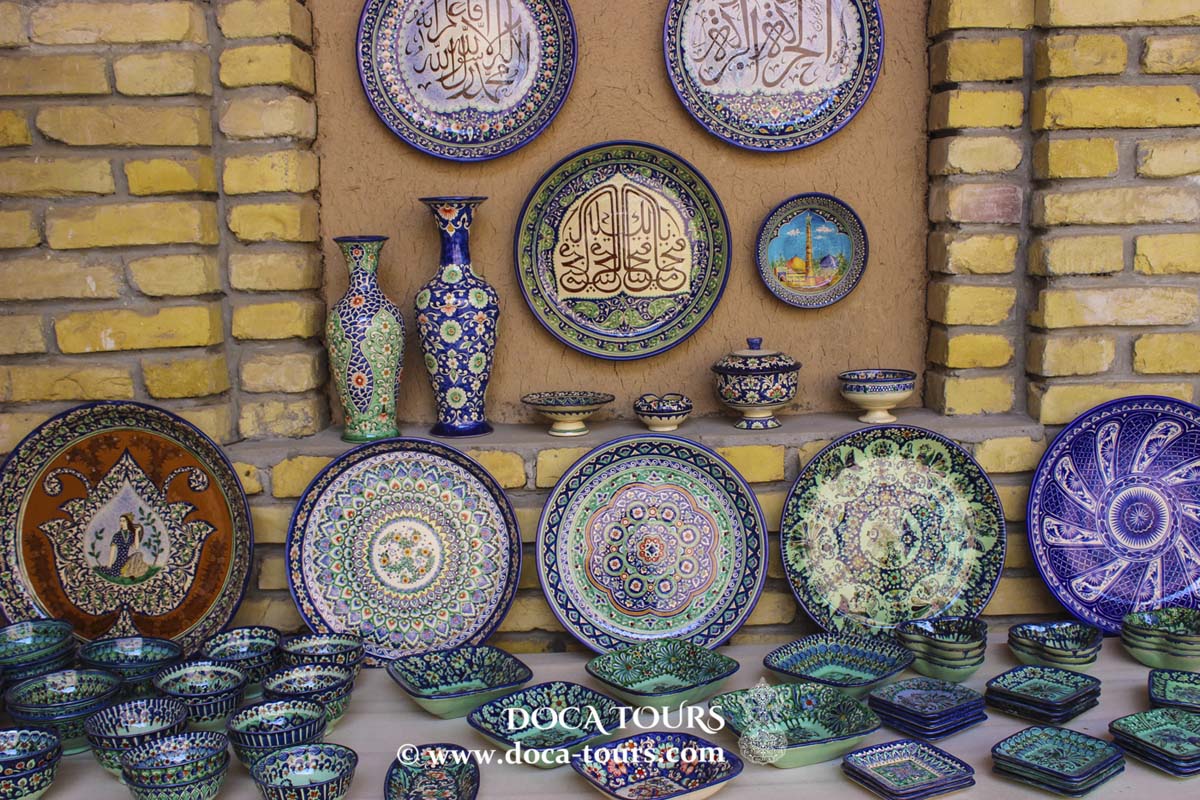
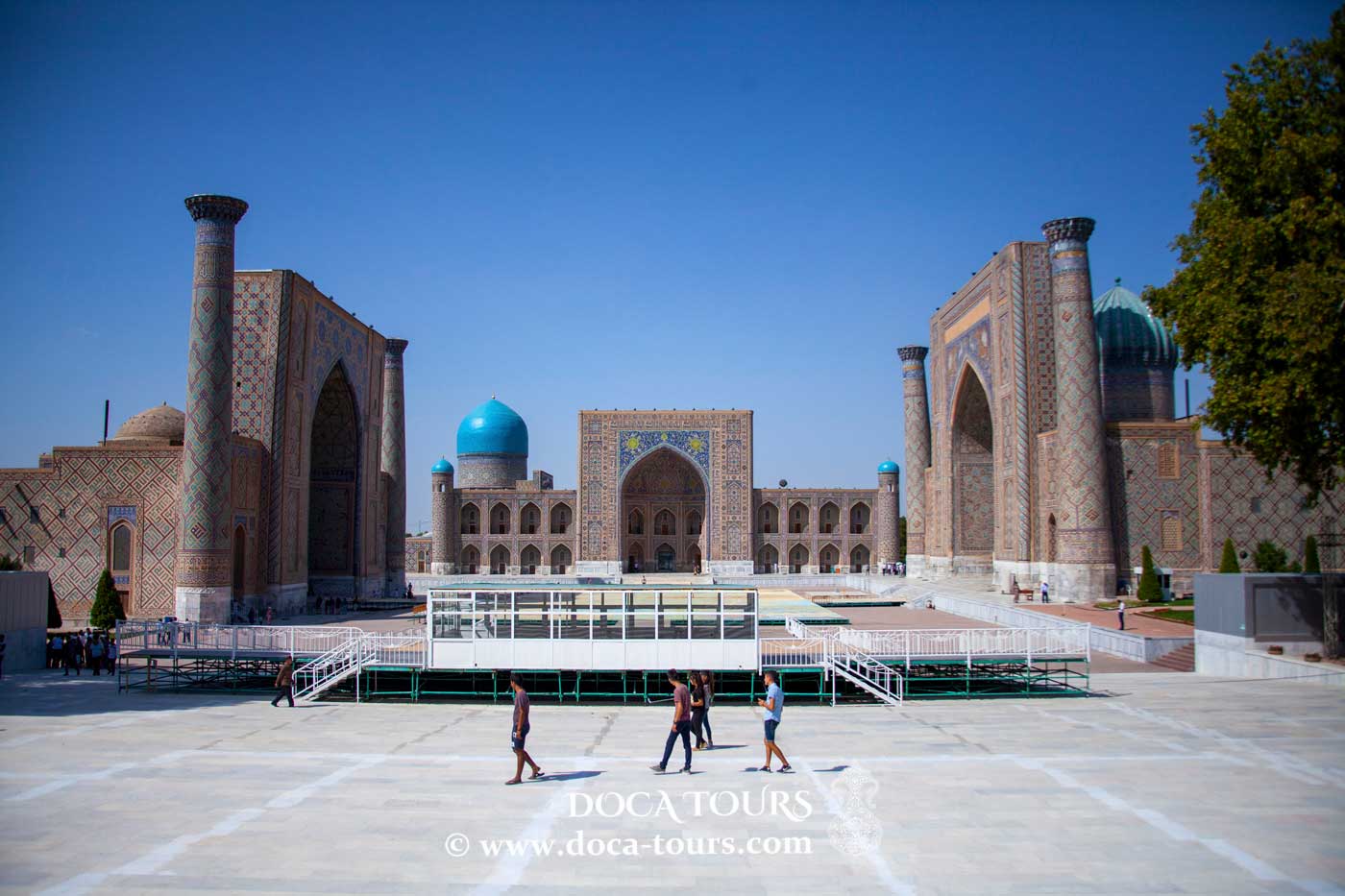
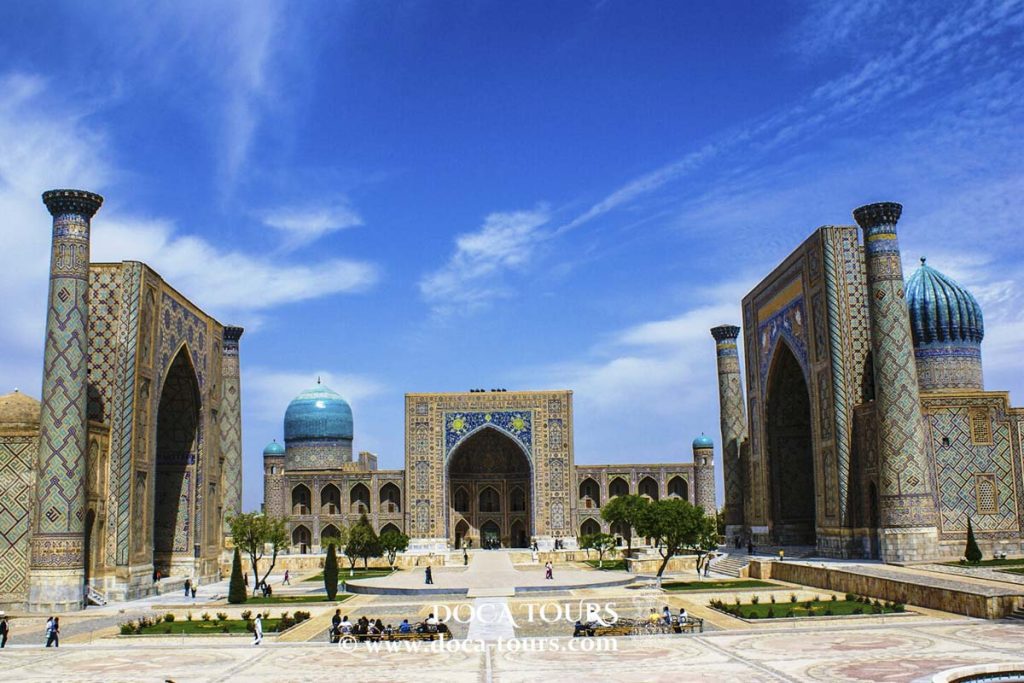
Samarkand gained prominence as a center of Islamic scholarship and the birthplace of the Timurid Renaissance. In the 14th century, Timur (Tamerlane) made it the capital of his empire and the location of his mausoleum, the Gur-e Amir. The Bibi-Khanym Mosque, restored during the Soviet era, remains a key architectural marvel. Registan Square, the ancient heart of Samarkand, is surrounded by three grandiose religious structures and stands as one of the city's most iconic landmarks. The city has also preserved its traditional crafts, including embroidery, goldwork, silk weaving, copper engraving, ceramics, and wood carving. In 2001, UNESCO designated Samarkand as a World Heritage Site under the title "Samarkand – Crossroads of Cultures."
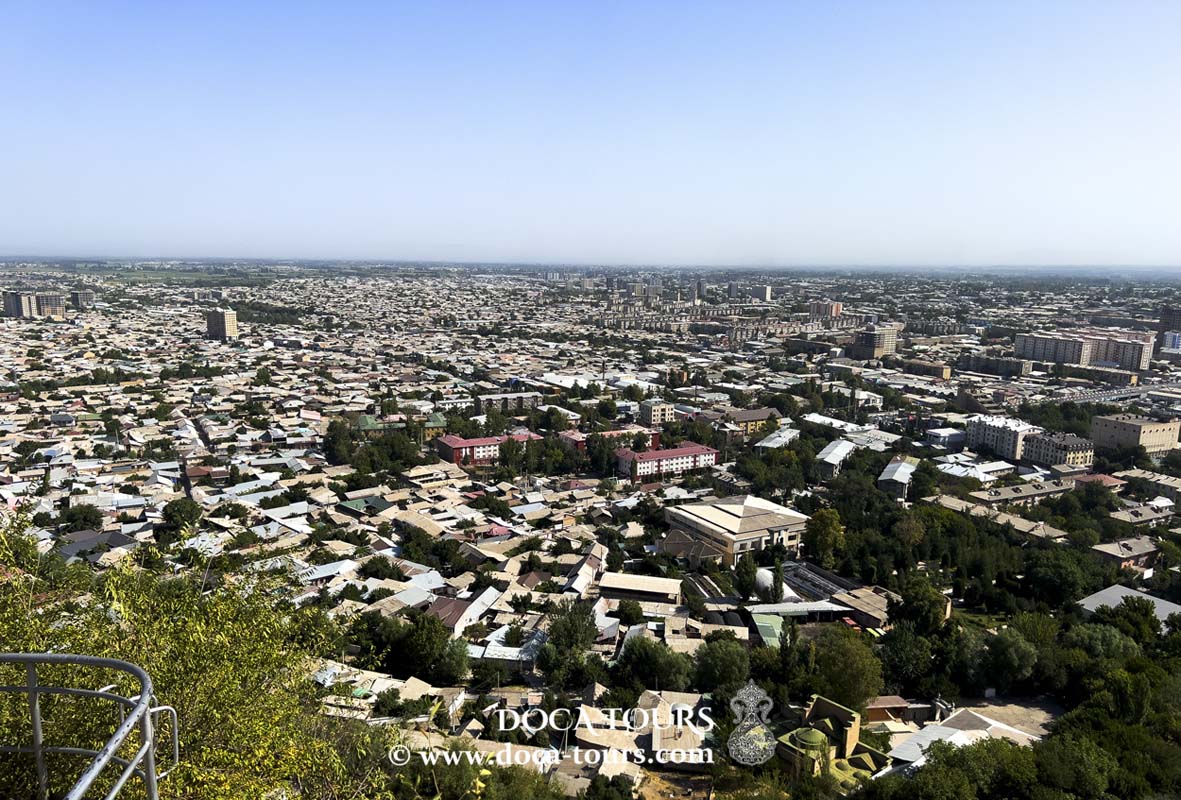
Modern Samarkand is divided into two main sections: the old city, home to historical monuments, traditional markets, and ancient residential quarters; and the new city, developed during the Russian Empire and Soviet Union, which features administrative buildings, cultural centers, and educational institutions. On September 15–16, 2022, Samarkand hosted the Shanghai Cooperation Organization (SCO) summit.
The city's multicultural heritage reflects its complex linguistic and cultural history. While Tajik remains widely spoken among its residents, Uzbek is the official state language, and Russian is commonly used in public and official settings due to Uzbekistan's language policy.
The name "Samarkand" derives from the Iranian languages, combining samar ("stone" or "rock") and kand ("fort" or "town"). This etymology aligns with the meaning of the name of Uzbekistan's capital, Tashkent, where tash (Turkic for "stone") parallels samar, and -kent (borrowed from Iranian) mirrors -kand.
According to the 11th-century scholar Mahmud al-Kashghari, the city was once called Sämizkänd (سَمِزْكَنْد), meaning "fat city" in the Karakhanid language. This name was later referenced by 16th-century Mughal emperor Babur and 15th-century Castilian traveler Ruy González de Clavijo, who suggested that "Samarkand" evolved as a variant of this earlier name.
Samarkand, alongside Bukhara, is one of the most ancient cities in Central Asia, thriving due to its strategic location on the trade route between China and Europe. While the exact founding date of Samarkand remains unclear, researchers from the Institute of Archaeology in Samarkand estimate its origins to the 8th–7th centuries BC.
Archaeological findings in both the city’s core (Syob and central areas) and its outskirts (such as Hojamazgil and Sazag'on) have revealed evidence of human activity dating back 40,000 years, during the Upper Paleolithic period. Sites from the Mesolithic era (12th–7th millennia BC) have also been unearthed in areas like Sazag'on-1, Zamichatosh, and Okhalik. Notably, the Syob and Darg'om canals, which supplied water to the city and its suburbs, were constructed around the 7th–5th centuries BC during the early Iron Age.
From its inception, Samarkand was a significant hub of Sogdian civilization. By the era of the Persian Achaemenid dynasty, it had become the capital of the Sogdian satrapy.
In 329 BC, Alexander the Great captured Samarkand, then known as Maracanda (Μαράκανδα) to the Greeks. Historical records mention a leader named Orepius, who reportedly became ruler as a gift from Alexander, rather than inheriting the position.
Despite the initial destruction caused by Alexander’s conquest, Samarkand quickly recovered and flourished under Hellenistic influence. Greek construction techniques, such as the use of square bricks and advanced masonry, were introduced. Greek culture, particularly its aesthetics, left a lasting impact on local artisans.
After Alexander's death, the city became part of the Greek Seleucid Empire and later the Greco-Bactrian Kingdom, followed by the Kushan Empire. Although the Kushans originated in Central Asia, they continued the Hellenistic cultural traditions. However, following the decline of the Kushan Empire in the 3rd century AD, Samarkand experienced a downturn, losing its significance as a major center until its revival in the 5th century.
Around 260 AD, the Persian Sassanian Empire conquered Samarkand. Under Sassanian rule, the city became a key center for the Manichaean religion, facilitating its spread across Central Asia.
Between 350 and 375 AD, the Xionites, a nomadic tribe of uncertain origin, seized control of Samarkand. Archaeological evidence from this period reveals the resettlement of nomads in the region, blending their culture with local traditions. From 457 to 509 AD, the city was part of the Kidarite state.
Later, the Hephthalites, also known as the "White Huns," took control of Samarkand before being defeated around 560 AD by the Göktürks in alliance with the Sassanian Persians at the Battle of Bukhara.
By the mid-6th century, the Turkic Khaganate, led by the Ashina dynasty, emerged as a major power. Between 557 and 561 AD, a joint campaign by the Turks and Sassanians defeated the Hephthalites, establishing a shared border between the two empires. During this period, Samarkand was fortified with four defensive walls and gates.
Archaeological discoveries from this era include an ancient Turkic burial site with a horse, dating back to the 6th century. Additionally, familial ties between Samarkand’s rulers and the Turkic Khaganate were recorded; for instance, Tong Yabghu Qaghan (618–630), a ruler of the Western Turkic Khaganate, gave his daughter in marriage to the ruler of Samarkand.
Christianity established a foothold in Samarkand as early as the 4th century. By the 5th century, a Nestorian Christian diocese was established, which later became a metropolitanate in the early 8th century. During this time, theological debates arose between Sogdian adherents of Christianity and Manichaeism, as reflected in historical documents.
Through these transformative eras, Samarkand evolved as a crossroads of civilizations, blending diverse cultural, religious, and architectural influences that shaped its unique history.
In approximately 710 CE, the armies of the Umayyad Caliphate, led by Qutayba ibn Muslim, captured Samarkand from the Tang dynasty. At the time, the city was a melting pot of religions, hosting followers of Zoroastrianism, Buddhism, Hinduism, Manichaeism, Judaism, and Nestorian Christianity, though Zoroastrianism was the predominant faith.
Unlike other Central Asian regions where Qutayba refrained from settling Arabs, Samarkand was treated as an exception. An Arab garrison and administrative structures were established, Zoroastrian fire temples were destroyed, and a mosque was erected. These actions significantly altered the religious landscape, leading to widespread conversion to Islam. Over time, Samarkand became a center for Islamic scholarship and Arabic studies.
By the late 740s, discontent with Umayyad rule gave rise to a movement led by Abu Muslim, an Abbasid commander. Following the victory of this uprising, Abu Muslim governed Khorasan and Transoxiana, choosing Samarkand as his residence (750–755). His tenure saw the construction of an extensive defensive wall around the city, along with a palace.
During the Abbasid era, legend states that the secret of papermaking was obtained from Chinese prisoners captured at the Battle of Talas in 751. This led to the establishment of the first paper mill in the Islamic world at Samarkand, a development that facilitated the spread of papermaking to other Islamic regions and eventually Europe.
After a period of Abbasid control, Samarkand fell under the rule of the Samanids (875–999), who made it a key trading hub and capital of their dynasty. Although nominally vassals of the Caliph, the Samanids fostered the city's prosperity. Around 999, the Samanids were overthrown by the Karakhanids, marking the beginning of a period during which Samarkand came under the rule of various Turkic tribes, including the Seljuqs and Khwarazmshahs.
The Persian geographer Istakhri, writing in the 10th century, described the lush and fertile landscape of the region he called "Samarkandian Sogd," noting its vast greenery, gardens, and abundant water sources. According to him:
"I know no place in it or in Samarkand itself where if one ascends some elevated ground one does not see greenery and a pleasant place... Samarkandian Sogd... eight days’ travel through unbroken greenery and gardens... In it are the best trees and fruits, in every home are gardens, cisterns, and flowing water."
Following the fall of the Samanid dynasty, the Karakhanid State took control of Samarkand in 999. When the Karakhanids divided their territory, Samarkand became the capital of the Western Karakhanid Kaganate from 1040 to 1212. Ibrahim Tamgach Khan (1040–1068), the founder of the Western Karakhanid Kaganate, played a crucial role in the city’s cultural development. Under his rule, state funds were used to establish the first madrasah (Islamic educational institution) and a public hospital (bemoristan) in Samarkand, where medicine was taught.
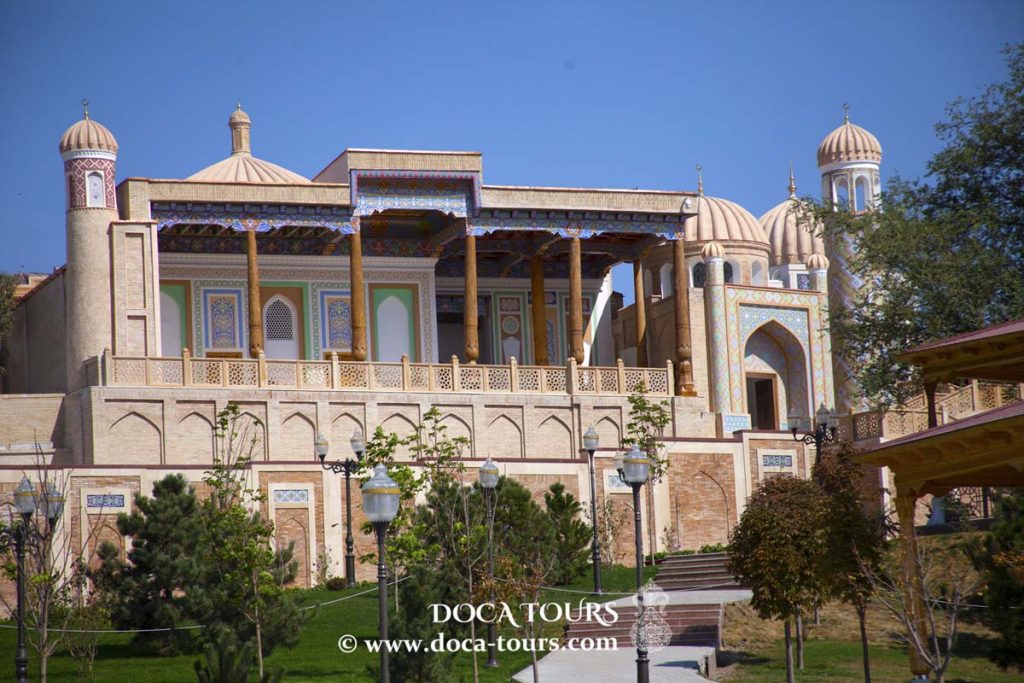
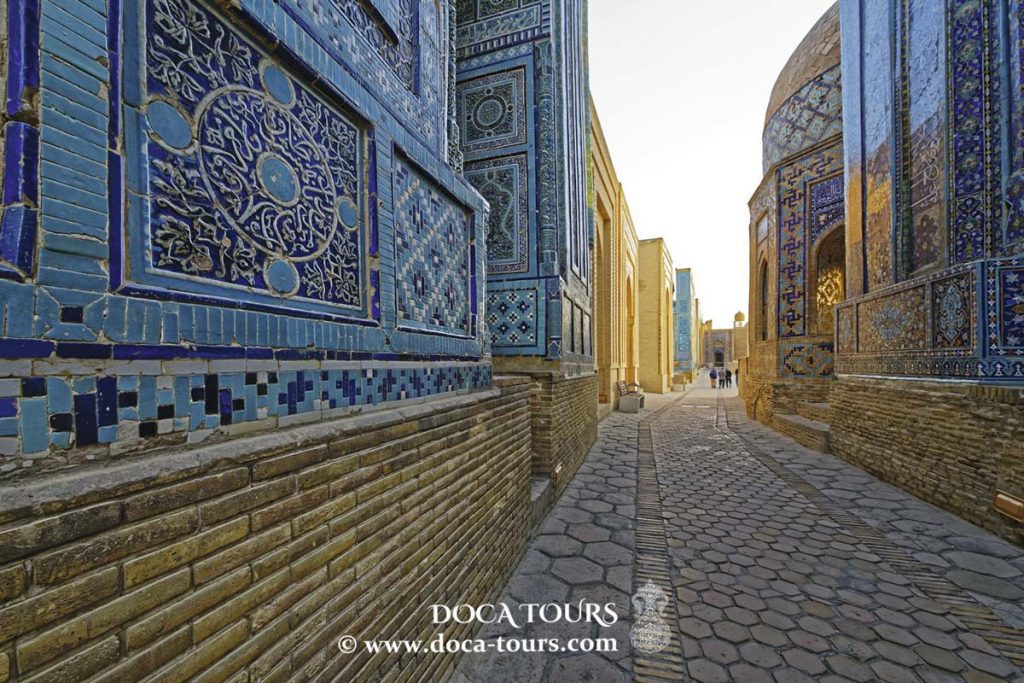
The Shah-i-Zinda necropolis, one of the city's most significant architectural and spiritual sites, was also established during the Karakhanid period in the 11th century.
The most remarkable monument of this era was the palace of Ibrahim ibn Hussein (1178–1202), located within the citadel of Samarkand. Excavations revealed fragments of monumental artwork, including depictions of a Turkic warrior in a yellow caftan, as well as scenes of hunting, animals, and period-style women.
In 1220, Samarkand was conquered by the Mongols under Genghis Khan. According to Juvayni, Genghis Khan ordered the slaughter of all who sought refuge in the citadel and mosque, looted the city, and conscripted 30,000 craftsmen and young men. The city suffered another sacking later by Khan Baraq, who needed treasures to fund his army.
Samarkand became part of the Chagatai Khanate, one of the four Mongol successor states, where it remained until 1370. Despite the destruction, the Mongols appointed foreign administrators, including Chinese and Qara-Khitays, to oversee the city’s gardens and fields, tasks that were forbidden to Muslims.
During the Mongol period, Samarkand continued to attract attention as a significant city. Marco Polo, writing about his travels along the Silk Road in the late 13th century, described it as "a very large and splendid city."
Chinese weavers and artisans resided in Samarkand during this period, contributing to the city’s crafts and economy. The Mongols also allowed the establishment of Christian bishoprics, underscoring the city’s role as a diverse and cosmopolitan hub during this turbulent time.
In 1333, the famous traveler Ibn Battuta described Samarkand as "one of the greatest and most beautiful cities," highlighting its perfection and the irrigation of its orchards through norias.
In 1365, a revolt against the Chagatai Mongols erupted in Samarkand. Five years later, Timur (Tamerlane), the founder of the Timurid Empire, established the city as his capital in 1370. Timur implemented extensive urban planning to legitimize his rule, transforming Samarkand into a grand cultural and administrative center over 35 years. He rebuilt much of the city and populated it with skilled artisans and craftsmen brought from across his empire. Timur's reputation as a patron of the arts was reflected in his leniency toward artists, architects, and craftsmen, sparing their lives to employ their talents in beautifying Samarkand.
Timur actively oversaw construction projects, often demanding swift completion or revisions if dissatisfied with the results. Under his orders, Samarkand was fortified with deep ditches and walls spanning 8 km (5 mi). Roads became the only access points to the city, which grew to house around 150,000 inhabitants.
Ruy Gonzalez de Clavijo, an ambassador of Henry III of Castile who visited Samarkand between 1403 and 1406, marveled at the constant construction in the city. He described one mosque as "the noblest of all those we visited in the city of Samarkand."
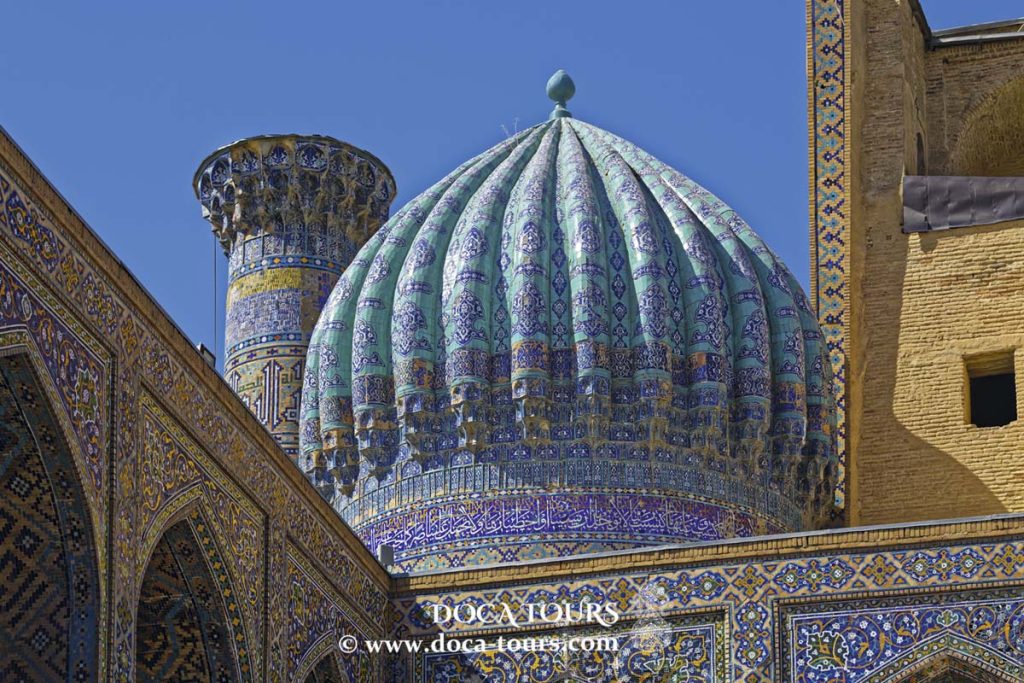
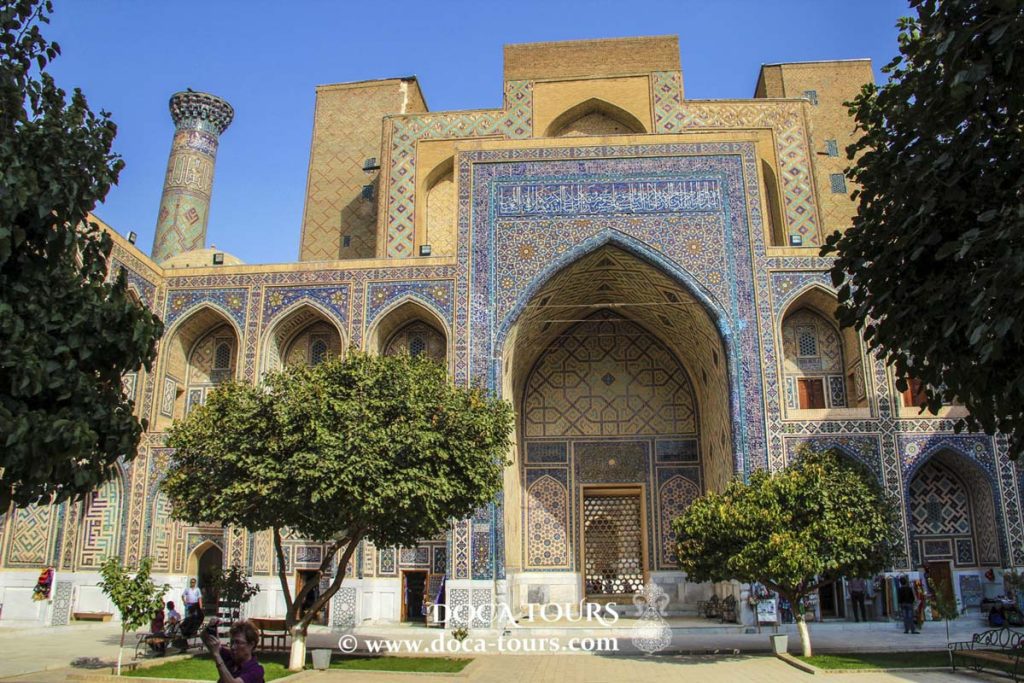
Timur’s grandson, Ulugh Beg, ruled Samarkand and transformed it into a center of science and education. Between 1417 and 1420, he constructed a madrasah at the Registan Square, inviting leading astronomers and mathematicians of the Islamic world to join him. Under his leadership, Samarkand became a hub for medieval scientific thought.
During the early 15th century, a renowned scientific school formed around Ulugh Beg, featuring figures such as Jamshid al-Kashi, Qāḍī Zāda al-Rūmī, and Ali Qushji. Ulugh Beg’s primary passion was astronomy, and in 1428, he built an observatory equipped with the monumental "Fakhri Sextant," a wall quadrant with a radius of 40 meters. The precision and scale of the observatory made it a marvel of its time.
In 1500, Samarkand fell under the control of Uzbek nomads. Muhammad Shaybani of the Shaybanid dynasty captured the city in 1501, making it part of the newly formed Bukhara Khanate. He was crowned in Samarkand, which became the Khanate’s capital. Shaybani Khan ordered the construction of a grand madrasah to honor his brother Mahmud Sultan, a project praised for its magnificent design. Fazlallah ibn Ruzbihan and Zayn ad-din Vasifi, contemporaries of the era, extolled the madrasah’s gilded roof, spacious courtyard, and intricate architecture.
From 1540 to 1551, Abdulatif Khan, a descendant of Ulugh Beg, ruled Samarkand and became known as a patron of poets and scientists. He even composed poetry under the pen name "Khush."
During the reign of the Ashtarkhanid ruler Imam Quli Khan (1611–1642), Samarkand witnessed the construction of iconic architectural masterpieces. Among them were the Tillya-Kari Madrasah, Sherdor Madrasah, and the cathedral mosque built by Yalangtush Bahadur, the city’s governor.
By the early 18th century, the city suffered significant decline after an assault by the Persian ruler Nader Shah. By 1720, much of Samarkand had been abandoned. From 1599 to 1756, the Ashtrakhanid branch of the Bukhara Khanate ruled the city.
From 1756 to 1868, Samarkand was governed by the Manghud Emirs of Bukhara. The city's revival began during the reign of Muhammad Rakhim, the founder of the Manghud dynasty, who demonstrated strong leadership and military prowess. Rakhim made initial efforts to restore the city’s vitality.
In 1868, Samarkand came under Russian control following its capture by Colonel Konstantin Petrovich von Kaufman. Shortly after, the city’s small Russian garrison of 500 men was besieged by Abdul Malik Tura, the rebellious son of the Bukharan Emir, alongside allied forces. However, the attack was repelled with significant losses.
Samarkand was incorporated into the Russian Empire as the administrative center of the Zeravshan Military Okrug, under the leadership of General Alexander Konstantinovich Abramov. The city’s Russian district, largely developed west of the old city, began to take shape during this time.
In 1886, Samarkand was named the capital of the newly established Samarkand Oblast in Russian Turkestan. The city’s significance grew further when the Trans-Caspian railway reached it in 1888, connecting it to broader imperial trade networks.
From 1925 to 1930, Samarkand served as the capital of the Uzbek Soviet Socialist Republic before Tashkent took over the role. During World War II, after Nazi Germany's invasion of the Soviet Union, many residents of Samarkand were deployed to Smolensk to combat the advancing enemy. Tragically, a significant number were captured or killed by the Nazis. The city also became a refuge for thousands of displaced civilians fleeing the western regions of the USSR under Nazi occupation. Samarkand emerged as a key hub for evacuees within the Uzbek SSR and the Soviet Union at large.
The study of Samarkand's history by European scholars began following its annexation by the Russian Empire in 1868. Notable early researchers included N. Veselovsky, V. Bartold, and V. Vyatkin. During the Soviet era, historical research on the city culminated in the History of Samarqand, a two-volume work edited by Uzbek academician Ibrohim Moʻminov.
In 1970, the city’s 2,500th anniversary was celebrated on the initiative of Ibrohim Moʻminov, with support from Sharaf Rashidov. To mark the occasion, a monument to Ulugh Beg was erected, the Museum of the History of Samarkand was established, and the comprehensive two-volume history of the city was published.
Following Uzbekistan’s independence, further research resulted in the publication of monographs dedicated to the ancient and medieval history of Samarkand.
Samarkand lies in southeastern Uzbekistan, situated in the fertile Zarefshan River valley, approximately 135 km from Qarshi. The M37 highway links the city to Bukhara, located 240 km away, while the M39 highway connects it to Tashkent, 270 km to the northeast. The Tajikistan border is about 35 km away, and the Tajik capital, Dushanbe, is 210 km from Samarkand. Additionally, the M39 road extends southward, reaching Mazar-i-Sharif in Afghanistan, 340 km from the city.
Samarkand experiences a cold semi-arid climate (Köppen BSk), characterized by hot, dry summers and moderately wet, variable winters. The summer months of July and August are particularly scorching, with temperatures frequently surpassing 40 °C (104 °F). Precipitation is minimal from June to October, peaking between February and April. In January 2008, the city experienced an exceptionally cold winter, with temperatures plunging to −22 °C (−8 °F).
In Samarkand, as in the rest of Uzbekistan, the official state language is Uzbek. This Turkic language is the native tongue for Uzbeks, Turkmens, Samarkandian Iranians, and a majority of Samarkandian Arabs.
Russian serves as the de facto second official language, with around 5% of the city's signage and inscriptions displayed in it. It is commonly spoken by Russians, Belarusians, Poles, Germans, Koreans, many Ukrainians, Armenians, Greeks, and some Tatars and Azerbaijanis residing in Samarkand. Russian-language media is also prevalent, including newspapers like the widely read Samarkandskiy Vestnik ("The Samarkand Herald") and some broadcasts on local channels such as STV.
Tajik, a variant of the Persian language, is widely spoken and deeply rooted in Samarkand's cultural history. The city has been a significant center for Persian literature, with renowned poets like Ferdowsi, Omar Khayyam, and Jami either hailing from or visiting Samarkand. Although officially Uzbek is considered the most common language, estimates suggest that only about 30% of residents speak it as their first language, while 70% primarily speak Tajik, with Uzbek and Russian as secondary languages. However, due to a lack of recent census data since 1989, these figures remain unofficial. Tajik lacks official status but is still supported academically at Samarkand State University, where ten faculties offer courses in the language. The Tajik-language newspaper Ovozi Samarqand ("Voice of Samarkand") and the newly launched literary magazine Durdonai Sharq ("Pearl of the East") cater to the Tajik-speaking population.
Besides Uzbek, Tajik, and Russian, other native languages spoken in the city include Ukrainian, Armenian, Azerbaijani, Tatar, Crimean Tatar, and Arabic, spoken by a small minority of Samarkandian Arabs.
Samarkand remains vibrant and dynamic, hosting events like the Samarkand Half Marathon, which expanded to include a full marathon in 2022.
Islam was introduced to Samarkand in the 8th century during the Arab invasion of Central Asia under the Umayyad Caliphate. Before this, the city's population primarily practiced Zoroastrianism, with smaller communities of Nestorians and Buddhists. Over time, under successive Islamic rulers, Samarkand saw the construction of numerous mosques, madrasahs, minarets, shrines, and mausoleums, many of which still stand today.
Prominent Islamic sites in the city include the Shrine of Imam Bukhari, author of Sahih al-Bukhari, one of Sunni Islam’s most revered hadith collections, and the Mausoleum of Imam Maturidi, a key figure in Maturidism. Samarkand also houses the Mausoleum of Prophet Daniel, a figure venerated in Islam, Judaism, and Christianity.
The majority of Samarkand’s Muslim population are Sunni, predominantly following the Hanafi school of thought, while Sufi traditions remain influential. Approximately 80–85% of the Muslim community, including Tajiks, Uzbeks, and Samarkandian Arabs, adhere to Sunni Islam. The city is renowned for its sacred lineages tied to influential Sufi leaders, such as Khodja Akhror Wali and Makhdumi A’zam. Recent liberal reforms under President Shavkat Mirziyoyev have facilitated greater religious expression, including a notable increase in women wearing the hijab since 2018.
Samarkand, along with the Bukhara region, is one of the main centers for Shiite Islam in Uzbekistan. The city has several Shiite mosques and madrasahs, such as the Punjabi Mosque and Madrassah, and the Mausoleum of Mourad Avliya. Shiite observances, including Ashura, are celebrated annually.
Shiite Muslims in Samarkand are primarily descendants of Iranian migrants from regions like Khorasan, Mashhad, and Nishapur. Some arrived in search of better opportunities, others as captives sold into slavery, and some as soldiers stationed in the city. Azerbaijanis, along with a small number of Tajiks and Uzbeks, also belong to the Shiite community.
While there is no precise data on Uzbekistan's Shiite population, estimates suggest "several hundred thousand" reside in the country. Diplomatic cables from 2007–2008 revealed unofficial claims of about 1 million Shiites living in the Samarkand region. Despite the lack of concrete figures, the region is noted for its religious tolerance, with Sufism and Sunnism traditionally fostering coexistence with Shiite communities.
Christianity was introduced to Samarkand during its time as part of Sogdiana, long before Islam's arrival in Central Asia. The city emerged as a key center for Nestorian Christianity in the region. While most of the population at the time practiced Zoroastrianism, Samarkand’s position at the crossroads of trade routes between China, Persia, and Europe fostered a spirit of religious tolerance. However, during the Umayyad Caliphate, Zoroastrians and Nestorians faced persecution under the Arab conquerors, leading many to flee or convert to Islam. Although Nestorian temples once stood in Samarkand, none have survived to the present day. Archaeological excavations at the ancient Afrasiyab site and in the outskirts of the city have uncovered remnants of these early Christian places of worship.
Between 1329 and 1359, the Samarkand eparchy of the Roman Catholic Church served a community of several thousand Catholics. Notable historical accounts, such as those by Marco Polo, recount that Eljigidey, a descendant of Chaghatai Khan, converted to Christianity and helped establish the Catholic Church of St. John the Baptist in the city. However, Catholicism eventually faded as Islam became the dominant religion.
Christianity reemerged in Samarkand in the mid-19th century following the Russian Empire’s annexation of the city. Russian Orthodoxy was introduced in 1868, and several churches and temples were constructed. During the early 20th century, additional Orthodox cathedrals and temples were built, though many were later destroyed during the Soviet period.
Today, Christianity is the second-largest religion in Samarkand. The Russian Orthodox Church (Moscow Patriarchate) is the predominant Christian denomination, with over 5% of the city's population identifying as Orthodox. Most Orthodox adherents are Russians, Ukrainians, and Belarusians, along with smaller groups of Koreans and Greeks. Samarkand serves as the center for the Samarkand branch of the Uzbekistan and Tashkent eparchy within the Central Asian Metropolitan District of the Russian Orthodox Church. Active Orthodox churches in the city include the Cathedral of St. Alexiy Moscowskiy, the Church of the Intercession of the Holy Virgin, and the Church of St. George the Victorious. Other Orthodox sites, such as the Church of St. George Pobedonosets, are currently inactive.
There are also tens of thousands of Catholics in Samarkand, primarily of Polish, German, and Ukrainian descent. The Catholic Church of St. John the Baptist, built in the early 20th century, remains an important place of worship. Samarkand falls under the Apostolic Administration of Uzbekistan.
The Armenian Apostolic Church is the third-largest Christian community in the city, consisting of tens of thousands of Armenian residents. Armenian Christians began migrating to Samarkand in the late 19th century, with their numbers growing significantly during the Soviet era. The Armenian Church Surb Astvatsatsin, located in the western part of the city, serves as a center for the Armenian Christian community.
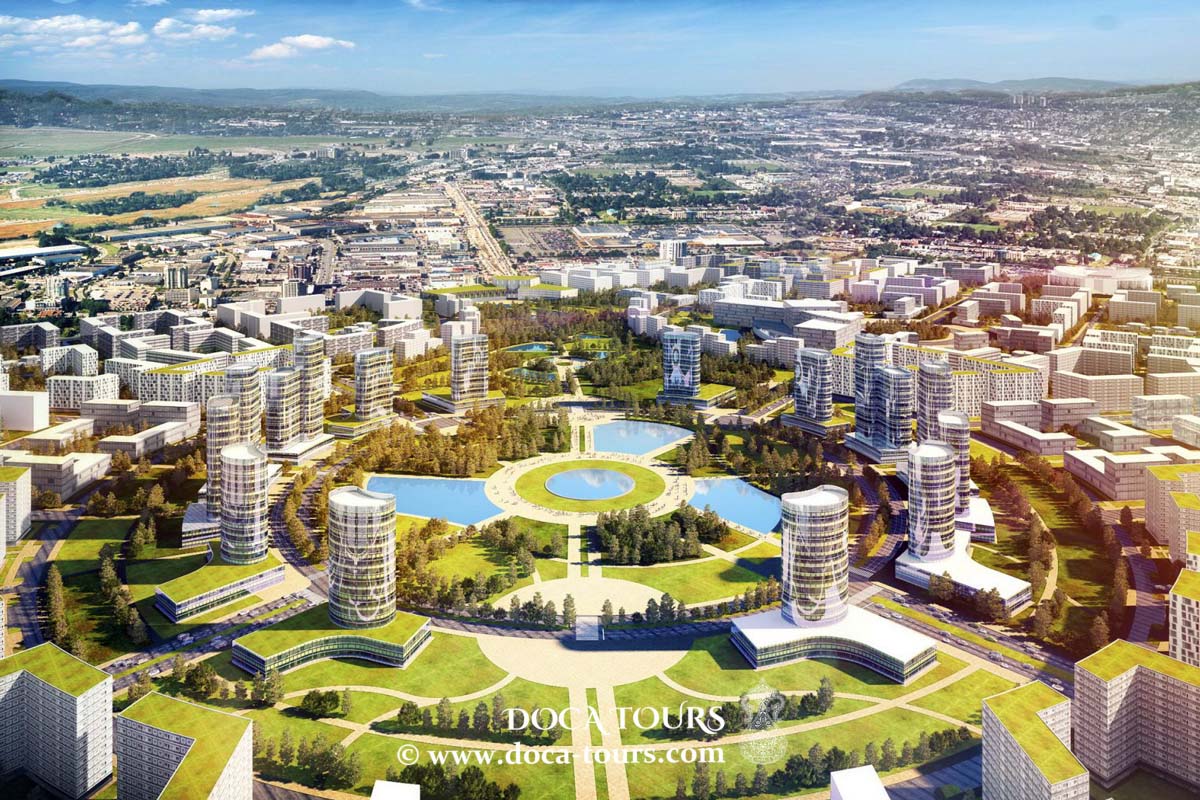
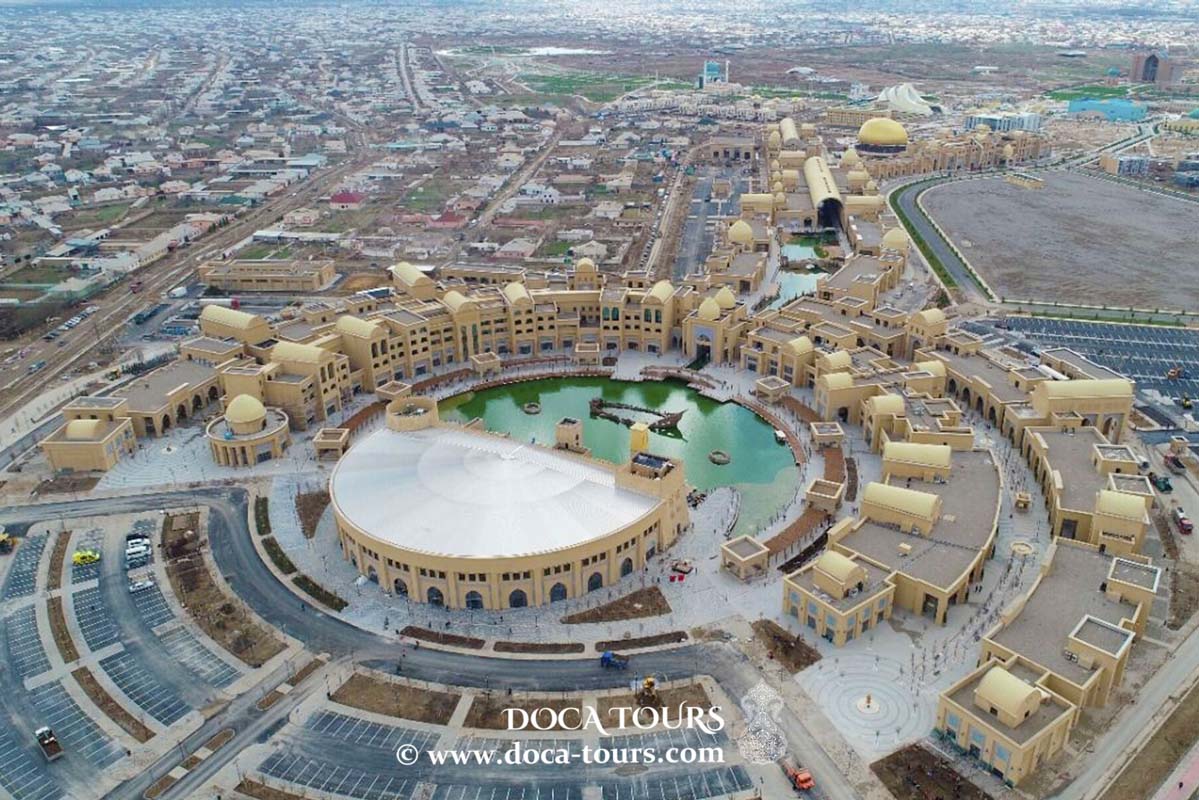
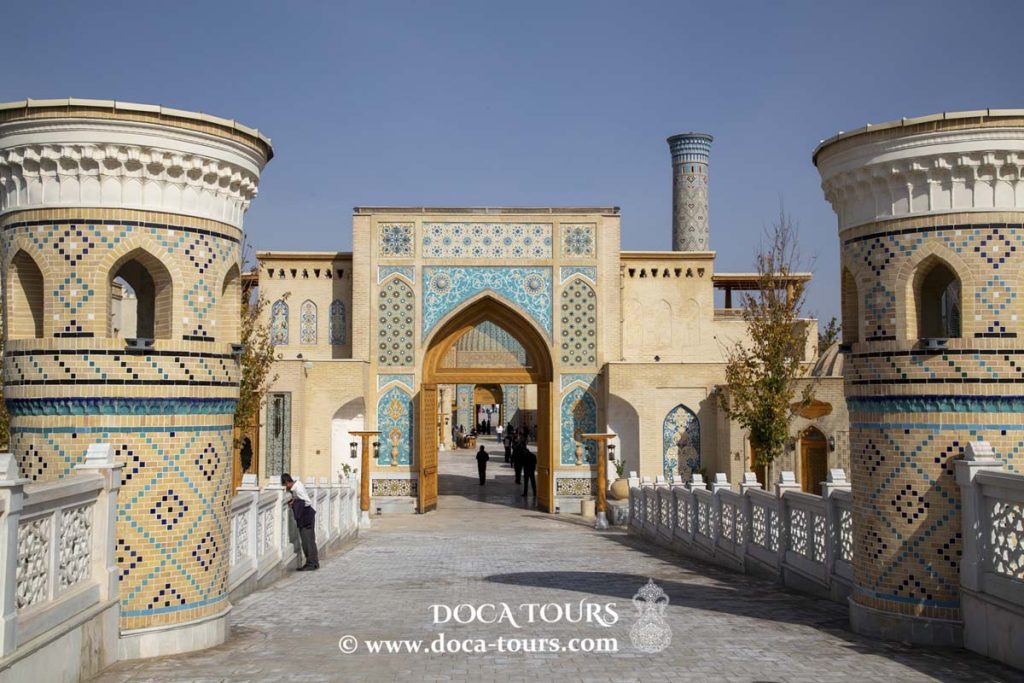
Silk Road Samarkand is a modern complex that opened in early 2022 in the eastern part of Samarkand. Spanning 260 hectares, the site features world-class business and medical hotels, restaurants, recreational areas, parks, an ethnographic corner, and a state-of-the-art congress hall for hosting international events.
One of the highlights of this complex is the "Eternal City," a 17-hectare area designed to transport visitors back in time. Inspired by the history and traditions of Uzbekistan, the Eternal City recreates the atmosphere of an ancient city with narrow streets, artisan workshops, and colorful marketplaces. The design of the pavilions reflects authentic architectural styles, including turquoise domes, intricate mosaics, and towering minarets, all evoking the rich cultural heritage described in ancient texts.
Visitors to the Eternal City can enjoy national dishes from various eras and regions of Uzbekistan, as well as authentic street performances. The site captures a blend of Parthian, Hellenistic, and Islamic influences, allowing guests to experience the diverse and vibrant heritage of bygone centuries.
The concept and design of the Eternal City were brought to life by Bobur Ismoilov, a renowned contemporary artist.
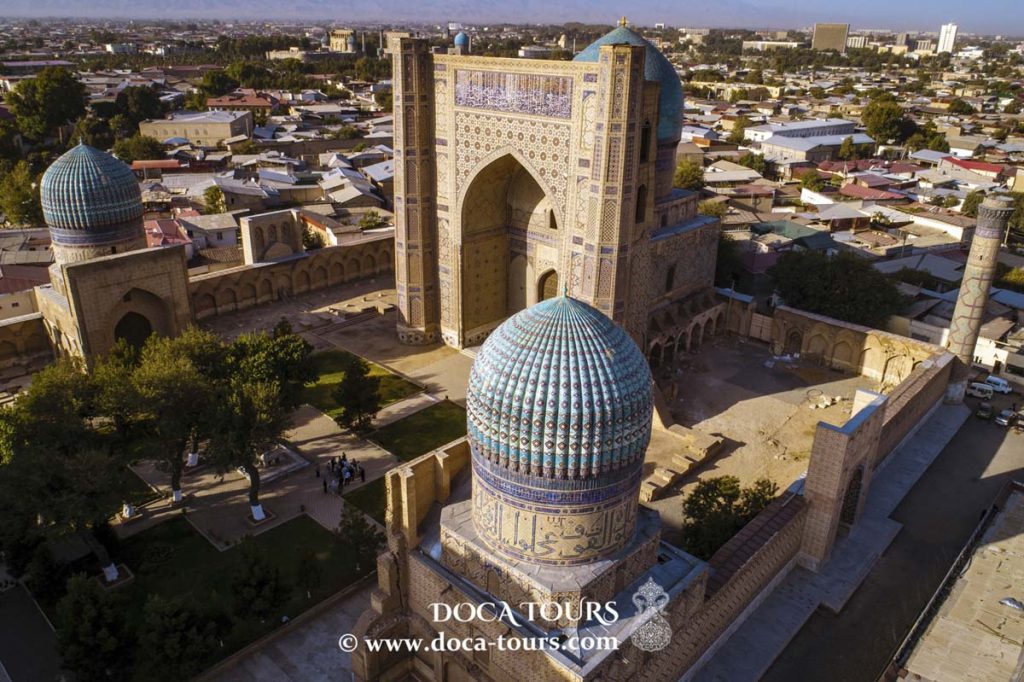
The construction of Bibi Khanum Mosque began under Timur after his 1398–1399 campaign in India. The mosque originally featured around 450 marble columns, transported and erected with the aid of 95 elephants Timur brought back from Hindustan. Indian artisans and stonemasons designed the mosque’s distinctive dome, setting it apart from other structures in the region. Unfortunately, an earthquake in 1897 destroyed the columns, and while reconstruction efforts followed, they were not fully restored.
Samarkand's most iconic architectural landmark is the Gur-i Amir mausoleum, which reflects influences from diverse cultures, neighboring civilizations, and Islamic traditions. Although much of Samarkand’s pre-Timurid Islamic architecture was destroyed by the Mongols, Timur revived and restored these styles during his reign. The mausoleum exemplifies Islamic architectural precision, particularly in its geometric design and intricate details. The entrance features elaborate Arabic calligraphy and inscriptions, a hallmark of Islamic art. Inside, the walls display stunning mosaic faience, an Iranian technique where each tile is individually cut, colored, and arranged. The tiles form religious inscriptions such as "Muhammad" and "Allah," highlighting Timur's meticulous attention to symbolic detail.
Floral and vegetal motifs adorn the Gur-i Amir’s walls, symbolizing gardens that represent paradise in Islamic culture. Similar themes were mirrored in Samarkand’s famed gardens, including the New Garden and the Garden of Heart’s Delight, which served as entertainment venues for ambassadors and dignitaries. Historical accounts from 1218, such as those by Yelü Chucai, describe Samarkand as a city surrounded by gardens, each meticulously designed with canals, fountains, and ponds, as well as orchards of peach and plum trees. Floral designs, both in architecture and on Persian carpets found in Timurid buildings, further emphasize this connection to paradise.
Traditional Islamic architectural elements are also evident in the city’s historic mud-brick Uzbek homes, which are built around central courtyards with gardens. These homes often feature painted wooden ceilings and walls. In contrast, the western parts of Samarkand showcase European-style houses constructed during the 19th and 20th centuries.
Samarkand’s architecture also reflects Turko-Mongol influences, particularly in the melon-shaped domes of mausoleums, thought to resemble the yurts used by Mongols for displaying the deceased before burial. Timur adapted these designs, using durable materials like brick and wood while maintaining their symbolic purposes. His burial chamber included “tugs,” poles adorned with horse or yak tail hairs, an ancient Turkic tradition that honored the dead and served as military standards among nomadic peoples.
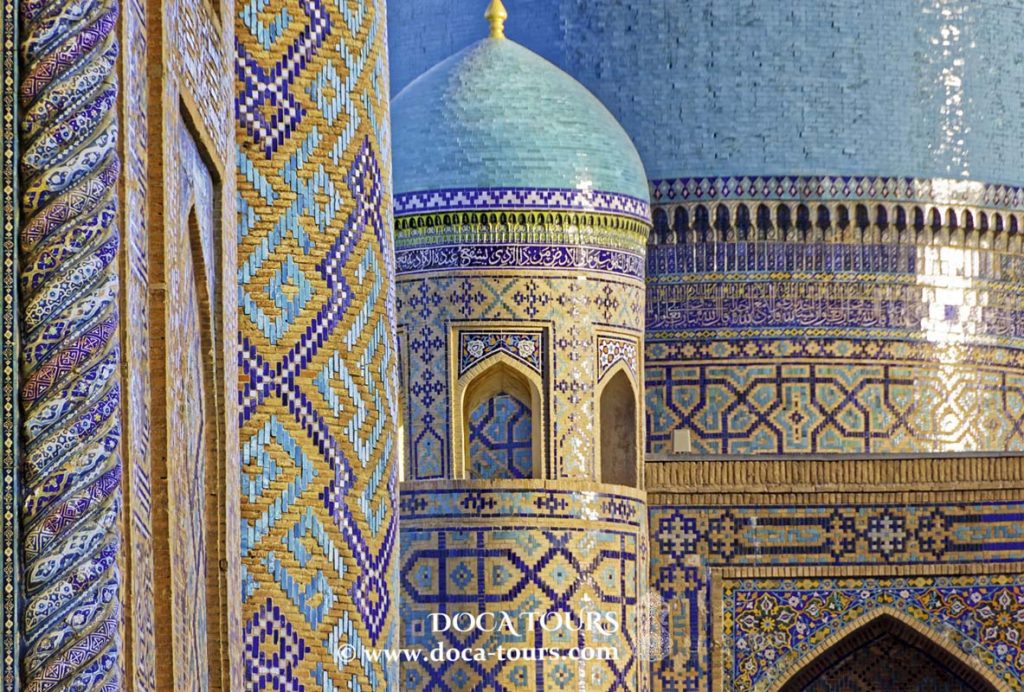
Colors also play a symbolic role in Samarkand’s architecture. The dominant blue hues seen in many buildings, such as the Gur-i Amir, conveyed various meanings. In Timur’s era, blue was associated with mourning in Central Asia and was believed to ward off the "evil eye," as evidenced by the prevalence of blue-painted doors around the city. Blue also symbolized water, a precious resource in the region, and its use underscored Samarkand’s wealth. Gold, another prominent color, reflected Timur’s fascination with grandeur. He extensively used gold in the Gur-i Amir and adorned his city with luxurious textiles, inspired by the Mongols’ appreciation for Chinese and Persian gold-threaded silk fabrics.
The suburbs of Samarkand include Gulyakandoz, Superfosfatnyy, Bukharishlak, Ulugbek, Ravanak, Kattakishlak, Registan, Zebiniso, Kaftarkhona, and Uzbankinty.
Samarkand boasts a well-developed public transport system. Since Soviet times, municipal buses and taxis have been integral to city life. Today, most buses are manufactured by SamAuto or Isuzu, while taxis are predominantly yellow Chevrolet or Daewoo sedans. The city also operates trams, primarily Czech-made Vario LF.S models, introduced in 2017. Historically, trolleybuses operated from the Soviet era until 2005, and steam trams were in service from 1924 to 1930, with modern trams running between 1947 and 1973. Earlier forms of transport included horse-drawn carriages and "arabas," which were common until 1950.
Located in the northern part of the city, Samarkand International Airport has been operational since the 1930s. As of 2019, the airport offers regular flights to domestic destinations like Tashkent and Nukus, as well as international cities such as Moscow, Istanbul, Saint Petersburg, and Dushanbe. Charter flights to additional destinations are also available.
Samarkand is a critical railway hub in Uzbekistan, with all major east–west railway routes passing through the city. The Tashkent–Kungrad line is the longest and most significant, while high-speed trains connect Samarkand with Tashkent, Bukhara, and other major cities. International rail connections include routes such as Saratov–Samarkand, Moscow–Samarkand, and Astana–Samarkand.
The city’s railway history dates back to the Russian Empire’s construction of the Trans-Caspian Railway between 1879 and 1891. Originally terminating in Samarkand, the railway began in Krasnovodsk (modern Turkmenbashi) on the Caspian Sea. By 1898, it was extended to Tashkent and Andijan and renamed the Central Asian Railways. Samarkand has since remained one of the largest and most important stations in Uzbekistan.
Samarkand has established twin-city relationships with:
Additionally, Samarkand maintains friendly ties with: