






















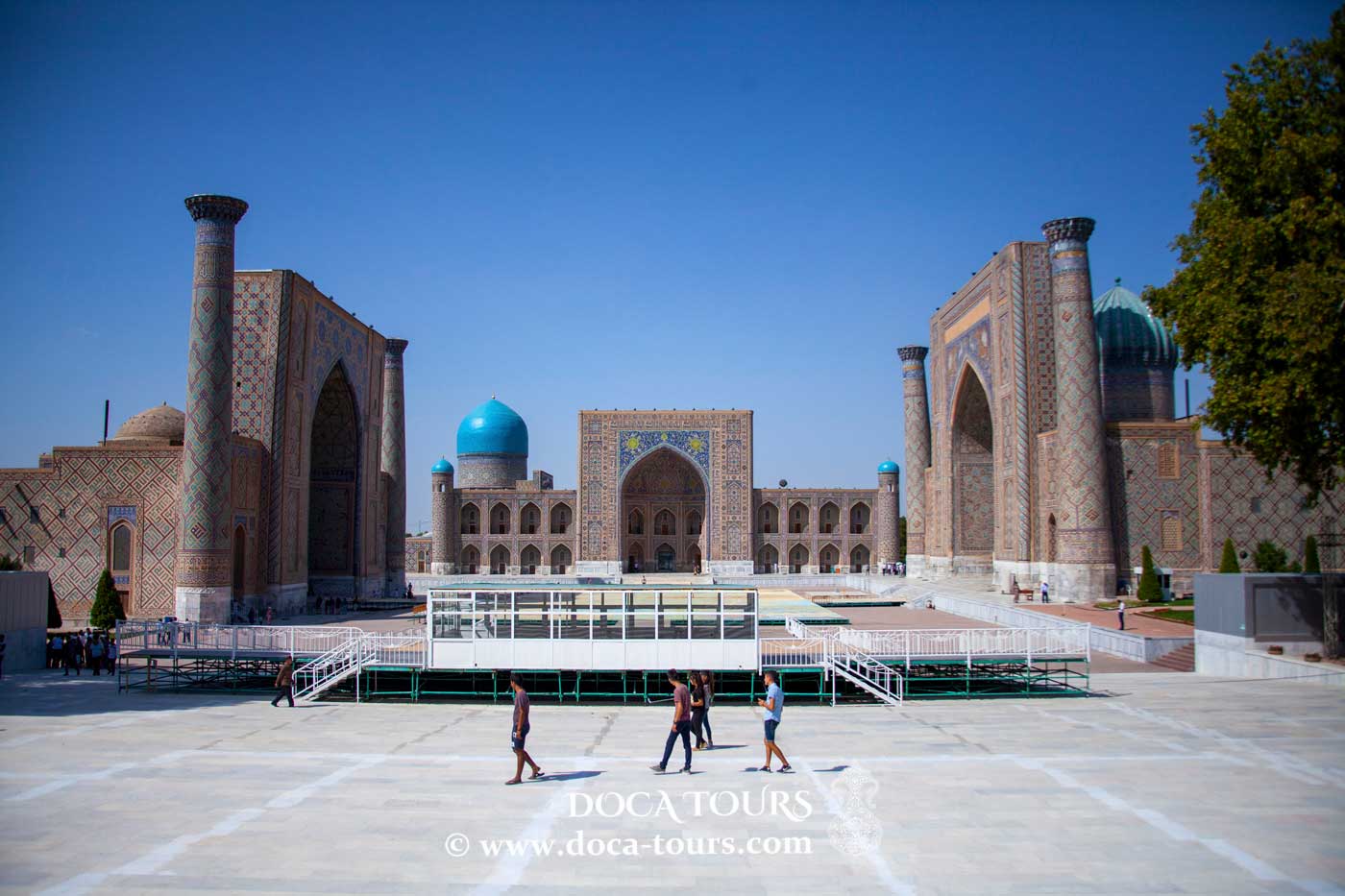

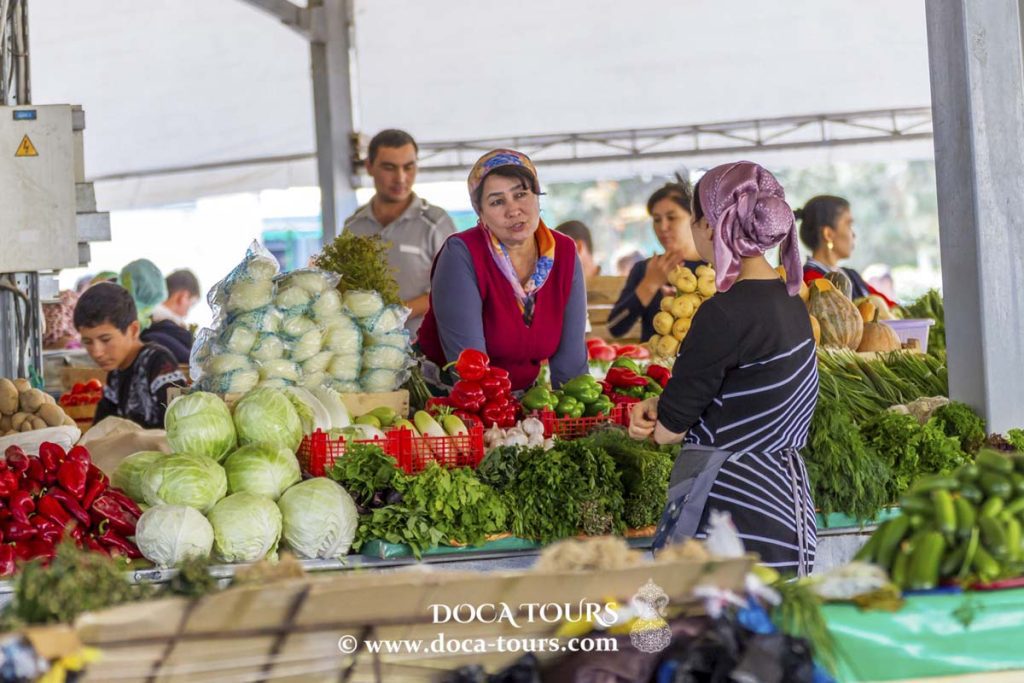
Uzbekistan is a country famous for its markets. Having visited Uzbekistan, one cannot leave without a separate bag of souvenirs and gifts bought at the local oriental bazaar.
Since ancient times oriental bazaars have been places of gathering where people used to trade, share the news, meet their friends and relatives and stay in teahouses.
The attribute of the oriental markets is trading: it is necessary and interesting to bargain, and the price is twice as low as it was declared. But the most important thing is the atmosphere, the colorful appearance of the bazaar people and the inimitable drive of the oriental trade.
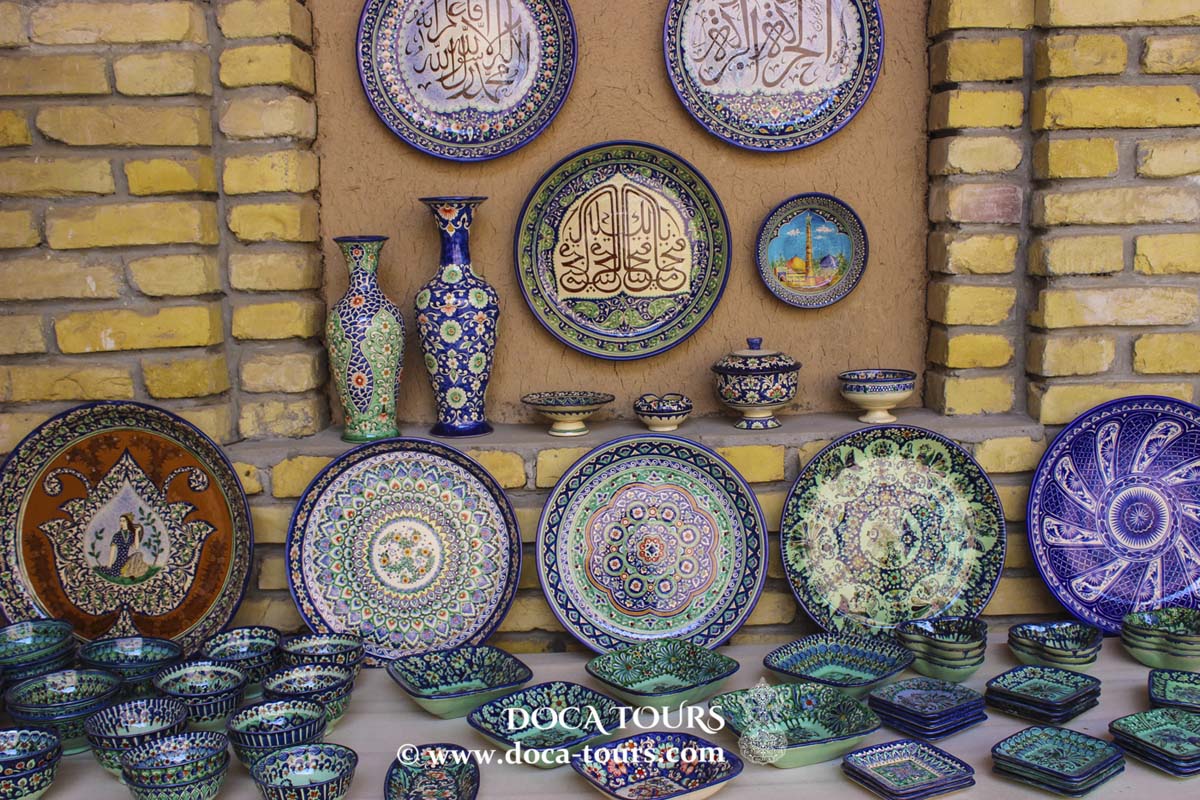
The bazaars of Uzbekistan have varied forms: open or closed, with a clear structure of parallel and perpendicular rows of shops, or circular sub-dome formations, when shops form concentric circles extending from the center, or linear formations when rows are aligned along some dominant feature of a town, a road or a riverbed. The forms of stalls are also diverse: from the most primitive (bedding directly on the ground) to luxuriously illuminated showcases. And all these are the bazaars of Uzbekistan!
There are over twenty large markets in Tashkent, but the oldest and most revered is Chorsu Bazaar, located in the heart of the old city on the famous Eski Zhuva square. Chorsu market in Tashkent has been renowned since the times of the Silk Road and Mongol invasion, and it is one of the oldest marketplaces in the whole of Central Asia. Today, just like centuries ago, the place is bustling with life and commerce – you can find anything here. But the history of the place is no less interesting than the price tags on the abundant stalls. Here’s a special insight into Chorsu Market, which has retained its charm for more than 10 centuries.
Not far from the food stalls is a row of eateries where you can sample traditional Uzbek dishes. As you approach the counters, you can already smell the ineffable aromas of pilaf, shashlik and samsa from afar. Even if you are full you will not be able to refuse Uzbek delicacies. You will come across cold noodles naryn, sausage kazy, meat pies, gumma, homemade sausage khasyp, fried fish, hanym, manty, peas with lamb, lamb ribs. You can either try the delicacies at the café or take them to go, necessarily with fresh Uzbek flatbread. Anyway, the rows of catering establishments in Chorsu are a real gastronomic delight and an adventure for real gourmands!
The buildings may have fallen into ruin or decayed, but their distinctive architectural handwriting remained intact – large buildings covered by domes that look as though they are taking flight. It was only in such buildings that one could find shelter from dust and heat.
In the center of Tashkent is the Alai Bazaar, which originated about a century and a half ago in New City. It is the most modern, sophisticated and modernized, as they say, covered market in the city. A huge awning covers the rows of shops that seem to stretch as far as the eye can see. And in the rows, you will be offered first-class goods. The Alai Market sells only selected fruits and vegetables.
For five centuries, one of the oldest bazaars in Central Asia, Siob Bozor, has been a crowded, bustling bazaar on Samarkand’s Tashkent Street. The bazaar, at the foot of the Bibi-Khanim Mosque, is bustling with activity from early morning until darkness falls. The enticing shouts of the traders, the honking of cars, the national music, the smells of spices and roast meat, and the colorful array of fruits and vegetables in the rows of shops create the unique atmosphere of an oriental bazaar. Here you will taste salted apricot kernels baked in ash and buy the famous Samarkand bread, rich with a golden glossy crust.
Perhaps one of the best-known is the Sunday bazaar in the ancient town of Urgut, about sixty kilometers from Samarkand.
Urgut is a real “town of craftsmen”. It is home to traditional blacksmiths, potters, and embroiderers. On Sundays, at the bazaar, one can buy modern and ancient Urgut hand-made embroideries, jewelry made of silver and cornelian, carpets and palaces, ancient clothes, hand-woven silk and cotton cloth and many other curiosities.

The bazaars of ancient Bukhara, situated in its reserved, historical part, amaze with their exoticism and richness. An American geologist and orientalist Raphael Pampelli wrote in his notes at the beginning of the twentieth century: “By its nature, the huge Bukhara bazaar is the most oriental of all existing ones. Its narrow streets are sheltered from the sun by lattice roofs. Every kind of good is sold in a special quarter. Bukhara is famous for its peculiar art. Its silks, exceptionally beautiful in color and texture, carpets with marvelous patterns, embroidered gold articles and jewels are peculiar to Bukhara. We bought many things at the bazaar, and yet later regretted that we had not bought more”. There are some surviving dome-covered rows of shops which were built in the 16th century at the crossroads of Toki-zargaron (“Jewellers’ Dome”), Telpak-furushon (“Headdressers’ Dome”) and Toki-sarathon (“Traders’ Dome”). The names themselves are an indication of their original purpose.
A visit to the bazaar is not only a shopping experience but also an unforgettable contact with the locals. The smell of shashlik, pilaf, spices, fresh cakes and oriental snacks will make the unsophisticated traveler go crazy. The selection of Oriental sweets will make you stuck for a long time: you won’t find such a variety of halva, nougat, sherbet, lukum and the famous baklava even in Turkey. Speak to the locals and vendors and get a taste of the Oriental fairytale and national culture.
DOCA TOURS invites you on a fascinating journey to Sunny Uzbekistan at attractive prices. We will create a tour package based on your desires and requirements. Only we can give you the emotions you’ve been waiting for. Travel with us. Discover Uzbekistan and entire Central Asia together with DOCA TOURS.
Thank you very much for your attention.

Subscribe to the channel and don’t forget to like our videos.
#market, #bazaar, #shop, #oriental, #asian, #uzbek, #uzbekistan, #traditional, #store, #asia, #east, #eastern, #arabic, #samarkand, #ornament, #decoration, #tashkent, #pattern, #handmade, #design, #decorative, #craft, #national, #sale, #ceramic, #bukhara, #food, #colorful, #souvenir, #background, #painted, #decor, #color, #retail, #handicraft, #decorated, #pile, #central asia, #art, #tourism, #pottery, #ornate, #plate, #culture, #counter, #stall, #dish, #porcelain, #workshop, #spice