

























Key takeaways
- A small group Silk Road tour usually means a fixed departure of roughly 6 to 16 travelers with one local guide, which keeps costs and logistics shared without the crowd-feel of a coach tour.
- Smaller groups fit into yurt camps, family guesthouses and narrow old-town lanes that larger buses simply cannot reach.
- Central Asia was the world's fastest-growing tourism region in 2025, so popular departures fill early and booking ahead matters.
- Fixed departure dates set the frame, but a good operator still builds in free afternoons and optional add-ons along the route.
- Small group travel suits solo travelers, couples and curious culture-first visitors who want company without losing a sense of discovery.
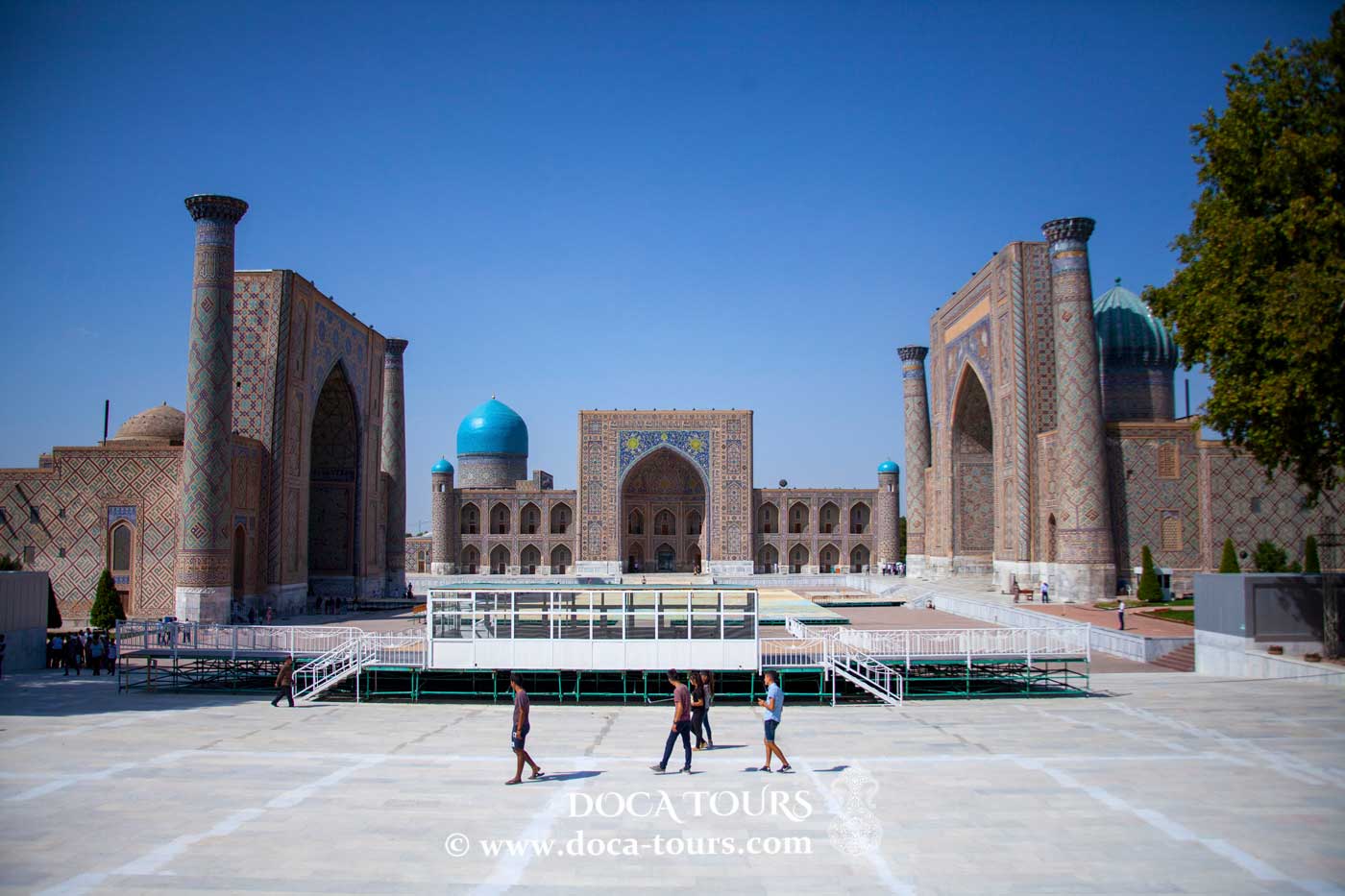
A Silk Road small group tour puts you on a fixed-date departure with a handful of other travelers, usually around 6 to 16 people, a single local guide, and a shared route through cities like Samarkand, Bukhara and Bishkek. You get the structure and savings of a group trip without the forty-seat coach feeling, which is why this format has become the default way most international visitors first see Central Asia.
The reason it works is practical. Costs for a guide, driver and vehicle are fixed whether two people travel or twelve, so splitting them across a small group brings the per-person price down while keeping the experience personal. You also travel with built-in company, which matters on a route where distances are long and the payoff is often a shared meal in a desert yurt rather than a checklist of monuments.
What defines a small group tour, and how big is "small"
There is no single legal definition, so group size is set by each operator. In practice, a small group Silk Road tour runs with roughly 6 to 16 travelers and one guide, sometimes two on longer multi-country routes. Anything above twenty starts to behave like a coach tour: slower boarding, split restaurant tables, and a guide working a microphone instead of a conversation.
The number you want to check before booking is the maximum, not the average. An operator advertising "small groups" of up to 24 is describing something very different from one that caps departures at 12. Smaller caps mean you move faster between sites, spend less time waiting, and actually hear the guide inside a busy madrasa.
Doca Tours keeps its Silk Road departures toward the lower end of that range so that transport stays in minibuses rather than full coaches, and so guesthouse hosts can seat the whole group at one table. If you want to compare how group trips are structured across the region, our guide to group tours to Uzbekistan walks through a typical itinerary in detail.
The real benefits: shared costs, local guides and ready-made company
Three things make the small group format worth choosing over going fully independent.
Shared costs. The expensive parts of a Silk Road trip are the fixed ones. A licensed guide, a driver, a vehicle and pre-arranged yurt stays cost roughly the same for a group of ten as they do for a couple. Spreading those across the group is what makes a guided trip affordable without dropping down to a self-driven budget version.
Local guides who open doors. A good Central Asian guide does more than recite dates. They read menus you cannot, negotiate a quieter entry time at a packed monument, and know which family in a village still weaves the old way. On the Silk Road, where the best moments are often arranged rather than stumbled upon, this is the difference between seeing a place and understanding it.
Ready-made travel companions. Most people who join a small group departure do so without knowing anyone else on it. By the second dinner that has usually sorted itself out. Solo travelers in particular get the safety and company of a group without surrendering the trip to a tour of strangers that is simply too large to bond.
How small groups reach yurt camps and family guesthouses
This is where group size stops being a comfort preference and becomes the thing that shapes your whole trip. The accommodation that people remember from Central Asia is rarely a hotel. It is a yurt camp beside a desert lake or a family guesthouse in an old town, and both have hard limits on how many guests they can take.
A yurt camp in the Kyzylkum Desert might sleep sixteen people across a handful of tents. A family home in Bukhara might have six rooms. A coach group of forty cannot stay in either, so large tours default to modern hotels on the edge of town. A small group slots straight in, which means you eat what the host cooks, wake to the actual landscape, and spend an evening around a fire instead of a lobby.
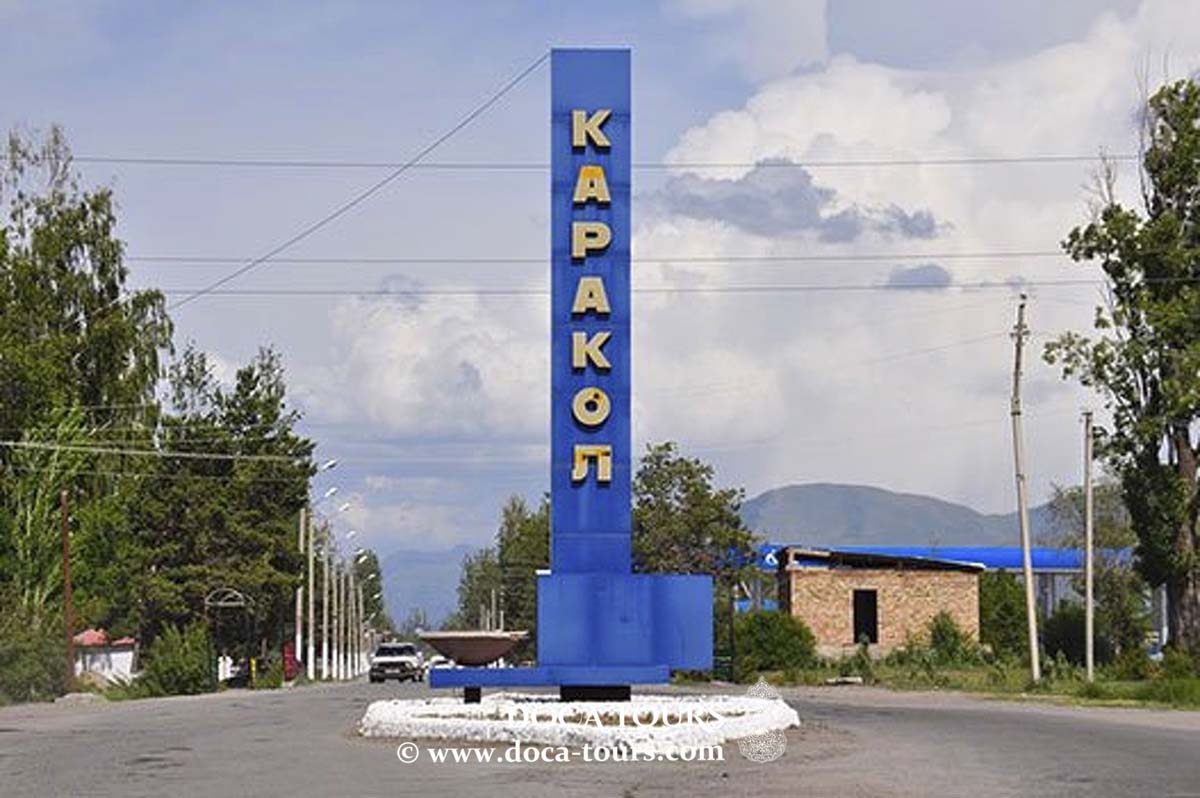
Kyrgyzstan makes this especially clear, where the high summer pastures are dotted with seasonal nomad camps rather than hotels. A small group route can be built around these stays, dropping into mountain yurt camps that no coach could reach. The desert version in Uzbekistan follows the same logic, linking yurt stops between Silk Road towns across the Kyzylkum.
Balancing fixed departures with flexibility on the route
The honest tension in any group tour is that the departure date and the broad route are set in advance. You are joining a trip that already exists, which is the trade-off for the shared price. The question is how much room is left inside that frame, and this varies a lot between operators.
The better small group tours build flexibility into a fixed itinerary in three ways. First, free afternoons in the main cities, so you can linger in a bazaar or rest rather than march to one more monument. Second, optional add-ons, such as a cooking session or an extra hike, that run only for those who want them. Third, a guide empowered to adjust the day for weather, a local festival, or simply the group's energy.
If a completely bespoke pace matters more to you than the group price, a private trip is the better fit, and Doca Tours runs tailored Uzbekistan departures built for exactly that. For most travelers, though, the fixed-departure structure removes the planning burden while still leaving daily choices open.
Who Silk Road small group travel suits best
Small group travel is not the right answer for everyone, and it is worth being clear about who it fits.
- Solo travelers who want company, shared costs and a safety margin without booking a private guide for one.
- Couples and friends who would rather let an expert handle the logistics of a region where English is limited and distances are large.
- Culture-first travelers who care more about meeting a guesthouse family than about a private pool, and who enjoy the mix of people a group brings.
- First-time visitors to Central Asia who want a guide to translate a region that is still unfamiliar to most Western itineraries.
It suits less well anyone who wants to set their own daily schedule, travel at an unusual time of year outside scheduled departures, or move at a very different pace from a group. Those travelers are better served by a tailored private trip. If you are weighing the two, our guide to choosing your Silk Road journey across the Stans lays out the decision clearly.
Why timing matters more than it used to
Central Asia is no longer a quiet corner of the map. Uzbekistan welcomed 11.7 million foreign tourists in 2025, a 46.8 percent jump on the year before, according to figures from the country's National Statistics Committee reported by Kun.uz. Neighboring Kyrgyzstan received about 5.31 million tourists in the same year, a 45.2 percent increase, per its national statistics office. Across the region as a whole, the World Travel and Tourism Council found tourism grew 17.7 percent in 2025, the fastest rate of any region in the world.
What that growth means in practice is simple. The best yurt camps and family guesthouses have fixed capacity, and small group departures on popular spring and autumn dates fill early. If you have a target window, booking several months ahead is the difference between joining the trip you want and taking whatever is left.
How Doca Tours handles group dynamics and pacing
Running a good small group is as much about people as logistics. Doca Tours builds its Silk Road departures around a deliberately modest group size, a single guide who stays with you for the whole route, and a daily rhythm that leaves room to breathe between the major sites. The aim is a group small enough that the guide knows everyone's name and interests by day two.
Pacing is set so that long transfer days are balanced by lighter ones, free afternoons are genuinely free, and optional activities never leave anyone feeling pushed. On multi-country routes, that steady rhythm matters even more, so countries are sequenced to avoid back-to-back travel marathons across borders.
The simplest next step is to pick a departure window that suits you and check which small group dates are open for that season, then build the rest of the trip around it. Travel in good company across the Silk Road rewards a little planning ahead, and the earlier you lock a date, the more of the region's best stays are still available to you.
Frequently asked questions
How many people are in a Silk Road small group tour?
Most small group Silk Road tours run with about 6 to 16 travelers. Doca Tours keeps groups toward the lower end so guesthouses, guides and transport stay personal.
Are small group tours cheaper than private tours?
Usually yes. Fixed costs like the guide, driver and vehicle are split across the group, so the per-person price is lower than a private tour while you still get expert guiding.
Do I need to travel with people I know?
No. Small group departures are designed for strangers to travel together. Many guests join solo and the shared itinerary gives everyone built-in travel companions.
When should I book a Silk Road small group tour?
Book several months ahead for spring and autumn departures. Central Asia tourism is growing fast and the most popular dates sell out first.
Which countries do Silk Road small group tours cover?
Routes commonly cover Uzbekistan and Kyrgyzstan, often adding Kazakhstan, Tajikistan or Turkmenistan. Multi-country trips follow the historic trade corridors between the great caravan cities.