
























Key takeaways
- Uzbekistan holds the densest cluster of Silk Road heritage, with Samarkand, Bukhara and Khiva all protected as UNESCO World Heritage sites.
- The classic route runs west from Tashkent to Samarkand, then Bukhara, then Khiva, following the historic caravan corridor.
- The Registan in Samarkand, the walled Itchan Kala in Khiva and Bukhara’s old town are the three unmissable stops on any Silk Road itinerary.
- A knowledgeable local guide turns monuments into living stories, which is the difference between sightseeing and understanding the Silk Road.
- Uzbekistan is one of the fastest-growing travel destinations in its region, so booking a structured Uzbekistan tour package well ahead secures the best dates and guides.
If you want one country that delivers the full Silk Road experience, Uzbekistan is the answer. Three of its cities, Samarkand, Bukhara and Khiva, preserve the trading squares, madrasahs and caravan quarters that merchants knew a thousand years ago, and they sit close enough together to visit on a single trip. This guide walks you through what to see, how to route your journey, and how a good guide turns old walls into real history, so you can book a Silk Road tour of Uzbekistan with a clear picture of what you are getting.
Why Uzbekistan Holds the Richest Silk Road Heritage
Uzbekistan sat at the center of the Silk Road, where routes from China, Persia, India and the Russian steppe converged. That central position left it with a density of trading cities, monuments and bazaars that no other country on the route can match in one compact journey. Samarkand, Bukhara and Khiva each carry UNESCO World Heritage status, and the distances between them are short enough to see all three in a week to ten days.
The country has also become far easier to visit. Uzbekistan ranked among the world’s top seven countries for the fastest growth in inbound tourism during the first nine months of 2025, with arrivals up 73 percent compared to 2019, according to Uzbekistan’s national tourism committee. Visa rules have loosened, a high-speed train links the main cities, and the tourism infrastructure has matured. For travelers who once found Central Asia hard to reach, that shift makes a structured Silk Road tour both practical and comfortable.
The concentration is what sets the country apart. You can stand in a Timurid royal square in the morning and walk a fully walled medieval town by the end of the same trip.
Registan, Itchan Kala and the Bukhara Old Town
These three places form the backbone of any Silk Road itinerary in Uzbekistan. Each represents a different chapter of the route’s history.
The Registan in Samarkand
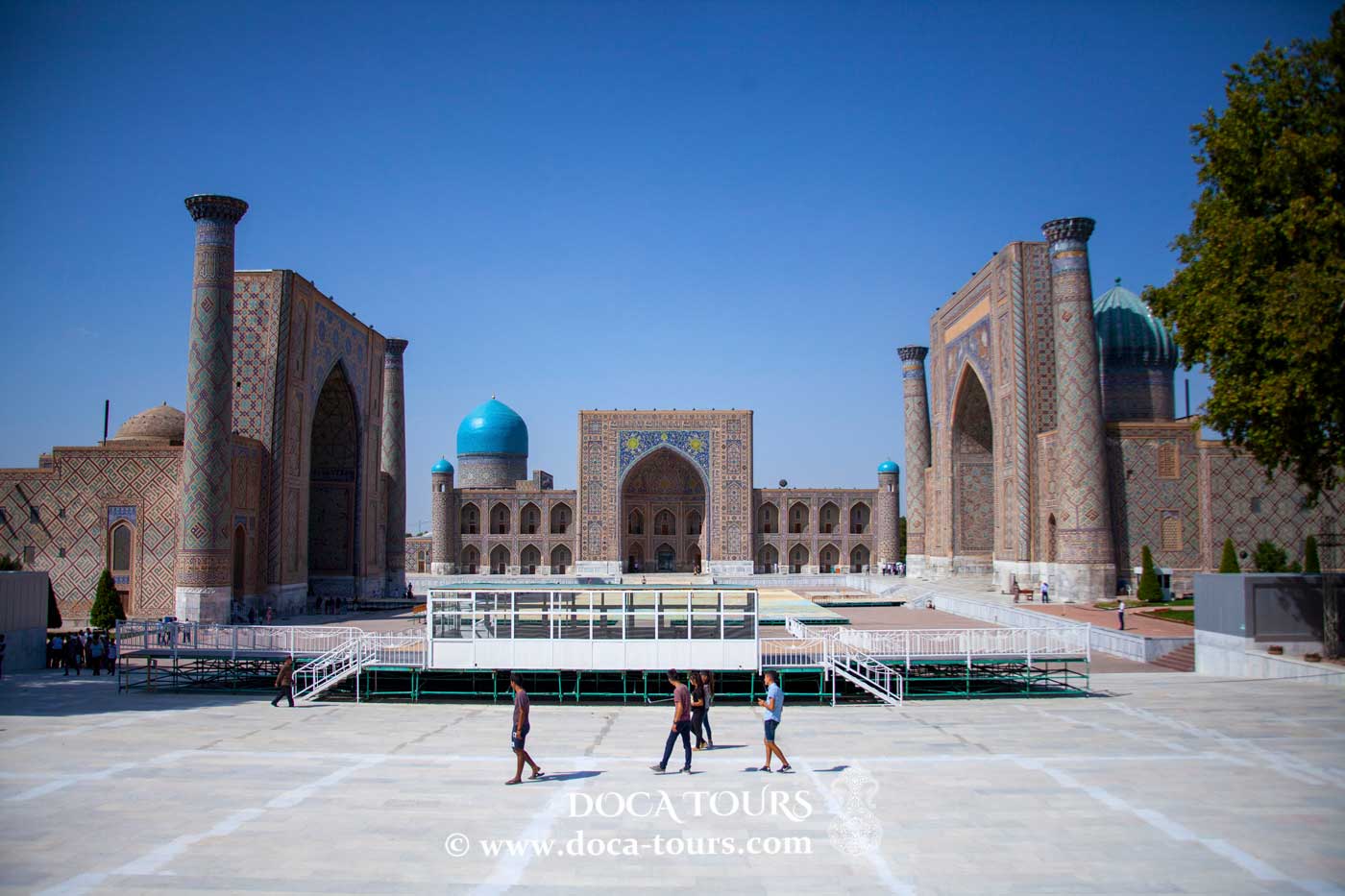
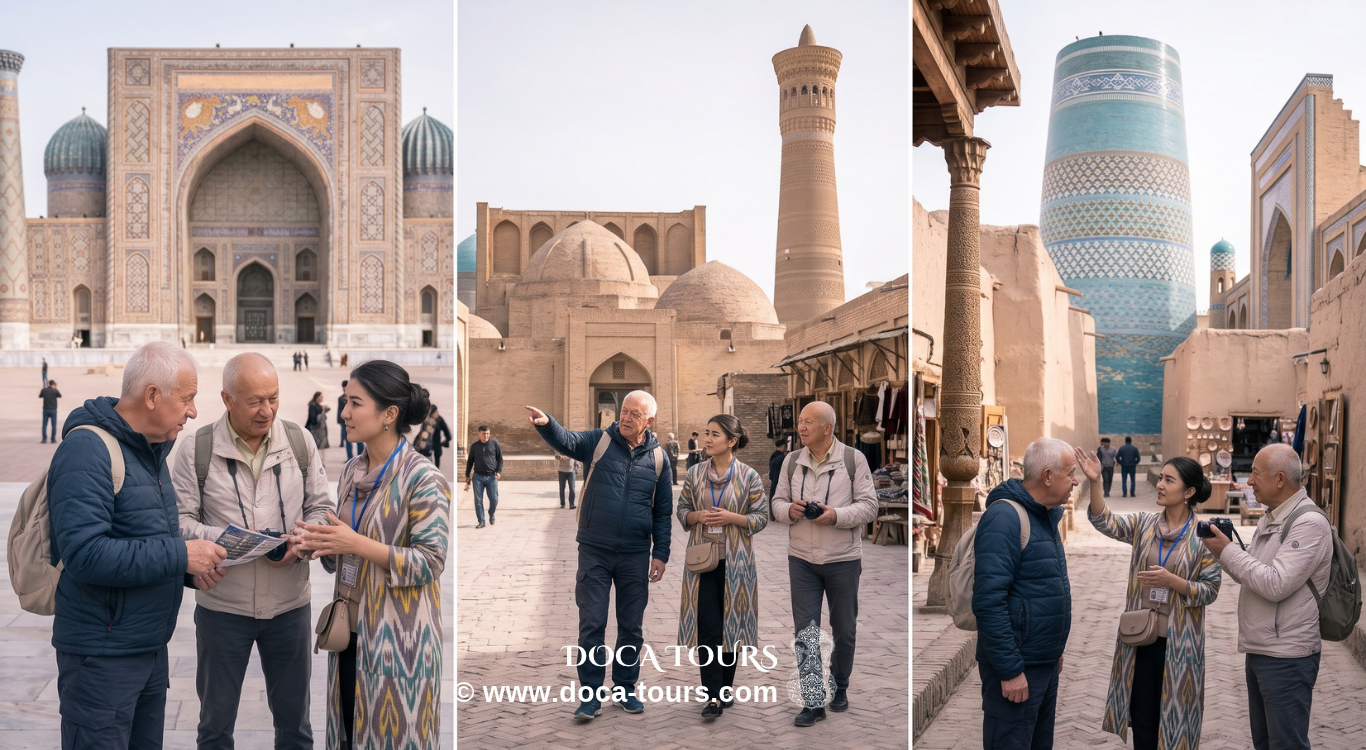
The Registan is the signature image of Uzbekistan: three grand madrasahs framing a public square that was once the heart of Timurid Samarkand. The oldest, the Ulugh Beg Madrasah, was built in the early 15th century by a ruler who was also a serious astronomer. The Sher-Dor and Tilya-Kori madrasahs completed the ensemble in the 17th century. The tilework, the scale and the symmetry make this the most photographed spot in the country, and it rewards both a daytime visit and an evening return when the facades are lit.
Itchan Kala in Khiva
Khiva’s inner town, Itchan Kala, is a fully walled medieval city and the kind of place you can walk end to end. Thick mud-brick ramparts enclose a tight grid of mosques, madrasahs, minarets and former caravanserais, which once sheltered the last caravans before they crossed the desert toward Persia. Because the walls still stand and the streets remain intact, Khiva feels less like a collection of monuments and more like a town that time preserved whole.
The Bukhara Old Town
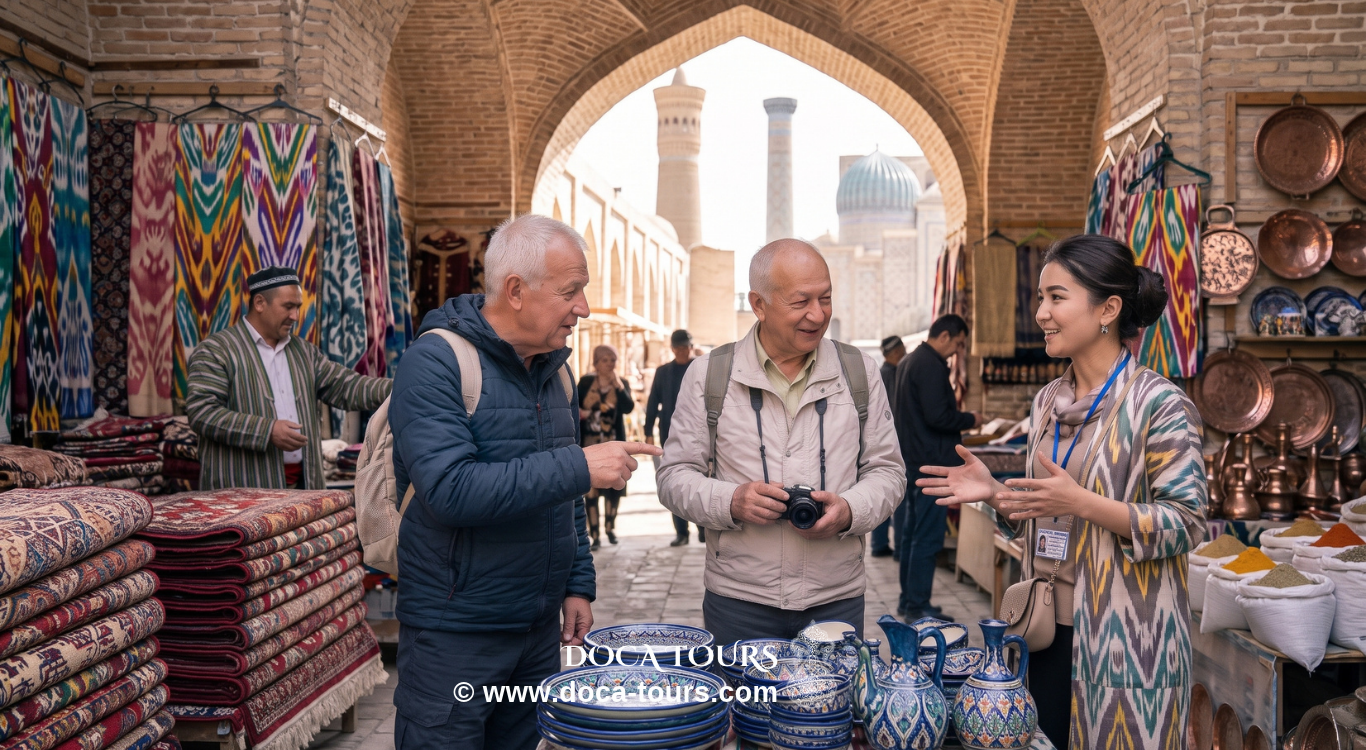
Bukhara was one of the great centers of learning and trade in the Islamic world, and its old town still reflects that. The Kalon Minaret, the Ark fortress, the Ismail Samani Mausoleum and the covered trading domes sit within walking distance of one another. The trading domes are the detail that connects Bukhara most directly to commerce: merchants sold silk, carpets, hats and metalwork under these brick cupolas, and traders still work the same spots today.
Caravanserais and Historic Trading Posts
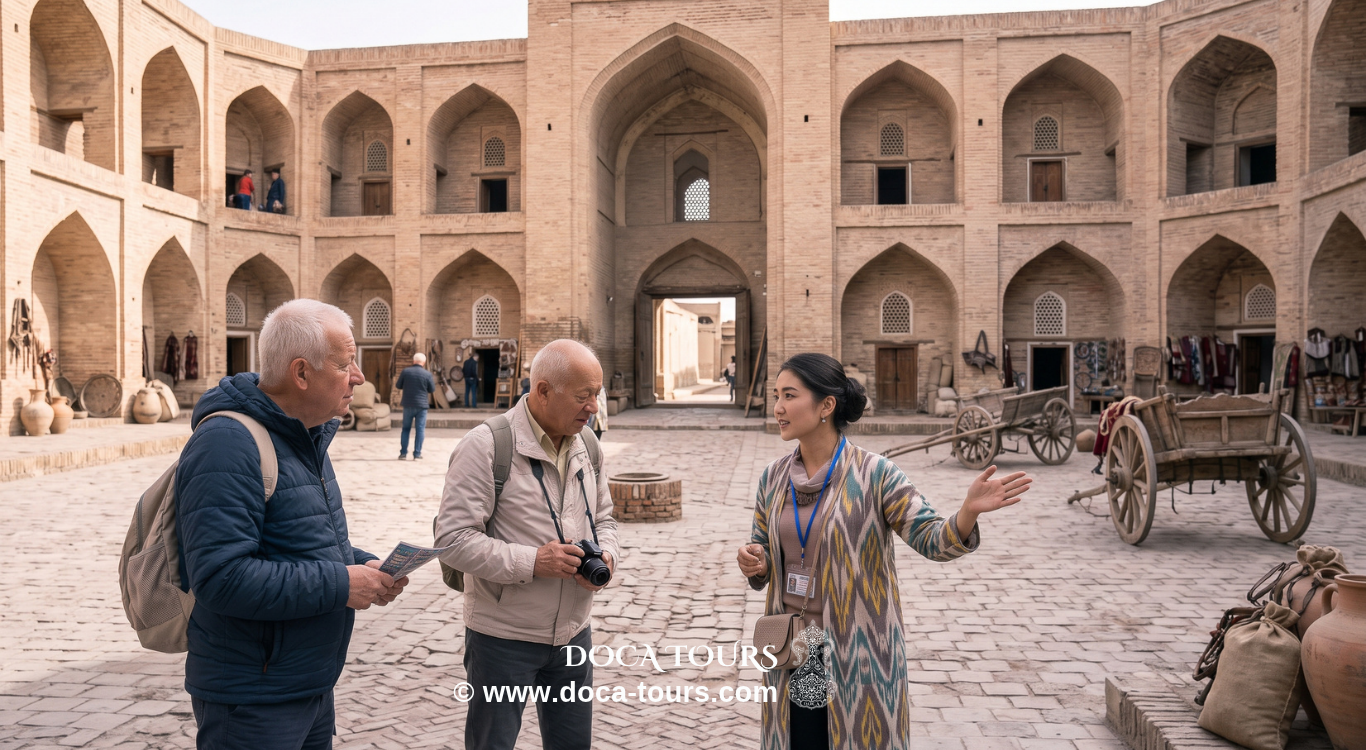
Caravanserais were the roadside inns of the Silk Road, and they explain how the whole system functioned. A caravanserai offered merchants a secure courtyard, lodging, stabling for camels and horses, water and a place to trade. Spaced roughly a day’s travel apart, they turned a dangerous crossing of deserts and mountains into a chain of manageable stages.
In Uzbekistan you can still see this infrastructure. Bukhara and Khiva both preserve trading domes and caravanserai buildings, several of which now house workshops and craft sellers, so the spaces continue to do roughly what they were built for. Visiting one gives you the practical side of the Silk Road story: the route was not only about silk and spices but about hospitality, security and the steady rhythm of travel. Seeing where traders slept and bargained makes the distances and the risks feel real in a way that a museum display cannot.
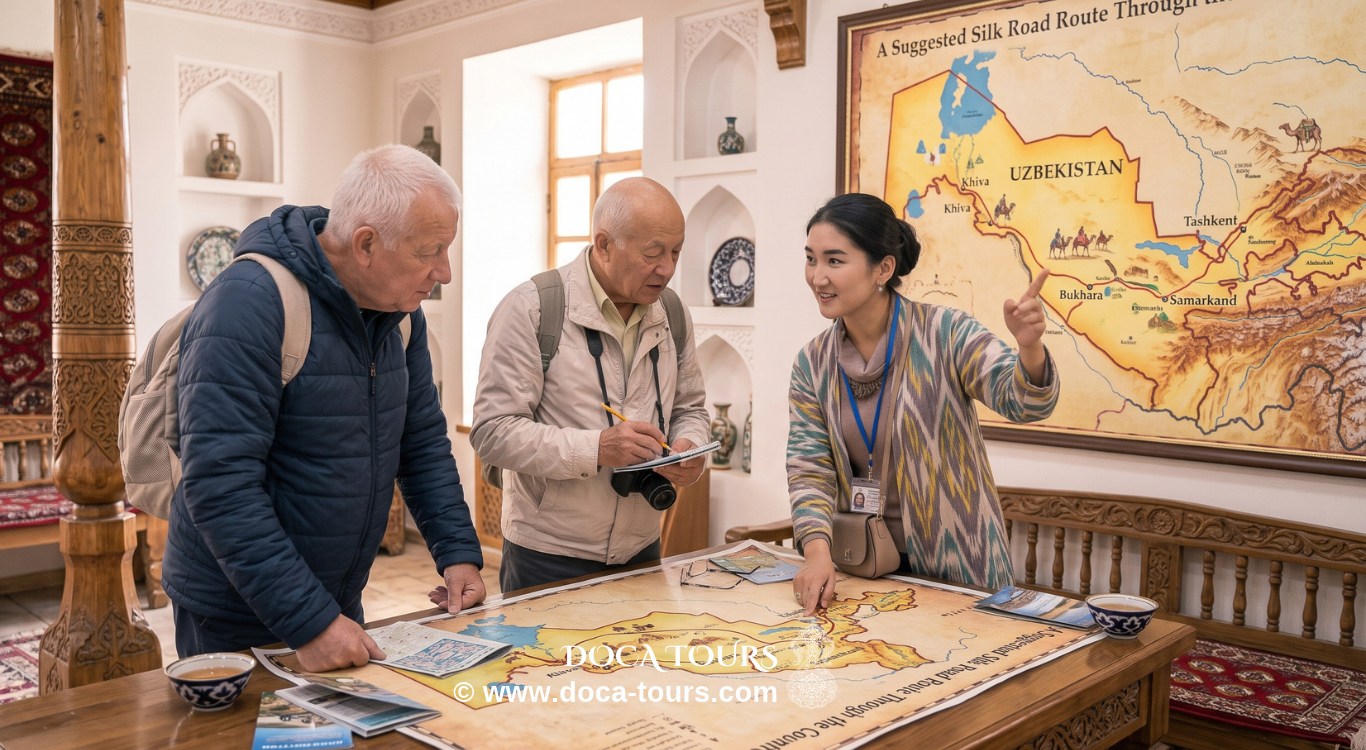
A Suggested Silk Road Route Through the Country
The classic Uzbekistan itinerary runs from east to west, following the historic caravan corridor. Most travelers start in Tashkent, the modern capital and main international gateway, then move on to the heritage cities.
A proven sequence looks like this:
- Tashkent. Arrive, adjust, and see the capital’s museums and markets. It is the transport hub and the place where most high-speed trains and flights connect.
- Samarkand. Around 350 kilometers from Tashkent, reachable in roughly two hours on the high-speed train. Base here for the Registan, the Bibi-Khanym Mosque and the Shah-i-Zinda necropolis.
- Bukhara. Continue west to Bukhara for the old town, the trading domes and the fortress. The city rewards slow walking.
- Khiva. The final leg reaches Khiva and its walled Itchan Kala, often via a desert crossing or a domestic flight to save time.
This order lets the experience build. Samarkand delivers monumental grandeur, Bukhara adds depth and texture, and Khiva closes the trip with an intact walled city. For a wider view of the country’s circuits, the overview of Uzbekistan tour routes and cultural highlights covers how these stops combine with lesser-known sites. If you prefer to travel between cities the historic way, the dedicated guide to Silk Road train tours across Central Asia explains the rail options in detail.
How long you need depends on pace. Eight to ten days covers all four cities comfortably. A tighter five to six day trip can still reach Samarkand and Bukhara, which captures the core of the Silk Road if your schedule is short. Travelers can also explore the available Uzbekistan tour packages to find an itinerary that suits their schedule.
Guided Storytelling That Brings History Alive
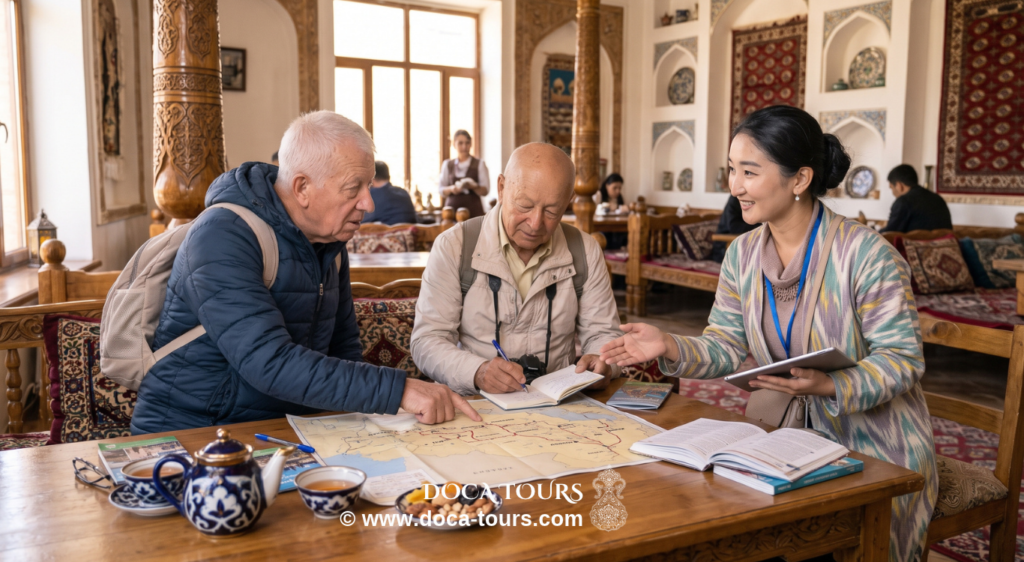
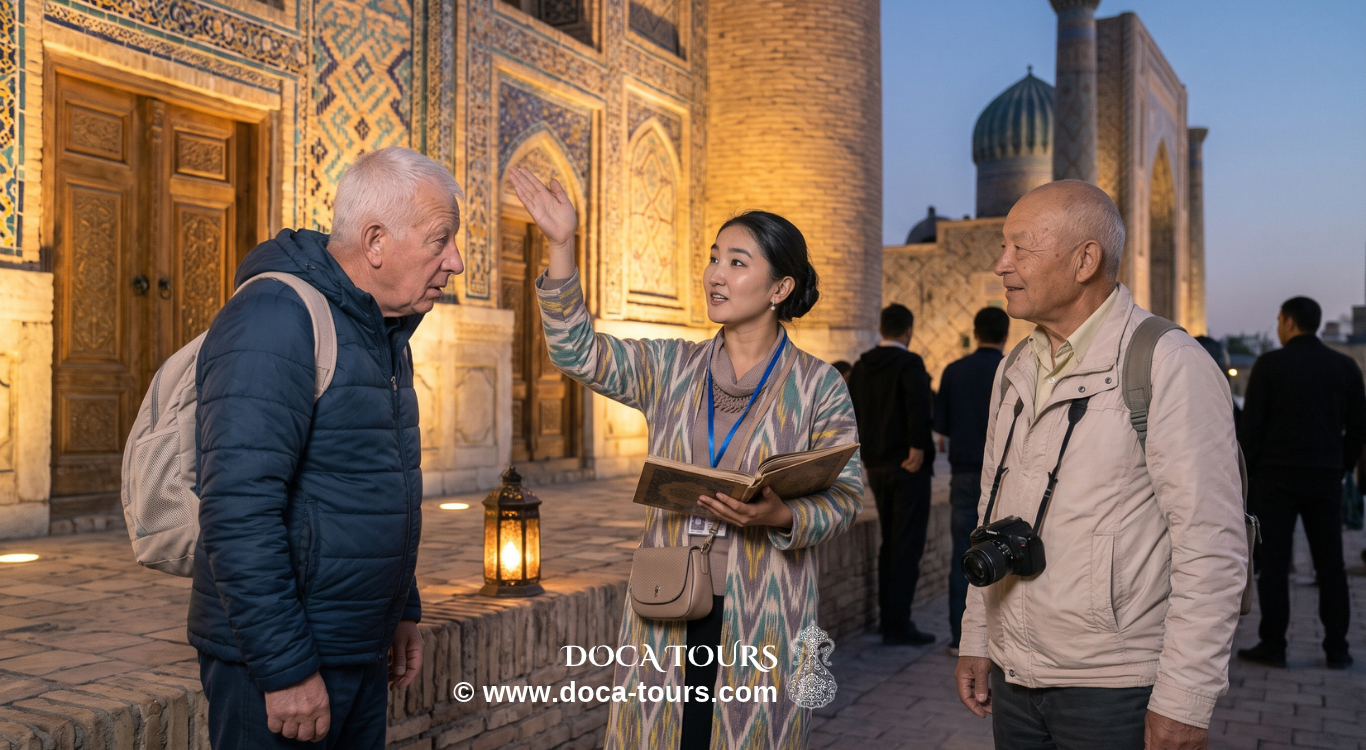
A monument on its own is a beautiful object. The same monument with the right story behind it becomes memorable. This is where guided Silk Road tours earn their value. A knowledgeable local guide connects the astronomy of Ulugh Beg to the madrasah he built, explains why a caravanserai was laid out the way it was, and points out the small details on a tiled facade that most visitors walk straight past.
Good guiding also handles the practical load. Transport between cities, timed entries, local dining and the language barrier all fade into the background when someone experienced manages them, which leaves you free to absorb the places themselves. Doca Tours builds its Uzbekistan programs around this balance, pairing the major sites with local guides who know the history and the logistics, so the days feel structured without feeling rushed.
The payoff is understanding rather than a checklist. You leave not just with photographs of Samarkand and Khiva, but with a sense of how goods, ideas and faiths moved across this landscape for centuries.
Start by deciding how many days you have, then match that to a route: pick Samarkand and Bukhara for a short trip, or add Khiva and a caravanserai stop for the full Golden Road. From there, a guided tour of Uzbekistan handles the rest.
Frequently asked questions
How many days do you need for a Silk Road tour in Uzbekistan?
Most travelers spend 8 to 10 days to cover Tashkent, Samarkand, Bukhara and Khiva at a comfortable pace. A shorter 5 to 6 day trip can still reach Samarkand and Bukhara if your time is limited.
What is the best time of year to visit Uzbekistan?
Spring (April and May) and autumn (September and October) offer the mildest weather for sightseeing. Summers are very hot in the desert cities, and winters are cold but quiet and atmospheric.
Do I need a guide for a Silk Road tour in Uzbekistan?
You can travel independently, but a local guide adds enormous value by explaining the history behind each monument and handling logistics. Guided tours also smooth out transport between the main cities. You can explore guided Uzbekistan tours to find a suitable travel program.
Which cities are essential on an Uzbekistan Silk Road itinerary?
Samarkand, Bukhara and Khiva are the three essential stops, usually reached through Tashkent. Each holds UNESCO-protected architecture that defines the country’s Silk Road legacy.