


























Key takeaways
- Uzbekistan drew 8.2 million foreign tourists in 2024, up from 6.6 million in 2023, so you join a well-supported route (Kun.uz / Statistics Agency, 2025).
- Small-group departures of 8 to 16 travelers give you guided access, shared costs, and company on the road without the price of a private trip.
- Fixed itineraries cover the big Silk Road sites, while good tours still leave half-days of free time for wandering and photography.
- Shared costs cover the guide, private transport, and often entrance fees, which lowers the per-person price compared to solo travel.
- Vet an operator on local presence, group-size caps, clear inclusions, and honest reviews before you book.
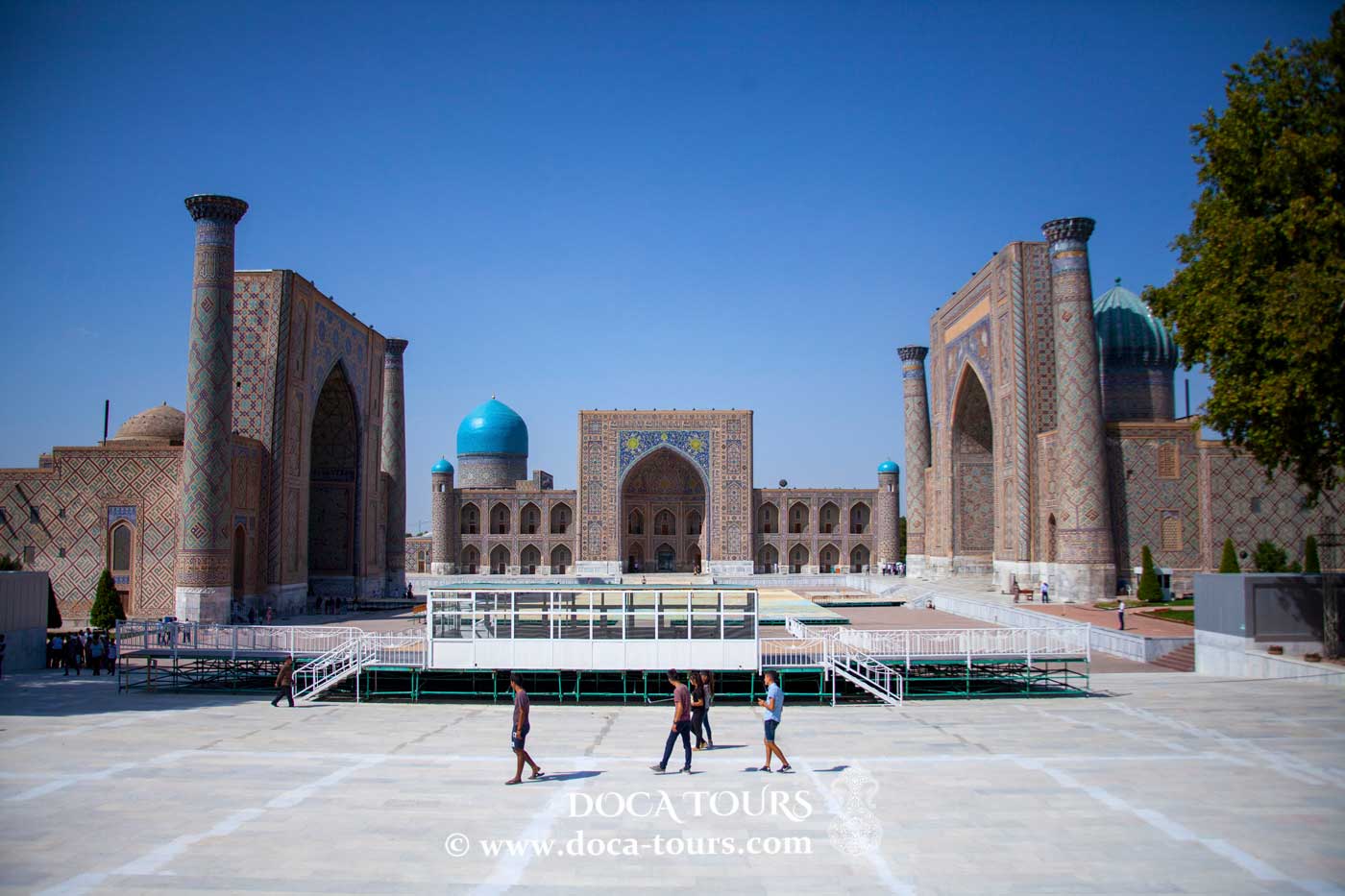
A group tour to Uzbekistan hands the hard parts, visas logic, drivers, guides, and hotel bookings, to an operator while you travel with a small set of fellow explorers. You see the Registan in Samarkand, the old walls of Khiva, and the trading domes of Bukhara with an expert explaining what you are looking at, and you split the cost of transport and guiding across the whole group.
Interest in the country is climbing fast. Uzbekistan welcomed 8.2 million foreign tourists in 2024, up from 6.6 million the year before (Kun.uz, 2025). That growth means more departures, better roads, and more choice for anyone comparing group tours to Uzbekistan. This guide walks through the benefits, group sizes, itinerary styles, shared costs, and how to pick an operator you can trust.
Why Join a Small-Group Departure to Uzbekistan?
A small-group departure gives you a local guide, private transport, and vetted hotels for far less than a private trip costs. Momentum backs the format: Uzbekistan drew 9.7 million foreign tourists in the first ten months of 2025, a 50% jump over the same period a year earlier (UzDaily, 2025). More travelers means more fixed departures to choose from.
The practical wins add up quickly. A guide reads inscriptions on the madrasahs, points out the difference between a 15th-century tile and a modern restoration, and gets you through ticket lines. Shared transport means you are not negotiating taxis in the heat. And you have company at dinner, which matters on a two-week trip.
There is a social side that solo travel rarely delivers. People who book the same Silk Road route tend to share your curiosity, and friendships formed over a week of bazaars and long drives often outlast the trip. If this is your first visit to the region, a group departure smooths the learning curve and lets you lean on a guide who knows the ground.
How Big Are the Groups, and Who Joins Them?
Most reliable operators cap group tours to Uzbekistan at 8 to 16 travelers. That number is small enough for a guide to give everyone attention inside crowded sites, yet large enough to spread the cost of a private driver and vehicle across the group. Anything much above 20 starts to feel like herding a crowd through narrow madrasah courtyards.
The traveler mix is broad. You will meet couples, solo travelers of every age, small groups of friends, and retirees drawn by the history. Uzbekistan attracts the curious rather than the party crowd, so the pace suits people who want to understand a place, not just tick it off.
Group size also shapes the experience day to day. In a group of ten to twelve, a guide can still answer individual questions inside the Registan courtyards and keep everyone together through the back lanes of Bukhara. Larger coaches of thirty or more move slower, split into sub-groups, and lose the easy conversation that makes a small departure feel like travel among friends rather than a procession.
Solo travelers do especially well on these trips. A fixed departure removes the awkwardness of eating alone and handles the logistics that are tricky to arrange from abroad. Couples get the social buzz of a group plus private rooms. Older travelers often choose group tours for the comfort and support they offer, since the operator carries the luggage logistics and sets a sensible pace.
Fixed Itineraries or Free Time: Which Suits You?
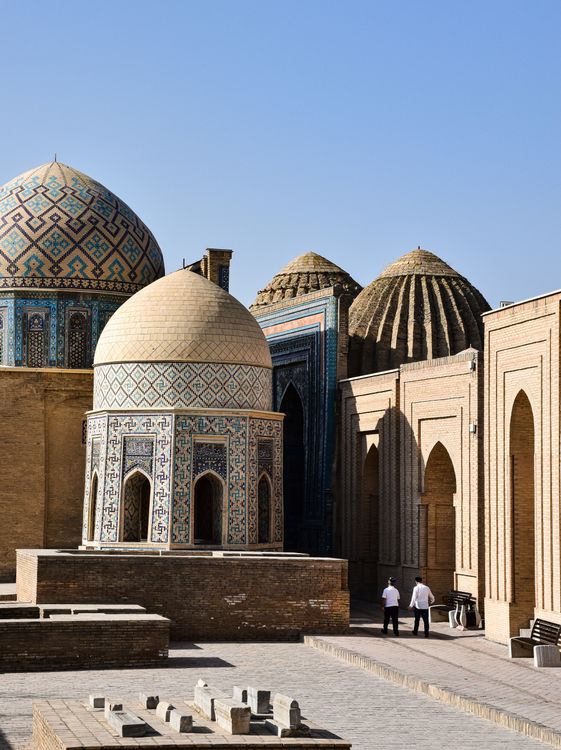
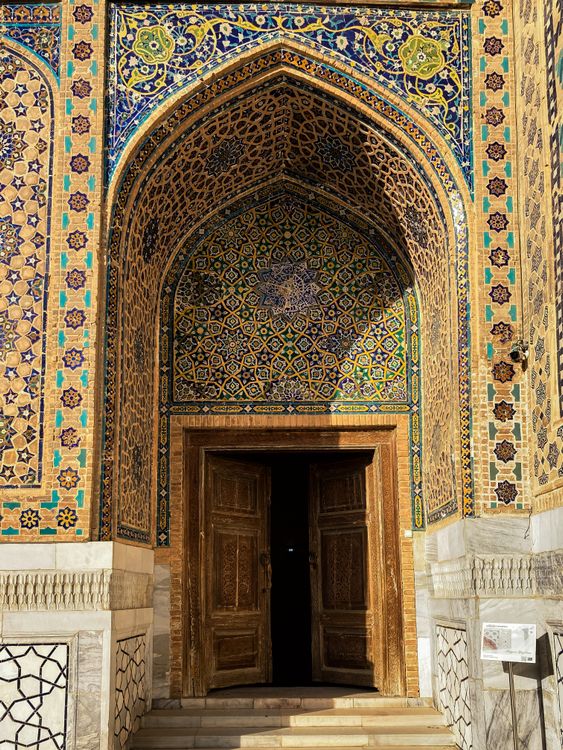
The best group tours blend both. A fixed itinerary guarantees you hit the landmark sites, the Registan, Shah-i-Zinda, the Ark of Bukhara, Khiva's Itchan Kala, in a sensible order with transport sorted. A good operator then builds in free half-days so you can wander a bazaar, rest, or chase the light for photographs.
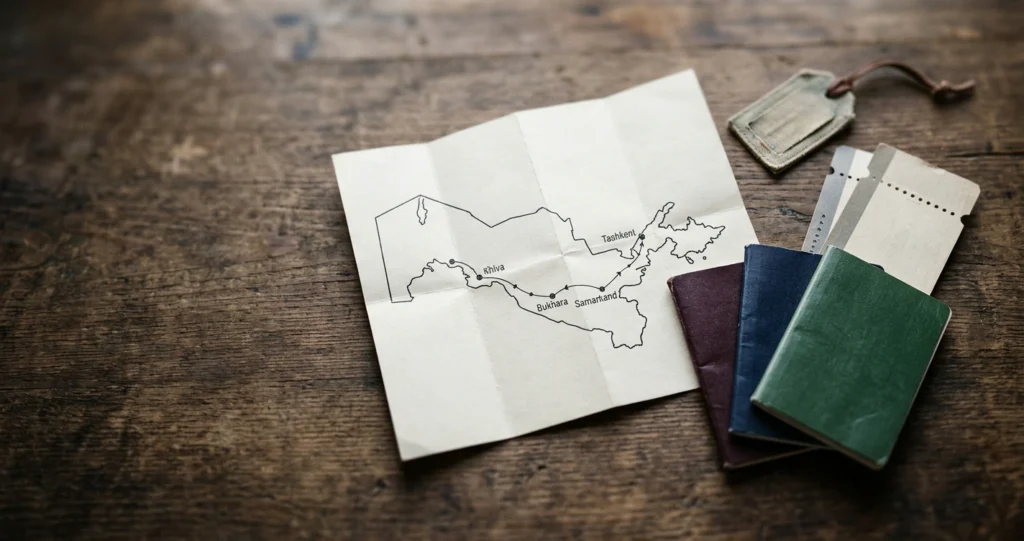
Fixed structure has clear value. Uzbekistan's major sites span three cities hundreds of kilometers apart, and getting the sequence right, Tashkent, then Samarkand, Bukhara, and Khiva, saves days of backtracking. A planned route also books the best hotels before they fill during shoulder season.
Free time is where a trip becomes yours. Ask an operator how many unstructured afternoons a tour includes. Thin tours over-schedule to look packed; strong ones trust you with your own hours. If photography is your focus, the free windows matter most, since the best light at the Registan comes early and late. Doca Tours builds guided mornings and open afternoons into its Uzbekistan departures for exactly this reason.
What Costs Are Shared Across the Group?
Shared costs are the core reason a group tour undercuts solo travel. The guide's daily fee, the private driver, and the vehicle are split across everyone on board, so a 12-person departure spreads those fixed expenses twelve ways. Many operators also fold monument entrance fees and some meals into one upfront price.
A typical group price covers the guide, ground transport between cities, hotels, and often the headline entrance fees. What usually sits outside the price: international flights, most lunches and dinners, drinks, tips, and personal shopping in the bazaars. Reading the inclusions line by line is the single most useful thing you can do before booking.
Watch for the gap between a low headline price and the real total. A cheaper tour that excludes entrance fees can cost more once you pay them yourself at every gate. Add up flights, meals, tips, and fees before you compare two quotes. Comparing total cost, not just the sticker price, is how you spot genuine value.
How Do You Choose Reliable Group Tours to Uzbekistan?
Pick an operator with real local presence, clear inclusions, a firm group-size cap, and reviews that mention guides by name. Local ground teams, rather than a reseller abroad, usually mean better guides and faster fixes when a train is delayed or a hotel overbooks. Ask who actually runs the tour on the ground.
Press on the details before you pay. Confirm the maximum group size in writing, get the full inclusions and exclusions list, and check whether departures are guaranteed or cancel below a minimum headcount. A reputable operator answers these plainly. Vague replies are a signal to keep looking.
Check independent reviews and verify the basics for yourself. Cross-check which sites hold official heritage status against the UNESCO World Heritage list so you can see what a tour genuinely covers. Compare two or three operators on the same route before deciding. If you want to see how departures are structured, browse the Uzbekistan tour packages from Doca Tours as a reference point.
Your Next Step
Shortlist two or three operators running the Tashkent, Samarkand, Bukhara, Khiva route, then request their full inclusions list and group-size cap for your travel dates. Compare the total cost rather than the headline price, read reviews that name the guides, and book the departure that leaves you both well-supported and free to explore on your own terms. With arrivals rising and more departures on the calendar, a spring or autumn group tour is a straightforward way to see the Silk Road alongside fellow explorers.
Frequently asked questions
What is the ideal group size for a tour to Uzbekistan?
Most well-run departures cap at 8 to 16 travelers. That size keeps costs shared, lets a guide give everyone attention inside busy sites like the Registan, and still fits comfortably in a single minibus.
Are group tours to Uzbekistan good for solo travelers?
Yes. A fixed departure handles logistics, pairs you with a guide, and puts you alongside other travelers, which makes it one of the easier ways to see Uzbekistan alone without paying a single-traveler premium on everything.
How much free time do group tours to Uzbekistan include?
It varies by operator. Strong itineraries balance guided mornings at major sites with free afternoons in Samarkand, Bukhara, and Khiva, so you can explore bazaars or rest at your own pace.
Do group tour prices to Uzbekistan include entrance fees and meals?
Usually the guide, private transport, and many monument entrances are included, while meals are often partial. Always read the inclusions list, since the cheapest headline price may exclude fees you will pay anyway.
When is the best time to take a group tour to Uzbekistan?
Spring (April to May) and autumn (September to October) bring mild weather and the clearest skies for photography. These shoulder seasons are also when most operators run their fullest departure calendars.