
























Key takeaways
- Central Asia nomadic culture survives as a living tradition in Kyrgyzstan and Kazakhstan, not a museum piece.
- The yurt, eagle hunting and horse games like kok-boru remain central to steppe and mountain life.
- The 2024 World Nomad Games in Astana drew athletes from 89 countries across 21 sports.
- A summer yurt stay at a jailoo such as Song-Kol is the most direct way to experience nomad hospitality.
- Visit responsibly by booking community-based stays, asking before photographing, and respecting yurt etiquette.
Central Asia nomadic culture is still a living way of life in Kyrgyzstan and Kazakhstan, not a chapter in a history book. Each summer, herding families pack their felt yurts onto trucks and horses and move up to high mountain pastures, exactly as their ancestors did on the open steppe.
For travelers, that makes this region one of the few places on earth where you can share a meal inside a working yurt, watch an eagle hunter call his bird to the glove, and see horseback games played with real intensity rather than for a camera. This guide explains where that culture comes from, what it looks like today, and how to experience it without turning it into a spectacle.
The Roots of Central Asia Nomadic Culture
Central Asia nomadic culture grew out of a simple logic: in a land of dry steppe and high mountains, moving your animals to the grass makes more sense than trying to bring grass to your animals. For thousands of years, Turkic and Mongol herding peoples followed that rhythm across what is now Kyrgyzstan and Kazakhstan.
Their lives were organized around livestock, mainly horses, sheep, goats, and in some areas yaks and camels. Wealth was measured in herds, not land. Families migrated between seasonal pastures, spending winters in sheltered valleys and summers on the high meadows locals call a jailoo.
This mobility shaped everything else. Homes had to be portable, so the yurt was engineered to be assembled and struck in hours. Knowledge passed through spoken word rather than paper, which is why epic poems, songs, and oral genealogies carry so much weight. The Silk Road caravans that crossed these lands traded with nomads for horses, wool, and safe passage, weaving the steppe into a much wider world. For the bigger picture of those trade routes, see our history of the ancient Silk Road.
Eagle Hunting, Horse Games, and the Yurt Lifestyle
Three traditions capture Central Asia nomadic culture better than any others: hunting with golden eagles, competing on horseback, and living in the yurt. Each is practical in origin and still practiced today in rural Kyrgyzstan and Kazakhstan.
Eagle hunting, the domain of the berkutchi, began as a way to take foxes and hares across snow in winter. A hunter trains a golden eagle over years, builds a bond of trust, and traditionally releases the bird back to the wild after a season of service. Watching a berkutchi raise his arm and call the eagle down from a ridge is unforgettable, and autumn festivals in both countries now showcase the skill.
Horse games are the loud, dusty heart of nomad festivals. The signature contest is kok-boru in Kyrgyz, called kokpar by Kazakhs, where mounted teams wrestle to carry a goat carcass and drop it into the opposing goal. Gentler games include kyz kuumai, a chase on horseback between a man and a woman, and tests of precision like picking a coin from the ground at a gallop.
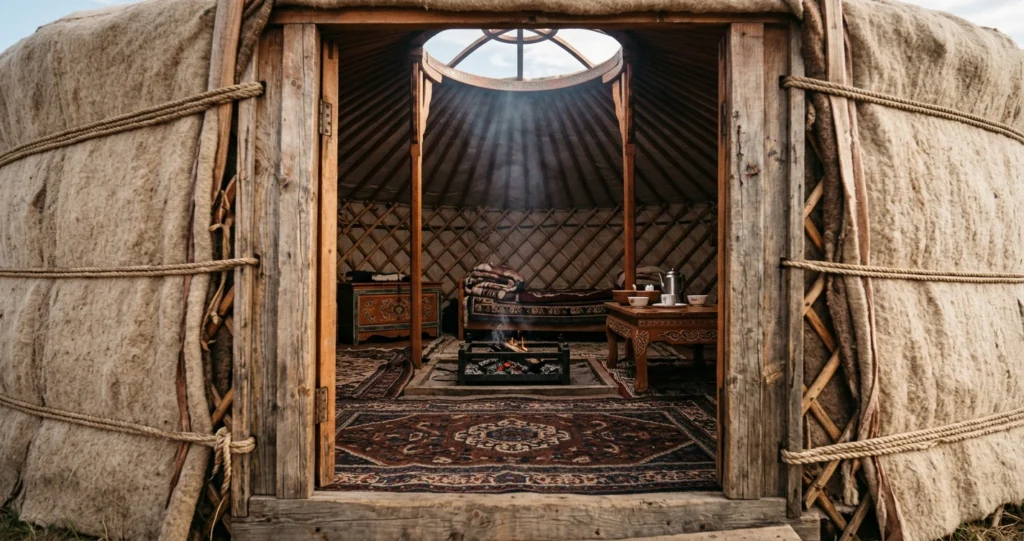
The yurt ties it all together. Its frame of bent willow poles and a crown wheel supports layers of felt made from the herders' own sheep. It is warm in winter, cool in summer, and can be moved by a single family. The craft of building a Kyrgyz or Kazakh yurt is recognized on UNESCO's list of intangible cultural heritage, a sign of how central the structure remains to both national identities.
The World Nomad Games and Living Traditions Today
These traditions are not fading quietly. The clearest proof is the World Nomad Games, a sporting festival that has grown from a regional event into a global one. The fifth edition, held in Astana, Kazakhstan in September 2024, brought together athletes from 89 countries competing across 21 sports, with Kazakhstan topping the medal table on 112 medals (The Astana Times, 2024).
The Games put traditional skills on a modern stage: eagle hunting, kok-boru, wrestling on horseback, archery, and bone-throwing games most visitors have never heard of. They matter because they treat nomad sport as serious competition rather than folklore, which keeps young people invested in learning it.
Beyond the Games, the traditions live on in daily life. Shepherds still ride out at dawn on the jailoo. Musicians still play the komuz and perform improvised verse duels. Families still slaughter and share a sheep to honor a guest. Several of these practices, from falconry to epic storytelling, carry UNESCO recognition, but their real strength is that people keep doing them because the practices still work.
Experiencing Nomad Hospitality Responsibly
Hospitality is a cornerstone of steppe culture: a traveler at the door is traditionally fed and sheltered without question. That generosity is real, and it deserves care rather than exploitation. The goal is to be a good guest, not a consumer of someone else's daily life.
A few habits go a long way. Accept the tea and the food you are offered, since refusing can read as an insult. Step into a yurt with your right foot and avoid stepping on the threshold. Ask before photographing people, especially eagle hunters and elders, and accept no for an answer. Dress modestly, and keep your voice down around livestock and children.
Where your money goes matters most. Booking through community-based tourism, where host families are paid directly and set their own terms, keeps the benefit in the village rather than with distant middlemen. Doca Tours works with local Kyrgyz and Kazakh host families on its nomad-focused itineraries, so a yurt night supports the people who actually build and move the yurt.
Where to Encounter Nomadic Culture on a Tour
You can meet nomadic culture across the region, but a few places concentrate it. In Kyrgyzstan, the summer yurt camps around Song-Kol Lake are the classic choice, a high-altitude basin where herding families live beside the water from roughly June to September. Days there mean riding, watching the herds, and sharing bread and fermented mare's milk.
Kazakhstan offers its own routes, from eagle-hunting demonstrations near Almaty to the vast steppe landscapes around Astana that hosted the 2024 Games. Deciding between the two countries for a first trip is a common question, and our comparison of Uzbekistan versus Kazakhstan for first-time visitors can help you frame the choice if your itinerary is still open.
The practical reality is that the best nomad experiences are seasonal and rural, so timing and local contacts make the difference. Aim for summer for the jailoo, autumn for eagle festivals, and build in flexible days for weather in the mountains.
If a yurt night at Song-Kol or a morning with an eagle hunter sounds like your kind of trip, the next concrete step is to pick a season and a base, then shape an itinerary around it. Start by choosing between a mountain-and-pasture route in Kyrgyzstan and a steppe route in Kazakhstan, and plan the rest of your Silk Road travel around that anchor.
Frequently asked questions
What is nomadic culture in Central Asia?
It is the herding way of life built around seasonal migration with livestock, portable felt yurts, horsemanship, and oral traditions. In Kyrgyzstan and Kazakhstan it remains a living practice, especially in summer mountain pastures.
Can tourists stay in a yurt in Kyrgyzstan or Kazakhstan?
Yes. Community-based tourism networks run summer yurt camps in high pastures such as Song-Kol in Kyrgyzstan. Guests sleep in traditional felt yurts, share home-cooked meals, and can try riding and other daily herding activities.
What is kok-boru?
Kok-boru is a traditional horseback game where riders compete to carry and drop a goat carcass into the opposing team's goal. Kazakhs call a similar game kokpar. It is one of the headline events at the World Nomad Games.
When is the best time to experience nomadic culture?
Summer, roughly June through September, when herding families move to high pastures and open their yurt camps. Autumn eagle-hunting festivals and the periodic World Nomad Games are other strong reasons to time a trip.