


























Video: https://www.youtube.com/watch?v=6Y9dLiqVCTQ
After successful campaigns and victories in East Turkestan and South Semirechye, Genghis Khan came close to the borders of the Khorezmshah state, which included Central Asia and most of Iran.
By the time of the Mongol conquest, Khorezm (early 13th century) was a large Islamic state in Central Asia. It was one of the strongest, richest and most beautiful states in the world. The rulers of Khorezm had at their disposal a large and battle-hardened army and pursued an aggressive foreign policy. It consisted of Khorezm proper, Maveranakhr, Iran, Khorasan, and the lands of modern South Kazakhstan.
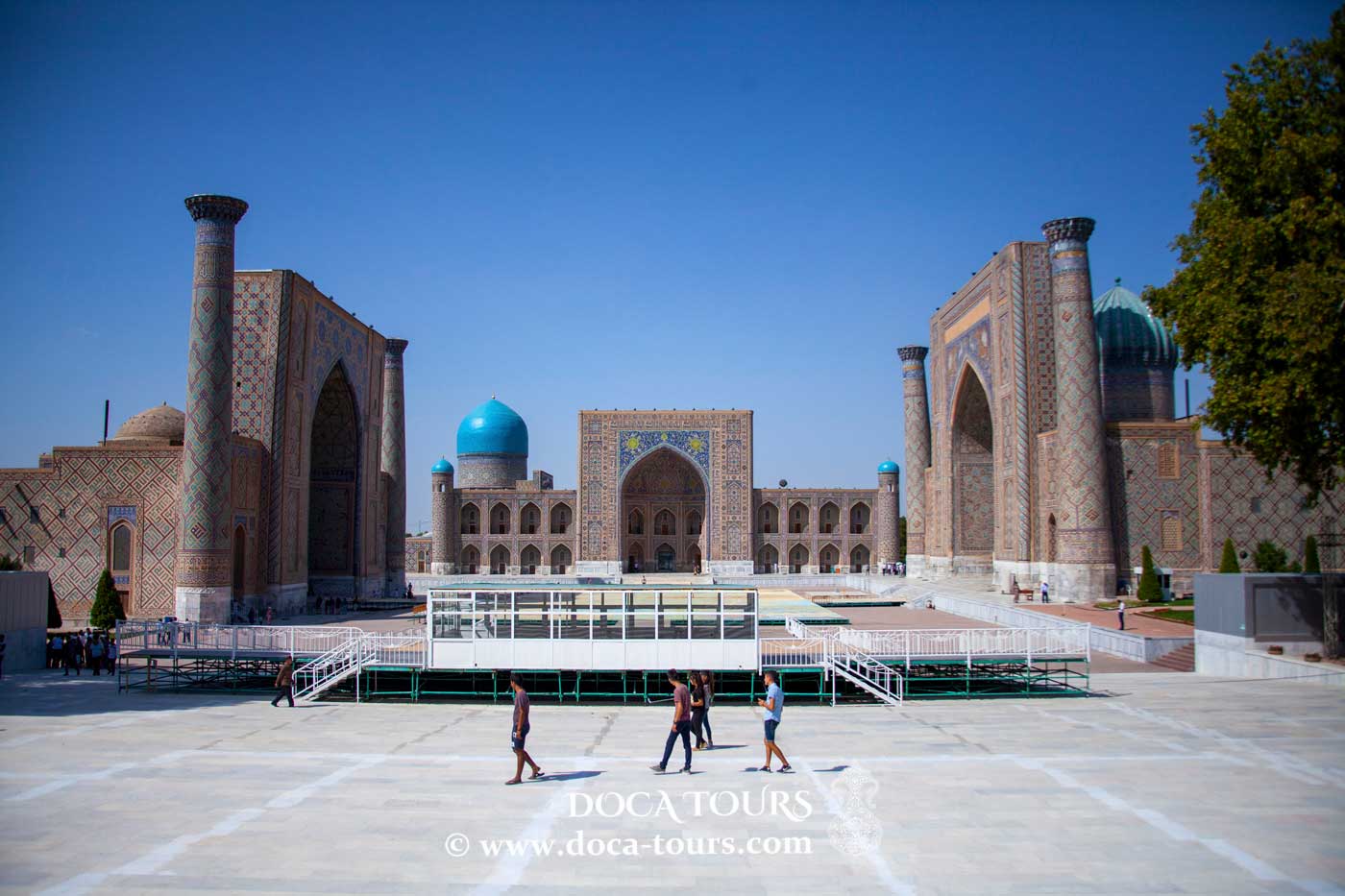
The favorable geographic location contributed to the stable income from the transit trade. Such cities as Samarkand, Bukhara, Gurganj, Ghazni, Tabriz were famous for their craft and architecture. Agriculture flourished in numerous fertile valleys and in oases in the lower reaches of the Amu Darya. The Aral Sea abounded in different types of fish. In the endless steppes, huge herds and flocks of cattle grazed.
The state of the Khorezmshahs reached its heyday under Ala ad-Din Muhammad II, who successively defeated the Gurid Sultanate and the Karakitai Khanate, after which he appropriated the title of “second Alexander”.
The capital of the Khorezmshahs was at first Gurganj (now the Turkmen city of Koneurgench), but then Mohammed II moved it to Samarkand.
But all this was just a beautiful outer wall covering an unsightly picture of internal discord and disorder. A vulnerable spot in the state was the omnipotence of the Kangly and Kipchak nobility, who held leading positions in the administrative and military apparatus. The mother of the Khorezmshah Muhammad Terken-Khatun came from a Kipchak ruling clan, and according to another version she was from the Kangla and had tremendous influence at the court, in fact, she herself appointed her relatives to all key government posts. With their support, she actually led the opposition to her son. Their relations were especially aggravated before the Mongol invasion. Significant garrisons were located in all major cities of Khorezm: Samarkand, Bukhara, Otrar. In 1212 the Kangly participated in suppressing the uprising of the Karakhanid Osman in Samarkand.
In 1215, Genghis Khan signed an agreement with Khorezm on good-neighbourly trade relations. He ordered to convey to Sultan Muhammad that he considers him the ruler of the West, and himself – the ruler of Asia. Soon after Genghis Khan’s ambassadors returned from Khorezm, he sent his first merchants there. It was a large and wealthy merchant caravan consisting of 450 Muslim merchants and several dozen Mongolian officers.
When the ambassadors arrived in the border town of Otrar, their caravan was plundered and killed. They were accused of espionage by Inalchik Kayir Khan, the ruler of Otrar, who was a cousin of Muhammad II. This became a convenient pretext for organizing a grand campaign for the Mongol army.
The enraged Genghis Khan demanded the extradition of Kayir Khan, but the Khorezmshah, fearing the wrath of the Kangly nobility, refused. Instead of fulfilling the demand, Muhammad beheaded one of the ambassadors of the Mongol Khan, and released the rest, having previously cut off their beards.
In the spring of 1219, without completing the conquest of China, Genghis Khan sent troops to the west.
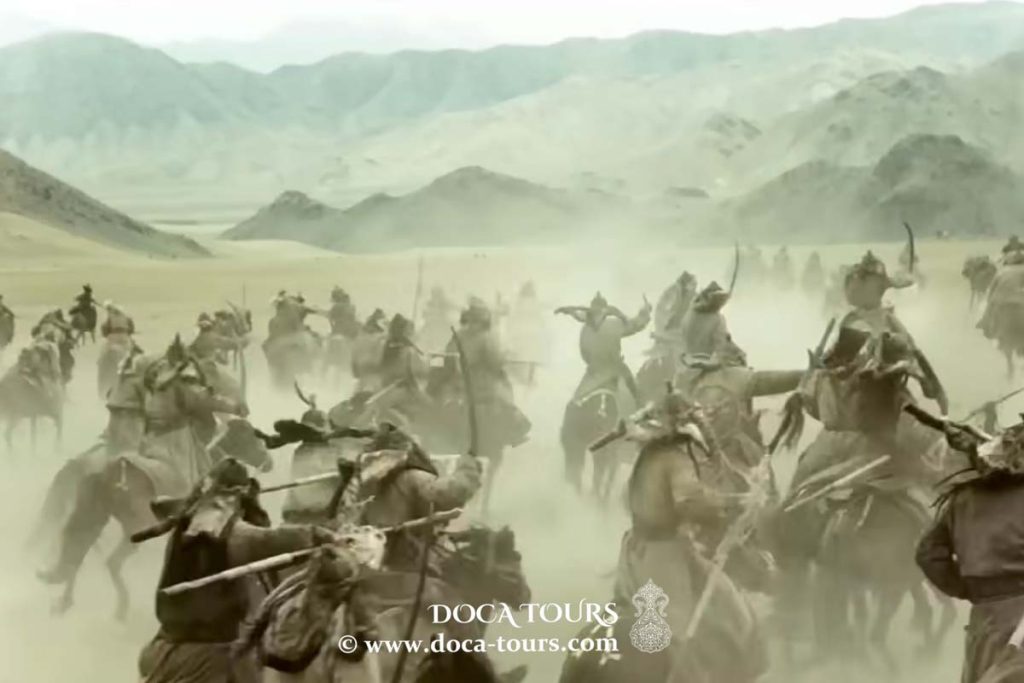
This bad news alarmed and stumped the Sultan’s court in Urgench. The urgently assembled Supreme Council of State was unable to work out a reasonable plan of military action. Shihab ad-din Khivaki, the closest companion of Muhammad II, proposed to gather the people’s militia and meet the enemy on the banks of the Syr Darya with all military forces. Other plans for military operations were proposed, but the sultan chose the tactics of passive defense. Khorezmshah and the dignitaries and commanders who supported him, underestimating the siege art of the Mongols, relied on the fortress of the cities of Maverannahr. The sultan decided to concentrate the main forces on the Amu Darya, reinforcing them with militias from neighboring regions. Muhammad and his generals, seated in the fortresses, expected to attack the Mongols after they scattered across the country in search of prey. However, this strategic plan did not come true, which led to the death of thousands of the rural and urban population of Kazakhstan, Central Asia, Iran and Afghanistan.
In large cities of the northeastern part of the state, powerful garrisons were located, a wall was built around Samarkand and a ditch was dug, although Muhammad doubted the effectiveness of defensive structures. It was planned to concentrate most of the troops south-west of the Amu Darya, where the main center of resistance was to be located.
Before the outbreak of hostilities, the Mongols conducted a deep large-scale reconnaissance of the enemy forces. When the headquarters of the Mongol Khan brought together all the reports of the informants, it was decided to rely on the surprise and mobility of the Mongol troops.
In the summer of 1219, Genghis Khan prepared, according to various sources, from 150 to 200 thousand people for the campaign against Khorezm. The Khorezm Sultan Muhammad could easily gather and put up a twice as large army against the conquerors from the east. However, these were poorly trained, poorly disciplined detachments, besides, Muhammad was afraid of his own emirs, who at any moment could arrange rebellion against him.
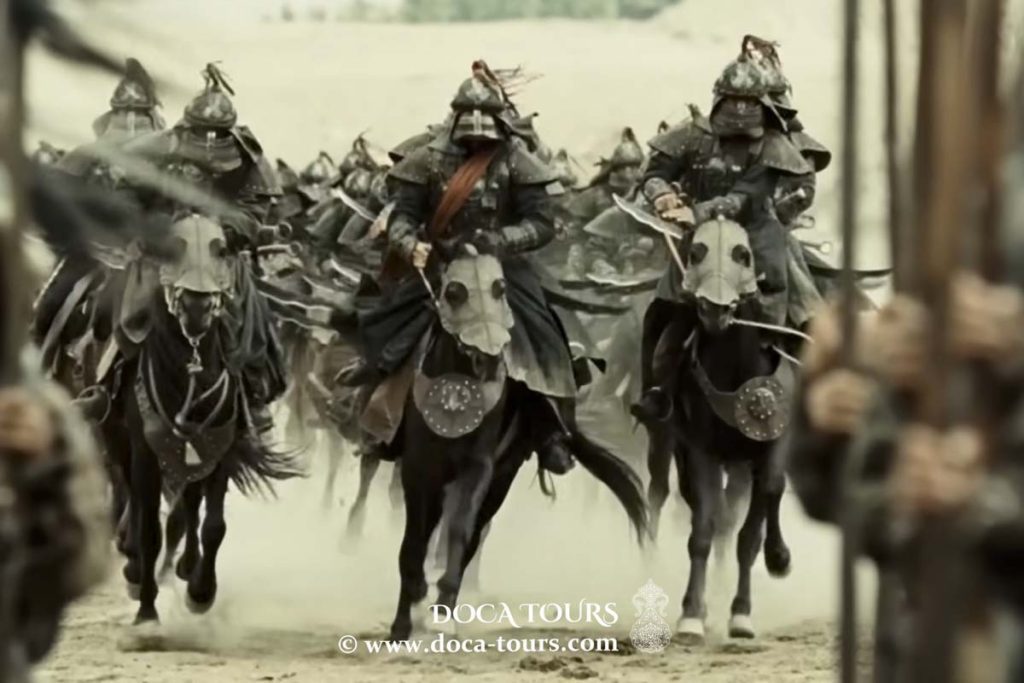
In 1219, Genghis Khan personally set out on a campaign with all his sons and with the main military forces. The conqueror’s army was divided into several parts. One was commanded by his sons Chagatai and Ugedei, left by their father to besiege Otrar; the second was headed by the eldest son – Djuchi. His main goal was the conquest of Sygnak and Jend. The third army was sent to Khujand. The main forces under the leadership of Genghis Khan and his son Tolui were to capture Samarkand.
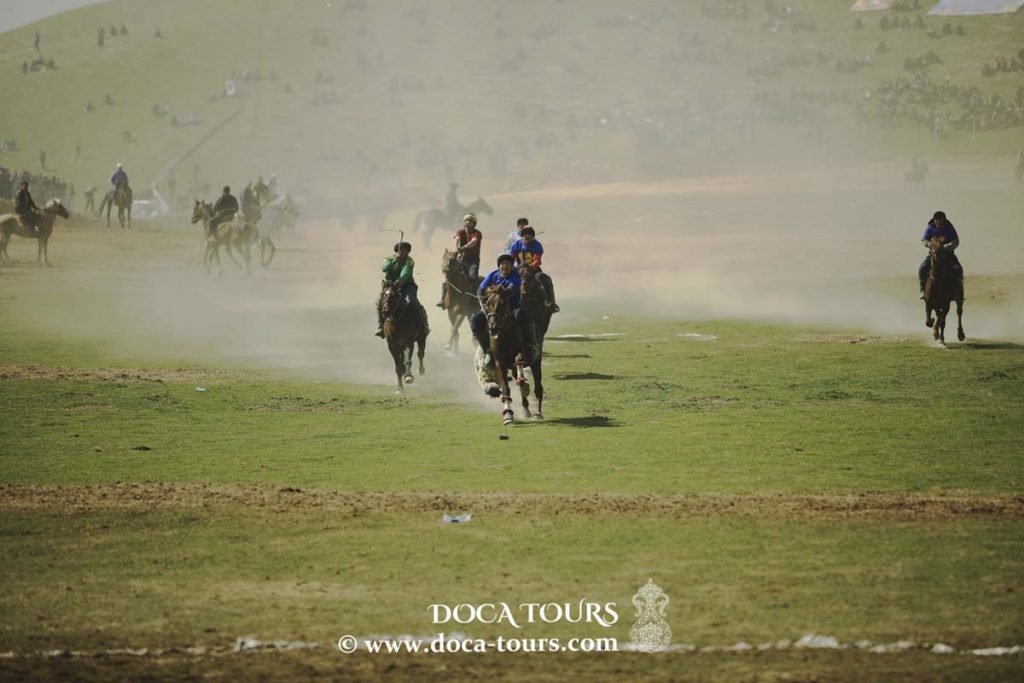
The siege of Otrar by the forces of several tumens began in September 1219 and lasted for about five months. Kayir Khan, knowing that the Mongols would not spare him, fiercely defended himself. The betrayal of one of the commanders hastened the fall of Otrar. Leaving the city gates at night, he surrendered to the Mongols. The besiegers broke into the city through the same gate. Part of the troops and residents locked themselves in the fortress and continued to defend themselves. Only a month later the Mongols were able to take the citadel. All its defenders were killed, the fortress was destroyed, Kayir Khan was executed, and the city was razed to the ground after being plundered. The captives (hashar) from Otrar were then used in the assault on Khujand and Samarkand.
The Djuchi`s detachments, making campaigns along the Syrdarya, in the spring of 1220 approached Sygnak. The siege lasted seven days, after which the Mongols rushed into the city and destroyed all its fortifications. In a short time, Uzgen, Barchynlykent and Dzhend submitted to the Mongols. A detachment of 10,000 took Yangikent and headed to the lower reaches of the Syr Darya, mobilized there 10,000 Turkmen. They rebelled, were partially defeated, and partially retreated to the south, in the direction of Merv. The main forces of Djuchi were located in the Jend`s area.
In 1220, the third army of 5 thousand people took Benakent and surrounded Khujand, also located on the Syrdarya. During the siege, the number of Mongolian troops increased to 20 thousand people, the number of prisoners used during the siege – up to 50 thousand people. Timur-Malik, who was in charge of the defense of the island fortress, sailed down the Syrdarya. The Mongols organized a pursuit, and when Timur-Malik reached the area where the troops of Djuchi were located, he was forced to land on the left bank of the river and was able to escape from the pursuit with a fight, then kill the Mongol governor in Yangikent.
The fourth army, led by the ruler of the Mongols himself and his son Tolui, approached Bukhara (garrison, according to various sources, 3 thousand or 20 thousand people), which after a short siege fell into the hands of the Mongols in March 1220. The inhabitants were subjected to severe violence, and the city was plundered, destroyed and burned by the Mongols, the captives were sent to siege Samarkand. Leaving Bukhara in ruins, Genghis Khan went to Samarkand along the valley of Sogdiana (the garrison, according to various sources, is 40 thousand or 110 thousand people; 20 war elephants). On the third day, part of the clergy opened the gates for him and surrendered the city without a fight. 30 thousand Kangly warriors who were the support of the Khorezmshah Muhammad and his mother Turkan Khatun were executed by the Mongols.
The same was done in the city of Balkh. But in neither case, voluntary surrender did not save the inhabitants of the city from violence and robbery. According to the Chinese pilgrim Chang Chun, only 50 thousand of the 400,000 population of the city of Samarkand survived.
Without a fight, losing the war and having no support, Muhammad fled to one of the deserted islands of the Caspian Sea, where in the village of Astara he died in February 1221, transferring power to his son Jalal ad-Din. Three tumen, headed by Jebe, Subedei-bagatur and Tohuchar-noyon, pursued Muhammad. Passing through the possessions of Khan-Malik, Tohuchar, in violation of the preliminary agreement, began to rob and take prisoners of the inhabitants, as a result of which he was defeated by Khan-Melik (killed or, according to the version of the “Secret Legend”, after returning to Genghis Khan, demoted).
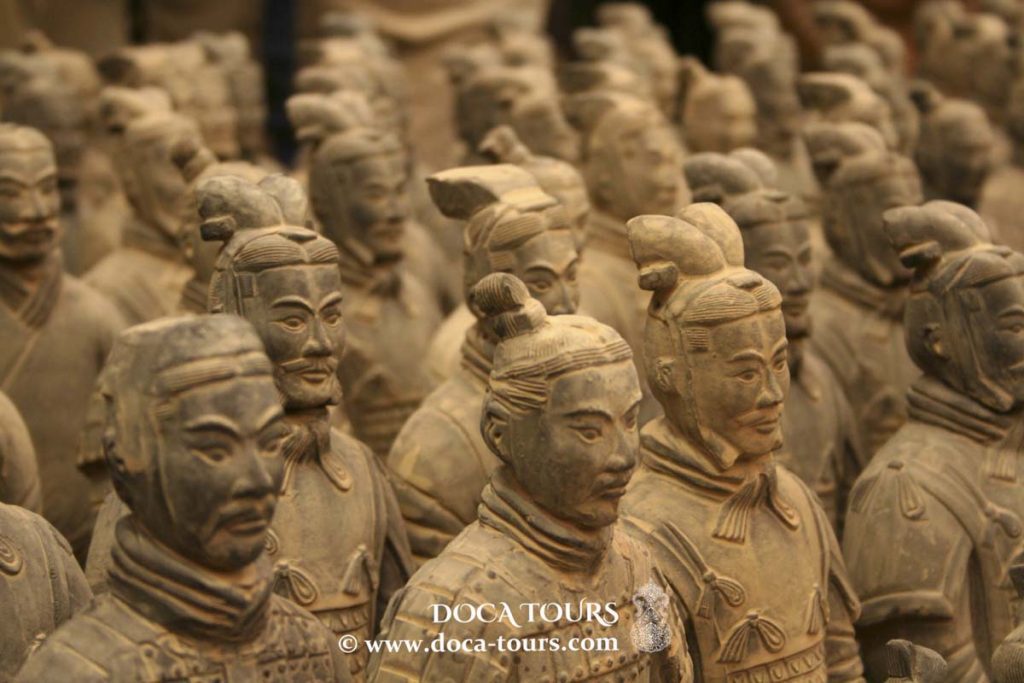
Genghis Khan did not go further than Samarkand but sent Tolui with a 70 000-strong army to conquer Khorasan, and at the beginning of 1221, the 50,000-strong army of Djuchi, Chagatai and Ugedei approached the capital of Khorezm, the city of Urgench. After a five-month siege, the Mongols took it, defeated it, and took the inhabitants captive.
Meanwhile, Tolui, together with his army, entered the province of Khorasan and took Nisa by storm, after which he appeared in front of the fortress walls of Merv. Near Merv, captives from almost all the cities previously captured by the Mongols were used. Taking advantage of the betrayal of the inhabitants of the city, the Mongols captured Merv and, in their usual manner, plundered and burned the city in April 1221.
From Merv, Tolui went to Nishapur. For four days its inhabitants fought desperately on the walls and streets of the city, but the forces were unequal. The city was taken, and, with the exception of four hundred artisans who were left alive and sent to Mongolia, the rest of the men, women and children were brutally killed. Herat opened its gates to the Mongols, but this did not save him from ruin. At this stage of his advance through the cities of Asia, Tolui received an order from his father to join his army in Badakhshan.
After a short break, during which he captured Ghazni, Genghis Khan was going to resume pursuit of Jelal ad-Din, who, having collected a 70-thousandth army, defeated a 30-thousandth Mongol detachment at Pervana. Having united with the detachments of Chagatai, Ugedei and Tolui, the leader of the Mongols overtook Jalal-ad-Din in December 1221 on the banks of the Indus River. Although Genghis Khan’s troops significantly outnumbered the army of Muhammad’s son, the Khorezmians fanatically defended themselves. The Mongols carried out a roundabout maneuver over difficult rocky terrain, coupled with losses, and struck the Khorezmians in the flank. Also, Genghis Khan brought in the elite guards unit of “Bagatur” into battle. Jelal ad-Din decided to retreat, was able to temporarily push the Mongols away from the river, after which he escaped by swimming with 4 thousand soldiers.
In pursuit of the young sultan, who fled this time to Delhi, Genghis Khan sent an army of 20,000. Having devastated the provinces of Lahore, Peshawar and Melikpur, the Mongols returned to Ghazni. For another 10 years, Jalal ad-Din fought with the Mongols, until he died in Anatolia in 1231.
In three years (1219-21), under the blows of the Mongols, the kingdom of Muhammad Khorezmshah fell, stretching from the Indus to the Caspian Sea, its eastern part was conquered.
The Mongol conquest threw back the economic and cultural development of the peoples of Central Asia for many decades, but it could not stop the peoples’ striving for freedom and independence. Destruction of cities and rural settlements, decline in the development of productive forces, reduction of foreign and domestic trade, destruction of material, spiritual and cultural values, huge human sacrifices.
The one and half-century domination of the conquering Mongols caused innumerable disasters for the population of Maverannahr and other conquered regions. For a long period, the country could not fully heal the severe wounds inflicted on it by the tragic events of the 13th century. The destruction of trade and craft centers, irrigation systems dealt a heavy blow to the country’s productive forces. Neither craft production, nor agriculture, nor trade in the 60s of the XIV century did not reach the level of the XII and early XIII centuries. The political situation in the country was characterized, on the one hand, by the fragmentation of the country into small, warring possessions, and on the other, by the ever-increasing desire of each Mongol khan to seize the entire Maverannahr.

Thank you very much for your attention.
Subscribe to the channel and don’t forget to like our videos.
#mongolia, #asia, #warrior, #khan, #genghis, #emperor, #statue, #history, #mongol, #empire, #conqueror, #leader, #genghis khan, #khaan, #travel, #sculpture, #man, #tourism, #mongolian, #ulaanbaatar, #king, #ancient, #culture, #monument, #equestrian, #asian, #great, #tourist, #illustration, #nomad, #metal, #traditional, #steel, #art, #vector, #famous, #steppe, #site, #historic, #brave, #rider, #complex, #face, #metallic, #horse, #chinggis, #memorial, #portrait, #leadership, #symbol