
























Video: https://www.youtube.com/watch?v=MVpkdd1EpyY&t=34s
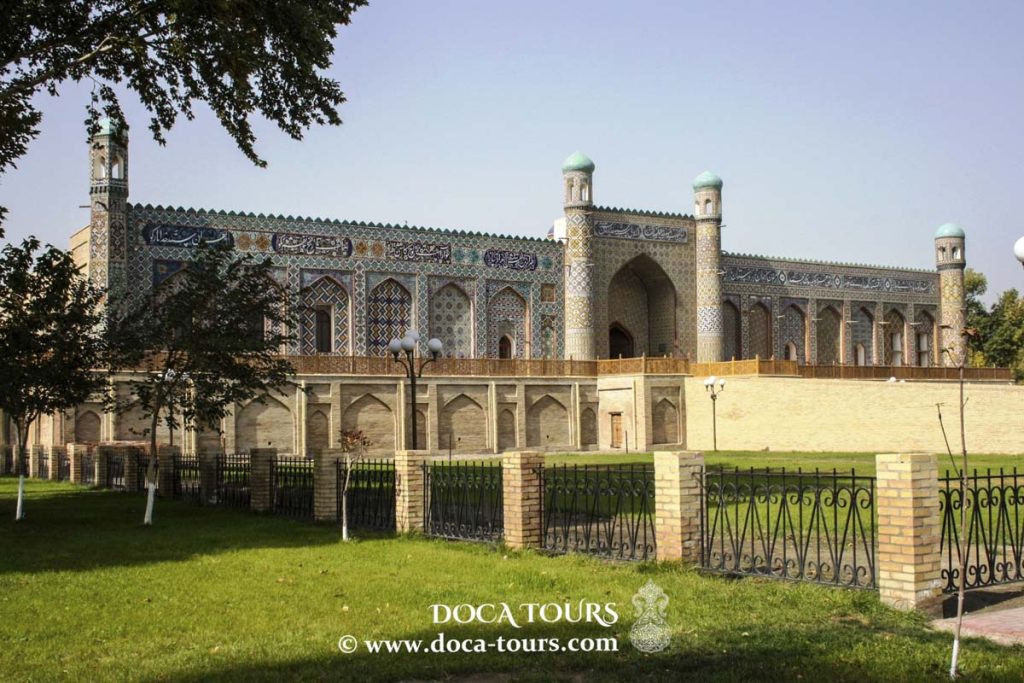
One of the most luxurious buildings in Kokand is the City Hall. Today, few people know that this royal building in the Art Nouveau style appeared here at the beginning of the twentieth century, according to the project of the famous architect Svarichevsky. This mansion belonged to millionaire-merchants, famous oligarchs – the Vadyaev brothers.
In this release we will continue the topic of the famous merchants – Bukharian Jews.
If this is your first time on our channel, then we highly recommend that you subscribe to our channel and watch our interesting releases.
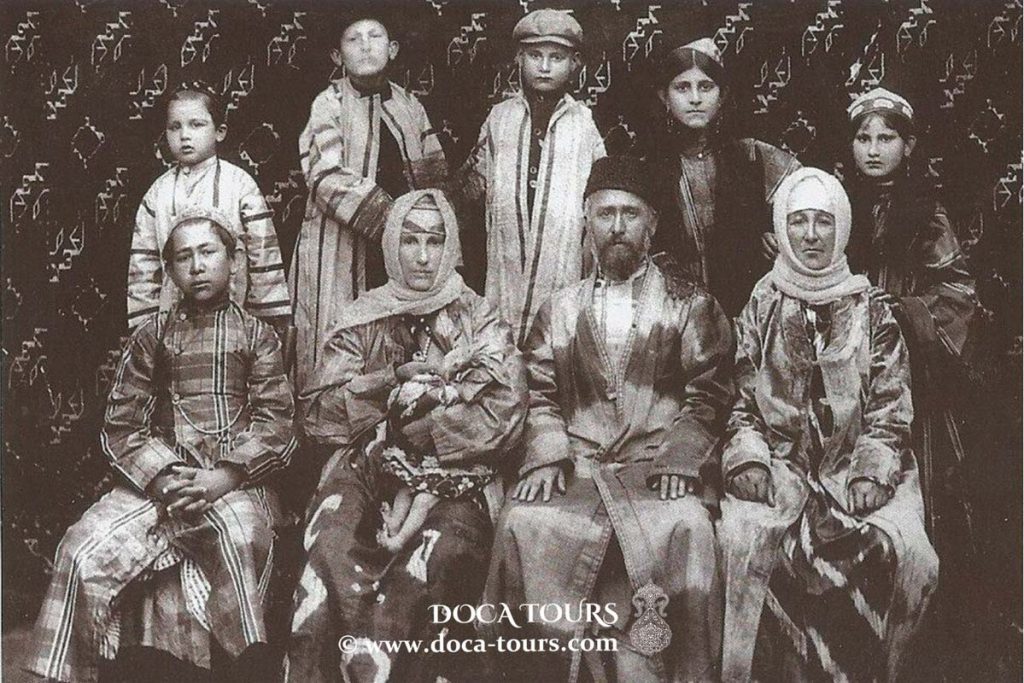
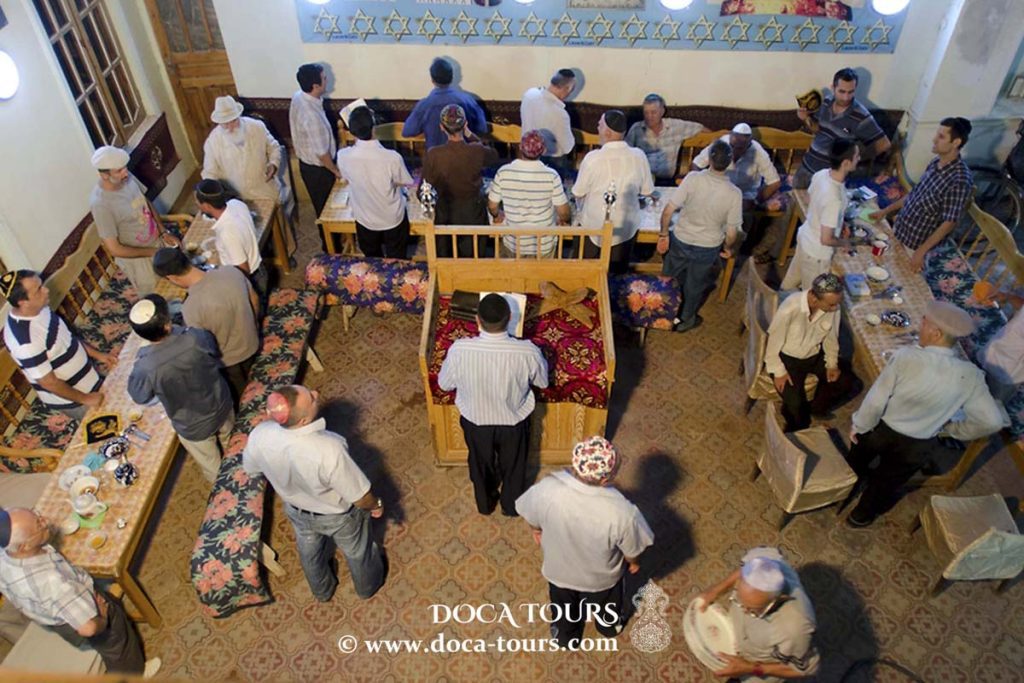
As you know, Bukharian Jews have been one of the oldest communities in Central Asia, formed more than two thousand years ago. They are classified as representatives of the Sephardic sub-ethnic group of Jews.

Scientists believe that Jews appeared in Central Asia already in the first centuries AD. But due to the lack of written sources, the only material about the life of Jews in the antique period are oral traditions that have been passed down in Jewish families from generations to generations orally.
The earliest written data about Jews in Central Asia date back to the twelfth century and belongs to the notes of “Benjamin of Tudela” who visited these regions in the Middle Ages. Central Asian Jews are also mentioned in the works of European scholars and travelers of the 18th-19th centuries, such as Arminius Vambery, Eversman, Meyendorff and others.
There are many legends and traditions associated with the emergence of Jews in Central Asia.
So, one of the legends and traditions says that the first Jews in Central Asia arrived before the formation of Bukhara, that is, more than 2500 years ago.
Persian king – Cyrus the Great conquered Babylon in the 6th century BC and allowed the captive Jews to return to their homeland – Judea. Nevertheless, some of them decided that it would be safer for them in Persia and stayed. That lead to the formation of the Persian Jews. Subsequently, through Persia, they moved to the cities of Central Asia.
It is believed that the ancestors of the Bukharian Jews moved here from Persia. The resettlement of Jews to Central Asia did not happen simultaneously, but lasted for centuries. Everything depended on the political situation and living conditions in the Central Asian Khanates.
According to traditions, ten Jewish families were the very first ones who moved to Bukhara. They were professional dyers, who gradually created a separate industry in the Bukhara Emirate – workshops for dyeing fabrics and yarns.

Bukharian Jews have successfully adapted in Central Asia for several centuries. They fully assimilated the culture and languages of the local peoples. The native language of the Bukharian Jews has become their own dialect, based on the Tajik language.
If you look at the statistics, you can establish that at the beginning of the 20th century, about 8000 Bukharian Jews lived in Bukhara alone, which made up 12% of the city’s population. Large communities also existed in Samarkand, Tashkent and Kokand.
After the conquest of Central Asia by Tsarist Russia, the Russian tsar recognized the Bukharian Jews as equal, along with all other peoples in the Turkestan region.
Legally, Bukharian Jews received all rights, like other peoples of Central Asia. They were allowed to do business on a large scale, buy houses and settle in new parts of Samarkand, Tashkent, Kokand and other cities.
This period is considered the heyday for Bukharian Jews. They owned large factories, cotton ginning, oil mills, tobacco and distilleries in different cities of Central Asia.
It was at this time, at the end of the 19th century, that the term “Bukharian Jew” appeared in official Russian documents. This was the name of the Central Asian Jews who were subjects of the Bukhara Emirate – territories that were vassals of the Russian Empire. Although, subsequently, many Bukharian Jews left the Bukhara Emirate and settled in different cities of the Turkestan Territory. Outside the borders of the Bukhara Emirate, wealthy Bukharian Jews had more freedoms, since the rules and laws of Tsarist Russia, and not the Bukhara Emir, were in force there.
The traditional and monopolized sphere of activity of most of the Central Asian Jews was the dyeing craft. When in the late 19th – early 20th centuries, cheap fabrics from Russia began to be imported to the Central Asian market in large quantities, the local dyeing craft became unclaimed.

Among the Central Asian Jews were skilled jewelers, shoemakers, tailors, hairdressers, healers; there were famous musicians and dancers who performed at feasts not only in their community, but also among Muslims. The best of them became court singers and musicians of the emirs and khans. There were many merchants among Central Asian Jews – from small hawkers to large entrepreneurs.
In the cities, Central Asian Jews worked in silk weaving, textile, garment factories, in cotton ginning, oil mills, ditch and brick factories, as well as in handicraft workshops.
In this release, we decided to tell in more detail about the famous merchants – Bukharian Jews of Kokand. If you have not watched a similar release about the famous merchants of Samarkand, then the link to it has shown up right now. Also, soon on our channel will be presented release about the famous Jewish merchants of Bukhara itself, so do not miss our videos!
Kokand is one of the ancient cities of Central Asia. The oldest information about it dates back to the tenth century AD. The Arab travelers of the tenth century mention in their books the city of Khovakend or Khokand, which was located on the Great Silk Road and connected Central Asia, Persia, the Middle East and India with China.
However, the flourishing of Kokand is attributed to the beginning of the eighteenth century, when the city became the capital of the powerful Khanate of the same name. The Kokand Khanate existed from the beginning of the eighteenth century to 1876 and included the territories of today’s Uzbekistan, Tajikistan, Kyrgyzstan, partly Kazakhstan and even the Xinjiang Uygur Autonomous Region of China.
In 1876, the Kokand Khanate was conquered by Tsarist Russia under the leadership of General Skobelev and abolished. The territory of the Kokand Khanate became part of the Turkestan General Government. From the Soviet period to the present day, Kokand is located on the territory of Uzbekistan and is considered one of the key cities of the Fergana Valley.
Kokand city consists of old and new parts. Today, you can see a powerful citadel – Urdu of the last Khan Khudoyar, several ancient mosques and madrasahs in the old part of the city, and in the new part, which was built up from the end of the nineteenth century, you can see buildings in the royal style, which were: banks, trading houses and mansions of the oligarchs of that time.
One of the most outstanding buildings of modern Kokand is the house of the Vadyaev brothers. In 1905, the Vadyaev brothers bought the 4500 sq. m. in the center of Kokand for 100 thousand rubles. Today this amount would be 1,100,000 (one million one hundred thousand US dollars). And that’s just the price of the land! This luxurious house was built by the famous architect Svarichevsky.
According to historians, the surname Vadyaev came from the word “Vada”, which is translated from Tajik as “promise.” According to legend, the founder of the family, Khaim Vadyaev, used to keep his promise and therefore received such a nickname, “Vada”. He moved to Kokand from Bukhara. At the end of the nineteenth century, Khaim Vadyaev moved to Jerusalem, and his eldest son Isaak Vadyaev became the head of the “Vadyaevs’ trading house”, created in 1874. The main entrepreneurial activity of the Vadyaevs was manufacturing trade, they traded cotton, oil, soap and many other goods in Russia, Asia and Europe, and from there they brought goods that were in great demand in Central Asia.
At that time, branches of state banks and commercial banks of Tsarist Russia were opening in large cities of Central Asia. The Vadyaevs, as large cotton firms, could get profitable loans from these banks at 5-8% per annum and gave huge amounts to the local population at 30-40 percent or more. Thus, the capital of the Vadyaev Brothers trading house was growing rapidly.
The family business, from the beginning of the twentieth century, was run by the brothers Yakov and Sion Vadyaevs. Yakov was a merchant of the first guild and mainly lived in Moscow. Through him, the Vadyaevs’ trading house sold large quantities of cotton to Russian textile factories. And Sion was in charge of all affairs in the Turkestan Territory.
In 1910, the Vadyaevs organized one of the largest oil mills in Central Asia. This plant was equipped with the most modern technology of the time. There they processed up to fifty tons of cotton seeds per year.
In 1912, the turnover of the Vadyaevs’ company reached fifty million rubles, which would have amounted to five hundred and fifty million dollars! The most important component of the Vadyaevs’ business was the cotton trade. Almost in all corners of the Fergana Valley there was real estate owned by the Vadyaevs, with a total value of more than four million rubles. They owned 13 houses, 9 ginneries, soap and oil factories, land plots and branches of railways.
In 1916, the Vadyaev brothers bought the Ivanovo-Voznesensk textile combine, which at that time was one of the largest in Europe. The Vadyaevs also actively participated in the political life of the Turkestan Territory. So, in the summer of 1917, the elite of Kokand held a charity evening to support the then government, where a portrait of Kerensky, the chairman of the provisional government of Russia, was played at an auction in the form of a collection at an auction. The portrait was bought by Yakov Vadyaev for 50,000 rubles, and the money was donated to the government.

The Vadyaevs’ trading house owned shares of the All-Russian Society of Cotton Industrialists, the Turkestan Trade and Industrial Association and many other companies. Yakov Vadyaev was the director of the Turkestan Society of the Coal Industry and a philanthropist in many charitable and educational organizations.
When in 1918 the government of the Turkestan Territory applied for a loan to large industrialists of the Fergana Valley, the Vadyaevs issued 25% of the amount. The Potelakhovs allocated 15%, and the Simkhaevs 10% of the total. The remaining 50% was distributed among other rich people in Fergana.
With the advent of Soviet power, it became dangerous for the Vadyaevs to be in the Turkestan Territory. In 1919, the Bolsheviks shot Rafael Vadyaev, who was the head of the Vadyaevs’ trading house in Tashkent. Yakov Vadyaev and his family were forced to flee from Kokand. Their route ran through Kiev to London.
The entire huge business of the Vadyaevs collapsed. The Bolsheviks took away all the property of the Vadyaevs and their return to Kokand was dangerous to their lives.
The remaining common money of the Vadyaevs’ trade and industrial company was divided between the brothers Yakov and Sion. Also, other members of the family received their shares. Almost all the Vadyaevs left Turkestan.

In London, Yakov Vadyaev continued his commercial activities. He owned several firms selling the manufacture.
Sion Vadyaev moved with his family to Berlin in 1921. From there, a year later they moved to Wiesbaden, and in 1927 to Paris. Sion Vadyaev continued to do business in immigration. There is also information that in 1916 one of the Vadiaevs bought the Metropol Hotel in Moscow for several million rubles, which was confiscated by the Bolsheviks two years later. Which again proves the economic power of the Vadyaev family.
Another significant family of industrialists in Kokand is the Potelakhov family. The head of the company was Rafael Potelakhov, who was a merchant of the first guild, a prominent businessman and an honorary citizen of Kokand and St. Petersburg.
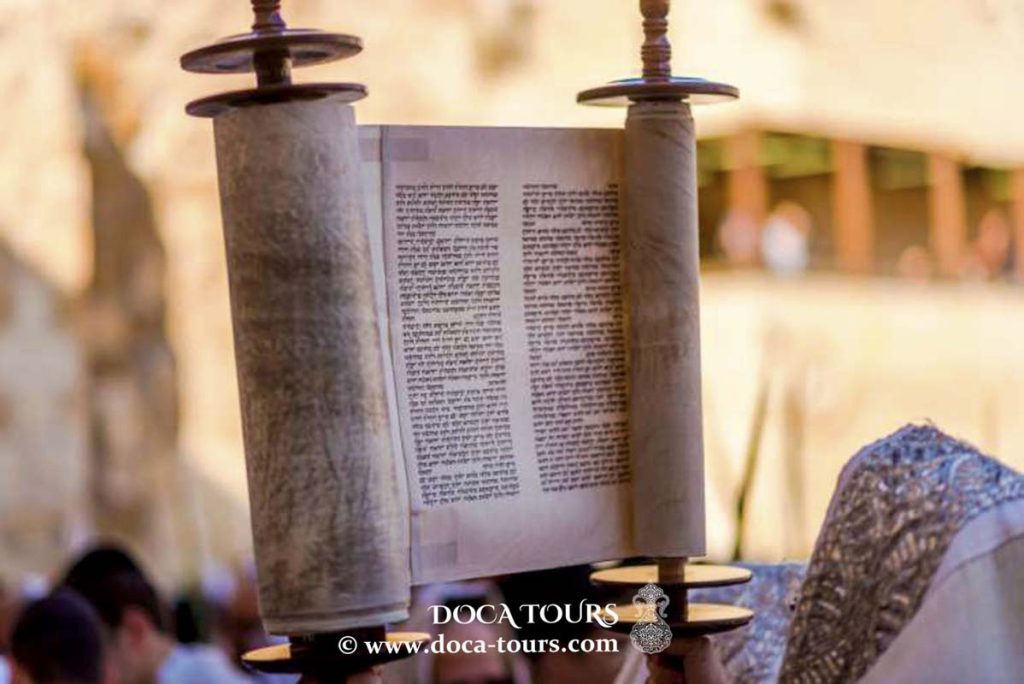
There are several versions about the origin of this unusual surname. Linguists believe that Potelakhov comes from the Tajik phrase “Poi Tillo”, that is, “golden stupa”. According to legend, wherever Raphael’s foot went, he was always and everywhere lucky, because of this he was nicknamed “Poi Tillo”. Apparently, Raphael had a trading acumen in his blood. His father Sholomo was the son-in-law of the treasurer of the Emir of Bukhara – Aron Kandin. Sholomo’s caravans traded between Bukhara and Orenburg. Rafael Potelakhov was a highly educated person. He knew Tajik, Uzbek, Hebrew and Russian, was an expert on the Torah and Talmud. After the death of his father, he took over his business, opened a company selling tea and spices.
Evaluating the great potential of the trade and processing of cotton, Potelakhov in 1907 builds a modern factory for the production of cotton seed oil. In 1912, Potelakhov, together with the industrialist Heinrich Emil Stecker, created a commercial and industrial partnership. He owned 5 cotton ginning factories in the cities Kokand, Andijan, Fergana (then Skobelev) and Khodjent; they also owned soap and oil factories, a tobacco factory, huge tracts of land and houses.
In 1914, the powerful Potelakhov company began supplying cotton to firms in Liverpool in England.
Rafael Potelakhov was a shareholder of the Turkestan Society of Coal and Mining Industry, and was a member of the committee of the Kokand Stock Exchange. Potelakhov also allocated large sums to charity. At the beginning of the 20th century, Potelakhov, together with the Vadyaevs, built and financed a Jewish school with his own money. Teachers invited from Jerusalem and Odessa worked here. The school taught Hebrew and Russian, as well as exact and humanitarian sciences.

In 1907, in the center of Kokand, Potelakhov built for himself a luxurious mansion made of baked bricks, popularly called “Nikolaevsky”. In that house there was a greenhouse with various exotic plants. After the confiscation of the house by the Bolsheviks, the main post office of Kokand was located here.
Potelakhov was awarded a certificate of “hereditary honorary citizen. St. Petersburg” by Tsar Nicholas II himself for his significant contribution to the development of trade and economic relations between Russia and the Turkestan Territory.
With the coming to power of the Bolsheviks, the Potelakhovs’ affairs sharply changed for the worse. In 1918, Rafael Potelakhov was arrested by the Soviet authorities for concealing wealth and illegal operations related to the cotton trade. The Potelakhov family managed to free the head of the family by paying the communists several million poods of cotton. Freed from prison, Potelakhov moved to London with his family. In 1936 he died in a car accident in London.
Nathaniel Potelakhov, Raphael’s brother, represented his family’s company in Moscow. He owned a luxurious house on 64 Pyatnitskaya Street. He was a confidant of the Emir of Bukhara in negotiations with the Bolsheviks during the liquidation of the Bukhara Emirate.
Potelakhov’s son Sion, collaborated with many firms and banks. In 1926 he joined his family in London. In the 1950s, he was engaged in buying and selling real estate in England. In 1969, Sion Potelakhov founded the “Education Fund” for Bukharian-Jewish youth in Israel. He died in 1970 in London.
The Rybakovs also enjoyed great prestige among the industrialists of Kokand. The head of the family was Pinchas Rybakov. The head office of his trading house was in Kokand, and branches existed in Marghilan, Bukhara, Namangan and Moscow. The annual turnover of his company was 2.5 million rubles – which would have amounted to more than twenty-seven million US dollars. The Rybakov family sold large quantities of cotton in Russia and Poland.
One of Rybakov’s luxurious houses was a mansion in the old city of Bukhara, which was rented by the Russian-Asian Bank. The house was taken away by the Bolsheviks in 1929. After the October Revolution, Rybakov moved with his family to Jerusalem.
It is also worth mentioning the Simkhaev family, who owned a large mansion in Kokand, built in 1910 by the architect Markevich. Today the Kokand Oil College is located here. Adjacent to this huge building was a large garden with a swimming pool and hotel. The garden was looked after by specially invited German gardeners from Russia.
The ancestors of the Simkhaevs accumulated their capital from the shop trade. Eliezer Simkhaev already owned a factory at the end of the 19th century and was a merchant of the first guild. For many years he was the head of the Bukhara-Jewish community of Kokand. At the beginning of the 20th century, Simkhaev visited Jerusalem and built a house in Shkhunat ha-Bukharim (the ancient Bukhara-Jewish quarter of Jerusalem).
In 1907, Eliezer Simkhaev built another house in Kokand, where today the building of the Pedagogical Institute is located.
In 1912, Abo Simkhaev brought one of the first cars in the history of the region from Moscow to Kokand.
The Simkhaevs, like the Vadyaevs and Potelakhovs, owned factories and had millions in circulation in the equivalent of US dollars, but just like the aforementioned famous families, the Simkhaevs were also forced to flee the communist regime, leaving all their property in Central Asia.
In 1926, after several years of wandering, the Simkhaevs settled in Jerusalem. Abo Simkhaev died in Jerusalem and before his death he made a notarial will, where he bequeathed the confiscated property of the USSR to his family and Israel.
Many of the confiscated factories and plants also functioned during the Soviet era as state institutions. Kokand Bukharian-Jews-Oligarchs left a powerful industrial base.
Today, passing by the mansions of Jewish industrialists in Kokand, few people know who they belonged to, who built them and how the further fate of these famous families defined.
But, undoubtedly, they are part of the history of mankind, Central Asia and the world community of Bukharian Jews.
Thank you very much for your attention.
Subscribe to the channel and don’t forget to like our videos.
#religious, #uzbek, #jews, #old, #asia, #medieval, #synagogue, #heritage, #history, #tombstone, #religion, #stone, #prayer, #travel, #fence, #bukhara, #grave, #bukharan, #memory, #judaism, #city, #jewish, #monument, #selective focus, #selective focus on, #graveyard, #central, #architecture, #cementary, #memorial, #cemetery, #europe, #jew, #uzbekistan, #necropolis