OSH
- Geographical coordinates: 40°31′48″N 72°48′0″E
- Elevation: 963 m
- Common Languages: Uzbek, Kyrgyz, Russian
- Ethnic Groups: Kyrgyz, Uyghurs, Uzbeks etc.
- Population: 454 858 (2023)
- Time Zone: UTC + 6
- Telephone Code: +996-322
- Postal Codes: 7235XX
Osh: The Second-Largest City in Kyrgyzstan
Osh is the second-largest city in Kyrgyzstan, located in the Fergana Valley in the southern part of the country. Often referred to as the "southern capital," Osh is the oldest city in Kyrgyzstan, estimated by UNESCO to be over 3,000 years old. Since 1939, it has served as the administrative center of the Osh region. As of 2021, Osh had a population of 322,164, comprising a diverse mix of ethnic groups, including Kyrgyz, Uzbeks, Ukrainians, Koreans, and smaller ethnic communities.

Overview
Osh hosts a significant bazaar, which has operated in the same location for over 2,000 years and was once a vital marketplace along the Silk Road. The city’s industrial base, established during the Soviet era, largely deteriorated after the Soviet Union’s collapse but has shown signs of recovery in recent years.
The city's proximity to the Uzbekistan border, which cuts through historically interconnected territories, has deprived Osh of much of its former hinterland and poses challenges to trade and economic development. Osh Airport offers daily flights connecting the city—and southern Kyrgyzstan as a whole—with the capital, Bishkek, as well as several international destinations, primarily in Russia. Although Osh has two railway stations and a line to Andijan in neighboring Uzbekistan, there is no passenger service, and freight transport occurs sporadically. Most transportation is carried out by road, and recent improvements to the challenging road through the mountains to Bishkek have significantly enhanced connectivity.
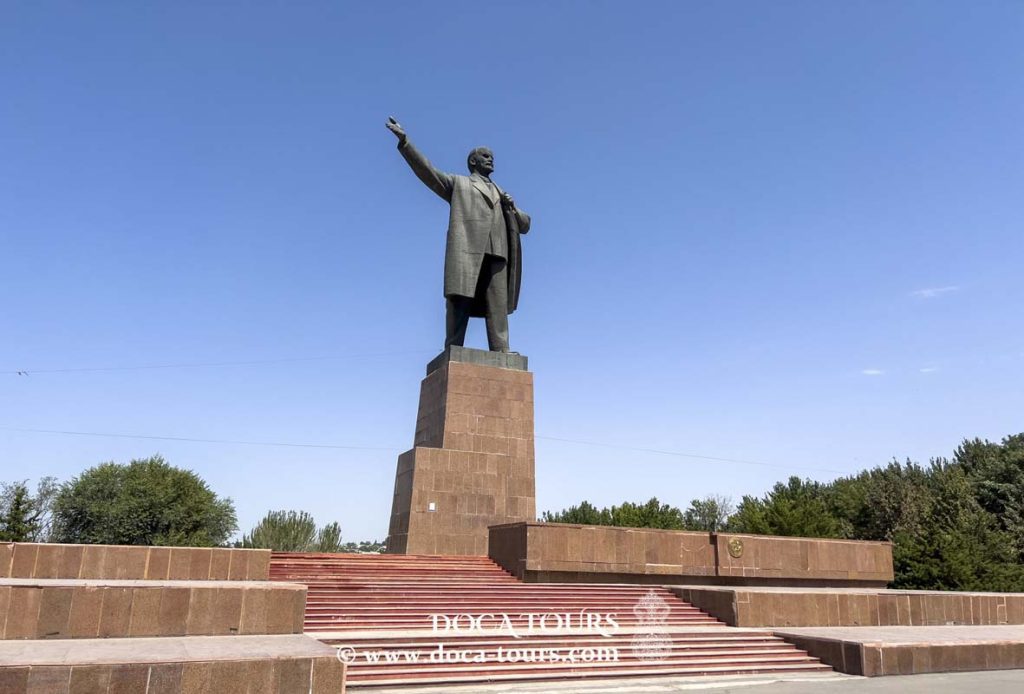
Osh boasts several landmarks, including a monument to southern Kyrgyz leader Kurmanjan Datka and one of the few remaining statues of Lenin. The city is home to a Russian Orthodox Church, reopened after the Soviet Union's dissolution, the second-largest mosque in the country (built in 2012 near the bazaar), and the 16th-century Rabat Abdul Khan Mosque. The Suleiman Mountain, Kyrgyzstan's only UNESCO World Heritage Site, offers stunning views of Osh and its surroundings.
Some historians and researchers believe this mountain to be the "Stone Tower" mentioned by Claudius Ptolemy in his famous work Geography, marking the midpoint of the ancient Silk Road. The National Historical and Archaeological Museum Complex of Suleiman is carved into the mountain and houses archaeological, geological, and historical artifacts, along with information on local flora and fauna.
In March 2007, the city's first Western-style supermarket, "Narodny," opened its doors.
Osh is also home to Osh State University, one of the largest universities in Kyrgyzstan.
Administration
The city of Osh (Ош шаар) spans an area of 182.5 square kilometers (70.5 square miles). Like the capital, Bishkek, Osh operates as an independent administrative unit and is not part of any region, despite serving as the administrative center of the Osh Region. The city governs 11 nearby villages: Almalik, Arek, Gulbaar-Tölöykön, Japalak, Kenesh, Kerme-Too, Orke, Pyatiletka, Teeke, as well as parts of Ozgur and Tölöykön.
Population
Osh is the second-largest city in Kyrgyzstan after Bishkek. According to the 2021 population estimate, the city had 322,164 residents, including 33,315 people living in the 11 villages under Osh’s jurisdiction. Based on the 2009 census, the ethnic composition was as follows: 47.9% Kyrgyz, 44.2% Uzbek, 2.5% Russian, 2.2% Turkish, 1.1% Tatar, and 2.1% other ethnicities. The metro area, which includes parts of the surrounding Kara-Suu District and neighboring Uzbekistan, is estimated to have a population of approximately 400,000.
History
Early History
The name “Osh” is believed to derive from the Vakhsh River, which was personified in ancient times as a water goddess of the same name. This goddess, along with Atar, the sacred fire, was worshipped at a Zoroastrian shrine or fire temple located in the Eagle Cave on Suleiman Mountain, a sacred site. The Vakhsh River, also known as Surkhob or Kyzyl-Suu (Turkic for “Red Water”), is a tributary of the Amu Darya. Originating on the western slopes of the 3,536-meter-high Taldyk Pass (east of the village of Sary-Tash), the river flows southwest to merge with the Panj River at Takht-i Sangin, forming the Amu Darya. The ancient name of the Amu Darya, Oxus, is etymologically linked to both Vakhsh and Osh, suggesting that the modern Vakhsh/Kyzyl-Suu was once regarded as the upper course of the river now known as the Amu Darya.
Osh is one of the oldest settlements in Central Asia, with historical records dating back to the 8th century when it was a key center for silk production along the Silk Road. This renowned trade route traversed the Alay Mountains, connecting Osh to Kashgar in the east.
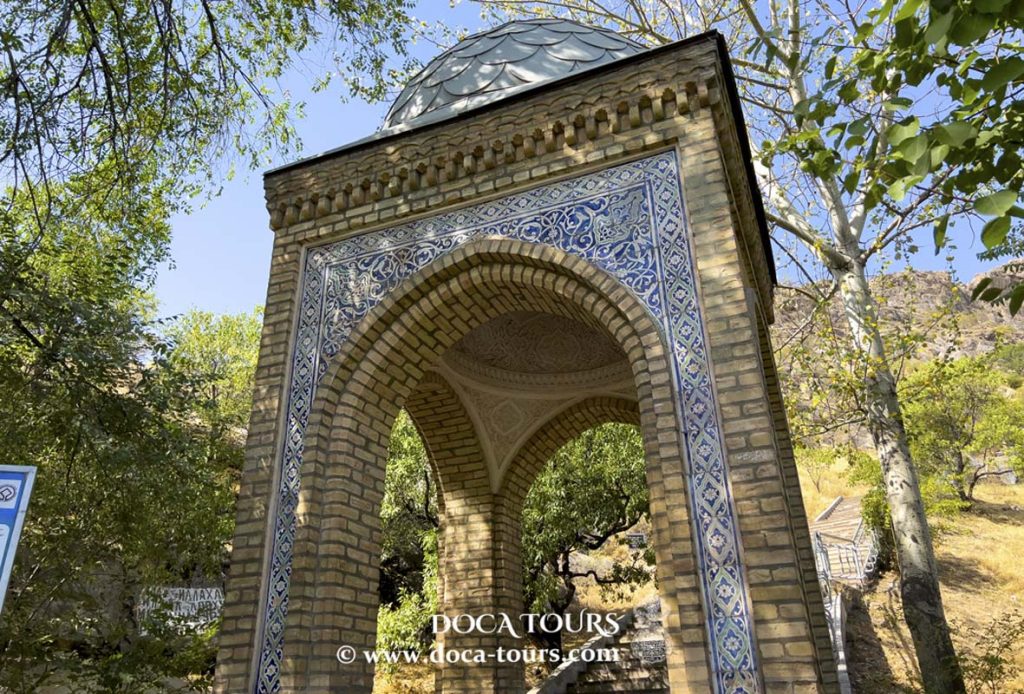
Babur, the founder of the Mughal Empire and a descendant of Timur, was born in nearby Andijan in the Fergana Valley. He often reflected on his future at Suleiman Mountain and even built a mosque at its summit. Babur came to realize that the constraints of Fergana would limit his ambitions as a descendant of legendary warrior-conquerors. In his writings, he described Osh:
“There are many sayings about the greatness of Osh. To the southeast of the Osh fortress lies a slender mountain called Bara-Koh, where Sultan Mahmud Khan built a pavilion. Further along the same ridge, I constructed a pavilion with a portico in the year 902 AH (1496-7 CE).”
Imperial Russian and Soviet Rule
Osh was occupied and annexed by the Russian Empire in 1876, following the conquest of Central Asian khanates during the so-called “Great Game,” the geopolitical rivalry between Britain and Russia for dominance in Central Asia. This conquest, led primarily by General von Kaufman and General Mikhail Skobelev, was solidified by the mid-1880s.
In the 1960s, Osh and other cities in southern Kyrgyz SSR began to undergo industrialization. The population of Osh and the Fergana Valley within Kyrgyzstan traditionally included a significant number of ethnic Uzbeks. As Osh industrialized, ethnic Kyrgyz were encouraged to move from rural areas to urban centers for work in industry and government administration. This migration contributed to rising social tensions between the two groups.
Climate
According to the Köppen climate classification, Osh has a continental climate (Dsa) characterized by hot, dry summers and cold winters. The city receives an average of approximately 400 millimeters of precipitation annually, most of which falls outside the summer months. Summers in Osh are typically hot, with average temperatures exceeding 30°C. Winters are cold, with average temperatures remaining below freezing for much of the season. Spring and autumn serve as transitional periods, with temperatures gradually rising in spring and cooling down in autumn.
Twin Cities
Osh has established sister city relationships with:
- Yozgat, Turkey
- Manisa, Turkey
- Jeddah, Saudi Arabia

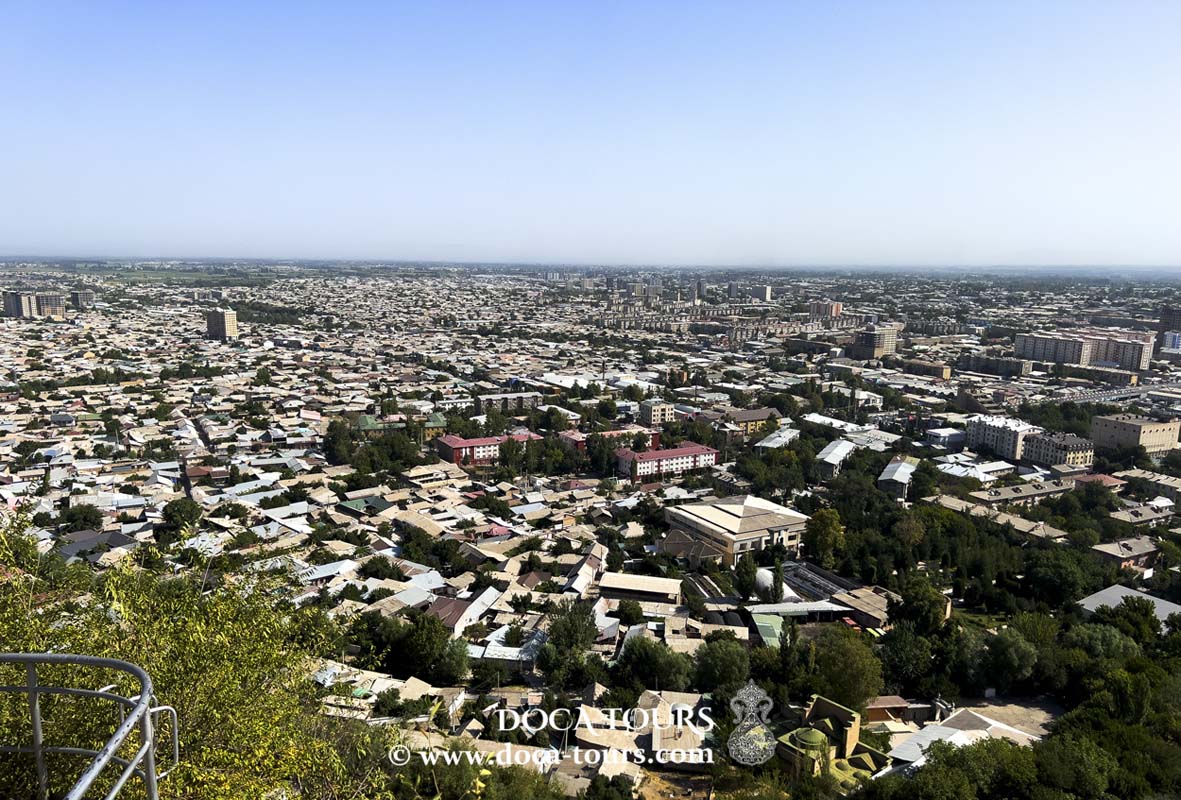
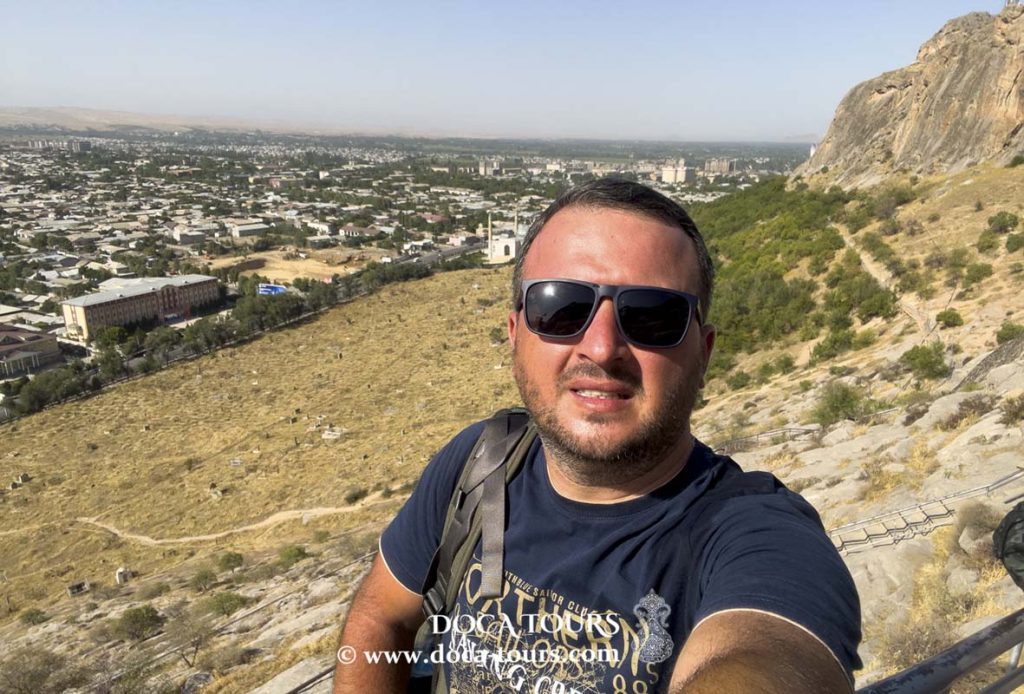
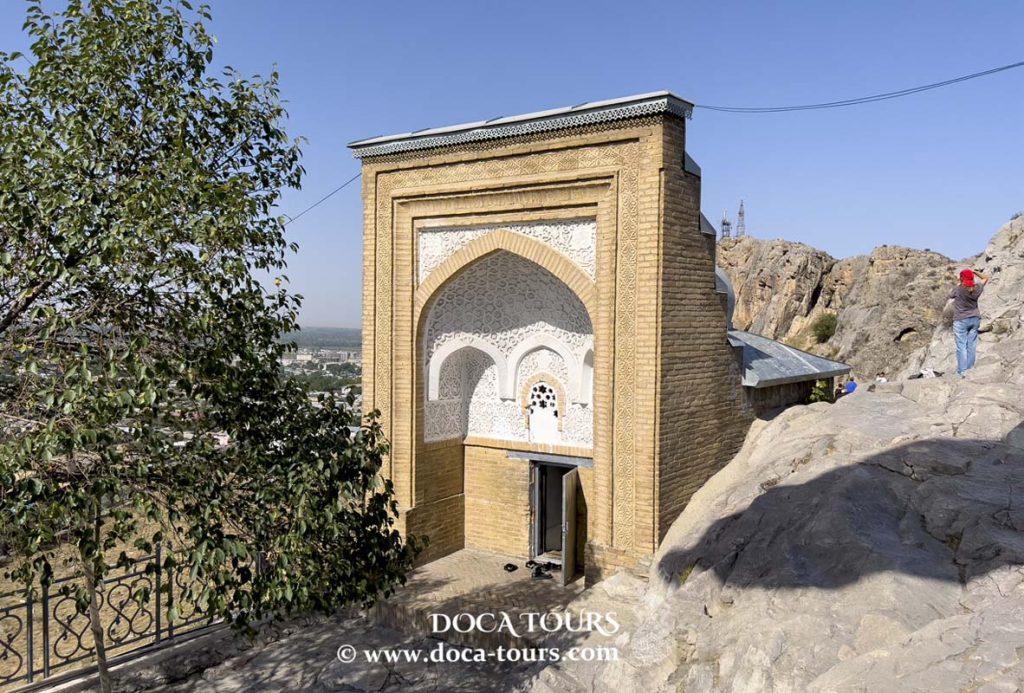 Osh boasts several landmarks, including a monument to southern Kyrgyz leader Kurmanjan Datka and one of the few remaining statues of Lenin. The city is home to a Russian Orthodox Church, reopened after the Soviet Union's dissolution, the second-largest mosque in the country (built in 2012 near the bazaar), and the 16th-century Rabat Abdul Khan Mosque. The Suleiman Mountain, Kyrgyzstan's only UNESCO World Heritage Site, offers stunning views of Osh and its surroundings.
Some historians and researchers believe this mountain to be the "Stone Tower" mentioned by Claudius Ptolemy in his famous work Geography, marking the midpoint of the ancient Silk Road. The National Historical and Archaeological Museum Complex of Suleiman is carved into the mountain and houses archaeological, geological, and historical artifacts, along with information on local flora and fauna.
Osh boasts several landmarks, including a monument to southern Kyrgyz leader Kurmanjan Datka and one of the few remaining statues of Lenin. The city is home to a Russian Orthodox Church, reopened after the Soviet Union's dissolution, the second-largest mosque in the country (built in 2012 near the bazaar), and the 16th-century Rabat Abdul Khan Mosque. The Suleiman Mountain, Kyrgyzstan's only UNESCO World Heritage Site, offers stunning views of Osh and its surroundings.
Some historians and researchers believe this mountain to be the "Stone Tower" mentioned by Claudius Ptolemy in his famous work Geography, marking the midpoint of the ancient Silk Road. The National Historical and Archaeological Museum Complex of Suleiman is carved into the mountain and houses archaeological, geological, and historical artifacts, along with information on local flora and fauna.
 In March 2007, the city's first Western-style supermarket, "Narodny," opened its doors.
Osh is also home to Osh State University, one of the largest universities in Kyrgyzstan.
In March 2007, the city's first Western-style supermarket, "Narodny," opened its doors.
Osh is also home to Osh State University, one of the largest universities in Kyrgyzstan.

 Osh is one of the oldest settlements in Central Asia, with historical records dating back to the 8th century when it was a key center for silk production along the Silk Road. This renowned trade route traversed the Alay Mountains, connecting Osh to Kashgar in the east.
Babur, the founder of the Mughal Empire and a descendant of Timur, was born in nearby Andijan in the Fergana Valley. He often reflected on his future at Suleiman Mountain and even built a mosque at its summit. Babur came to realize that the constraints of Fergana would limit his ambitions as a descendant of legendary warrior-conquerors. In his writings, he described Osh:
Osh is one of the oldest settlements in Central Asia, with historical records dating back to the 8th century when it was a key center for silk production along the Silk Road. This renowned trade route traversed the Alay Mountains, connecting Osh to Kashgar in the east.
Babur, the founder of the Mughal Empire and a descendant of Timur, was born in nearby Andijan in the Fergana Valley. He often reflected on his future at Suleiman Mountain and even built a mosque at its summit. Babur came to realize that the constraints of Fergana would limit his ambitions as a descendant of legendary warrior-conquerors. In his writings, he described Osh:
 “There are many sayings about the greatness of Osh. To the southeast of the Osh fortress lies a slender mountain called Bara-Koh, where Sultan Mahmud Khan built a pavilion. Further along the same ridge, I constructed a pavilion with a portico in the year 902 AH (1496-7 CE).”
 In the 1960s, Osh and other cities in southern Kyrgyz SSR began to undergo industrialization. The population of Osh and the Fergana Valley within Kyrgyzstan traditionally included a significant number of ethnic Uzbeks. As Osh industrialized, ethnic Kyrgyz were encouraged to move from rural areas to urban centers for work in industry and government administration. This migration contributed to rising social tensions between the two groups.