
























Key takeaways
- The Darvaza gas crater measures about 69 meters across and 30 meters deep, and sits roughly 260 km north of Ashgabat (Geology.com).
- The fire is widely reported to have been burning since around 1971, after a Soviet drilling operation collapsed.
- Turkmenistan has renamed the site the Shining of Karakum and is actively working to extinguish the flames, so the spectacle may not last forever (RFE/RL, 2025).
- Most visitors need a Letter of Invitation arranged through a licensed Turkmen agency before a tourist visa is issued.
- An overnight desert camp beside the crater is the standard way to experience it, since the glow is most dramatic after dark.
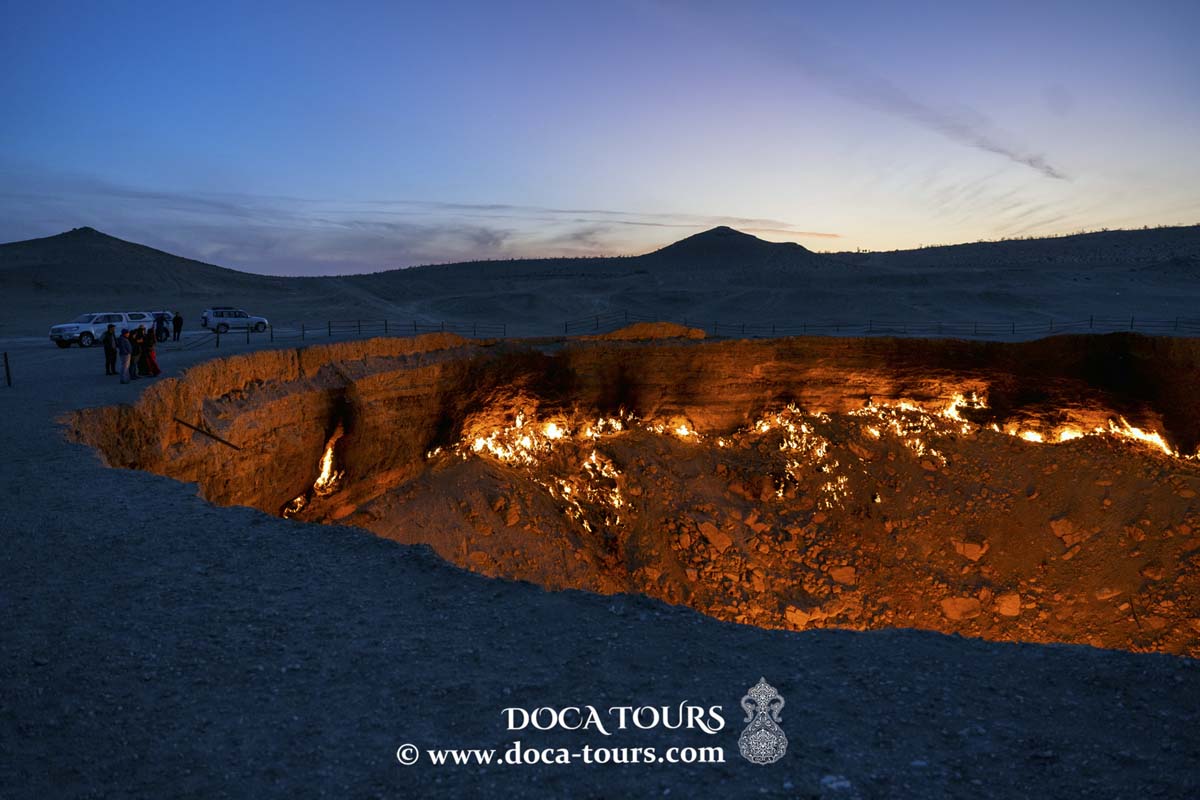
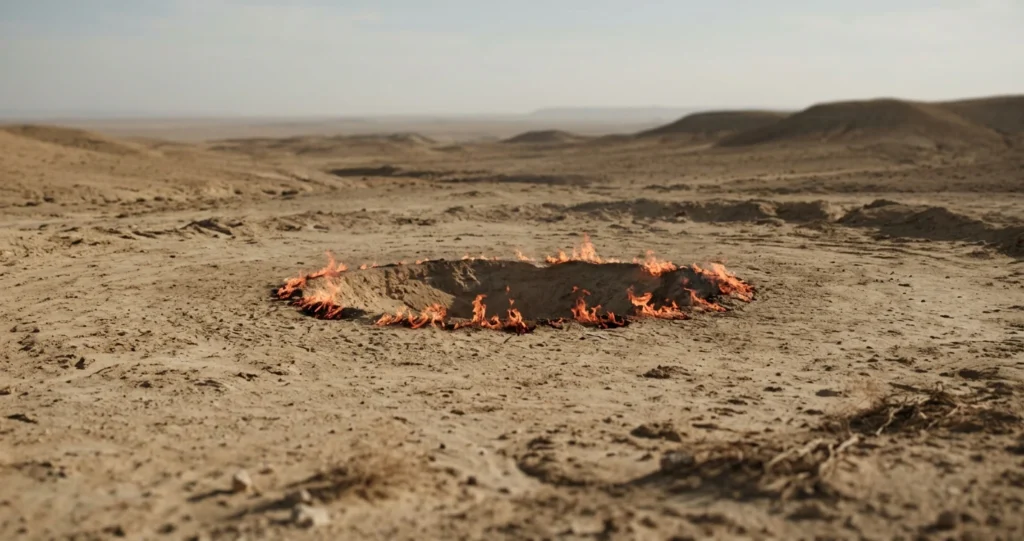
The Darvaza gas crater is a fiery pit in the middle of Turkmenistan's Karakum desert that has burned continuously for roughly half a century. Locals and travelers call it the Door to Hell, and standing at its rim after dark, watching flames roar out of the earth, it is easy to see why.
This guide covers the story behind the fire, how to reach the crater, what an overnight desert camp is like, and the permits you need to enter one of the world's most closed-off countries. One point worth knowing before you plan: the fire may not last forever.
The Story Behind the Burning Darvaza Gas Crater
The Darvaza gas crater measures about 69 meters across and roughly 30 meters deep, and it sits around 260 km north of Ashgabat (Geology.com). The pit is reported to have formed in about 1971 during a Soviet natural gas drilling operation, when the ground collapsed and the rig fell into a cavern below.
The common account says engineers set the escaping methane alight, expecting it to burn off in days. Instead it kept burning. Geology.com notes the 1971 origin story lacks firm documentation, so treat the exact details as reported rather than proven. What is not in doubt is the result: a glowing crater that has drawn adventurous travelers for decades.
The fire's future is now uncertain. Turkmenistan has officially renamed the site the Shining of Karakum, and the government has been working to put the flames out. Radio Free Europe/Radio Liberty reported that fires inside the crater had fallen nearly threefold by mid-2025, and that state gas company Turkmengaz announced a plan in December 2025 to drill a new well and divert the gas (RFE/RL, 2025). If you want to see the Door to Hell at full strength, the window may be closing.
There is an environmental reason behind the push. According to the same RFE/RL report, officials have described the lost gas as worth roughly 300 million dollars over the decades and compared the greenhouse emissions to the annual output of millions of vehicles. For a country that lives on its gas exports, a crater burning fuel into the open sky is an expensive landmark.
Getting There Across the Karakum Desert
Reaching the crater means a road trip from the capital. The site lies about 260 km north of Ashgabat, as noted above, and the drive takes most travelers three to four hours along the main highway that cuts through the Karakum.
The paved road gets you most of the way. Near the village of Darvaza, the route leaves the asphalt and follows sandy desert track for the final stretch to the rim. A standard car will not manage the soft sand, so a 4×4 with an experienced driver is the norm. Tour groups usually set out from Ashgabat in the afternoon so they arrive with enough daylight to set up camp before the fire takes over the view.
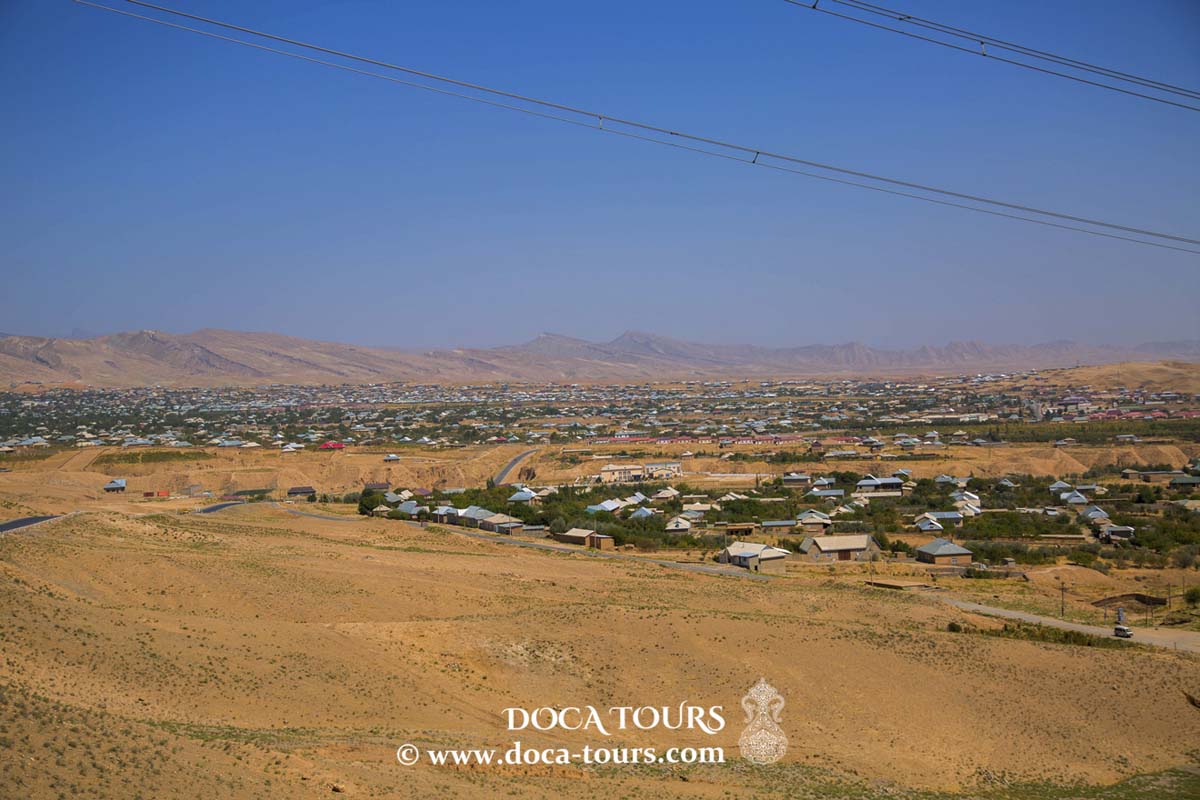
The Karakum itself is worth the journey. It is one of the largest sand deserts in Central Asia, a flat, scrubby expanse that stretches to the horizon in every direction. The emptiness is part of the appeal. Many travelers fold the crater into a wider Silk Road trip that pairs Turkmenistan with Uzbekistan and Kazakhstan.
Most people do not drive themselves. Independent travel inside Turkmenistan is heavily restricted, so the practical route is a guided trip with a local operator who handles the vehicle, the driver, and the camp. Doca Tours runs guided Central Asia packages that can include the Darvaza crater as part of a Turkmenistan leg.
Overnight Desert Camping Under the Stars
An overnight camp beside the crater is the standard way to experience it, because the fire is most dramatic after dark. During the day the pit looks like a smoking hole in the ground. Once the sun drops, the flames light up the desert and the whole scene turns cinematic.
Operators pitch tents on the plateau a safe distance from the rim. Expect a simple setup: tents, bedding, a shared meal cooked over a fire, and little else. There is no lodge, no electricity, and no phone signal to speak of. That is the trade, and it is a fair one. You get a front-row seat to a burning crater and a sky full of stars with almost no light pollution.
Nights in the desert swing between extremes. Summer days are brutally hot, often well above 40 degrees Celsius, while winter nights near the crater can drop below freezing. Spring and autumn are the most comfortable seasons to camp. Bring layers whatever the month, because the temperature gap between afternoon and the small hours is large.
A camp night at Darvaza has a lot in common with other nomadic stays across the region, such as yurt nights beside Kyrgyzstan's mountain lakes. The desert version trades green pasture for open sand and a wall of fire on the horizon.
Safety matters at the rim. The crater edges are unstable and the heat close up is fierce, so keep well back, follow your guide, and never try to climb in. The spectacle is best enjoyed from a few meters away, camera in hand.
Permits and Logistics for Visiting Turkmenistan
Turkmenistan is one of the hardest countries in the world to enter independently, and that shapes every Darvaza trip. Most nationalities need a tourist visa, and a tourist visa almost always requires a Letter of Invitation arranged in advance by a licensed Turkmen travel agency. In practice, that means booking a guided tour before you apply.
The Letter of Invitation is the gatekeeper. Your agency submits it to the State Migration Service, and approval can take several weeks, so start early. Once the invitation clears, you collect the visa on arrival or at an embassy, depending on your route. A short transit visa is an alternative for some travelers crossing the country overland, but it does not suit a flexible sightseeing trip.
Rules here change with little warning, and the government has signaled moves toward an electronic visa system. Confirm the current requirements for your passport well before you travel. Our Central Asia visa requirements guide for 2026 breaks down the process country by country, including Turkmenistan's invitation system.
Because independent movement is limited, a local operator is effectively required rather than merely convenient. Doca Tours handles the invitation paperwork, the guide, the desert vehicle, and the overnight camp as a single package, which removes most of the friction from an otherwise complicated trip.
What Else to See on a Turkmenistan Tour
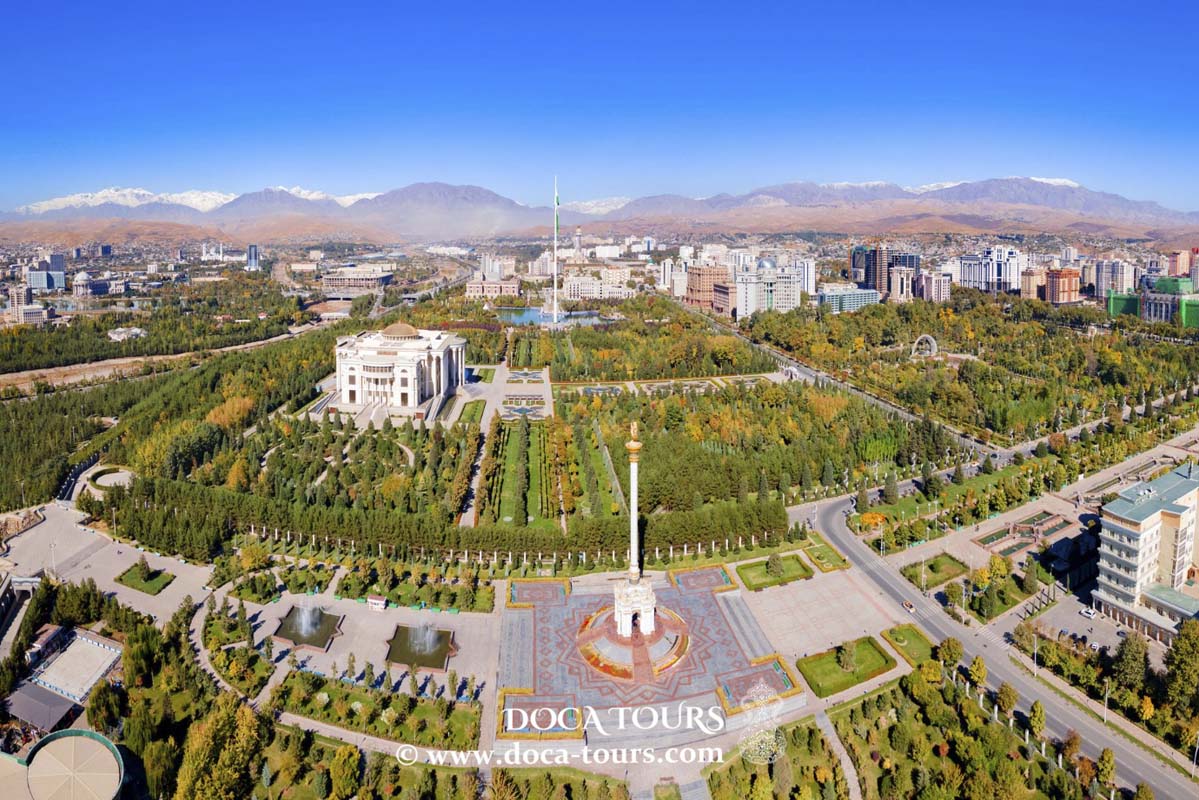
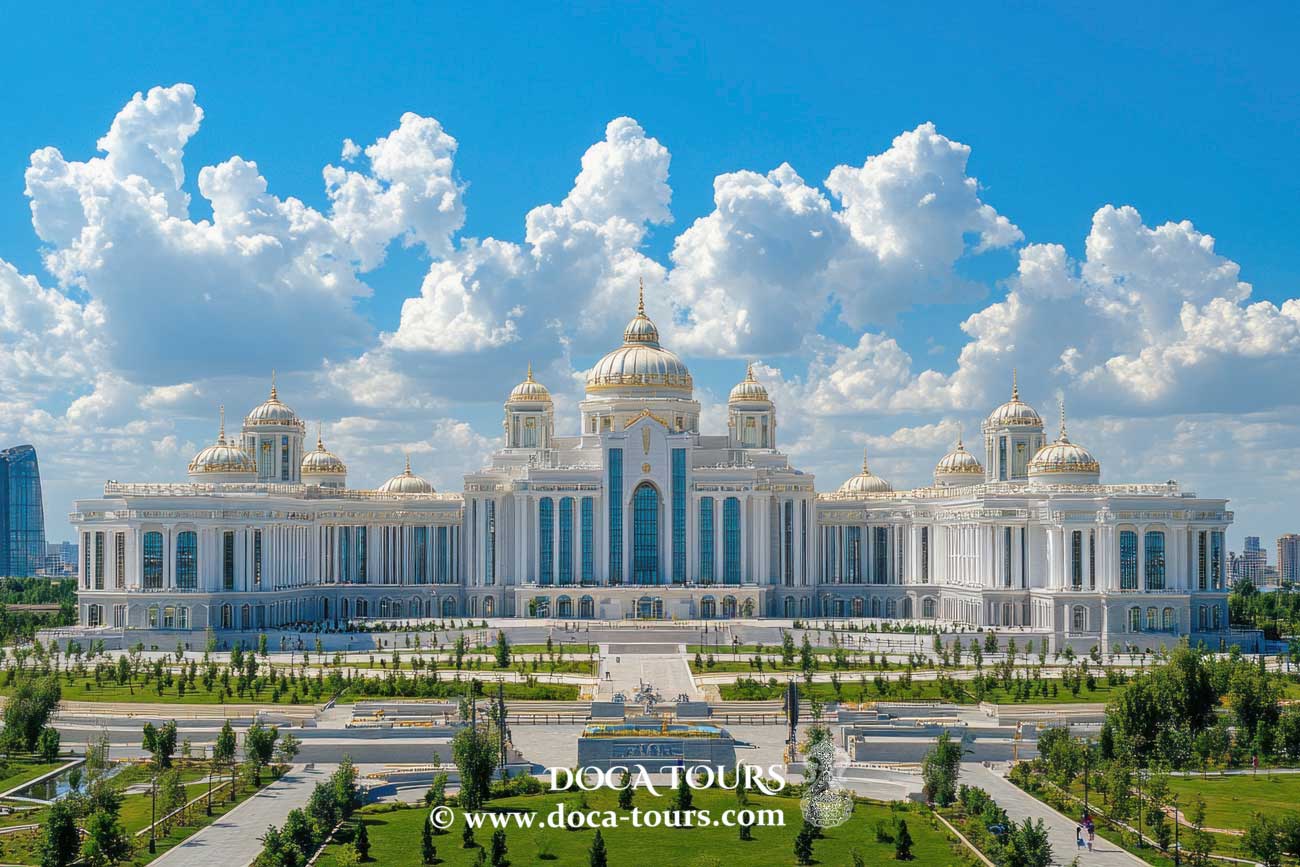
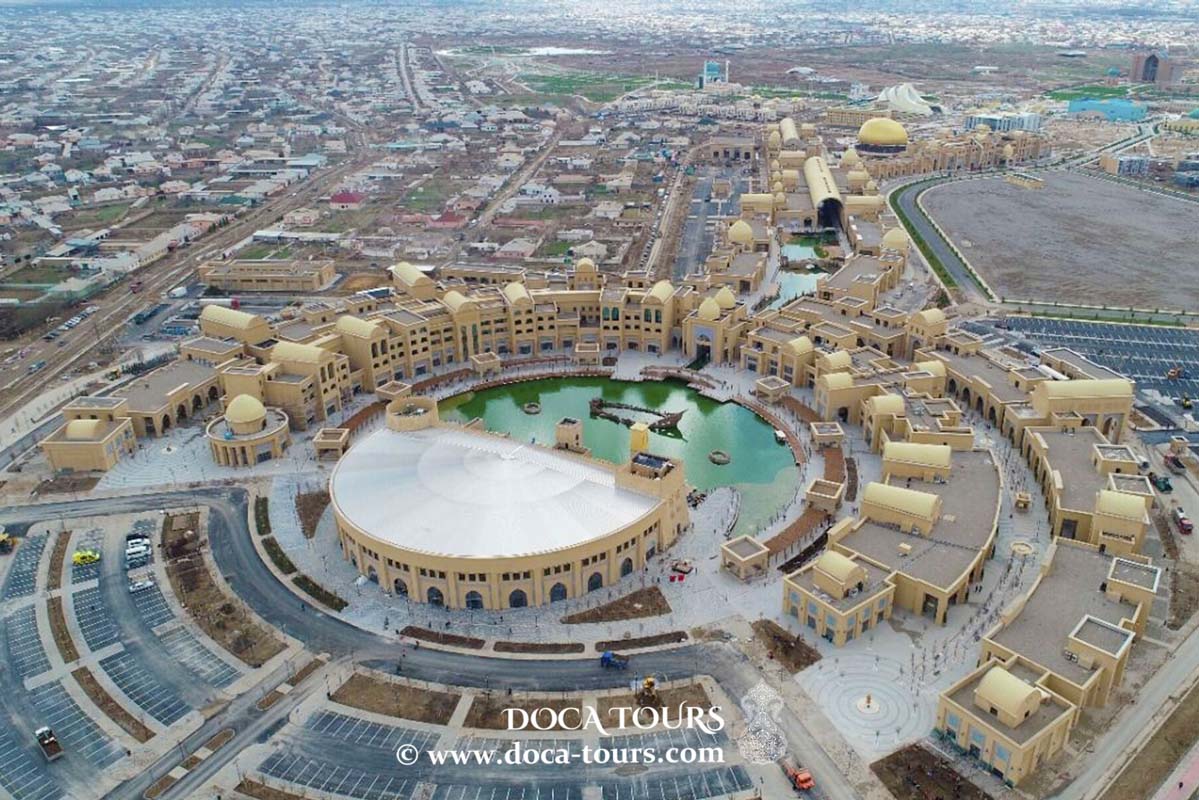
The crater is the headline, but Turkmenistan rewards a longer look. Most tours pair Darvaza with Ashgabat, the capital, a strikingly unusual city of white marble buildings, gold domes, and grand empty boulevards. It feels like nowhere else in Central Asia, and a day there is a worthwhile bookend to the desert.
Beyond the capital, the country holds genuine Silk Road heritage. The ancient city of Merv, a UNESCO-listed site, was once one of the largest cities on earth and sits among the most important archaeological landscapes in the region. Konye-Urgench, in the north, preserves monuments from a medieval capital that predate much of what survives elsewhere on the route.
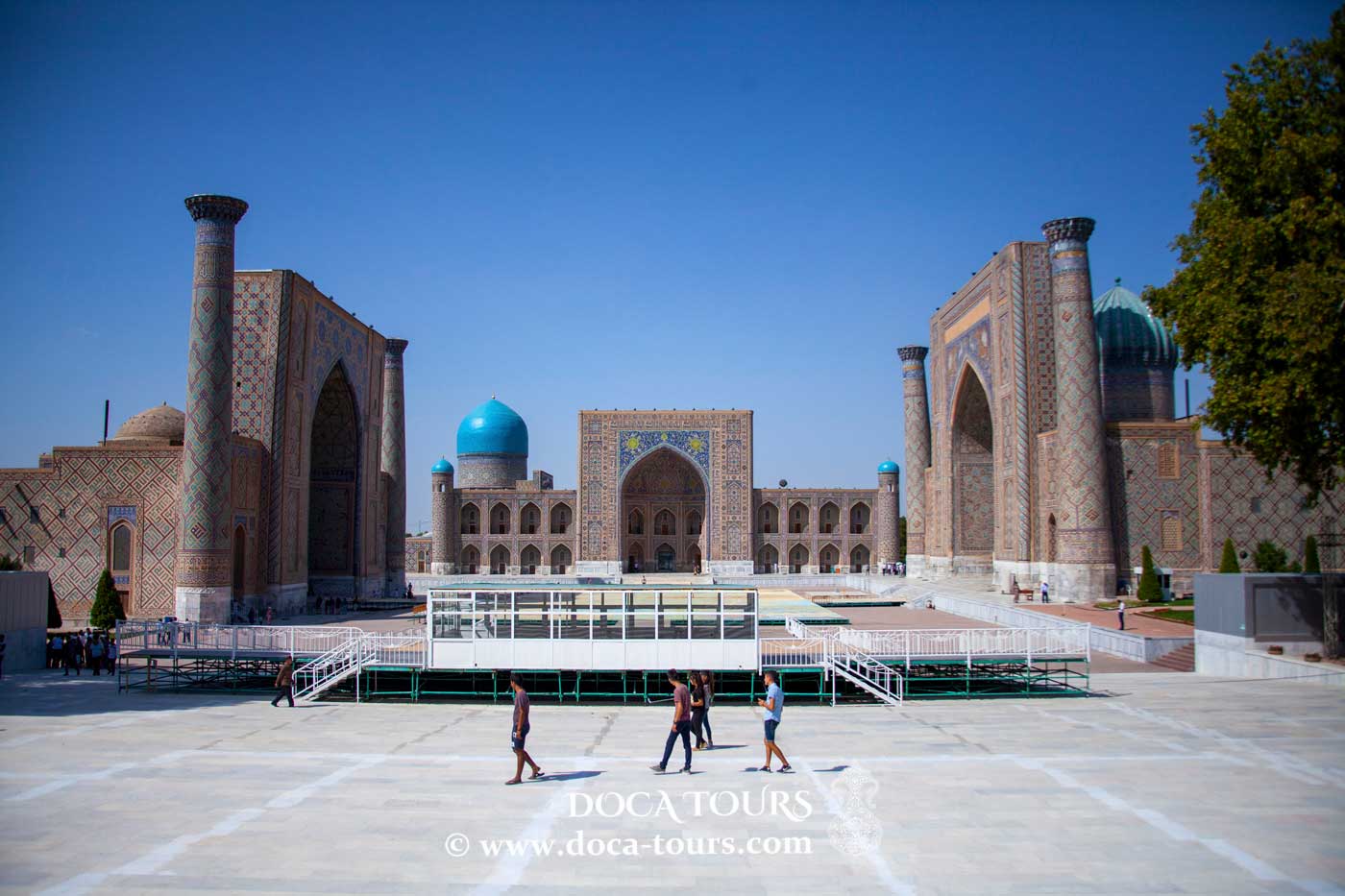
Many travelers treat Turkmenistan as one leg of a wider Central Asia journey rather than a standalone trip. The country borders Uzbekistan, whose Silk Road cities are the obvious next stop. Khiva and its walled old town of Itchan Kala sit a short hop across the border, a natural continuation of a Turkmenistan itinerary.
Before you commit to the Door to Hell, decide what you want from the trip: a single bucket-list night at the crater, or a fuller route through Turkmenistan's deserts and ancient cities. Either way, start by locking in a licensed operator and your invitation paperwork, since nothing else can move until that is in place. From there, the fire is waiting, at least for now.
Frequently asked questions
Is the Darvaza gas crater still burning in 2026?
Yes, it is still alight, but Turkmenistan has reduced the fire significantly and announced plans to extinguish it. RFE/RL reported in December 2025 that fires had fallen nearly threefold and heat had dropped sharply, so the crater may not burn indefinitely.
How do you get to the Darvaza crater?
The crater lies about 260 km north of Ashgabat in the Karakum desert. Most travelers drive roughly three to four hours by 4×4 along the main highway, then turn onto desert track for the final stretch to the rim.
Do I need a visa to visit Turkmenistan?
Most nationalities need a tourist visa, which usually requires a Letter of Invitation arranged in advance by a licensed Turkmen travel agency. A short transit visa is an alternative for some travelers crossing the country.
Can you camp at the Darvaza crater overnight?
Yes. Overnight camping on the desert plateau near the crater is the standard way to visit. Operators set up tents a safe distance from the rim, and the fire is most striking after dark.
Is it safe to visit the Door to Hell?
The crater is safe to view from the rim if you keep your distance, as the edges are unstable and the heat is intense. Travel with a guide, avoid the loose edge, and follow your operator's instructions around the fire.