

























The fate of the untold wealth of the last emir of Bukhara, Said Alimkhan, has recently been the main subject of many studies related to Central Asia. The history of the treasury begins with the rise of the Mangyt dynasty to power in Bukhara. The exact contents of the treasury were never known. The wealth was kept underground in the strictest secrecy.
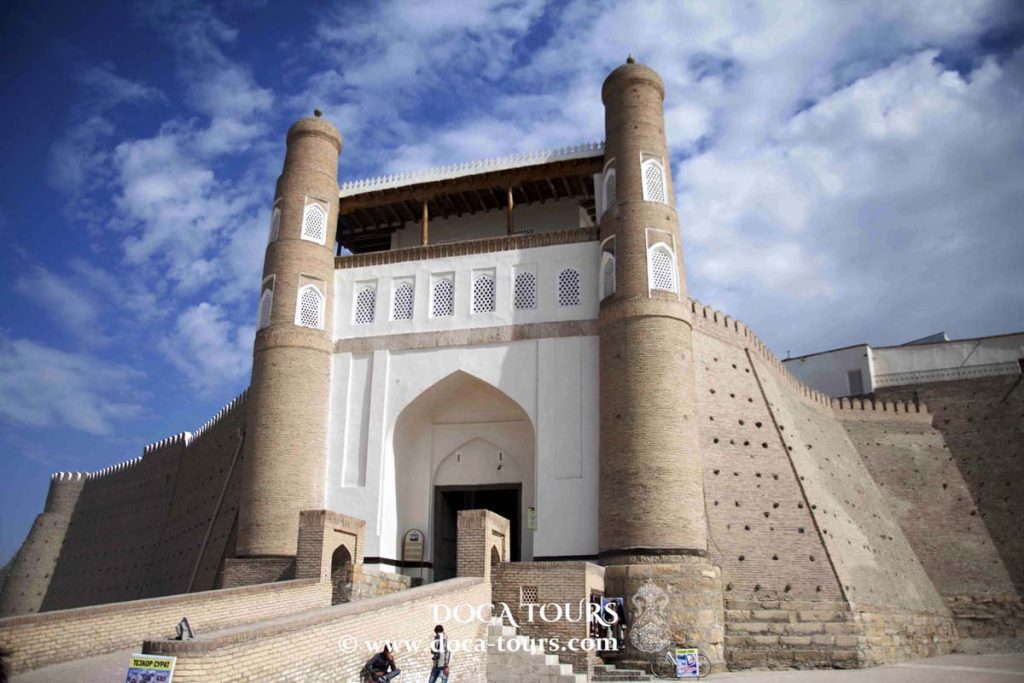
Since Said Alimkhan was the last Emir of the Bukhara Khanate, its immense wealth is often associated solely with his name. However, considering that the Bukhara Khanate, established during the reign of Ubaydullah Khan from the Shaybanid dynasty, ruled for nearly 400 years, and that the Bukhara khans and emirs continuously replenished the treasury in the Ark, one can imagine the immeasurable riches accumulated over time.
In 1863-1864, the renowned Hungarian Turkologist and traveler Arminius Vambéry lived in Bukhara for a year, disguised as a dervish. He wrote numerous articles about the Bukhara Emirate, paying particular attention to the high-quality pure gold mined in the Zarafshan River. Thanks to Vambéry’s sensational articles, Bukhara and gold became synonymous for Europeans.
Russia also showed interest in Bukhara’s gold. Peter I was the first to launch an expedition to obtain this gold. He sent two missions to the cities of Khiva and Bukhara to investigate rumors of inexhaustible wealth. Both expeditions failed.
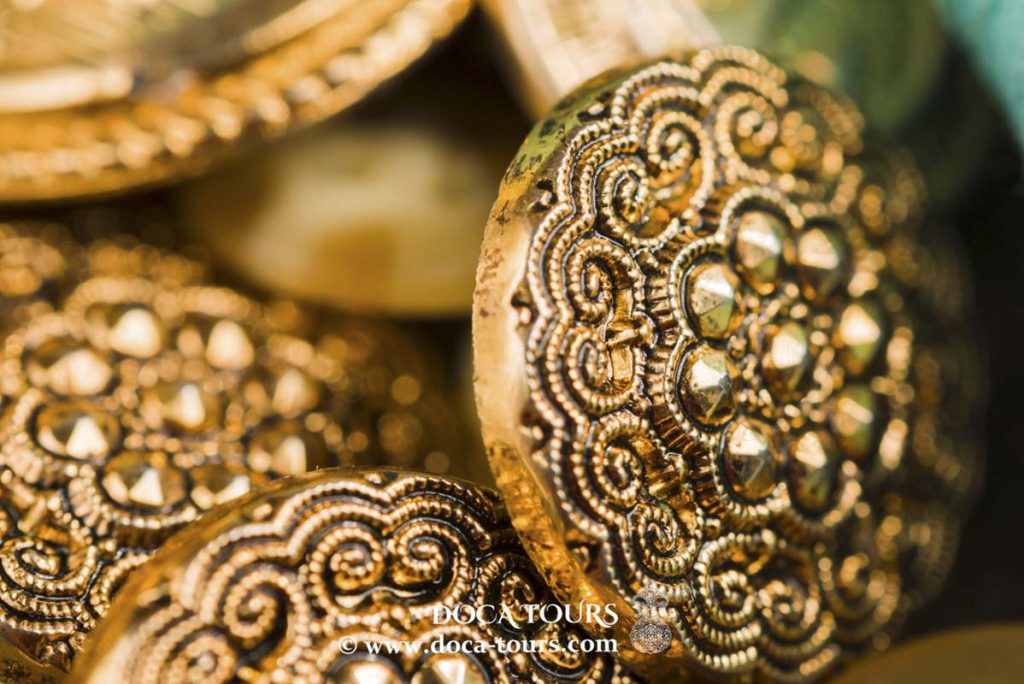
In the second half of the 19th century, after Central Asia came under the control of the Russian Empire, the main focus of Russian efforts turned to the gold mines of Bukhara. At that time, Said Alimkhan had not yet been born. Remarkably, the emirs of Bukhara managed to keep their vast riches hidden from the Russians for many years, even increasing them.
In the 25th issue of the journal Oyina, published under the editorship of Mahmudkhoja Behbudi in 1914, it was stated:
“Perhaps no other state treasury contains as many gold and silver coins or as many treasures (gold and silver) as are carefully stored in the treasury of the Emir of Bukhara today. The gold and silver coins kept in the emir’s palaces form a pile 50 alchins long, 20 alchins wide, and 8 alchins high. In addition, there is another hoard in a cellar measuring 3 alchins, filled with gold coins from Russia, Bukhara, and several other countries. The emir’s gold and silver treasures were also stored in banks owned by him. For instance, in Chorzoi Bekstvo, Said Alimkhan had ten poods (160 kg) of gold and more than a thousand poods (16 tons) of silver coins. At the same time, gold mines existed within the Bukhara Emirate, and the treasury was filled with high-quality gold mined at the beginning of the century.”
Indeed, many historical sources confirm that the Emir of Bukhara’s gold was truly vast.
The emir’s gold reserves were mainly replenished through gold mines belonging to the khanate. According to some accounts, these mines were already active in the 4th century BCE during the flourishing Bactrian Kingdom. These mines made Bukhara one of the wealthiest centers along the Great Silk Road. During the Shaybanid dynasty in the 16th century, Bukhara began minting its own gold coins called ashrafi. These coins even supplanted the Arabic gold dinars in the region and became the primary currency for transactions.
Gold Loaded on 100 Horses
The treasury of Emir Alimkhan was filled not only with gold and silver ingots and coins but also with numerous valuable items. As with any eastern ruler, it included a precious weapons collection: Damascus steel blades adorned with gold inlays and enamel, ceremonial swords and daggers in gem-studded scabbards, Persian shields painted with gold ornaments, and firearms encrusted with gold, silver, and diamonds. There were also piles of gold and silver tableware, including plates, trays, jugs, ewers, and bowls. The collection featured countless items made of precious stones—emeralds, rubies, agates, lapis lazuli, sardonyx, jade, and rock crystal. It was impossible to list everything.
The time came when the era of Emir Said Alimkhan, ruler of the immense wealth of Bukhara, came to an end. In 1920, the emir, unable to resist the revolutionaries, was forced to flee the country. Realizing that his rule was ending, the emir devised a plan to hide the khanate’s treasures. Preparing the wealth for transport via a secret caravan route required meticulous planning. For several months, the most loyal servants packed the gold into leather bags and forged chests lined with leather on the inside. Initially, the emir planned to take his gold to the Iranian city of Mashhad, but the route was too dangerous. He also sought support from the British ambassador in Kashgar, but the diplomat changed his mind at the last moment.
On August 28, 1920, Bukhara came under the control of the Provisional Revolutionary Committee, and on September 2, without resistance, the Red Army led by Frunze entered the city. At that time, the emir remained in the Ark with his close associates. The new government, overwhelmed with numerous organizational and other problems, forgot about the emir. Said Alimkhan realized he needed to act immediately. After a brief conversation with the dervish Davron, the emir summoned his chief guard, Karapush, who also served as his personal bodyguard.

That same night, a caravan left ancient Bukhara, consisting of no fewer than 100 horses loaded with cargo. Some horses pulled carts, and experienced drovers managed the caravan. The caravan was guarded by armed guards and accompanied by a large group of dervishes. These dervishes carried long daggers concealed in their staffs.
However, suspicious riders following the caravan indicated that someone was tracking the gold. Upon reaching the Kasbi Fortress, Karapush decided it was unsafe to hide the treasures there.
A contingency plan was enacted: the caravan would proceed through Guzar and Yakkabag to Langar. The subsequent events unfolded both predictably and unexpectedly. The dervishes of Davron hid the treasures in a predetermined location in the foothills of the Gissar Range. When they were returning through the gorge, they were killed by the caravan’s drovers. Guarding the road in the gorge, Karapush extracted the treasure’s location from a wounded Davron. Upon learning this information, Karapush strangled the dervish leader, as per the emir’s orders.
Returning to Bukhara, Karapush was intercepted by another detachment led by the emir’s artillery commander, Topchibashi Nizameddin. That same night, the entire guard detachment was poisoned, except for Karapush. Taken to the Ark, Karapush revealed the treasure’s location to the emir but was killed that very night.
Believing no witnesses remained to reveal the treasure’s location, Emir Alimkhan left the Ark and headed toward Afghanistan with his guard led by Topchibashi Nizameddin. The emir, having managed to hide most of his wealth, crossed into Afghanistan with the remainder. When the caravan crossed the Amu Darya, gunfire erupted, and Nizameddin, the last person aware of the treasure’s secret, was killed. Thus, the final link to the secret of the Emir of Bukhara’s gold was severed.

Meanwhile, rumors circulated in the city that the emir had fled with all his riches. One of the treasurers left in the Ark claimed that wagons loaded with gold bars, jewels, large diamonds, gem-encrusted belts, necklaces, pearls, and rare Qurans had already left the city.
Understanding that Alimkhan could not have gone far with such cargo, Frunze ordered his pilots to locate the fugitive. One pilot soon spotted a caravan of 40 carts loaded with bags and boxes and 20 camels heavily laden with cargo near the road to Karshi. It was accompanied by 1,000 horsemen.
The Red Army intercepted the caravan and seized three carts laden with gold. The drovers confirmed they were transporting the emir’s gold but claimed they didn’t know its final destination—they were only following the mountain route provided.
It became clear to Frunze that the emir intended to escape to Afghanistan through mountain passes, likely hiding most of his treasury along the way. He could have done so in Karshi, Shahrisabz, or Guzar. Frunze dispatched his best units to pursue the emir. In Shahrisabz, where the emir’s influential relatives lived, a significant amount of gold and valuables was confiscated. These were packed into boxes, sealed, and transported to a bank in Samarkand.
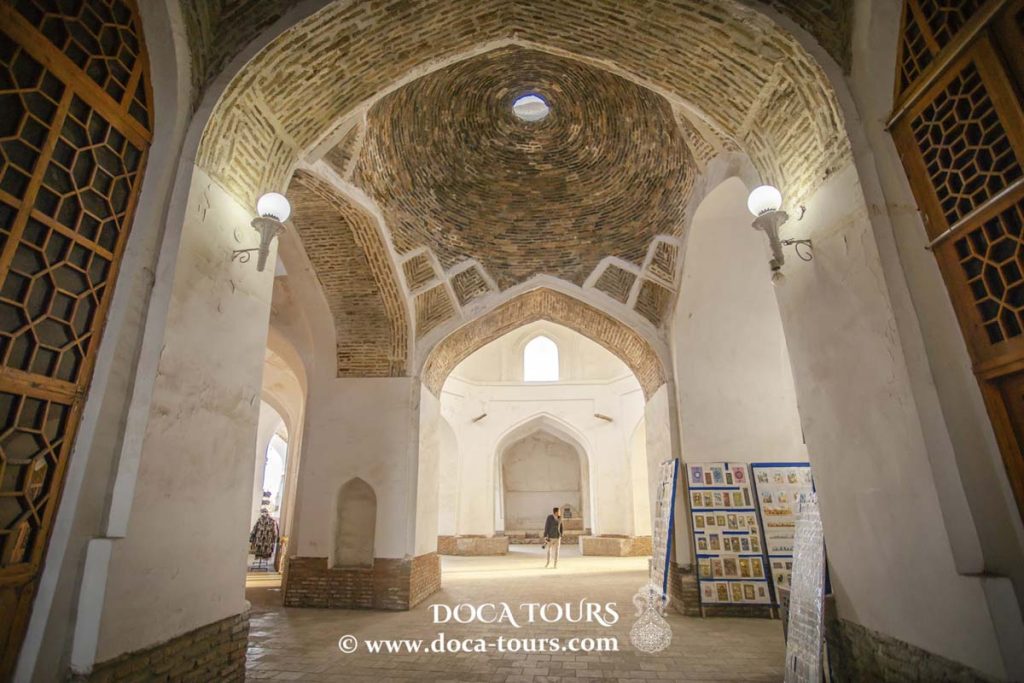
However, it was clear that only a fraction of the emir’s treasures was found in Shahrisabz. Some accounts suggest part of the treasure ended up in the mountains of Baysun, stored in inaccessible natural vaults. These included carpets, Qurans created by skilled calligraphers in Baghdad and Cairo in the 16th and 17th centuries, gold and silver household items, Chinese porcelain, and much more.
People were interested in these treasures even then, but rumors that caves housing Alimkhan’s gold were guarded by enormous snakes—and that anyone who entered would be turned into a snake for life—deterred the local population.
According to many sources, the bulk of the treasures was guarded by Ibrahim Bek, appointed by the emir as the commander-in-chief of Bukhara’s forces. Said Alimkhan spent a significant portion of his wealth trying to liberate Bukhara from the Red Army. In 1958, a former participant in the Basmachi movement shared the following with journalists: at the emir’s request, while he lived in Kabul, some items from the treasury were periodically delivered to undisclosed locations.
There is also a theory that the last emir of Bukhara’s treasure was not transported in a single caravan but hidden in various places along different routes—perhaps to divert attention.
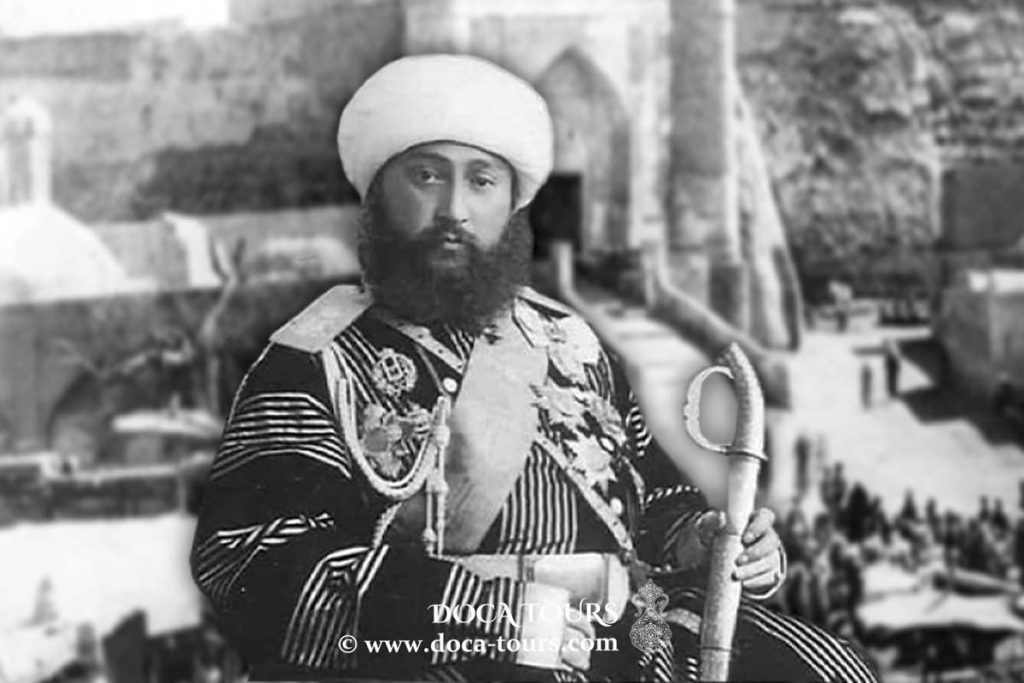
Based on later revelations and uncovered documents, it appears the emir may not have succeeded in hiding all his wealth.
After Said Alimkhan fled Bukhara, the Red Army entered the Ark and inventoried the emir’s treasury. This list only included the wealth found in Registan and old Bukhara. Sources state that a small portion of the gold was transported by rail to Orenburg. Said Alimkhan kept foreign trade funds in overseas banks. Some accounts claim that to this day, money belonging to the last emir is stored in banks in Pakistan, India, France, and England.
Years later, valuable items from Said Alimkhan’s treasury, including copies of the Quran, were found among Samarkand’s clergy and local residents, indicating that part of the treasure was hidden within the country. It remains unknown how much wealth Alimkhan took with him when he fled to Afghanistan. Perhaps he truly managed to hide his treasures, and they await their discoverers.
Thank you very much for your attention.

Subscribe to the channel and don’t forget to like our videos.
#bukhara, #uzbekistan, #travel, #asia, #tourism, #decoration, #ancient, #unesco, #silk road, #building, #central, #design, #persian, #historic, #landmark, #landscape, #architecture, #religion, #culture, #history, #islam, #stone, #dome, #outdoors, #pattern, #uzbek, #east, #national treasure, #structure, #muslim, #century, #medieval, #memorial, #monument, #art, #brick, #brickwork, #burial, #eurasia, #countryside, #vintage, #samarkand, #decorative, #old, #village, #dynasty, #famous, #legacy, #park, #mediaeval