






































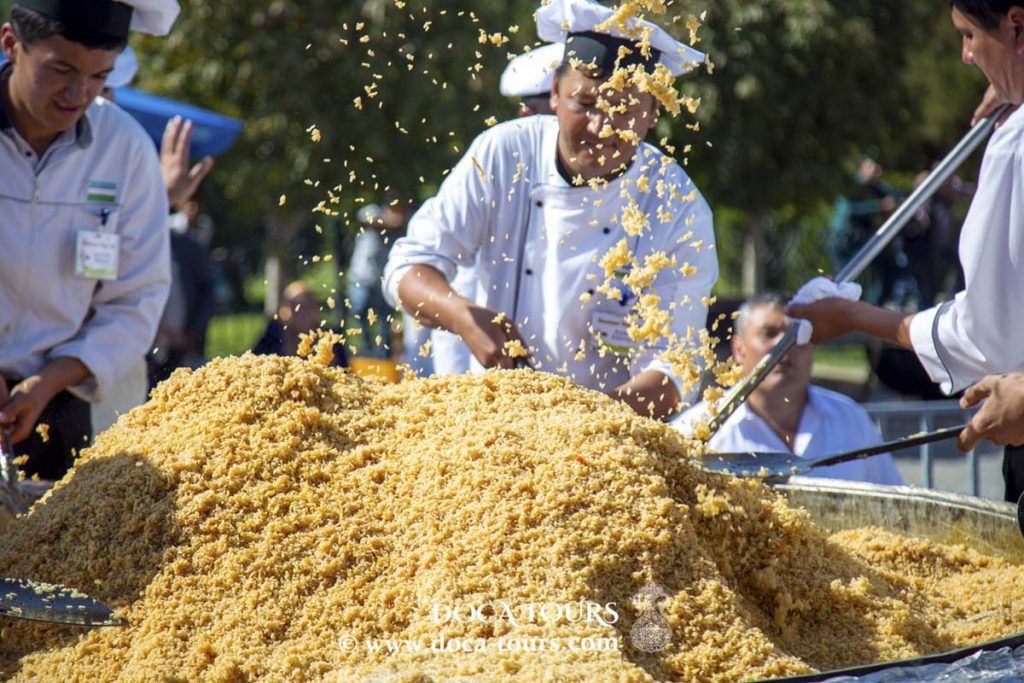
Mega Plov in Tashkent’s Plov Center: A food lover’s dream come true!
Video: https://www.youtube.com/shorts/iM99a6l4gWo
Dear friends, today we are describing the recipe for Tashkent plov, and not with these gigantic portions of ingredients.
If you like our videos, please feel free to like, subscribe, and share our content.
Tashkent pilaf was once prepared in the capital of Uzbekistan only on major holidays. Today, it is everywhere, replacing chaikhansky, which until recently was considered the most popular type of this dish. How is one different from the other?
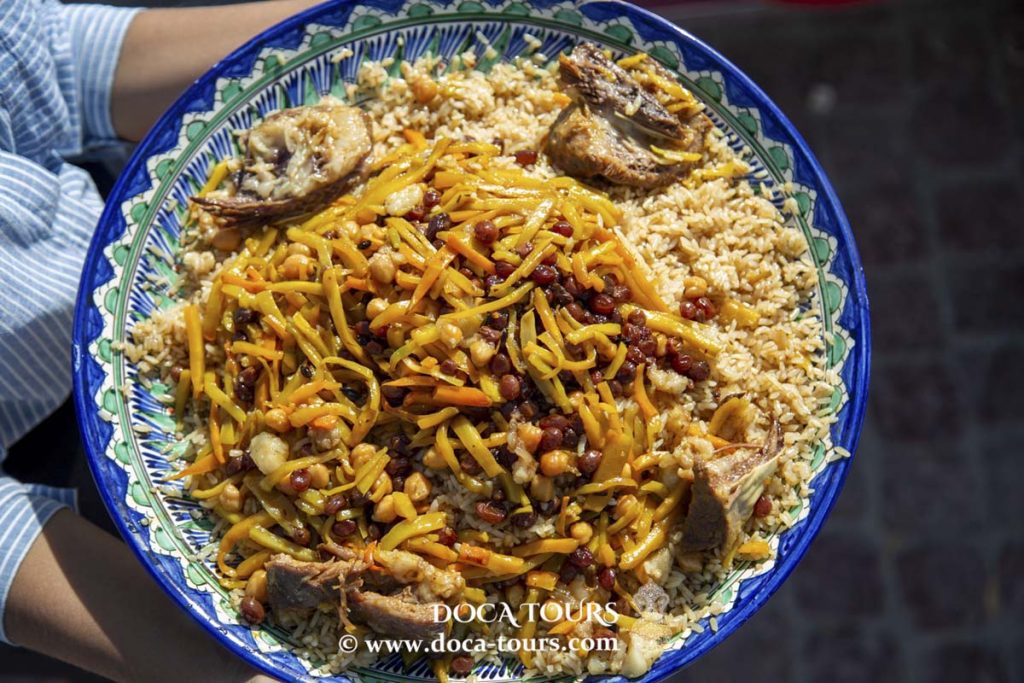
First of all, because the Tashkent one contains chickpeas, which makes the texture of the pilaf denser and the taste richer. Bones are not included in the “capital” version, but fat tail fat is added in excess. The result is a dish that is incredibly aromatic and dizzyingly appetizing. Will you be able to do this? We are sure, yes! Moreover, if you and, for example, your friend cook according to the same recipe, you will get two different-tasting but equally wonderfully tasty Tashkent pilafs. Why is that? Yes, because, according to experts, the result is influenced by water, air, the quality of the ingredients, and even the mood of the cook. There is no need to compare and analyze; just try and get a vivid gastronomic experience!
INGREDIENTS
chickpeas: 220 g
lamb pulp from the sternum or loin; 1-1.2 kg
tail fat; 300 g
carrots; 1 kg
medium-sized onions; 3 pcs.
heads of garlic; 2–3 pcs.
Laser rice: 1 kg
Raisins; 100 g
refined vegetable oil; 250 ml
drinking water; 1.5 l
chili pepper; 1 pc.
sugar; 1/2 tsp.
zira; 1.5 tsp.
ground paprika; 1 tsp.
barberry; 1 tsp.
ground black pepper; 1 tsp.
turmeric; on the tip of a knife;
salt; to taste
Step-by-STEP Cooking Recipe
Prepare chickpeas for the Tashkent pilaf. To do this, pour it into a saucepan and fill it with plenty of water. Leave for 24 hours. Drain the chickpeas in a colander and rinse under running water.
Cut the lamb pulp for pilaf into 8–10 pieces. Measure 100 g of tail fat and cut into cubes with a side of 1 cm. Chop the carrots into thin strips 5–6 cm long. Cut the onion into half-rings. Cut off the root part of the garlic heads and remove the top layers of the husk, leaving only the thinnest.
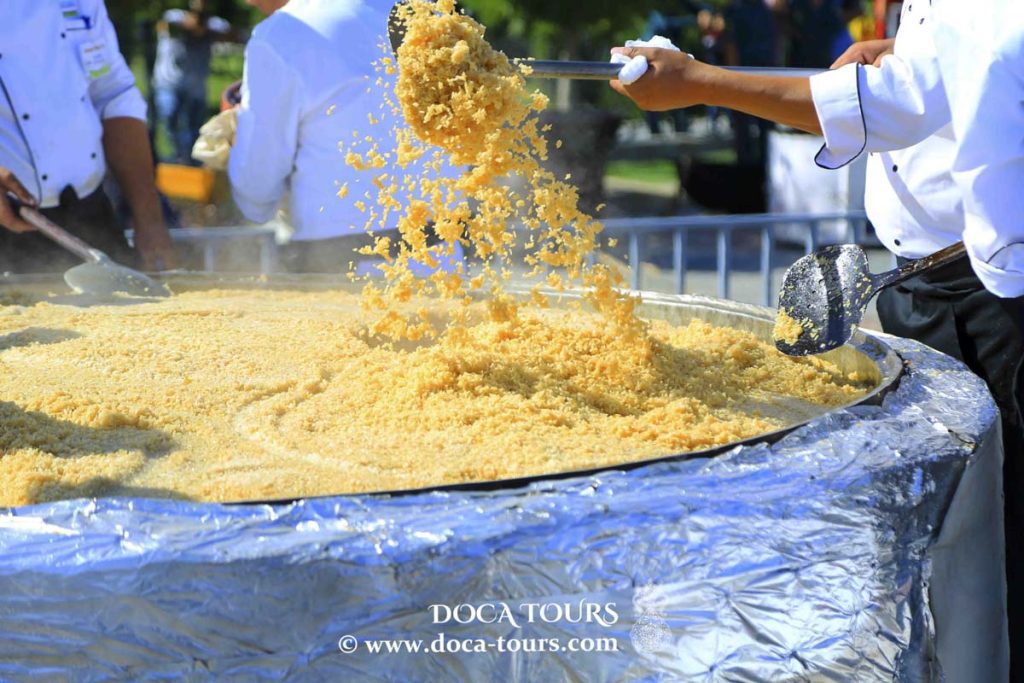
Prepare rice for Tashkent pilaf. Rinse it seven to eight times with plenty of water until it becomes clear. Then pour warm water (37°C) over the rice, generously add salt, and leave for 1 hour. Pour a small amount of hot water over the sultanas.
Prepare zirvak for pilaf. Heat the oil in a cauldron over high heat until white smoke appears. Dip the diced fat and a large piece of fat into it. Fry until golden brown. Do not stir small, fat cubes. Turn the large piece over so that it is fried on all sides. Use a slotted spoon to place it on a plate.
Place the lamb in a cauldron with boiling fat and fry until the liquid has evaporated and the pieces are golden brown. Then add the onion and fry until light yellow. Level the meat with the onions, and distribute the carrots on top.
At the “first water” stage of preparing pilaf, pour 1.25 liters of hot water into the cauldron. Press the carrots with a slotted spoon and immerse the heads of garlic and a pod of chili peppers in the future zirvak. Add sugar and all the spices, rubbing the cumin with your fingers.
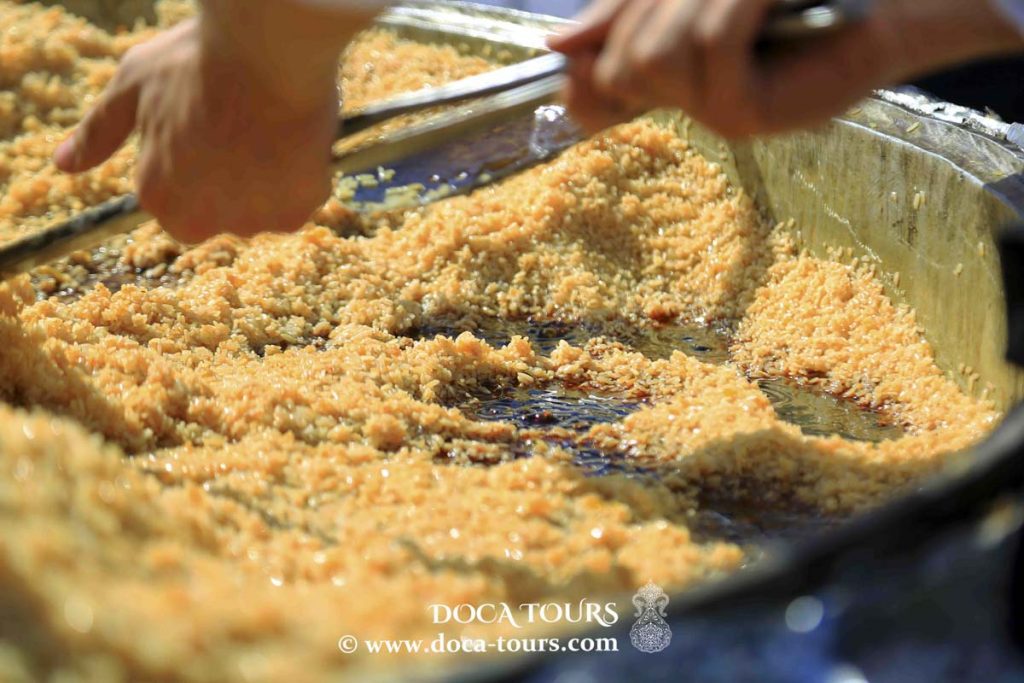
Place the chickpeas on top of the carrots and smooth them out. Simmer uncovered for 40–60 minutes. Halfway through, remove the garlic heads and peppers and set aside. Immerse the fried piece of fat in the zirvak. Simmer until most of the water has evaporated so that you can easily lay a layer of rice on the zirvak. At the end, add a lot of salt (more than necessary).
Drain all the water from the pilaf rice. Place the rice on the zirvak and smooth it out. Pour in the hot “second water” through a slotted spoon so that the water does not “hit” the rice layer. Add so much of it that it barely reaches the top grains. Flatten the rice again, and add a little salt.
Increase the heat to high. The zirvak and water should boil evenly and produce powerful steam that will process the rice. Then he will “take” as much liquid as needed. The water should evaporate into a layer of zirvak.
“Close” the pilaf. Try the rice first; it should be a little dry but almost cooked (the inside is not crispy). Using a slotted spoon, carefully collect the rice into a hemisphere from the sides to the center. Sprinkle with sultanas, and add chili peppers on top. Using a thin stick, make several holes in the bottom of the cauldron.
Pour a teaspoon of hot water into the holes. Level the surface. Close the cauldron tightly with a lid, and reduce the heat to low. Cook for 30 minutes. Extract the tail fat along with the lamb pulp. Cut the meat into small pieces and the fat into thin slices.
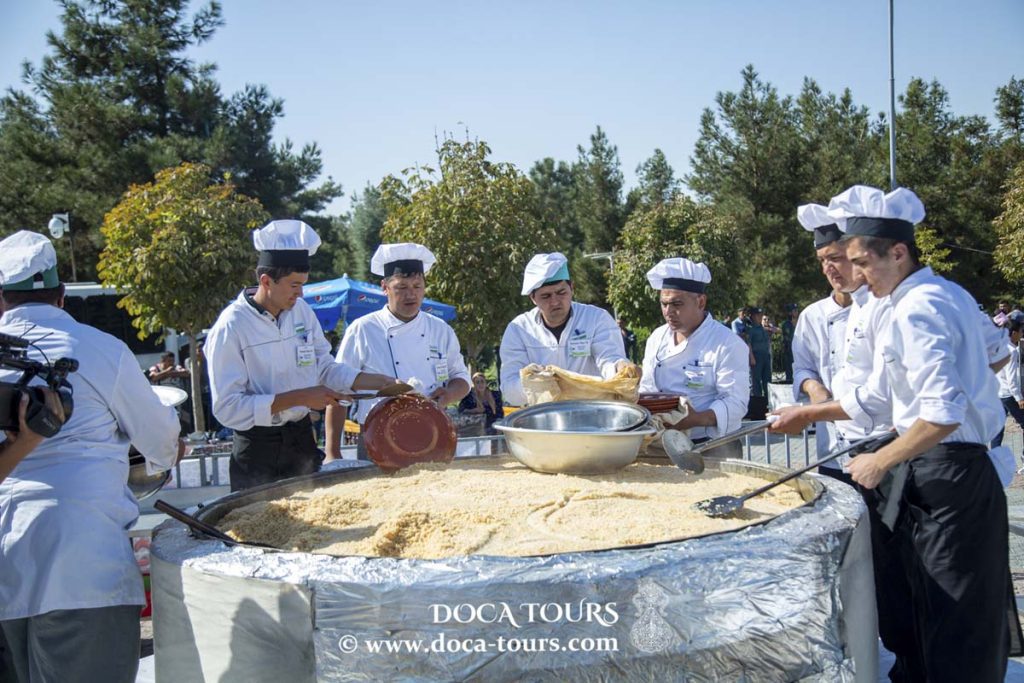
Place rice, carrots, chickpeas, and sultanas in a heap on a large flat dish (lyagan). Distribute the meat on top. Place petals of fat tail fat along the edge of the dish directly onto the Tashkent pilaf. Place the heads of garlic and pepper on top.
HELPFUL ADVICE
If you cook Tashkent pilaf in a cauldron with a flat bottom, the steam may be distributed unevenly or come out slowly. In this case, it is permissible to very carefully turn the rice into layers, moving the distant layers to the center and the central ones to the edges. Be very careful not to damage the rice or touch the zirvak layer, which should remain intact.
Thank you very much for your attention.
Subscribe to the channel and don’t forget to like our videos.
#pilaf, #cuisine, #rice, #food, #plov, #traditional, #uzbek, #asian, #recipe, #arabic, #meat, #dinner, #dish, #oriental, #meal, #plate, #beef, #pilau, #gourmet, #eastern, #uzbekistan, #lamb, #indian, #healthy, #turkish, #national, #restaurant, #fried, #arabian, #tasty, #spicy, #vegetable, #kazakh, #asia, #delicious, #background, #carrot, #hot, #homemade, #bowl, #garlic, #muslim, #cooking, #table, #cooked, #tatar, #arab, #eat, #pakistani, #culture