
























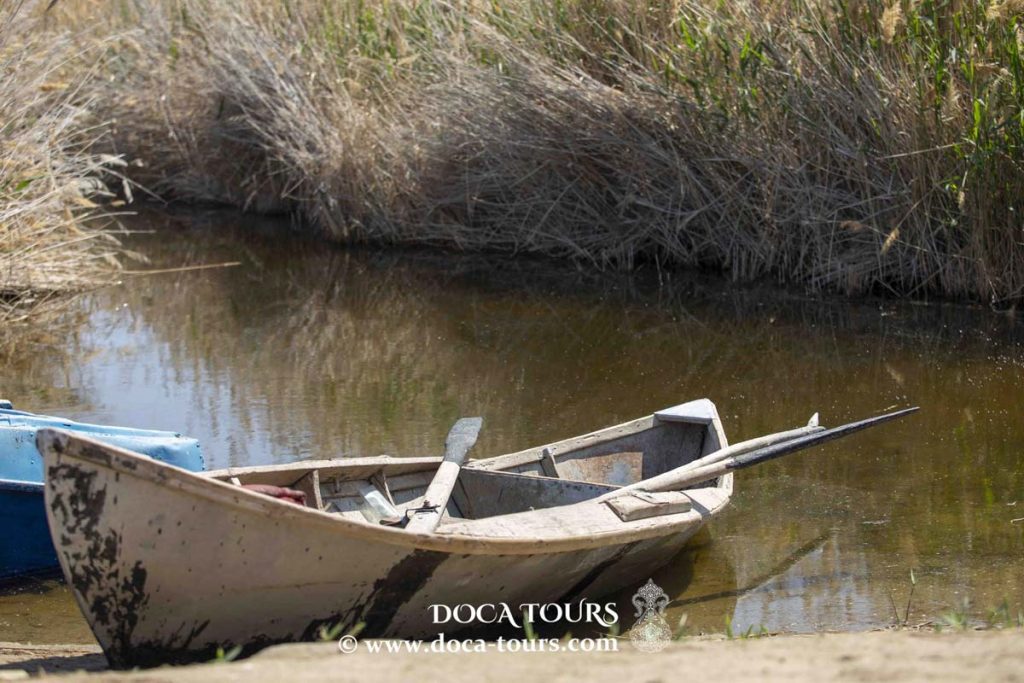
Abandoned village Urga & Sudochye lake
Video: https://www.youtube.com/watch?v=jULwu1c3Rug&t=183s
Throughout the history of human civilization, many magnificent creations have been created by the hands of people, which amaze the imagination to this day. But as a result of thoughtless activities of people, many valuable cultural monuments and natural complexes were destroyed and abandoned. Such places are overgrown with secrets and legends, sometimes quite scary, and this only increases the interest of curious people to feel the dead atmosphere of the structures. Only the most fearless people are willing to visit these abandoned places. We invite you to watch our video to the end and make sure that nothing in our life is eternal, and nature will still take its toll in the end.
In the left-bank part of the Amu Darya delta, there is Lake Sudochye, which was once the largest lake in the territory of Karakalpakstan and the largest reservoir in the Amu Darya delta. It is noteworthy that many people think that the lake got its name in honour of the fish – sudak (pikeperch). However, its name came from the word “Suvdoshin” (suv “water”, shin – “true” – in Uzbek.)
Previously, Sudochye was fed by the Amu Darya’s Raushan and Priemyuzyak channels and was connected by the channel with the Aral Sea. The area of the lake’s water surface reached 350 km², while its length reached 250 km with an average width of 15 km and an average depth of 2 m.
In the 1950s-1970s, due to the irrigation of cotton fields, the flow of water into the lake decreased significantly, and it completely lost its significance. In the 1960s, due to a decrease in the level of the Aral Sea and the closure of the Raushan channel, which interrupted the flow of almost all river water, Sudochye began to dry up. In 1968, the shallow lake split into separate bodies of water. In 1972, its area was 96 km².

Later, water was again diverted to the lake in order to refill it. It was not fully refilled, but 4 large reservoirs were reestablished: Bolshoye Sudochie, Akushpu, Karateren and Lake Begdulla-Aydin.
Every year fishermen and ichthyologists from all over the world come here – many species of different fish are found in Sudochye today. In addition, the surrounding area abounds in various species of birds – there are more than 230 species of them. Moreover, 12 of them are seriously at risk of complete extinction, and 3 have almost been completely exterminated throughout the country. Interestingly, relatively recently, a population of flamingos have also been discovered here, which are also at risk of extinction. The flock numbers about 7000 nesting birds, which is about 1.4% of the total number of the species in the world. This finding is especially remarkable against the background of negative changes in local landscapes due to the instability of the water regime. In addition, the Dalmatian Pelican, Pink Pelican, Little Cormorant, Little Egret, Spoonbill, Glossy Iaf, Mute Swan, White-eyed Duck, Golden Eagle and others were observed on the lake.
In 1991, on an area of 50 thousand hectares, the Sudochye State Ornithological Reserve was established. In 2008 Lake Sudochye received the status of the “Most Important Bird Area”
Fishermen often come to Sudochye, especially during the fishing season. Near the lake, you can stop for the night near the signal tower, pitching a tent. And then, in front of you will open the unique views of the lake with many reed islands. An indescribable pleasure to see off the sunset and meet the sunrise at this place amid the squawking birds and the flapping wings of large feathered.
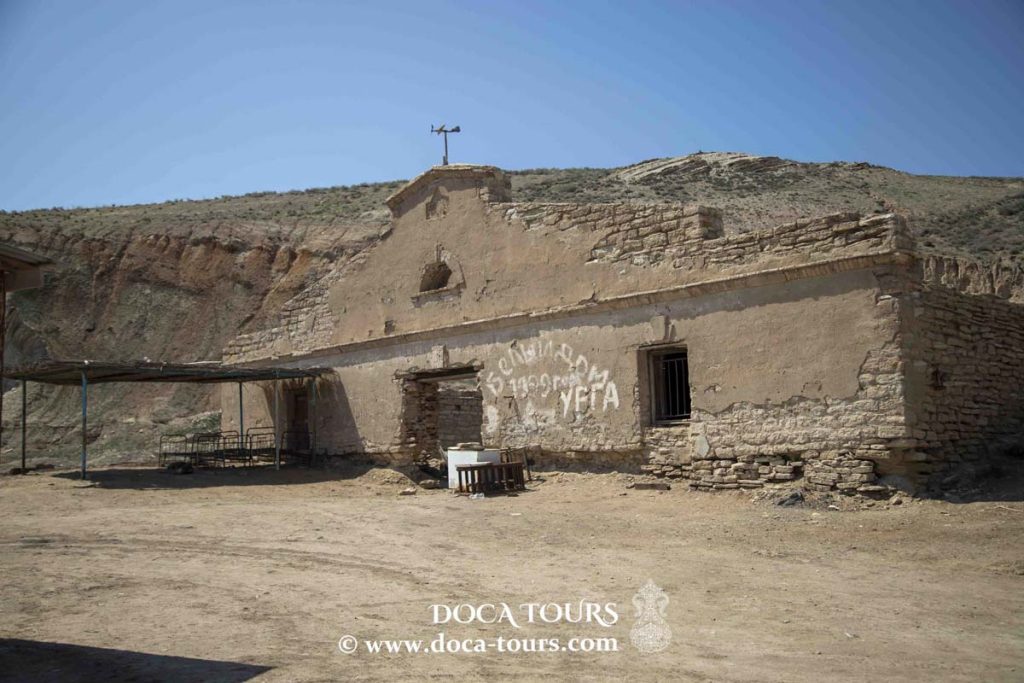
On the shores of Lake Sudochye, the fishing village of Urga once flourished with its own fish processing factory – one of the first Russian settlements on the territory of Khorezm. However, the history of this settlement goes much deeper. Cape Urga has been a habitat for people since ancient times. In the vicinity of Urga on the Ustyurt Plateau and closer to its chink, masses of a cluster of burial mounds were discovered which date back to the III-IV centuries BC. This suggests that the vicinity of the abandoned village of Urga was inhabited by the nomadic tribes of the Massagets and Sarmatians since ancient times. Life in this place probably continued in the middle Ages. Archaeologists have discovered traces of a settlement with a citadel built of shell rock and dating back to the 9th-13th centuries.
The era of the Mongol conquest of the entire territory of Central Asia, and the expansion of the Mongols that continued for many years, probably did not allow the existence and life of the extended plan of the Great Silk Road, which previously had one of its branches towards the Black Sea. This is evidenced by the ruins of medieval caravan sarais on the Ustyurt Plateau; these are Beleuli, Kukcha, Kurgancha and others. Thus, life here was interrupted until the middle of the 19th century.

After some reports of adventurers about their travels to these uncharted lands, the Aral Sea and its surroundings began to attract people, especially the Russian Empire. In 1848-1849, Captain N. Butakov noted about it, having sailed in the Aral Sea region for more than 15 years. The news that reached the Russian Geographical Society allowed the empire to take the first steps to deport the Ural Cossacks (Old Believers) to the islands of the Aral Sea. Accordingly, some of the deported were resettled to Urga.
The first fishing artels began to appear, small wooden ships and boats were built, and chalk was collected and sold.
The second wave of deported people to Karakalpakstan was associated with the Second World War. The first evacuated people began to arrive in Uzbekistan at the end of 1941. Residents of Karakalpakstan were actively involved in the resettlement of evacuated citizens. To provide assistance, city and regional commissions were created.
One of the first people evacuated to Karakalpakstan were Polish citizens. In the explanatory note of the Alimbetov who was the second secretary of the Muynak district committee, it was recorded that the Polish, numbering 997 people, arrived in the Muynak region by the Aral Sea on November 25-26, 1941. Due to the fact that the water washing the Muynak Island froze, the evacuees were sent to Uchsay. Further from Uchsai to Urga, people were sent by the sea on three boats, 25-30 people each.
In Urga, was organized the repair of footwear and clothing, uniform from the factory and footwear were given out to those who did not have them.
Later Russians, Kalmyks and other nationalities also began to arrive.

Thus, the outskirts of the Aral Sea, from Kungrad to the modern site of the Urga settlement, were occupied along the entire length with the settlement.
By government decree, in the 30-40s, they began to actively build plants and factories for the production and preparation of fish – smoked, dried, salted on the Aral Sea Islands. Including in 1939, the Muynak fish cannery was launched into production.
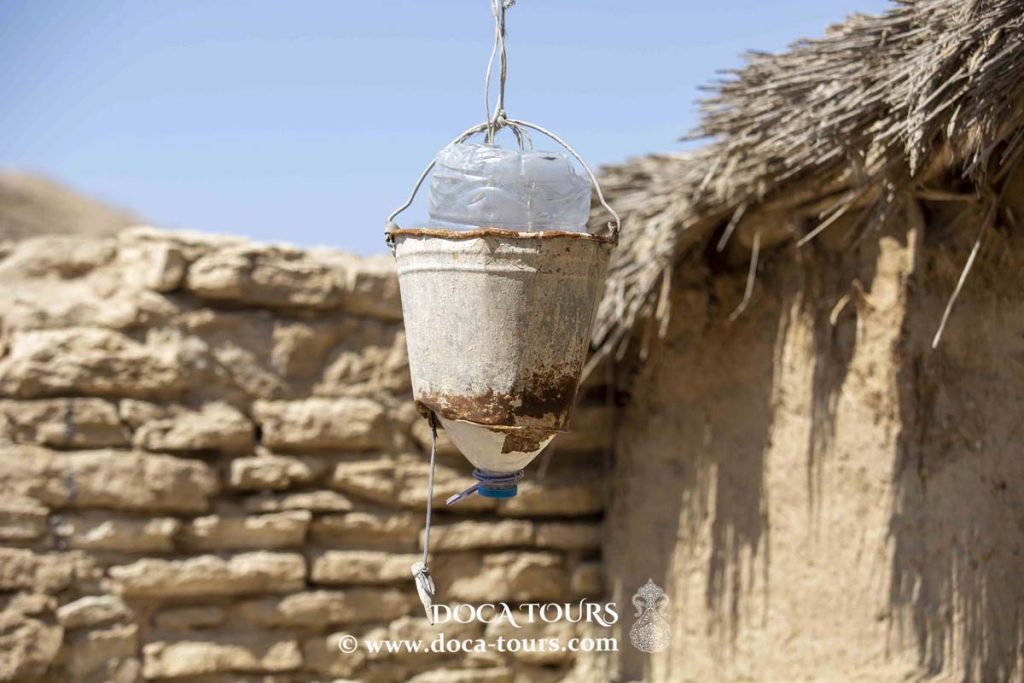
In 1937-1938, in the village of Urga was built a fish factory, the ruins of which have survived to this day. The factory was built exclusively from stone workings from the Ustyurt chink. The inhabitants of the village themselves built and collected stones. Everything that was in the village was made with their own hands. The same is true for residential buildings. They were all built from scrap materials in the form of small huts made of coastal reeds, plastered with clay. Primitive streets were built along the coast. All residents, regardless of nationality and time of arrival in the village as a whole, were engaged in fishing and collecting chalk. The finished products were shipped from the local port, which, unfortunately, has not survived now. The ruins of the building of the local school and hospital have been preserved on the most preserved hill.
Thus, given that, in general, the inhabitants of the village were deported people; special control over them was strengthened. That is, communications with the mainland, letters or other means of communication were prohibited.
From the memories of an old resident (her name has not survived), she tells: “Our parents have been fishing all their lives. There was a small meager shop in the village selling food products. The food was also very scarce due to its absence. We practically did not see meat, the main food was fish. I was born in the village. Part of the day we pupils were in school, and the rest of the time we collected chalk from the outskirts of the desert and coastal sediments. My father was a good master blacksmith. He was able to make himself homemade skates. And in winter, the waters of the Aral Sea frozed to death. He tied a bag to his belt, put on a backpack, and skated off somewhere. He usually returned in 1-2 days. He brought with him some sweets or food, newspapers and letters.
Most people were unaware of his journey. Later, having already grown up, I realized that he sometimes went to Kungrad or Muynak. The distance from the village to the destination is about 100 km one way. Usually, he returned overnight so that no one would see him. Due to the fact that the island was controlled by the NKVD officers every time, it was impossible to be absent for a long time. The controlled ones were keeping records of living people. In the early 60s, the coast of the sea began to gradually retreat from its shores, and by the middle, it had gone very far and it was impossible to completely engage in fishing. Then in the same years, many people began to leave the village. Mostly they moved to Kungrad and Nukus. We cried when we left the village in 1964. Because this was our home and our village. We practically had no idea that there are big cities and towns with civilization.”
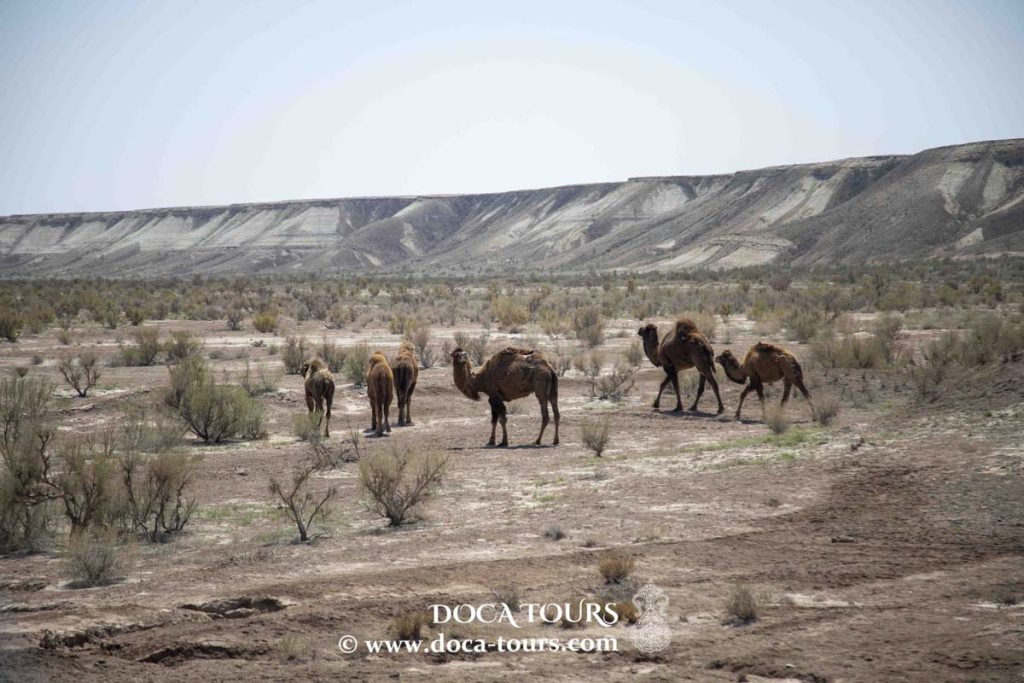
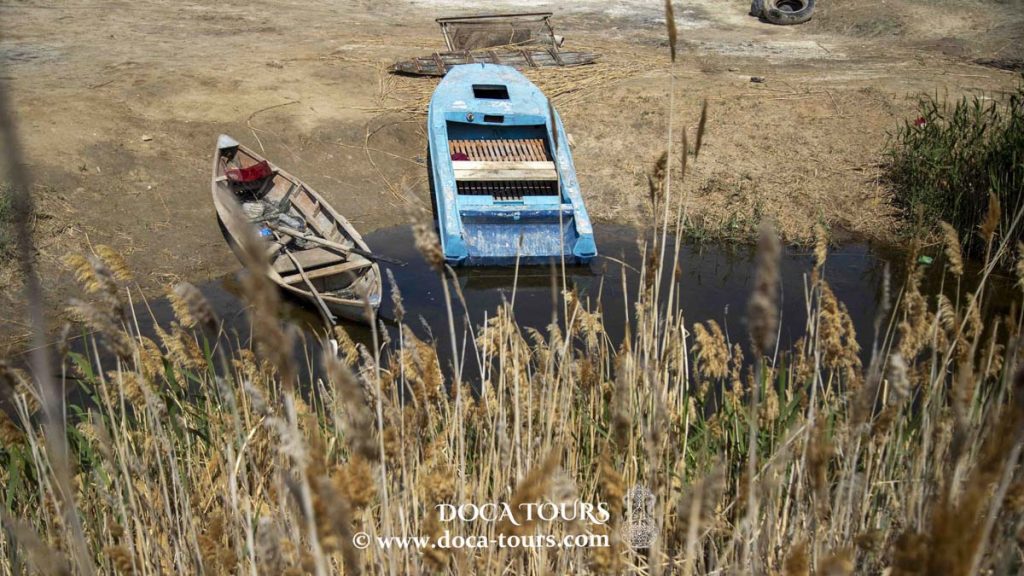
When the Aral began to retreat, people also began to leave the village of Urga. The middle of the 60s of the last century turned out to be one of the last moments of the village’s life. Until now, sometimes you can see people who are trying to visit the village and the burial places of their ancestors who once lived in these places. Only the ruins of old houses, abandoned boats and the ruins of a fish factory remind of the former glory of the village. This whole picture is a very sad sight.
Thank you very much for your attention.
Subscribe to the channel and don’t forget to like our videos.
#Sudochye #Urga #lake #cap #Karakalpakstan #AralSea #fishplant #feshery #flamingo #Nature #Adventure #Yourts #tours #travelling #silkroad