URALSK
- Geographical coordinates: 51°14′N 51°22′E
- Area: 700 km2
- Former Names: Yaitsk
- Elevation: 35 m
- Common Languages: Kazakh, Russian
- Ethnic Groups: Kazakh, Russian, Tatar, Korean
- Population: 233 904 (2019)
- Time Zone: UTC+5
- Telephone Code: +7 7112
- Postal Codes: 090000
- Vehicle Registration Code: 07
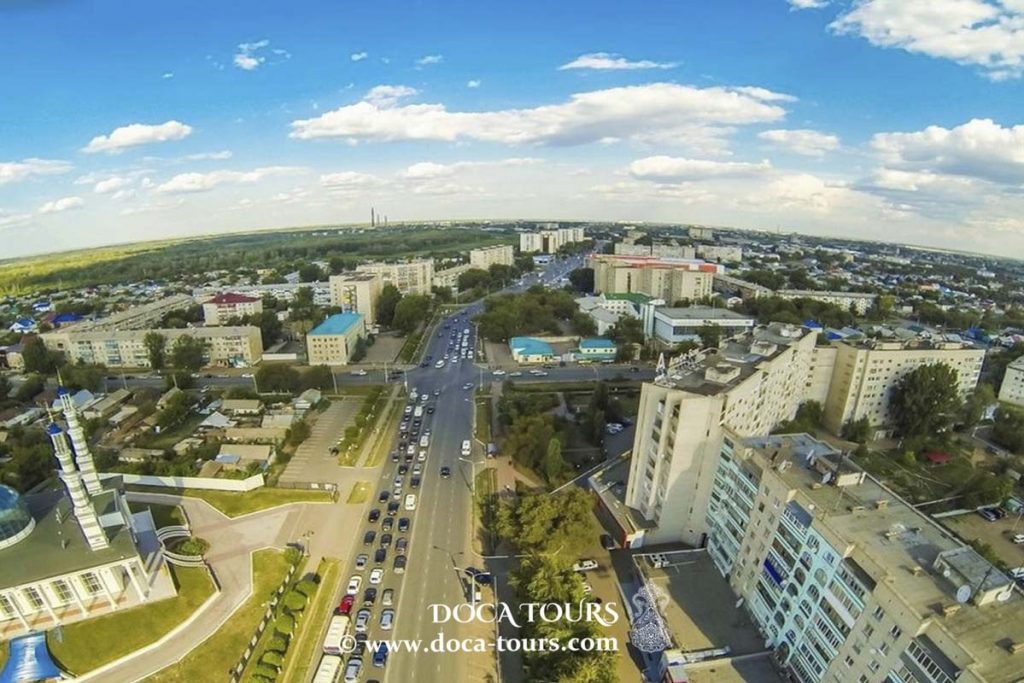
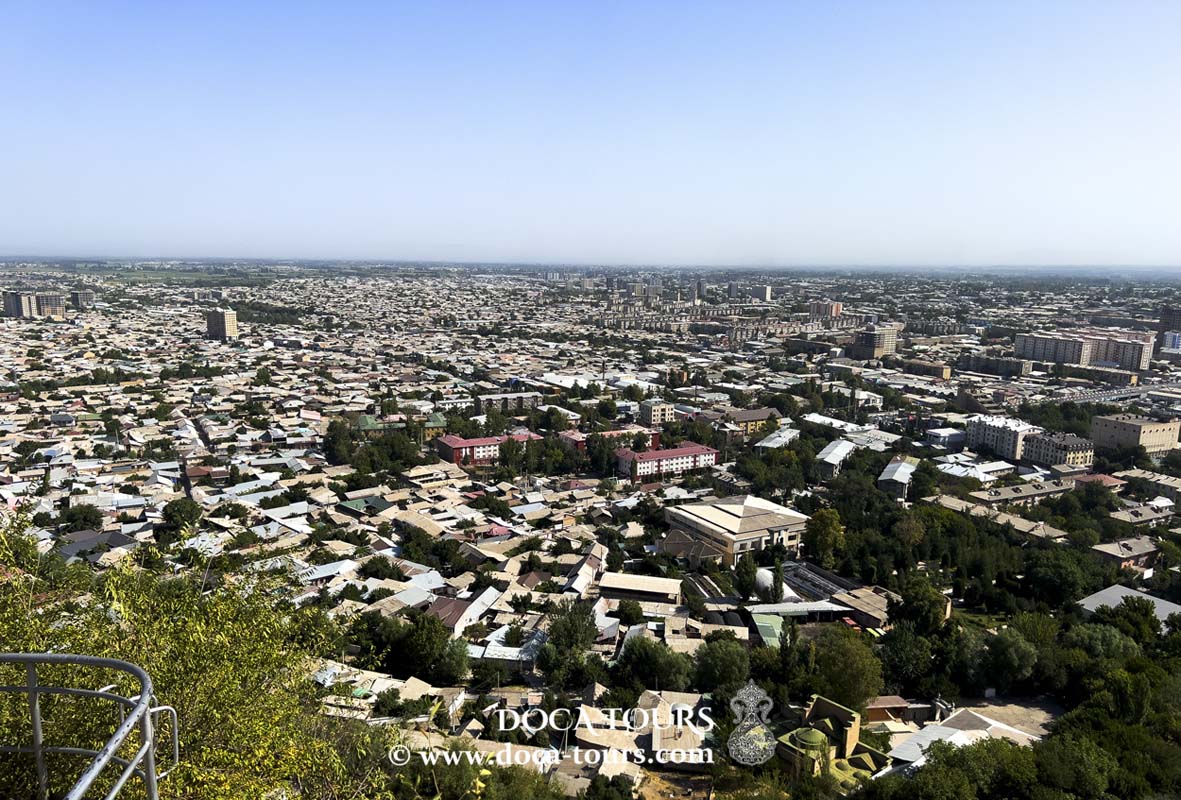
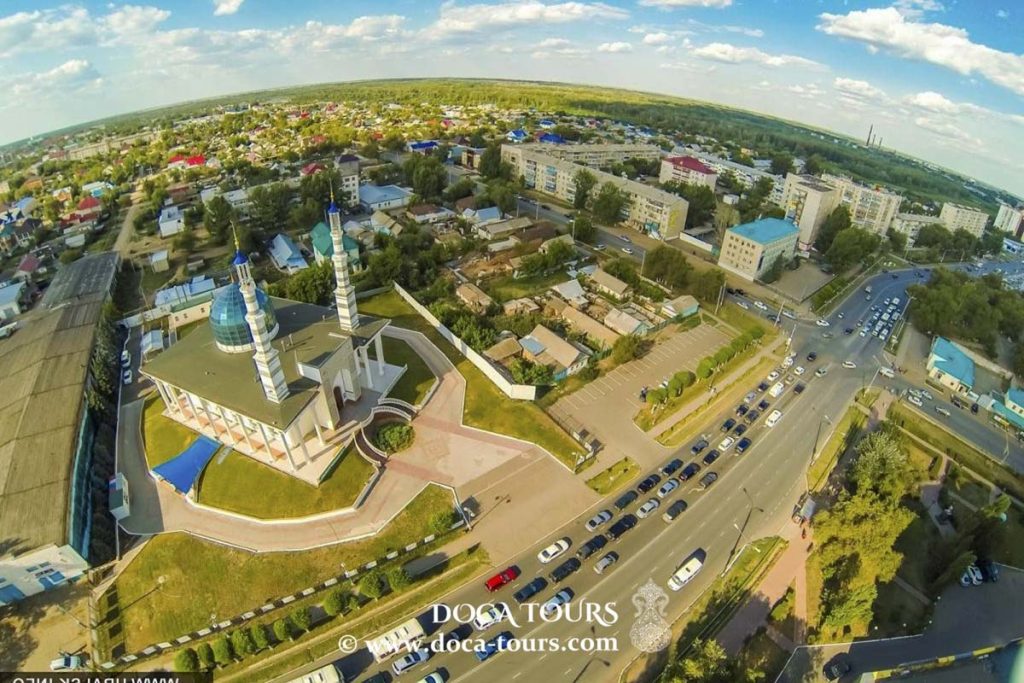
Uralsk is one of the oldest cities in the European part of Kazakhstan that has been preserved to this day. It is located in Western Kazakhstan on the Ural River and serves as the administrative center of the West Kazakhstan Region. The city lies on the northern edge of the Caspian Lowland. Within the city limits, Uralsk covers an area of 209.83 square kilometers, while the total area under the jurisdiction of the Uralsk city administration is 731.33 square kilometers. The city has a population of 361,940 people, representing 83 different nationalities and ethnic groups. The settlements administratively subordinate to the city’s akimat include the villages of Zachağan, Derkul, Krugloozernoye, Mashtakovo, and Zhelaevo.
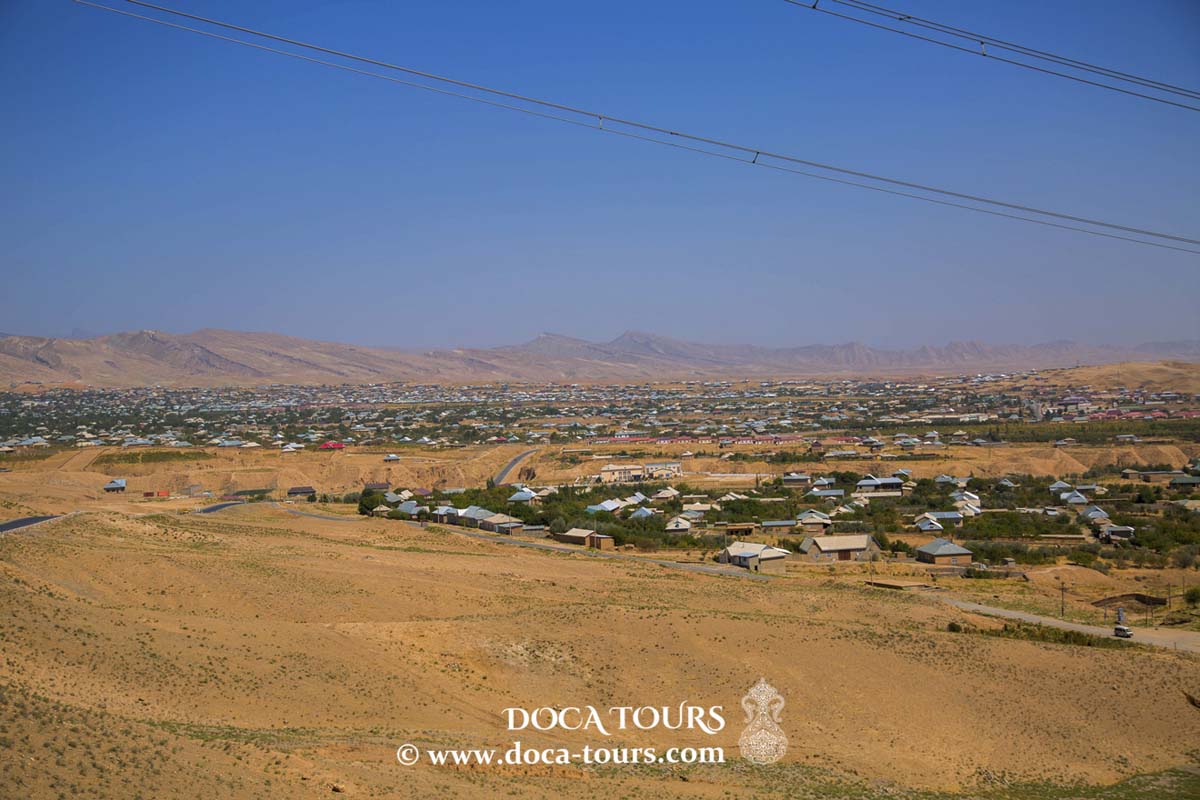
Uralsk is situated on the right bank of the middle course of the Ural River and the left bank of the lower course of the Shagan River, in a picturesque steppe plain characterized by steep and high river bluffs. The Derkul River, a right tributary of the Shagan, flows near the city and the suburban settlement of Derkul. The highest elevation in the surrounding area is Swistun Hill, with its peak reaching 84.0 meters above sea level (Baltic Sea level). Relative to the Ural River, which flows at 22.2 meters above sea level at the base of the hill, Swistun Hill has a relative height of 61.8 meters. It is located between the suburban settlements of Zachağan and Krugloozernoye (the latter was previously known as Swistun).
History
In the 13th century, the Swistun Hill, located 10 km from modern Uralsk, was home to a Golden Horde settlement known as Zhayyk. The name of the site was later attributed based on the Kazakh name of the nearby river. Archaeological excavations revealed that Zhayyk was a large city that flourished during the peak of the Golden Horde in the 13th and 14th centuries. The site included residential estates, utility buildings, brick kilns, and a hammam (bathhouse). Two significant mausoleums were also uncovered at the location. However, with the decline of the Golden Horde and later the Nogai Horde, the city's significance diminished, and its trade and crafts began to decline.
During the Kazakh-Nogai war in the early 16th century, Khan Kasym achieved victory over the Nogai Horde, temporarily gaining control over parts of Western Kazakhstan.

The geographical features of the area, favorable for defense, led Cossacks seeking refuge and a permanent settlement to choose this location near the Yaik River. By the 16th century, a small military settlement began to take shape, which eventually grew into one of the major cities along the Ural River by the mid-19th century. This stage of the city's development was closely tied to the history of the Yaik Cossacks.
In 1584, the settlement was first mentioned as Yaik Town (Yaik Gorodok), founded by Yaik Cossacks who originated from Volga Cossacks fleeing persecution. The town's founder is traditionally considered Ataman Bogdan Barbosha. After being destroyed by the Nogai, the settlement was relocated 50 km downstream along the Yaik (Ural) River in 1613, the year now recognized as the official founding date of the city. In 1988, the city celebrated its 375th anniversary. The settlement was established on a peninsula between the Yaik (Ural) and Chagan Rivers. This area of the city is now known as "Kureny," derived from kuren, the traditional dwelling of the Cossacks.
During the Civil War
Uralsk became a focal point of intense fighting during the Civil War. Captured by the Bolsheviks in 1919, it endured a prolonged siege by the Ural Army.
World War II
During the Great Patriotic War, Uralsk was designated a frontline zone and an anti-aircraft defense point by the Military Council of the Stalingrad Front on October 16, 1942. The city received 14 industrial enterprises relocated from central regions to support the war effort, as well as 20 military hospitals. Uralsk also became a site for forming military units.
Post-Independence
Since 1991, Uralsk has grown into one of the significant cities of independent Kazakhstan. During the 1990s, many of the city's streets were renamed.
The Border Between Europe and Asia
Soviet-era scientific consensus defined the boundary between Europe and Asia along the Mugodzhar Hills to the source of the Emba River, then following the Emba to the Caspian Sea. Prior to the late 1950s, the Ural River itself was used to demarcate this border within Kazakhstan.
In April–May 2010, an expedition by the Russian Geographical Society proposed revising the Europe-Asia boundary to follow the Mugodzhar Hills and the edge of the Caspian Lowland, where the East European Plain ends and the western slopes of the Ustyurt Plateau begin. This suggestion places the boundary even farther south than currently recognized. However, this proposal has not been reviewed by an international body such as the International Geographical Union.
As a result, Uralsk is considered entirely within Europe under some definitions, while under others (if the Ural River is used as the boundary), it lies at the intersection of Europe and Asia.
Climate
Uralsk experiences a sharply continental climate characterized by hot, dry summers and snowy, moderately cold winters often accompanied by strong winds.
- Average annual temperature: +6.5°C
- Average annual wind speed: 2.9 m/s
- Average annual humidity: 70%
Transportation
Railway
The first railway line reached Uralsk in 1894 as part of the Ryazan-Urals Railway. Initially, the station, featuring towers styled after Central Asian minarets, was located far from the city center. Writer Alexei Nikolayevich Tolstoy once described his journey from the station to the city as traveling "…across the steppe lined with telegraph poles." For a long time, Uralsk served as the terminus of a railway that connected it to central Russia. However, in 1936, the construction of a line to Iletsk established direct railway communication with the rest of Kazakhstan.
During the Soviet period, as the city expanded, the railway station became integrated into what is now the city’s central area. In the early 1980s, due to increased passenger traffic, construction began on a new railway station. Unfortunately, the 19th-century station, an architectural monument, was demolished.
Today, Uralsk maintains regular passenger rail connections with Kazakhstan’s former and current capitals, Almaty and Astana.
Airport
Uralsk Airport, located 16 kilometers from the city near the suburban settlement of Podstepnoye, gained international status following its reconstruction in the 1990s.
In February 2023, the airport was acquired by Oral Airport Holding LLP, a Kazakhstani company. The majority stake is owned by Uralsk Management LLP and entrepreneur Dauletkhan Kilybayev, while a minority share (49%) is held by the Russian company AO Retrans. The new management aims to transform Uralsk Airport into a regional hub by expanding its route network and upgrading its technical infrastructure.
On July 3, 2019, modernization work began on the airport terminal. This project increased the terminal’s capacity from 160,000 to 350,000 passengers annually and expanded its area from 4,000 m² to 7,500 m². According to the Akim of the West Kazakhstan Region, the airport’s strategic location offers potential for even greater growth.
On March 18, 2022, the Government of Kazakhstan issued a resolution renaming the airport after Manshuk Mametova, a national hero of Kazakhstan.
On April 7, 2022, the airport reopened after a full-scale reconstruction. The renovations increased the terminal's area to 10,000 m², raising passenger capacity to 600,000 annually. The airport now meets all international IATA standards. Future plans include launching new routes to destinations such as Amsterdam, Moscow, Kyiv, Istanbul, St. Petersburg, Abu Dhabi, Atyrau, and Shymkent, as well as expanding current services to Almaty, Frankfurt, Astana, Aktau, and Turkestan.
The upgraded runway can now accommodate large aircraft, including the Il-76, Boeing 737, and Boeing 757.
As of 2024, Uralsk Airport operates flights to Frankfurt, Aktau, Shymkent, Turkestan, Astana, Almaty, Sharm El-Sheikh, Phuket, and Antalya.
Public Transportation
Public transportation in Uralsk primarily consists of bus routes. During the Soviet era, plans were made to build trolleybus lines, but these were abandoned following the collapse of the USSR. Periodically, tenders are held between transport companies for the right to operate bus routes. The routes themselves are frequently adjusted due to the construction of new residential districts in remote areas and efforts to optimize coverage across the city.
The fare depends on the payment method:
- Cash payment: 200₸ for adults, 100₸ for children (7–18 years old) and pensioners.
- Transport card or QR code: 100₸ for adults, 50₸ for children (7–18 years old) and pensioners. These rates are effective as of January 1, 2024.
- Certain groups are eligible for free transportation, including mothers of large families, children under 7, people with first-degree disabilities, World War II veterans, combat veterans, and those involved in the cleanup of the Chernobyl disaster.
- Official taxi services are also widely available in Uralsk, significantly reducing the prevalence of unregulated private taxi operators. Currently, the city is served by at least 10 competing taxi companies.
Culture
Uralsk is home to a variety of cultural institutions, including the K. Bukeeyeva Regional Kazakh Drama Theater, the A. N. Ostrovsky Uralsk Russian Drama Theater, the G. Kurmangaliyev Regional Philharmonic, 12 museums, 5 cinemas, 11 cultural centers and clubs, and 24 libraries with a combined collection exceeding one million books. Among these, the A. N. Ostrovsky Theater stands out as the oldest drama theater in Kazakhstan, with a history spanning over 160 years.
Regional Kazakh Drama Theater Named After K. Bukeeyeva
The city’s cultural life is enriched by popular local performance groups, such as the folk dance and music ensembles Ak Zhayyk and Nazerké, the Adagio dance studio, the Yaikushka children's choir, and ensembles like Uraltzy led by Natalia Komarova, Mikhailov Den, and the children's and adult groups of Ural Cossacks under the direction of A. A. Konovalova, among others.
Uralsk also boasts a vibrant literary and artistic scene, with celebrated authors and poets such as V. P. Pravdukhin, N. Korsunov, Yu. A. Baev, A. P. Yalfimov, A. Baktygereeva, E. Gabassov, B. B. Pyshkin, T. Azovskaya, Zh. Nabiullin, A. Narykov, and A. M. Svyatynin. The city is also proud of the works of artist S. Gumarov, who is widely recognized in Kazakhstan.
Contributions to Local History
The city’s historical and cultural richness is further supported by the efforts of local historians and ethnographers such as A. G. Tregubov, V. V. Kutishchev, A. Z. Kurlapov, and G. L. Mukhin, as well as renowned expert on Cossack history, Saniya Sagnaeva.
Museums and Cultural Centers
A significant hub for Slavic and Tatar culture is the Old Uralsk People's Museum, which plays a key role in publishing and preserving the city’s historical and cultural heritage.
Education
The first educational institution in Uralsk opened in 1812. According to the Brockhaus and Efron Encyclopedic Dictionary, by the early 20th century, the city had 27 schools with 2,222 students (1,440 boys and 782 girls). The Ural Cossack Military Real School, converted in 1890–91 from a classical gymnasium, was funded by the Cossack community and the state, offering free education to Cossack children. It employed 19 teachers and enrolled 287 students, 141 of whom (49.2%) were Cossacks.
Historical Schools
The school also housed a Natural History Museum. Other prominent educational institutions included:
The Women’s Cossack Gymnasium with 16 staff members (10 teachers and 6 assistants) and 283 students, 149 of whom (52.6%) were Cossack girls.
The Spiritual Seminary.
A Russian-Kyrgyz vocational school, which included a literacy program.
A school for Cossack singers and musicians.
An agricultural school near the Cossack farm.
Primary schools were classified as either parish or Cossack military schools.
The building that once housed the Spiritual Seminary later became home to the art and design faculty of a teaching institute and is now the Pushkin Hotel.
Modern Education
Today, Uralsk has 52 general education schools with over 2,000 teachers and more than 40,000 students. Additionally, 16 extracurricular centers provide opportunities for diverse interests, while 7 vocational schools train approximately 4,000 students. Several colleges offer specialized secondary education, including pedagogical, medical, accounting and trade, music, polytechnic, agricultural, and legal institutions.
Higher Education
Uralsk hosts several higher education institutions, including:
- M. Utemisov West Kazakhstan University.
- Zhangir Khan West Kazakhstan Agrarian-Technical University.
- Eurasian Academy Educational and Scientific Production Complex, formed by merging the West Kazakhstan Institute of Management and Languages "Eurasia" and the Uralsk Academy of Labor and Social Relations.
- West Kazakhstan Engineering and Humanities University, which incorporates the Kazakhstan University of Innovation and Telecommunications (KAZIITU), the West Kazakhstan Engineering and Technological University (WKITU), and the West Kazakhstan Humanitarian Academy (WKGA).
Additionally, the city hosts branches of the Kazakh University of Law and the Kazakh Academy of Labor and Social Relations. Over 22,500 students are enrolled in full-time and part-time programs at these institutions.
Industry
The industrial sector in Uralsk includes energy production, machinery manufacturing, food processing, flour milling, light industry, and the production of construction materials.
Key industrial facilities in the city include:
- Omega Instrumentation Plant JSC,
- Zenit Uralsk Plant JSC,
- Hydropribor Research Institute JSC,
These enterprises are part of Kazakhstan Engineering, a national company. Additionally, the West Kazakhstan Corporation for Construction Materials JSC operates a facility in Uralsk for producing building materials.
Hydromash-Orion-MZhBK LLP, a company under the Hydromash-Orion Investment Holding, specializes in manufacturing reinforced concrete structures and products used in road, industrial, and civil construction.
UralskAgroRemMash JSC, formerly the Uralsk Repair Plant founded in 1955, now produces fire trucks and specialized equipment for transporting liquid hydrocarbons.
With the rapid development of oil and gas extraction in Western Kazakhstan, many Uralsk enterprises focus on manufacturing equipment for refining, extraction, and transportation of oil. For example:
TMK-Kaztrubprom, part of the Pipe Metallurgical Company, produces pump-compressor and casing pipes for the oil and gas industry.
West Kazakhstan Machine-Building Company JSC is a leading enterprise in Kazakhstan, specializing in the development and production of energy and refining equipment.
The nitrogen plant located in the Zachağan suburb produces cryogenic products essential for the oil and gas industry, manufacturing, agriculture, and housing projects in Western Kazakhstan.
Other machinery-focused companies in Uralsk include Uralsk Mechanical Plant LLP, KazArmProm LLP, and the Uralsk Foundry and Mechanical Plant PC.
Energy
The city’s centralized heat supply comes from the Uralsk Thermal Power Plant (TPP), with a capacity of 58.52 MW, operated by Zhaiykteploenergo JSC.
In 2011, the Uralsk Gas-Turbine Power Plant (GTPP) was commissioned near the village of Novenkoe, providing an additional 54 MW of electricity to the city.
Food Processing
Uralsk is also home to Kublai LLP, a renowned company within Kazakhstan and beyond. Established in 1992, it is one of the country’s largest processing enterprises, producing fresh and chilled meats such as horse, beef, and lamb, along with canned products including fish, vegetables, and tomato paste. The company’s operations comply with all relevant standards, as confirmed by regular internal and external audits.
Other Industries
In the 1970s, Uralsk became home to several key manufacturing ventures: large-caliber machine guns were produced at the "Metallist" plant, naval equipment was developed at the "Omega" factory, and the Urals branch of the Central Research Institute "Hydropribor" specialized in marine instruments.
Uralsk also hosted the only plant in the country for processing herbal medicinal raw materials—KazakhLakritsa JSC. While this facility currently operates in the village of Kushum, it was originally based in Uralsk.
The industrial development of the city is significantly influenced by the Karachaganak oil and gas condensate field, located 150 km away in the Burlinsky district. This strategic site is crucial for the extraction of both gas and liquid hydrocarbons.
Twin Cities
Uralsk has established sister-city relationships with the following cities:
- Atyrau, Kazakhstan
- Manisa, Turkey
- Blagoevgrad, Bulgaria
- Ploiești, Romania
- Saratov, Russia
- Ostrava, Czech Republic
- Rostov-on-Don, Russia
- Kostroma, Russia
Partner City
Orenburg, Russia


 The geographical features of the area, favorable for defense, led Cossacks seeking refuge and a permanent settlement to choose this location near the Yaik River. By the 16th century, a small military settlement began to take shape, which eventually grew into one of the major cities along the Ural River by the mid-19th century. This stage of the city's development was closely tied to the history of the Yaik Cossacks.
In 1584, the settlement was first mentioned as Yaik Town (Yaik Gorodok), founded by Yaik Cossacks who originated from Volga Cossacks fleeing persecution. The town's founder is traditionally considered Ataman Bogdan Barbosha. After being destroyed by the Nogai, the settlement was relocated 50 km downstream along the Yaik (Ural) River in 1613, the year now recognized as the official founding date of the city. In 1988, the city celebrated its 375th anniversary. The settlement was established on a peninsula between the Yaik (Ural) and Chagan Rivers. This area of the city is now known as "Kureny," derived from kuren, the traditional dwelling of the Cossacks.
The geographical features of the area, favorable for defense, led Cossacks seeking refuge and a permanent settlement to choose this location near the Yaik River. By the 16th century, a small military settlement began to take shape, which eventually grew into one of the major cities along the Ural River by the mid-19th century. This stage of the city's development was closely tied to the history of the Yaik Cossacks.
In 1584, the settlement was first mentioned as Yaik Town (Yaik Gorodok), founded by Yaik Cossacks who originated from Volga Cossacks fleeing persecution. The town's founder is traditionally considered Ataman Bogdan Barbosha. After being destroyed by the Nogai, the settlement was relocated 50 km downstream along the Yaik (Ural) River in 1613, the year now recognized as the official founding date of the city. In 1988, the city celebrated its 375th anniversary. The settlement was established on a peninsula between the Yaik (Ural) and Chagan Rivers. This area of the city is now known as "Kureny," derived from kuren, the traditional dwelling of the Cossacks.
 In April–May 2010, an expedition by the Russian Geographical Society proposed revising the Europe-Asia boundary to follow the Mugodzhar Hills and the edge of the Caspian Lowland, where the East European Plain ends and the western slopes of the Ustyurt Plateau begin. This suggestion places the boundary even farther south than currently recognized. However, this proposal has not been reviewed by an international body such as the International Geographical Union.
As a result, Uralsk is considered entirely within Europe under some definitions, while under others (if the Ural River is used as the boundary), it lies at the intersection of Europe and Asia.
In April–May 2010, an expedition by the Russian Geographical Society proposed revising the Europe-Asia boundary to follow the Mugodzhar Hills and the edge of the Caspian Lowland, where the East European Plain ends and the western slopes of the Ustyurt Plateau begin. This suggestion places the boundary even farther south than currently recognized. However, this proposal has not been reviewed by an international body such as the International Geographical Union.
As a result, Uralsk is considered entirely within Europe under some definitions, while under others (if the Ural River is used as the boundary), it lies at the intersection of Europe and Asia.
 On April 7, 2022, the airport reopened after a full-scale reconstruction. The renovations increased the terminal's area to 10,000 m², raising passenger capacity to 600,000 annually. The airport now meets all international IATA standards. Future plans include launching new routes to destinations such as Amsterdam, Moscow, Kyiv, Istanbul, St. Petersburg, Abu Dhabi, Atyrau, and Shymkent, as well as expanding current services to Almaty, Frankfurt, Astana, Aktau, and Turkestan.
The upgraded runway can now accommodate large aircraft, including the Il-76, Boeing 737, and Boeing 757.
As of 2024, Uralsk Airport operates flights to Frankfurt, Aktau, Shymkent, Turkestan, Astana, Almaty, Sharm El-Sheikh, Phuket, and Antalya.
On April 7, 2022, the airport reopened after a full-scale reconstruction. The renovations increased the terminal's area to 10,000 m², raising passenger capacity to 600,000 annually. The airport now meets all international IATA standards. Future plans include launching new routes to destinations such as Amsterdam, Moscow, Kyiv, Istanbul, St. Petersburg, Abu Dhabi, Atyrau, and Shymkent, as well as expanding current services to Almaty, Frankfurt, Astana, Aktau, and Turkestan.
The upgraded runway can now accommodate large aircraft, including the Il-76, Boeing 737, and Boeing 757.
As of 2024, Uralsk Airport operates flights to Frankfurt, Aktau, Shymkent, Turkestan, Astana, Almaty, Sharm El-Sheikh, Phuket, and Antalya.