KHOROG
- Geographical coordinates: 37°29′30″ N 71°33′21″ E
- Administrative center: Gorno-Badakhshan Autonomous Region
- Elevation: 2123 m
- Official language: Tajik
- Popular languages: Russian, Uzbek etc.
- Nationals: Uzbek, Tajik, Russian
- Population: 30 300 (as of 2019)
- Time Zone: UTC+5
- Telephone Code: +992 35
- Postal Codes: 736ХXX
- Vehicle Registration Code: 04
Khorog: The Capital of Gorno-Badakhshan, Tajikistan
Khorog, also spelled Khorugh or Kharag, serves as the administrative center of Gorno-Badakhshan and the Shughnan District. As of 2020, its population is estimated at 30,500 people.

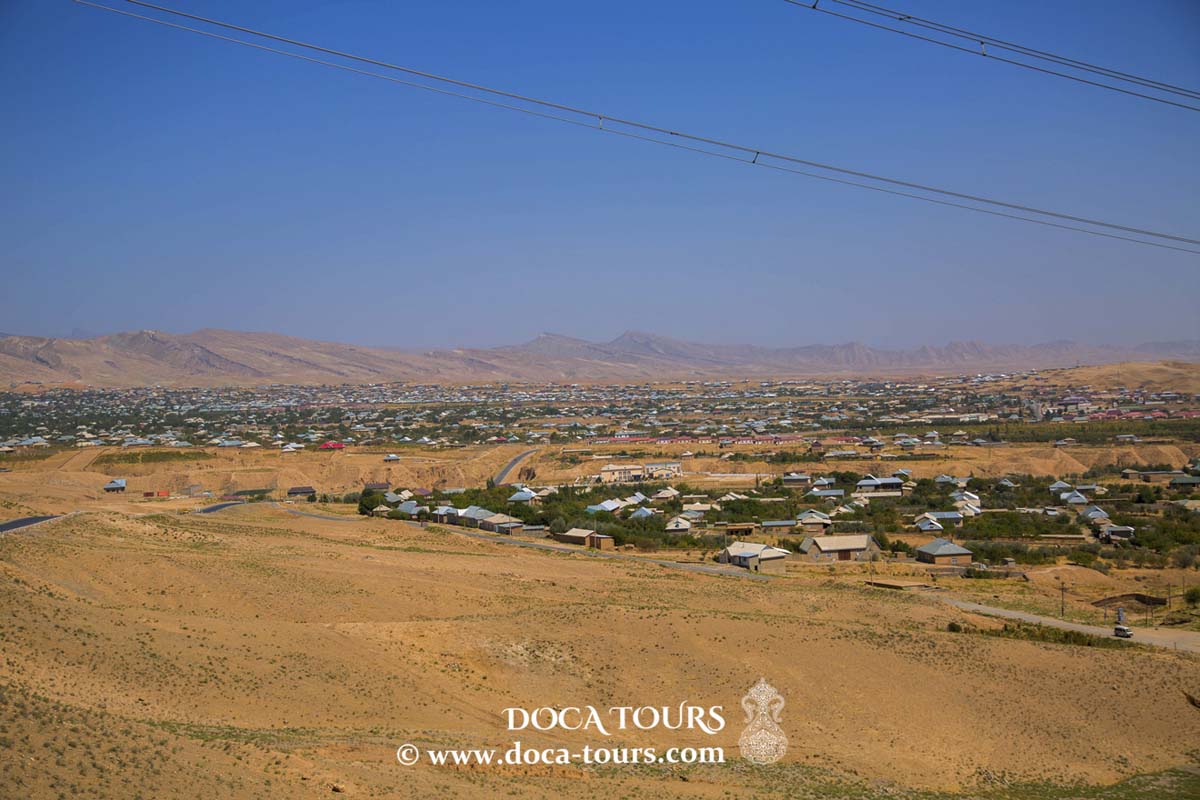
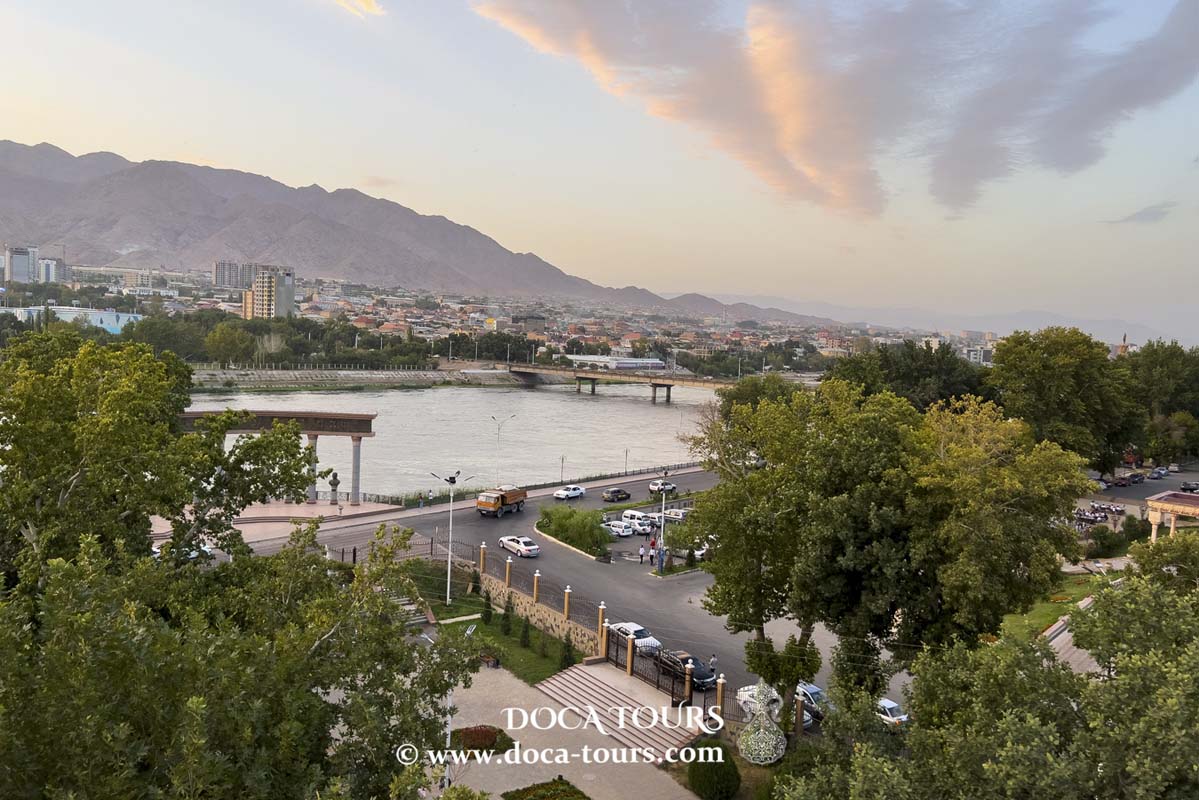
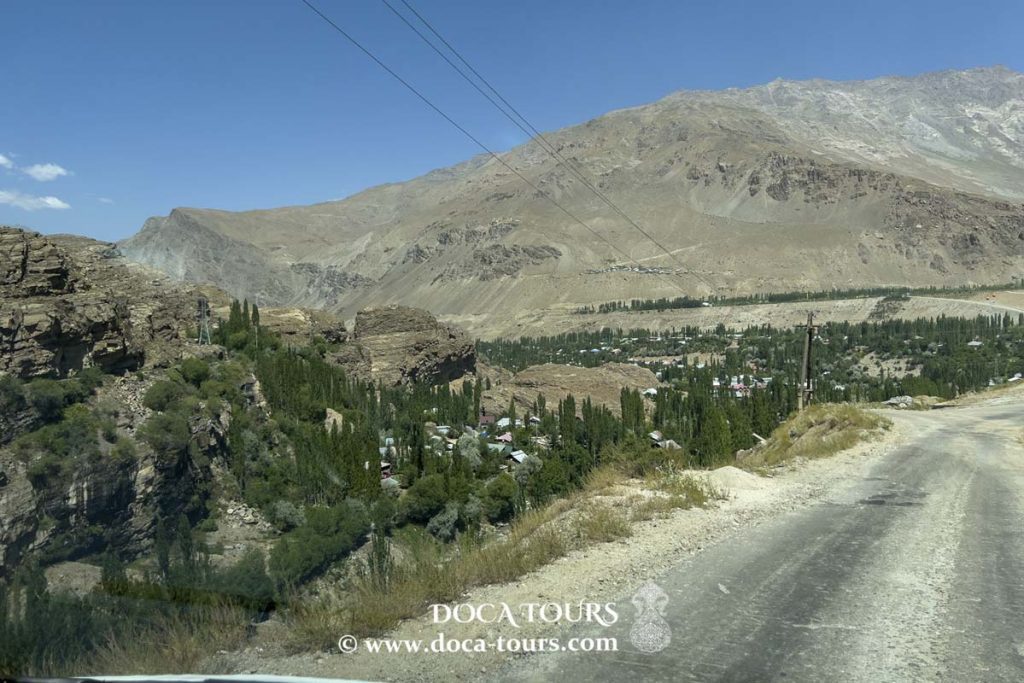
Nestled at an altitude of 2,200 meters (7,200 feet) above sea level, Khorog lies in the Pamir Mountains (historically known as Mount Imeon) at the confluence of the Gunt and Panj rivers. The city is bordered by the Shahdara and Gunt river deltas to the south (Nivodak) and north (Tem), respectively. The rivers merge in the eastern part of the city, flowing through Khorog and splitting it almost evenly before joining the Panj, which marks the border with Afghanistan. Khorog is renowned for its abundant poplar trees, which dominate the city's vegetation.
History
Until the late 19th century, Khorog was part of a region contested by the Emir of Bukhara, the Shah of Afghanistan, Russia, and Great Britain. Russia ultimately gained control of the area after the Great Game, establishing the current northern boundary of Afghanistan along the Panj River and creating the Russian Pamirs around Khorog.
Before 1896, when Russian forces arrived and built a fort, the region’s main settlement was Kala-i Bar Panj (or Bar Panja Qala) on the Afghan side downstream. After the fall of Imperial Russia and the establishment of the Soviet Union, Khorog was designated the capital of Gorno-Badakhshan in 1925. Soviet authorities encouraged settlers to move to the area with promises of wages, medals, and cars, but these efforts largely failed due to the lack of industry and limited arable land.
Khorog gained international attention in July 2012 during clashes between government forces and local militias. Over 40 people, including 12 soldiers, were killed (though some reports suggest higher casualties). The security forces were targeting suspects involved in the assassination of special services general Abdullo Nazarov. The suspects were allegedly linked to former militia leader turned border patrol commander Tolib Ayombekov, who was reportedly involved in drug trafficking and smuggling tobacco and precious stones. Subsequent violent clashes and protests against alleged human rights violations occurred in 2014, 2018, 2021, and as recently as May 2022.
The Pamir Botanical Garden is Khorog’s most notable attraction. Established in 1940 to test plant survival in mountainous climates, it boasts over 30,000 plant varieties, with about 4,000 species now part of its collection. Situated near Khorog, the garden offers panoramic views of the entire city.
Facilities and Education
Modern Khorog is one of the poorest regions in Tajikistan, with the Aga Khan Foundation being the primary source of economic support. Despite this, the city has its own university, the Khorog State University (founded in 1992), twelve schools, and several hospitals. Other notable institutions include the Khorog Regional Museum, the Ismaili Center, and the Pamir Botanical Garden, the second-highest botanical garden in the world.
Along the Dushanbe–Khorog Highway
Khorog is home to the Aga Khan Lycée and one of the three campuses of the University of Central Asia (UCA). UCA, established in 2000 by the governments of Kazakhstan, the Kyrgyz Republic, Tajikistan, and the Aga Khan, is the first international higher education institution in the region. The university comprises three schools: the School of Arts and Sciences, the Graduate School of Development, and the School of Professional and Continuing Education. The Khorog campus offers undergraduate degrees in Global Economics and Earth and Environmental Sciences.
Transportation
A bridge connects Khorog to the Afghan side of the river. The city lies along the Pamir Highway at the point where it leaves the Panj River valley and ascends eastward through the Gunt Valley. The Pamir Highway serves as the primary road in Gorno-Badakhshan, linking Tajikistan's capital, Dushanbe, in the west to the Kyrgyz Republic in the northeast.
The highway is notoriously difficult to traverse in both directions, particularly during winter and spring. Khorog also has a small airport that can accommodate light aircraft like the turboprop AN-28 and Yak-40, as well as helicopters. However, as of 2023, there are no regular flights between Khorog and Dushanbe.
Economy
Khorog is a vital regional hub for trade, transportation, and education. It hosts several educational institutions, including the Moyonsho Nazarshoev Khorog State University (KSU), a branch of the University of Central Asia (UCA), and the Aga Khan Lycée.
The Pamir Highway runs through Khorog, connecting it to Dushanbe and Osh. There is also a dirt road leading through the Wakhan Valley and the village of Alichur. Another route links the city to China via the Kulma-Karakorum Pass, which facilitates the primary imports into Khorog.
The city has an airport, and near the bridge, there is a market that operates on Saturdays and Sundays.
Bandy (Ice Hockey with a Ball)
In the 1950s, Tajikistan’s bandy championships were held, and Khorog had its own stadium. It is the highest-altitude facility where bandy matches were ever played.
Tourism
Khorog is one of the main tourist centers in the Pamirs and serves as a starting point for travelers exploring the region’s key attractions.
Botanical Garden
At the eastern edge of the city lies the Pamir Botanical Garden, the highest-altitude botanical garden in the Commonwealth of Independent States (CIS) and the second-highest in the world (2,320 meters above sea level), after Nepal’s botanical garden. Founded in 1940, the garden features over 4,000 plant species from around the globe. Since Tajikistan’s independence, the garden has continued its scientific research and operations successfully.


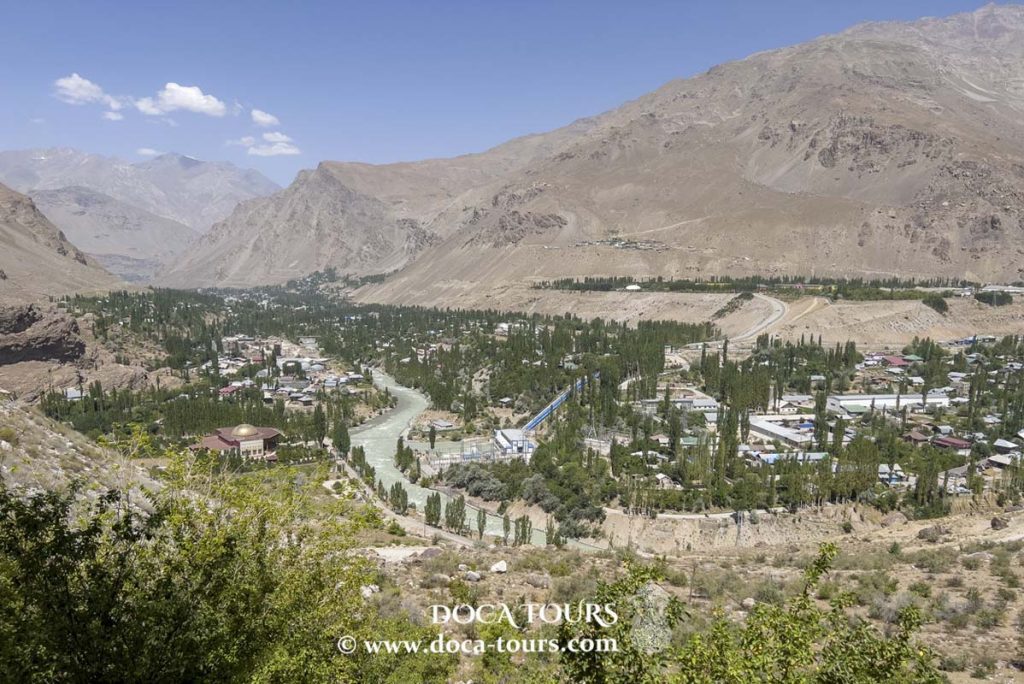 Nestled at an altitude of 2,200 meters (7,200 feet) above sea level, Khorog lies in the Pamir Mountains (historically known as Mount Imeon) at the confluence of the Gunt and Panj rivers. The city is bordered by the Shahdara and Gunt river deltas to the south (Nivodak) and north (Tem), respectively. The rivers merge in the eastern part of the city, flowing through Khorog and splitting it almost evenly before joining the Panj, which marks the border with Afghanistan. Khorog is renowned for its abundant poplar trees, which dominate the city's vegetation.

 Khorog gained international attention in July 2012 during clashes between government forces and local militias. Over 40 people, including 12 soldiers, were killed (though some reports suggest higher casualties). The security forces were targeting suspects involved in the assassination of special services general Abdullo Nazarov. The suspects were allegedly linked to former militia leader turned border patrol commander Tolib Ayombekov, who was reportedly involved in drug trafficking and smuggling tobacco and precious stones. Subsequent violent clashes and protests against alleged human rights violations occurred in 2014, 2018, 2021, and as recently as May 2022.
The Pamir Botanical Garden is Khorog’s most notable attraction. Established in 1940 to test plant survival in mountainous climates, it boasts over 30,000 plant varieties, with about 4,000 species now part of its collection. Situated near Khorog, the garden offers panoramic views of the entire city.
Khorog gained international attention in July 2012 during clashes between government forces and local militias. Over 40 people, including 12 soldiers, were killed (though some reports suggest higher casualties). The security forces were targeting suspects involved in the assassination of special services general Abdullo Nazarov. The suspects were allegedly linked to former militia leader turned border patrol commander Tolib Ayombekov, who was reportedly involved in drug trafficking and smuggling tobacco and precious stones. Subsequent violent clashes and protests against alleged human rights violations occurred in 2014, 2018, 2021, and as recently as May 2022.
The Pamir Botanical Garden is Khorog’s most notable attraction. Established in 1940 to test plant survival in mountainous climates, it boasts over 30,000 plant varieties, with about 4,000 species now part of its collection. Situated near Khorog, the garden offers panoramic views of the entire city.


 The highway is notoriously difficult to traverse in both directions, particularly during winter and spring. Khorog also has a small airport that can accommodate light aircraft like the turboprop AN-28 and Yak-40, as well as helicopters. However, as of 2023, there are no regular flights between Khorog and Dushanbe.

 The city has an airport, and near the bridge, there is a market that operates on Saturdays and Sundays.