

























Key takeaways
- Multi-country packages connect Silk Road cities in Uzbekistan with the mountains and trekking tours in Kyrgyzstan on one guided itinerary.
- Kyrgyzstan received 5.31 million tourists in 2025, a 45.2% rise over 2024 (Kyrgyzstan National Statistical Committee via Xinhua, 2026).
- A good package bundles internal flights, transfers, licensed guides and vetted accommodation so you cross borders without logistics stress.
- Two weeks suits a two-country trip; three weeks lets you add Tajikistan or Kazakhstan without rushing.
- Choose group departures for value and company, or private packages when dates, pace and trek difficulty must be yours.
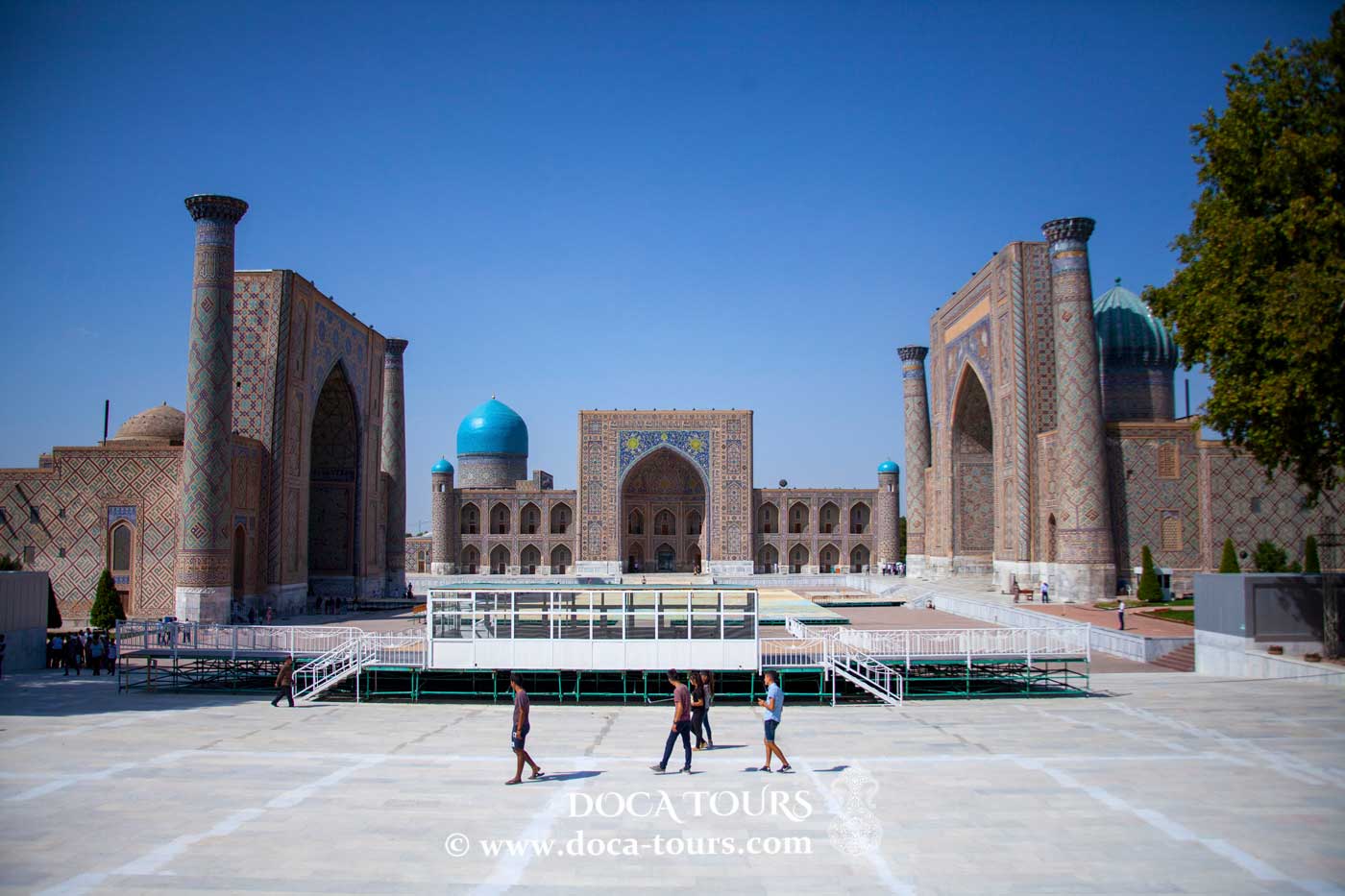
A multi-country Central Asia package stitches several Silk Road countries into one guided trip, so you move from the blue domes of Samarkand to the high passes above Issyk-Kul without planning each leg yourself. For travellers weighing trekking tours in Kyrgyzstan against a cultural week in Uzbekistan, the honest answer is that you no longer have to choose. One booking can deliver both.
That matters because the region is busier and easier to reach than it was even two years ago. Kyrgyzstan received 5.31 million tourists in 2025, up 45.2% on 2024, according to the Kyrgyzstan National Statistical Committee reported via Xinhua. More visitors means more fixed departures, better roads, and smoother border handling for packaged trips.
How Multi-Country Packages Link Uzbekistan, Kyrgyzstan and Beyond
A multi-country package works by sequencing countries so travel between them is short and the themes complement each other. Uzbekistan's draw is architecture and history. Kyrgyzstan's is mountains and nomadic life. In 2025, Uzbekistan welcomed 11.7 million foreign tourists, a 46.8% jump, per the Uzbekistan National Statistics Committee reported by Kun.uz. That scale supports frequent connections into neighbouring countries.
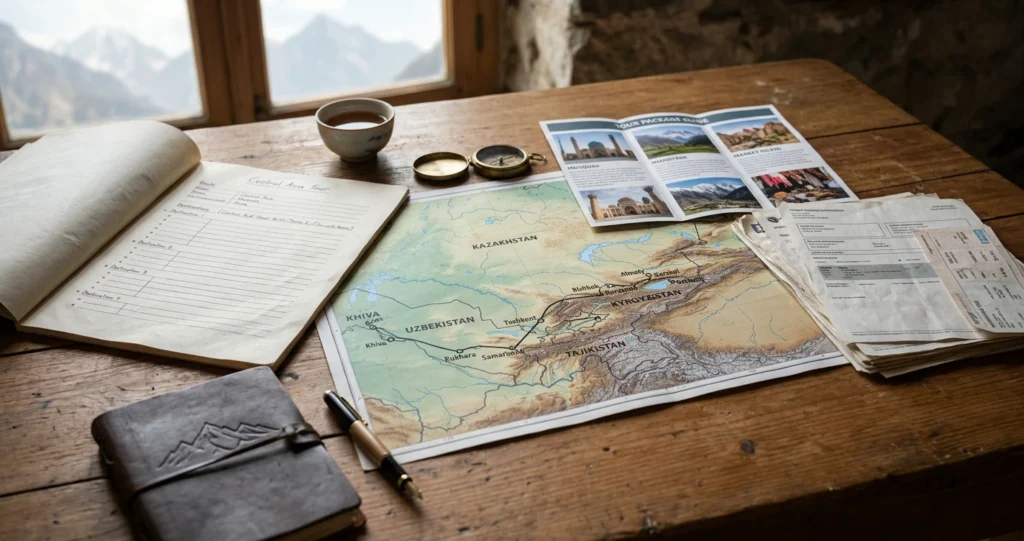
The usual spine runs west to east. You start among the madrasas of Samarkand and Bukhara, then fly or drive toward Tashkent, cross into Kyrgyzstan, and finish in the Tian Shan. Some itineraries add Tajikistan's Pamir Highway or Kazakhstan's Almaty before heading home.
A package removes the friction between those legs. Instead of rebooking a guide and a driver in each country, you keep one operator coordinating the whole route. Doca Tours builds these joined-up itineraries so a cultural first week flows straight into a mountain second week, sequencing cities and mountains so travel days stay short.
What's Bundled: Flights, Transfers, Guides and Accommodation
A full package bundles four things so you never touch a booking engine mid-trip: internal flights, ground transfers, licensed guides, and vetted accommodation. The point is a single price that covers the moving parts, with support reachable in your language if a plan slips.
Internal flights matter in a region this size. A short hop from Samarkand to Tashkent or Bishkek to Osh saves a punishing road day. Transfers then connect airports, hotels, and trailheads, including the drive to a trek start point where public transport simply does not run.
Guides are the part that pays off most. A good local guide reads the history of a mosque and the weather on a mountain pass with equal confidence. Accommodation usually mixes central-city hotels with guesthouses and, on trekking segments, yurt camps or mountain huts. The same hands-off, fully escorted model that works for a single country applies just as well across a whole region.
What is not always included deserves a careful read. International flights, travel insurance, visas where required, and some meals often sit outside the headline price. Check the inclusions list line by line before you compare two packages on cost alone.
Popular Regional Routes and Recommended Trip Lengths
The best route depends on how many countries you want and how much trekking you need. For two countries, allow about two weeks. For three, allow closer to three. Rushing a multi-country trip turns a highlight into a blur of airport lounges.
A classic two-week pairing is Uzbekistan plus Kyrgyzstan: roughly seven days of Silk Road cities, then seven days in the mountains. The trekking half is where Kyrgyzstan earns its reputation. Routes like Ala-Kul lake, Song-Kol, and the Jyrgalan valley sit within reach of organised camps, and each needs two to four days to do properly.
The Issyk-Kul region anchors most mountain itineraries, and its popularity is clear. Visitor numbers there rose 32.1%, from 1.99 million to 2.63 million in 2025, again per the same Kyrgyzstan National Statistical Committee figures reported by Xinhua. More demand has pushed camps and guides to raise their standards.
Three-week travellers can add Tajikistan for the Pamirs or Kazakhstan for Almaty and the Charyn Canyon. If trekking is the whole reason you are coming, let the mountain days drive the plan: build the cultural cities around your chosen route rather than the other way round.
Overland Border Crossings and How Packages Handle Them
Packages handle borders by doing the parts that trip up independent travellers: permits, timed transfers, and a guide waiting on the far side. You walk through immigration, and a new vehicle is already there. The logistics that look daunting from home become a single line on the day's schedule.
Common overland routes are well worn. Tashkent connects to Kyrgyzstan through the Fergana Valley toward Osh. Bishkek links to Almaty in Kazakhstan on the region's busiest corridor. Osh reaches Tajikistan via the Pamir Highway for travellers wanting the high road south.
Rules do shift, so this is where an operator earns its fee. Some crossings close seasonally, and documentation requirements change. A packaged trip absorbs those updates for you rather than leaving you to discover a closed post at the frontier. Access overall keeps loosening: Uzbekistan now offers visa-free entry to a long list of nationalities, which makes assembling a multi-country route far simpler than it was in 2019.
Group Versus Private Multi-Country Package Options
The choice between group and private comes down to budget, pace, and how fixed your dates are. Group departures share costs across travellers, so they price lower and add built-in company. Private packages cost more but bend to your schedule, fitness, and interests.
Group trips suit solo travellers and anyone who enjoys a shared table at dinner. They run on set dates, which means you fit your diary to the departure rather than the reverse. Small group sizes keep the social upside without the coach-tour feel, so ask how many travellers a departure caps at before you book.
Private packages win when specifics matter. A family wanting gentler trekking days, a photographer needing dawn starts, or a couple chasing a particular trek difficulty will all get more from a tailored plan. You pick the dates, the pace, and which mountain routes make the cut.
A middle path exists too. Some travellers join a group for the cultural cities, then switch to a private guide for the trekking half where personal fitness and ambition vary most. Ask whether an operator can split an itinerary that way.
Tips for Choosing Trekking Tours in Kyrgyzstan and Beyond
Start by naming your priority: culture, mountains, or an even split. That single decision shapes the ratio of city days to trail days and tells you which operators to shortlist. A package heavy on madrasas will frustrate a keen hiker, and the reverse is just as true.
Then check the trekking detail. Ask for daily distances, altitude, and the hardest day's elevation gain. Vague phrases like "moderate" hide a wide range. A genuine operator will tell you whether Ala-Kul's pass at 3,560 metres fits your fitness or whether a gentler Song-Kol loop suits you better.
Read the inclusions, confirm the guide-to-traveller ratio, and verify the accommodation standard on mountain nights. Finally, judge responsiveness. The speed and clarity of answers before you pay often predicts the support you will get at a border or a trailhead. When you are ready to compare concrete itineraries against your priorities, browse Doca Tours' Kyrgyzstan tour packages and request a route that puts your chosen trek at the centre.
Frequently asked questions
Are trekking tours in Kyrgyzstan suitable for multi-country Silk Road trips?
Yes. Most operators pair a cultural week in Uzbekistan with a mountain week in Kyrgyzstan. You see Samarkand and Bukhara, then trek routes like Ala-Kul or Song-Kol, all under one booking.
How long should a multi-country Central Asia package be?
Allow about two weeks for two countries and three weeks for three. Shorter trips work but mean long travel days. Trekking segments in Kyrgyzstan need two to four days each to be worthwhile.
Do packages handle overland border crossings?
Yes. Operators arrange permits, transfers to the border, and a guide on the far side. Common routes include Tashkent to Osh and Bishkek to Almaty, so you skip the paperwork guesswork.
Is Central Asia easy to visit in 2026?
Access keeps improving. Uzbekistan welcomed 11.7 million foreign tourists in 2025 and now offers visa-free entry to many nationalities, so building a multi-country route is simpler than a few years ago.
Should I pick a group or private multi-country package?
Group departures cost less and add travel company. Private packages give you control over dates, pace and trek difficulty. Families and keen trekkers often prefer private; solo travellers often prefer groups.