


























Key Takeaways
On February 19, 2027, a new Central Bank instruction on cash supply, cash issuance to customers, and issuing new banknotes and coins took effect (registered on November 17, 2026, under No. 3977).
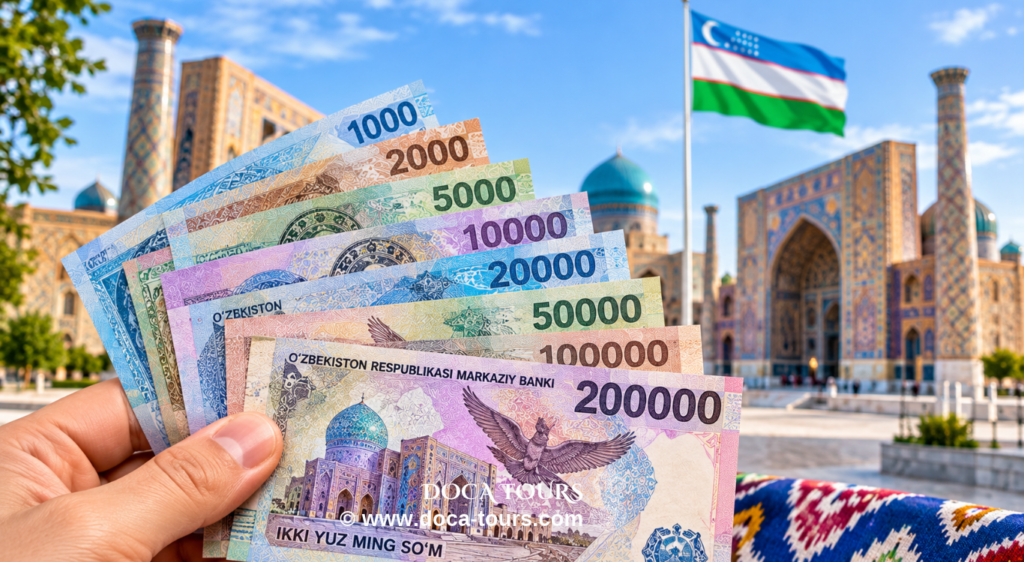
The official currency in the country is the Uzbek soum (UZS); banknotes are common in everyday life, while the source material also mentions notes from 1,000 to 200,000 soums as well as older denominations.
New banknotes and coins will display inscriptions in Uzbek using the Latin alphabet, denomination, Central Bank name, year of design approval, coat of arms or flag, and security features.
Upon entry and exit, a threshold equivalent to 100 million soums applies: above this amount, a written customs declaration is required.
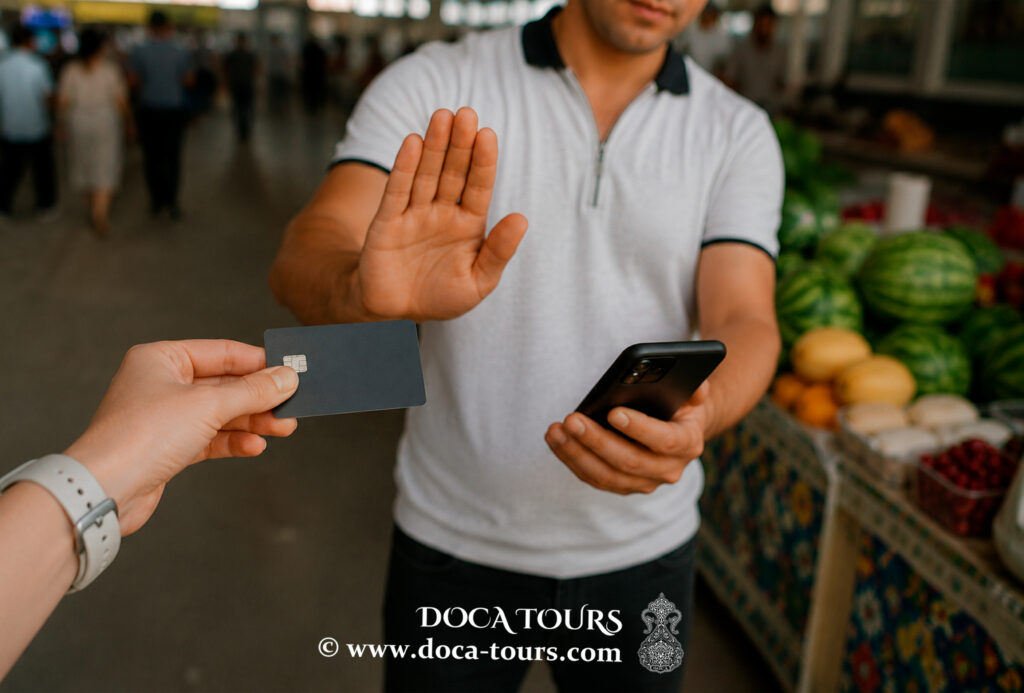
In cities, Visa and Mastercard are widely accepted, while at bazaars, small eateries, and teahouses, cash in sum is practical
Cash in Uzbekistan: 2027 Rules, Currency & Tips for Tourists
Anyone planning a trip to Central Asia wants to know in advance how payments work on the ground and which rules apply. Cash in Uzbekistan continues to play an important role in daily travel—especially at bazaars, in smaller cafés, or teahouses—while international cards are already usable in many cities. At the same time, structural updates in the banking sector are coming: a Central Bank instruction on cash supply, providing cash to customers, and issuing new banknotes and coins was registered on November 17, 2026, under No. 3977 and takes effect on February 19, 2027. This article summarizes the new rules, the currency, and practical tips for foreign visitors clearly.
New Rules for Cash and Banknotes from February 19, 2027
The regulation registered on November 17, 2026 (No. 3977) governs from February 19, 2027, how the Central Bank and commercial banks supply cash, disburse funds, and introduce new means of payment. For foreign travelers, it is important to distinguish between matters that primarily concern internal bank processes and points that affect handling money in the country.
Internal Bank Processes and Cash Supply
Commercial banks will submit monthly forecasts of cash receipts and withdrawals electronically at least three banking business days before the relevant month begins. Daily, they review cash balances, expected receipts, and planned withdrawals so branches and ATMs remain supplied. Banks with surplus cash can offer it through an electronic platform, while banks needing cash submit an electronic request; cash-in-transit services handle transport between banks.
Withdrawal, Exchange, and Announcement of New Notes
Individuals and businesses can withdraw cash on first request within the funds available in their accounts and in accordance with the law; bank branches accept cash in circulation at face value. The Central Bank and commercial banks exchange banknotes and coins for other denominations on request free of charge. The Central Bank announces new banknotes and coins in the media and publishes their description at least one week before they enter circulation.
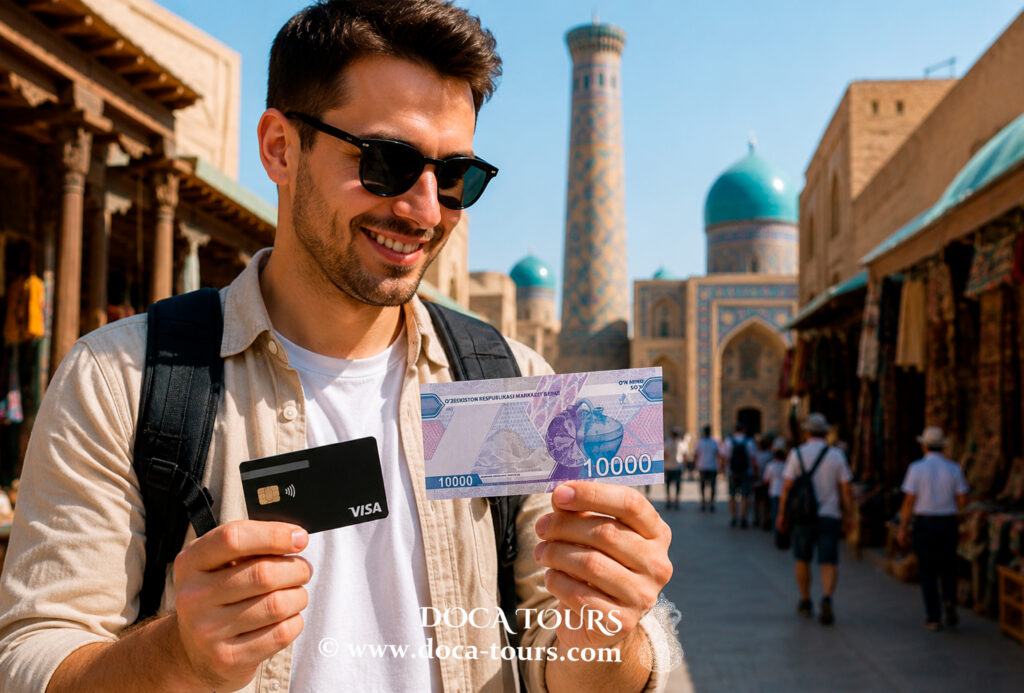
Changes to the Design and Inscriptions of New Banknotes
When new banknotes and coins are issued in the future, clear requirements apply to their design and details:
Language and script: Inscriptions on banknotes and coins will be in Uzbek using the Latin alphabet.
Mandatory details on notes and coins: They will show their denomination, the name of the Central Bank, the year the design was approved, an image of the national coat of arms or flag, and security features.
Additional details on banknotes: Banknotes will also display the face value in words, the series and number, as well as notices on mandatory acceptance for payment and liability for counterfeiting.
Design and security: The provided materials also note that new currency should be made from materials safe for human health and equipped with modern security features and may feature imagery reflecting the country’s history, culture, values, scholars, and achievements.
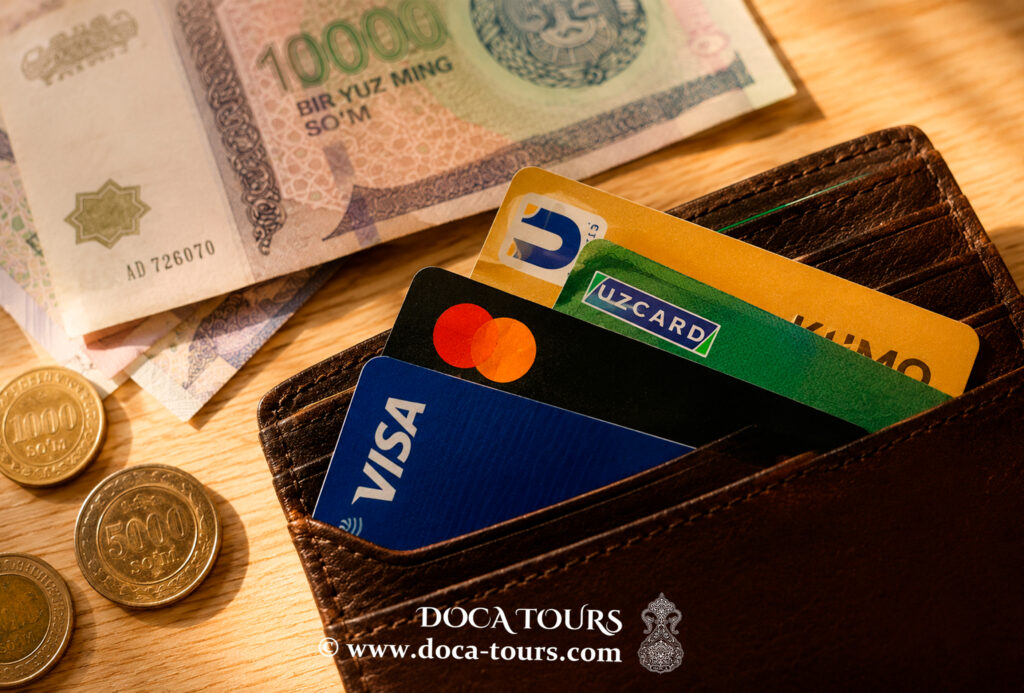
National Currency and Banknotes at a Glance
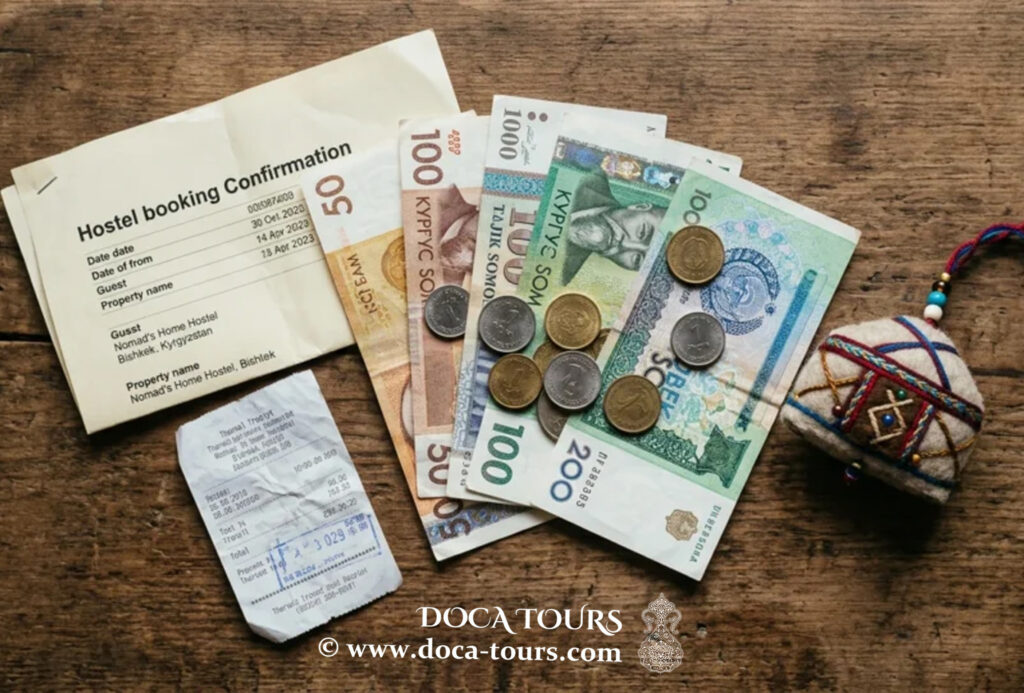
The official currency unit is the Uzbek soum (UZS), based on the decimal system with 100 tiyin to each soum. During your trip, you will encounter notes, with the provided documents mentioning denominations of 100, 200, 500, and 1,000 soums on one hand and notes from 1,000 to 200,000 soums on the other; larger amounts in banknotes can fill your wallet noticeably.
Even when hotels, guides, or tourism businesses occasionally list prices in US dollars, it is illegal to pay in cash for goods and services in anything other than the Uzbek soum. Before traveling, it is advisable to check current exchange rates and conditions directly with the Central Bank of Uzbekistan at cbu.uz.
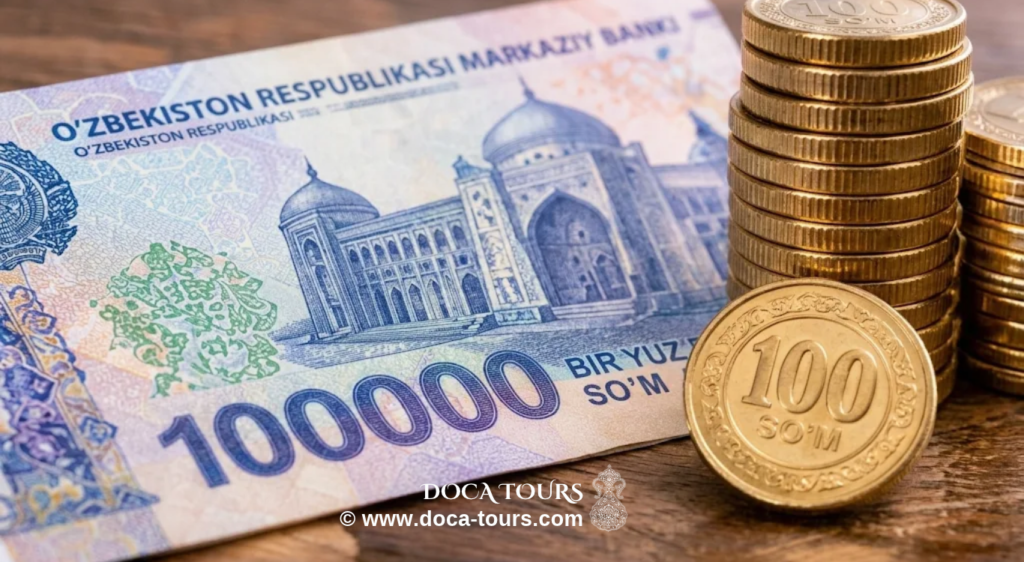
Cash in Uzbekistan: Withdrawals, Currency Exchange & Cards
Anyone needing cash in Uzbekistan should check exchange options, card acceptance, and ATMs early. This helps manage your travel budget smoothly—more on this is also shown in our overview of Central Asia travel costs.
Currency Exchange and Exchange Offices
US dollars are especially popular as a foreign currency to exchange; in addition, exchange offices exchange currencies such as the euro, UK pound sterling, and Japanese yen into soums. Exchange options are available at many larger hotels (often 24/7 except for short breaks), in banks, as well as at exchange kiosks in major supermarkets and at bazaars. Money should only be exchanged at exchange offices or banks, as exchanging elsewhere such as at markets is illegal; furthermore, notes issued before 1996 or worn notes are often rejected.
International Bank Cards and ATMs
In cities—such as in cafés, shops, and restaurants—Visa and Mastercard are accepted in many places. Older guidance also notes that credit cards (including Visa, Mastercard, and American Express) are accepted mainly in most Tashkent hotels and a limited number of shops, making cash in dollar notes of different denominations helpful. Local cards like Humo or Uzcard are generally not needed by visitors.
ATMs can be found at most banks, hotels, and shopping centers—especially in Tashkent, Samarkand, Bukhara, and Khiva, where there are ATMs that accept international cards. A four-digit PIN is typically required, and not every machine can serve every foreign card.
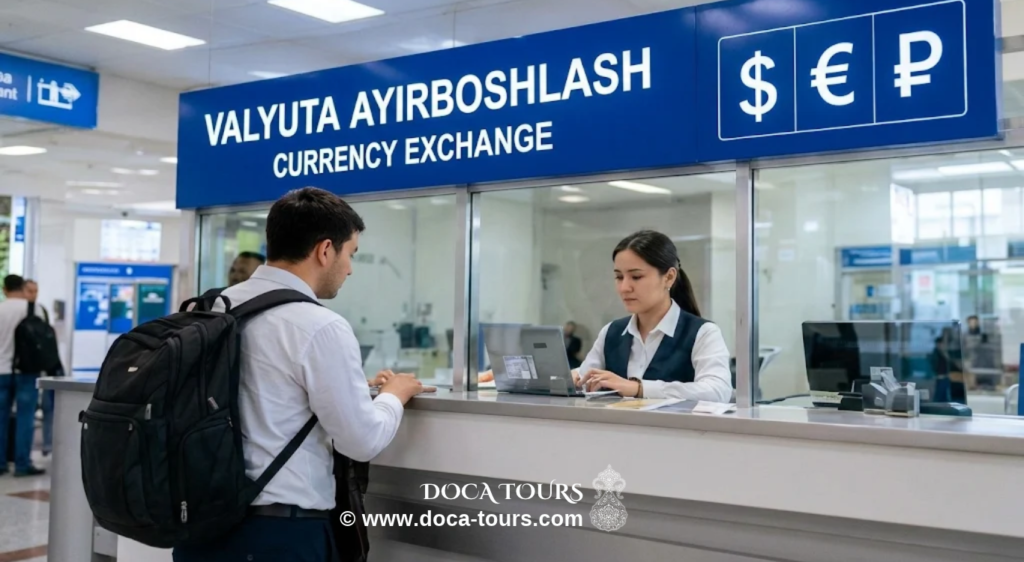
Customs Rules for Bringing Cash In and Out
Upon arrival and departure, clear customs rules apply that you should know in advance to avoid questions at the border:
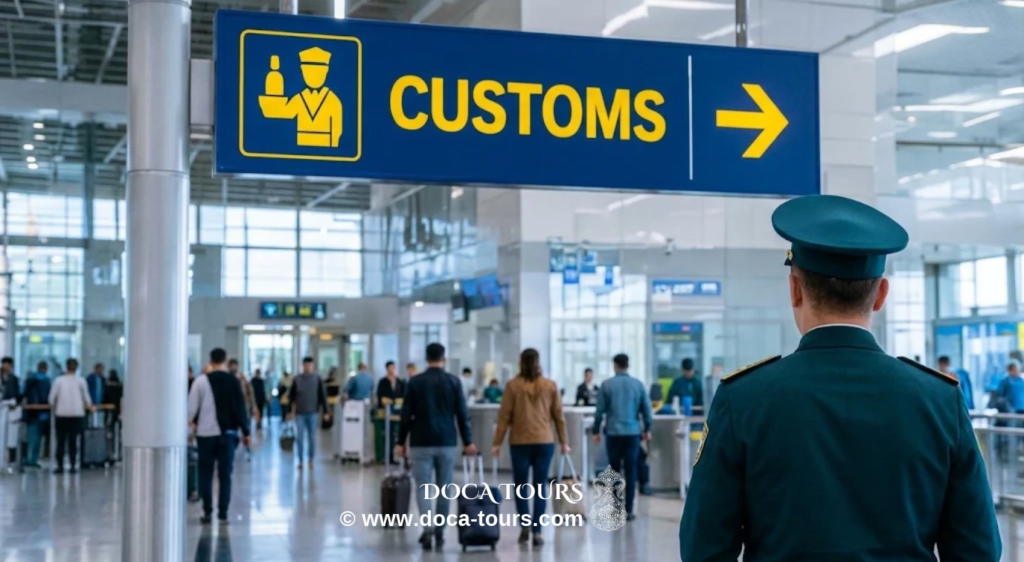
Unlimited entry, but declaration duty: Foreign and national currency in cash may be brought into Uzbekistan in unlimited amounts. If the total cash you are carrying exceeds the equivalent of 100 million soums, you must state the full amount in the passenger customs declaration and present it to the customs officer; declaring amounts below this threshold voluntarily is also possible.
Exit and proof requirements: You may take out cash up to the equivalent of 100 million soums without a declaration. For amounts above this, relevant customs requirements apply, including for foreign citizens the amount of funds declared when entering the country.
Common mistake with larger sums: For example, if a tourist brings 15,000 US dollars into the country and declares the full amount, a copy of the declaration allows them to confirm remaining funds upon exit—even if part of the money was spent during the trip and the remainder exceeds 100 million dollars.
Новый документ.docx
Conversion on the border day: The sum’s equivalent is calculated at the exchange rate of the Central Bank of the Republic of Uzbekistan on the day you cross the customs border.
Additional note from the documents: The provided materials also include a reference to declaring foreign currency in writing at the customs border checkpoint using form T-6.
Practical Tips for Handling Money on Your Trip
With a few simple habits, traveling in cities like Samarkand or Tashkent is much more relaxed:
Do not exchange too much at once: Avoid exchanging overly large sums all at once so you do not have to carry thick rolls of cash.
Ask for a receipt and count on the spot: Always ask for the official receipt at an exchange office, have clerks count the money in front of you, and ask about the rules for exchanging leftover soums back into foreign currency.
Keep a modest reserve for daily expenses: Carry a modest reserve of soums for bazaars, small cafés, teahouses, or spontaneous expenses.
Keep bank hours in mind: Banks are generally open Monday through Friday roughly from 9:00 a.m. to 4:00 p.m., though hours vary by branch, banks close on public holidays, and some close for an hour at lunchtime.
Organize documents and luggage well: Keep copies of customs declarations safely and pay attention to structured storage—matching packing advice can be found in our guide on what to pack for Central Asia.
Ask customs officers if unsure: If you have questions before going through customs control, ask a customs officer directly.
Frequently Asked Questions (FAQ) About Cash in Uzbekistan
When do the new cash and banknote rules in Uzbekistan take effect? The Central Bank instruction registered on November 17, 2026, under No. 3977, takes effect on February 19, 2027.
Which currency is used in Uzbekistan? The official currency is the Uzbek soum (UZS). Cash payments for goods and services in the country must be made in sums.
How much cash can you bring in or take out without a declaration? There is no limit on bringing cash in, but if the total exceeds the equivalent of 100 million soums, you must declare the full amount; when leaving, you may take out cash up to the equivalent of 100 million soums without a declaration.
Which foreign currencies are easy to exchange? US dollars are especially popular; exchange offices and banks also exchange currencies such as euros, UK pound sterling, and Japanese yen into sums.
Do Visa and Mastercard work in Uzbekistan? In cities, Visa and Mastercard are accepted in many cafés, shops, restaurants, and hotels, and ATMs in major centers allow withdrawals in sums with a four-digit PIN—still, carrying a small cash reserve is recommended.
Plan Your Private Journey: As a family-run DMC based in Samarkand, DOCA TOURS supports you in planning your individual trip along the Silk Road. Contact us today to request your personal itinerary!