
























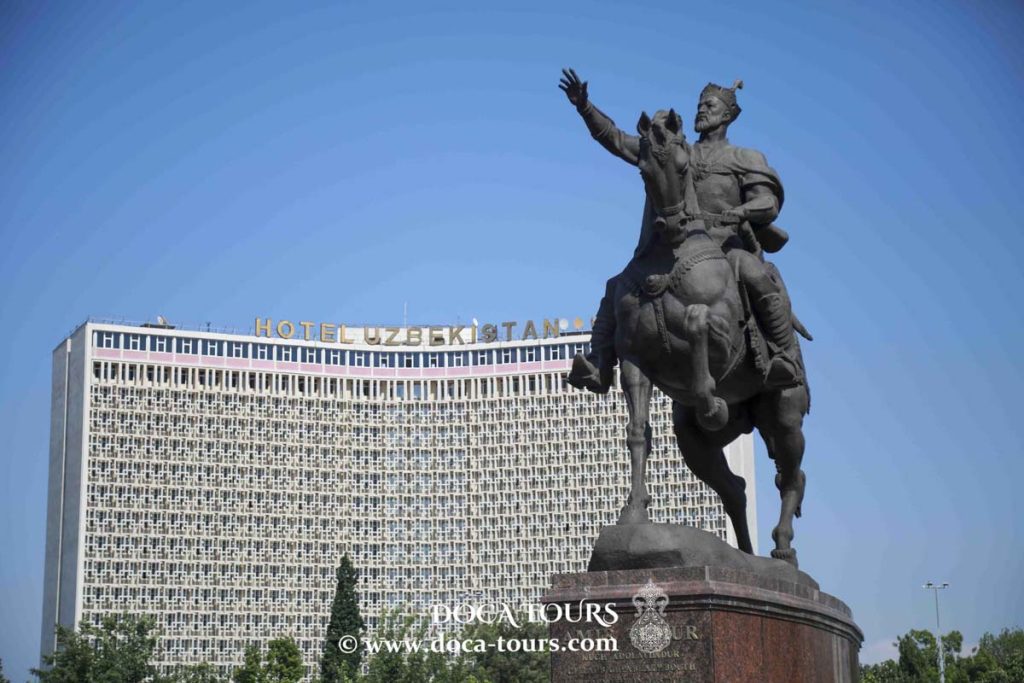
Amir Timur – a creator of great Empire
Video: https://www.youtube.com/watch?v=ILeOH1UQo6o&t=1s
Wars are marching shoulder to shoulder with the civilization of mankind. And wars, as you know, give rise to great warriors. Many such personalities have gone down in history forever and have become a legend.
Only by hearing his name, the kings of Europe trembled. The triumph of his architecture caused the envy of the greatest empires of the time. He led his army from Delhi to the Aegean Sea, from Damascus to Chinese Turkestan. A whole era ended with the commander’s horse campaigns, during which horsemen armed with bows established their order throughout Eurasia.
This is a story about the great Amir Timur, a commander, ruler, creator of the largest empire on the Eurasian continent, which includes the lands of modern Iran, the Caucasus, Mesopotamia, Afghanistan, most of Central Asia, as well as parts of modern Pakistan, India, Syria and Turkey.
1336, April. In the village of Khoja Ilgor, near the town of Shakhrisabz, was born an unusual boy with white hair as snow and his hand stained with blood. The boy’s parents took this as a message from heaven and announced that their son was destined to become a great warrior. The boy was named Timur, which in translation from the Turkic language means “iron”. This largely influenced his strong-willed character and further destiny.
In Persian and Turkic written sources Timur was also called “sahibkiran”, which in figurative meaning means: “Happy” or “born during the conjunction of two planets: Venus and Jupiter.”
Timur’s father was Muhammad Taragay, he was from the Barlas clan, one of the Turkic tribes. It was one of the most influential and powerful Turkic families. Its leaders always bore the honorary title of noyons and enjoyed the exclusive confidence of Genghis Khan.
Childhood and adolescence of the future ruler were spent in the vicinity of his hometown of Kesh. From a young age, Timur loved competitions, hunting and war games. He excellently wielded a spear and shot from a bow, and also played chess well.
Because of the constant strife destroying the country, the young man began to seriously think about politics. Later, together with his military unit, Timur entered the service of his uncle who was the ruler of Kesh – Khoja Barlas.
At the end of the XIII, the beginning of the XIV century, the economic situation of Maverannahr inspired serious concern, the Mongol Khan Tugluk Timur took advantage of this, who in 1360 without difficulty, conquered most of Maverannahr, reaching Kashkadarya. Timur Taragay enters his service. However, after the khan appoints his son as the ruler of the country, he terminates the obligations.
The earliest information about Timur can be found starting in 1361. From that time on, Timur’s political growth begins: he was the leader of the detachments of adherents that he personally recruited, who later remained as the main support of his power. Timur personally delved into all the details of the organization of his military forces, had detailed information about the forces of enemies and the state of their lands. He enjoyed absolute authority among his troops.
For some time Timur lives on the right bank of the Amu Darya River, waging a partisan war with the Mongols. During a skirmish in Seistan, which took place in the fall of 1362 against the enemies of the ruler Malik Qutbiddin, Timur lost two fingers on his right hand and was badly wounded in his right leg, which made him lame, for which he received the nickname Timur-lang (Lame Timur).
Since the time of Genghis Khan, only Genghis Khan descendants could bear the title of Great Khan. That is why Timur formally bore the title of Emir (warlord). At the same time, in 1370 he managed to intermarry with the Chingizids by marrying Saray Mulkhanim who was the daughter of Kazan Khan. After that, Timur received the prefix Gurgan to his name, which means “son-in-law”, which allowed him to act as a ruler.
Having achieved significant success in 1370 at the general kurultay (Assembly) of the Mongol Empire in Balkh, he was proclaimed ruler. Now the main task of Amir Timur was to unite all disparate territories into a single whole. Enlisting the support of the local clergy and feudal lords, Tamerlane made 9 military campaigns.
Three-year, five-year and seven-year campaigns of conquest are known in Timur’s biography. In a three-year campaign, he conquered: Georgia, northern Iraq, Armenia and the south of Azerbaijan. The rest of Azerbaijan, Iraq and Iran were annexed to the empire during a five-year campaign.
The longest campaign began in Iran. And in 1402, near Ankara, Timur defeated the Ottoman Empire, capturing Sultan Bayezid I. After this military campaign, all of Asia Minor was under the control of the commander.
Amir Temur didn`t want to conquer the lands of Russia, making three attempts to defeat the troops of the Golden Horde and overthrow Khan Tokhtamysh, he had to invade the Russian lands. But after the victory over the troops of Tokhtamysh, the pressure of the Golden Horde on the Russian princedoms weakened significantly.
Historians write: “In pursuit of the fleeing troops of Tokhtamysh, Timur invaded Ryazan, ruined Yelets, posing a threat to Moscow. Having launched an offensive on Moscow, on August 26, 1395, he unexpectedly, turned back (possibly due to the uprisings of previously conquered peoples) and left the Moscow lands on the very day when Muscovites met the image of the Vladimir Icon of the Sacred virgin (from that day the icon is revered as the patroness of Moscow) “.
His victories over the Golden Horde removed the main obstacle to the creation of a unified Russian state. Mongol domination was broken over the northern steppes, and the continental caravan trade, transferred to the south, provided the Russian states with access to trade with distant countries.
The brilliant commander, who conquered a territory roughly equal to the empire of Alexander the Great, was the first to create an intelligent army in the east. In the campaign, in the battle and during the siege of cities, everything took place according to a strictly worked out system and in full accordance with the campaign plan. The strictest order and absolute discipline reigned in the army; the soldiers unquestioningly obeyed their commanders.
The military organization of Timur’s troops was upbuilt according to the decimal system: tens, hundreds, thousands and 10 thousand.
Thanks to the great experience of his predecessors, Timur managed to create a powerful army that allowed him to win victories on the battlefields. His army was multinational and multi-confessional, the core was the Turkic-Mongol warriors. Timur’s army consisted of cavalry and infantry.
In addition to the main types of troops: heavy and light cavalry, as well as infantry, Timur’s army had detachments of workers, engineers and other specialists.
The main weapon of the cavalry and infantry was the bow. The cavalrymen also used sabers, swords and axes. Heavily armed horsemen wore armor. The most popular armor was chain mail, reinforced with metal plates. The warriors were protected by helmets.
The experienced warriors of Tamerlane shot at least 16 arrows per minute at full gallop, hitting a target the size of a squirrel’s head from a distance of 100 steps. The boot bent upwards toe, made it possible to control the horse without the aid of hands because the warrior needed his hands to hold the sabre tightly and shoot from the bow.
In his campaigns, Timur used banners with the image of three rings. According to historians, the three rings symbolized: earth, water and sky. According to another theory, Timur could borrow this symbol from the Tibetans, where three rings meant: past, present and future.
The sedentary population supplied infantry, artillery formations and soldiers for ancillary and siege work, for launching catapults, driving in rams, launching fire arrows and throwing grenades with an incendiary mixture from oil. The assigned intelligence service functioned splendidly, which was supposed to give an accurate assessment of the enemy’s forces, his morale, and location on the ground. Timur himself developed a plan for each battle and tactical guidelines for all parts of the troops. The center and the leading core of the army were representatives from the Barlas clan. With this army, Timur defeated the best leaders of his time. He was practically invincible.
News of the great conqueror reached Europe. They were frightened, and it made them think about the coming threat from the East.
Timur manages to create a great empire with the capital in Samarkand, in which reigns order, flourishes creativity and operate fair laws.
Timur established diplomatic relations with many states, such as England, France, China, Egypt, Spain and others. In 1404, Rui Gonzales de Clavikho, the ambassador of the Castilian king, visited his country. The originals of Timur’s letters to the French king Charles VI have also survived.
Timur is less known to us as a great creator and reformer, although there is more than enough evidence of this side of Timur’s genius. Conquering countries, Tamerlane took out from them not only gold and jewelry, but also scientists, artists, architects, builders, craftsmen and artists (musicians, dancers). The displaced specialists received funds for the arrangement in the cities of his empire (in Samarkand, Kesh Shakhrisabz, Bukhara) and work in accordance with their specialties. Only from India, Timur took out more than one hundred thousand artisans specializing in the production of fabrics and weapons, as well as architects, masons, engineers, doctors.
Both ancient and modern researchers agree that Timur’s buildings are distinguished by a special style and sophistication. Most of the surviving monuments of Timur’s architecture are included in the “treasury of world culture”.
Timur knew the Asian continent better than any atlas. In between state affairs and in moments of rest, he discussed with the dignitaries of his court and listened with pleasure to the legends of his people. Timur could adequately argue with the leading scholars of Islam on history, religious teachings and scientific problems. The documents of Timur’s state were drawn up in two languages: Persian and Turkic.
Amir Timur ruled the state for thirty-five years.
At the age of 68, in the fall of 1404, Timur began his campaign in China. The reason for this was the persecution of Muslims in China and the desire to expand the empire. Timur believed that the world was too small for two rulers. Besides, the main goal was also to capture the remaining part of the Great Silk Road in order to obtain maximum profit and ensure the prosperity of his native Maverannahr with its capital in Samarkand.
In August 1404, the commander returned to Samarkand and a few months later began a campaign against China. Preparations for this campaign began in 1398. In that year, by his order, a fortress was built on the border of the present Syr-Darya region and Semirechye; in 1404, another fortification was built, 10 days’ journey to the east, presumably, at the Issyk-Kul lake. The campaign was terminated due to the severe winter. And in February 1405 Timur died.
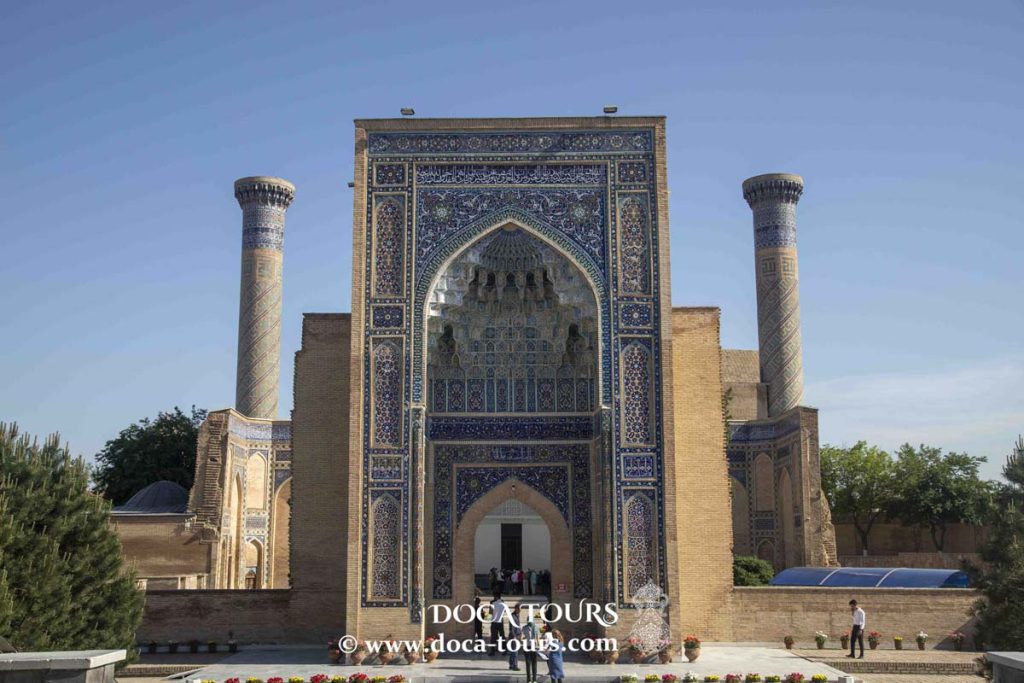
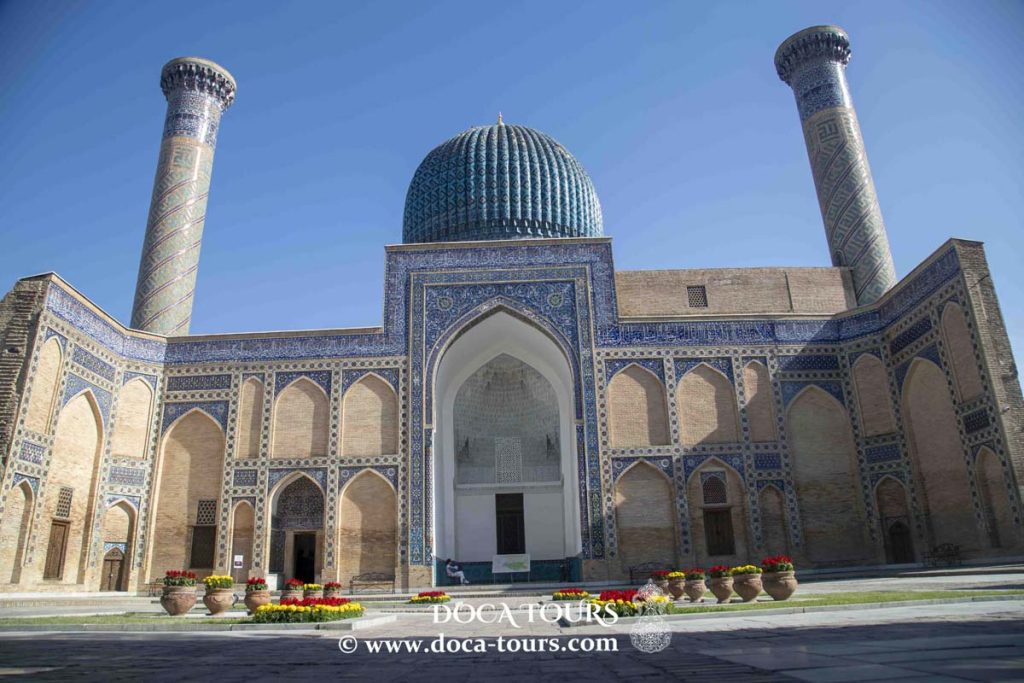
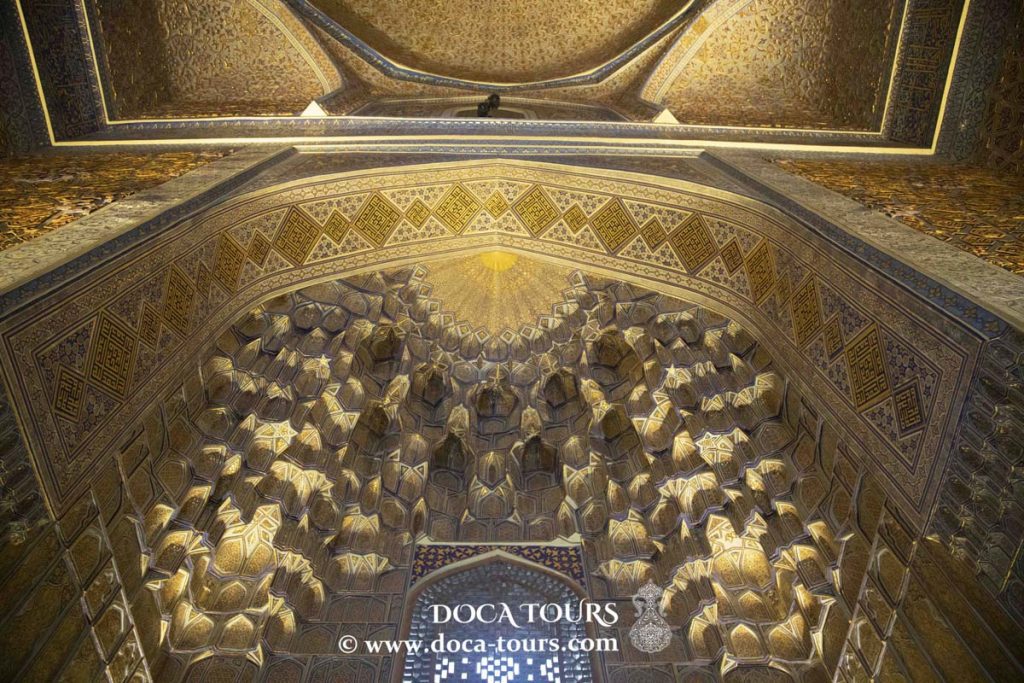
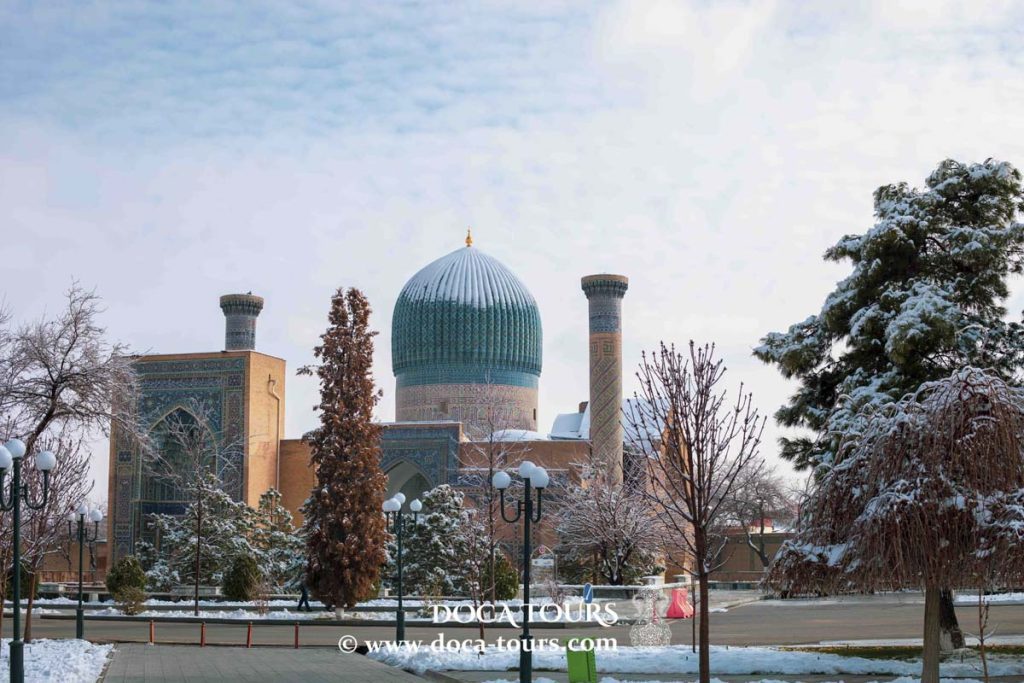
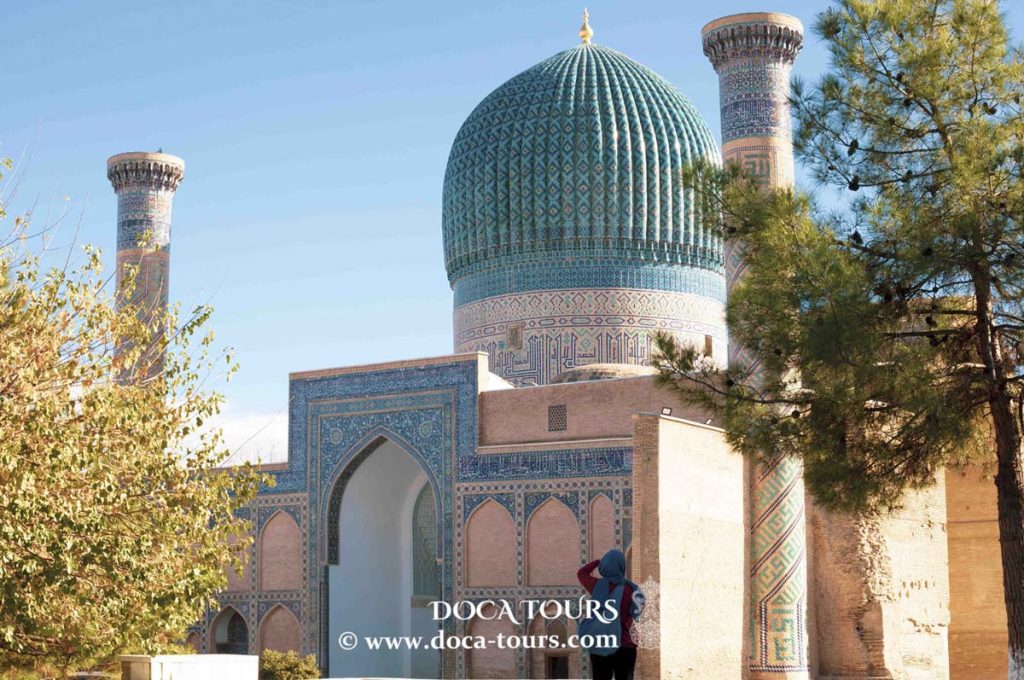
His body was embalmed, placed in a coffin with black brocade and sent to Samarkand, where he rested in the Gur-Emir family tomb.
When the anthropologist Gerasimov opened the tomb of Gur-Emir in 1941 in Samarkand, where Timur was officially buried, a skeleton was discovered, whose height was 172 cm. He was a strong man, physically developed, his contemporaries wrote about him: “If most of the soldiers could pull the bowstring to the level of the collarbone, then Timur pulled it up to the ear. ” His hair was blonder than that of most of his fellow tribesmen.
Timur’s dynasty continued to exist in Central Asia for about a hundred years after his death. Samarkand has become a major scientific center. There Timur’s grandson Ulugbek founded an observatory and developed astronomical tables, which were widely used by European scientists since the 17th century. Babur, Timur’s great-great-great-grandson, settled first in Kabul and later conquered Delhi. He founded a dynasty of Muslim emperors in India known as the Great Mughuls.
During the reign of Timur, a set of laws was created, known as: “Timur’s Orders”, which outlined the rules of conduct for subjects, the duties of the ruler and officials, as well as the rules for managing the army and the state.
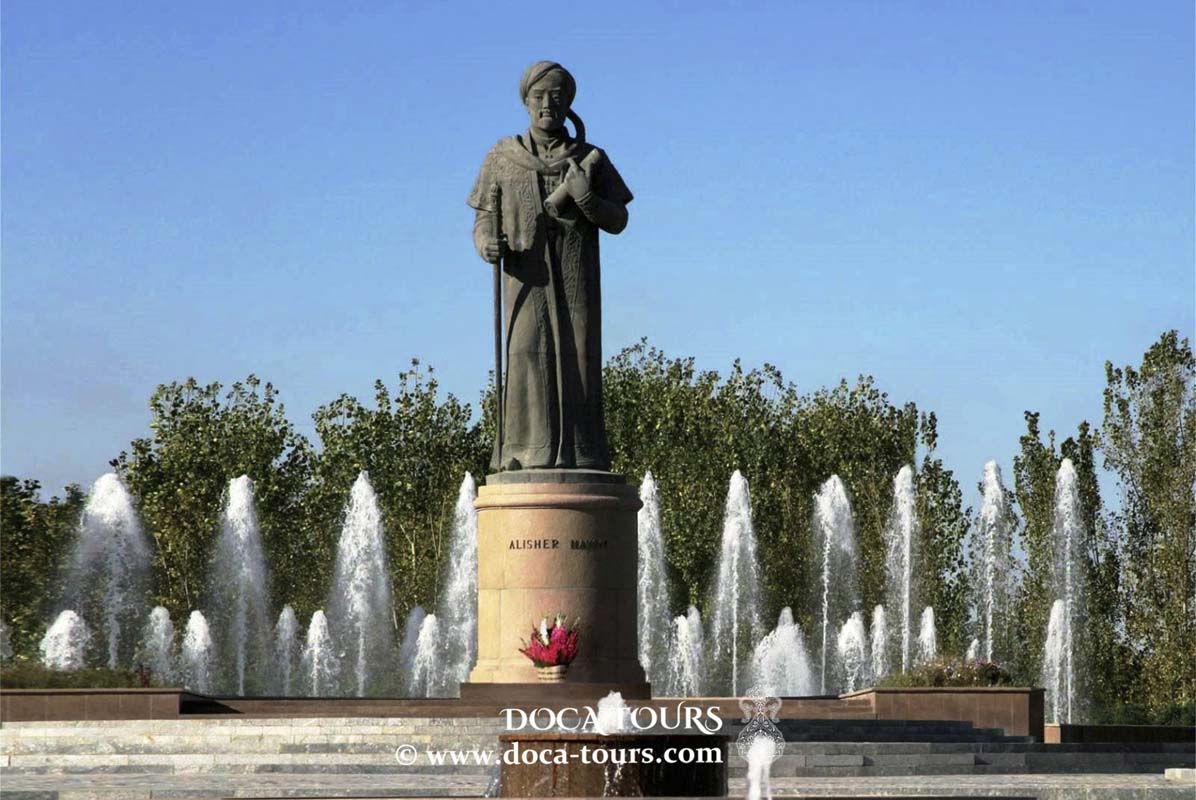
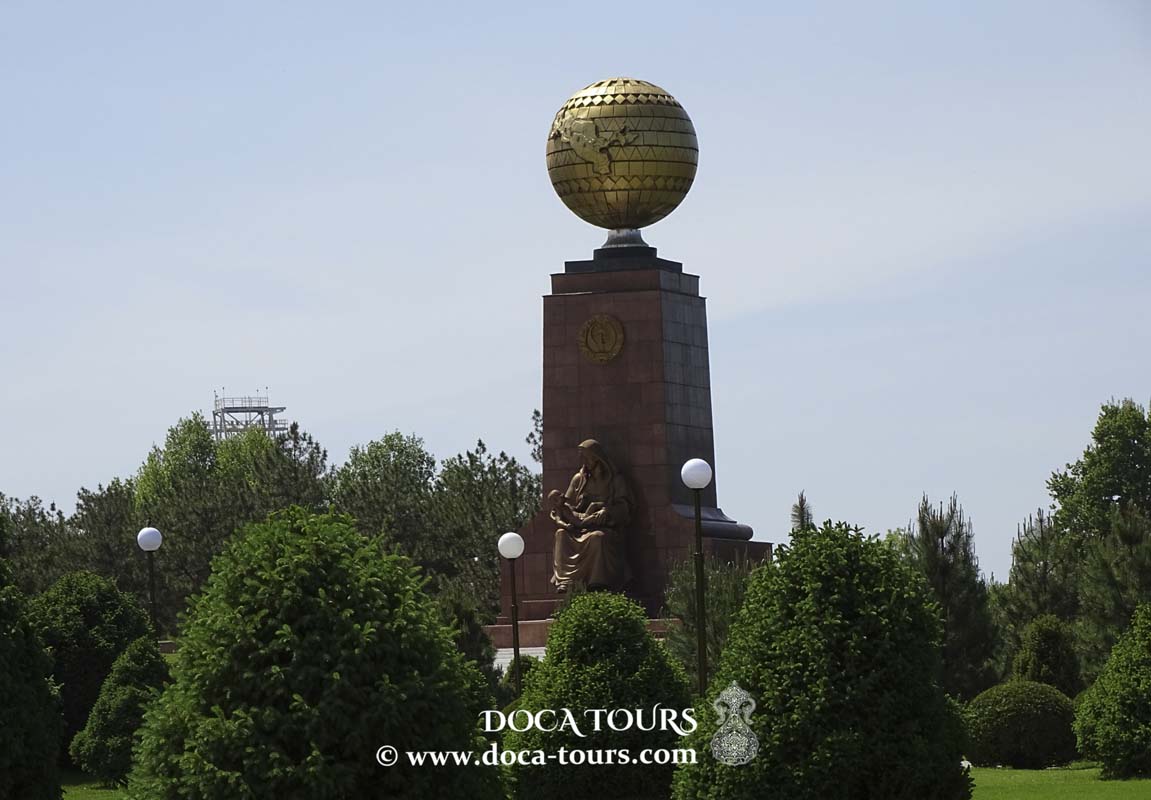
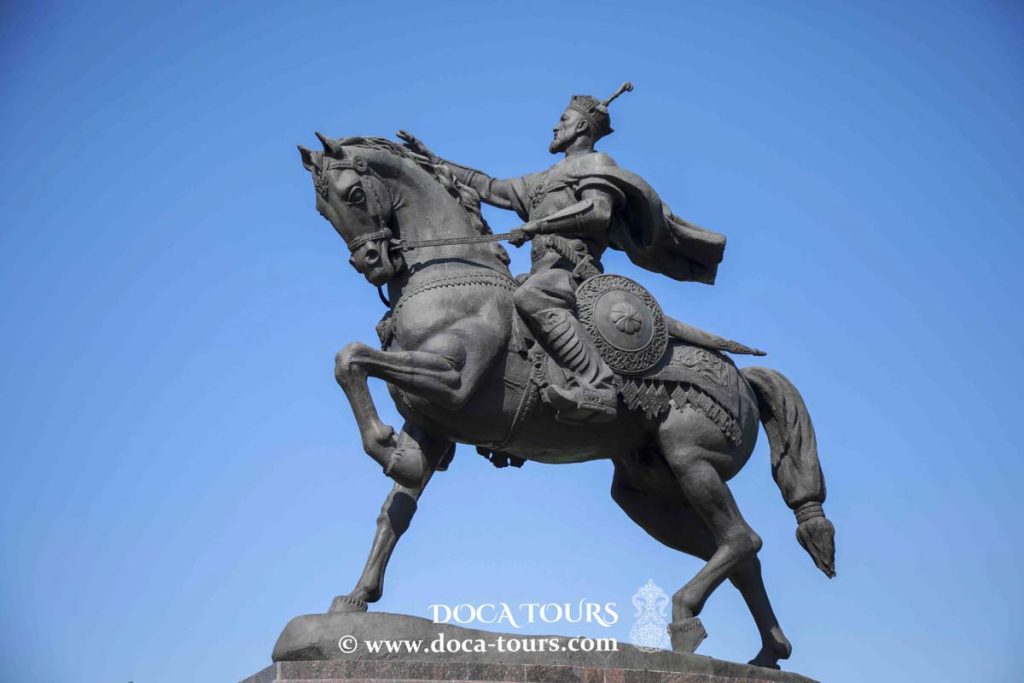
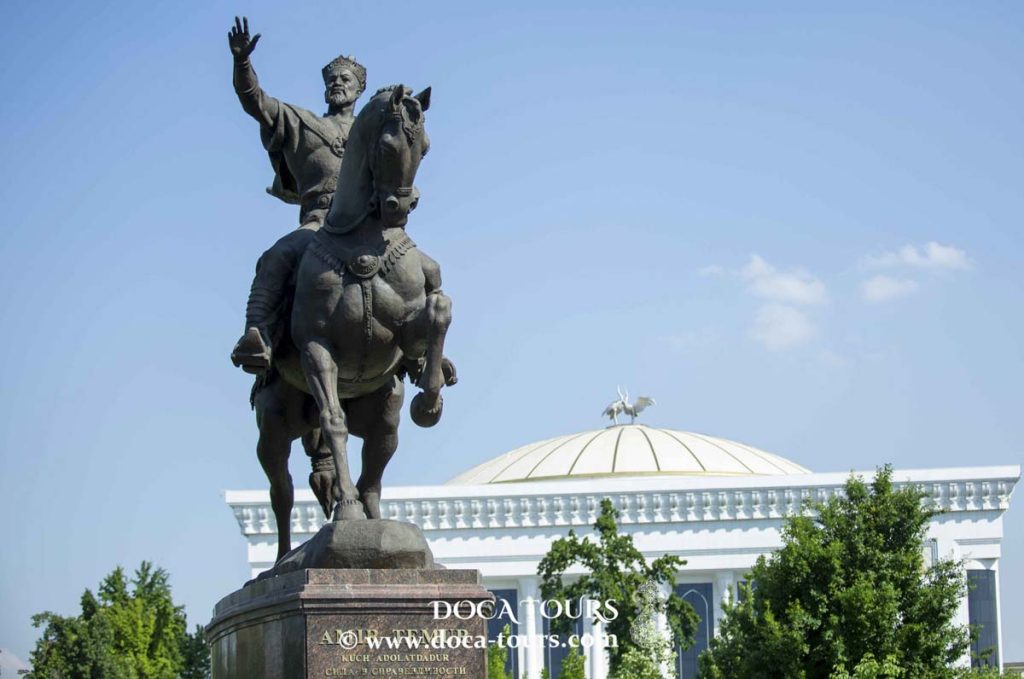
Some of the ruler’s artifacts have survived to our time, they are found in different parts of the world. The stone with the Karsakpay inscription is presented in the St. Petersburg Hermitage. The sword of war is in the Tehran Museum. The so-called Timur’s ruby can be seen in London. Monuments were erected in his honor in the cities of Tashkent, Samarkand, Shakhrisabz.
Amir Timur will remain in the history of mankind as a recognized great commander, creator and ruler.
Thank you very much for your attention.
Subscribe to the channel and don’t forget to like our videos.
#Tamerlan #AmirTimur #Temurlang #Empire #TamerlanEmpire #History #CentralAsia #Silkroad #Samarkand #Bukhara #Battles #Tmursorder #Tours #traveling #Voyage #trip #Turan #Turkestan #Bayazid #GoldenHorde #Tokhtamysh #Shakhrisabz, #uzbekistan, #asia, #landmark, #amir, #timur, #uzbek, #architecture, #travel, #tourism, #tashkent, #central, #historical, #tamerlane, #temur, #timurid, #samarkand, #square, #building, #city, #capital, #islam, #blue, #downtown, #park, #monument, #history, #decoration, #tourist, #islamic, #toshkent, #statue, #attraction, #empire, #historic, #warrior, #outdoor, #emperor, #amir timur, #east, #dome, #conqueror, #museum, #central asia, #sightseeing, #place, #entrance, #main, #man, #ancient, #art