





























Key takeaways
- British passport holders can visit Uzbekistan visa-free for up to 30 days, with no application and no fee (UK FCDO, 2026).
- Uzbekistan Airways flies direct from London Heathrow to Tashkent twice a week, with a flight time of about 6 hours 50 minutes.
- Spring (April to May) and autumn (September to October) offer the most comfortable weather for a cultural tour.
- A 7 to 10 day guided trip covering Tashkent, Samarkand, Bukhara and Khiva suits most first-time UK visitors.
- Booking with a local operator removes the hassle of arranging domestic transport, guides and accommodation from afar.
British travellers can reach the heart of the Silk Road with a single direct flight and no visa paperwork. That combination makes Uzbekistan one of the easiest Central Asian countries to visit from the UK, and this guide walks you through flights, entry rules, timing, itineraries and budget so you can book with confidence.
Uzbekistan holds the showpiece cities of the old Silk Road: Samarkand, Bukhara and Khiva. For anyone comparing tours to Uzbekistan from the UK, the practical questions usually come first. How do you get there, what does entry involve, when should you go, and what will it cost? Here are the answers.
How Do You Fly from the UK to Tashkent?
Uzbekistan Airways runs direct flights from London Heathrow to Tashkent twice a week, on Tuesdays and Fridays, with a flight time of about 6 hours 50 minutes (FlightMapper, 2026). That direct option is the quickest way in for most UK visitors.
Tashkent is the country's main gateway, and almost every Silk Road tour begins there. If the direct schedule does not fit your dates, one-stop routes are plentiful. Turkish Airlines connects through Istanbul, flydubai and Emirates route through Dubai, and several carriers link through Gulf and European hubs.
Travellers from Manchester, Edinburgh, Birmingham or Glasgow usually fly to Istanbul or Dubai first, then onward to Tashkent. A connecting journey adds a few hours but often widens your choice of departure days and fares. Booking the whole route as one ticket protects your connection if the first leg runs late.
What Are the Visa and Entry Rules for British Travellers?
You can visit Uzbekistan without a visa for tourism or business for up to 30 days (UK Foreign, Commonwealth & Development Office, 2026). There is no application to complete and no fee to pay, which strips a common headache out of trip planning.
Your passport should be valid for the duration of your stay. On arrival you simply pass through immigration and collect your bag. Keep your accommodation details handy, as hotels register guests with the authorities automatically, a routine step that tour operators handle for you.
Thirty days is far longer than most holidays, so the allowance comfortably covers even an extended multi-city trip. If you plan to combine Uzbekistan with neighbouring countries, check each one separately, since entry rules vary across the region. Our guide to planning a multi-country trip across Central Asia covers those border details.
How Long Should Your Trip Be, and What Should It Cover?
A 7 to 10 day tour suits most first-time UK visitors. That length covers the three great Silk Road cities without rushing, and it matches a single direct flight in each direction with time to spare inside the 30-day limit.
A classic route runs west across the country. You start in Tashkent, take the high-speed Afrosiyob train to Samarkand, then continue to Bukhara and finish in Khiva before flying home. Each city has its own character, so the distances feel worthwhile rather than repetitive.
Here is how the stops typically break down:
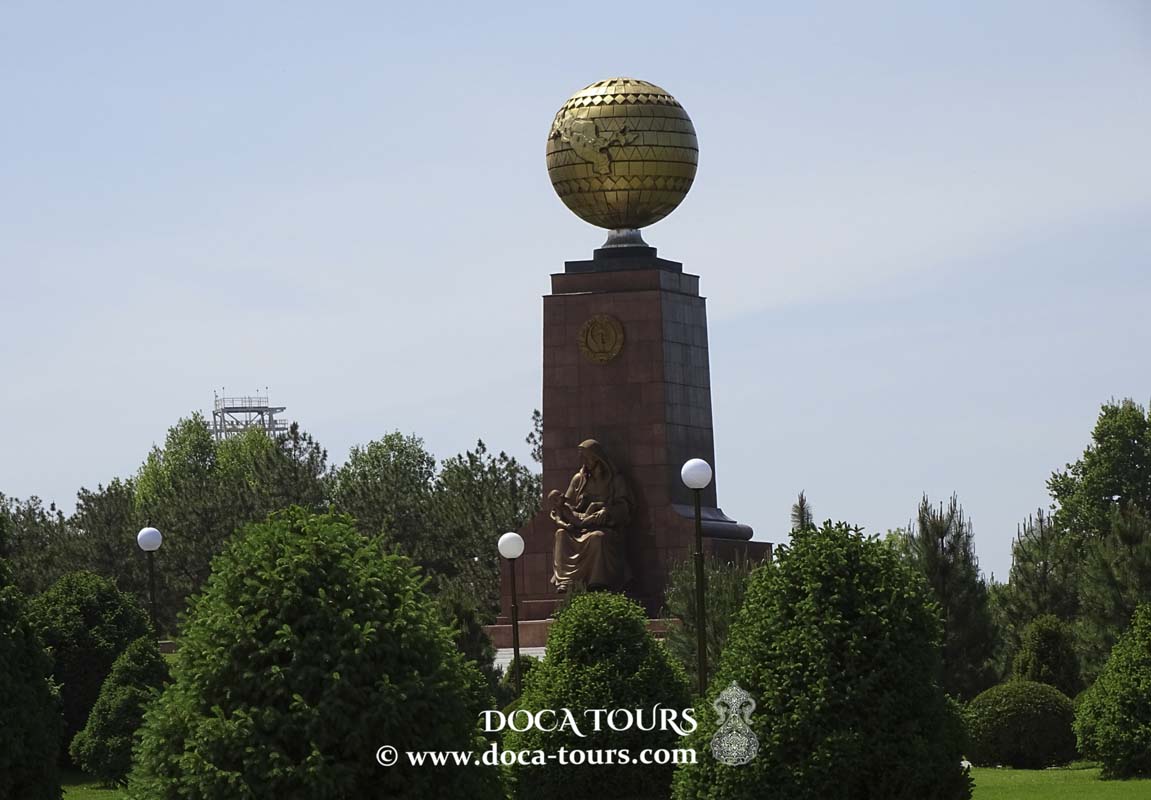
- Tashkent (1 day): The capital and arrival point, mixing Soviet-era avenues with old bazaars and metro stations worth seeing in their own right.
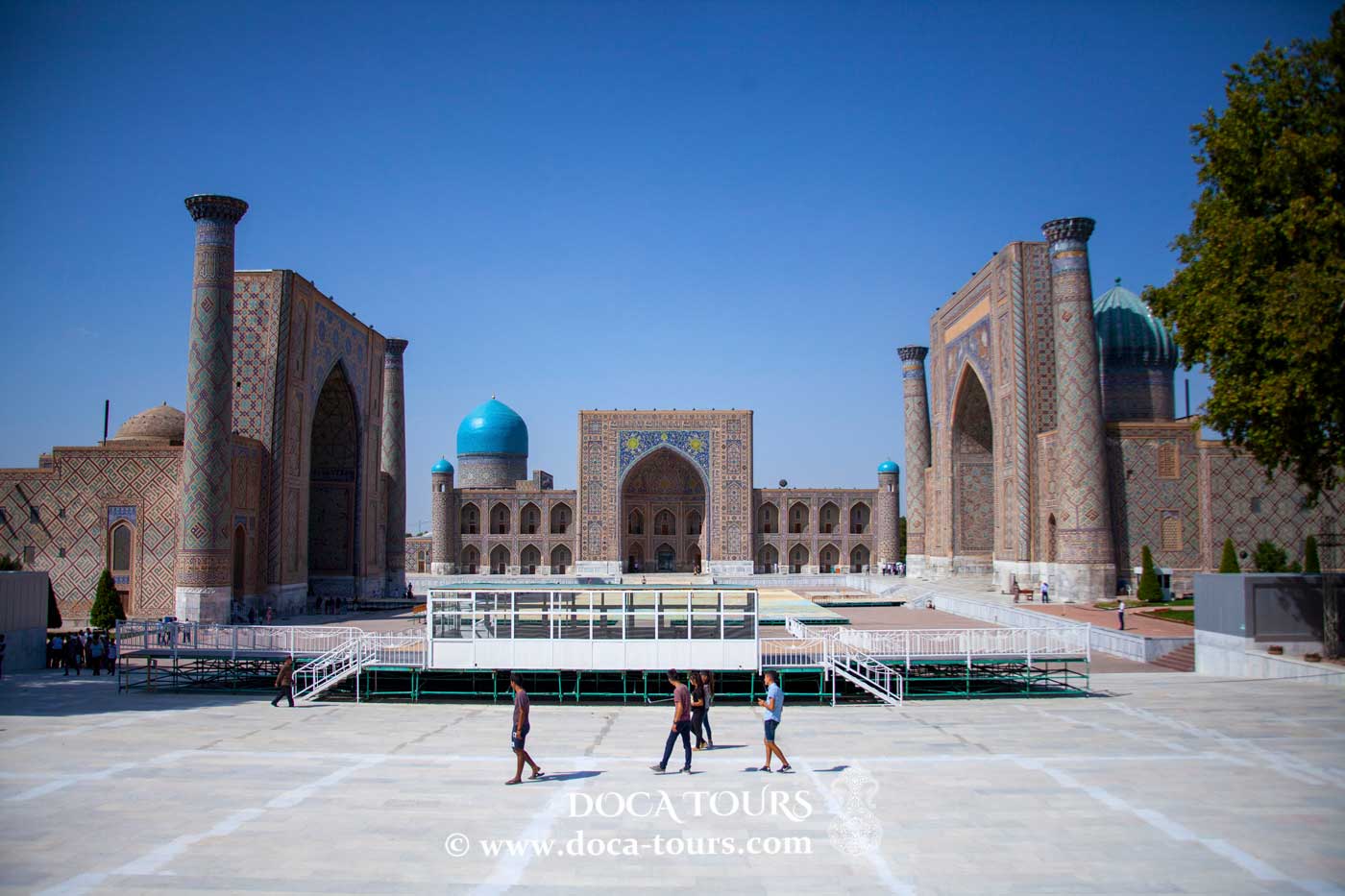
- Samarkand (2 days): Home to the Registan, the Shah-i-Zinda necropolis and the Bibi-Khanym Mosque.
- Bukhara (2 days): A living medieval centre around the Kalon Minaret, the Ark fortress and the Lyab-i-Hauz pool.
- Khiva (1 to 2 days): The walled inner town of Itchan Kala, a UNESCO site you can explore on foot.
If you want more time in each city, or a private pace rather than a fixed group schedule, a tailored plan works well. Doca Tours arranges private Uzbekistan itineraries that stretch or shorten this route around your interests.
When Is the Best Time to Travel?
Spring and autumn are the clear winners. April to May and September to October deliver warm, dry days that suit long hours of sightseeing, which is why these windows top almost every seasoned traveller's recommendation.
Summer is the season to avoid. In July, Samarkand sees average high temperatures around 34.5 degrees Celsius, with peaks climbing higher still (Weather Atlas, 1991-2020 normals). Walking stone courtyards in that heat is draining, especially after a long flight from a cooler UK climate.
Winter swings the other way. December through February can turn cold, grey and occasionally snowy, and some smaller sites feel bleak. A few travellers enjoy the quiet and lower prices, but for a first visit the shoulder seasons give you the kindest conditions.
Do spring and autumn get busy? They do, since everyone else has worked out the same thing. Booking a few months ahead secures the better hotels and guides before they fill, particularly around public holidays.
What Does a Guided Trip Really Cost?
Budget for three main buckets: your international flights, the land package, and personal spending. Flights from the UK vary most, so set your dates early and track fares for your chosen season.
The land package is where a guided tour earns its keep. It bundles hotels, a driver, an English-speaking guide, intercity transport and entrance fees into one price, so you avoid booking a dozen pieces separately from home. Train tickets between cities, especially the popular Afrosiyob service, sell out in peak months and are far simpler to secure through an operator.
Day-to-day costs on the ground are modest by UK standards. Meals, local transport and souvenirs rarely strain a budget, and tipping is appreciated but not aggressive. To compare formats and price points before you commit, browse the full range of Uzbekistan tour packages and match one to your dates.
Why Book with a Local Operator?
Arranging intercity trains, vetted guides and well-placed hotels from thousands of miles away is slow and error-prone. A local operator already holds those relationships, which means smoother transfers, confirmed train seats and guides who know each city well.
A ground team on the spot also helps when plans shift. A delayed flight, a change of pace or a last-minute request is handled quickly by people in the same time zone as your trip. That responsiveness is hard to match when you have booked everything piecemeal yourself.
Doca Tours runs guided travel across Uzbekistan and the wider region, handling the logistics so you focus on the Registan rather than the paperwork. The simplest next step is to pick your season, choose a 7 to 10 day route, and ask the team to confirm the direct Heathrow flight dates against an itinerary that fits your calendar.
Frequently asked questions
Do UK citizens need a visa for Uzbekistan?
No. British passport holders can enter Uzbekistan visa-free for up to 30 days for tourism or business, with no application or fee required (UK FCDO, 2026). Your passport should be valid for the length of your stay.
Are there direct flights from the UK to Uzbekistan?
Yes. Uzbekistan Airways operates direct flights from London Heathrow to Tashkent twice a week, with a flight time of roughly 6 hours 50 minutes. Travellers from other UK airports connect through hubs such as Istanbul or Dubai.
When is the best time to visit Uzbekistan from the UK?
Spring (April to May) and autumn (September to October) are ideal. Summer temperatures in cities like Samarkand regularly climb above 34 degrees Celsius, which is uncomfortable for sightseeing.
How long should a first Uzbekistan trip be?
Most first-time visitors choose a 7 to 10 day guided tour. That window covers Tashkent, Samarkand, Bukhara and often Khiva at a reasonable pace without long daily drives.