
























Key takeaways
- The Kyzylkum spans roughly 298,000 square kilometres, making it the 15th largest desert in the world and a natural bridge between Khiva and Bukhara.
- A Kyzylkum desert tour usually means one overnight in a yurt camp near Aydarkul Lake, with camel riding and a desert sunset included.
- Aydarkul Lake was created by accident in 1969 when the Chardara reservoir overflowed, so the water is a recent feature of an ancient landscape.
- Nurata, with a hilltop fortress linked by local tradition to Alexander the Great, pairs well with a desert night as a half-day stop.
- The detour adds one day to a standard Khiva to Bukhara route and suits travellers who want nomadic culture without a long trek.
A Kyzylkum desert tour is the overnight you slot between Khiva and Bukhara to swap city walls for open sand, a yurt camp and a lake that should not exist. It usually means one night under felt, a slow camel ride at dusk and a sunset over Aydarkul, plus a stop at the old fortress town of Nurata on the way.
The Kyzylkum covers roughly 298,000 square kilometres, which ranks it as the 15th largest desert on Earth and spreads it across Uzbekistan, Kazakhstan and Turkmenistan (Wikipedia). Its name means "red sand," and the long drive between Uzbekistan's two great Silk Road cities runs straight through it. That geography is why so many travellers turn a transit day into the most memorable night of the trip.
A Kyzylkum Desert Tour Between Khiva and Bukhara
The Kyzylkum sits between the Amu Darya and Syr Darya rivers, filling most of the land between Khiva and Bukhara. Driving that corridor takes the best part of a day, so breaking it with a desert stay turns dead transit time into the heart of the itinerary.
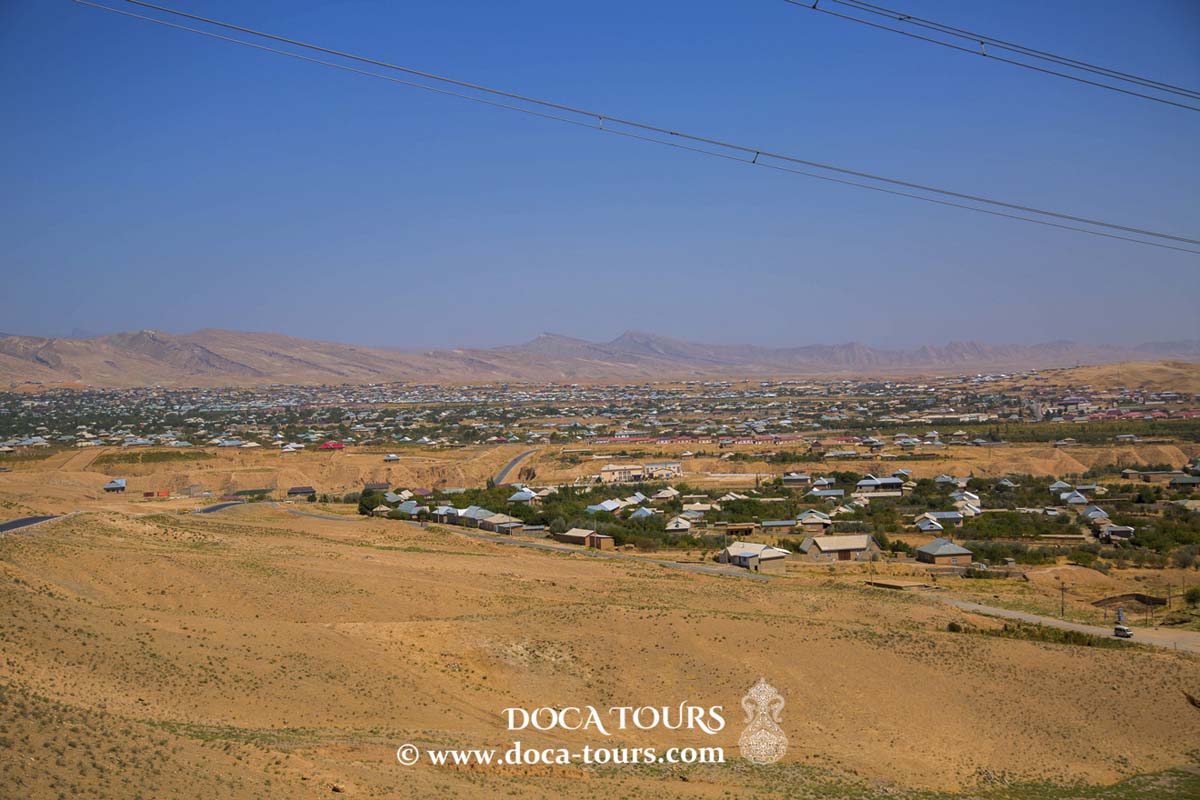
The road itself is part of the experience. You pass flat semi-desert, grazing camels and the occasional roadside teahouse before the sand gathers into low dunes near the lake country. Most groups leave Khiva after breakfast, cross the Amu Darya, and reach the yurt camps by late afternoon.
The scenery changes slowly, which is part of its appeal. For hours the horizon stays almost empty, broken only by a shepherd, a herd of camels or a lone petrol stop. That emptiness resets the pace of a trip built around dense, monument-packed cities. By the time the dunes appear, most travellers have stopped checking their phones and started watching the land.
This is classic caravan country. For a thousand years, traders crossed these same sands, and the modern route traces their path. If you want the wider story before you travel, read our Silk Road history guide to see how Khiva, Bukhara and the desert fit together.
Doca Tours builds this crossing into several Uzbekistan packages, so the yurt camp, transport and Nurata stop arrive as one booking rather than three separate arrangements.
Overnight yurt camps and camel riding
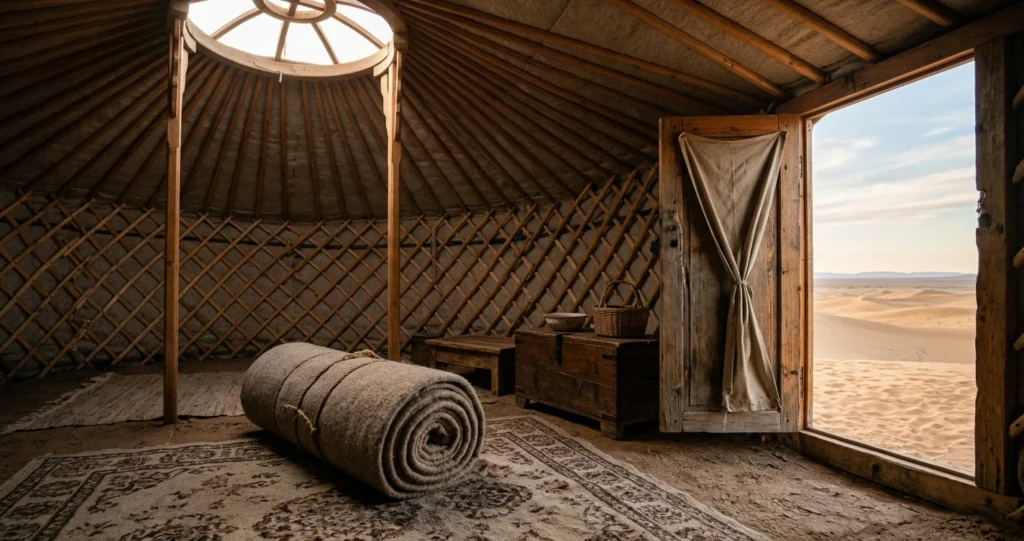
A yurt camp night is the core of almost every Kyzylkum desert tour. You sleep in a round felt tent of the kind Central Asian nomads have used for centuries, eat a shared dinner, and ride a Bactrian camel across the sand near sunset.
The camps are simple. Expect mattresses on the floor, a communal dining yurt, basic washing facilities and limited power. That plainness is the point. With no city glow, the night sky is extraordinary, and the quiet is total once the generators shut off.
Camel riding here is gentle and short, usually an hour at walking pace rather than a long trek. It suits families and first-time riders alike, and needs no previous experience in the saddle.
Dinner is usually plov or a simple stew eaten together in the main yurt, often followed by music around a fire. Hosts are local, and the evening doubles as a window into desert life rather than a staged show. Mornings are quiet, with tea, bread and a slow start before the drive resumes.
The yurt tradition runs across the whole region, from Uzbekistan's deserts to the high pastures of Kyrgyzstan. Travellers who love this style of stay often return later for a summer version in the Kyrgyz mountains, where herders move their flocks to green alpine lakes.
Aydarkul Lake and desert sunsets
Aydarkul is the surprise of the Kyzylkum: a large freshwater lake in the middle of the sand. It was created by accident in 1969, when the Chardara reservoir overflowed during extreme flooding and drained huge volumes of Syr Darya water into the Arnasay depression (Wikipedia). What looks timeless is actually younger than many of the visitors standing on its shore.
Today the lake and its neighbours form a wetland of international importance, and the shallow sandy shoreline makes it easy to walk in for a quick swim in warm months. Birdlife gathers at the water, a sharp contrast to the dunes a few steps away.
Local fishermen work the lake, and some camps serve fresh-caught fish grilled over coals. A morning walk along the shore, before the heat builds, is one of the simplest pleasures of the stay. The combination of water, sand and sky in one view is rare, and it is the image most travellers carry home from the desert.
Sunset is the main event. The yurt camps sit close enough to walk to a dune and watch the light fall across the sand. The colour shift from gold to deep red gives the desert its name back for a few minutes each evening. Photographers in particular will want this hour, so keep a camera charged and ready.
Nurata mountains and ancient fortresses nearby
On the southern edge of the Kyzylkum, the Nurata mountains rise where the sand meets higher ground, and the town of Nurata guards the gap. Local tradition holds that its hilltop fortress was founded as Nur by Alexander the Great, a story residents still cite with pride even though archaeology has not confirmed it.
The ruined fortress walls climb a low hill above the modern town. Below them sits a sacred spring fed by an ancient karez water channel, with pools of protected fish that pilgrims consider holy. It is a short, easy stop, usually a half day, and it adds real historical weight to a trip that might otherwise feel purely scenic.
The surrounding Nurata mountains also shelter villages known for petroglyphs and walnut groves, a greener contrast to the sand you have just crossed. Some longer trips add a guesthouse night here instead of, or alongside, the yurt camp, which suits travellers who want a slower pace and a chance to walk in the hills.
Nurata works best as the bridge between desert and city. Many itineraries pause here on the way from the yurt camp to Bukhara, so travellers see the fortress and spring before the afternoon drive. Pairing an ancient ruin with a night in a felt tent gives you both the settled and nomadic sides of Central Asia in a single stretch of road.
How to add a desert night to your itinerary
Adding a Kyzylkum desert tour to a standard Uzbekistan route costs you about one extra day. The usual pattern is Khiva in the morning, the drive across the desert, a yurt camp night near Aydarkul, a Nurata stop, then Bukhara by the following afternoon.
Timing matters most. Spring and autumn give warm days and bearable nights, while summer afternoons push past 40C and winter nights turn bitterly cold inside the yurt. Pack a warm layer, a headlamp and a sleeping bag liner whatever the season.
Decide early whether you want a private transfer or a small-group camp, since the desert sits off the train line and needs road transport either way. Private transfers cost more but let you set the pace and stop for photos; shared departures are cheaper and more social. Either way, book the yurt camp ahead in high season, as the best sites near the lake fill up in spring and autumn.
If a felt-tent night and a desert sunset sound like the part of Uzbekistan you would remember longest, tell your Doca Tours planner to slot one overnight into the Khiva to Bukhara leg, and build the rest of your Silk Road route around it.
Frequently asked questions
How long does a Kyzylkum desert tour take?
Most itineraries add a single overnight, roughly one extra day. You arrive at a yurt camp near Aydarkul Lake in the afternoon, ride a camel, watch sunset and stay the night, then continue to Bukhara the next morning.
When is the best time for a Kyzylkum desert tour?
Spring (April to early June) and autumn (September to October) are most comfortable. Summer days exceed 40C, and winter nights in the yurt are cold. Shoulder seasons give warm days and bearable nights for camel riding and stargazing.
Are the yurt camps comfortable?
They are simple rather than luxurious. Expect shared yurts with mattresses on the floor, basic toilets and a communal dining yurt. Bring a sleeping bag liner, a warm layer for night, and a headlamp, since electricity is limited.
Can you swim in Aydarkul Lake?
Yes. Aydarkul is a freshwater lake and swimming is popular in warm months. The shoreline is shallow and sandy, so it suits a quick dip rather than long swims. Water temperature is most pleasant from late May through September.