

























Video: https://www.youtube.com/watch?v=LdtfK5qDGZE
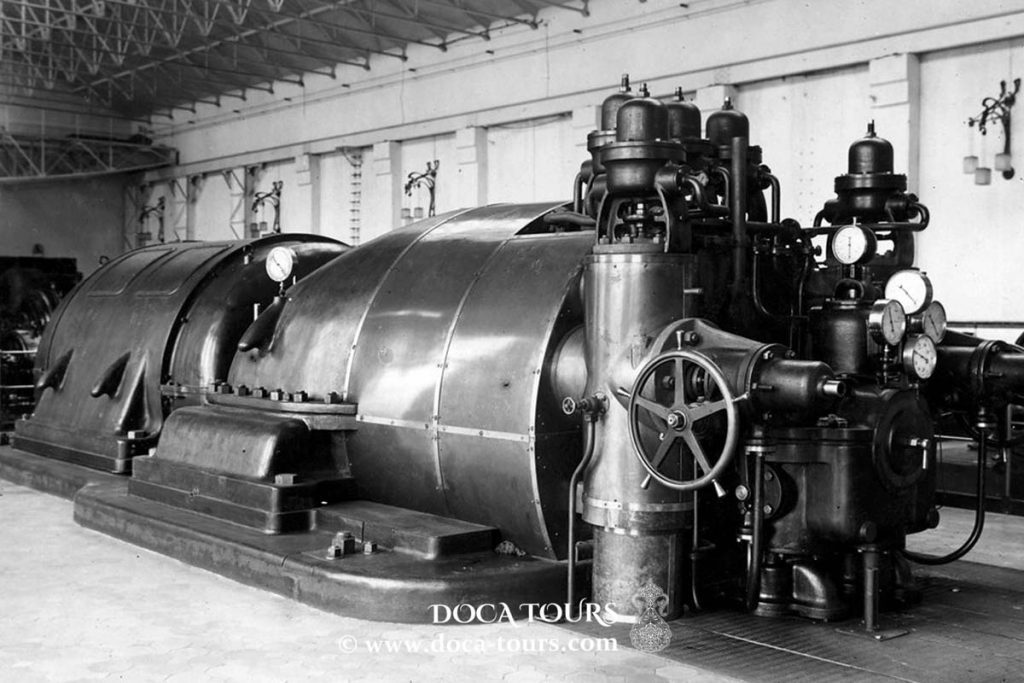
By the end of the 19th century, significant progress and development of various industries took place in the Khiva Khanate. European technologies were introduced into people’s lives, agriculture and animal husbandry were developed, modern castles, a post office, a telegraph were built, and the first power station was constructed. The reason for this is the sagacity and strategic thinking of the Khiva khan Muhammad Rakhimkhan II, as well as the arrival of the Mennonite Germans in Khiva, who lived in this region for more than half a century.
In today’s episode, we will cover this topic in detail, as well as tell interesting facts about the Mennonites and their life in the Khiva Khanate. So, let’s get started.
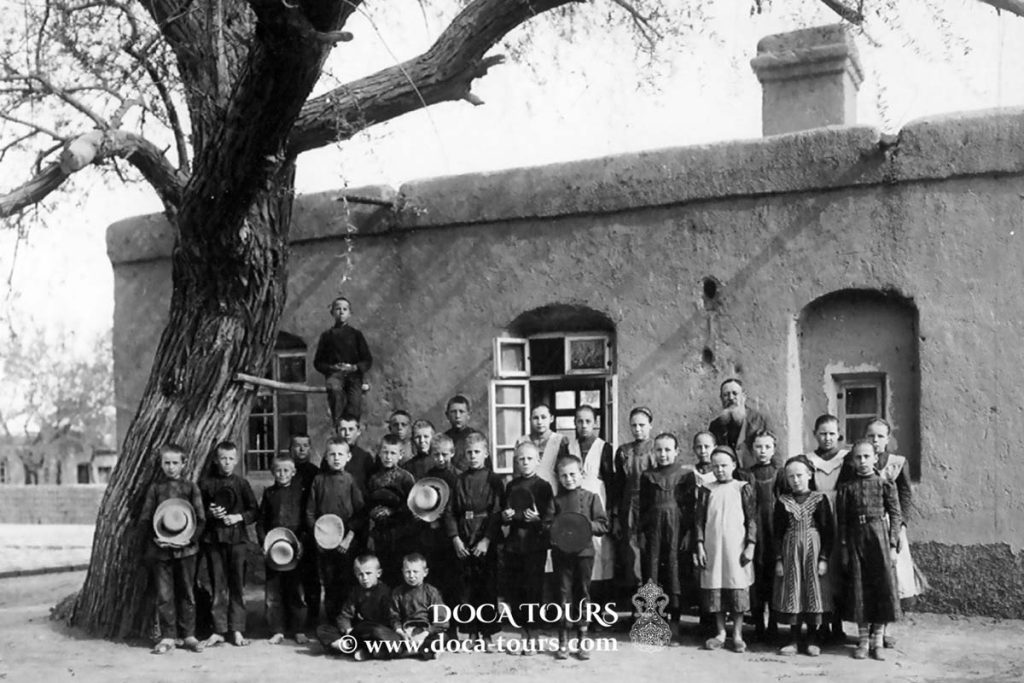
Perhaps, many of you come across the concept of “Mennonites” first and do not know what it means. In fact Mennonites, the members of a Protestant church that arose out of the Anabaptists, a radical reform movement of the 16th-century Reformation. It was named after Menno Simons, a Dutch priest who consolidated and institutionalized the work initiated by moderate Anabaptist leaders.
The Mennonite doctrine is based on the ideas of non-use of force and non-resistance: Mennonites, due to their religious convictions, they refuse to take up arms. The principled pacifism of the Mennonites, which came into conflict with the interests of the states in which they lived, gave rise to a specific form of passive protest: every time the state authorities tried to force the Mennonites to serve in the army, they chose mass emigration for themselves.
In addition, the active church did not recognize Menno and his views, and in the end, he and many of his followers were executed, while the rest fled to Northern Germany and Prussia.
In the second half of the 18th century, at the invitation of Tsarina Catherine II, Mennonites began to move from Germany to Russia. This was done in order to increase the number of Russian citizens through the immigrants from the West, primarily Germans. The immigrants who arrived in Russia were exempted from “any taxes and burdens” for different periods. In particular, foreigners who settled in colonies on lands designated in the register as free for settlement were exempted from taxes for 30 years. In addition, full self-government in the colonies was allowed, without interference in the organization of the internal life of settlements by government officials. The privileges given to the colonists remained for many decades.
However, during the reforms of Tsar Alexander II, the most important of which consisted of the abolition of serfdom in 1861, the German colonists were deprived of many rights and, in the end, ceased to exist as a special class. In the late seventies, the exemption from military service was also abolished. This caused a number of grievances among Mennonite Germans.
Thousands of Mennonite Germans migrated to Canada and the USA. Several groups of Mennonites wanted to escape from the increasing influence of the government on its communities and were looking for new safe destinations. Finally, the solution was found. One community`s leader had a meeting with the governor of Turkestan von Kaufmann, who belonged to the family of a Russified German aristocrat, asking for help. Kaufman was keen to colonize the recently conquered Bukhara Emirate and Khanates of Turkestan that`s why he offered the Mennonites to move to Turkestan and promised to rid them from military service for 25 years. This offer was sincerely accepted by the Mennonites in 1879.
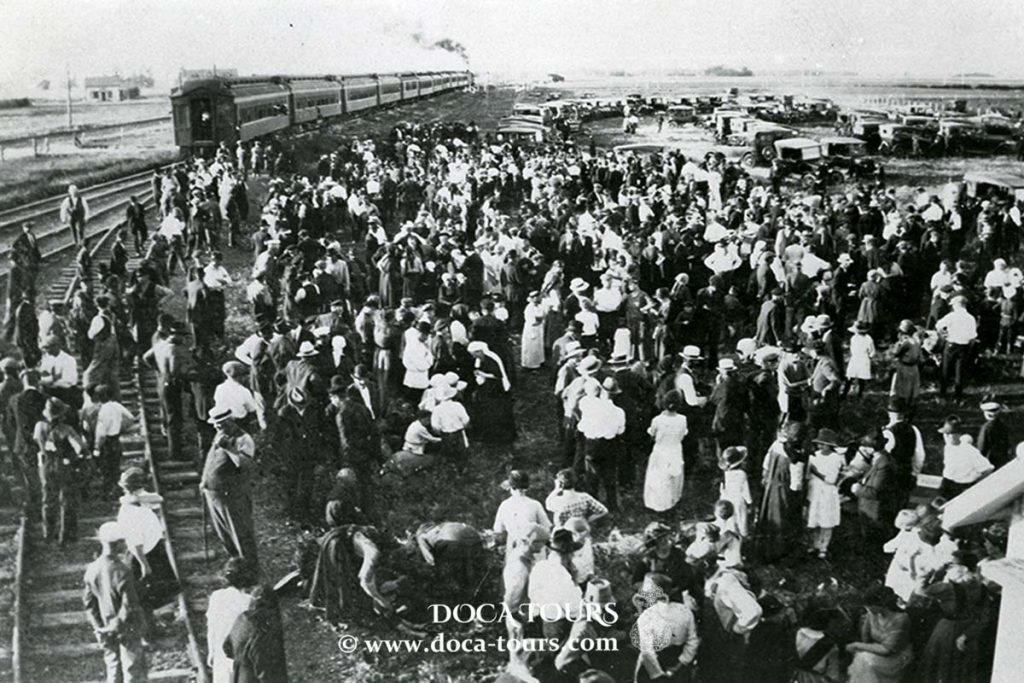
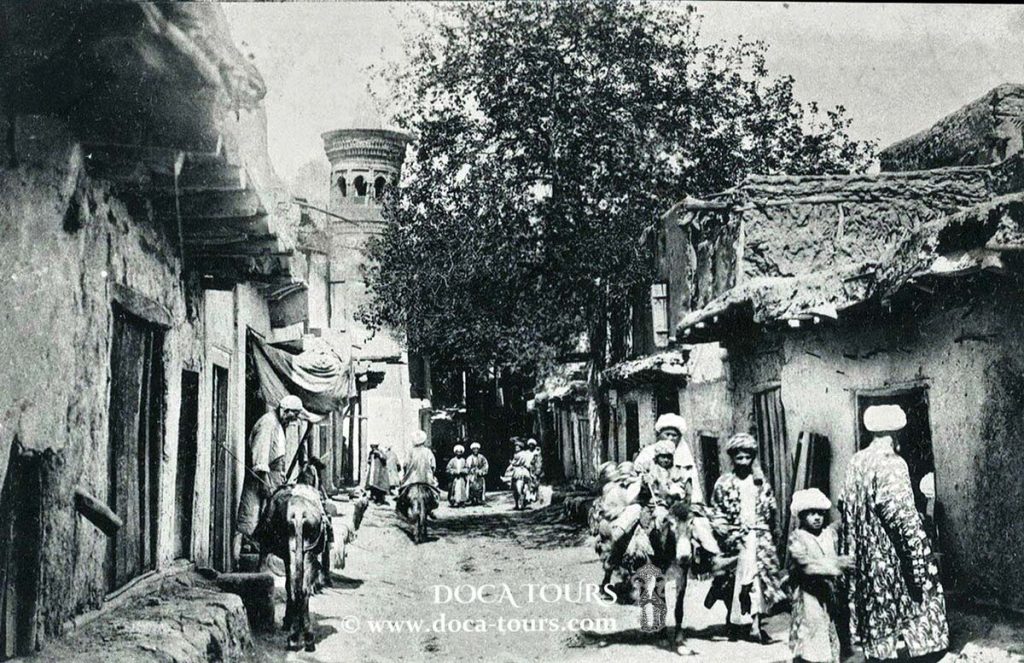
On 18 October 1879, Mennonites, consisting of 10 families, arrived in Tashkent and were settled in the town of Koplonbek. After a while, 92 more families joined this group. The rest of the people from the Mennonite community went to the Bukhara Emirate and settled in the village of Zirabulak. Residents of the village hospitably sheltered Mennonite refugees. Moreover, they were offered to use the Kuk Ota mausoleum for Sunday Christian prayers.
Ella Maillart, a French-Swiss journalist, visited the Mennonite colony in 1932, just a few years before it was forcibly dissolved. One of their Elders, Otto Theuss, explained their background to her.
We made up our minds to crave asylum from the Emir of Bukhara, and set off again, passing through Samarkand. Some of us saw strange customs being practiced in the yurts: they were amazed to see camel meat being eaten and that only one bowl did service for a whole gathering. The local beks were not of the same mind as the Emir, and to make a long story short, it was the khan of Khiva who gave us a grant of land.
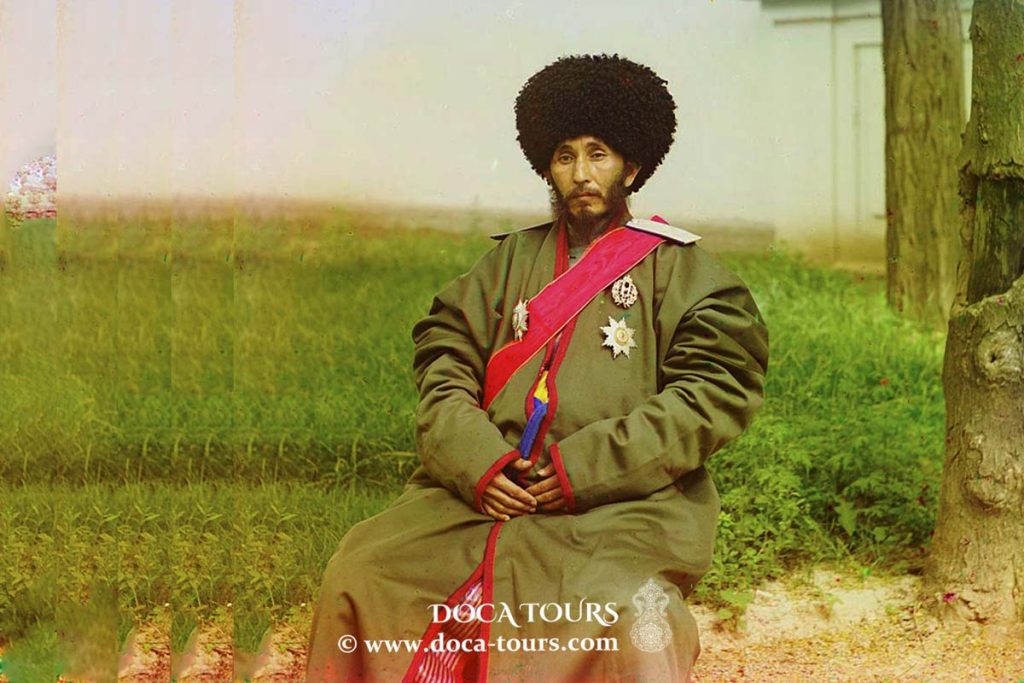
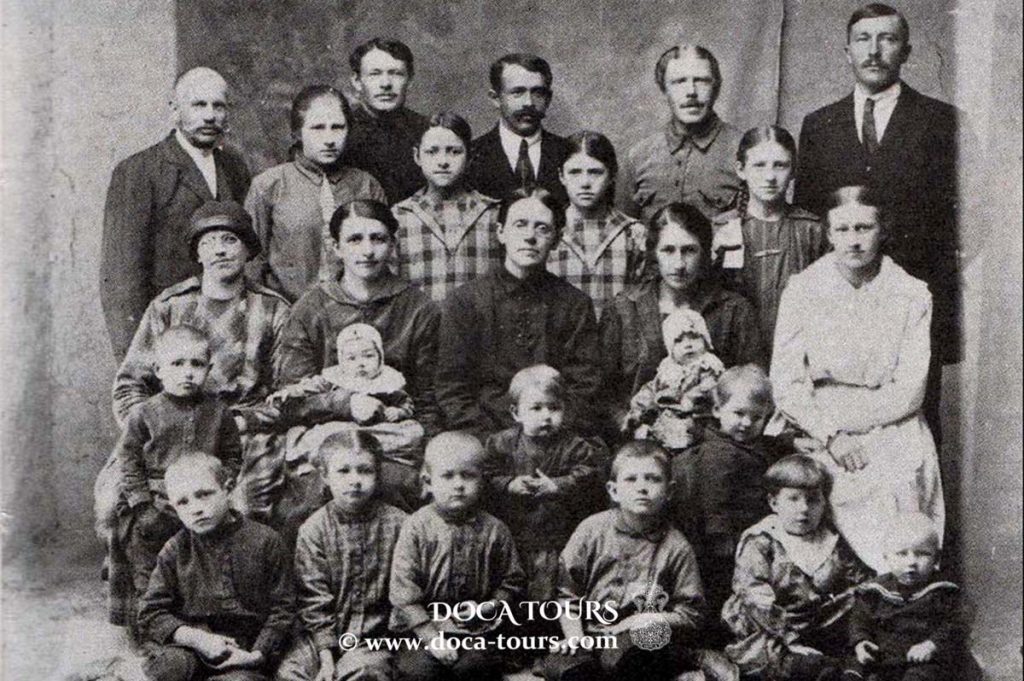
After successful negotiations of the Mennonite Germans with the Khiva khan Said Muhammad Rakhimkhan II, in the spring of 1882, they moved to Khorezm. Thanks to the decision and support of the khan in 1884, 15 km. from Khiva was founded a colony of Mennonite Germans that consisted of 40 families. Later, fellow believers from Kyrgyzstan, the Volga region, and Ukraine joined them.
The khan ordered a plot of land with an area of about 50 hectares in the village of Ak-mеchеt that belonged to his brother Atajan Tura to be assigned to foreigners.
For the first four years, the community was exempt from all obligations. Later it began to give part of its income to the khan’s treasury and to Atajan tura.
The words of Otto Theuss, member of Mennonites community who lived in Khiva
The khan wanted the service of our carpenters, some of whom were very skillful, to polish up his floors and woodwork; through them, he learned that the Turkmens had robbed us of our cattle and horses. He sent some soldiers to protect us, and then we were granted the village Ok Metchet where there were already 139 apricot trees.’
‘Our beginnings here were very difficult,’ ‘We got here with absolutely no money. We sold little lanterns of our own manufacture in the market for eighty Russian coins each, and then socks and blouses. One of us fixed the khan’s phonograph. As I knew Uzbek, I was always responsible for negotiations with the officials. At the time of the coronation of Nicholas II, he rented a palace for three hundred roubles a month. When the Tsarina asked him what he thought of Moscow, he said he felt more comfortable in his rabbit run in Khiva! The khan liked us better than his subjects and presented us with khalats when we had to appear at his Court. He was prepared to pay me heavily if I would become a Muslim.’
Gradually the composition of the village grew to 62 families, and its territory increased to 60 hectares. The “German Islet” was designed in the form of a small fortress with one gate that could be locked at night. To enclose the village with an adobe wall for security purposes was a local folk tradition of that time.
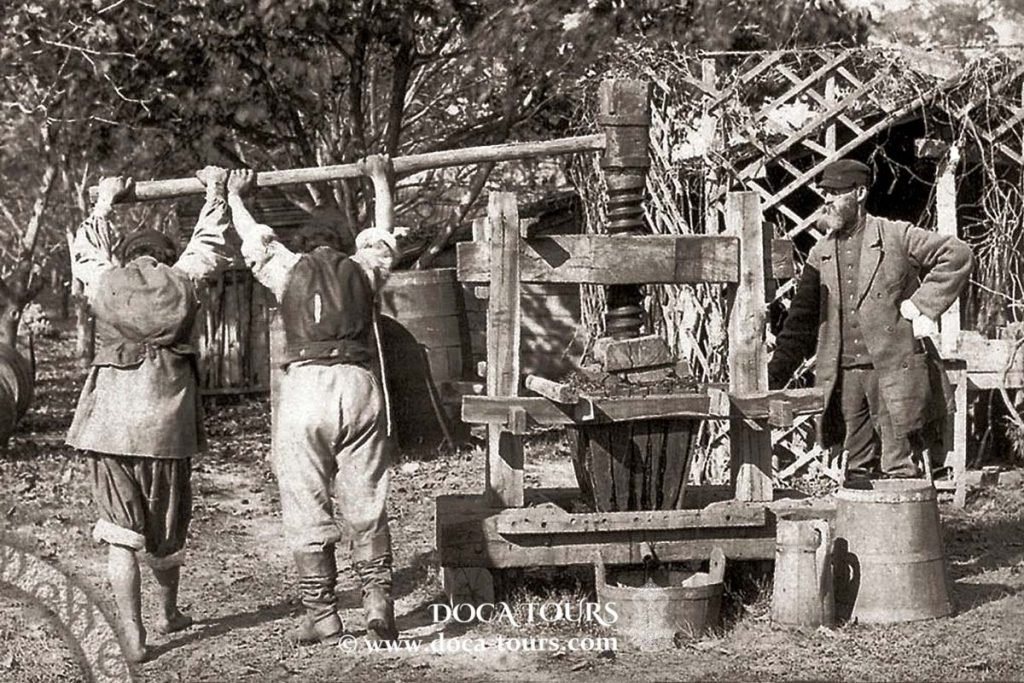
Having received land, the Mennonites began to engage in their favorite occupation – agriculture and animal breeding. At first, fishing was a great help in the economy because there was Lake Shirkul nearby. The land was cultivated exclusively with a wooden tool. Gradually, they learned to grow vegetables unusual for this region on saline soil using artificial irrigation – potatoes, eggplants, tomatoes, cucumbers, cabbage and spices. Breeding cattle were raised.
The inhabitants of Khorezm adopted useful skills from the “guests” in cultivating new types of garden plants and the experience of caring for livestock. The Mennonites, in turn, willingly traded with them.
A smaller part of the Germans was engaged in traditional crafts – shoemaking, carpentry, blacksmithing, repairing simple agricultural implements and others. The first elements of the building industry – machine tools and carpentry were brought by the Mennonite Germans.
Women from this society lived in the houses of the khan’s relatives and helped with the housework. It was their business to look after the thoroughbred brown cows and to milk them. For the first time in Khorezm, a separator separating milk into cream and butter was used by German women. They fully provided themselves with dairy products, and the part that remained from their needs, they sold to local people. On winter days, they whiled away the time knitting and sewing.
The village of Ak Machit, where the Germans lived, was turned into a European city with beautiful buildings. A pharmacy and a small hospital were built in the village. The doctors who worked at the hospital were Mennonite Germans. Medicines for the pharmacy were brought from Europe and Russia.
There was a prayer house, in the village, neatly built and very cleanly maintained. During the divine services, they used the organ donated by Muhammad Rahim khan. Obviously, the ruler of Khiva was distinguished by religious tolerance and without hesitation helped the settlers in meeting their religious needs.
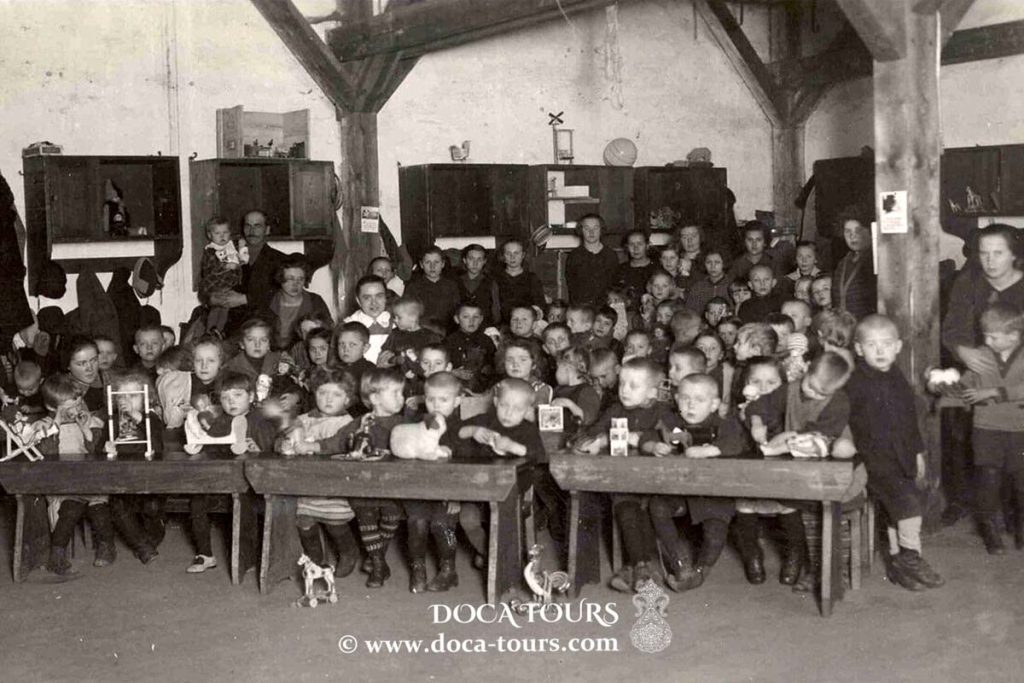
The Mennonites had their own school, where children were taught reading, writing and arithmetic and their religious doctrine in German. Khan offered the Mennonites a protected society status. They were allowed to supervise their school and appoint their teachers.
The Germans were famous for their craftsmanship in woodworking. Their pieces of furniture – tables, chairs, tabourets, wardrobes, window frames, doors and other household items – began to enter the life of prosperous Khorezmians.
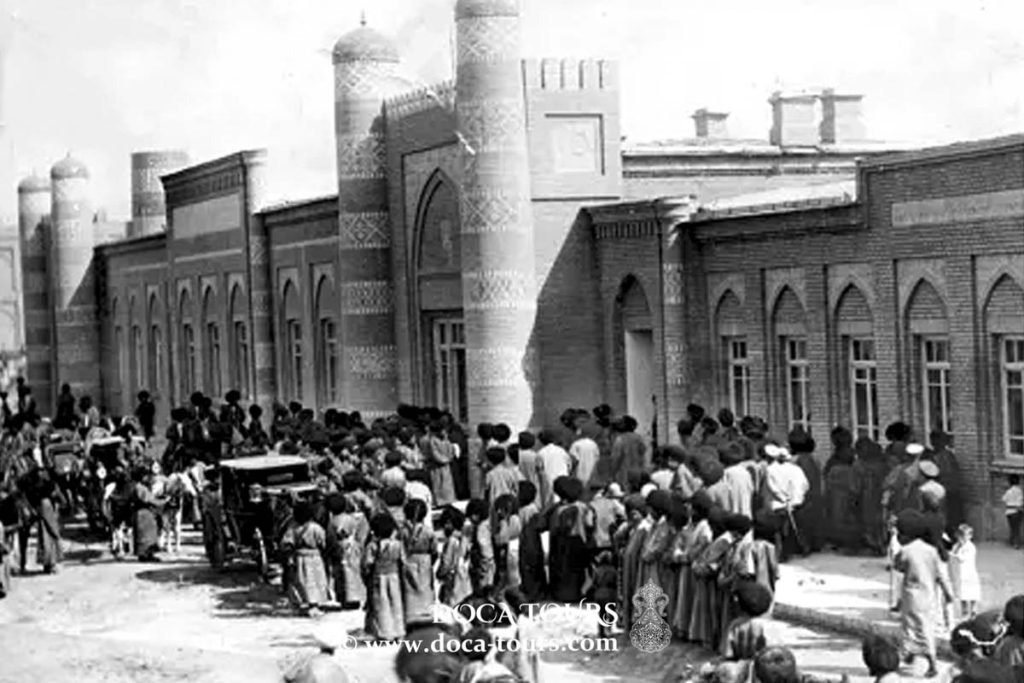
When Muhammad Rakhimkhan II visited St. Petersburg for the funeral of Tsar Alexander II in 1881, he saw a multicolored polished wooden parquet floor. In 1884, he asked the Mennonites to build a similar floor for Nurullabay palace.
The architecture of the palace combined traditional Islamic and Western styles. The khan asked the Mennonites to build wooden doors and window frames for the palace. The excellent work of the masters helped to recommend them as good workers, and the parquet floor has survived to this day, acquiring an artistic and historical value, however, as the windows and doors of this palace.
The Germans also made ornamental drawings for 10 tiled stoves installed in the rooms. The tiles were made to order at the Imperial Porcelain Factory. Besides, Ak Machit craftsmen were involved in the carpentry work of Qibla Tozabog, the summer residence of Muhammad Rakhimkhan II. In one of the halls of the palace, a painted plafond has been preserved, on which an amateur Mennonite artist painted a landscape inspired by memories of his distant homeland – the green banks of the Volga and a mill. Most likely, the same painter was also the author of the painting of medallions in the form of flying cupids, peacock feathers and bows on the ceiling in room No. 2 of Nurullabay`s palace.
The Mennonite`s leader at the Ak Machit, Emil Reisen, was fluent in local, Russian and German. Muhammad Rahimkhan II invited him to serve as a translator and advisor on economic issues. It is believed that Reisen took part in the transformations of Khiva in such areas as – modern postal service, telegraph system and electricity. With the assistance of the Mennonite Germans, the first power station was built in Khiva.
Reisen had contacts with businessmen in Germany and Switzerland. He accompanied Crown Prince Isfandiyar on his travels to Tashkent and Russia.
According to historical information in 1910, Reisen was organizer of sales of sewing machines «Singer» in Palvan Kariy’s shop.
Among the settlers were people of various specialties. Wilhelm Penner whom locals called Panorbuva (Grandfather Lantern) taught young Khudaybergan Devonov the craft of photography and gave him his first camera. Devanov began shooting pictures in 1903 and became Uzbekistan`s father of Photography and Cinematography. Later, he opened his school of photography and started to teach other people of Khiva to this craft.
The determining goal of allowing the Germans to settle in the khanate was the need to enrich the local population with new knowledge and technologies in various spheres of production, which the German Mennonites carried with them. This was a very important factor that undoubtedly influenced the decision of the Khiva ruler. The fact is that during this period, production technologies in the German villages were significantly ahead of similar processes even in Russian settlements.
Therefore, one cannot fail to note once again the foresight and strategic thinking of the Khiva khan Muhammad Rakhimkhan II, who was interested in the progress and advanced development of his economy on the basis of European technologies, who invited a whole diaspora of Germans to the Khorezm land for this.
After the advent of Soviet authority, the Ak Machit Mennonites continued to keep apart as before, not joining either the local or the Russian-speaking population. After the adoption of the Constitution of the USSR in 1936, the Mennonite community did not want to obey its individual laws, and still did not agree to give surplus income from collective farm management to the state. As a result, one of the winter nights in 1937, members of the community were deported.
For a long time, the villagers had no idea where their neighbors suddenly “disappeared”. As it turned out, most of the Mennonite`s community was deported to the Vakhsh Valley. Some families moved to Kyrgyzstan and Kazakhstan.
Such a hardworking original community, over the fifty-year period of its stay in Khorezm, was able to noticeably inscribe itself in its history and so worthily defend its spiritual values in the most difficult conditions.
With their tolerant attitude towards the indigenous population, they have earned a benevolent and respectful attitude towards themselves, which the Khorezmians highly value today. The Khorezmians still say only good things about the Mennonites and pay tribute to the good name and blessed memory that the «Ak-Mechet Mennonites» left behind.
Perhaps that is why, on the territory of the Ak Machit village, where the “Mennonite Germans” lived, it was decided to create a reconstruction of the period of their life, build buildings and other structures of that time and develop projects to turn the village into a tourist site.
In 2019, on the territory of the famous Ichan-Kala State Museum-Reserve was opened a Museum dedicated to the Mennonites. It shows living illustrations of the history of hundreds of German and Dutch families who, by the will of fate, ended up on the Khorezm land.
In the spring of the same year, the President of the Federal Republic of Germany Frank-Walter Steinmeier, accompanied by his wife, visited the historical center of Khiva – Ichan-Kala and the Museum of the Mennonite Germans. The guests were told about the lifestyle and history of the Mennonite Germans, who for a short time lived in the Khiva Khanate, but took a worthy place in the hearts of the Khiva people, their craft activities and true humane qualities, the brotherhood of representatives of different religions.
– Uzbekistan is an amazing country. Using the example of ancient Khiva, we got even more information about age-old customs, hospitable people of this sunny land. We were told about the conditions created here for the residence of German Mennonites. In those days, people who were representatives of a different nationality, religion and different way of life lived in harmony, which is a vivid example of brotherhood and unanimity prevailing in the minds of our peoples today, ”said Frank-Walter Steinmeier.
Thank you very much for your attention.
Subscribe to the channel and don’t forget to like our videos.
#Mennonites #Mennonitegermans #Khivamennonites #Centralasia #Prussia #Russia #CatherineII #AlexanderII #Nitherland #Mennosimens #dutch #Uzbekistan #history #silkroad #Khan #Mennoniten #Anabaptism #amish, #mennonite, #religion, #summer, #history, #travel, #farm, #german, #church, #christianity, #ancient, #outdoors, #latin america, #ranch, #day, #farmer, #tradition, #people, #romantic sky, #rural scene, #walking, #scenics – nature, #spirituality, #travel destinations, #order, #traditional clothing, #tranquil scene, #tranquility, #sunrise – dawn, #wild west, #old-fashioned, #hat, #attending, #bright, #cloudscape, #community, #cowboy, #cultures, #dawn, #dress, #horizontal, #non-urban scene, #human interest, #idyllic, #landscape – scenery, #lifestyles, #light – natural phenomenon, #luminosity, #moody sky, #morning