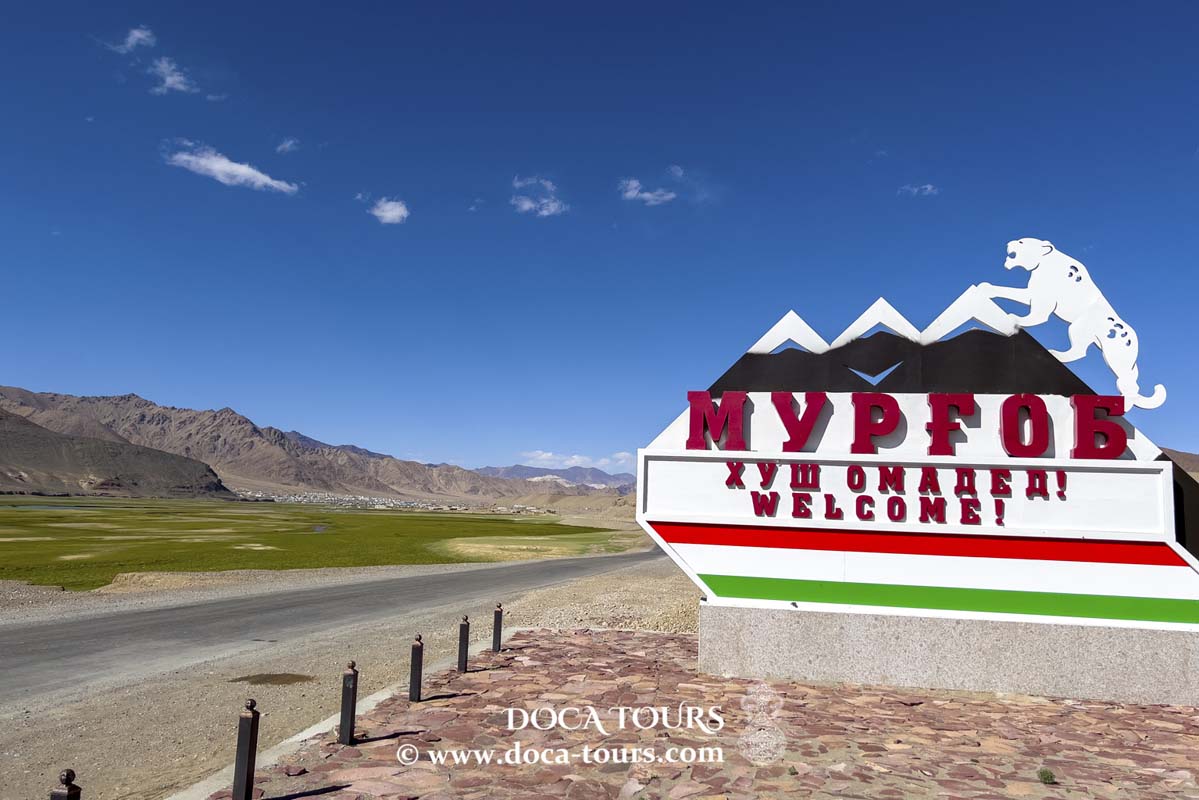
MURGAB
- Geographical coordinates: 38°10′08″N 73°57′54″E
- Elevation: 3 618 m
- Official language: Tajik
- Popular languages: Russian, Kyrgyz, Tajik etc.
- Nationals: Kyrgyz, Pamir people, Tajik
- Population: 8500 (as of 2019)
- Time Zone: UTC+5
- Telephone Code: +992 35
- Postal Codes: 736600
Murghob (Tajik: Мурғоб) or Murghab (Russian: Мургаб, Murgab, from the Persian word margh-ab, meaning 'prairie river') is the capital of Murghob District in the Pamir Mountains of Gorno-Badakhshan, Tajikistan. With a population of just under 7,500, Murghob is the only significant town in the eastern half of Gorno-Badakhshan. It is the highest town in Tajikistan (and of the former Soviet Union) at 3,650 meters above sea level. It is where the Pamir Highway crosses the Bartang river.[1]

The Pamir Highway goes north to Sary-Tash and on to Osh in Kyrgyzstan and southwest to the region's capital Khorugh. Another road goes east over the Kulma Pass to the Karakoram Highway in China connecting to Tashkurgan to the south and Kashgar to the north.
Geography and Climate
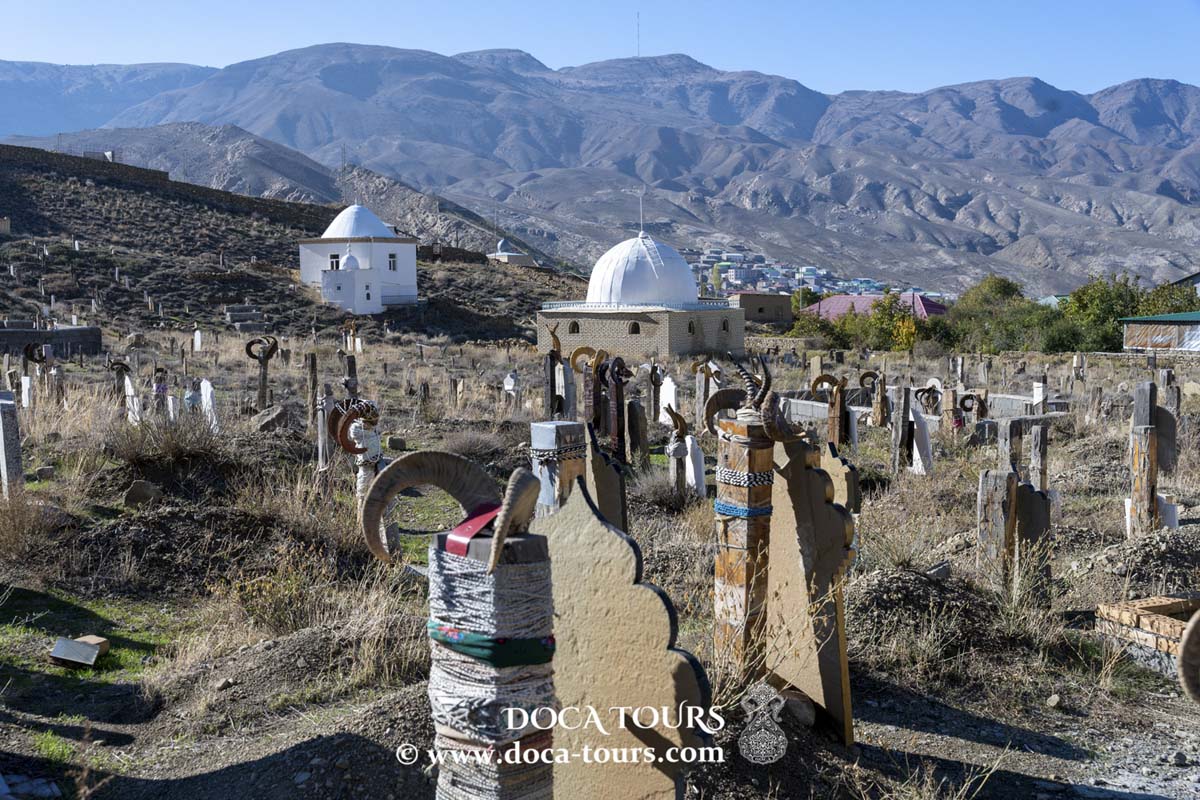
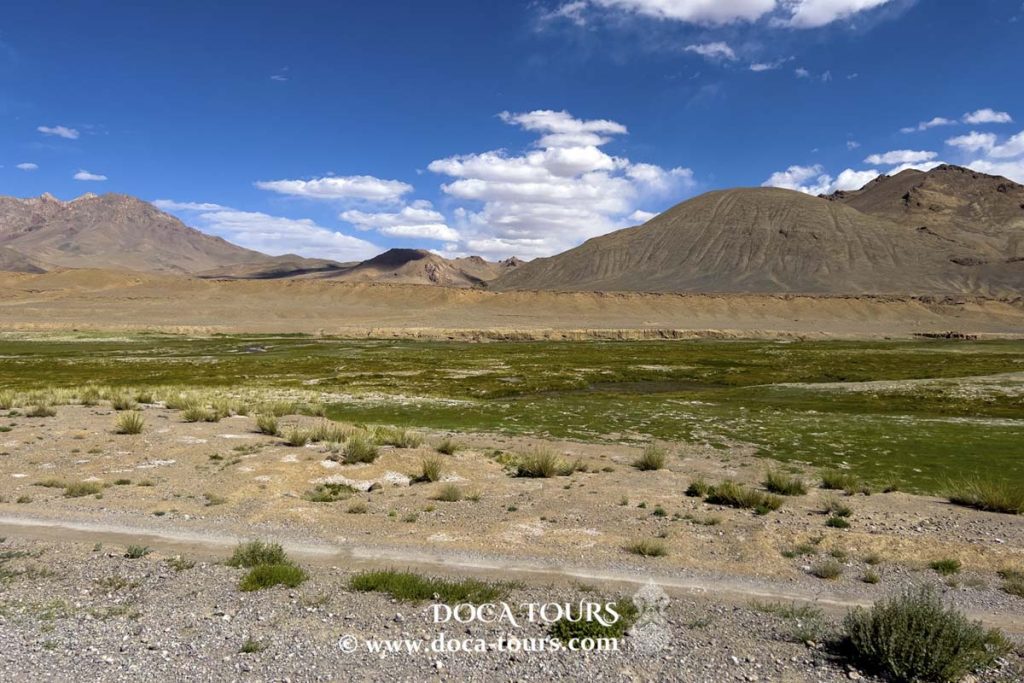
The village is located in the Pamir Mountains at an altitude of over 3,600 meters above sea level, making it the highest settlement in the former Soviet Union. It lies at the confluence of the Murghab and Akbaital rivers, 225 km from Khorog and 229 km from Sary-Tash. At the southern edge of the village, there is an entrance to the Madiyan Valley. A tourist base operates in the area. The climate is characterized by significant temperature fluctuations: winter lows can reach -50°C, while summer highs climb to +40°C.
The climate in Murghab is arid, with minimal precipitation throughout the year. According to the Köppen climate classification, it is categorized as a cold desert climate (BWk). The average annual temperature is +0.3°C, and the yearly precipitation averages 72 mm.
Infrastructure
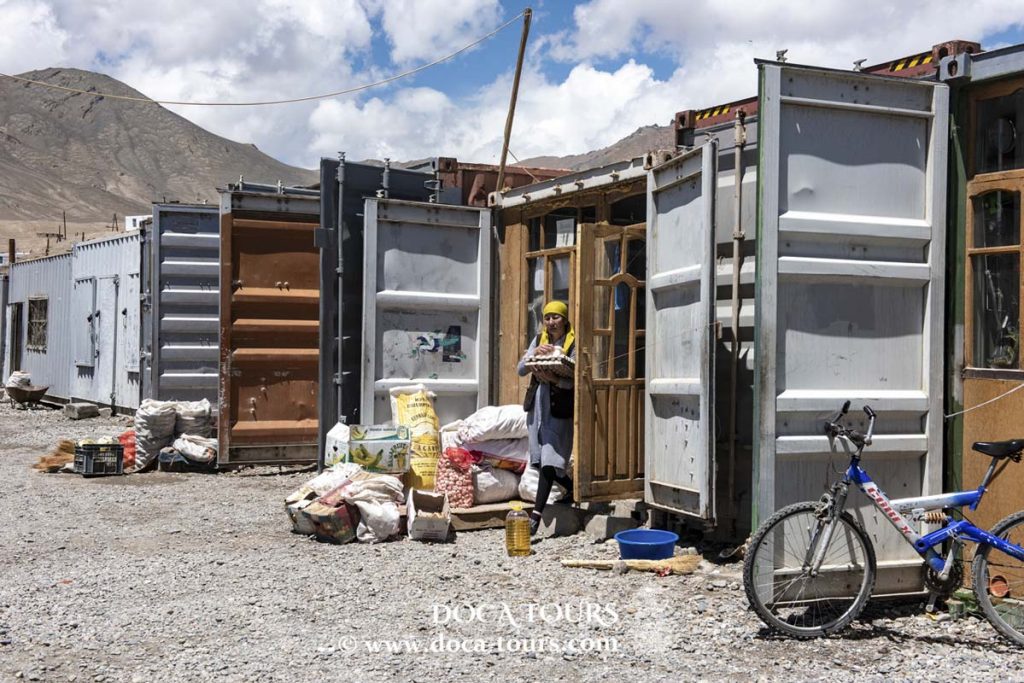
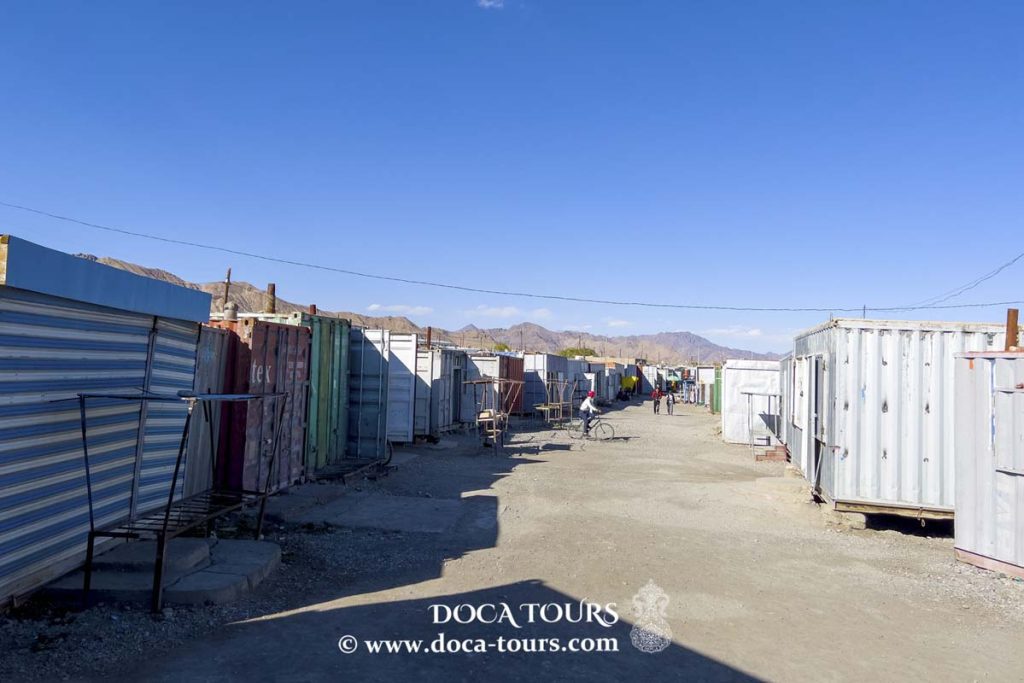
Murghab is situated at the intersection of the Pamir Highway and the Kulma Pass road, which leads into China and connects to the Karakoram Highway. The village has a hospital, a market, public baths, and several guesthouses. Additionally, several military units, including the Murghab Border Detachment, are stationed here.
Population
As of the 2022 census, the population of Murghab is 8,500.
History
In 1892–1893, a fort called Shadzhansky Post stood on the site of the present-day town, commanded by Captain P. A. Kuznetsov of the General Staff. However, it is often claimed that Murghab was founded in 1893 as the main Russian fort in the Pamirs, originally named Pamir Post. The fort was constructed by military engineer Staff Captain Serebrennikov. According to other, later sources, Murghab was officially founded on July 26 (July 13, Old Style), 1903, when new barracks for the Russian fort, previously located in the village of Kuni-Kurgan, were built. This fortification was erected by military engineer Lieutenant Colonel Nikolai Nikitich Moiseyev under the command of Captain A. E. Snesarev, head of the Pamir detachment.
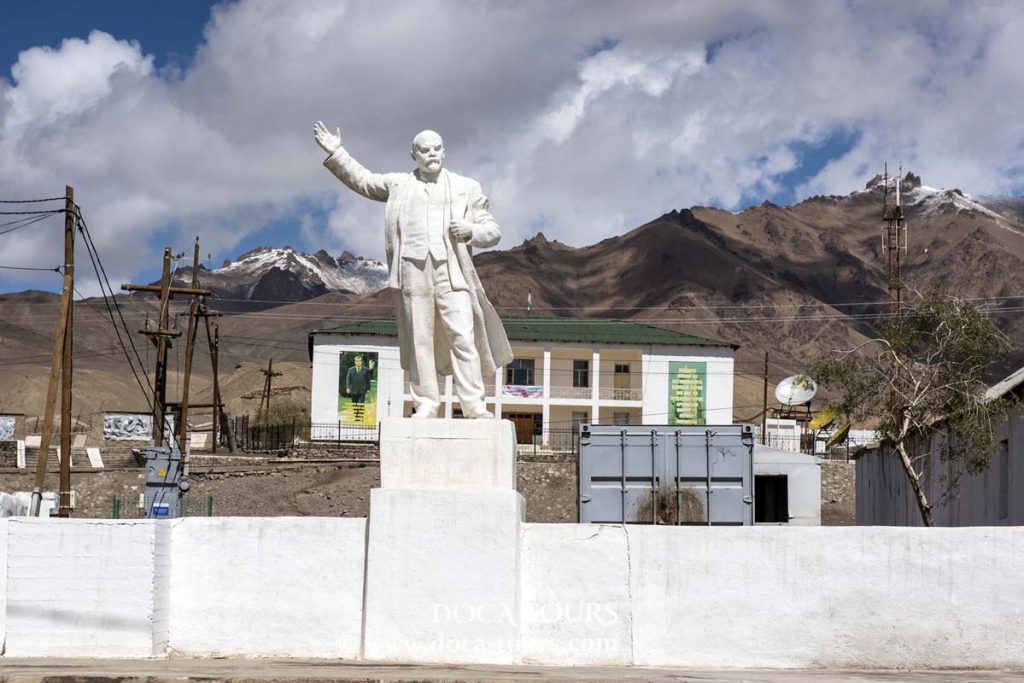
On September 29, 2013, a memorial plaque was unveiled in central Murghab, commemorating the location of the first Russian border detachment in the Pamirs—Shadzhansky Post—established in 1892–1893. The precise location of the Shadzhansky detachment had long been disputed, but this was resolved through archival documents and photographs discovered by N. Zacharychev from Ulyanovsk. These materials were sourced from the Snesarev family archive, transferred to the Institute of Oriental Manuscripts of the Russian Academy of Sciences by Evgeniya Andreevna Snesareva. Valuable assistance was provided by Anna Andreevna, granddaughter of the Russian geopolitician and ethnographer A. E. Snesarev, as well as N. D. Kareeva, a descendant of the legendary "old Turkestani" General M. E. Ionov. Contributions also came from writer B. G. Belogolovy and border guard veteran V. Sorokin. Local support for the memorial included efforts by A. Bekmurodi, head of the E. Kivikas Foundation, TV journalist T. Gadomamadov, district head M. A. Djozhbayev, director of the travel company "Pamir-Fortress Co." U. Abibov, and T. Akyolov from the Tajik National Park.
Incident
On September 7, 1966, an Antonov An-2 aircraft (registration number USSR-79816) from the Dushanbe Aviation Detachment of the Tajik Civil Aviation Authority, carrying geologists and flammable cargo (gasoline and acetone), crashed during an attempted emergency landing in mountainous terrain 60 km west of the village of Murghab. All six people on board perished. The disaster was caused by an in-flight fire resulting from the ignition of accidentally spilled acetone, compounded by violations of hazardous cargo transportation regulations.

 The Pamir Highway goes north to Sary-Tash and on to Osh in Kyrgyzstan and southwest to the region's capital Khorugh. Another road goes east over the Kulma Pass to the Karakoram Highway in China connecting to Tashkurgan to the south and Kashgar to the north.
 The climate in Murghab is arid, with minimal precipitation throughout the year. According to the Köppen climate classification, it is categorized as a cold desert climate (BWk). The average annual temperature is +0.3°C, and the yearly precipitation averages 72 mm.

 On September 29, 2013, a memorial plaque was unveiled in central Murghab, commemorating the location of the first Russian border detachment in the Pamirs—Shadzhansky Post—established in 1892–1893. The precise location of the Shadzhansky detachment had long been disputed, but this was resolved through archival documents and photographs discovered by N. Zacharychev from Ulyanovsk. These materials were sourced from the Snesarev family archive, transferred to the Institute of Oriental Manuscripts of the Russian Academy of Sciences by Evgeniya Andreevna Snesareva. Valuable assistance was provided by Anna Andreevna, granddaughter of the Russian geopolitician and ethnographer A. E. Snesarev, as well as N. D. Kareeva, a descendant of the legendary "old Turkestani" General M. E. Ionov. Contributions also came from writer B. G. Belogolovy and border guard veteran V. Sorokin. Local support for the memorial included efforts by A. Bekmurodi, head of the E. Kivikas Foundation, TV journalist T. Gadomamadov, district head M. A. Djozhbayev, director of the travel company "Pamir-Fortress Co." U. Abibov, and T. Akyolov from the Tajik National Park.