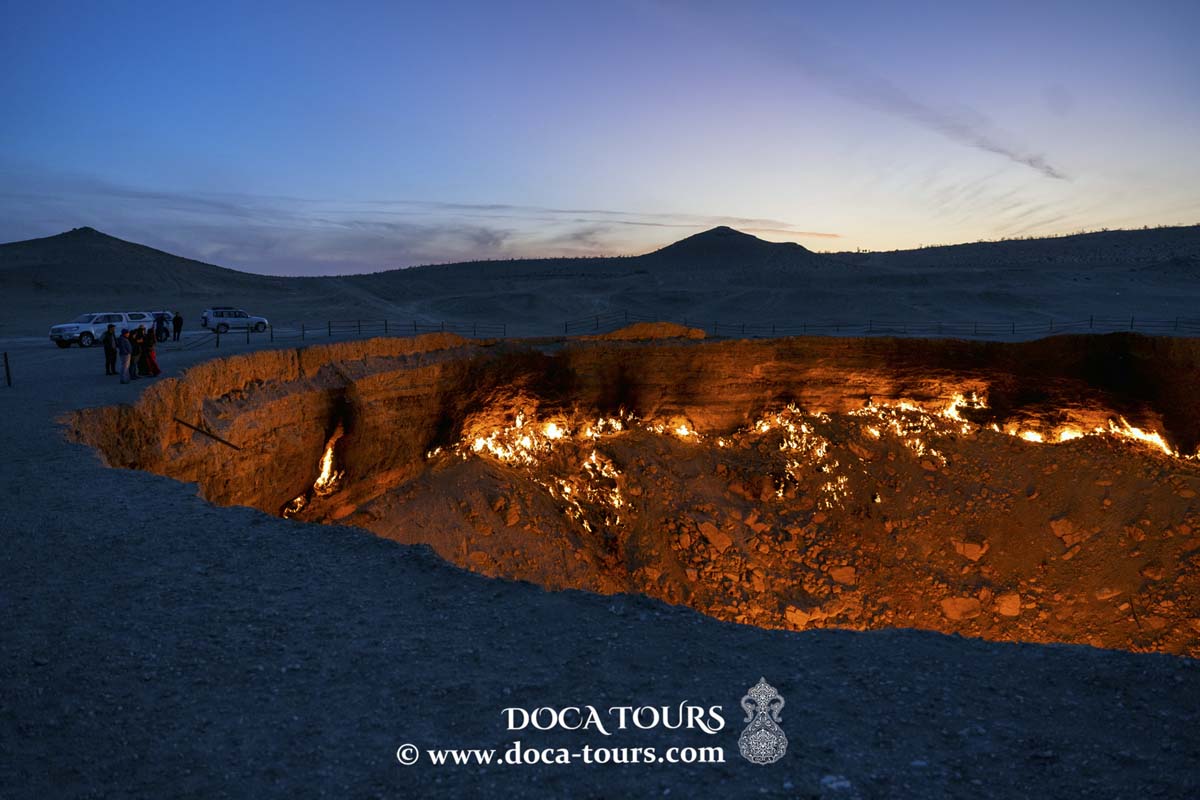
The Darvaza gas crater (Turkmen: Garagum ýalkymy), also known as the Door to Hell or Gates of Hell, is a constantly burning natural gas field that collapsed into a cavern near Darvaza, Turkmenistan. Officially called the Shining of Karakum, the crater features hundreds of flames lighting up its floor and rim. The blaze has been active since the 1980s. While the exact cause of the crater’s formation remains unclear, it is believed that engineers deliberately ignited the gas to prevent the spread of toxic fumes.
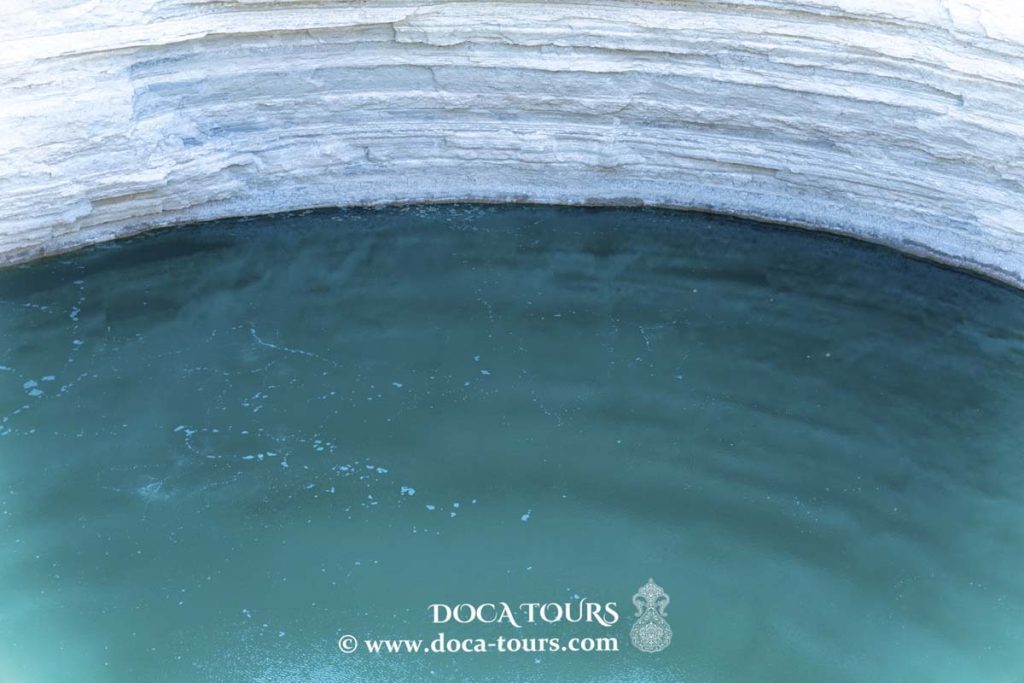
Situated in the heart of the Karakum Desert, the crater lies near the village of Darvaza, approximately 260 kilometers (160 miles) north of Ashgabat, Turkmenistan's capital. It has a diameter of 60–70 meters (200–230 feet) and a depth of roughly 30 meters (98 feet). Another nearby gas crater, smaller and fenced off, emits a distinctive odor, further highlighting the area's rich natural gas reserves.
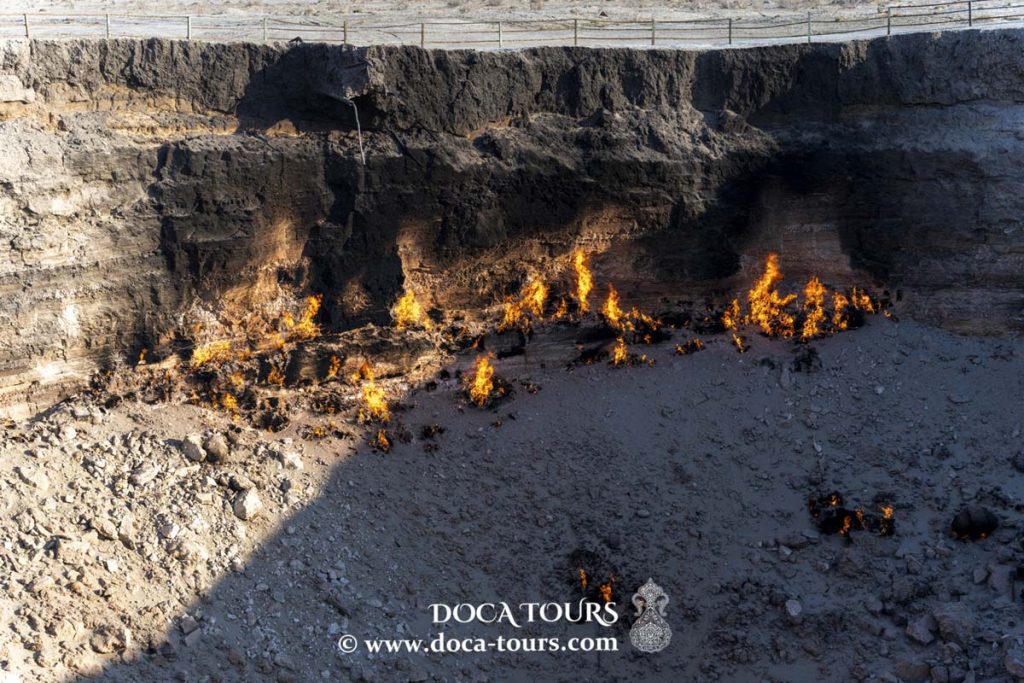
In 1971, near the settlement of Darvaza in the Turkmen SSR, Soviet geologists discovered a large underground gas reserve. During exploratory drilling, they encountered a subterranean cavern, which caused the ground above to collapse. The drilling rig, along with its equipment and vehicles, fell into the resulting gas-filled crater. Fortunately, no one was injured in the incident. To prevent harmful gases from spreading into the surrounding environment, the geologists decided to ignite the gas, assuming the fire would extinguish itself within a few days. However, this assumption proved wrong—since 1971, the natural gas emerging from the crater has been continuously burning, day and night.

Nothing that falls into the crater can escape. Any living being entering these "gates" to the underworld is doomed. The crater, with a diameter of 60 meters and a depth of 20 meters, emits hot air and a constant hum. Gas seeps from the ground, fueling hundreds of blazing flames of varying sizes, some reaching 10 to 15 meters in height.
In 2004, the settlement of Darvaza was abolished by order of the Turkmen President Saparmurat Niyazov.
In 2010, President Gurbanguly Berdimuhamedov visited the crater and instructed local authorities to explore ways to eliminate it or ensure it would not hinder the development of nearby gas fields. By 2013, under a presidential decree, a state nature reserve was established in the Karakum Desert, incorporating the Darvaza crater.
In November 2013, Canadian explorer George Kourounis descended to the bottom of the crater to conduct scientific research and collect samples. He discovered unique bacteria that thrive in the extreme heat at the bottom of the crater. These bacteria are not found anywhere else on Earth and have adapted to live within a small, isolated ecosystem in the fiery depths of the crater.
As of 2014, the Turkmen State Committee for Tourism viewed the crater as a key local attraction to draw international tourists.
In 2019, President Gurbanguly Berdimuhamedov, during an extensive trip through the Karakum Desert, referred to the remarkable site—officially named "The Shining of the Karakum"—as a phenomenon deserving scientific study. He emphasized that it could reveal many hidden secrets about Turkmenistan's land and natural resources.
On January 7, 2022, President Berdimuhamedov instructed Deputy Prime Minister Shahym Abdrakhmanov, responsible for the oil and gas sector, to collaborate with scientists to find a solution to extinguish the crater, possibly involving international experts. The president highlighted that the ongoing gas combustion adversely impacts the environment and the health of nearby residents while wasting valuable natural gas that could generate significant revenue.

In April 2010, President Gurbanguly Berdimuhamedow suggested measures to minimize the crater's impact on the development of other gas fields in the region. In January 2022, he announced plans to extinguish the fire, citing its negative effects on the environment, public health, and the natural gas industry. A special commission was created to explore possible solutions. However, despite these efforts, the gas crater continues to burn unabated.
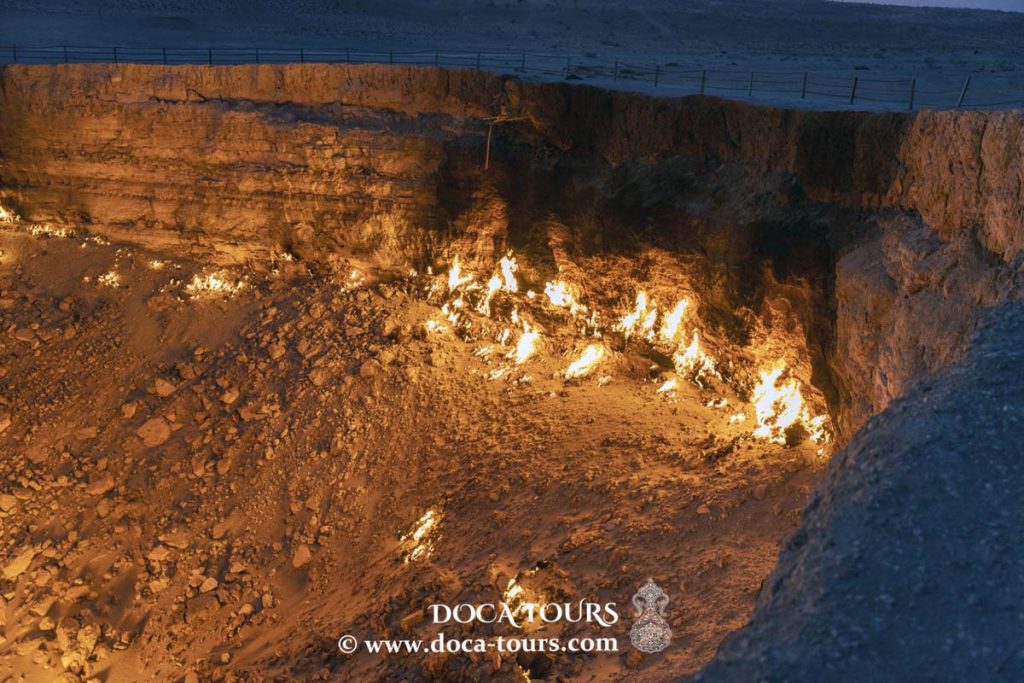
Since the dissolution of the Soviet Union, the Darvaza gas crater has become a prominent tourist attraction. Its popularity grew further after the area was designated a natural reserve in 2013. Although access to the site involves a basic, unmarked road, visitors can stay in nearby yurts for an immersive desert experience.
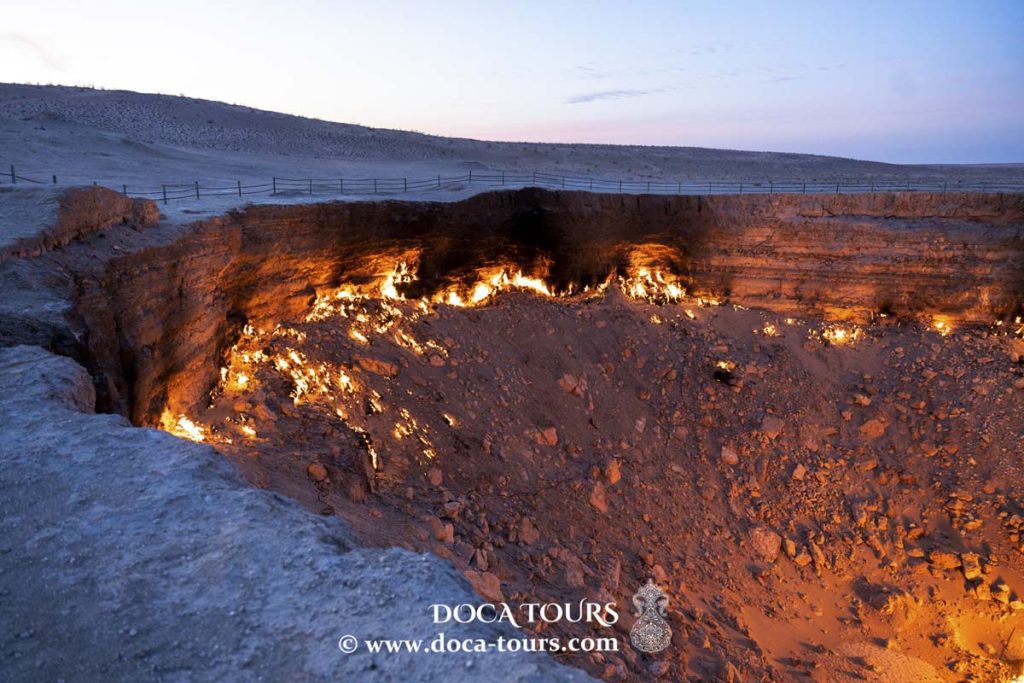
In 2018, the crater served as an overnight stop during the Amul-Hazar automobile rally. A year later, President Berdimuhamedow appeared on state television performing car stunts around the crater to refute rumors of his death, further cementing the site’s role in Turkmen culture and media.
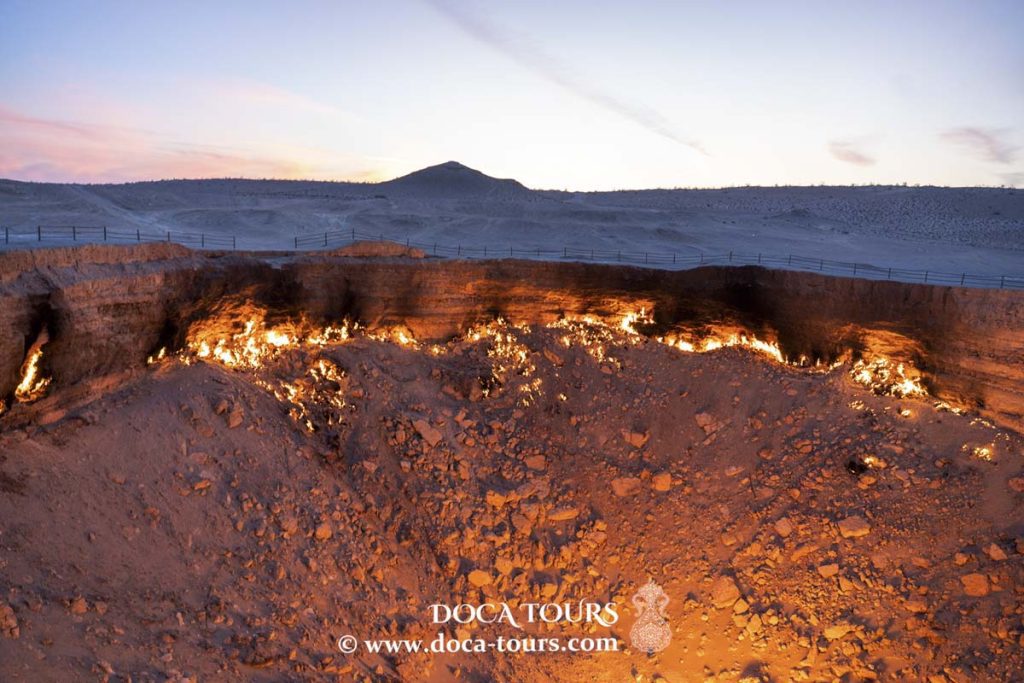
In 2013, Canadian explorer George Kourounis became the first person to descend to the bottom of the Darvaza crater. His mission, part of the Extreme Microbiome Project, involved collecting soil samples to study microorganisms thriving in extreme environments. This groundbreaking descent was sponsored by National Geographic and documented in the series Die Trying.