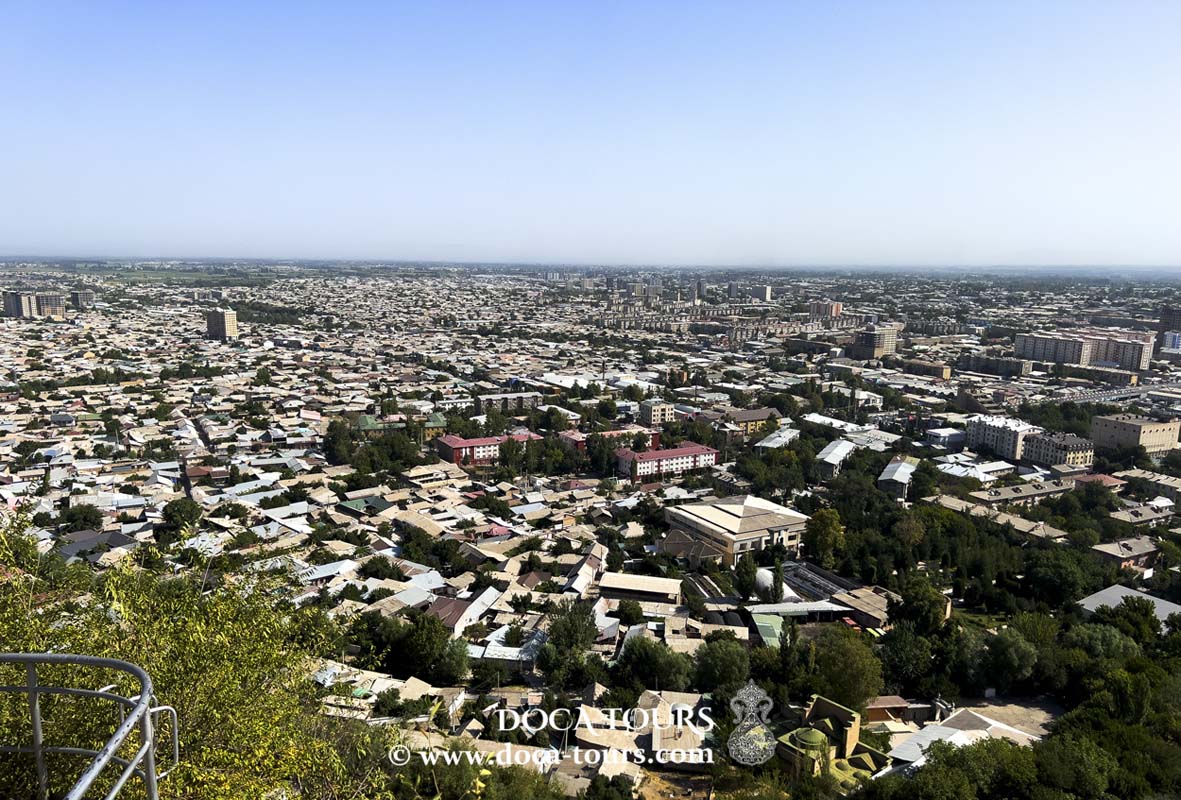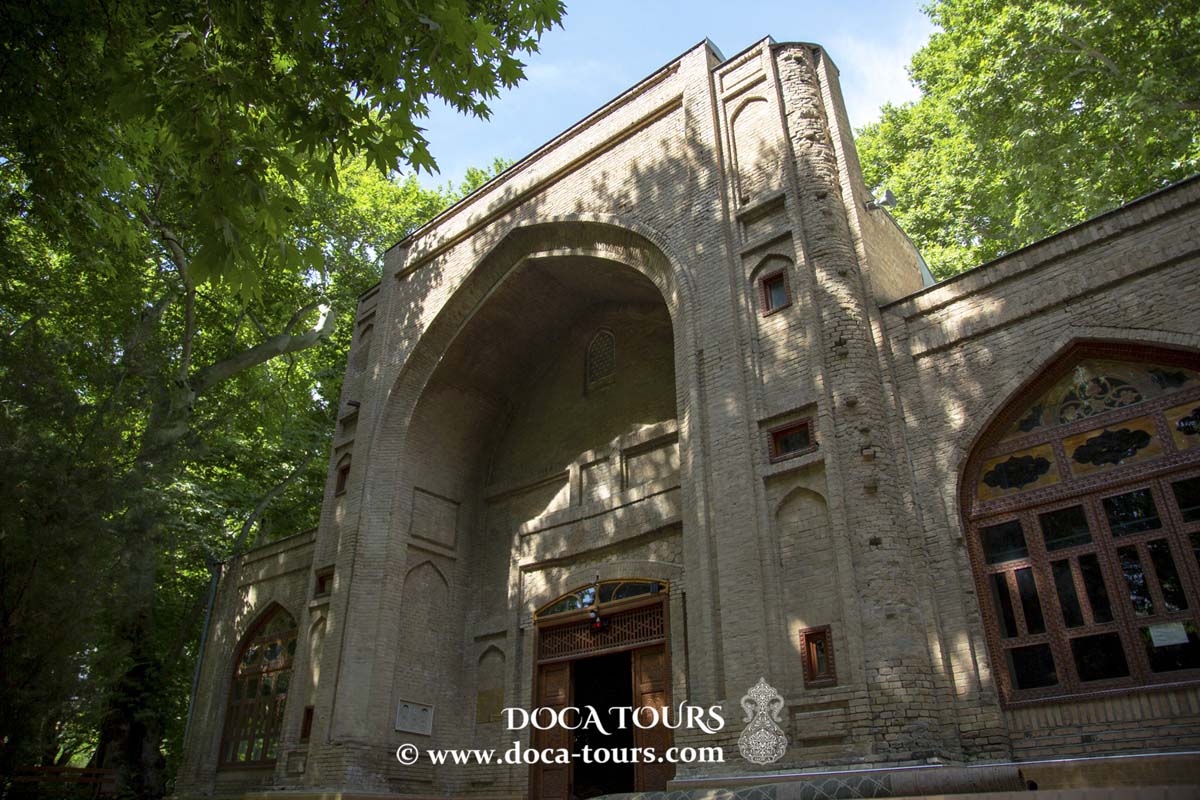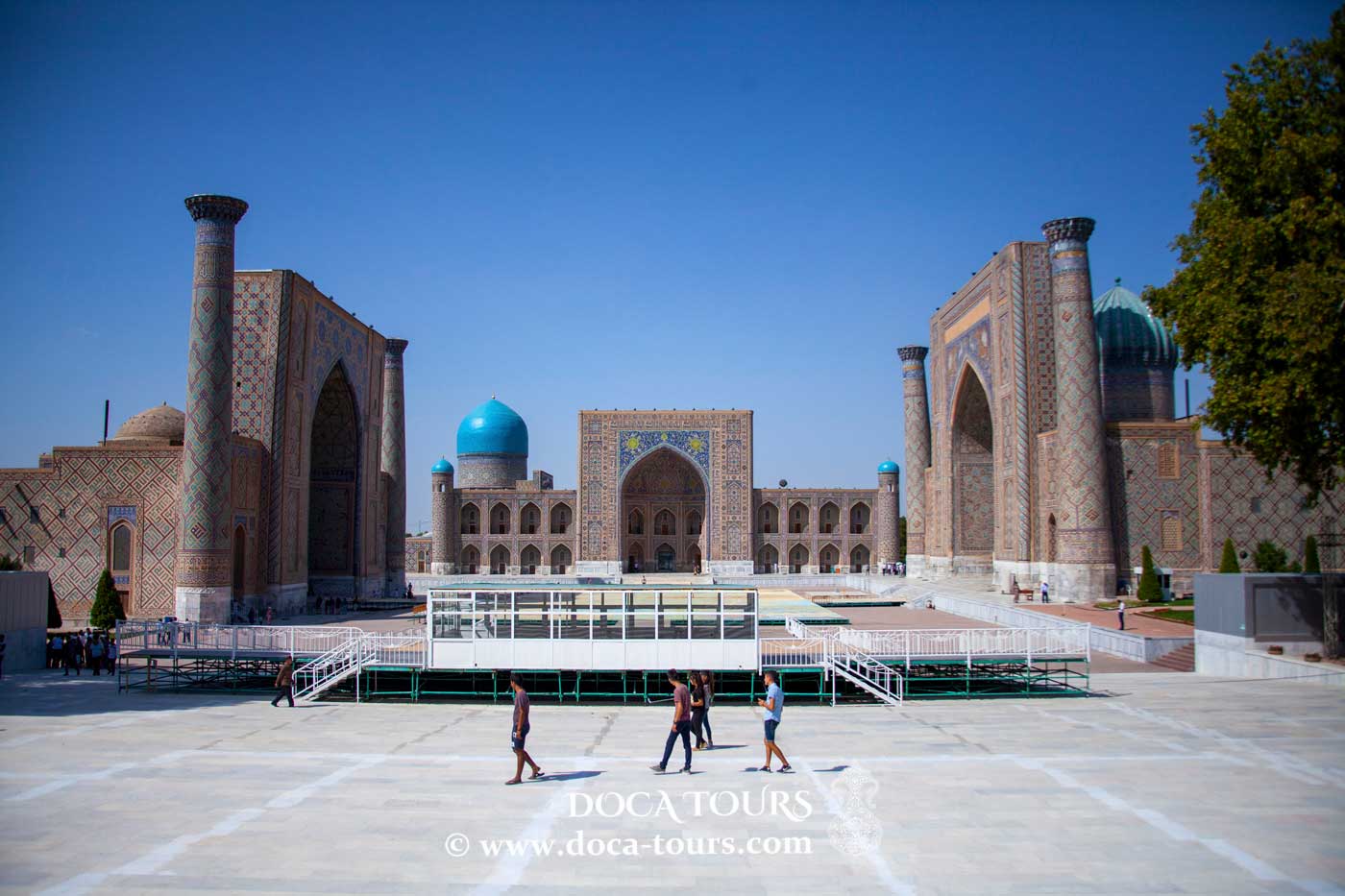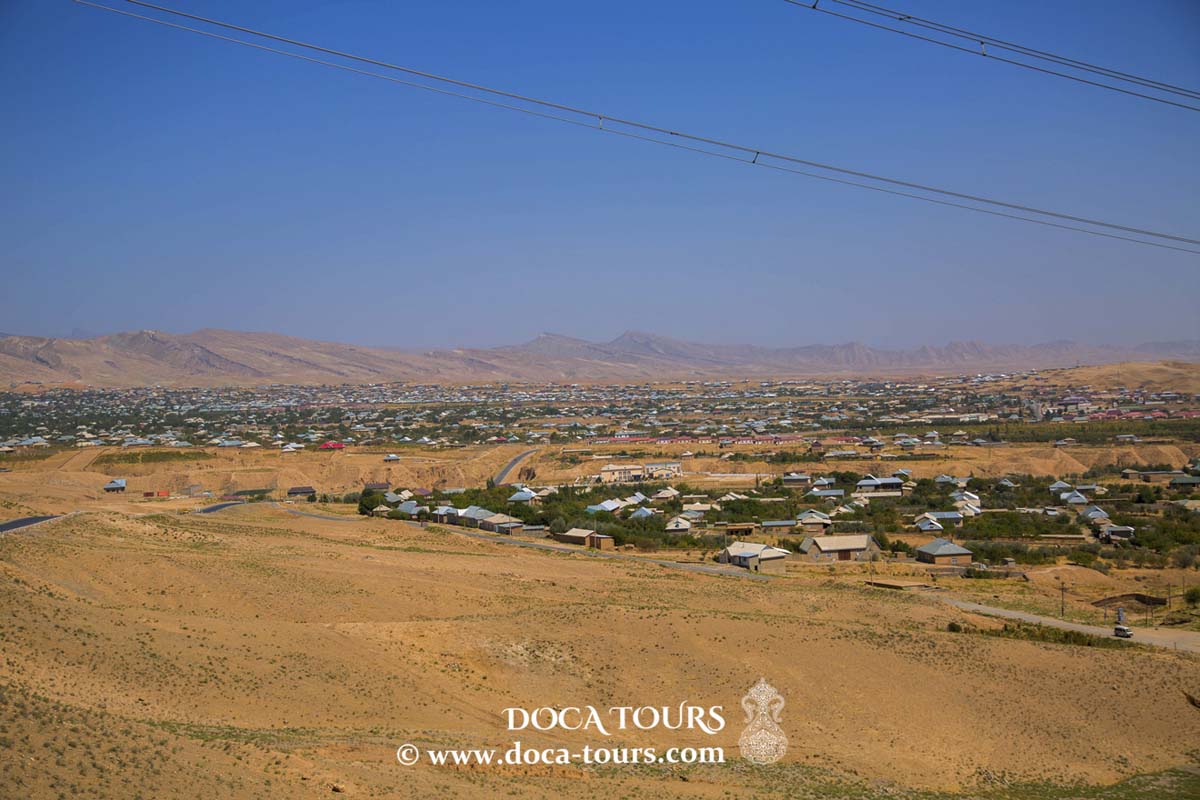
Boysun (Uzbek: Boysun, Russian: Байсун, romanized: Baysun) is a town located in the Surxondaryo Region of Uzbekistan and serves as the administrative center of Boysun District. Its population, recorded at 16,732 in the 1989 census, grew to approximately 27,600 by 2016.

Boysun is among the oldest continuously inhabited settlements in the Surxondaryo Region. Situated northwest of Boysun in the Teshiktosh mountains, the area has been home to human activity for around 5,000 years. During the 1st century BCE to the 1st century CE, it was the site of a fortified settlement called Poikalon. From the 6th to the 13th centuries, the region was home to the city of Bosand, an important part of the historical Chaghaniyan area.
Bosand is mentioned in historical texts such as Abu Ishaq al-Istakhri’s Book of Roads and Kingdoms and Hudud al-'Alam, which described it as a populous and militarized city. Strategically located along the trade route connecting Chaghaniyan with Samarkand through the Iron Gate, Bosand flourished as a center of trade and culture. Archaeological evidence reveals that Bosand was continuously inhabited from ancient times until the Islamic period and was fortified with defensive walls during its later reconstruction.
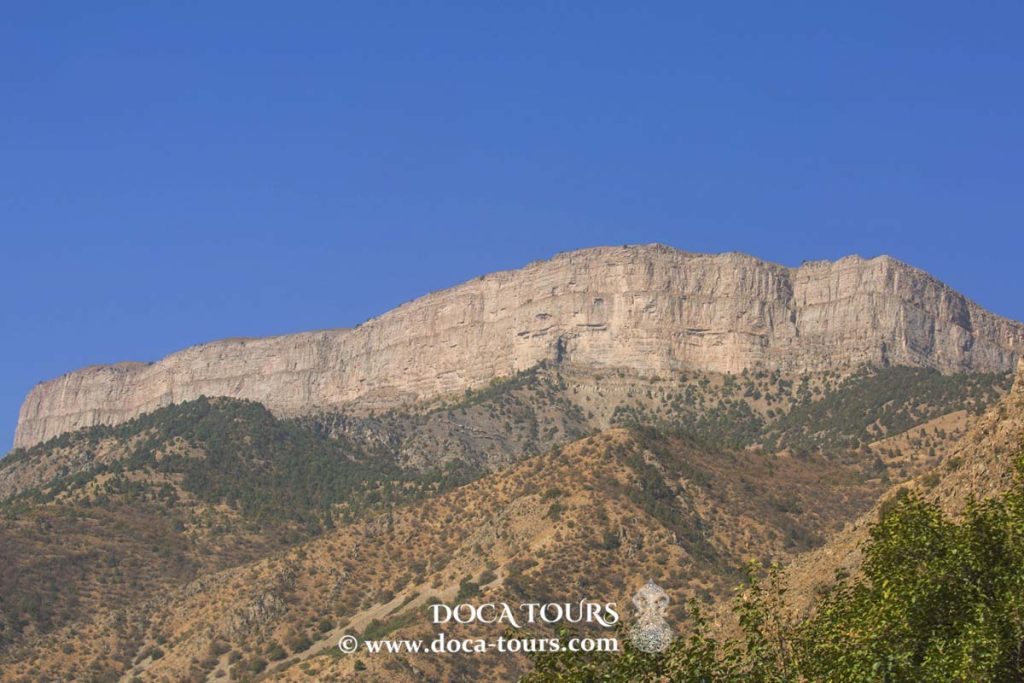
Boysun is also notable for its Teshik-Tash cave, where the burial site of a Neanderthal child was discovered, drawing global attention. Nearby, in the Kugitang Mountains, Mesolithic-era rock paintings of a "magic bull hunt" serve as further evidence of the region’s ancient human activity.
The Boysun treasure, referenced in the Zafarnama, is another testament to the area’s historical significance. During the 19th century, Boysun was one of three bekliks (administrative divisions) of the Bukhara Emirate in the Surxondaryo Region, primarily inhabited by the native Uzbek population.
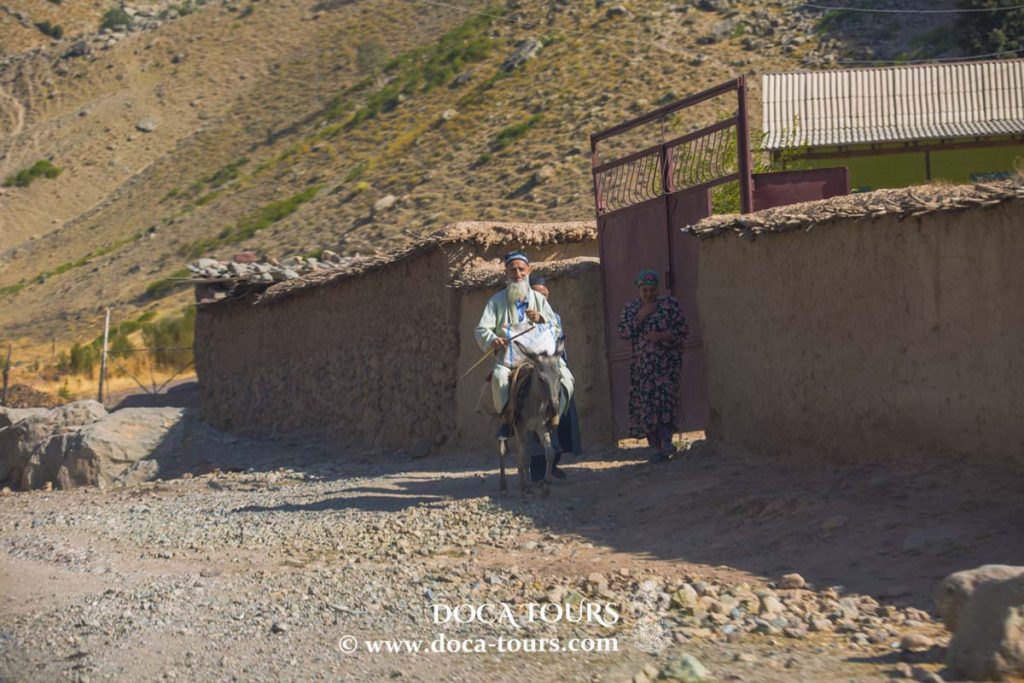
The name "Boysun" originates from the ancient Turkic words boy and sin, which translate to "great mountain" or "big mountain." Among Turkic tribes, mountains were often considered sacred and referenced in toponyms. Local tradition suggests that the name "Biysun" (a variant of Boysun) means "abode of the powerful" or "settlement of the mighty," reflecting the strength of the ancient Turkic inhabitants of the area.
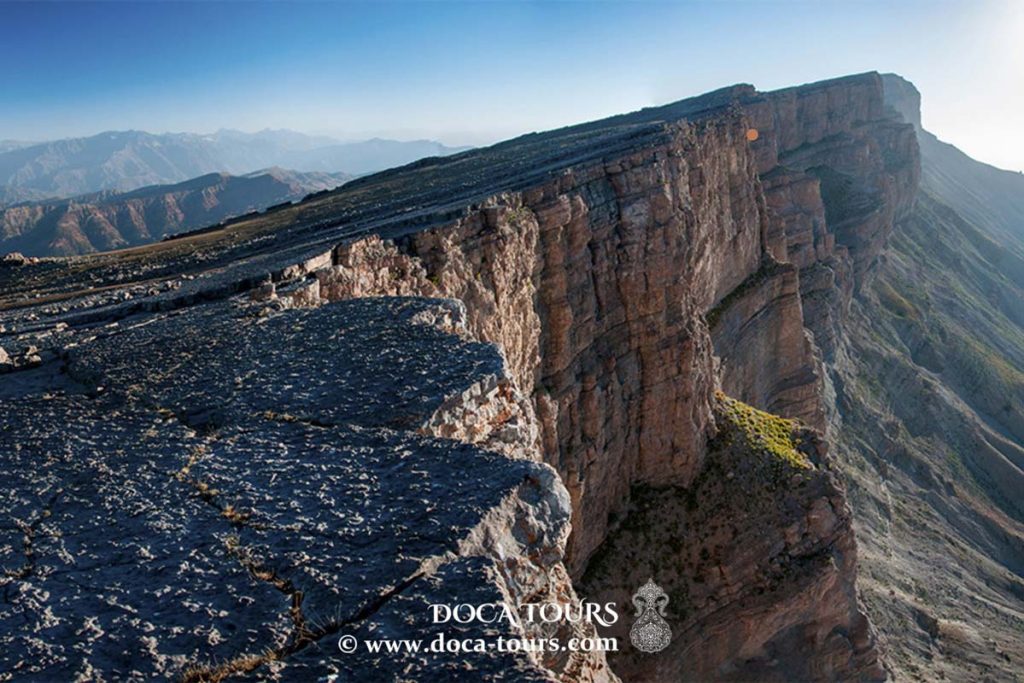
Boysun is nestled in a valley surrounded by hills and the Boysuntoq Ridge of the Gissar Range. The ridge rises to a height of 3,100 meters (10,200 feet) in the area, with even higher elevations to the west. The landscape is dramatic, ranging from grassy expanses to rugged rock formations, though the region is predominantly arid.
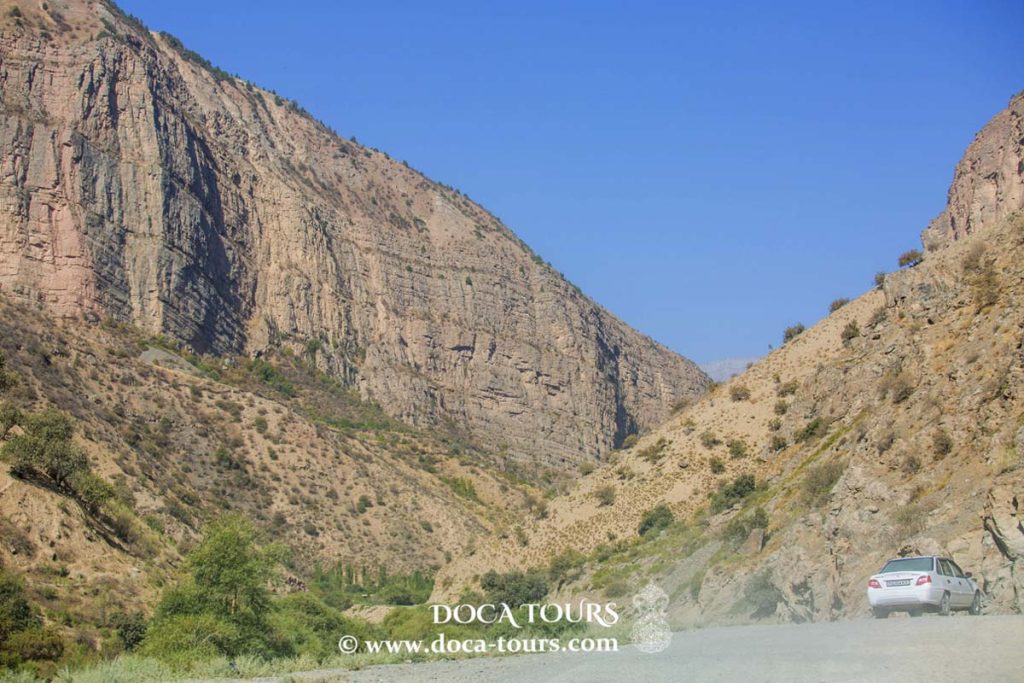
Boysun experiences a Mediterranean climate (Köppen: Csa), with hot, dry summers and cool winters. Precipitation is minimal and irregular, with autumn being the wettest season and summers remaining extremely dry.
The main road through Boysun is Route P-105, which connects the town to major roads and cities. To the west, it links with the M39 highway near Shorab, providing access to Dehqonobod, Gʻuzor, Shahrisabz, and Samarkand. To the south, it leads to Akkurgon and Termez. Eastward, the route connects to Shoʻrchi and Qumqoʻrgʻon.
Boysun was added to the UNESCO World Heritage Tentative List on January 18, 2008, in the Mixed (Cultural and Natural) category. This recognition highlights its unique combination of historical and natural significance.
In 1938–1939, Soviet archaeologist A.P. Okladnikov discovered the Teshik-Tash cave in the Baysuntau Mountains. It contained the burial of a Neanderthal child, one of the most important discoveries of its kind. Another significant site, the Machai cave, which dates back to the Middle Paleolithic and Mesolithic eras, was first explored in the early 1930s by Gavriil Vasilyevich Parfenov.

In 1991, archaeologist Edward Rtveladze led excavations on Mount Susiztag, uncovering the Uzundara fortress, a Hellenistic site from the 3rd–2nd centuries BCE. Additionally, in 2003, a team from the Baysun Scientific Expedition, led by L. Sverchkov, discovered a fortress near Kurganzol. This structure, built in northern Bactria in the late 4th century BCE, is attributed to Alexander the Great.
"Boysun Bahori" Festival – A Celebration of Heritage in Uzbekistan
The "Boysun Bahori" ("Boysun Spring") Festival is an annual international cultural event held in the small, picturesque town of Boysun, situated in the heart of Surkhandarya Region in southern Uzbekistan.
At first glance, Boysun might seem like an unassuming mountain town surrounded by scenic nature. However, its true magic reveals itself behind the gates adorned with ancient ceramic tiles. These gates do not lead to a historical landmark left by ruling dynasties but to the homes and families of Boysun’s local residents. Here lies the town's greatest treasure: its people, who diligently preserve the customs, rituals, and traditions of their ancestors. What makes this authenticity particularly captivating is the depth of its roots, which trace back to ancient times, even before the advent of Islam. During those early periods, Zoroastrianism, with its reverence for natural elements, dominated the region now known as Uzbekistan.
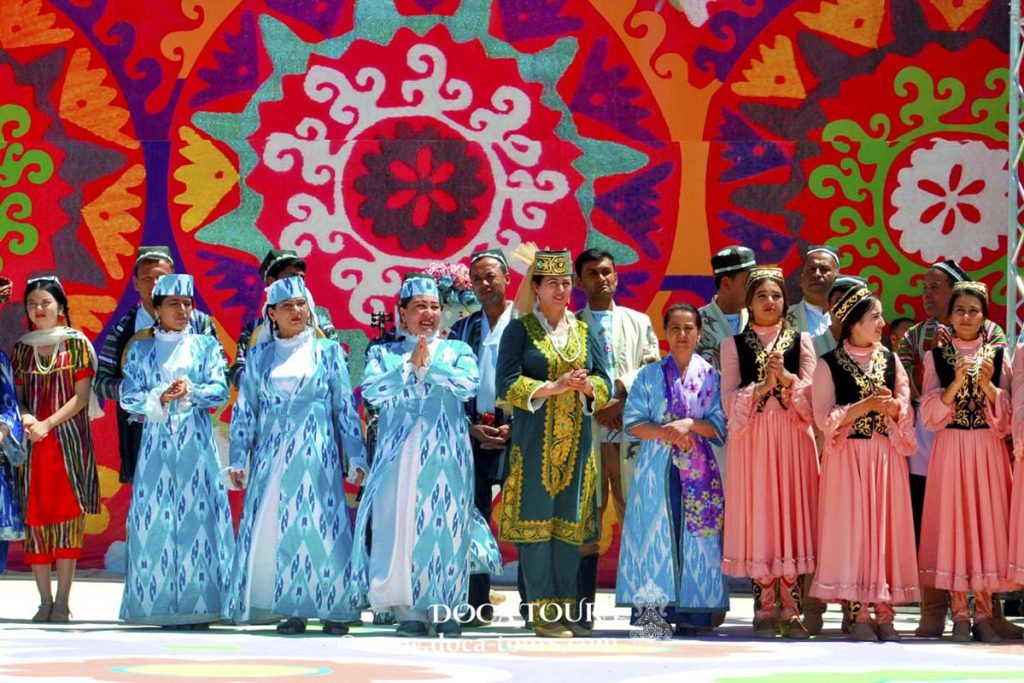
The folkloric festival "Boysun Spring" takes place in this enchanting location, nestled among the Ketmen-Chapty mountain range. While many mountain towns around the world are known for their traditional ways of life, the uniqueness of this festival lies in the fact that the folklore celebrated here is not artificially revived—it is an organic part of the lifestyle passed down through generations. Few places on Earth can claim heritage recognized as a UNESCO "Masterpiece of the Oral and Intangible Heritage of Humanity."

As the name suggests, the festival is held in spring, a season when nature awakens from its winter slumber, covering the land with emerald-green grass and filling the air with the scent of blooming trees. The warm sun welcomes visitors, encouraging long hours of outdoor celebration and relaxation.
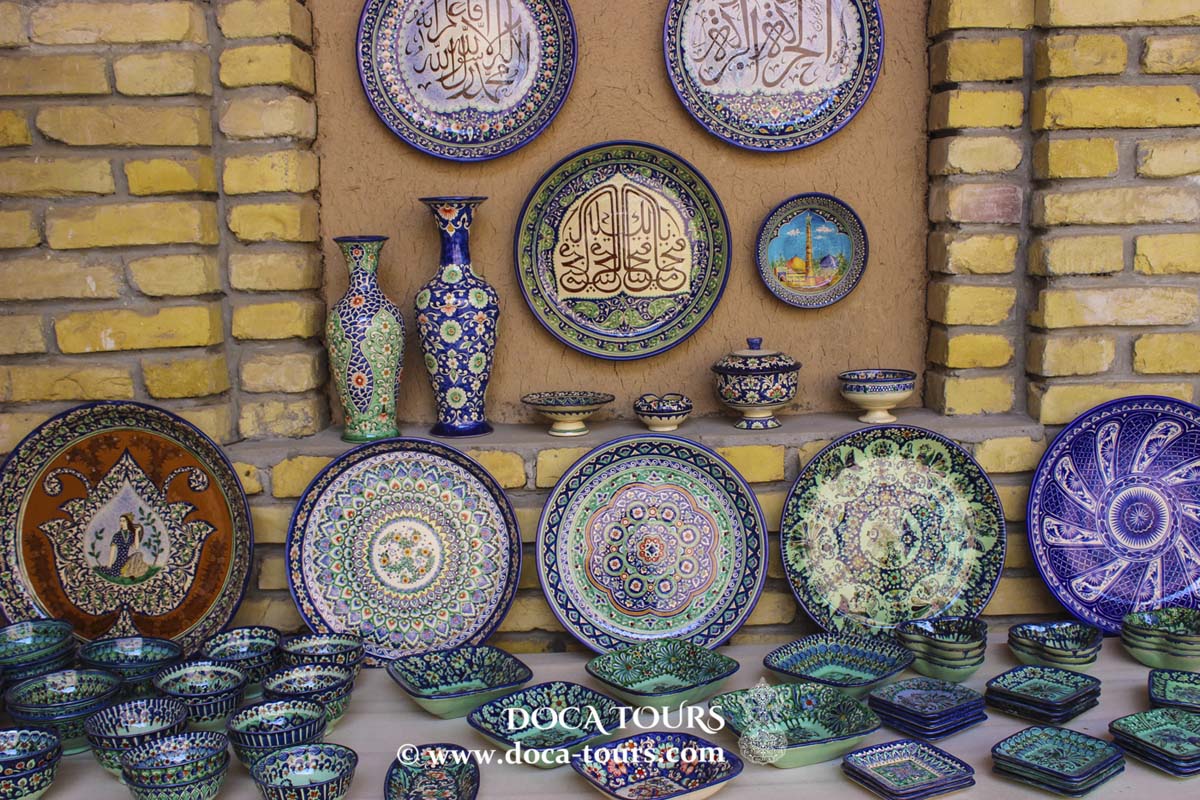
During the festival, yurts are set up in the foothills to form a temporary village. These yurts host folklore ensembles, "bakhshi" storytellers and poets, and "akyn" improvisers, who gather from all over Uzbekistan and Central Asia, much like nomads. Skilled artisans display their intricately crafted items for sale and offer masterclasses to share the secrets of their craft.
Uzbek cuisine, deeply intertwined with the country's cultural identity, is showcased in all its richness. Culinary enthusiasts will find a haven here, with countless traditional dishes being prepared in cauldrons over open fires. Guests can savor plov, shurpa, dimlama, lagman, and many other delicacies that define Uzbekistan's gastronomic heritage.
The festival also appeals to fans of exhilarating traditional sports and games. Wrestling matches featuring "kurash" fighters and horseback competitions like "kupkari" bring vibrant energy to the event and showcase the region's cultural vitality.
In 2022, the "Boysun Bahori" Festival celebrated its 20th anniversary, marking two decades of honoring and preserving this extraordinary cultural heritage.