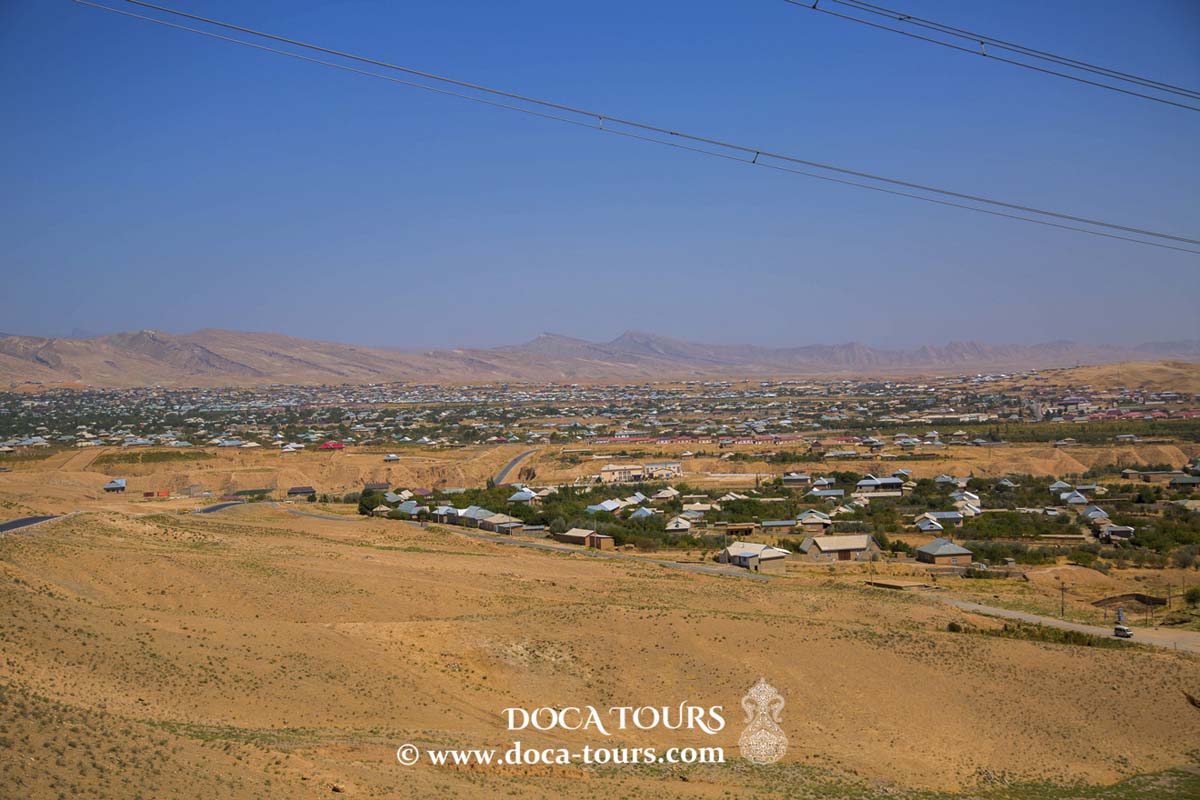
Balkanabat (Turkmen: Balkanabat şäheri), previously known as Nebit-Dag and Neftedag, serves as the administrative center of Balkan Province, the largest province in Turkmenistan. Located at the base of the Balkan Daglary mountain range, the city is situated approximately 450 km west of Ashgabat and 160 km east of Türkmenbaşy, a major seaport on the Caspian Sea. Its urban design features a grid-like structure of residential blocks known as kvartal (quarters). Key thoroughfares include Magtymguly Street, Pervomayskiy Street, and Gurbansoltan eje şaýoly.

Founded in 1933 as Neftedag ("Oil Mountain"), the town initially served as a station settlement on the Trans-Caspian Railway. The name combined the Russian word neft ("oil") with the Turkmen word dag ("mountain"). In 1946, after gaining city status, it was renamed Nebit-Dag, retaining the same meaning but using the Turkmen word nebit for oil. In 2001, former Turkmen President Saparmurat Niyazov renamed the city Balkanabat—Balkan referring to the nearby Balkan Mountains, and abat meaning “settlement” in Persian. Notably, the Balkan Mountains in Turkmenistan should not be confused with the Balkan Mountains in Bulgaria.

As a district-level city, Balkanabat oversees several subordinate administrative units, including:
A notable landmark, the "Pioneers" monument (Russian: Первопроходцы), also known as "Desert Explorers," commemorates early petroleum prospectors like Ivan Gubkin. The sculpture depicts explorers and a camel braving the harsh conditions of the Karakum Desert in search of oil. Balkanabat’s history is deeply intertwined with its nearby oil fields, such as Goturdepe, Barsagelmes, and Nebitdag. Early settlers endured extreme hardships, living in tents or carts without basic amenities like electricity or water.

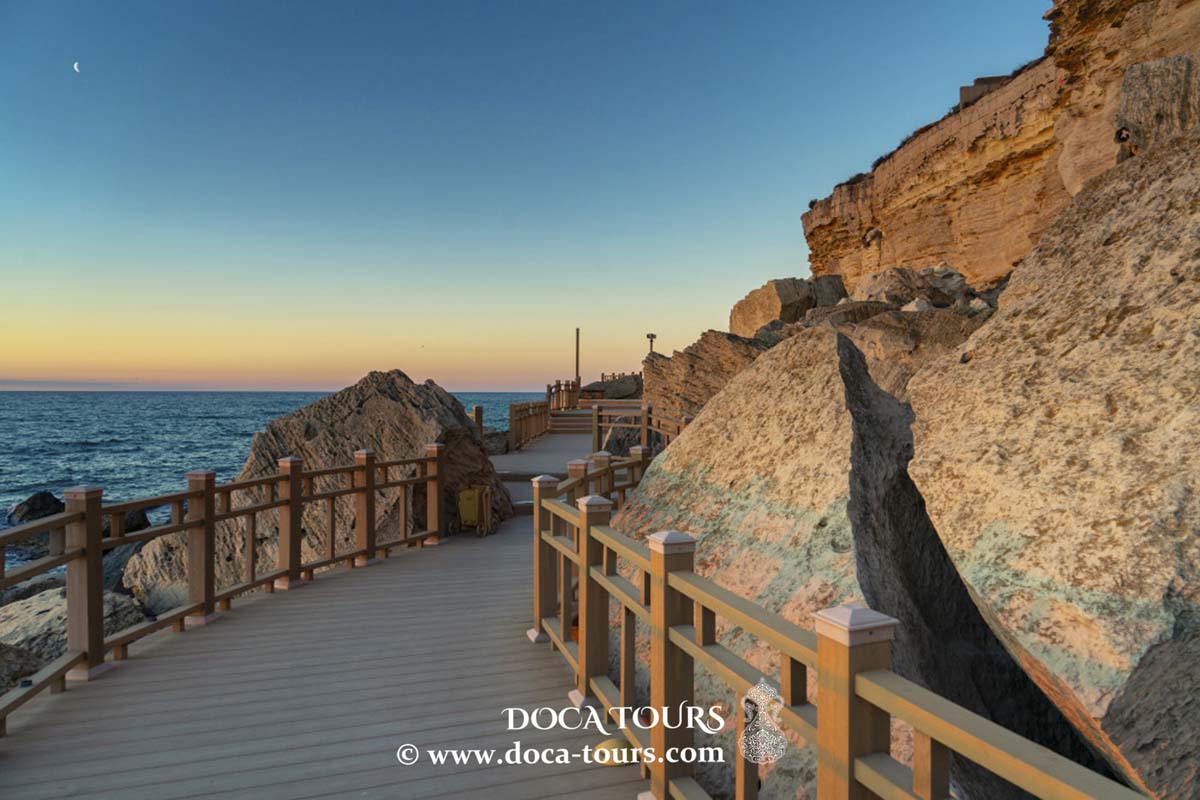
Balkanabat boasts a "Health Path," a concrete hiking trail along the mountains, inaugurated in 2004 and inspired by a similar path in Ashgabat. The city has five bustling bazaars: Gök, Jennet, Gündogar, Bereket, and 5th Microdistrict Bazaar. For accommodations, there are two hotels: Nebitçi and Sport. Other notable amenities include a theater, museums, restaurants, and parks. The Saparmyrat Türkmenbaşy Park, located on the city’s northern side, features tennis courts, a life-size chess board, shaded benches, and abundant greenery.
The early 2000s marked a period of extensive urban development in Balkanabat. Major projects included the enhancement of roadways, construction of residential complexes, and establishment of cultural and social institutions. Key additions during this period included the State Drama Theater, the Museum of History and Local Lore, a diagnostic center, a wedding palace, the Balkanabat Railway Station, the Balkan Provincial Library, a 10,000-seat stadium, and a general oriental market. These improvements transformed Balkanabat into a modern and vibrant city.

As of 2011, the population of Balkanabat was approximately 120,800. Around 80% were Turkmen, primarily from the Yomud tribe, which is strongly associated with the Balkan region. The Yomud carpet göl (rosette) is one of the five rosettes depicted on the Turkmen flag. Other ethnic groups included Russians (15%), Kazakhs (3%), Azerbaijanis (2%), and a mix of others (10%), such as Lezgins, Armenians, Uzbeks, Tatars, and Jews.
Balkanabat serves as an industrial hub for petroleum and natural gas production in Turkmenistan. The city also hosts a branch of the Russian petroleum company Tatneft. Additionally, animal husbandry, wheat farming, and cotton production contribute to the local economy. The oil and gas industry is an important part of the economic development of western Turkmenistan.

Highways and Roads: The city lies along the east-west M37 highway and is well-connected to nearby cities by rail and bus. Road connections make it possible to travel between Balkanabat, Ashgabat, and Türkmenbaşy.
Shared Cabs: Although there are no official taxi companies, shared cabs are operated by private individuals.
In October 2004, the Balkanabat Airport terminal was inaugurated with a capacity to handle 200 passengers per hour. However, as of now, Turkmenistan Airlines does not operate any regular flights from this airport. Travelers planning a trip to western Turkmenistan should check current flight schedules and transport options before departure.
For travel planning and guided experiences in the country, see Turkmenistan tours by DOCA TOURS.
Balkanabat is situated on the Trans-Caspian Railway, which connects Ashgabat with the Balkan Region. This railway facilitates both passenger and freight transport. The Balkanabat Railway Station is the city’s primary rail hub. Rail travel is an important part of the transport network connecting settlements across Turkmenistan.

The city has one mobile service provider, Altyn Asyr. Internet and cable TV services are offered by Turkmentelecom, and a single internet café operates within the city. Postal services are managed by Turkmenpochta, which runs four post offices in Balkanabat.
Balkanabat hosts a School of Oil and Gas Industry, operating as a branch of the International Oil and Gas University. The school offers specialized training in areas such as geology, drilling, oil and gas field operations, chemical processing, and pipeline construction. This institution succeeded the Polytechnic Institute, previously affiliated with the Gubkin Russian State University of Oil and Gas during the Soviet era.

Vocational education is also available through the Balkanabat Medical School, the Special School of Arts, the Financial and Economic Vocational School, and the Oil Secondary Vocational School under the Turkmennebit State Concern. These institutions provide training in healthcare, arts, finance, economics, and the petroleum industry.
The majority of residents practice Sunni Islam. The main mosque of Balkan Province accommodates 3,000 worshippers and features four minarets, each 63 meters tall. Additionally, the Russian Orthodox Church of the Nativity of the Holy Virgin has served the community since 1997 in the 13th microdistrict. These religious sites reflect the religious and cultural life of Balkanabat.

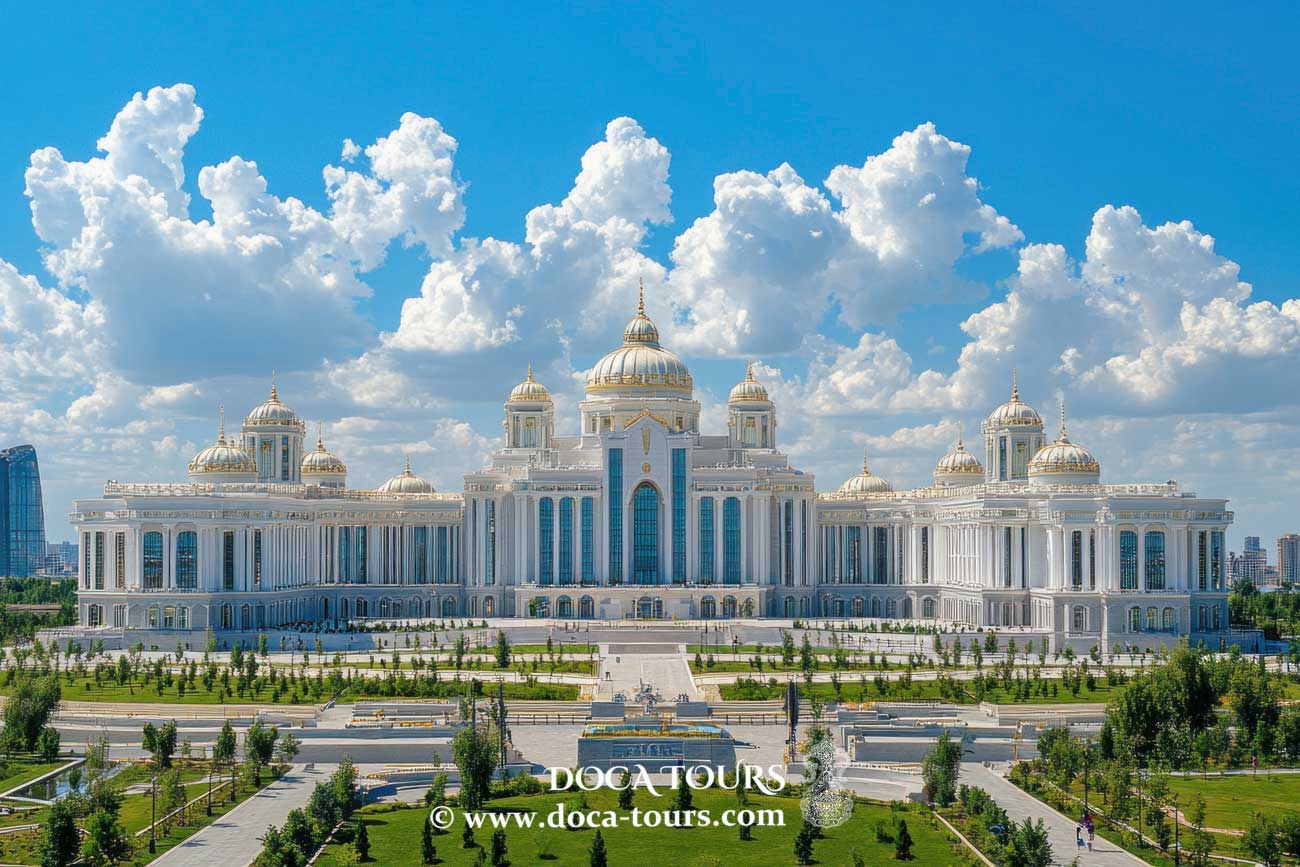
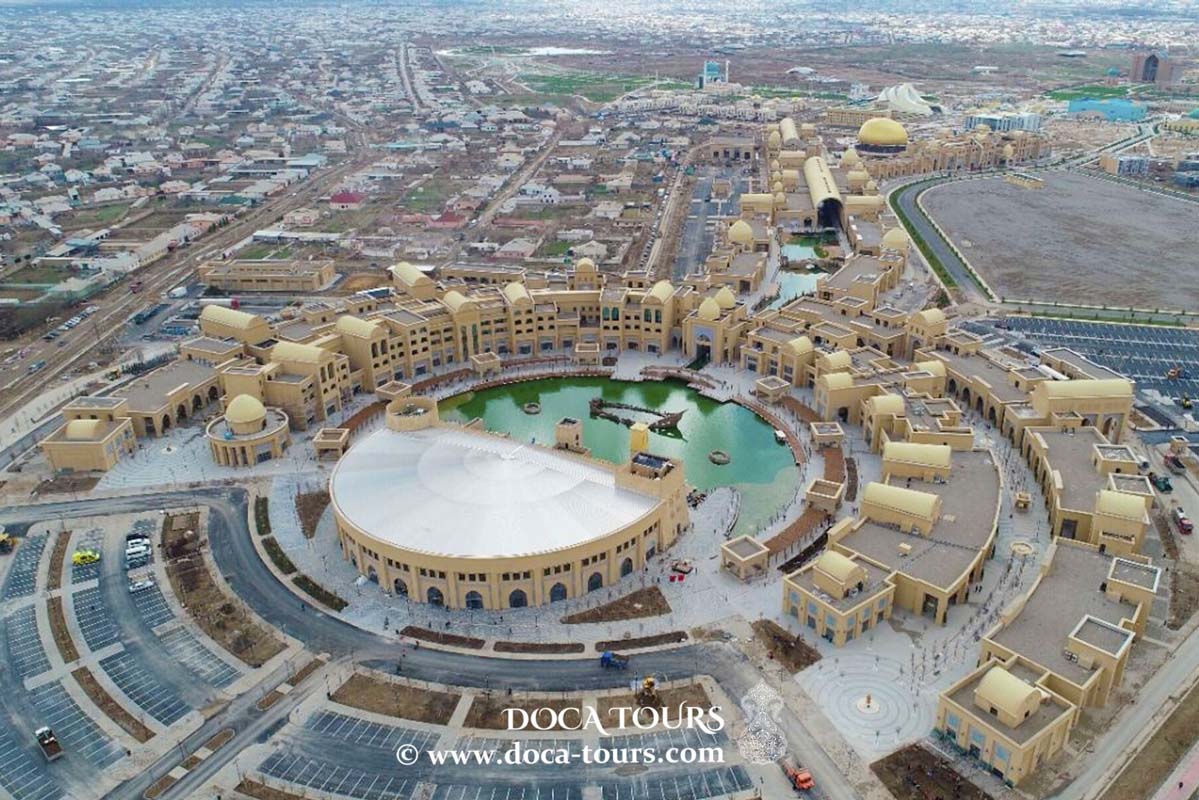
In 2021, Balkanabat unveiled the Türkmeniň ak öýi ("Turkmen White House"), a large yurt-shaped building designed for special events. The complex includes a concert hall with 3,000 seats, supplementary facilities, and a sadaqah (charity) hall of equal capacity. Traditional Turkmen architecture, hospitality, music, and cultural customs are important elements of the country's national identity.
Visitors interested in the cultural heritage of Turkmenistan can explore the country's historical destinations through DOCA TOURS' Silk Road heritage tour.
The state-run daily newspaper Balkan is published in Balkanabat. Local media provides news and information about the city, the Balkan Province, and events in western Turkmenistan.

Balkanabat maintains a sister-city relationship with Almetyevsk, a city in Russia. Sister-city relationships can support cultural exchange and cooperation between communities.
The Balkanabat Sport Toplumy Stadium is home to the Nebitçi Football Club, which competes in the Ýokary Liga ("Upper League"). Football is among the sports played in Turkmenistan, alongside other organized sporting activities.
Balkanabat offers insight into the modern industrial development of western Turkmenistan, including its petroleum history, local culture, and connections to the Caspian Sea region. Travelers interested in exploring more of the country can discover historical cities, desert landscapes, and ancient Silk Road heritage with DOCA TOURS' Turkmenistan tour.
For travelers interested in the region's historical routes and archaeological sites, the Turkmenistan Silk Road heritage tour offers another way to discover the country's cultural history.
For reliable background information on Turkmenistan's recognized cultural heritage, visit the UNESCO World Heritage page for Turkmenistan.