























Key takeaways
- The second Bukhara Biennale 2027 runs from September 3 to November 21, 2027, under the main theme “The Long Welcome.”
- The event is initiated by Gayane Umerova, organized by the Uzbekistan Art and Culture Development Foundation (ACDF), and led artistically by Kulapat Yantrasast.
- International and Uzbek artists collaborate with local master artisans and communities on new projects, some of which remain permanently in Bukhara’s urban environment.
- Admission is free; commercial photography or filming requires prior written authorization from the biennial’s management.
- The exhibition area spans roughly 35,000 square meters across the Cultural District of Bukhara’s Old City, connecting caravanserais, madrasas, mosques, and public spaces.
Bukhara Biennale 2027: Travel Guide, Dates, Venues, and How to Get There
The Bukhara Biennale 2027 brings contemporary art, architecture, and traditional craftsmanship to the historic oasis city of Bukhara from September 3 to November 21, 2027. Under the main theme “The Long Welcome,” the second edition builds directly on Bukhara’s centuries-old role as a crossroads along the Silk Road. For travelers, this major cultural event offers a rare chance to experience contemporary works inside restored trading domes, madrasas, and caravanserais with free admission.
Concept, Leadership, and Participating Artists of the Bukhara Biennale 2027
The Bukhara Biennale was initiated by Gayane Umerova and is organized by the Uzbekistan Art and Culture Development Foundation (ACDF). According to the organizers, Bukhara’s character has largely been shaped by people who traveled along the Great Silk Road and settled in the city—merchants, scholars, and artisans whose legacy remains visible in its architecture, crafts, and traditions.
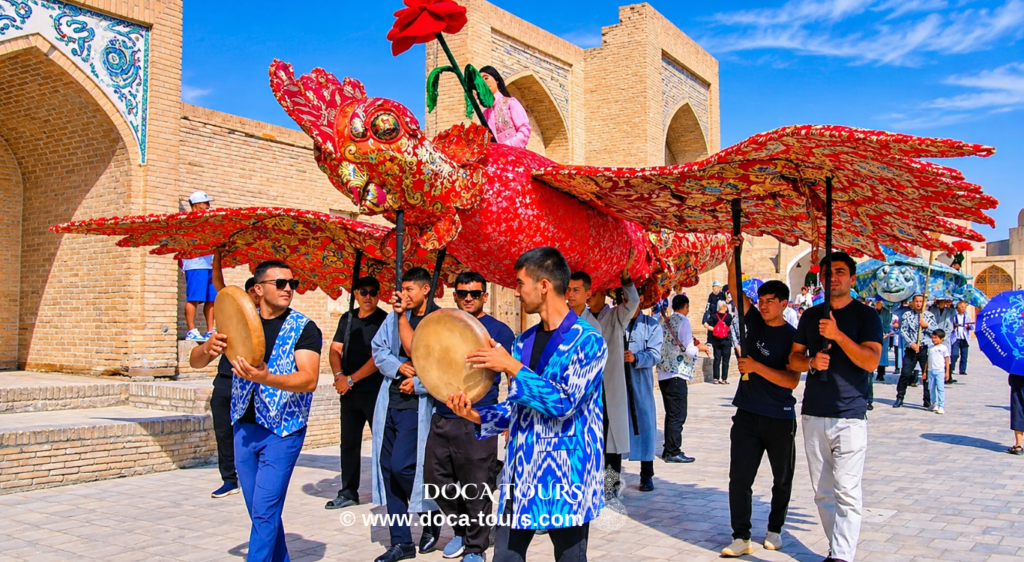
For the 2027 edition, hospitality serves both as the core theme and as a guiding principle of creative collaboration. Under Artistic Director Kulapat Yantrasast, founder of the architecture practice WHY Architecture, artists from Uzbekistan and abroad partner with local master artisans and communities to create new works. Selected projects will stay in Bukhara after the biennial ends, becoming part of the city’s everyday environment.
Among the initially announced participants are
Anish Kapoor
Koo Jeong A (Ku Chon A)
Sevara Haydarova Donazzan
Susan Philipsz (Syuzan Filips)
Nigina Mirzajonova
Precious Okoyomon
Josef Arzumanov
Oscar Tuazon
Maxim Vardanyan
Daima Rahmanbekova
Bethan Laura Wood
Practical Visitor Information: Tickets, Hours, and Advisories
Planning a visit to the Bukhara Biennale 2027 during a trip to Uzbekistan is straightforward thanks to clear on-site guidelines:
Tickets: Admission to the Bukhara Biennale is free.
Photography and filming rules: Commercial photography or filming on the biennial premises is prohibited without prior written authorization from the biennial’s management; unauthorized material is subject to legal action.
Scale and flow: The biennial covers approximately 35,000 square meters across the Cultural District and takes about 10 minutes to walk from one end to the other without stopping. Biennial guides help manage visitor flow and monitor capacity during busy periods.
Accessibility and facilities: Because all venues are restored historic landmarks, wheelchair access is limited at several sites. Public restrooms are available in the district and marked on the on-site map.
Opening hours (reference from the first edition): During the first edition, project sites were open Tuesday to Sunday from 10:00 a.m. to 10:00 p.m. in September and 10:00 a.m. to 8:00 p.m. in October and November, while street artworks could be viewed at any time. During unfavorable weather, access to certain exhibits may be temporarily restricted for visitor safety and artwork protection.
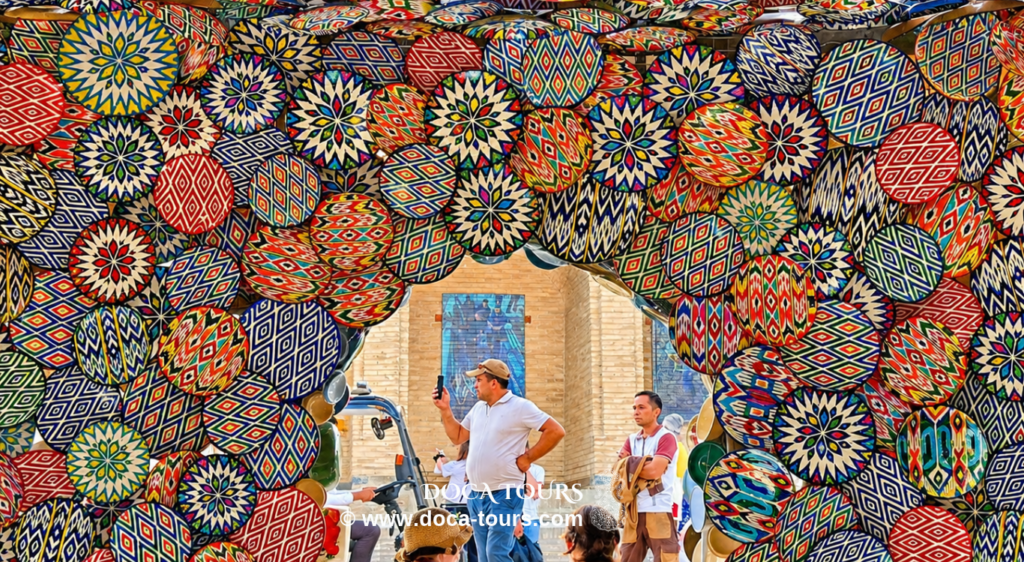
Historic Venues Across Bukhara’s Old City
The biennial’s Cultural District traces the route of the ancient Shakhrud Canal, which once carried water from the Zarafshan River into Bukhara through a network of hauz pools. The exhibition trail links key architectural landmarks and neighborhood spaces across the Old City.
Public Spaces and Toqi Sarrafon
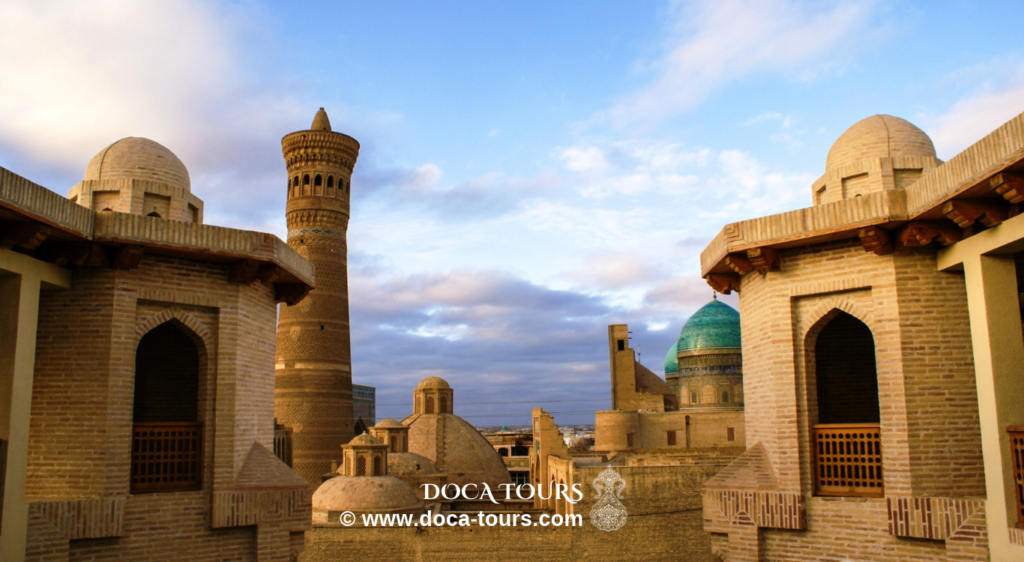
The route starts at Toqi Sarrafon, a sixteenth-century covered trading dome that once operated as a money-exchange hub run by Indian and Jewish merchants. Following the canal path and passing the hauz pool in front of the Khoja Gavkushon complex, the trail winds through mahalla neighborhoods home to artisans, particularly embroiderers and gold embroiderers.
The Four Caravanserais
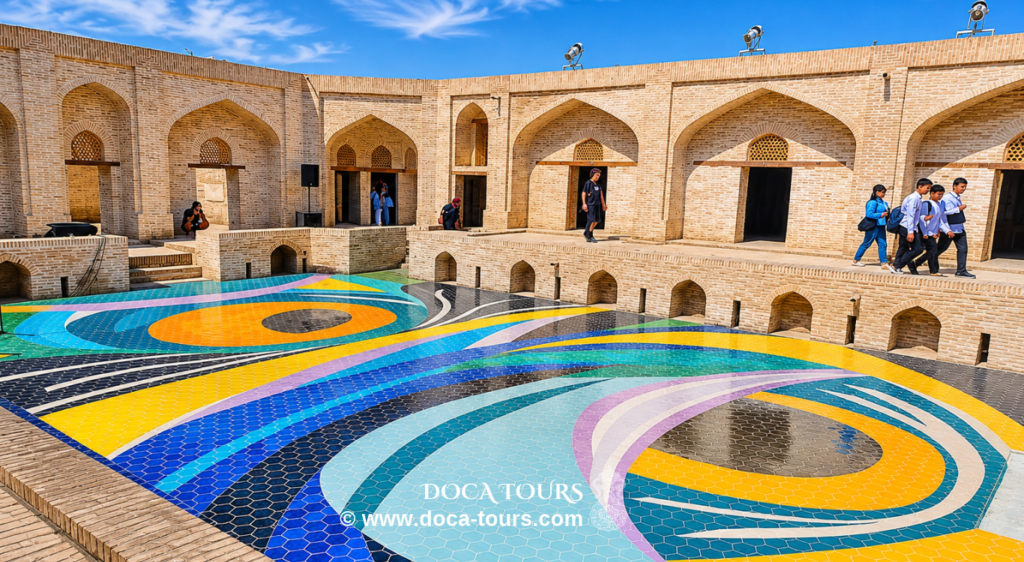
Four interconnected eighteenth- and nineteenth-century caravanserais—Fathullajon, Ayozjon, Ahmadjon, and Mirzo Ulugbek Tamakifurush—once housed traveling merchants and hosted trade in dishware and local tobacco. Built around central courtyards with hujra rooms, donkey-feeding niches, and horse stables, Fathullajon and Ayozjon were restored in the early 2000s, while Ahmadjon and Mirzo Ulugbek Tamakifurush remain in ruins.
Gavkushon Madrasa and Khoja Kalon Mosque
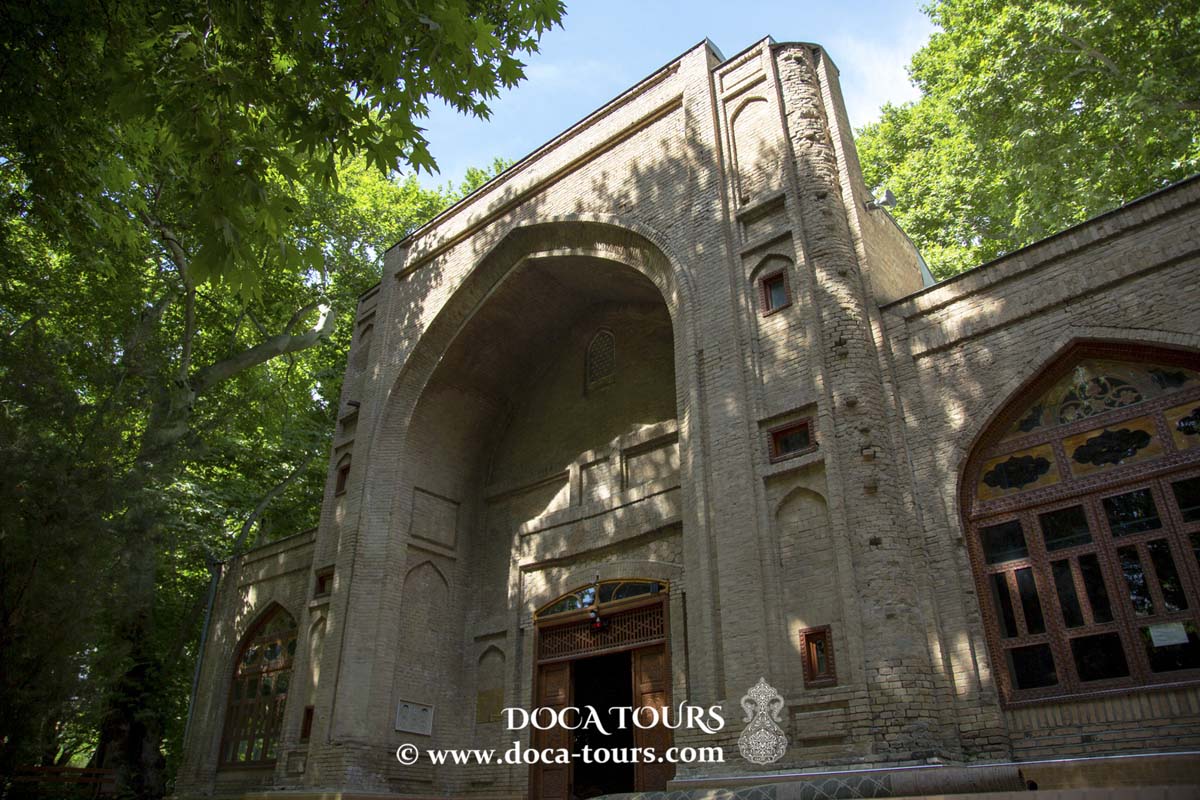
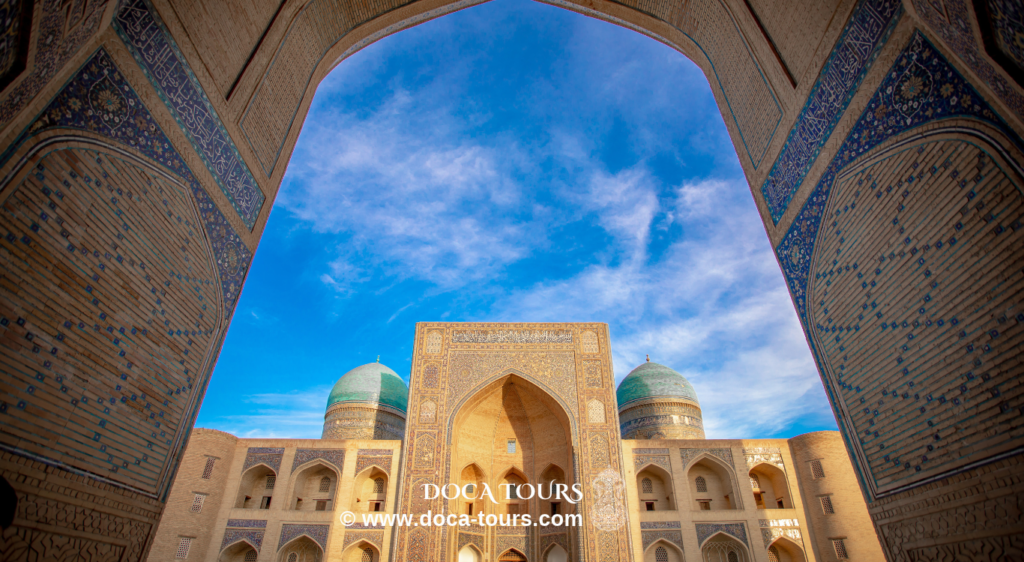
Built in 1570 on a trapezoidal plot near a street fork, Gavkushon Madrasa features more than 30 rooms, a library, a prayer and lecture hall, and four mulberry trees in its courtyard, hosting cross-disciplinary gatherings, readings, and craft studios. Nearby stands Khoja Kalon Mosque (built in 1598), once Bukhara’s second-largest mosque after the Poi-Kalon complex, where the minaret and restored front portal remain amid ruined sections.
Rashid Madrasa, AlMusalla, and Pop-Up Library
Near the Shakhrud Canal in a former embroiderers’ quarter sits Rashid Madrasa (eighteenth–nineteenth century), endowed by Afghan tea merchant Abdurashid. The wider program also features AlMusalla—a modular prayer and contemplation structure created by EAST Architecture Studio, AKT II, and Rayyane Tabet—a children’s pop-up library inside the nineteenth-century Pochakul Khoja Mosque, and Café Oshqozon, which pairs shared meals inspired by Bukhara’s spice-trade history with storytelling and conversation.
Getting to Bukhara: Flight, Train, and Bus
Bukhara can be reached both on direct international routes and conveniently from Tashkent. Depending on your itinerary and schedule, you can choose between several ways to travel.
By Plane: There are direct flights from Tashkent (taking about one hour) as well as from cities such as Moscow, Istanbul, and other destinations in Central Asia. Domestic flights from Tashkent are operated by Uzbekistan Airways (via uzairways.com) and daily by Silk Avia. You arrive at Bukhara International Airport (BHK) on Airport Highway in the Kogon District, roughly six kilometers from the city center. From the airport, it takes about 15 minutes into town by taxi or via the Yandex app.
By Train: Daily Afrosiyob high-speed trains and Sharq regional trains run from Tashkent to Bukhara. Depending on the train type, the journey takes roughly 3.5 to six hours, with schedules available at railway.uz. Trains depart from Tashkent Central Railway Station (Tashkent-1, 7 Turkistan Street) and arrive at Bukhara-1 (Kogon) Railway Station. Taxis and shuttle buses are available at the station for the roughly 15- to 20-minute ride into the center.
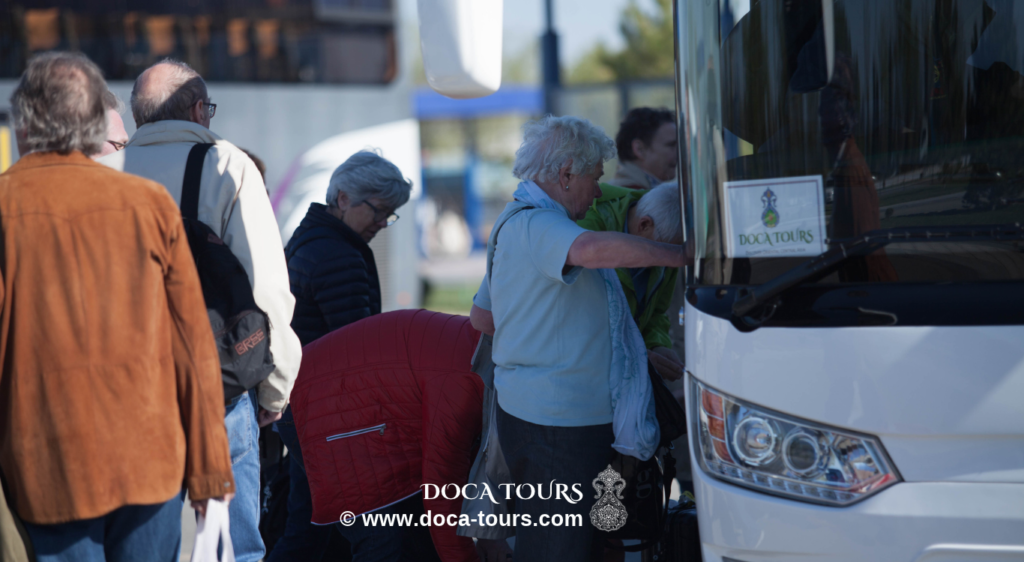
By Bus: Regular intercity buses connect Tashkent and Bukhara, typically taking around eight to ten hours. Tickets can be booked in advance on avtoticket.uz. Buses depart from Tashkent Bus Station (Avtovokzal, 7 Bunyodkor Avenue) and arrive at Bukhara Central Bus Terminal on Gijduvon Road, about a ten-minute taxi ride from the city center.
Frequently Asked Questions (FAQ) About the Bukhara Biennale 2027
When does the Bukhara Biennale 2027 take place? The second edition runs from September 3 to November 21, 2027, under the theme “The Long Welcome.”
Is admission to the Bukhara Biennale free? Yes, admission is free.
Who organizes and leads the Bukhara Biennale 2027? It was initiated by Gayane Umerova, is organized by the Uzbekistan Art and Culture Development Foundation (ACDF), and has architect Kulapat Yantrasast (WHY Architecture) as artistic director.
How do you travel from Tashkent to Bukhara? Travelers can fly in about one hour (via Uzbekistan Airways or Silk Avia), take a train such as Afrosiyob or Sharq in roughly 3.5 to 6 hours, or take an intercity bus in about 8 to 10 hours.
Plan Your Private Journey: As a family-run Destination Management Company based in Samarkand, DOCA TOURS helps arrange custom itineraries, train tickets, and local guides along the Silk Road. Reach out to us to plan your trip!