





























Video: https://www.youtube.com/watch?v=eo4uomVJsxQ
Greetings, companions! We will visit the renowned Siab Bazaar, Samarkand’s most vibrant marketplace, today. This location is a veritable gold mine of flavors, scents, and vibrant hues! We’ll find out how much fresh produce, spices, and traditional Uzbek desserts currently cost. Are you ready? Then let’s get started!
Hi everyone, subscribers! We’re in Samarkand today! It’s Sunday, August 4th, the 24th summer, and Siab Bazaar. Let’s get started with our comprehensive analysis of the market today, focusing on its prices above everything else!
And the street market will be the first topic of our review! Let’s check it out for ourselves—they say these are the best deals!
I choose to purchase some inexpensive wine-glad to sample.
How much do tomatoes cost? Excellent value for the fruits and veggies in season.
The most popular type in Uzbekistan is called Charos, a Central Asian table variety of dark grapes, and when we tried them, they turned out to be incredibly sweet.

Every fruit is grown nearby, including grapes with and without seeds. The well-known Uzbek grape type known as “lady finger” is more costly due to its diversity.
Carmen, offer buckwheat of the Russian variety. Always willing to compromise on the cost.
In order to determine whether the cost varies depending on the location of sale, I inquired about bell peppers and tomatoes of various hues.
Bargaining is not only a component of purchases in Uzbekistan’s markets; it is a comprehensive custom founded on the values of friendliness and dialogue. It is normal to talk about the cost and occasionally make jokes while doing so. Particularly if the consumer demonstrates genuine interest in the products, the sellers are amiable and willing to compromise. Shopping in such an environment is not only profitable but also pleasurable since it allows one to build amicable relationships and experience the local way of life. In the Uzbek market, haggling is an art form in which a smile and goodwill are just as important as numbers.
The prices of Uzbekistan’s seasonal fruits are just astounding. You can even pickle a watermelon because it’s so inexpensive. Hearing such a low price surprised me.
Prices still pique my curiosity; you, my subscribers, must compare them to the earlier ones and make judgments. And the primary market is still a ways off.
The tomatoes are homemade, the price is essentially the same everywhere, and the market is filled with a riot of colors, flowers, and scents.
Because they don’t pay rent for the space, or if they do, it’s not much, locals claim that prices are lower in the nearby “street market” region.
Friends, we’ve arrived at the market itself. We’ve passed through one of the five entrances, and the Bibikhanum Mausoleum is behind me. Let’s continue our review.
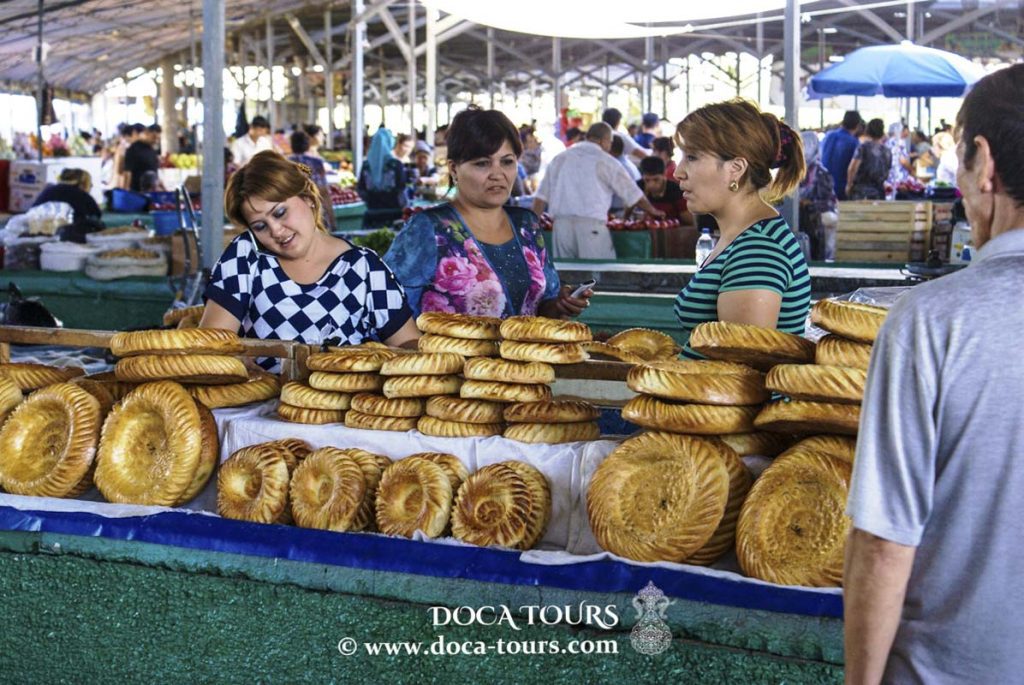
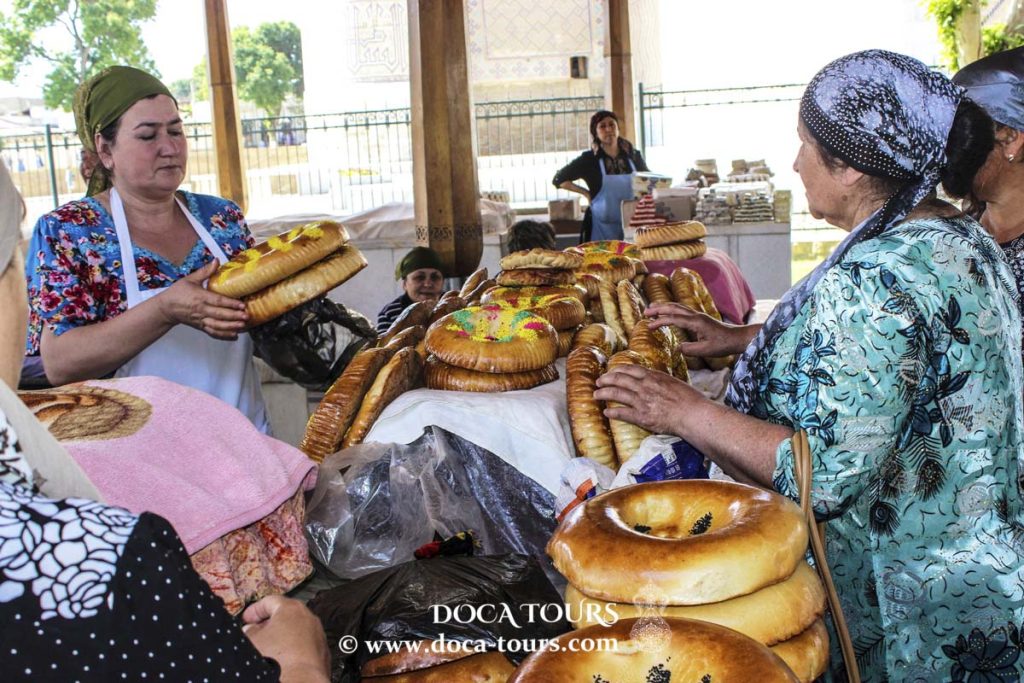
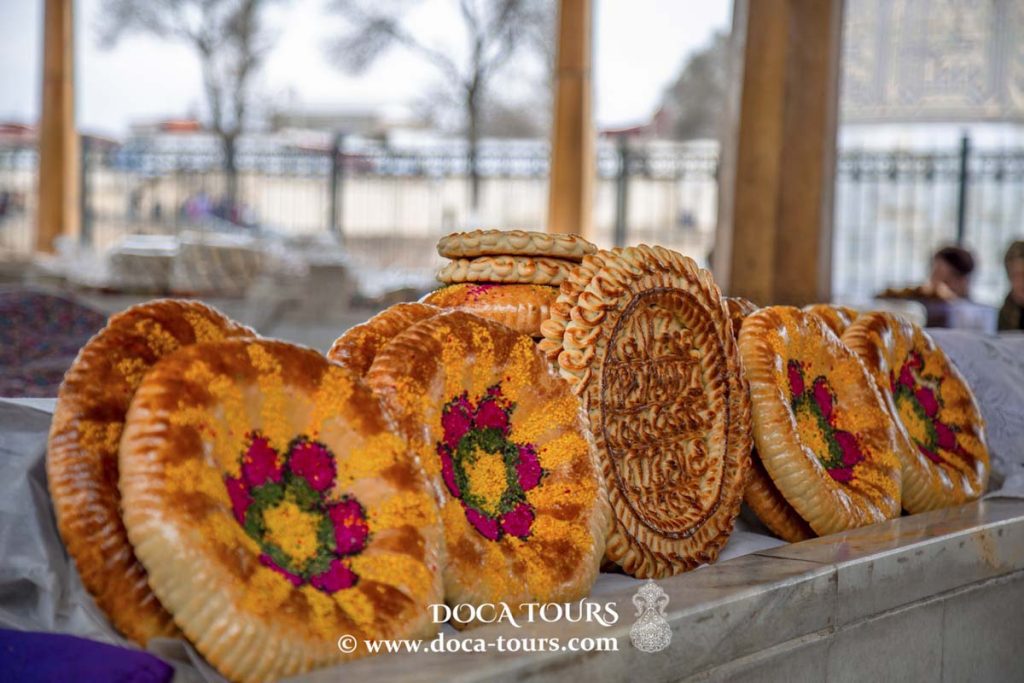
Samarkand flatbreads are more than just bread; they are a representation of Uzbek customs and culture. A specific cooking technique gives these flatbreads their distinct flavor, aroma, and texture. They have a distinctive look and are soft on the inside because they are baked in a tandoor, or clay oven.
When I decided to inquire as to why the flatbreads were so bright, they informed me that they had been professionally oiled to give them a lovely golden hue, which enhanced their appeal
I approach the vendors carefully since I am interested in every culinary item at the market. They all sell the same item.
I proceed to the next tent; the costs are the same, the products aren’t all that different, someone requests that I not take pictures, and someone voluntarily strikes up a discussion and shares information about their products.
The cost is reasonable because the plums are handmade and locally grown. Children love Kishmish grapes because they don’t have seeds.
When the merchants notice that I’m filming, they approach me to inquire about costs and instantly offer a discounted rate.
Although there is a limited selection of goods in the market, the ability to haggle is crucial for successful buying. Because prices for visitors and tourists are frequently exaggerated, you should exercise caution and first compare prices across multiple locations before selecting the one that would yield the highest profit. Additionally, remember to request a discount; some dealers are prepared to lower the price.
The luscious, juicy berries of the black mulberry tree are utilized extensively in traditional medicine and cookery. The dark purple, nearly black mulberry berries offer a rich, sweet flavor with a hint of sourness. They are rich in microelements including iron, potassium, and magnesium as well as numerous vitamins (C, E, and K).
A distinctive member of the mulberry family, figs are prized for their delicious and nutritious fruits. indigenous to the Mediterranean and Asia Minor. Figs are high in fiber, minerals (potassium, calcium, magnesium, and iron), and vitamins (A, B, and K).
This time, my friends, I made the decision to try and get myself a bottle of juice. It’s natural, delicious, freshly squeezed, heat-resistant, and vitamin-rich.
Their products are praised by everyone as the best and freshest. Let’s go ahead; the cost of the figs is the same as it was at the last location.
Vegetables have the same price, which is convenient because it’s easy to count, and you can always rely on a discount.
Since a lot of individuals grow greens, the cost is low and constant throughout the year. Ten thousand local money for three or four bunches.
The cost of potatoes is the same whether they are grown in Uzbekistan or imported from Russia.
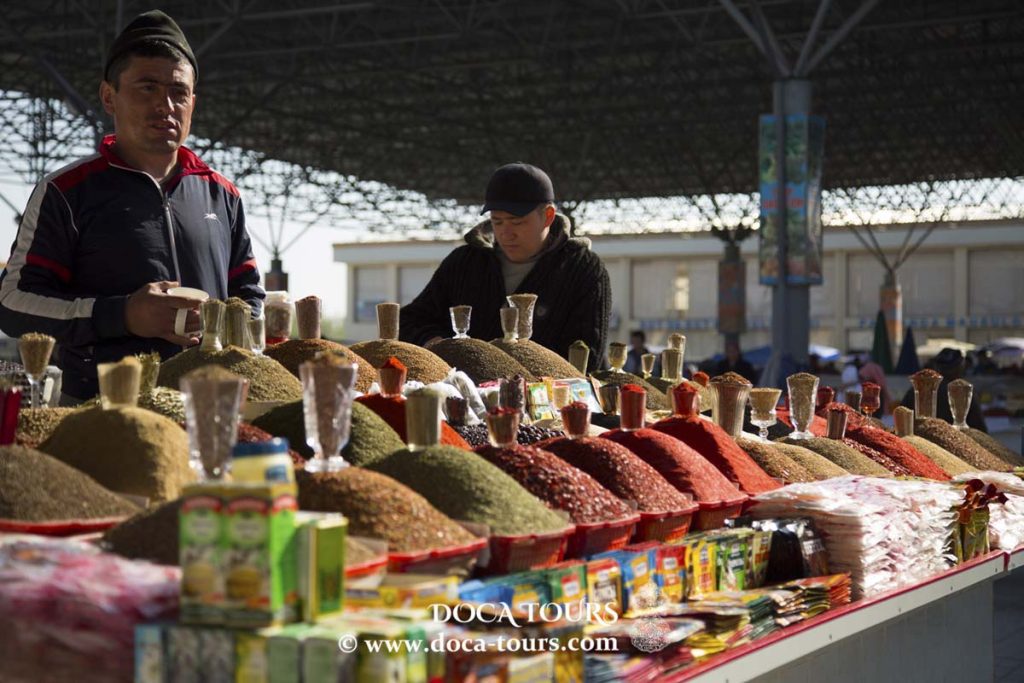
In addition to its rich cultural heritage, Uzbekistan is well-known for its distinctive spices, which lend distinctive flavor and fragrance to its cuisine. The key ingredients in Uzbek cooking include coriander, turmeric, barberry, and zira.
When used to pilaf, soups, and meat dishes, zira gives them a hearty, spicy scent. The taste is enhanced by the subtle sourness that barberry contributes. In addition to adding a golden tint to food, turmeric improves its flavor.
Chili lends a hint of spice, and coriander offers delicate citrus notes.

These spices are more than simply ingredients; they are the essence of oriental cooking, which is what gives it its unique flavor!
In addition to being locations to shop, Uzbekistan’s marketplaces are authentic havens of oriental culture. Here, the vibrant textiles glisten, the ringing voices of vendors create a distinctive ambiance, and the scents of spices come to life.
Every bazaar has an own personality, including the Alty-Aryk in Fergana, the Siab Bazaar in Samarkand, and the Chorsu Bazaar in Tashkent. Juicy fruits, vegetables, dried fruits, spices, handicrafts, and traditional sweets are all available in the markets.
A trip to an Uzbek market immerses one in the hospitality and Eastern way of life. Every area here has a story to tell, and every purchase contributes to a special occasion!
The market provides a wheelbarrow transportation service, which is typically handled by young men. They will assist you in carrying your items from the market to your vehicle or taxi. The service costs roughly ten to fifteen thousand soums, which is very practical if you intend to make big purchases.
Locals are always eager to chat with you at the market, especially if they recognize you as a visitor to their nation. Making friends here is simple, and as a result, you can purchase things at enticing discounts later on. This adds to the buying experience’s enjoyment and memorability.
Vegetables are less expensive here than in an impromptu market outside the market. They are probably grown by individuals either on or off of their own plots.
In Uzbek cuisine, cereals hold a prominent place as the foundation for numerous traditional dishes. The primary ingredient is rice, which is used to make the well-known Uzbek pilaf. Rice varieties like “devzira” and “laser” each have a distinct texture and the capacity to absorb spice scents.
Apart from rice, millet and bulgur are also widely used to make soups and cereals. In certain recipes, corn grits serve as the primary ingredient and as a side dish.
In addition to being a substantial and healthful product, cereals in Uzbekistan play a significant role in the country’s culinary legacy by capturing the flavor and coziness of Eastern culture.
The main ingredient that gives Uzbek food its depth and flavor is meat. The primary meats used in pilaf, shurpa, manti, and shashlik are lamb, beef, and horse meat.
Lamb’s mild flavor and juicy texture make it an icon of Uzbek cuisine. Horse meat is a delicacy used to make festive feasts and kazy sausage, while beef adds a rich flavor to food.
Uzbek cuisine is genuinely unique since the art of cooking meat is passed down from generation to generation.
Many of the Siab Market merchants may be familiar to you from reviews left by bloggers. Being accustomed to the camera, they are eager to interact, discuss their products, and extend an invitation to try them. And because to the local merchants’ warmth, you will most likely leave the market feeling full even if you arrived hungry.
After spending roughly thirty minutes in the market, you are able to navigate the costs with ease. However, they may also fluctuate based on the price of gas or the dollar exchange rate. Drivers in Uzbekistan love gas since it’s more affordable and efficient. Due to the scarcity of petrol and the rise in winter goods prices, individuals mostly fill up with gasoline during this season.
In addition to being traders, Uzbek market vendors are also genuine experts in hospitality and communication. Eastern bazaars are known for their distinctive ambiance, which is created by their genuine greets, smiles, and ability to relate to each individual consumer.
Every vendor will be pleased to tell you about their products, whether they are vibrant textiles, fragrant spices, or delicious fruits. Here, it’s normal to treat, haggle, and talk about life in addition to the cost.
These individuals are the market’s lifeblood, transforming a typical shopping excursion into an authentic voyage through the realm of Eastern hospitality.
One of the most unique items available in Uzbekistan’s markets is edible clay. Known for its mineral qualities, this natural treat is utilized as a nutritious addition to the diet or just as a unique item for those who enjoy foreign foods.
There are various varieties of clay, such as white, blue, and red, and each has unique qualities. It is frequently purchased for enjoyment, to enhance digestion, or to boost the immune system.
During Uzbek bazaars, vendors will explain the uses and advantages of this unique product, transforming your purchase into an educational experience.
Kurts are dried balls of salted cottage cheese that are a classic Central Asian food. It plays a crucial role in the cuisine of Kyrgyzstan, Kazakhstan, Uzbekistan, and other nations in the area. Kurt is rich in distinct flavor and has a good shelf life. Main ingredient: Typically, a fermented milk product like cottage cheese or thick strained yogurt, or suzma, is used. Even in hot areas, kurt may be kept for months because of its low water and salt content. Protein, calcium, and other beneficial elements are abundant in kurt. It is portable and can be eaten as a snack while traveling. It is added to food or consumed as an appetizer.
Among the varieties of honey made from a variety of herbs is mountain honey. It is frequently collected by bees from medicinal plants located in mountain valley areas. We choose to get a jar of this honey as well.
Surprisingly, each commodity can be bought separately. For instance, you don’t have to buy a dozen eggs because some people are accustomed to.
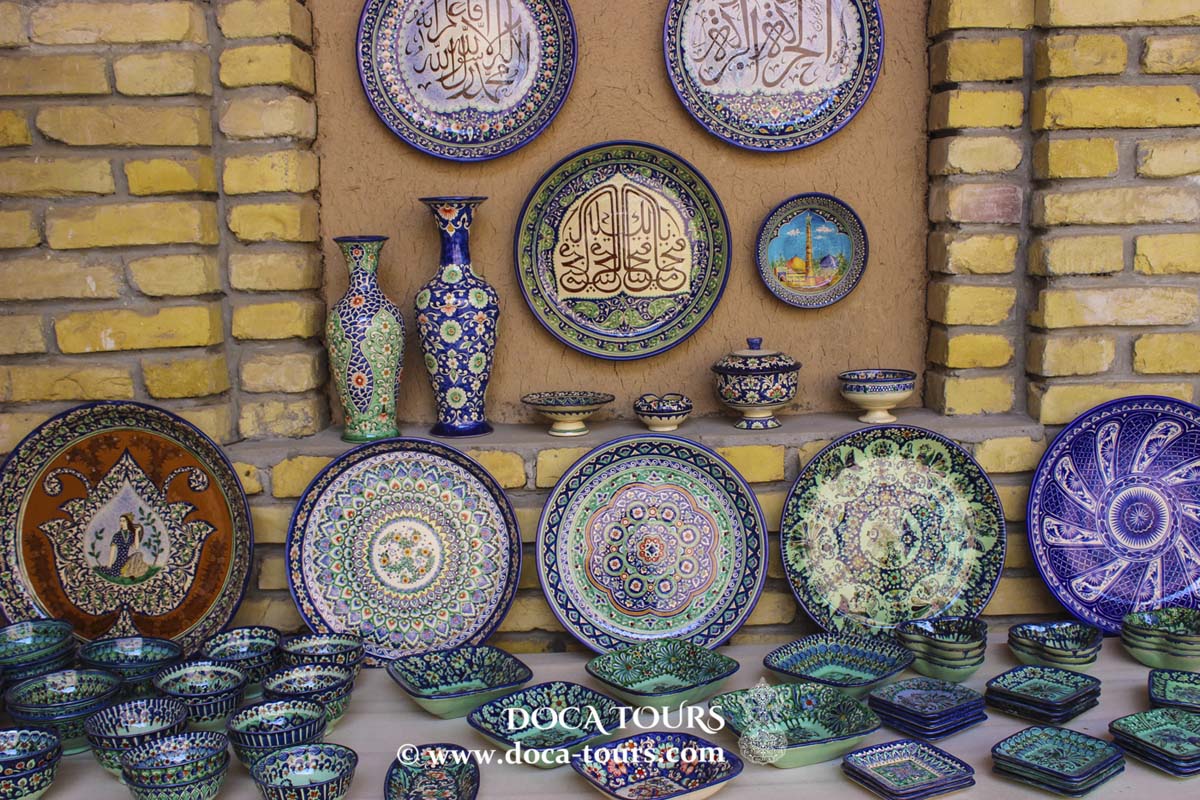
A wide range of vibrant souvenirs, national attire, food, and toys are available at the market. Every memento is produced by hand.
Uzbekistan’s markets are a veritable gold mine of traditional attire that captures the essence of the nation’s rich past and culture. Products made of hand needlework, patterned textiles, and vibrant silks are available here.
Skullcaps, traditional headdresses with symbolic designs, and the Uzbek robe, a light and comfortable garment adorned with an ornament, are popular wardrobe pieces. Exquisite gowns with satin and adras that highlight beauty and elegance are available for women.
Each item not only embodies the spirit of the East but also preserves traditions and is a piece of legacy.
Nuts are a wholesome food item that has been enhanced with good fats. Walnuts, cashews, peanuts, hazelnuts, almonds, pistachios, and dried apricot kernels are among the most popular nuts in Uzbekistan. Because they are utilized in cooking, oil production, and fresh consumption, nuts hold a unique target niche in the food sector. Uzbek nuts are a natural product that hasn’t been chemically treated.
Don’t deny yourself the pleasure; you should try everything you see on the counter. If you were hungry, you might even feel a little full after strolling through the market.
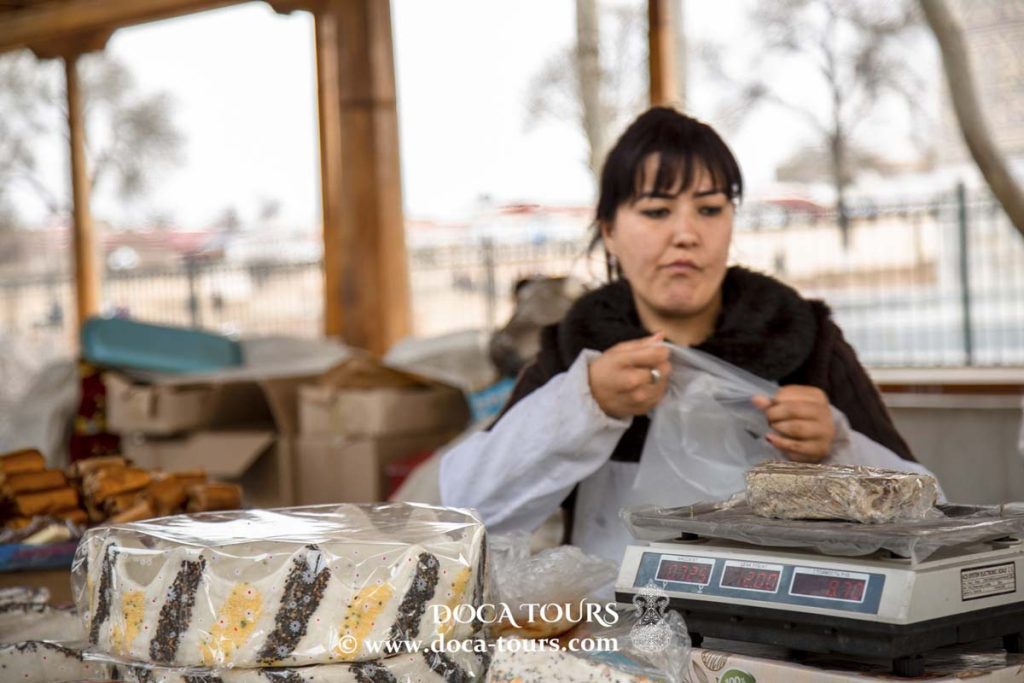
Nabat, also known as novot, novvot, navat, or kinva-shakeri, is a traditional candy sugar from Central Asia and Iran. Large crystals of crystalline sugar, known as navat, are made from grape juice and sugar syrup.
Uzbek sweets are renowned for their rich flavor and variety, and they hold a distinct position in the country’s cuisine. Many of them are made utilizing natural components including nuts, honey, dairy products, and spices in accordance with traditional methods. These are a few well-known Uzbek candies.
Both residents and visitors to Uzbekistan adore pastila, one of the country’s most well-liked sweet sweets. Apples, apricots, cherry plums, and grapes are among the natural fruits used to make it. To create thin, fragrant layers, the fruits are meticulously dried in the sun or in specialized ovens.
In addition to being delicious, traditional Uzbek pastila is nutritious since it retains all the health advantages of fruits, such as vitamins and natural sugars. This treat is perfect as a travel present, dessert, or snack.
When you try pastila in Uzbekistan, you will experience the centuries-old Eastern culinary culture in addition to enjoying the flavor.
One of the oldest and most well-known markets in Uzbekistan is Siab Market in Samarkand, which is particularly well-liked by tourists. In addition to being a shopping mall, this bazaar is a charming location where you can sample local cuisine, purchase one-of-a-kind mementos, and experience the ambiance of an eastern commerce.
This concludes our review video. Please remember to like and subscribe to our channel. It’s time for us to part ways, friends. See you soon.
I thank you from the bottom of my heart for accompanying me on this walk, I hope you enjoy it, we will see each other again very soon, I bless you with love, I wish peace to everyone and all over the world, I love you all, DOCA TOURS ❤
Thank you very much for your attention.
Subscribe to the channel and don’t forget to like our videos.
Prices at Siab Market, Siab Market, Uzbekistan, Samarkand Market, prices 2024, shopping in Uzbekistan, Samarkand Market, price review, bargains, goods at the market, what to buy in Uzbekistan, travel around Uzbekistan, saving at the market, eastern market, fruit prices, goods at Siab Market, Samarkand goods, local products, tourist market
#PricesAtSiabMarket #SiabMarket #Uzbekistan #SamarkandMarket #Prices2024 #ShoppingInUzbekistan #SamarkandMarket #PriceReview #BargainShopping #WhatToBuyInUzbekistan #GoodsAtMarket #TravelingAroundUzbekistan #SavingAtMarket #EasternMarket #FruitPrices #GoodsAtSiabMarket #SamarkandGoods #LocalProducts #TouristMarket #SamarkandPrices