



























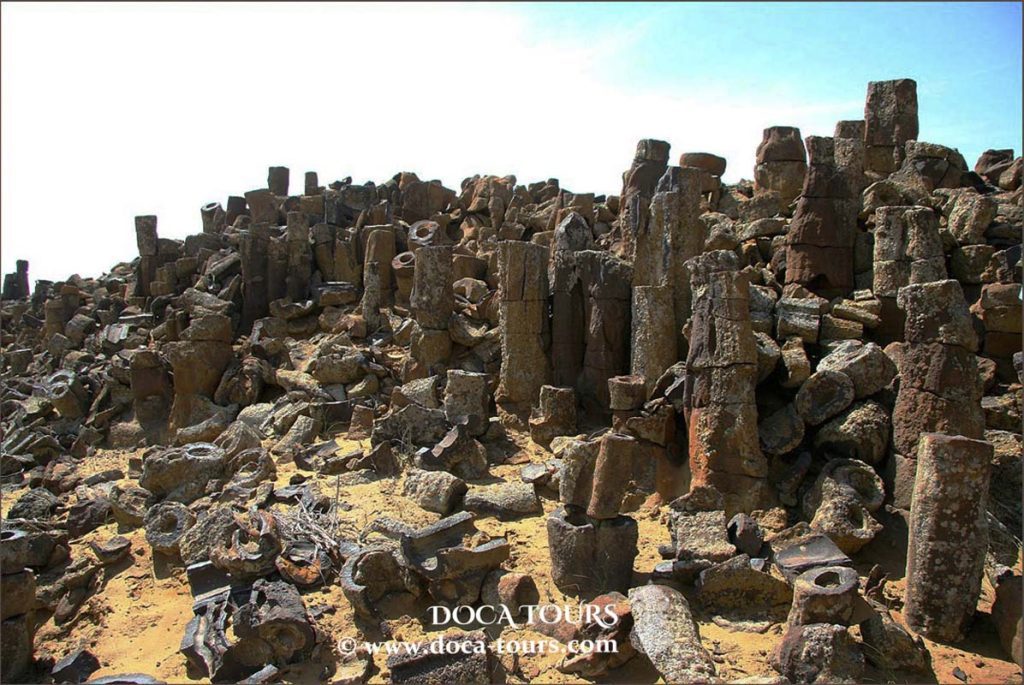
Have you ever seen a forest that is 100 million years old? Such a forest still exists in Uchkuduk, but now it has turned to stone.
According to research, millions of years ago, the boundless deserts of the Kyzylkum were swept by waves of the ancient Tethys Ocean. Various marine shells, whale teeth and bones, and even the fossilized remains of a duck-billed dinosaur have been discovered among the desert sands. However, there is an even more fascinating place in this region that attracts tourists from all over the world: a unique geological, paleontological, and historical natural site located in the Jarakuduk area, 30 kilometers from the village of Mingbulak in the Uchkuduk District of the Navoi region—the extraordinary petrified forest.
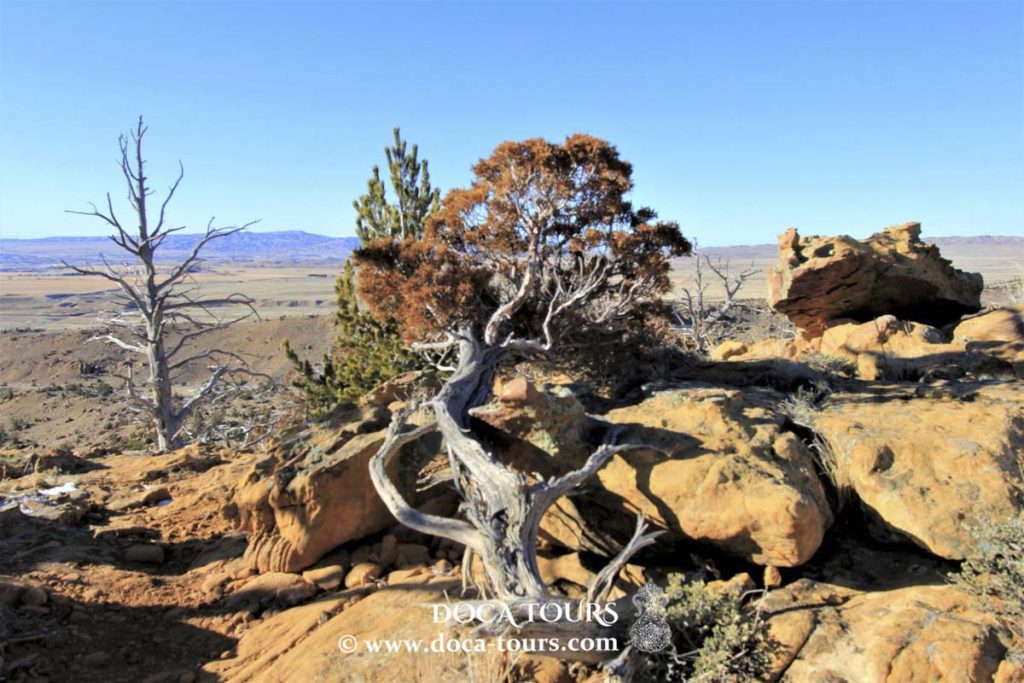
In nine gorges of the area, covering 30 square kilometers, amidst heaps of stones and marine formations, one can find rock formations resembling massive pipes. These are the fossilized trees of the ancient forest, reaching heights of up to 4 meters. Hundreds of preserved tree trunk fragments have been discovered here. Detailed studies of the inner parts of the stone trees, including carbon analysis, confirm the presence of wood residues. Traces of leaves, preserved with remarkable accuracy, also confirm the biogenic origin of this petrified forest.
Scientific hypotheses suggest that around 95–100 million years ago, during the first half of the Late Cretaceous period, this area was a dense forest where maple, laurel, magnolia, and other angiosperm trees thrived. Over time, these trees mineralized and turned into stone while remaining in a vertical position.
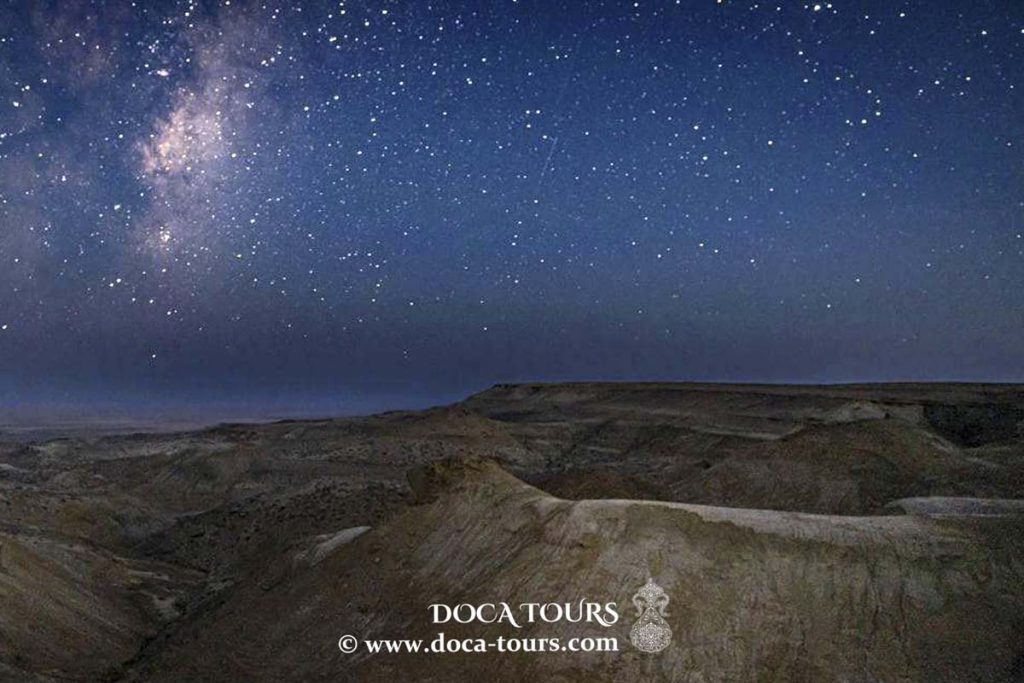
The unique stone forest was discovered in 1919 by geologist and professor Andrey Arkhangelsky. Some sources also note that the Jarakuduk gorge was first mentioned in 1916.
An international expedition, including scientists from Uzbekistan, Russia, the United Kingdom, the United States, and Canada, made significant contributions to studying the Cretaceous deposits of the Kyzylkum and the stone forest of Jarakuduk. Paleontologist Lev Nesov dedicated 20 years of his life to studying the petrified forest. In 1994, Nesov, along with American professor James David Archibald, organized an expedition to Jarakuduk. Subsequent expeditions, funded by the National Academy of Sciences of the USA and the National Geographic Society, followed.
Fossil remains of various organisms, mainly vertebrates, have been found in the deposits of Jarakuduk. About 200 groups of genera, classified into at least 70 families, have been identified: skeletal fragments of ancient vertebrates, teeth of freshwater and marine sharks, remains of cartilaginous and bony fish such as rays, shark vertebrae, turtle shells, crocodile teeth, bird vertebrae, traces of mammalian activity, fossils of amphibians, giant herbivorous dinosaurs, invertebrates, and numerous plant species.
Scientific studies also confirm that millions of years ago, Jarakuduk was a lush, green forest. In the distant past, these lands were washed by warm marine bays, with tall forests growing along the shores. Later, they were covered with marine and river deposits, and the tree trunks mineralized, gradually turning to stone while retaining their original appearance and structure.
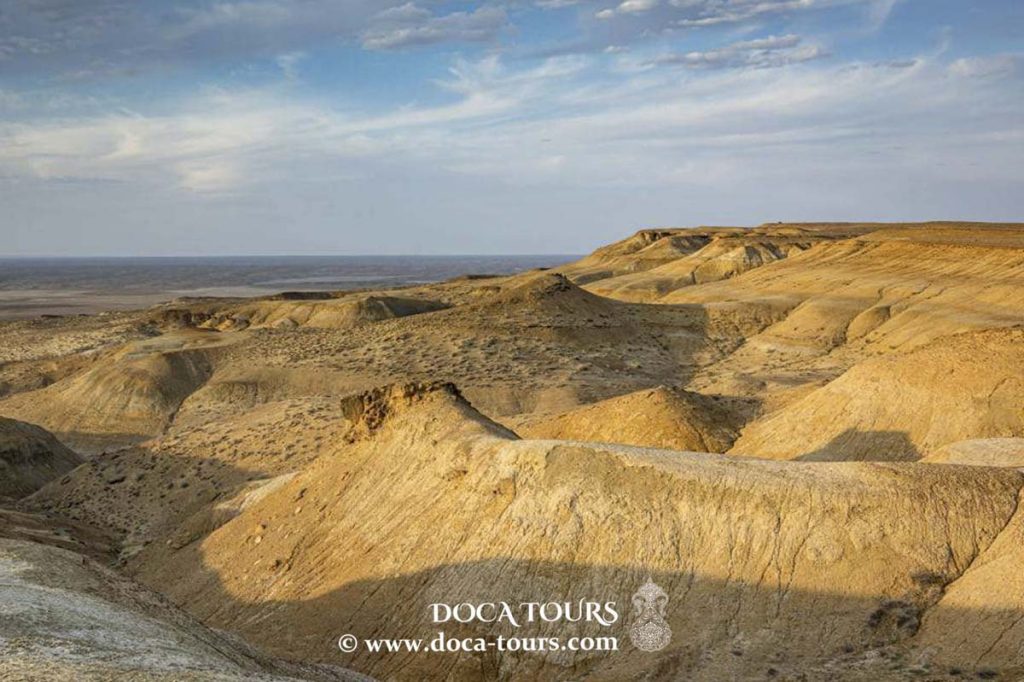
Today, the Stone Forest is well studied by scientists and geologists. Over the past century, numerous sensational discoveries have been made here. Research conducted by the Republic’s Institute of Mineral Resources indicates that there is no other place in the world that can rival the diversity and number of findings found here. The fossils reveal that the Kyzylkum region was once part of a global ocean.
The discovered remains confirm that the area’s natural environment was fantastically beautiful and diverse, thanks to the warm and mild climate of the Late Cretaceous. The region was home to creatures ranging from tiny planktonic organisms to 15-meter-long ichthyosaurs and plesiosaurs, while golden algae that grew here have now turned to stone.
If you want to visit this open-air paleontological museum and see the stone forest with your own eyes, you can find approximate directions online: 30 kilometers from the village of Mingbulak and 50 kilometers from the Uchkuduk-Mingbulak highway. However, there are no precise signs in the desert. If you go there on your own, you may get lost and never find the stone forest. It is best to go with an experienced guide who knows the area well.
The discovered fragments are preserved in the State Geological Museum, the Navoi Regional History Museum, the Museum of the History of the Navoi Mining and Metallurgical Combine, as well as in the Zarafshan and Kyzylkum History Museums. Currently, a new generation of researchers and geologists is working in Jarakuduk. It is no surprise that future discoveries and findings await us in this remarkable place.
Thank you very much for your attention.
Subscribe to the channel and don’t forget to like our videos.
#nature, #forest, #rock, #green, #stone, #landscape, #environment, #background, #natural, #tree, #isolated, #outdoor, #garden, #grass, #moss, #mountain, #summer, #plant, #travel, #beauty, #leaf, #beautiful, #design, #cliff, #vegetation, #scene, #tropical, #white, #trees, #jungle, #hill, #old, #symbol, #set, #sky, #bush, #cutout, #clipping, #fresh, #view, #growth, #landscaping, #scenery, #park, #boulder, #wood, #adventure, #botanical, #concept, #abstract