























Video: https://www.youtube.com/watch?v=n1-il40p-xg&t=3s
Traveling through Central Asia, whether in Uzbekistan or Kazakhstan, many foreigners wonder: where did the Koreans in Central Asia come from? How did they end up here? After all, Korea is so far away from this region.
Local people are unlikely to provide detailed information on this topic, as for Uzbeks and Kazakhs, Koreans have always been their classmates, neighbors, friends, and acquaintances. The Korean diaspora has integrated so deeply into Central Asian countries that few people think about the history behind their resettlement.
This video is dedicated to the topic of the relocation of Koreans to Central Asia.
For a long time, the topic of the deportation of Koreans from the Far East in the USSR was taboo. Access to archival sources was restricted, and most information relied on the memoirs of those who had experienced the deportation firsthand. By the 1960s, the subject began to attract more attention from historians and writers.
Here’s the background:
Since the late 1920s, the Soviet leadership had planned to relocate Koreans from the border areas of Primorye to the Khabarovsk region. The issue was discussed by Bolshevik authorities in 1927, 1930, and 1932.
Starting in 1937, publications in the central press began to accuse Koreans in Primorye of involvement in Japanese subversive activities and of being spies recruited by Japan. On March 23, 1937, the newspaper Pravda reported that a Korean collective farmer had apprehended another Korean who was a spy. On September 4, 1937, Izvestia published information from Kim Iksen, the chairman of the border Korean collective farm “Borba,” stating that border guards had detained a Korean spy sent by the Japanese from Manchukuo.
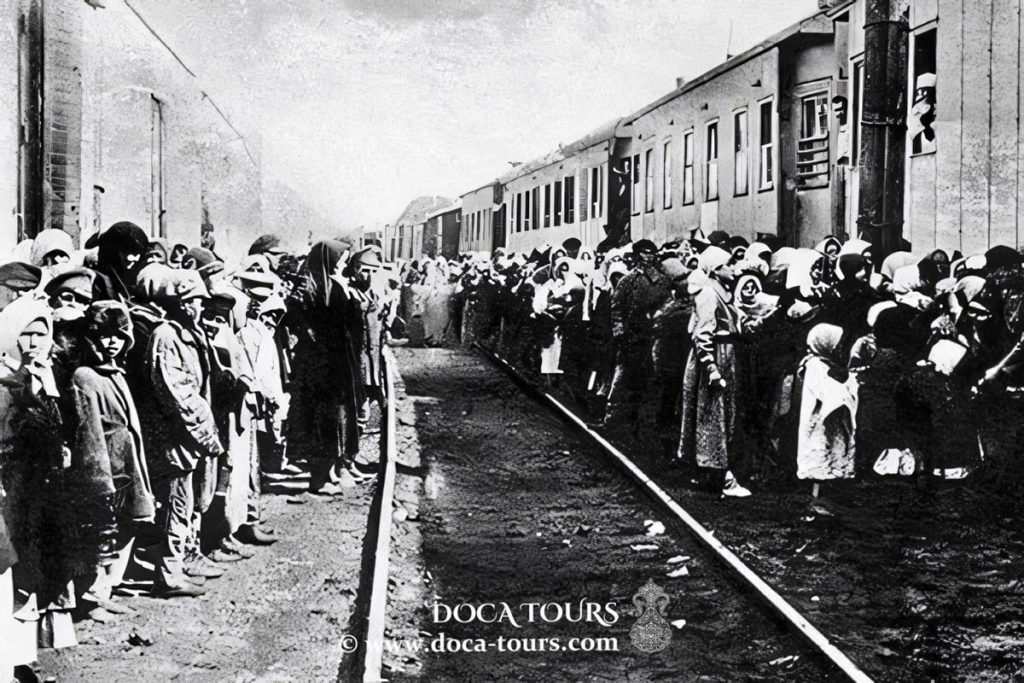
One train typically consisted of an average of 50 “people’s” cars, one passenger car, one medical car, a kitchen car, 5-6 covered freight cars, and 2 open cars. The “people’s” cars were essentially freight cars equipped with two-tiered bunks and a stove. Each car transported 25-30 people. The journey from Primorye to unloading stations in Uzbekistan and Kazakhstan took between 30 and 40 days. Before departure, all passports were confiscated. Each car had its own assigned agents.
Before World War II, deported Koreans faced significant restrictions on their rights. Relocated Koreans held the status of “administratively exiled.” They were allowed to move only within Central Asia. However, unlike other deported peoples in the USSR, Koreans were permitted to hold leadership positions and receive higher education.
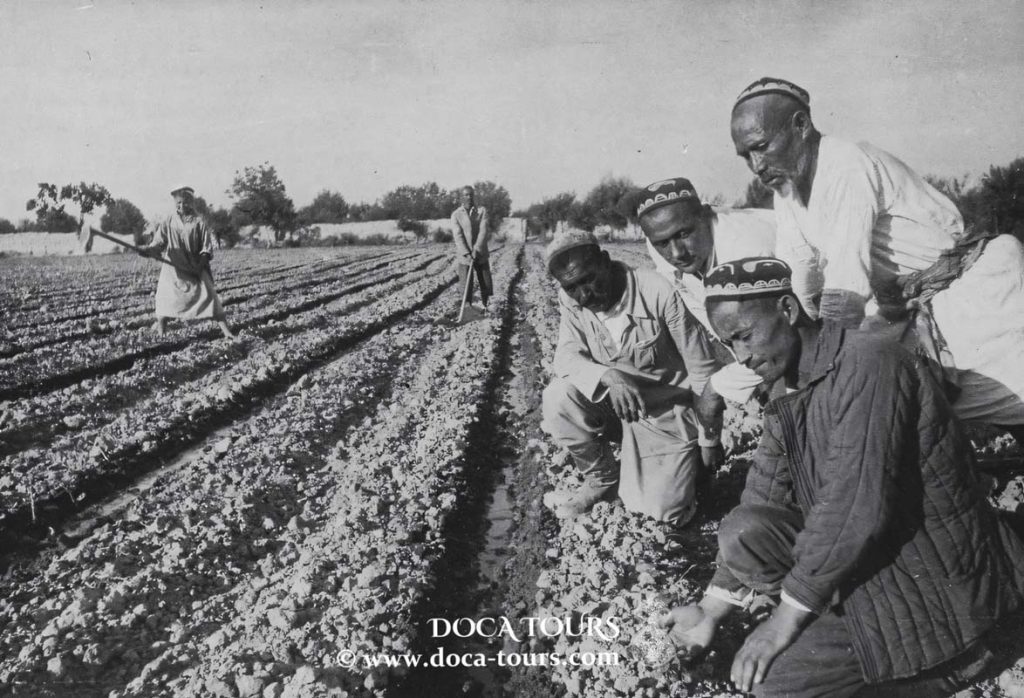
In the early years, Koreans primarily worked in their own collective farms on specially allocated land or joined local general-purpose collective farms.
Documents indicate that local and central authorities in Central Asia made significant efforts to settle the relocated Koreans. They were compensated for property lost in the Far East and received a one-time gratuitous aid of 3,000 rubles.
Deported Koreans were provided with building materials, loans, and arable land under special arrangements.
Initially, the main occupations of Koreans were rice cultivation, vegetable farming, and fishing. Notably, in the first year of resettlement, a significant portion of Koreans voluntarily moved from Kazakhstan to Uzbekistan, where conditions for traditional Korean farming were more favorable.
Korean settlements were scattered across a vast area of Central Asia. Nearly all Korean children began attending Russian schools immediately after the resettlement. As a result, within two generations, relocated Koreans became Russian-speaking.
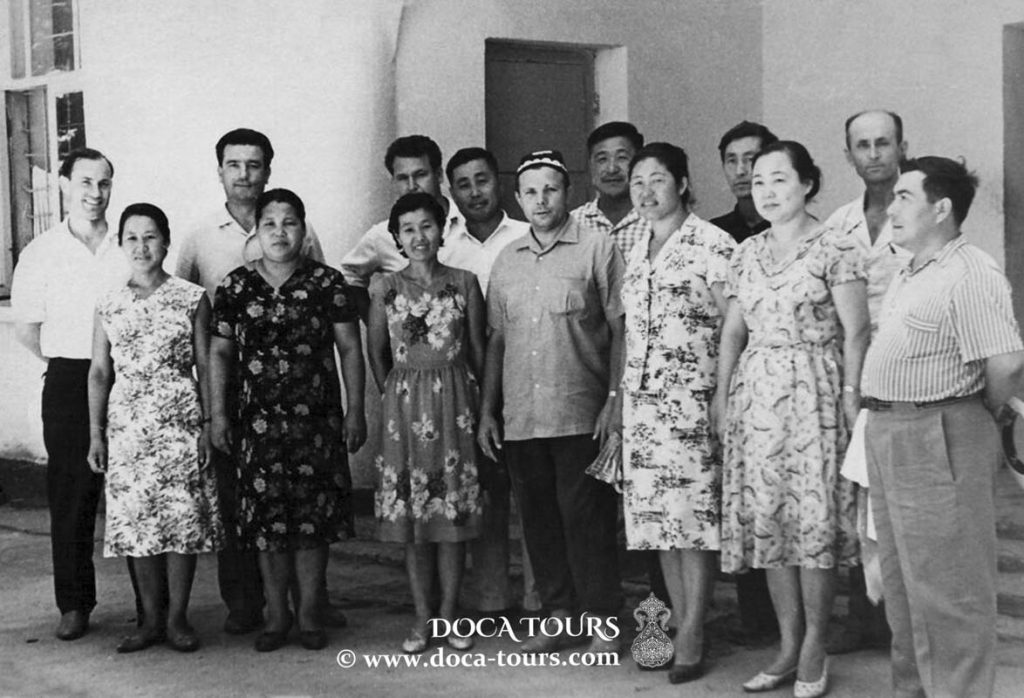
This gave rise to the term Koryo-saram, referring to the descendants of Koreans originally relocated from the Far East. Unlike Koreans in some other countries, mixed marriages became common among the Koryo-saram, reaching 40% by the late Soviet period. Today, the global population of Russian-speaking Koreans is estimated at over 500,000. Due to the high number of mixed marriages, accurately counting Koryo-saram is challenging.
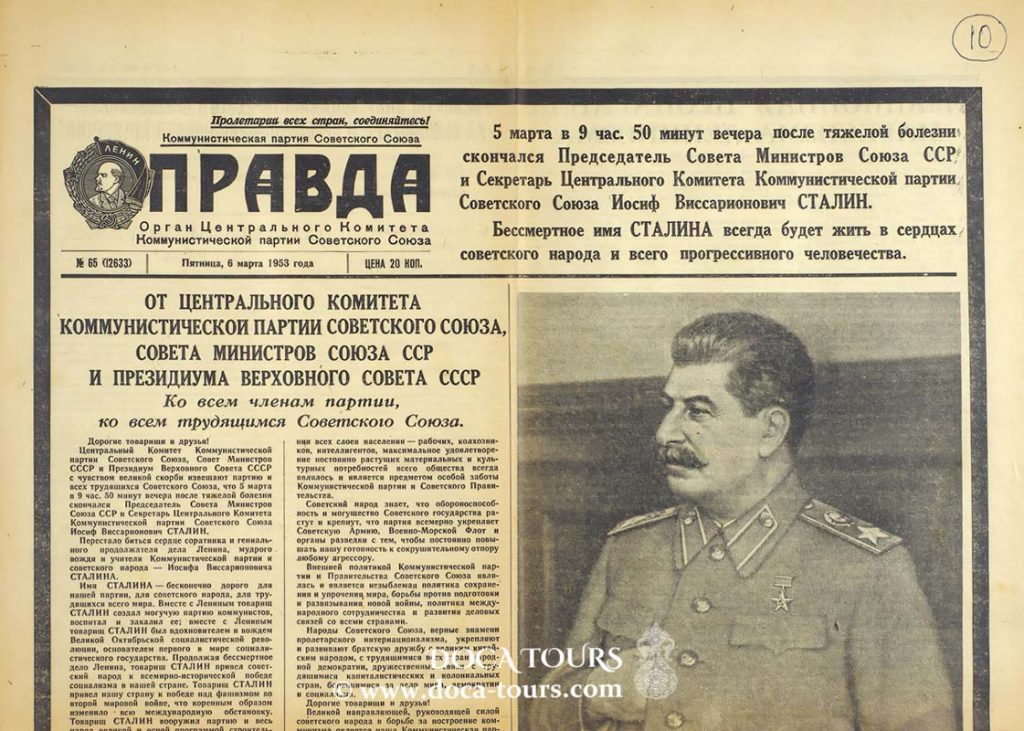
The actual rehabilitation of Koreans occurred after Stalin’s death between 1953 and 1957, when all restrictions on their rights were lifted. In the USSR, there was an unofficial barrier to their career advancement within the Communist Party, preventing them from rising above the rank of district party secretary or lieutenant colonel. However, some Koreans were recognized as Heroes of the Soviet Union. In other fields, including government administration and law enforcement, noticeable discrimination was absent. By the 1970s, Koreans held positions such as ministers and deputy ministers at the union level, and some were even academicians of the USSR Academy of Sciences. A significant shift also occurred as Koreans left traditional agriculture in large numbers to pursue higher education.
After restrictions were lifted, most Koreans relocated to Russia, primarily to central regions. Estimates suggest that there are currently about 150,000 Koryo-saram in Russia, 100,000 in Kazakhstan, and 200,000 in Uzbekistan.
This is the story of the resettlement of Koreans in Central Asia. They remain an integral part of the region’s peoples.
Thank you very much for your attention.
Subscribe to the channel and don’t forget to like our videos.
#uzbekistan, #korean, #friendship, #seoul, #tashkent, #traditional, #dostlik, #tile, #architecture, #art, #autumn, #bobur, #garden, #leaves, #asia, #park, #outdoor, #landscape, #gazebo, #building, #attraction, #pagoda, #terrace, #style, #roof, #pavilion, #oriental, #background, #flag, #symbol, #national, #country, #nation, #illustration, #cooperation, #banner, #sign, #korea, #concept, #politics, #south, #uzbek, #world, #icon, #partnership, #conflict, #agreement, #white, #union, #government