
























Video: https://www.youtube.com/watch?v=US4CZ_bGKfQ&t=735s
One day Khoja Nasreddin came to an inexperienced hairdresser, whom he instructed to shave his head. While the hairdresser was shaving the head of Khodja, he nicked his head several times and put pieces of cotton wool over the cuts to stop the bleeding. When the barber had shaved half of Nasreddin’s head, the sage suddenly stood up and began to leave. The surprised hairdresser asked:
Dear Khoja, where are you going, because I shaved only half of your head? To which Khoja replied: You know, I decided this way: If you have half-sown my head with cotton, then on the other half I will plant wheat myself.
Many nations have their own legendary heroes. These personalities are almost the only ones who empathize with the common people, think about the problems of the common man, and ridicule the vices of the greedy rich.
One of the most famous characters in this genre is Khoja Nasreddin. Everyone who has been to the East has heard about him, especially in Muslim countries. His sayings and philosophy are unique in their simplicity and at the same time filled with deep meaning. With the help of anecdotes and stories, where Khoja Nasreddin is present, people express their opinions and criticism.
In the stories of Khoja Nasreddin, they deceive or he deceives others, sometimes he shows himself to be a great sage, and sometimes even a complete fool, but the essence of Nasreddin is that he has a wise answer to any question and he will get out of any situation. Exactly these properties are so popular with the common people.
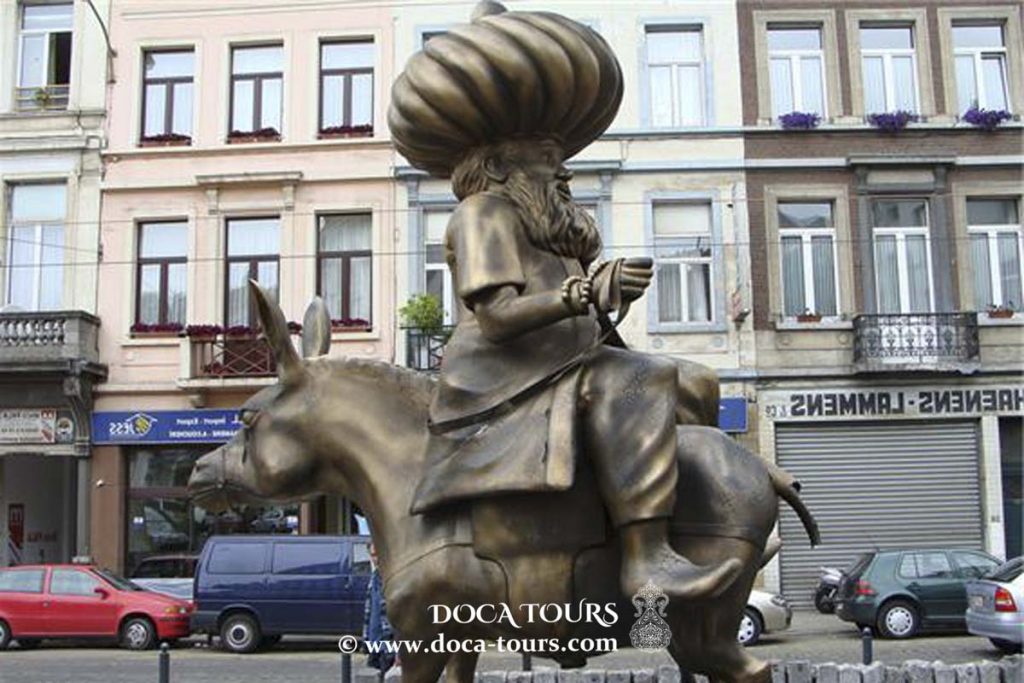
Once Khoja Nasreddin saw the emir on the street, who was presented with a beautiful white donkey. Khoja went up to the donkey and said: Wow! This is exactly the breed of donkeys that can talk! Hearing these words, the emir turned to Khoja:
– Are you crazy? Where have you seen donkeys that can talk?
Khoja objected:
– It is exactly this breed that knows how to talk, but for this, donkeys need to be specially trained! And I know the secrets of training donkeys. I learned them from my grandfather – the great donkey teacher!
The emir pondered and said:
– If I give you this donkey, can you teach him to speak like we do? And what is required for its training?
Khoja replied:
– I cannot refuse your request, dear emir. But you are right; this is not an easy path. The training lasts 10 years and for this, I need one gold coin for every day.
The emir ordered the treasurer to pay Khoja coins for 10 years and said in parting: I will wait for the day when you come with my donkey to my palace and the donkey will speak to me. But if it turns out that you deceived me, then your head will be chopped off by my executioner on the spot.
Khoja bowed to the emir, took coins and a donkey and went home. At home, many questions from his wife about the donkey and gold coins awaited him. Khoja told his wife everything as it is. After his story, the wife was confused and said:
– I have never met such a fool in my life, where did you get the idea that the donkey would speak? You will be executed for your lies!
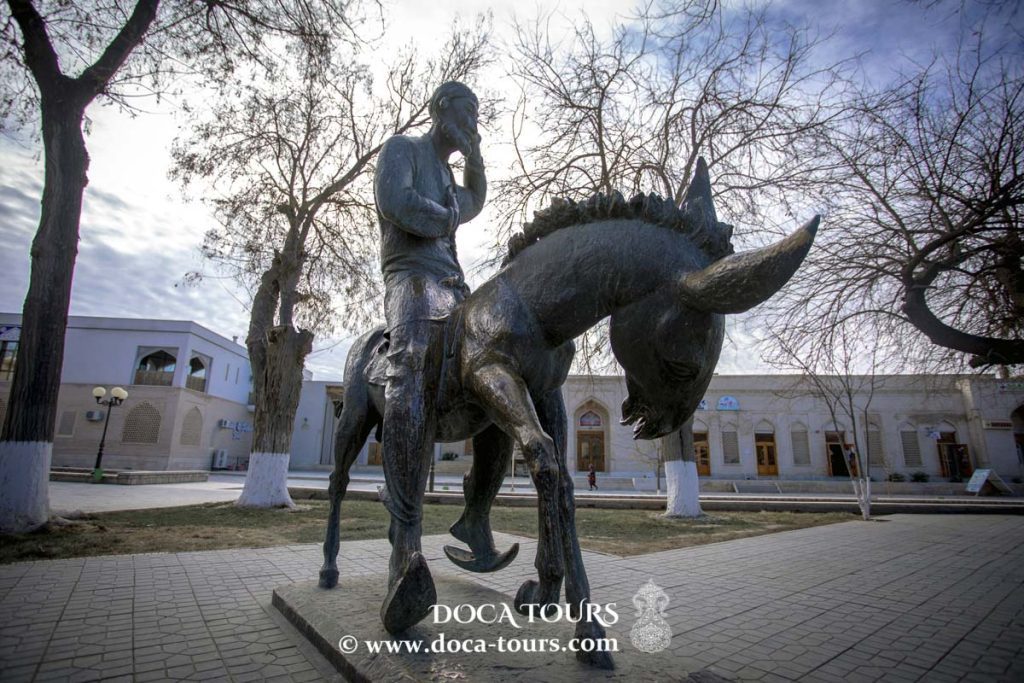
To which Nasreddin calmly replied:
– Don’t worry… I have everything under control… In 10 years either the donkey or the emir will die!
Although Nasredin is considered a fictional character, there are many cities and towns in the world where people are still convinced that this sage lived there.
It is said that Nasreddin was born in the family of a highly respected imam named Abdullah in a small village in Turkey called Horto in 1206. Horto is located in the province of Eskishehir.
Nasreddin studied in the city of Konya – the capital of the Seljuk state, lived and worked in the city of Kastamonu, from there he moved to Eksihehir, where, as a result, he died.
But there are many theories about Nasreddin’s life and places of residence. For instance:
Historian professor from Turkey Mikail Bayram conducted detailed research about Nasreddin, and found out that the full name of our hero sounded like: Nasir ud-din Mahmud al-Hoyi. That is, he was born in the city of Khoy, which was an Iranian province – today – Western Azerbaijan. He was educated in the territory of Khorasan and was a student of the famous Islamic theologian Fakhriddin ar-Razi.
According to some sources, he rose to the rank of qadi – an Islamic judge and visited many cities of the world, according to other sources – he was a poor man all his life, rode his donkey and constantly quarrelled with his wife. Unfortunately, we will not be able to find out the truth here.
For example, in Azerbaijan Nasreddin’s name is Molla. This name, according to historians, is a latent form of the name Movlan, which belonged to Tusi. Many coincidences can be found between the works of Tusi himself and the stories about Nasreddin (where, for example, soothsayers and astrologers are ridiculed):
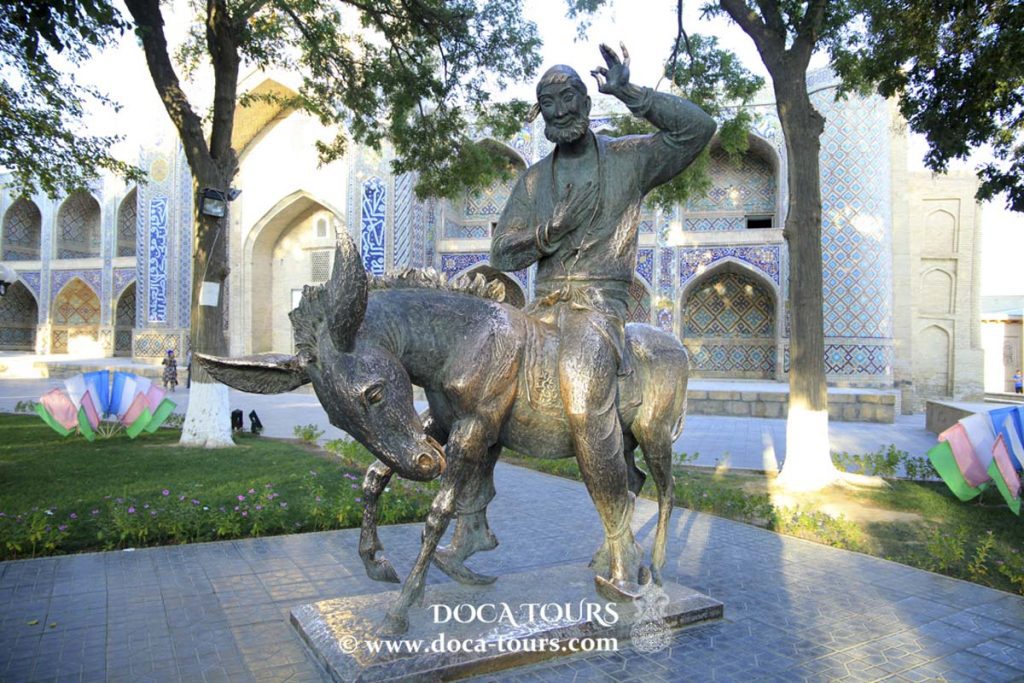
One day a great ruler decided to check the fortune-tellers and astrologers. He called all of them to the palace and asked a very easy but intriguing question: How many years will I live? Khoja Nasreddin was also among the predictors. Hearing the question of the ruler, astrologers immediately set to work using various intricate devices. After some time, the ruler turned to the first fortuneteller and repeated his question. To which he replied: Oh the luminary of the stars! The stars say you will live 99 years! To which the governor ordered his execution. The next astrologer replied: Your Majesty the stars say you will live 500 years! The ruler also ordered his execution. Thus, everyone was executed and the last was Nasreddin. He replied: Oh great ruler! The stars say that you will live only three days longer than me!
If you look for a specific person in history – the prototype of Nasreddin, then most likely there will be some legendary personalities but not historical ones. Historians believe that traces of Khoja Nasreddin should be sought not in written sources, but in parables and legends that are still told by the peoples of the East.
The stories show Nasreddin to be very diverse. Sometimes he is a man in an old dressing gown whose pockets are empty. And sometimes, on the contrary, he is a person with a pleasant appearance, living in abundance.
One day loud screams and curses were heard from Nasreddin’s house. One of the curious neighbors decided to inquire about the situation in Khoja’s house. He knocked on the door, Khoja opened it and the neighbor immediately asked: what is going on here Khoja? Where do the screams and noise come from? Khoja replied: Yes … nothing special. It’s just that my robe fell from the roof of the house. But the neighbor did not lag behind: And was it worth swearing so much over such a trifle? To which Nasreddin replied: Only at the moment the robe fell from the roof I was in it!
The sage travels a lot. He could live anywhere: in Eskishehir, Bukhara, Samarkand or Baghdad. His name is found in different languages: Khoja Nasreddin, Joha Nasreddin, Mulla, Molla (in Azerbaijani), Afandi (in Uzbek), Ependi (in Turkmen), Nasyr (in Kazakh), Anasratin (in Greek). Everywhere he has friends and students, but he also always has enough enemies and ill-wishers.
The word “Khoja” in translation from Farsi means “master”. This word is present in almost all Turkic languages and Arabic. Initially, it was used as the name of a family of descendants of Islamic – Sufi missionaries in Central Asia. These were representatives of the “white bone” class. Later “khoja” became an honorary title – which means “sage”.

Khoja has many professions: he is a farmer, a merchant, a doctor, a craftsman. He is very sophisticated and wise, so everyone listens to him attentively; he is fair and knows the laws well, therefore he often involuntarily becomes a judge;
Khoja Nasreddin is a manifestation of life in all its diversity. With his help, you can look at life in a different way, and if sometimes some circumstances cannot be avoided, then you can learn something from them and become even wiser! And next time, in a similar situation, it may turn out to teach someone a lesson. Nasreddin will definitely not go into his pocket for words.
One night, Khoja was riding his donkey in another village and watched as two very drunk men argued loudly with each other. One of them, pointing his finger to the sky, said: This is a star! And the other said: Come on! It’s the moon! Can’t you tell the moon from the star! Having approached closer, Nasreddin involuntarily became their judge. They called him over and asked him a question. The first drunk said: look at the sky, over there – is it a star? Better say it’s a star! And the other threatened: if you don’t say now that it is the moon, then you’re done! Looking up, Khoja replied: guys, sorry, unfortunately, I cannot give you an exact answer to your question. Both drunken asked at the same time: Why?
– Because I am not a local and do not understand your heavenly bodies! This was Nasreddin’s answer.
Khoja Nasreddin is also associated with Sufism. Sufism is mystical teaching, a spiritual transformation of a person. Sufism has different thinking, a different worldview, free from stereotypes and dogmas.
According to hypotheses, the image of Khoja Nasreddin is an amazing find of the Sufis. He does not lecture or rant. Someone laughs at his stories, and someone, thanks to them, learns something and draws conclusions for themselves.
The earliest written source about Khoja Nasreddin dates back to 1480 when stories about him were recorded in Turkey in a book called “Saltukname”. Later, in the 16th century, the writer and poet Jami Ruma Lamia also compiled a manuscript with stories about Khoja. In the 20th century, Millin wrote the work “Nasreddin and His Wife”, and “Rosary from Cherry Pits” belongs to the pen of the Uzbek writer Gafur Gulam.
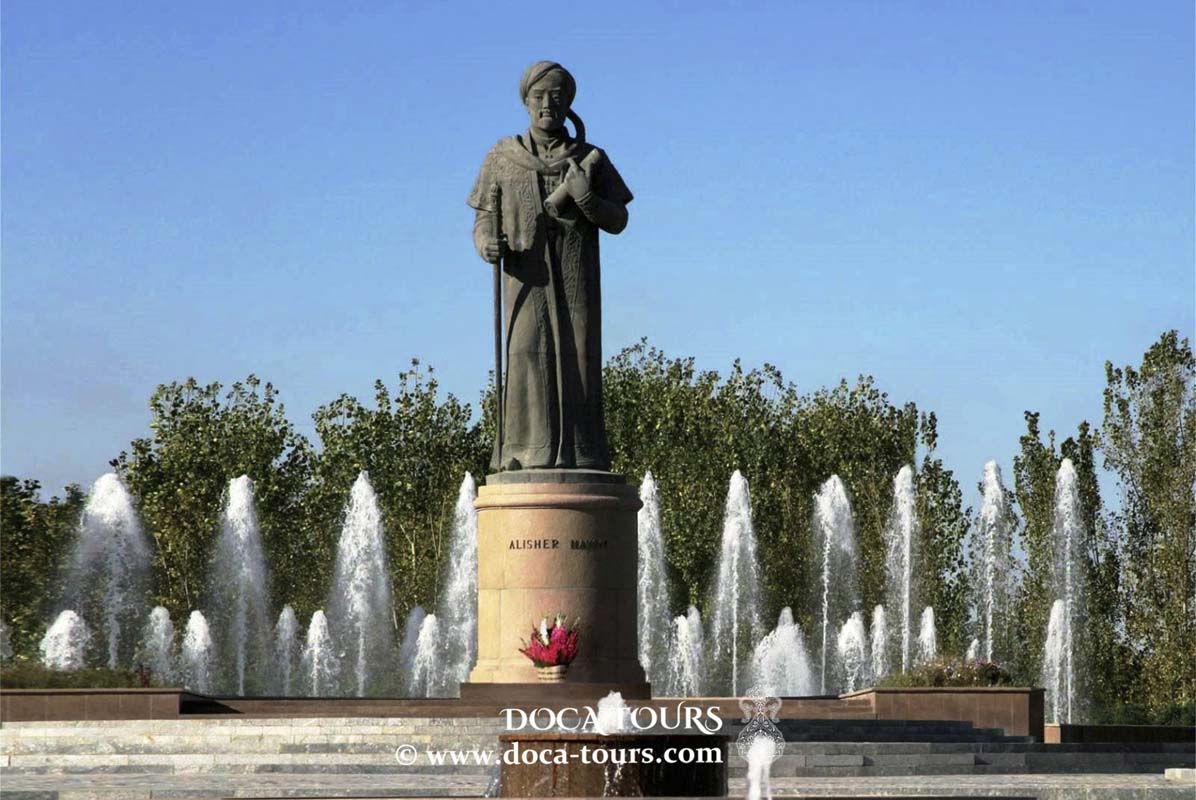
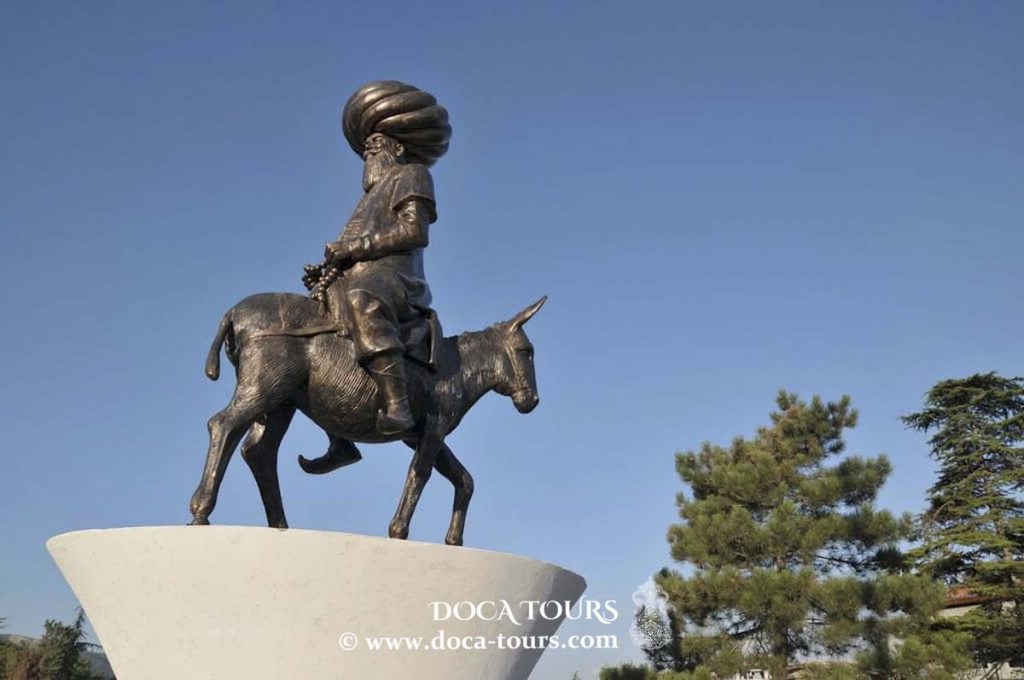
In many countries of the world, there are statues and monuments to Khoja Nasreddin, which always attract tourists.
In the twentieth century, stories about Khoja Nasreddin were filmed and shown on the stage. The stories about Khoja Nasreddin have now been translated into many languages of the world and have long become a part of world literature. It is not for nothing that 1996-1997 was declared by UNESCO the International Year of Khoja Nasreddin.
The main feature of the literary hero Nasreddin is to get out of any situation as a winner through the word. Nasreddin’s frequent reception is feigned ignorance.
Once, Khoja wanted to cross the hanging bridge over the canal to the other side. The bridge was very narrow, where only one person could pass. After taking a few steps, he noticed an obese man who quickened his step so as not to let pass Khoja and be the first to cross to the other side. At the same time, this man kept saying: I don’t let the fools pass! I don’t let idiots pass! To which Khoja began to move back across the bridge to let this man pass. When he was already on the other side, Khoja quietly but distinctly said: But I let pass!
The Russian-speaking reader knows the stories about Khoja Nasreddin not only from anecdotes but also from the famous novels of Leonid Solovyov: “The Troubled One” and “The Enchanted Prince”, based on which the films were made.
Of course, there will always be someone who will say that Nasreddin is incomprehensible or that his image is simply outdated. But we can assume that this statement would not upset Khoja in any way: after all, in life, you cannot please everyone.
Khoja Nasreddin always reminds us that we are limited in understanding the essence of things. If Khoja were called a fool, then such an accusation would be the highest of praise for him!
Generations were replaced by generations, legends and anecdotes were passed from mouth to mouth in teahouses and caravanserais of the East. Endless folk fantasy has invented and will continue to invent more and more intricate stories, where the great sage – Khoja Nasreddin – Friend of the People will always be in the center of attention.
Thank you very much for your attention.
Subscribe to the channel and don’t forget to like our videos.
#konya, #culture, #ink, #black, #leaf, #ancient, #flower, #home, #lifestyle, #traditional, #background, #turkey, #old, #vintage, #wooden, #plant, #yoghurt, #animal, #household, #illustration, #sketch, #travel, #texture, #nature, #botany, #white, #donkey, #isolated, #tourism, #turk, #house, #building, #summer, #spring, #botanical, #children, #art, #nasreddin, #street, #design, #drawing, #decoration, #graphic, #architecture, #element, #floral, #sky, #lake