


































Uzbek Nomadic Culture: The Yurt as the Center of Life
When gazing across the vast steppes of Central Asia, one inevitably encounters an architectural masterpiece of adaptation and tradition: the yurt.
Uzbek nomadic culture and the traditions of the Central Asian Turkic peoples are deeply rooted in this unique, portable home.
The yurt is not merely a simple tent; it is the guardian of the ancient customs and traditions of the nomads.
On a journey through Central Asia with DOCA TOURS, you can still experience the spirit of these ancient civilizations firsthand today.
History and the Ingenious Concept of the Yurt
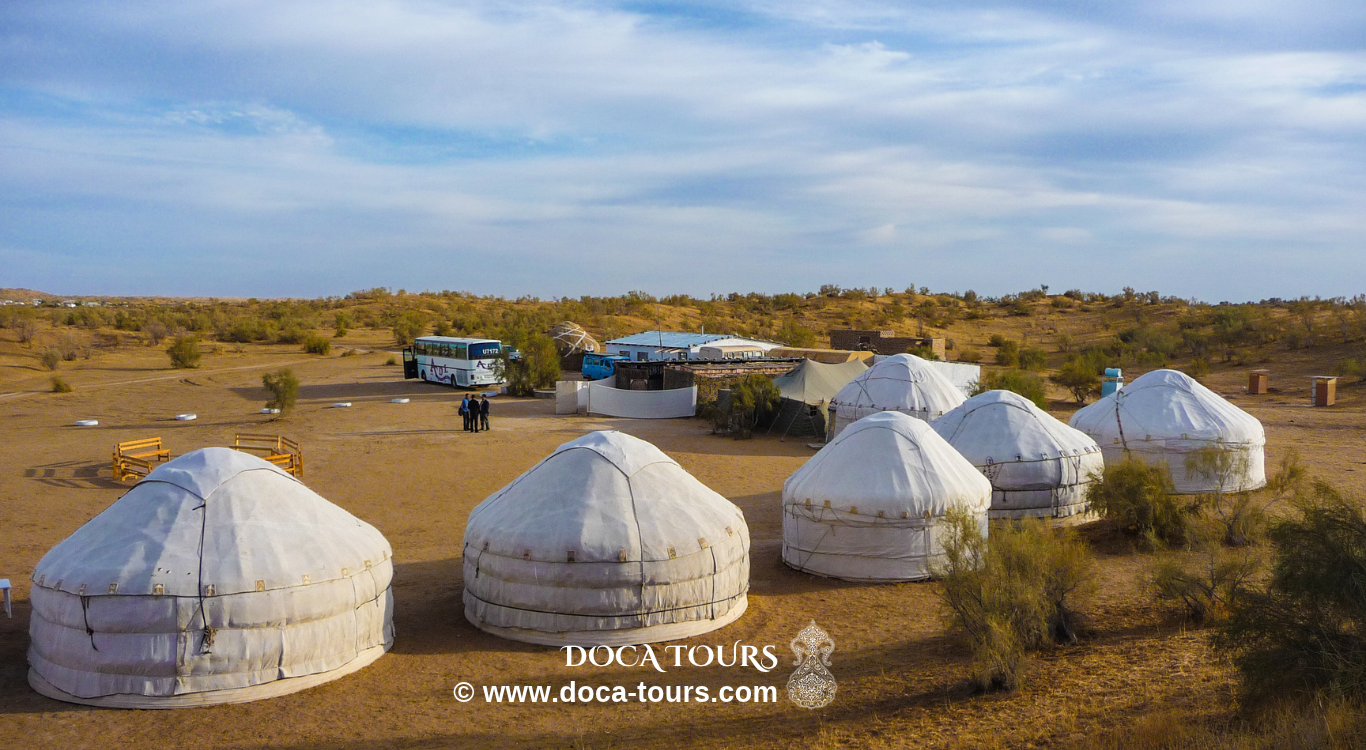
The history of the yurt among Central Asian nomads dates back to the 7th century BC.
Researchers have found depictions of tent-like dwellings that already featured a clear division into a right (female) and a left (male) half.
The yurt was developed as an ingenious solution to the harsh life on the steppe.
An experienced family head can completely assemble or disassemble this home in just a single hour.
The structure is perfectly adapted to extreme weather conditions: the dense felt roof reliably protects against strong winds, rain,
and moderate cold, while the side walls can be lifted during the hot summer for ventilation.
To make such a yurt, a nomadic family required between 130 and 170 kilograms of wool, which presupposed owning a herd of at least 33 sheep.
The Interior: A Microcosm of Society
The interior of the yurt is deeply symbolic and reflects the social concepts of interpersonal harmony held by the ancient nomads.
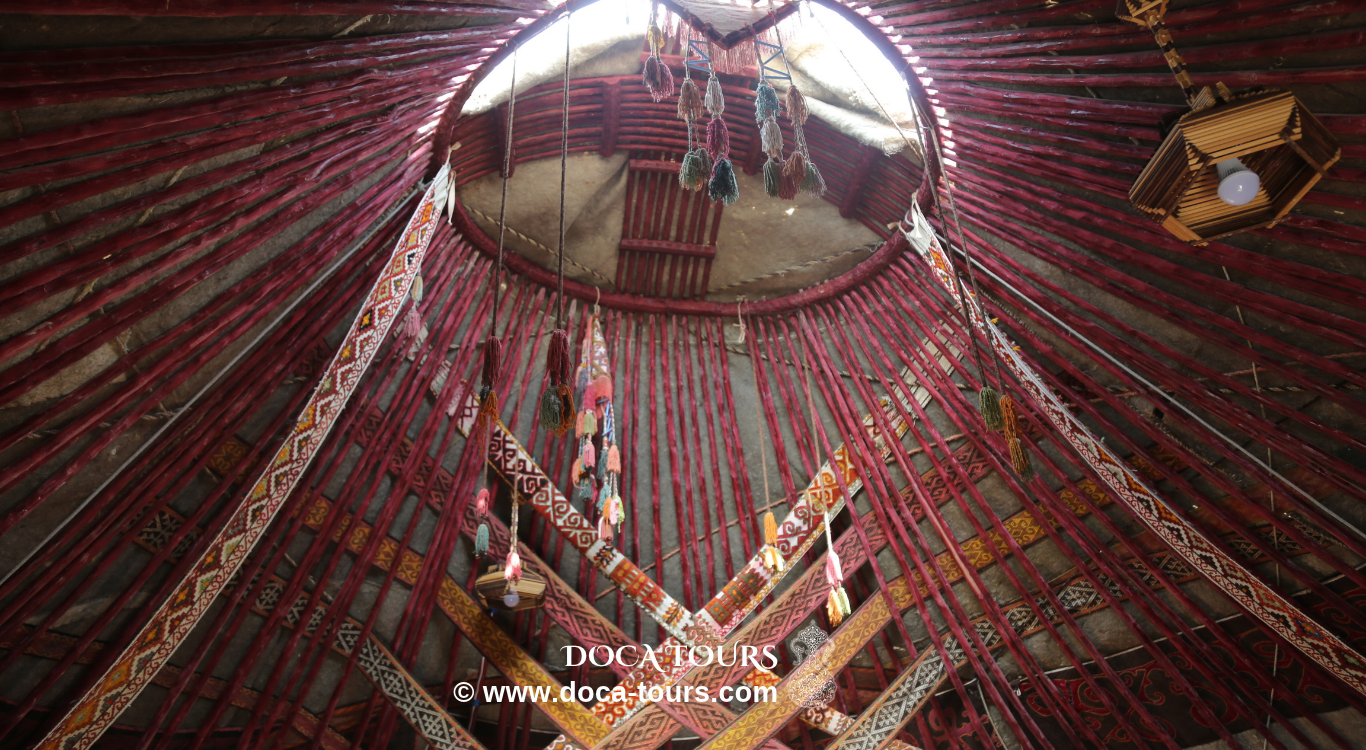
Every family member and guest is assigned a very specific place: The Center: At the heart of the yurt is the fireplace (otschag), which forms the
center of the home and lies directly beneath the smoke hole (tündük). The Female Side: The right side from the entrance belongs to the women ("epchi djak").
Here, kitchen utensils, food, and personal handicrafts are stored in chests. The Male Side: The left side ("er djak") is reserved for the men.
Here, horse tack, whips, hunting knives, and livestock breeding equipment are kept. The Place of Honor: The spot directly opposite the entrance ("tör") is the most honorable place.
This is where the most respected guests (aksakals) and the master of the house sit.

The Sacred Fireplace and Rituals
Central Asian nomads viewed fire as a divine force and a part of the sun.
The fireplace had to be kept absolutely pure; it was strictly forbidden to throw waste into it, step into the ashes with one's foot, or walk over the fire.
A central ritual of Uzbek nomadic culture is the "feeding" of the fire. It was believed that the guardian of the hearth (Ot-Ine) grants the family prosperity, happiness,
and health when regularly honored. Before meals, a small, uncut portion of the best food—such as meat, bread, butter, or tea with milk—was reverently offered to the fire.
This ritual is performed by the eldest woman of the house and underscores the nomads' deep connection with nature and its spirits.
Frequently Asked Questions (FAQ) about Nomadic Culture and the Yurt
How quickly can a yurt be set up? A yurt is extremely practical and can be assembled or disassembled by a single family in about an hour.
How do guests know where to sit in the yurt? The seating arrangement is strictly regulated. The master of the house and highly respected guests sit in the place of
honor ("tör") opposite the entrance; men sit on the left, and women and children on the right.
Why was it forbidden to throw trash into the fire? Fire was considered divine and pure. Contaminating it was viewed as disrespect toward the
guardian of the hearth (Ot-Ine), which was believed to bring misfortune or illness to the family.
Planning your private tour? DOCA TOURS organizes authentic and unforgettable experiences off the beaten path.
Contact us to plan your personal journey into the past!